
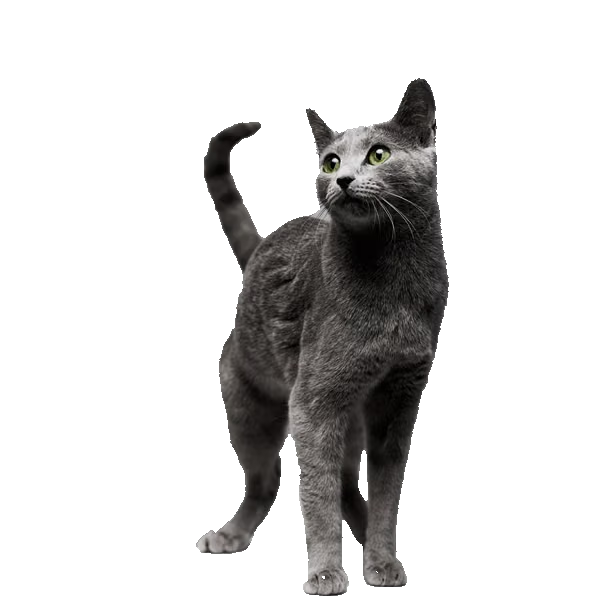
Russian Blue
The Russian Blue is a gentle, intelligent cat with a shimmering silver-blue coat, devoted to its family yet reserved with strangers.
- Size
- Medium
- Lifespan
- 15–20 years
- Origin
- Russia
- Temperament
- Gentle
- Standard colors
- Blue
Characteristics
Coat and grooming
How the Russian Blue coat is built, and what that means when you groom it.
- Coat layers
- Double coat
- Coat texture
- Plush
- Coat length
- Short
- Shedding
- Seasonal shedding
Grooming guidance
Critical: A Russian Blue should not be shaved.
The undercoat keeps heat out as well as in, and the outer coat shields the skin from sun and insect bites. Clipping the whole coat off removes both. It often grows back patchy, soft or a different colour, and in some animals the guard hairs never return properly. Brush the undercoat out instead of cutting it off.
Information: A Russian Blue drops its undercoat in heavy bursts.
The undercoat comes out in heavy bursts over a few weeks. An undercoat rake, or a bath followed by a proper blow-dry, clears it far faster than daily brushing. Clipping the coat down is not a shortcut for this.
Russian Blue colors and patterns
What each club's breed standard says about every Russian Blue color and pattern. Point at a ruling to see the club's own wording.
Breed standards describe the Russian Blue in Blue. Standard patterns: Solid.
| Color or pattern | TICA | CFA | FIFE | GCCF |
|---|---|---|---|---|
| Blue | Standard (“Blue”) | Standard (“Blue”) | Standard (“blue-grey with silver sheen”) | Standard (“Russian Blue”) |
| Black | No ruling | No ruling | No ruling | No ruling |
| White | No ruling | No ruling | No ruling | No ruling |
| Patterns | ||||
| Solid | Standard (“Solid”) | Standard (“even bright blue throughout”) | Standard (“solid”) | No ruling |
| Pointed | No ruling | No ruling | No ruling | Not recognised (“colourpoint”) |

%22%3E%3Cpath%20d%3D%22M5.5%2017L7.5%207L12%2015ZM14%2015L17.5%207L20%2018.5Z%22%20fill%3D%22%23847865%22%2F%3E%3Cellipse%20cx%3D%227.6%22%20cy%3D%2223.6%22%20rx%3D%225%22%20ry%3D%225.2%22%20fill%3D%22%23847865%22%2F%3E%3Crect%20x%3D%220%22%20y%3D%2244%22%20width%3D%2264%22%20height%3D%2220%22%20fill%3D%22%23847865%22%2F%3E%3Cpath%20d%3D%22M50%2027L53.5%205L64%203L64%2013L59%2024L53%2033Z%22%20fill%3D%22%23847865%22%2F%3E%3C%2Fg%3E%3Cuse%20href%3D%22%23s%22%20fill%3D%22none%22%20stroke%3D%22%233B2A20%22%20stroke-opacity%3D%220.6%22%20stroke-width%3D%221%22%20stroke-linejoin%3D%22round%22%2F%3E%3Cpath%20d%3D%22M3.4%2022.3L5.4%2022.5L4.3%2024Z%22%20fill%3D%22%23E8A0B4%22%2F%3E%3Ccircle%20cx%3D%229.6%22%20cy%3D%2221.2%22%20r%3D%221.1%22%20fill%3D%22%231C1C1C%22%2F%3E%3C%2Fsvg%3E)
| Color or pattern | TICA | CFA | FIFE | GCCF |
|---|---|---|---|---|
| Green | Standard (“green”) | Standard (“vivid green”) | Standard (“vivid green”) | Standard (“Vivid green”) |
| Blue | No ruling | No ruling | No ruling | Not recognised (“blue”) |
| Patterns | ||||
| Odd-eyed | No ruling | No ruling | No ruling | Not recognised (“odd”) |
%22%3E%3Ccircle%20cx%3D%2216%22%20cy%3D%2232%22%20r%3D%228%22%20fill%3D%22%23D9C3A0%22%2F%3E%3Ccircle%20cx%3D%2216%22%20cy%3D%2232%22%20r%3D%223.4%22%20fill%3D%22%231C1C1C%22%2F%3E%3Ccircle%20cx%3D%2213.6%22%20cy%3D%2229.6%22%20r%3D%221.3%22%20fill%3D%22%23F5F5F0%22%2F%3E%3C%2Fg%3E%3Cpath%20d%3D%22M3%2032Q16%2017%2029%2032Q16%2047%203%2032Z%22%20fill%3D%22none%22%20stroke%3D%22%233B2A20%22%20stroke-opacity%3D%220.75%22%20stroke-width%3D%221.4%22%20stroke-linejoin%3D%22round%22%2F%3E%3Cpath%20d%3D%22M35%2032Q48%2017%2061%2032Q48%2047%2035%2032Z%22%20fill%3D%22%23F5F5F0%22%2F%3E%3Cg%20clip-path%3D%22url(%23e1)%22%3E%3Ccircle%20cx%3D%2248%22%20cy%3D%2232%22%20r%3D%228%22%20fill%3D%22%23847865%22%2F%3E%3Ccircle%20cx%3D%2248%22%20cy%3D%2232%22%20r%3D%223.4%22%20fill%3D%22%231C1C1C%22%2F%3E%3Ccircle%20cx%3D%2245.6%22%20cy%3D%2229.6%22%20r%3D%221.3%22%20fill%3D%22%23F5F5F0%22%2F%3E%3C%2Fg%3E%3Cpath%20d%3D%22M35%2032Q48%2017%2061%2032Q48%2047%2035%2032Z%22%20fill%3D%22none%22%20stroke%3D%22%233B2A20%22%20stroke-opacity%3D%220.75%22%20stroke-width%3D%221.4%22%20stroke-linejoin%3D%22round%22%2F%3E%3C%2Fsvg%3E)
What the rulings mean
- Standard
- Described by the club's breed standard.
- Not recognised
- The club does not accept this colour or pattern for the breed.
Color changes
How a Russian Blue's colors can change over its life.
Bluechanges toTortoiseshell
Coat · With age
Solidchanges toSmoke
Coat · With age · from 3 to 104 weeks
Yellowchanges toGreen
Eyes · With age · from 4 weeks
Pinkchanges toSeal
Paw pads · With age · from 1 to 52 weeks
Pinkchanges toBlue
Paw pads · With age · from 1 to 52 weeks
Pinkchanges toChocolate
Paw pads · With age · from 1 to 52 weeks
Pinkchanges toLilac
Paw pads · With age · from 1 to 52 weeks
%22%3E%3Cg%20fill%3D%22%23A6402A%22%3E%3Cpath%20d%3D%22M33.4%2041.5C32.7%2042.3%2029.1%2042.6%2027.6%2042.6C26.1%2042.6%2024.8%2042.1%2024.2%2041.4C23.7%2040.8%2024.1%2039.5%2024.4%2038.7C24.7%2037.9%2025.4%2037.1%2026.1%2036.6C26.7%2036.2%2027.1%2036.1%2028.2%2036C29.4%2035.8%2032.3%2035.3%2032.9%2035.7C33.5%2036.1%2031.8%2037.2%2031.9%2038.2C32%2039.1%2034.1%2040.8%2033.4%2041.5ZM43.8%2021C44.8%2021.8%2044.6%2022.4%2045.1%2023.5C45.7%2024.7%2047.5%2026.8%2047.1%2027.9C46.8%2029.1%2044.4%2030.1%2042.9%2030.2C41.5%2030.3%2039.7%2029.4%2038.4%2028.8C37.2%2028.1%2035.9%2027.2%2035.5%2026.3C35%2025.3%2035.4%2024.2%2036%2023C36.5%2021.8%2037.3%2019.3%2038.6%2019C39.9%2018.6%2042.7%2020.3%2043.8%2021ZM32.1%2031.7C30.8%2031.1%2027.1%2030.8%2026.3%2030.2C25.5%2029.5%2026%2028.5%2027.2%2027.9C28.4%2027.2%2031.6%2026.4%2033.4%2026.5C35.1%2026.5%2036.4%2027.9%2037.7%2028.4C38.9%2028.9%2040.6%2029.1%2040.9%2029.6C41.2%2030.2%2040.6%2031.1%2039.5%2031.7C38.5%2032.4%2035.8%2033.6%2034.5%2033.6C33.3%2033.6%2033.5%2032.3%2032.1%2031.7ZM14.2%2025.9C14.7%2025.4%2017.6%2025%2018.9%2025C20.2%2024.9%2021.2%2025.1%2022.2%2025.4C23.2%2025.6%2024.4%2025.9%2024.9%2026.4C25.5%2026.8%2025.8%2027.3%2025.7%2027.8C25.7%2028.3%2025.4%2029.2%2024.5%2029.4C23.6%2029.6%2021.8%2029.2%2020.3%2029C18.8%2028.8%2016.5%2028.7%2015.5%2028.2C14.5%2027.7%2013.6%2026.5%2014.2%2025.9ZM12.7%2024.9C11.2%2024.1%208.1%2024.5%207.7%2023.6C7.4%2022.8%209.8%2020.5%2010.7%2019.8C11.7%2019.1%2012.2%2019.6%2013.3%2019.5C14.3%2019.4%2015.7%2018.9%2017.1%2019.1C18.5%2019.3%2021.2%2019.9%2021.7%2020.8C22.3%2021.6%2021.1%2023%2020.3%2024.3C19.5%2025.6%2018.3%2028.2%2017%2028.3C15.7%2028.4%2014.2%2025.7%2012.7%2024.9ZM4.1%2022.6C5%2021.8%209.9%2021.6%2011.1%2022.2C12.2%2022.8%2010.7%2025.1%2011%2026.1C11.2%2027.2%2012.6%2027.6%2012.8%2028.5C12.9%2029.3%2012.9%2030.8%2011.9%2031.2C10.9%2031.6%208.2%2031.1%206.8%2030.9C5.4%2030.7%203.9%2030.6%203.6%2029.9C3.3%2029.2%205.2%2027.9%205.2%2026.7C5.3%2025.5%203.1%2023.3%204.1%2022.6ZM44.6%2058.9C43.2%2058.4%2041.4%2057.6%2040.5%2056.7C39.7%2055.9%2038.9%2054.4%2039.5%2053.7C40.1%2053%2042.8%2053.2%2043.9%2052.4C45.1%2051.5%2045.7%2048.8%2046.6%2048.6C47.5%2048.4%2048.7%2050.2%2049.1%2051.3C49.6%2052.3%2049.3%2053.4%2049.2%2054.9C49.2%2056.4%2049.8%2059.5%2049%2060.1C48.3%2060.8%2046%2059.5%2044.6%2058.9Z%22%2F%3E%3Cpath%20d%3D%22M13.4%2021.1C13.1%2021.7%2011.8%2022%2010.3%2022.4C8.8%2022.9%205.2%2023.9%204.3%2023.6C3.4%2023.3%205.5%2021.4%204.8%2020.6C4.1%2019.8%200.1%2019.3%200.2%2018.9C0.3%2018.4%203.6%2018.1%205.3%2017.8C7%2017.6%209.3%2017.2%2010.4%2017.3C11.5%2017.4%2011.7%2018%2012.2%2018.6C12.7%2019.2%2013.8%2020.4%2013.4%2021.1ZM19.7%2020.4C18.8%2020.9%2017.5%2019.9%2016.2%2019.7C14.9%2019.4%2012.5%2019.9%2011.8%2019C11.2%2018%2011.6%2015.2%2012.4%2014.3C13.3%2013.3%2015.6%2013.6%2016.8%2013.4C18.1%2013.3%2019.1%2013.2%2019.9%2013.3C20.8%2013.4%2021.5%2013.5%2021.7%2014C22%2014.5%2021.8%2015.4%2021.5%2016.5C21.1%2017.5%2020.6%2019.8%2019.7%2020.4ZM34.3%2048.7C33.9%2048%2035%2046.2%2035%2044.7C35.1%2043.2%2034.2%2040.4%2034.6%2039.4C35.1%2038.5%2036.2%2038.8%2037.5%2038.9C38.9%2039.1%2042.1%2039.5%2042.7%2040.3C43.2%2041.2%2040.9%2042.8%2040.7%2044.1C40.6%2045.4%2042.3%2047.5%2041.8%2048.3C41.3%2049.1%2038.8%2048.7%2037.5%2048.7C36.3%2048.8%2034.8%2049.3%2034.3%2048.7ZM40.6%2033.5C40.2%2032.1%2038.2%2031.9%2038.5%2030.8C38.7%2029.8%2041.1%2027.9%2042.2%2027.2C43.3%2026.6%2044.6%2026.3%2045.3%2027.1C45.9%2027.8%2046%2030.2%2046.4%2031.6C46.7%2032.9%2047.4%2034.1%2047.2%2035.2C47%2036.4%2046.4%2037.8%2045.2%2038.5C44.1%2039.2%2041.1%2040.3%2040.3%2039.4C39.5%2038.6%2040.9%2035%2040.6%2033.5ZM27.8%2024.7C27%2023.4%2027.6%2020.6%2028%2019.3C28.3%2018%2028.9%2017.8%2030%2017C31%2016.1%2033.4%2014%2034.2%2014.1C35%2014.3%2034.3%2016.9%2034.9%2018.1C35.5%2019.3%2037.9%2020.5%2037.8%2021.2C37.7%2022%2035.1%2021.9%2034.2%2022.8C33.3%2023.8%2033.7%2026.8%2032.7%2027.1C31.6%2027.4%2028.5%2026%2027.8%2024.7ZM24.5%2050.5C23.4%2050.6%2022.7%2048.1%2022.1%2047.5C21.6%2046.9%2021.5%2047.5%2020.9%2046.8C20.3%2046%2018.2%2043.9%2018.4%2043.2C18.6%2042.6%2020.6%2043.2%2022.1%2042.9C23.6%2042.6%2026.4%2041.1%2027.3%2041.4C28.2%2041.7%2027.3%2043.8%2027.5%2044.7C27.7%2045.6%2029%2045.8%2028.5%2046.8C28%2047.7%2025.5%2050.4%2024.5%2050.5ZM49.9%2046.9C48.9%2047.3%2046.2%2047%2045.3%2046.6C44.3%2046.3%2044.2%2045.5%2044%2044.6C43.8%2043.7%2043.8%2041.9%2044.2%2041.2C44.6%2040.6%2045.6%2040.7%2046.2%2040.5C46.9%2040.3%2047.4%2039.8%2048.2%2040.1C49%2040.3%2050.4%2041.2%2050.8%2041.9C51.3%2042.6%2051.2%2043.3%2051.1%2044.1C50.9%2045%2050.8%2046.5%2049.9%2046.9Z%22%2F%3E%3Cpath%20d%3D%22M23.4%2058.2C22.3%2058.9%2020.7%2061.5%2020.2%2061.2C19.7%2060.9%2020.6%2058%2020.2%2056.3C19.8%2054.6%2017.8%2052.5%2017.9%2051.1C17.9%2049.6%2019.7%2047.9%2020.7%2047.7C21.6%2047.5%2022.8%2049%2023.6%2049.8C24.3%2050.6%2024.6%2051.1%2025.1%2052.3C25.6%2053.6%2027%2056.2%2026.7%2057.2C26.4%2058.2%2024.4%2057.6%2023.4%2058.2ZM50.2%2017.9C51%2018.5%2052.1%2021.9%2052.1%2023.2C52%2024.5%2050.5%2025.2%2050%2025.8C49.5%2026.4%2049.7%2026.4%2049%2026.8C48.4%2027.1%2046.8%2028.5%2046.3%2028.1C45.8%2027.7%2046.3%2025.6%2046.2%2024.5C46%2023.5%2045.4%2022.5%2045.5%2021.7C45.7%2020.9%2046.3%2020.3%2047%2019.7C47.8%2019.1%2049.4%2017.3%2050.2%2017.9Z%22%2F%3E%3C%2Fg%3E%3Cpath%20d%3D%22M18.9%2037.1h.1M44.8%2032.6h.1M39.4%2020.9h.1M26.4%2038.1h.1M31.6%2025.6h.1M32.5%2038.6h.1M48.1%2025h.1M56.5%2014.7h.1M16.4%2022.9h.1M45.4%2042.6h.1M12.2%2025.5h.1M15.6%2014.7h.1M44.2%2026.5h.1M47.1%2050.9h.1M7.7%2021.4h.1M25.8%2025.2h.1M38%2041.5h.1M21.9%2028.5h.1M17%2043.1h.1M26.4%2033.5h.1M7.6%2012h.1M56.3%2022.8h.1%22%20fill%3D%22none%22%20stroke%3D%22%231C1C1C%22%20stroke-width%3D%222%22%20stroke-linecap%3D%22round%22%20stroke-linejoin%3D%22round%22%2F%3E%3Cpath%20d%3D%22M48.6%2029.8h.1M8.5%2028.3h.1M21.9%2030h.1M48.5%2042.7h.1M18.7%2047.5h.1M45.4%2052.3h.1M27.7%2036h.1M34%2029.5h.1M44.5%2039.6h.1M57.5%2017.2h.1M31.4%2026.1h.1M17.5%2025.8h.1M22.4%2051.3h.1M14.5%2019h.1M55.2%2012.8h.1M22.2%2039.1h.1M18.9%2021h.1M36.4%2037.7h.1M58.8%208.8h.1M7.2%2016.6h.1M26.4%2030h.1M38.5%2047.6h.1%22%20fill%3D%22none%22%20stroke%3D%22%23A6402A%22%20stroke-width%3D%222%22%20stroke-linecap%3D%22round%22%20stroke-linejoin%3D%22round%22%2F%3E%3C%2Fg%3E%3Cuse%20href%3D%22%23s%22%20fill%3D%22none%22%20stroke%3D%22%233B2A20%22%20stroke-opacity%3D%220.6%22%20stroke-width%3D%221%22%20stroke-linejoin%3D%22round%22%2F%3E%3Cpath%20d%3D%22M3.4%2022.3L5.4%2022.5L4.3%2024Z%22%20fill%3D%22%23E8A0B4%22%2F%3E%3Ccircle%20cx%3D%229.6%22%20cy%3D%2221.2%22%20r%3D%221.1%22%20fill%3D%22%231C1C1C%22%2F%3E%3C%2Fsvg%3E)
%22%3E%3Crect%20x%3D%220%22%20y%3D%220%22%20width%3D%2264%22%20height%3D%2264%22%20fill%3D%22%231C1C1C%22%2F%3E%3Crect%20x%3D%220%22%20y%3D%220%22%20width%3D%2264%22%20height%3D%2264%22%20fill%3D%22url(%23g)%22%2F%3E%3Cpath%20d%3D%22M17.5%2030.4l0.2%203.7M48.5%2036.2l-0.3%203.1M40.1%2038.4l0.7%202.8M21.3%2029.4l0.3%202.9M38.5%2024l-0.7%202.7M19.4%2041l0.9%203.8M47.2%2026.3l0.3%203M28.1%2031.1l-0.4%202.6M21%2027l-0.7%203.4M20.1%2035l0.7%202.8M27.4%2035.9l1.2%203.6M31.5%2032.2l0.5%202.5M43.7%2038.4l0.2%202.9M15.5%2027.6l0.2%203M33.5%2029.7l0%203.8M50%2028l0.5%203.8M50.1%2029.5l-0.2%203.3M39.4%2037.1l0.8%203M31.1%2025l1%203.1M19.5%2028.3l0.3%203.1M29.5%2034.2l-0.3%203.8M50.4%2033.8l-0.5%202.6M39.3%2028.8l1.2%203.8M36.6%2037.2l-0.3%202.8M41.6%2026.3l-0.7%202.7M24.2%2038.3l-0.2%203.3M20.5%2033.1l0.7%203M24%2032.2l-0.7%203.3M42.7%2038.5l-0.6%203.8M20.4%2038.2l0.2%203.3M37.5%2036.9l-0.8%202.4M36%2035.3l-0.7%202.9M46.2%2033.2l-0.8%203.8M38.1%2030.5l-0.6%203.6M29%2038.9l-0.7%203.7M42.8%2031.3l0.1%203.1M22.5%2025.1l0.4%202.9M47.4%2025l0.2%203M24.7%2032l-0.8%203.2M14.8%2024.5l1.1%203.3%22%20fill%3D%22none%22%20stroke%3D%22%23F5F5F0%22%20stroke-width%3D%221%22%20stroke-opacity%3D%220.85%22%20stroke-linecap%3D%22round%22%20stroke-linejoin%3D%22round%22%2F%3E%3C%2Fg%3E%3Cuse%20href%3D%22%23s%22%20fill%3D%22none%22%20stroke%3D%22%233B2A20%22%20stroke-opacity%3D%220.6%22%20stroke-width%3D%221%22%20stroke-linejoin%3D%22round%22%2F%3E%3Cpath%20d%3D%22M3.4%2022.3L5.4%2022.5L4.3%2024Z%22%20fill%3D%22%23E8A0B4%22%2F%3E%3Ccircle%20cx%3D%229.6%22%20cy%3D%2221.2%22%20r%3D%221.1%22%20fill%3D%22%231C1C1C%22%2F%3E%3C%2Fsvg%3E)
Sources
Each ruling comes from the club's published breed standard or color list.
About the Russian Blue cat
The Russian Blue is a medium-sized cat from Russia with a short silver-blue coat and bright green eyes. Gentle and loyal at home, reserved with strangers.
The Russian Blue is a shorthaired cat recognised for its dense blue-grey coat and vivid green eyes. Each guard hair carries a silver tip that catches the light, so the coat takes on a shimmering quality. Adults are medium in size, with a fine-boned yet muscular body that often weighs more than it looks.
This is a quiet, even-tempered cat. It attaches itself closely to the people it lives with and tends to choose one or two favourites. Around visitors, or in a noisy flat, it usually slips away and watches from a distance, coming forward only once it feels secure. The breed is clever and observant, quick to register any shift in routine or surroundings.
Russian Blues suit households that want a settled companion. They fit HDB flats and condominiums well, and they suit owners who keep regular hours, since they dislike disorder and abrupt change. They can share a home with considerate children and other pets when introductions are made slowly.
| Attribute | Detail |
|---|---|
| Origin | Russia |
| Size | Medium |
| Lifespan | 15 to 20 years |
| Group/role | Shorthair companion cat |
| Good with | Calm families, considerate children, other gentle pets |
Who the Russian Blue suits
The breed suits people who want an affectionate cat that makes few demands. It is a sound choice for a quieter home, for owners who are out during the day but back in the evening, and for anyone who prefers a pet that shows devotion without constant noise. Loud, high-traffic households tend to unsettle this cat.
History and origin of the Russian Blue
The Russian Blue traces to northern Russia and reached western Europe by the mid-1800s. Later breeding in Britain and Scandinavia shaped the modern cat.
The breed is generally taken to come from northern Russia. One familiar account ties it to the port of Arkhangelsk on the White Sea, which is why early English writers sometimes called it the Archangel cat. Whether the breed genuinely arose there or was simply shipped from there is unsettled, but the northern Russian link runs consistently through the early records.
The cat turned up in western Europe during the 1800s, most likely carried by sailors trading along the northern routes. A blue cat shown at the Crystal Palace cat show in London in 1875 stands as one of the earliest documented public appearances of the type in Britain.
Across the late nineteenth and early twentieth centuries, English breeders developed the cat alongside other blue shorthairs. Both World Wars cut numbers sharply, and to rebuild the breed afterwards some breeders crossed the survivors with other types, among them blue point Siamese and British Shorthairs. Later work, much of it in Scandinavia and Britain, steered the breed back towards the lighter, finer cat seen today.
The modern Russian Blue is recognised by the major cat registries and is bred to a defined standard. Regional lines vary a little in build and coat, yet the silver-tipped blue coat and green eyes stay the defining marks.
Russian Blue appearance and coat
The Russian Blue is a medium, fine-boned cat with a short double coat in even blue-grey, silver tipping, and rounded green eyes.
The Russian Blue has a graceful, fine-boned frame with firm muscle beneath. The body is medium in length, the legs are long, and the cat carries itself as though standing on its toes. The head forms a smooth wedge with a flat top and large, wide-set ears. The eyes are rounded and set fairly far apart, and in the adult they are a clear green.
| Trait | Standard |
|---|---|
| Height | About 23 to 28 cm at the shoulder |
| Weight | 3 to 5.5 kg, males larger than females |
| Coat | Short, dense, plush double coat that stands out from the body |
| Colours | Even blue-grey with silver tipping; blue is the only accepted colour |
| Eyes | Rounded, wide-set, vivid green in adults |
Coat and colours of the Russian Blue
The defining feature is the double coat. A soft undercoat sits beneath guard hairs of equal length, which lifts the fur away from the body and gives it a plush feel. The base colour is a solid blue-grey, and the silver tips on each guard hair create the shimmer that sets the breed apart. Kittens are sometimes born with faint tabby ghost markings that fade as the coat matures. Eye colour moves from a yellowish shade in kittenhood to green by adulthood. Only the blue coat is accepted under show standards, though related breeding programmes have produced white and black coated cats under separate names.
Russian Blue temperament and behaviour
The Russian Blue is gentle, devoted, and intelligent. Affectionate with its own people, yet reserved and watchful around strangers.
The Russian Blue is calm and gentle by nature. It forms strong bonds with its household and often trails a favoured person from room to room. Affection comes on the cat's own terms, and many prefer to settle nearby rather than be carried or held for long.
With strangers the breed holds back. A new visitor usually sends the cat out of the room or up to a high perch, where it waits until things quieten. This caution is normal for the breed, not a mark of poor socialisation. With considerate children the cat is patient, though it dislikes rough handling and will retreat rather than scratch. It generally accepts other cats and calm dogs when introductions are unhurried.
The breed is clever and quietly playful. It picks up routines fast, enjoys puzzle toys and games of fetch, and is sensitive to change in the home. Sudden upheaval, loud noise, or an unpredictable schedule can leave the cat anxious.
| Trait | Rating |
|---|---|
| Affection | 4 |
| Energy | 3 |
| Trainability | 4 |
| Vocalness | 2 |
| Shedding | 2 |
Russian Blue care and daily routine
The Russian Blue needs only light grooming and moderate play, and does best in a calm, stable home with predictable routines.
Grooming
- Brush the coat once a week to lift out loose hair and keep the double coat plush.
- Brush more often during seasonal shedding in the cooler and warmer changeover months.
- Trim the nails every two to three weeks.
- Check the ears and brush the teeth regularly to support dental health.
- Bathing is rarely needed; the dense coat keeps itself clean.
Exercise
- Offer two or three short play sessions a day with wand toys or balls.
- Provide puzzle feeders and toys to keep the cat's mind occupied.
- Give a tall cat tree or shelf so the cat can climb and survey the room from height.
- Rotate the toys to hold interest, since the breed tires of the same items.
Environment
The Russian Blue prefers a quiet, predictable home. It copes with time alone during the working day better than many breeds, but it still wants company in the evening. Keep feeding times and litter habits consistent, since the cat dislikes change. A clean litter tray matters, as this breed is particular about hygiene and may shun a tray that is not kept fresh.
Russian Blue nutrition and feeding
The Russian Blue does well on a complete high-protein cat diet fed in measured portions, since the breed is prone to overeating and weight gain.
The Russian Blue needs a complete, balanced diet built around animal protein. Like every cat it is an obligate carnivore and depends on nutrients such as taurine that come from meat. Wet food, dry food, or a mix of both all work, provided the product is labelled complete for the cat's life stage. Fresh water should always be within reach.
This breed has a hearty appetite and can beg convincingly. Measured portions matter, because the cat will eat past its needs when food is left out freely. Judge by body condition rather than the bowl, and adjust the amount as activity changes.
| Life stage | Amount per day | Meals |
|---|---|---|
| Kitten (to 12 months) | Follow package guidance, fed to appetite | 3 to 4 |
| Adult | About 200 to 280 kcal, by weight and activity | 2 |
| Senior (10+ years) | Slightly reduced, monitor weight | 2 |
Treats and supplements
Treats should stay under about 10 percent of daily calories, to guard against weight gain. A diet that is complete and balanced usually needs no added supplements. Talk through any supplement, such as joint support for an older cat, with a veterinary surgeon before you start it.
Russian Blue health and lifespan
The Russian Blue is a generally healthy breed with a long lifespan of 15 to 20 years, though prone to weight gain and to risks common to all cats.
The Russian Blue is regarded as a hardy, generally healthy breed, and it is not tied to a long list of inherited disorders. With good care many cats reach 15 to 20 years. The most common practical concern is obesity, since the breed loves its food and will overeat when portions are not controlled. Excess weight lifts the risk of diabetes, joint strain, and other trouble.
| Condition | Signs | Note |
|---|---|---|
| Obesity | Weight gain, reduced activity, difficulty grooming | Most common issue; managed with portion control and play |
| Dental disease | Bad breath, drooling, reluctance to eat hard food | Regular brushing and check-ups help prevent it |
| Bladder and urinary issues | Straining, frequent or bloody urination | Common across cats; needs prompt veterinary care |
| Diabetes | Increased thirst, urination, weight change | Risk rises with obesity; more likely in older cats |
Preventive care
- Keep vaccinations and parasite control up to date.
- Book an annual veterinary exam, and twice yearly for a senior cat.
- Weigh the cat regularly and adjust the food to hold a healthy condition.
- Keep up dental care through brushing and professional cleaning as advised.
- Keep the litter tray clean and watch for any change in toilet habits.
Russian Blue training and enrichment
The Russian Blue is intelligent and quick to learn, responding well to patient, reward-based training for litter habits, tricks, and games like fetch.
The Russian Blue sits among the more trainable cats. It learns routines fast, can take up simple tricks, and many enjoy fetching a toy. Its sensitivity means it does best with calm, consistent handling. Harsh correction backfires with this reserved breed and wears away trust, so reward what you want rather than punish what you do not.
Basics
- Place a clean litter tray in a quiet, low-traffic corner and keep it fresh; most Russian Blues take to it easily.
- Provide a scratching post early and reward the cat for using it.
- Keep play and training sessions to a few minutes, ending while the cat is still keen.
- Teach one cue at a time, such as coming when called, using treats and a steady marker word.
- Build tolerance for handling and the carrier in slow steps, so vet visits cause less stress.
Breeding and raising Russian Blue kittens
Russian Blue queens carry litters for roughly 63 to 67 days and usually produce small to medium litters, with coat and green eye colour maturing over the first year.
Responsible Russian Blue breeding is carried out by registered breeders who screen for health and temperament. Cats reach sexual maturity at a few months of age, but breeding is held back until the cat is physically mature, usually well into the second year. Queens come into heat in cycles and may call loudly through this time.
Gestation runs about 63 to 67 days. Litters are usually small to medium. Newborn kittens are blind and wholly dependent, and they nurse for the first weeks before weaning onto solid food. The silver-tipped coat and clear green eye colour come in over the first year, and any faint kitten tabby markings fade as the coat matures. Kittens should stay with the queen and littermates until around 12 to 13 weeks, so they are weaned, socialised, and ready for vaccination before they go to their new homes.
| Metric | Value |
|---|---|
| Sexual maturity | Around 5 to 10 months |
| Recommended breeding age | Physical maturity, roughly 18 months or older |
| Gestation | About 63 to 67 days |
| Litter size | Typically 3 to 5 kittens |
| Weaning | Around 7 to 8 weeks |
| Ready for new home | About 12 to 13 weeks |
Registering your Russian Blue under the new cat rules
With cat licensing phased in from 2024, a free United Pet Club record keeps your Russian Blue's chip pointing at your current mobile.
Russian Blue registration and microchipping in Singapore
A flat-dwelling Russian Blue still bolts through an open door now and then, and that is exactly the moment a record matters. Hers is free: name, photo, chip number, your mobile, held by United Pet Club for her whole life. Register your cat before the door swings open.
Once the clinic has done the implant, the number needs a registry to live in. Register the microchip on the free lifetime plan: chips of any brand qualify, updating after a move between estates costs nothing, and the record stays searchable round the clock, in Singapore and out of it. Create your free account and finish both halves now.
How do I register my Russian Blue in Singapore?
Create a free United Pet Club account, add her name, colouring, and a photo, and save the profile. The lifetime plan holds it at no cost for her whole life, flat cat or wanderer.
How do I register my Russian Blue's microchip?
Enter the 15-digit number from the clinic's paperwork into your free account with your current contact details. The lifetime plan never charges for the record or for updates, whatever the chip brand.
Do cats need to be licensed and chipped in Singapore?
Yes, AVS is phasing in licensing and microchipping for pet cats from 2024. The licence answers the rules; the United Pet Club record answers the scanner, and it stays free for your Russian Blue's whole life.
What does it cost to register a Russian Blue?
Not a cent. Profile, microchip registration, and all future updates are covered by the free lifetime plan, with nothing to renew.
Russian Blue cat frequently asked questions
Common questions about the Russian Blue cover its size, temperament, care needs, lifespan, suitability, and how to find one in Singapore.
How big does a Russian Blue get?
It is a medium-sized cat. Adults usually weigh between 3 and 5.5 kg, with males larger than females, and stand about 23 to 28 cm at the shoulder. The plush coat can make the cat look heavier than it is.
What is the Russian Blue's temperament like?
It is gentle, devoted, and clever. The breed bonds closely with its household and is affectionate at home, but it stays reserved and watchful around strangers until it feels at ease.
Is the Russian Blue hard to care for?
No. The coat needs only weekly brushing, and the cat is content with moderate play. The main priorities are controlled feeding to prevent weight gain and a calm, predictable home.
How long do Russian Blues live?
They are a long-lived breed. With good care many reach 15 to 20 years.
Is a Russian Blue good for families or HDB flats?
Yes, in a calm household. It settles well in flats and condominiums and gets on with considerate children and other gentle pets, but it dislikes noise and disorder, so a very busy home suits it less.
Are Russian Blues good for people with allergies?
They are sometimes described as easier for allergy sufferers, but no cat is truly hypoallergenic. Anyone with allergies should spend time with the breed before committing.
Where can I get a Russian Blue in Singapore?
Through registered breeders who health-screen their cats, or occasionally through breed-specific rescue groups. Any cat kept in an HDB flat must be a licensed HDB-approved breed, so check the current AVS rules before you bring one home. Purebred kittens are less common than many breeds, so expect a wait.