
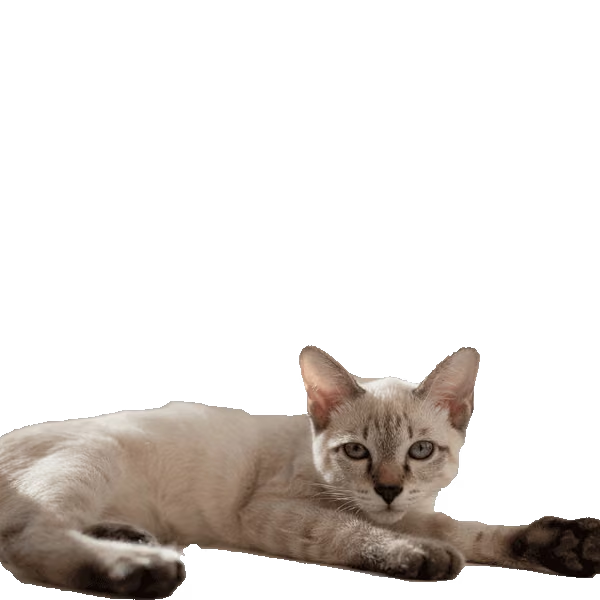
Mekong Bobtail
The Mekong Bobtail is an affectionate, intelligent natural bobtailed cat that bonds closely and sociably with its family.
- Size
- Medium
- Lifespan
- 15–20 years
- Origin
- Russia
- Temperament
- Affectionate
- Standard colors
- Black, White and Blue and 7 more
Characteristics
Coat and grooming
How the Mekong Bobtail coat is built, and what that means when you groom it.
- Coat layers
- Single coat
- Coat texture
- Smooth
- Coat length
- Short
- Shedding
- Low shedding
Mekong Bobtail colors and patterns
What each club's breed standard says about every Mekong Bobtail color and pattern. Point at a ruling to see the club's own wording.
Breed standards describe the Mekong Bobtail in Black, White, Blue, Lilac, Chocolate, Seal, Cinnamon, Red, Cream and Fawn. Standard patterns: Pointed.
%22%3E%3Cpath%20d%3D%22M5.5%2017L7.5%207L12%2015ZM14%2015L17.5%207L20%2018.5Z%22%20fill%3D%22%23847865%22%2F%3E%3Cellipse%20cx%3D%227.6%22%20cy%3D%2223.6%22%20rx%3D%225%22%20ry%3D%225.2%22%20fill%3D%22%23847865%22%2F%3E%3Crect%20x%3D%220%22%20y%3D%2244%22%20width%3D%2264%22%20height%3D%2220%22%20fill%3D%22%23847865%22%2F%3E%3Cpath%20d%3D%22M50%2027L53.5%205L64%203L64%2013L59%2024L53%2033Z%22%20fill%3D%22%23847865%22%2F%3E%3C%2Fg%3E%3Cuse%20href%3D%22%23s%22%20fill%3D%22none%22%20stroke%3D%22%233B2A20%22%20stroke-opacity%3D%220.6%22%20stroke-width%3D%221%22%20stroke-linejoin%3D%22round%22%2F%3E%3Cpath%20d%3D%22M3.4%2022.3L5.4%2022.5L4.3%2024Z%22%20fill%3D%22%23E8A0B4%22%2F%3E%3Ccircle%20cx%3D%229.6%22%20cy%3D%2221.2%22%20r%3D%221.1%22%20fill%3D%22%231C1C1C%22%2F%3E%3C%2Fsvg%3E)
What the rulings mean
- Standard
- Described by the club's breed standard.
Color changes
How a Mekong Bobtail's colors can change over its life.
Blackchanges toRusset
Coat · Progressive
Whitechanges toShaded
Coat · With age
Whitechanges toChinchilla
Coat · With age
Bluechanges toTortoiseshell
Coat · With age
Blackchanges toBrown
Coat · With body condition · can change back
Blackchanges toBrown
Coat · In the sun · can change back
Blackchanges toBrown
Coat · Progressive
Whitechanges toPointed
Coat · With age · from 1 to 52 weeks
Bluechanges toGreen
Eyes · With age · from 4 to 17 weeks
Bluechanges toYellow
Eyes · With age · from 4 to 17 weeks
Bluechanges toGold
Eyes · With age · from 4 to 17 weeks
Bluechanges toCopper
Eyes · With age · from 4 to 17 weeks
Bluechanges toOrange
Eyes · With age · from 4 to 17 weeks
Bluechanges toHazel
Eyes · With age · from 4 to 17 weeks
Bluechanges toAmber
Eyes · With age · from 4 to 17 weeks
%22%3E%3Crect%20x%3D%220%22%20y%3D%220%22%20width%3D%2264%22%20height%3D%2264%22%20fill%3D%22url(%23g)%22%2F%3E%3Cg%20fill%3D%22none%22%20stroke%3D%22%231C1C1C%22%20stroke-width%3D%221%22%20stroke-opacity%3D%220.85%22%20stroke-linecap%3D%22round%22%20stroke-linejoin%3D%22round%22%3E%3Cpath%20d%3D%22M18.9%2025.7l0.2%202.1M42.7%2033.1l1%202.1M12.6%2020.7l0.9%201.7M17.3%2012.7l1%201.7M25.9%2022.4l0.4%201.6M50.2%2029l0.1%201.6M29.2%2028l0.5%202.1M43.2%2022.9l1%202.2M42.4%2029.9l0.2%202.2M8.4%2023.4l1%202.1M7.8%2018.4l0.4%202M35%2027.9l0.5%202.2M35.9%2038.5l0.6%201.6M29.3%2032.6l0.5%201.4M34.8%2022l0.7%202.2M37.6%2020.6l0.7%202.2M18.2%2037.7l0.4%202.1M9.9%2029l0%201.5M9.9%2014l0.1%202M37%2030.4l0.5%202.3M13%2028.5l0.6%202M38.3%2049.6l0.6%201.9M18.4%2047.4l0.7%201.4M40%2026.9l0.2%201.6M57.5%2010.7l0.4%201.4M39.6%2030.3l0.3%202.1M54.9%2018.7l0.7%201.5M48%2028.3l0.4%202M23%2050.3l0.1%202.3M28.2%2036.1l0.5%202.1M57.9%2014.4l0.6%201.4M10.6%2023.3l1%202.1M17.5%2042.7l0.8%201.4M52.1%2026l0.1%201.6M38.6%2032.2l0.1%202.2M30.9%2037.8l0.7%201.7M56.6%2017l0.9%201.9M42.5%2028.7l1%201.8M24.4%2048.9l0%201.7M8.7%2022.3l0.4%201.4M16.6%2039.9l0.5%201.4M7.1%2021.8l0.8%202.2M34.1%2034.2l0.3%201.7M9.9%2025.5l0%201.6M43.1%2035.1l0%202M37.7%2051.3l0.3%201.7M31.7%2031.3l0.3%202.3M23.8%2036.6l0.9%201.8M16.6%2053.5l0.4%202.3M24.4%2041.2l0.6%201.8M39.9%2046.6l0.4%201.8M10.4%2021.8l0.1%202.1M47.2%2051l0.7%202.3M42.9%2027.4l0.1%202M20.5%2022.8l0.4%202.1M49.2%2032.2l0.6%201.3M15.8%2030.1l0.4%202.1M46.2%2053.6l0.6%201.4M15.1%2020.1l0.7%202M23.4%2043.9l0.4%201.6M38.8%2029.4l0.4%202.1M36.8%2034.7l0.4%201.9M48.3%2028.4l0.6%202M26.9%2029.6l0.4%201.6M28.4%2036.5l0.4%201.4M19.2%2034.3l0.5%202.1M7.2%2028.1l0.1%201.6M15.9%2019.7l0.6%201.3M23.4%2022.8l0.9%201.8M16.3%2019.8l0.2%202.1M21.9%2053l0.4%202M48.5%2028.5l0.7%201.8M16.9%2012.9l0.6%202.3M26.8%2033.1l0%201.7M46.2%2044.1l0.2%202.1M30.5%2025.1l0.1%201.7M42.1%2032.2l0.1%201.6M8.7%2021.9l0.6%202.2M29.2%2024.5l0.6%202M22.1%2040.7l1.1%201.9M24.3%2033.3l0.7%201.8M53.9%2026.4l0.1%202.4M21.4%2026.6l0.9%202M39.2%2025.3l0.1%201.9M32.4%2035.3l1%202M48.9%2031.4l0%201.6M24.8%2022.1l0.4%202.2M46.4%2054.6l0.7%201.8M25.1%2031.7l0.5%202.1M24.7%2043.5l0%201.4M23.1%2033.3l0.9%201.6M37.9%2039.5l0.5%201.3M45.7%2041.2l0.9%201.8M50.1%2029.5l0.4%201.8M46.6%2049.6l0.5%202.2M54%2024.3l0.5%202.3M5.9%2025.6l0.1%201.5M15.5%2022.8l0.9%202M26.3%2027.8l0%202.1M30.1%2020.3l0.1%202.3M18.1%2016.7l0.5%201.8M19.1%2024.1l0.9%201.8M12.7%2018.8l0.7%201.4M20.8%2031.1l0.6%201.5M16.9%2025.9l0.1%201.5M11.6%2014.8l0.1%202.3M10.8%2018.5l0.8%201.8M33.5%2038l0.6%201.4M30.6%2028.8l0.3%202.1M39.1%2031.7l0.9%201.9M34.6%2021.3l0.3%202%22%2F%3E%3Cpath%20d%3D%22M17.6%2040.5l0.7%202.1M46.2%2038.1l0.4%201.7M5.1%2020.5l0.2%201.6M21.8%2022.3l0.3%201.4M26.3%2021l0.9%201.6M32.6%2037.5l0.5%201.4M33.5%2031.6l0.6%201.6M39.2%2039l0.9%201.6M11.4%2022.8l0.7%201.8%22%2F%3E%3C%2Fg%3E%3C%2Fg%3E%3Cuse%20href%3D%22%23s%22%20fill%3D%22none%22%20stroke%3D%22%233B2A20%22%20stroke-opacity%3D%220.6%22%20stroke-width%3D%221%22%20stroke-linejoin%3D%22round%22%2F%3E%3Cpath%20d%3D%22M3.4%2022.3L5.4%2022.5L4.3%2024Z%22%20fill%3D%22%23E8A0B4%22%2F%3E%3Ccircle%20cx%3D%229.6%22%20cy%3D%2221.2%22%20r%3D%221.1%22%20fill%3D%22%231C1C1C%22%2F%3E%3C%2Fsvg%3E)
%22%3E%3Cg%20fill%3D%22none%22%20stroke%3D%22%231C1C1C%22%20stroke-width%3D%221.1%22%20stroke-opacity%3D%220.9%22%20stroke-linecap%3D%22round%22%20stroke-linejoin%3D%22round%22%3E%3Cpath%20d%3D%22M37.4%2030.7l0.7%201.3M18.9%2028.6l0.1%201.1M46.5%2033.6l0.3%201.3M35.8%2023.2l0.1%201.4M19.6%2045.1l0%201.2M34.4%2037.4l0%200.9M48.4%2037.9l0.2%201.2M29.8%2023.5l0.4%201.4M9.3%2013.8l0.2%201.1M45.6%2044.2l0.3%200.8M24.4%2028.2l0.1%200.8M41.2%2035l0.1%200.9M41%2030.9l0.1%201.2M40.9%2025.1l0.3%201.4M28.4%2034.5l0.6%201.1M26.7%2024.1l0.1%200.8M47.3%2050.1l0.3%201.4M17.7%2049.5l0.5%201.3M29%2024.1l0.4%201.1M38.6%2038.1l0%201M33.4%2026.9l0.6%201M25.7%2028.1l0.1%200.9M18.3%2038.1l0.6%201.2M47.5%2028.1l0.4%201.1M25.6%2022l0.1%200.9M29.5%2027l0.5%201.1M39.5%2021.4l0.1%201.2M40.9%2048.2l0.2%201.1M17.8%2013.2l0.5%201.2M27.3%2031.6l0%201M21.3%2023.5l0.2%200.9M40.9%2054.1l0.3%200.9M20.9%2028.2l0.7%201.2M26.2%2022.2l0.1%200.8M40.9%2050.9l0.3%201.4M35.2%2030.2l0.2%200.8M50.4%2031.3l0.1%201.3M43.6%2036l0.3%200.9M33.7%2039.1l0.3%200.9M48.6%2049.9l0.3%201.1M44.4%2021.9l0.2%200.9M40.3%2040.9l0.4%201M51.8%2031.5l0.1%201.4M42%2038l0.3%201M41.3%2027.1l0.6%201.1M27.2%2032.2l0.3%201.3M28%2024.6l0%201.2M29%2038.5l0.1%201.1M56%2014.4l0.6%201.3M51%2031.2l0.3%200.8M49%2024.2l0.6%201.1M39.1%2029l0.5%201.2M38.7%2037.6l0.2%201.4M24.3%2046.6l0.4%200.8M23.1%2037.4l0.2%200.8M43%2035.9l0%201M35.4%2027l0.5%201M29.7%2039.1l0.2%201.4M32.8%2037.2l0%201M7.4%2022.7l0.1%201.1M31.3%2020.3l0.6%201.1M21.7%2033.3l0.5%201.1M16.5%2043.9l0.2%201.1M22.7%2024l0%201.4M41.6%2034.2l0.7%201.3M27.1%2036.9l0.2%201.1M49.4%2029.1l0.4%200.9M34.4%2020.6l0.3%201.1M21.6%2037.3l0%201.4M47.1%2029.2l0.7%201.3M50.6%2024.8l0.3%201M49.7%2029.2l0.7%201.2M19.4%2045.4l0.2%201.5M48.6%2026.5l0.6%201.2M23%2022.5l0.4%201M39.9%2051.5l0.2%201.1M6.7%2020.5l0.2%200.9M44.8%2033l0.2%201.4M37.7%2045.6l0.4%201.2M29.9%2037.9l0.2%200.9M24%2020.8l0.4%201M42.7%2021l0.4%201M42%2030.3l0.4%201.1M21.6%2045l0.4%201.1M18.5%2017l0.1%201M9.6%2016.4l0.1%201.3M19.5%2045.9l0.1%201M46.9%2049.9l0.4%201.3M18.6%2020.1l0.1%200.9M38.5%2038.8l0.1%201.4M46.9%2032.3l0.5%201.1M49.4%2031.7l0.3%200.9M48.5%2040.7l0.2%201.4M30.5%2033.5l0.4%201.3M46.3%2041.6l0.3%200.9M23.1%2044.7l0.2%201.1M16.7%2027.5l0%201M37.8%2029.3l0.1%201.2M42.9%2036.9l0.2%201.1M31%2025.3l0.2%201.1M17.5%2052.8l0.6%201.1M11%2021.5l0.4%201M22.5%2029.1l0.5%201.1M27.5%2032.1l0.4%200.9M39.6%2023.3l0.1%201.2M52.1%2027l0.6%201.3M28.8%2029.6l0%201.5M37.9%2025.5l0.5%200.8M33.2%2022.6l0.1%201.2M15.7%2015.4l0.3%200.8M47.7%2053.4l0.1%200.9%22%2F%3E%3Cpath%20d%3D%22M20.7%2023.3l0.6%201.1M6.7%2027.8l0.5%201.3M17%2012.8l0.2%201.2M21.7%2036.2l0%201.3M12.3%2019.9l0.2%200.8M17.2%2025.6l0.4%201.2M42.3%2022.6l0%201.2M24.7%2028.4l0.3%201.4M44.5%2038.7l0%201.4%22%2F%3E%3C%2Fg%3E%3Cpath%20d%3D%22M3.5%2022.6L5.4%2022.6%22%20fill%3D%22none%22%20stroke%3D%22%231C1C1C%22%20stroke-width%3D%221%22%20stroke-linecap%3D%22round%22%20stroke-linejoin%3D%22round%22%2F%3E%3C%2Fg%3E%3Cuse%20href%3D%22%23s%22%20fill%3D%22none%22%20stroke%3D%22%233B2A20%22%20stroke-opacity%3D%220.6%22%20stroke-width%3D%221%22%20stroke-linejoin%3D%22round%22%2F%3E%3Cpath%20d%3D%22M3.4%2022.3L5.4%2022.5L4.3%2024Z%22%20fill%3D%22%23E8A0B4%22%2F%3E%3Ccircle%20cx%3D%229.6%22%20cy%3D%2221.2%22%20r%3D%221.1%22%20fill%3D%22%231C1C1C%22%2F%3E%3C%2Fsvg%3E)
%22%3E%3Cg%20fill%3D%22%23A6402A%22%3E%3Cpath%20d%3D%22M33.4%2041.5C32.7%2042.3%2029.1%2042.6%2027.6%2042.6C26.1%2042.6%2024.8%2042.1%2024.2%2041.4C23.7%2040.8%2024.1%2039.5%2024.4%2038.7C24.7%2037.9%2025.4%2037.1%2026.1%2036.6C26.7%2036.2%2027.1%2036.1%2028.2%2036C29.4%2035.8%2032.3%2035.3%2032.9%2035.7C33.5%2036.1%2031.8%2037.2%2031.9%2038.2C32%2039.1%2034.1%2040.8%2033.4%2041.5ZM43.8%2021C44.8%2021.8%2044.6%2022.4%2045.1%2023.5C45.7%2024.7%2047.5%2026.8%2047.1%2027.9C46.8%2029.1%2044.4%2030.1%2042.9%2030.2C41.5%2030.3%2039.7%2029.4%2038.4%2028.8C37.2%2028.1%2035.9%2027.2%2035.5%2026.3C35%2025.3%2035.4%2024.2%2036%2023C36.5%2021.8%2037.3%2019.3%2038.6%2019C39.9%2018.6%2042.7%2020.3%2043.8%2021ZM32.1%2031.7C30.8%2031.1%2027.1%2030.8%2026.3%2030.2C25.5%2029.5%2026%2028.5%2027.2%2027.9C28.4%2027.2%2031.6%2026.4%2033.4%2026.5C35.1%2026.5%2036.4%2027.9%2037.7%2028.4C38.9%2028.9%2040.6%2029.1%2040.9%2029.6C41.2%2030.2%2040.6%2031.1%2039.5%2031.7C38.5%2032.4%2035.8%2033.6%2034.5%2033.6C33.3%2033.6%2033.5%2032.3%2032.1%2031.7ZM14.2%2025.9C14.7%2025.4%2017.6%2025%2018.9%2025C20.2%2024.9%2021.2%2025.1%2022.2%2025.4C23.2%2025.6%2024.4%2025.9%2024.9%2026.4C25.5%2026.8%2025.8%2027.3%2025.7%2027.8C25.7%2028.3%2025.4%2029.2%2024.5%2029.4C23.6%2029.6%2021.8%2029.2%2020.3%2029C18.8%2028.8%2016.5%2028.7%2015.5%2028.2C14.5%2027.7%2013.6%2026.5%2014.2%2025.9ZM12.7%2024.9C11.2%2024.1%208.1%2024.5%207.7%2023.6C7.4%2022.8%209.8%2020.5%2010.7%2019.8C11.7%2019.1%2012.2%2019.6%2013.3%2019.5C14.3%2019.4%2015.7%2018.9%2017.1%2019.1C18.5%2019.3%2021.2%2019.9%2021.7%2020.8C22.3%2021.6%2021.1%2023%2020.3%2024.3C19.5%2025.6%2018.3%2028.2%2017%2028.3C15.7%2028.4%2014.2%2025.7%2012.7%2024.9ZM4.1%2022.6C5%2021.8%209.9%2021.6%2011.1%2022.2C12.2%2022.8%2010.7%2025.1%2011%2026.1C11.2%2027.2%2012.6%2027.6%2012.8%2028.5C12.9%2029.3%2012.9%2030.8%2011.9%2031.2C10.9%2031.6%208.2%2031.1%206.8%2030.9C5.4%2030.7%203.9%2030.6%203.6%2029.9C3.3%2029.2%205.2%2027.9%205.2%2026.7C5.3%2025.5%203.1%2023.3%204.1%2022.6ZM44.6%2058.9C43.2%2058.4%2041.4%2057.6%2040.5%2056.7C39.7%2055.9%2038.9%2054.4%2039.5%2053.7C40.1%2053%2042.8%2053.2%2043.9%2052.4C45.1%2051.5%2045.7%2048.8%2046.6%2048.6C47.5%2048.4%2048.7%2050.2%2049.1%2051.3C49.6%2052.3%2049.3%2053.4%2049.2%2054.9C49.2%2056.4%2049.8%2059.5%2049%2060.1C48.3%2060.8%2046%2059.5%2044.6%2058.9Z%22%2F%3E%3Cpath%20d%3D%22M13.4%2021.1C13.1%2021.7%2011.8%2022%2010.3%2022.4C8.8%2022.9%205.2%2023.9%204.3%2023.6C3.4%2023.3%205.5%2021.4%204.8%2020.6C4.1%2019.8%200.1%2019.3%200.2%2018.9C0.3%2018.4%203.6%2018.1%205.3%2017.8C7%2017.6%209.3%2017.2%2010.4%2017.3C11.5%2017.4%2011.7%2018%2012.2%2018.6C12.7%2019.2%2013.8%2020.4%2013.4%2021.1ZM19.7%2020.4C18.8%2020.9%2017.5%2019.9%2016.2%2019.7C14.9%2019.4%2012.5%2019.9%2011.8%2019C11.2%2018%2011.6%2015.2%2012.4%2014.3C13.3%2013.3%2015.6%2013.6%2016.8%2013.4C18.1%2013.3%2019.1%2013.2%2019.9%2013.3C20.8%2013.4%2021.5%2013.5%2021.7%2014C22%2014.5%2021.8%2015.4%2021.5%2016.5C21.1%2017.5%2020.6%2019.8%2019.7%2020.4ZM34.3%2048.7C33.9%2048%2035%2046.2%2035%2044.7C35.1%2043.2%2034.2%2040.4%2034.6%2039.4C35.1%2038.5%2036.2%2038.8%2037.5%2038.9C38.9%2039.1%2042.1%2039.5%2042.7%2040.3C43.2%2041.2%2040.9%2042.8%2040.7%2044.1C40.6%2045.4%2042.3%2047.5%2041.8%2048.3C41.3%2049.1%2038.8%2048.7%2037.5%2048.7C36.3%2048.8%2034.8%2049.3%2034.3%2048.7ZM40.6%2033.5C40.2%2032.1%2038.2%2031.9%2038.5%2030.8C38.7%2029.8%2041.1%2027.9%2042.2%2027.2C43.3%2026.6%2044.6%2026.3%2045.3%2027.1C45.9%2027.8%2046%2030.2%2046.4%2031.6C46.7%2032.9%2047.4%2034.1%2047.2%2035.2C47%2036.4%2046.4%2037.8%2045.2%2038.5C44.1%2039.2%2041.1%2040.3%2040.3%2039.4C39.5%2038.6%2040.9%2035%2040.6%2033.5ZM27.8%2024.7C27%2023.4%2027.6%2020.6%2028%2019.3C28.3%2018%2028.9%2017.8%2030%2017C31%2016.1%2033.4%2014%2034.2%2014.1C35%2014.3%2034.3%2016.9%2034.9%2018.1C35.5%2019.3%2037.9%2020.5%2037.8%2021.2C37.7%2022%2035.1%2021.9%2034.2%2022.8C33.3%2023.8%2033.7%2026.8%2032.7%2027.1C31.6%2027.4%2028.5%2026%2027.8%2024.7ZM24.5%2050.5C23.4%2050.6%2022.7%2048.1%2022.1%2047.5C21.6%2046.9%2021.5%2047.5%2020.9%2046.8C20.3%2046%2018.2%2043.9%2018.4%2043.2C18.6%2042.6%2020.6%2043.2%2022.1%2042.9C23.6%2042.6%2026.4%2041.1%2027.3%2041.4C28.2%2041.7%2027.3%2043.8%2027.5%2044.7C27.7%2045.6%2029%2045.8%2028.5%2046.8C28%2047.7%2025.5%2050.4%2024.5%2050.5ZM49.9%2046.9C48.9%2047.3%2046.2%2047%2045.3%2046.6C44.3%2046.3%2044.2%2045.5%2044%2044.6C43.8%2043.7%2043.8%2041.9%2044.2%2041.2C44.6%2040.6%2045.6%2040.7%2046.2%2040.5C46.9%2040.3%2047.4%2039.8%2048.2%2040.1C49%2040.3%2050.4%2041.2%2050.8%2041.9C51.3%2042.6%2051.2%2043.3%2051.1%2044.1C50.9%2045%2050.8%2046.5%2049.9%2046.9Z%22%2F%3E%3Cpath%20d%3D%22M23.4%2058.2C22.3%2058.9%2020.7%2061.5%2020.2%2061.2C19.7%2060.9%2020.6%2058%2020.2%2056.3C19.8%2054.6%2017.8%2052.5%2017.9%2051.1C17.9%2049.6%2019.7%2047.9%2020.7%2047.7C21.6%2047.5%2022.8%2049%2023.6%2049.8C24.3%2050.6%2024.6%2051.1%2025.1%2052.3C25.6%2053.6%2027%2056.2%2026.7%2057.2C26.4%2058.2%2024.4%2057.6%2023.4%2058.2ZM50.2%2017.9C51%2018.5%2052.1%2021.9%2052.1%2023.2C52%2024.5%2050.5%2025.2%2050%2025.8C49.5%2026.4%2049.7%2026.4%2049%2026.8C48.4%2027.1%2046.8%2028.5%2046.3%2028.1C45.8%2027.7%2046.3%2025.6%2046.2%2024.5C46%2023.5%2045.4%2022.5%2045.5%2021.7C45.7%2020.9%2046.3%2020.3%2047%2019.7C47.8%2019.1%2049.4%2017.3%2050.2%2017.9Z%22%2F%3E%3C%2Fg%3E%3Cpath%20d%3D%22M18.9%2037.1h.1M44.8%2032.6h.1M39.4%2020.9h.1M26.4%2038.1h.1M31.6%2025.6h.1M32.5%2038.6h.1M48.1%2025h.1M56.5%2014.7h.1M16.4%2022.9h.1M45.4%2042.6h.1M12.2%2025.5h.1M15.6%2014.7h.1M44.2%2026.5h.1M47.1%2050.9h.1M7.7%2021.4h.1M25.8%2025.2h.1M38%2041.5h.1M21.9%2028.5h.1M17%2043.1h.1M26.4%2033.5h.1M7.6%2012h.1M56.3%2022.8h.1%22%20fill%3D%22none%22%20stroke%3D%22%231C1C1C%22%20stroke-width%3D%222%22%20stroke-linecap%3D%22round%22%20stroke-linejoin%3D%22round%22%2F%3E%3Cpath%20d%3D%22M48.6%2029.8h.1M8.5%2028.3h.1M21.9%2030h.1M48.5%2042.7h.1M18.7%2047.5h.1M45.4%2052.3h.1M27.7%2036h.1M34%2029.5h.1M44.5%2039.6h.1M57.5%2017.2h.1M31.4%2026.1h.1M17.5%2025.8h.1M22.4%2051.3h.1M14.5%2019h.1M55.2%2012.8h.1M22.2%2039.1h.1M18.9%2021h.1M36.4%2037.7h.1M58.8%208.8h.1M7.2%2016.6h.1M26.4%2030h.1M38.5%2047.6h.1%22%20fill%3D%22none%22%20stroke%3D%22%23A6402A%22%20stroke-width%3D%222%22%20stroke-linecap%3D%22round%22%20stroke-linejoin%3D%22round%22%2F%3E%3C%2Fg%3E%3Cuse%20href%3D%22%23s%22%20fill%3D%22none%22%20stroke%3D%22%233B2A20%22%20stroke-opacity%3D%220.6%22%20stroke-width%3D%221%22%20stroke-linejoin%3D%22round%22%2F%3E%3Cpath%20d%3D%22M3.4%2022.3L5.4%2022.5L4.3%2024Z%22%20fill%3D%22%23E8A0B4%22%2F%3E%3Ccircle%20cx%3D%229.6%22%20cy%3D%2221.2%22%20r%3D%221.1%22%20fill%3D%22%231C1C1C%22%2F%3E%3C%2Fsvg%3E)
Sources
Each ruling comes from the club's published breed standard or color list.
About the Mekong Bobtail cat
The Mekong Bobtail is a medium-sized, short-tailed cat from Russia, known for being affectionate, intelligent and strongly attached to its household.
The Mekong Bobtail is a medium-sized domestic cat with a naturally short, kinked tail and a colourpoint coat. It originates in Russia, where the breed was formally developed from short-tailed cats that had long been present across mainland Southeast Asia and neighbouring regions. It is sometimes mistaken for the heavier Japanese Bobtail, yet the two are separate breeds with different builds and tail structures.
By temperament the Mekong Bobtail is affectionate, playful, curious, intelligent and sociable. Cats of this breed will follow their owners from room to room, take an interest in household activity, and stay engaged with people well into adulthood. Many owners describe an almost dog-like attachment, including a readiness to learn simple games and respond to a spoken name.
The coat is short and close-lying with very little undercoat, which keeps grooming demands modest. The body is balanced and moderate rather than extreme in any single feature, and the bobbed tail is the defining trait of the breed.
| Attribute | Detail |
|---|---|
| Origin | Russia |
| Size | Medium |
| Lifespan | 15 to 20 years |
| Group / role | Companion cat (natural bobtail, colourpoint) |
| Good with | Families, children and other pets when socialised |
Who this breed suits
The Mekong Bobtail suits households that want an interactive, people-focused cat and can give it daily attention. It does well with families, including homes with children and other animals, thanks to its sociable nature. People who travel constantly or are away for long stretches may find that this cat needs more company than they can provide.
History and origin of the Mekong Bobtail
Short-tailed cats from mainland Southeast Asia were brought to Russia, where breeders developed and standardised them into the modern Mekong Bobtail.
Naturally short-tailed cats have existed for centuries across mainland Southeast Asia, in the regions drained by the Mekong River that lends the breed its name. These cats lived around temples and homes and were valued as companions long before any formal breeding programme was set up.
Colourpoint cats of this type reached Russia through trade and diplomatic contact between Russia and Southeast Asian countries. For many years they were kept and bred informally alongside other imported colourpoint cats, without separate recognition as a distinct breed.
Russian breeders later worked to separate these short-tailed colourpoint cats into their own programme, selecting for the natural bobtail and a consistent type. The breed was named Mekong Bobtail to set it apart from the Thai and Siamese cats it had previously been grouped with.
The breed gained formal recognition through the World Cat Federation, which set a written standard for type, coat and tail. Recognition established the Mekong Bobtail as a separate breed rather than a regional variant, and breeding today aims to preserve the moderate build and short kinked tail described in that standard.
Mekong Bobtail appearance and breed standard
The Mekong Bobtail is a medium, moderately built colourpoint cat with a short kinked tail, a short close coat and oval blue eyes.
The Mekong Bobtail has a balanced, medium-sized body that is neither cobby nor extremely slim. The legs are slender with small oval paws, and the back rises slightly towards the rear. The head is a rounded wedge with a firm chin and medium-large ears set fairly high. The defining feature is the short tail, made up of several kinked or curved vertebrae and always shorter than that of an ordinary cat.
| Feature | Standard |
|---|---|
| Height | Roughly 23 to 28 cm at the shoulder |
| Weight | 3 to 5 kg |
| Coat | Short, close-lying, fine, with little undercoat |
| Colours | Colourpoint in seal, blue, chocolate, lilac, red and tortie point variations |
| Eyes | Oval, bright blue |
Coat and colours
The coat is short, smooth and lies flat against the body with minimal undercoat. Colour is restricted to the points: the face mask, ears, legs and tail are darker than the paler body, in the colourpoint pattern shared with Siamese-type cats. Accepted point colours include seal, blue, chocolate and lilac, along with red and tortie variations. Body colour deepens with age and is usually lighter in cats kept in warm conditions, which suits Singapore's climate.
Mekong Bobtail temperament and personality
The Mekong Bobtail is affectionate, sociable and intelligent, bonding closely with its family and getting on well with children and other pets.
The Mekong Bobtail is an affectionate, people-oriented cat that forms strong bonds with its household. Cats of this breed stay near their owners, join in daily activity, and seek out laps and attention. The curiosity and intelligence of the breed mean it investigates new objects, opens cupboards and picks up household routines quickly.
With family members the breed is gentle and engaged, and it usually tolerates handling well, which makes it suitable for homes with children. With strangers most Mekong Bobtails are confident rather than shy, warming up after a short settling-in period. The sociable nature extends to other animals: when introduced properly, these cats generally live well with other cats and with dogs.
The breed stays playful into adulthood and benefits from interactive toys and games. It is moderately talkative, communicating with soft sounds rather than constant loud calls. Left alone for long stretches without company or stimulation, a Mekong Bobtail can grow bored, so steady interaction suits it best.
| Trait | Rating |
|---|---|
| Affection | 5 |
| Energy | 4 |
| Trainability | 4 |
| Vocalness | 3 |
| Shedding | 2 |
Mekong Bobtail care and grooming
The Mekong Bobtail is low-maintenance to groom but needs regular play and interaction, and it adapts well to indoor life with enough enrichment.
Grooming
- Brush the short coat once a week to lift loose hair and spread skin oils.
- Check and gently clean the ears every one to two weeks.
- Trim the claws every two to three weeks.
- Brush the teeth several times a week to reduce dental disease.
- Bathing is rarely needed, as the close coat stays clean on its own.
Exercise
- Provide two or more daily play sessions with wand toys, balls or puzzle feeders.
- Offer a scratching post and a tall perch or cat tree for climbing.
- Rotate toys to keep the curious, intelligent mind engaged.
- Consider teaching simple games of fetch, which many cats of this breed enjoy.
Environment
The Mekong Bobtail adapts well to HDB flats, condominiums and landed homes alike, provided it has company and things to do. Because the breed is so people-focused, it does best where someone is home for part of the day or where a second pet provides company. Secured windows and a safe indoor space suit this curious cat, which will explore wherever it can reach. Given Singapore's warm, humid weather, keep the cat in a well-ventilated or air-conditioned area and make sure fresh water is always within reach.
Mekong Bobtail nutrition and feeding
Feed the Mekong Bobtail a complete, protein-rich cat food in measured daily portions, adjusting the amount by age, weight and activity level.
The Mekong Bobtail needs a complete and balanced cat food with animal protein as the main ingredient. As an obligate carnivore, the cat depends on nutrients such as taurine that come from meat. Both wet and dry foods are suitable, and many owners feed a mix to support hydration while keeping the diet convenient. Fresh water should always be available, and portions should be measured rather than left out all day, to prevent weight gain in this moderately active breed.
| Life stage | Amount per day | Meals |
|---|---|---|
| Kitten (2 to 6 months) | Follow label by weight; free access to small portions | 3 to 4 |
| Junior (6 to 12 months) | About 55 to 75 g wet plus measured dry | 3 |
| Adult (1 to 7 years) | About 50 to 70 g wet plus measured dry | 2 |
| Senior (7 years and over) | Adjusted to weight and activity | 2 |
Treats and supplements
Keep treats to no more than about ten percent of daily calories and reduce meal portions accordingly. A cat fed a complete commercial diet usually needs no extra supplements; add vitamins or joint products only on the advice of a veterinarian. Puzzle feeders are a good way to give treats while providing mental work.
Mekong Bobtail health and common conditions
The Mekong Bobtail is generally hardy with a long 15 to 20 year lifespan, though it shares the dental and inherited risks common to colourpoint cats.
The Mekong Bobtail is considered a robust, naturally developed breed with few breed-specific defects. With good care it commonly lives 15 to 20 years. The natural bobtail is a stable trait and is not linked to the spinal problems seen in some other tailless breeds. As with all cats, routine veterinary care and a healthy weight are the strongest predictors of a long life.
| Condition | Signs | Note |
|---|---|---|
| Dental disease | Bad breath, drooling, reduced appetite | Common in all cats; regular brushing and checks help |
| Obesity | Weight gain, low activity | Manage with measured portions and daily play |
| Progressive retinal atrophy | Loss of night vision, dilated pupils | Seen in some colourpoint lines; ask the breeder about testing |
| Upper respiratory infection | Sneezing, nasal discharge, watery eyes | Vaccination and clean housing lower the risk |
Preventive care
- Schedule annual veterinary exams, with twice-yearly checks for senior cats.
- Keep core vaccinations and parasite prevention up to date.
- Maintain dental hygiene through brushing and professional cleaning as advised.
- Monitor weight and body condition every few weeks.
- Buy from breeders who screen breeding cats for inherited eye and heart conditions.
Mekong Bobtail training and enrichment
The intelligent, food-motivated Mekong Bobtail learns names, cues and games quickly when trained with patience and positive reinforcement.
The Mekong Bobtail is one of the more trainable cat breeds, thanks to its intelligence and strong bond with people. Cats of this breed can learn their name, come when called, and pick up simple tricks such as sitting or fetching. Short, frequent sessions work better than long ones, and food rewards or a favourite toy keep the cat motivated. Because the breed is so attentive to its owners, it responds well to a calm, consistent approach.
Basics
- Start with litter training, which most kittens learn quickly when the box is clean and easy to reach.
- Teach the cat to respond to its name by pairing the name with a treat.
- Introduce a scratching post early and reward its use to protect furniture.
- Build up to simple cues such as sit or come, one at a time.
- Add games like fetch once the basics are reliable.
Breeding and raising Mekong Bobtail kittens
Mekong Bobtails mature at around one year, carry litters of three to five kittens after a roughly nine-week pregnancy, and pass on the bobtail naturally.
Mekong Bobtails reach sexual maturity at around eight to twelve months, though responsible breeders usually wait until the female is fully grown before her first litter. The bobtail is a naturally inherited trait, so two short-tailed parents reliably produce short-tailed kittens without the health risks tied to some other tail mutations.
Gestation lasts about 63 to 67 days, and litters typically contain three to five kittens. Queens of this breed are usually attentive mothers. Kittens are born with pale coats that develop their point colour over the following weeks. They open their eyes at about one to two weeks and begin weaning at around four to five weeks.
Kittens should stay with the mother and littermates until at least twelve weeks of age so that they are properly socialised, weaned and have received early vaccinations. Early handling by people supports the sociable, confident temperament the breed is known for. Breeders should health-screen parent cats and register litters with a recognised cat organisation.
| Metric | Value |
|---|---|
| Sexual maturity | 8 to 12 months |
| Gestation period | 63 to 67 days |
| Average litter size | 3 to 5 kittens |
| Weaning age | 4 to 5 weeks |
| Recommended rehoming age | 12 weeks or older |
Registering your Mekong Bobtail under the new cat rules
With cat licensing phased in from 2024, a free United Pet Club record keeps your Mekong Bobtail's chip pointing at your current mobile.
Mekong Bobtail registration and microchipping in Singapore
Start the paperwork where it costs nothing: your Mekong Bobtail's name, her colouring, a photo, your contact details, saved. The profile lasts her lifetime, takes any chip number the clinic issues, and never sends a bill. Cat registration is the five-minute version of responsible ownership.
The chip under your Mekong Bobtail's skin is a number; the registry is what makes it a phone call. United Pet Club keeps that registry entry free for life, accepts every brand, and never charges when your details change. Microchip registration first, then the free account wraps up the profile.
How do I register my Mekong Bobtail in Singapore?
Create a free United Pet Club account, add her name, colouring, and a photo, and save the profile. The lifetime plan holds it at no cost for her whole life, flat cat or wanderer.
How do I register my Mekong Bobtail's microchip?
Enter the 15-digit number from the clinic's paperwork into your free account with your current contact details. The lifetime plan never charges for the record or for updates, whatever the chip brand.
Do cats need to be licensed and chipped in Singapore?
Yes, AVS is phasing in licensing and microchipping for pet cats from 2024. The licence answers the rules; the United Pet Club record answers the scanner, and it stays free for your Mekong Bobtail's whole life.
What does it cost to register a Mekong Bobtail?
Not a cent. Profile, microchip registration, and all future updates are covered by the free lifetime plan, with nothing to renew.
Mekong Bobtail frequently asked questions
Common questions about the Mekong Bobtail's size, temperament, care needs, lifespan, suitability and availability in Singapore.
How big does a Mekong Bobtail get?
It is a medium-sized cat, usually weighing 3 to 5 kg and standing roughly 23 to 28 cm at the shoulder, with a slim but balanced build and a short kinked tail.
What is the Mekong Bobtail's temperament like?
Cats of this breed are affectionate, playful, curious, intelligent and sociable. They bond closely with their families, follow their owners around, and often behave in a dog-like way.
Is the Mekong Bobtail easy to care for?
Grooming is easy because of the short, close coat that needs only weekly brushing. The main commitment is daily play and attention, as this is a people-focused breed that dislikes long periods on its own.
How long does a Mekong Bobtail live?
With good care, a healthy diet and routine veterinary visits, the breed commonly lives 15 to 20 years.
Is the Mekong Bobtail good with children and other pets?
Yes. Its gentle, sociable nature makes it well suited to families with children, and with proper introductions it usually lives well alongside other cats and dogs.
Are Mekong Bobtails rare in Singapore?
The breed is uncommon outside Russia and Eastern Europe, so availability in Singapore is limited. Prospective owners may need to contact a specialist breeder registered with a recognised cat organisation, and any imported cat must meet AVS import requirements.
Does the short tail cause health problems?
No. The bobtail is a stable natural trait and is not linked to the spinal issues seen in some other tailless breeds. The Mekong Bobtail is generally a hardy, long-lived cat.