
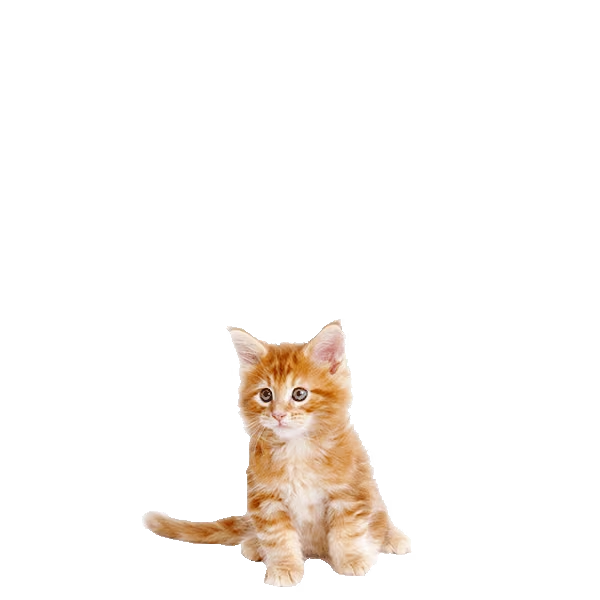
Maine Coon
The Maine Coon is a gentle giant known for its friendly, dog-like nature and impressive size, making it one of the most beloved family cats.
- Size
- Large
- Lifespan
- 12–15 years
- Origin
- United States
- Temperament
- Gentle
- Standard colors
- Black, White and Blue and 7 more
Characteristics
Coat and grooming
How the Maine Coon coat is built, and what that means when you groom it.
- Coat layers
- Double coat
- Coat texture
- Silky
- Coat length
- Long
- Shedding
- Seasonal shedding
Grooming guidance
Critical: A Maine Coon should not be shaved.
The undercoat keeps heat out as well as in, and the outer coat shields the skin from sun and insect bites. Clipping the whole coat off removes both. It often grows back patchy, soft or a different colour, and in some animals the guard hairs never return properly. Brush the undercoat out instead of cutting it off.
Caution: A Maine Coon coat mats easily.
Fine or long hair tangles at the base of the coat, out of sight, where the mats tighten and pull on the skin. Brushing has to reach right down to the roots in sections, not just skim the surface.
Information: A Maine Coon drops its undercoat in heavy bursts.
The undercoat comes out in heavy bursts over a few weeks. An undercoat rake, or a bath followed by a proper blow-dry, clears it far faster than daily brushing. Clipping the coat down is not a shortcut for this.
Maine Coon colors and patterns
What each club's breed standard says about every Maine Coon color and pattern. Point at a ruling to see the club's own wording.
Breed standards describe the Maine Coon in Black, White, Blue, Silver, Brown, Cinnamon, Red, Gold, Cream and Fawn. Standard patterns: Solid, Bicolour, Harlequin, Tabby, Mackerel tabby, Classic tabby, Spotted tabby, Ticked tabby, Tortoiseshell, Calico, Torbie, Van, Smoke, Shaded, Chinchilla and Caliby.
| Color or pattern | TICA | CFA | FIFE | GCCF | WCF |
|---|---|---|---|---|---|
| Black | Standard (“dominant black based”) | Standard (“Black”) | Standard (“black”) | Standard (“Black”) | Standard |
| White | Standard (“white”) | Standard (“White”) | Standard (“white”) | Standard (“White”) | Standard (“pure white”) |
| Blue | Standard | Standard (“Blue”) | Standard (“blue”) | Standard (“Blue”) | Standard |
| Silver | Standard (“Silver series”) | Standard (“Silver Tabby”) | Standard (“silver”) | Standard (“Silver”) | No ruling |
| Brown | Standard | Standard (“Brown Tabby”) | Standard (“black tabby”) | Standard (“Brown”) | No ruling |
| Cinnamon | Disqualifying (“cinnamon”) | Standard | Not recognised (“cinnamon”) | No ruling | Not recognised (“cinnamon”) |
| Red | Standard (“sex-linked red allele”) | Standard (“Red”) | Standard (“red”) | Standard (“Red”) | Standard |
| Gold | No ruling | No ruling | Standard (“golden”) | No ruling | No ruling |
| Cream | Standard | Standard (“Cream”) | Standard (“cream”) | Standard (“Cream”) | Standard |
| Fawn | Disqualifying (“fawn”) | Standard | Not recognised (“fawn”) | No ruling | Not recognised (“fawn”) |
| Lilac | Disqualifying (“lilac”) | Disqualifying (“lavender”) | Not recognised (“lilac”) | Not recognised (“Lilac”) | Not recognised (“lilac”) |
| Chocolate | Disqualifying (“chocolate”) | Disqualifying (“chocolate”) | Not recognised (“chocolate”) | Not recognised (“Chocolate”) | Not recognised (“chocolate”) |
| Caramel | Disqualifying (“caramel”) | No ruling | No ruling | No ruling | No ruling |
| Patterns | |||||
| Solid | Standard (“solid- colored”) | Standard (“Solid”) | Standard (“solid”) | Standard (“Solid colours”) | No ruling |
| Bicolour | Standard (“with white”) | Standard (“Bi-Color”) | Standard (“bicolour”) | Standard (“Bi-colour and Parti-colour”) | Standard (“bicolour”) |
| Harlequin | No ruling | No ruling | Standard (“harlequin”) | No ruling | Standard (“harlequin”) |
| Tabby | No ruling | No ruling | Standard (“tabby”) | No ruling | No ruling |
| Mackerel tabby | Standard (“mackerel”) | Standard (“Mackerel Tabby”) | Standard (“mackerel”) | Standard (“Mackerel Pattern”) | No ruling |
| Classic tabby | Standard (“classic”) | Standard (“Classic Tabby”) | Standard (“blotched”) | Standard (“Classic Pattern”) | No ruling |
| Spotted tabby | Standard (“spotted”) | No ruling | Standard (“spotted”) | Disqualifying (“spotted”) | No ruling |
| Ticked tabby | Standard (“ticked”) | Standard (“Ticked Tabby”) | Standard (“ticked”) | Disqualifying (“ticked”) | No ruling |
| Tortoiseshell | No ruling | Standard (“Tortoiseshell”) | Standard (“tortie”) | Standard (“Tortoiseshell”) | No ruling |
| Calico | No ruling | Standard (“Calico”) | Standard (“tortie with white”) | Standard (“Tortoiseshell and white”) | No ruling |
| Torbie | No ruling | Standard (“Patched Tabby”) | Standard (“tortie tabby”) | Standard (“Tortie Classic/Mackerel Tabby”) | No ruling |
| Van | No ruling | Standard (“Vans”) | Standard (“van”) | Disqualifying (“van”) | Standard (“van”) |
| Smoke | Standard (“smoke”) | Standard (“Smoke”) | Standard (“smoke”) | Standard (“Smoke”) | No ruling |
| Shaded | Standard (“shaded”) | Standard (“Shaded”) | Standard (“shaded”) | Standard (“Shaded”) | No ruling |
| Chinchilla | Standard (“chinchilla”) | Standard (“Chinchilla”) | Standard (“shell”) | No ruling | No ruling |
| Caliby | No ruling | Standard (“Calico”) | Standard (“tortie with white”) | Standard (“Tortoiseshell and white”) | No ruling |
| Pointed | Disqualifying (“Pointed”) | Disqualifying (“Himalayan pattern”) | Not recognised (“pointed patterns”) | Disqualifying (“pointed / Siamese Points”) | Not recognised (“pointed pattern”) |
| Mink | Disqualifying (“Mink”) | No ruling | No ruling | No ruling | No ruling |
| Sepia | Disqualifying (“Sepia”) | No ruling | No ruling | No ruling | No ruling |


| Color or pattern | TICA | CFA | FIFE | GCCF | WCF |
|---|---|---|---|---|---|
| Blue | Standard (“Blue”) | Standard (“blue”) | Standard (“blue”) | Standard (“Blue Eye”) | Standard (“Blue”) |
| Orange | No ruling | No ruling | Standard (“copper or deep orange”) | Standard (“Orange Eye”) | No ruling |
| Copper | No ruling | Standard (“copper”) | Standard (“copper or deep orange”) | Standard (“copper”) | No ruling |
| Gold | Standard (“gold”) | Standard (“gold”) | No ruling | Standard (“gold”) | No ruling |
| Green | Standard (“green”) | Standard (“green”) | Standard (“green”) | Standard (“green”) | No ruling |
| Patterns | |||||
| Odd-eyed | Standard (“odd”) | Standard (“odd”) | Standard (“odd eyed”) | Standard (“Odd Eye”) | Standard (“odd”) |

What the rulings mean
- Standard
- Described by the club's breed standard.
- Disqualifying
- The club's breed standard disqualifies an animal of this colour or pattern.
- Not recognised
- The club does not accept this colour or pattern for the breed.
Color changes
How a Maine Coon's colors can change over its life.
Brownchanges toCopal
Coat · With age · from 0 to 52 weeks
Blackchanges toRusset
Coat · Progressive
Tabbychanges toSolid
Coat · With age · from 0 to 39 weeks
Whitechanges toShaded
Coat · With age
Whitechanges toChinchilla
Coat · With age
Tabbychanges toShaded
Coat · With age · from 0 to 6 weeks
Tabbychanges toChinchilla
Coat · With age · from 0 to 6 weeks
Bluechanges toTortoiseshell
Coat · With age
Blackchanges toBrown
Coat · With body condition · can change back
Blackchanges toBrown
Coat · In the sun · can change back
Blackchanges toBrown
Coat · Progressive
Whitechanges toPointed
Coat · With age · from 1 to 52 weeks
Solidchanges toSmoke
Coat · With age · from 3 to 104 weeks
Bluechanges toGreen
Eyes · With age · from 4 to 17 weeks
Bluechanges toYellow
Eyes · With age · from 4 to 17 weeks
Bluechanges toGold
Eyes · With age · from 4 to 17 weeks
Bluechanges toCopper
Eyes · With age · from 4 to 17 weeks
Bluechanges toOrange
Eyes · With age · from 4 to 17 weeks
Bluechanges toHazel
Eyes · With age · from 4 to 17 weeks
Bluechanges toAmber
Eyes · With age · from 4 to 17 weeks
Pinkchanges toSeal
Nose · With age · from 1 to 52 weeks
Pinkchanges toBlue
Nose · With age · from 1 to 52 weeks
Pinkchanges toChocolate
Nose · With age · from 1 to 52 weeks
Pinkchanges toLilac
Nose · With age · from 1 to 52 weeks
Pinkchanges toSeal
Paw pads · With age · from 1 to 52 weeks
Pinkchanges toBlue
Paw pads · With age · from 1 to 52 weeks
Pinkchanges toChocolate
Paw pads · With age · from 1 to 52 weeks
Pinkchanges toLilac
Paw pads · With age · from 1 to 52 weeks
Sources
Each ruling comes from the club's published breed standard or color list.
Health
Conditions recorded as more common in the Maine Coon than in its species as a whole. A higher risk is not a diagnosis: many never develop any of them, and your vet can say which screening tests are worth doing.
High risk
- Cardiovascular system
Hypertrophic cardiomyopathy
Strong evidenceHereditaryInheritance: Autosomal dominantGene: MYBPC3OMIA entry
Moderate risk
- Nervous system
Spinal muscular atrophy
Strong evidenceHereditaryInheritance: Autosomal recessive
This content is for educational purposes and is not a substitute for professional veterinary advice. If you are worried about your pet, contact your veterinarian.
All health conditionsWhat is a Maine Coon cat?
The Maine Coon is among the largest domestic cat breeds, native to the northeastern United States. It has a long shaggy coat, a bushy tail and a calm, sociable nature suited to family homes.
The Maine Coon is a large, long-haired cat breed that took shape in the state of Maine in the United States. It counts among the oldest natural breeds in North America and is widely known as the official cat of Maine.
Adults stand out for their sheer size. Males commonly weigh 5.9 to 8.2 kg (13 to 18 lb) and females 3.6 to 5.4 kg (8 to 12 lb). The body is long and muscular, the tail is long and thickly furred, and the ears frequently carry tufts of hair at the tips.
For all that bulk, the breed has a name for being friendly and even-tempered. Many owners call the temperament dog-like, since these cats tend to trail their people from room to room and stay sociable well into adulthood.
| Attribute | Detail |
|---|---|
| Origin | Maine, United States |
| Size | Large to very large |
| Lifespan | 12 to 15 years |
| Group/role | Companion cat (long-haired) |
| Good with | Families, children, other cats, dogs |
Who the breed suits
The Maine Coon suits households that want an affectionate, interactive cat and can manage a bigger animal. The long coat calls for steady grooming, so the breed sits better with owners willing to brush it a few times a week. Its sociable streak means it does best in homes where it has company rather than long spells on its own. In the close quarters of an HDB flat this is worth thinking through, as the cat needs room to move and people around it.
Origin and history of the Maine Coon
The Maine Coon grew up as a working farm and ship cat in the northeastern United States during the 1800s. It became one of the first recognised American show cats before declining and later recovering in the mid-20th century.
The precise origin of the Maine Coon is not recorded, but the breed is generally held to have developed in and around the state of Maine during the 1800s. Long-haired cats carried to North America by European sailors are thought to have bred with local short-haired cats, giving rise to a hardy animal built for cold winters.
Several folk tales cling to the breed, among them the notion that it descends from a cross between a cat and a raccoon. That idea is biologically impossible and is set aside, though it may account for the "coon" in the name and the brown tabby coat with a ringed tail seen in many early cats.
Maine Coons earned their keep as mousers on farms and ships and were shown at agricultural fairs across New England. A brown tabby named Cosey took a prize at a major cat show held in New York in 1895, an early marker of the breed's standing in the United States.
The breed's popularity slipped in the early 1900s as imported long-haired cats such as the Persian gained favour. Interest picked up again from the 1950s onward, and breed clubs formed to settle a standard. The Maine Coon now ranks among the most popular pedigree cats in North America and Europe.
What does a Maine Coon look like?
The Maine Coon is a large, rectangular cat with a long shaggy coat, a bushy tail, tufted ears and large oval eyes. Coats come in many colours and patterns, with brown tabby among the most common.
The Maine Coon has a long, solid, rectangular body set on medium-length legs with large, round, well-tufted paws. The head is a touch longer than it is wide, with high cheekbones and large ears that often carry lynx-like tufts at the tips. The tail is long and worn with full, flowing fur. The build looks substantial without turning heavy or cobby.
| Trait | Detail |
|---|---|
| Height | 25 to 41 cm (10 to 16 in) at the shoulder |
| Weight | Males 5.9 to 8.2 kg (13 to 18 lb); females 3.6 to 5.4 kg (8 to 12 lb) |
| Coat | Long, shaggy, water-resistant; shorter on the shoulders, longer on the stomach and back legs |
| Colours | Many, including brown tabby, black, white, blue, red, cream, tortoiseshell and silver |
| Eyes | Large, oval, slightly oblique; green, gold or copper (blue or odd-eyed in white cats) |
Coat and colours
The double coat is uneven in length, with a ruff around the neck and a dense undercoat that helps in cold climates. Most colours and patterns are accepted by the major registries, with the classic and mackerel brown tabby patterns being the most familiar. Chocolate, lilac and the pointed (Siamese-style) pattern fall outside the traditional breed standard. The coat reaches full length and density as the cat matures, which can take three to four years. In Singapore's warm, humid climate the dense undercoat can feel heavier for the cat, so air-conditioned or well-ventilated space helps it stay comfortable.
Maine Coon temperament and personality
Maine Coons are friendly, gentle, people-oriented cats that get on with children, other cats and dogs. They are sociable without being demanding, and they talk in soft chirps and trills rather than loud meows.
The Maine Coon has a calm and friendly temperament. It tends to keep close to its owners and join in whatever is happening at home, which is why the breed so often gets called dog-like. Many are happy to be near people without needing constant lap time, and they usually settle well into busy homes.
With family the breed is affectionate and patient, and it generally puts up with handling by children better than many cats. With strangers it tends to be confident rather than shy, though individuals differ. Maine Coons usually live well alongside other cats and dogs that accept cats, especially when introductions are gradual.
The breed is known for its voice. In place of loud meowing, Maine Coons often chirp and trill. Many take an interest in water and may play with taps or drinking bowls. They hold on to a playful, kitten-like manner well into adulthood and respond well to interactive toys and games.
| Trait | Rating |
|---|---|
| Affection | 5 |
| Energy | 3 |
| Trainability | 4 |
| Vocalness | 3 |
| Shedding | 4 |
How to care for a Maine Coon
Maine Coons need regular brushing to keep the long coat free of mats, daily play to stay active, and indoor space that suits their size. Grooming and exercise are the main ongoing tasks.
Grooming
- Brush the coat two to three times a week, and more often during heavy shedding, to head off mats and tangles.
- Watch the longer fur on the stomach, behind the legs and around the ruff, where mats form most easily.
- Trim claws every few weeks and check the ears for dirt or wax.
- Brush the teeth regularly with cat-safe toothpaste to cut down on dental disease.
- The odd bath can help during heavy moulting, since the water-resistant coat may need extra working of the shampoo.
Exercise
- Give daily interactive play with wand toys, balls or puzzle feeders to burn off the cat's energy.
- Provide sturdy climbing trees and shelves; a large cat needs furniture that holds its weight.
- Rotate toys to keep the cat keen, as the breed stays playful into adulthood.
Environment
A Maine Coon needs more space than the average cat, which is worth planning for in a flat. A large litter tray, a strong scratching post and a tall cat tree all suit the breed's size. Many are kept indoors for safety, and they generally adjust well as long as they have room to move and company through the day.
Maine Coon diet and nutrition
Maine Coons need a balanced, meat-based diet with enough protein to support their large frame. Feeding amounts depend on age, weight and activity, and portions should be controlled to prevent obesity.
Cats are obligate carnivores, so a Maine Coon's diet should be built around animal protein. A complete commercial cat food that meets recognised nutritional standards covers the basic needs of most cats. Given their size, Maine Coons may eat somewhat more than the average cat, but portions still need to match the individual's weight and activity so the cat does not gain excess weight. Fresh water should always be on hand, and many of these cats drink more readily from a fountain.
| Life stage | Amount per day | Meals per day |
|---|---|---|
| Kitten (up to 12 months) | Per label, fed to appetite for growth | 3 to 4 |
| Adult (1 to 7 years) | Per label for body weight, roughly 60 to 90 g dry or equivalent wet | 2 |
| Senior (7 years and older) | Per label, adjusted for lower activity | 2 |
Treats and supplements
Treats should make up only a small share of daily calories, generally no more than about 10 per cent. A cat on a complete, balanced diet usually needs no supplements. Any addition, such as joint support for an older or large cat, should be discussed with a vet first.
Maine Coon health and common conditions
Maine Coons usually live 12 to 15 years and are generally robust, but the breed carries known risks of hypertrophic cardiomyopathy, hip dysplasia, spinal muscular atrophy and polycystic kidney disease. Genetic testing of breeding cats reduces several of these.
The Maine Coon is generally a healthy, long-lived breed, with a typical lifespan of 12 to 15 years and many cats going on longer with good care. Its large size and popularity mean a handful of inherited conditions are well documented, and responsible breeders screen their cats for several of them. Knowing the signs helps owners catch trouble early.
| Condition | Signs | Note |
|---|---|---|
| Hypertrophic cardiomyopathy (HCM) | Lethargy, rapid or laboured breathing, sudden weakness | Most common heart disease in the breed; a genetic mutation can be screened, and heart scans help detect it |
| Hip dysplasia | Stiffness, reluctance to jump, altered gait | Linked to the breed's size; ranges from mild to limiting |
| Spinal muscular atrophy (SMA) | Muscle weakness and wasting in the hind end, unsteady gait | Inherited; a DNA test identifies carriers |
| Polycystic kidney disease (PKD) | Increased thirst, weight loss, poor appetite over time | Cysts in the kidneys; can be screened by DNA test and scan |
Preventive care
- Keep vaccinations and parasite control current on the schedule your vet advises.
- Book annual check-ups, with more frequent visits for senior cats.
- Hold a healthy weight to ease strain on the joints and the heart.
- Brush the teeth and arrange dental checks to limit gum disease.
- Ask breeders for evidence of HCM, SMA and PKD screening in the parents.
Training a Maine Coon
Maine Coons are intelligent and people-oriented, which makes them more trainable than many cats. They learn names, simple cues, harness walking and tricks through short sessions and reward-based methods.
The Maine Coon's intelligence and wish to interact with people make it one of the easier cat breeds to train. Many learn to answer to their name, come when called, fetch and walk on a harness. Training works best as play, in short sessions, using rewards the cat values. Punishment does not work with cats and tends to erode trust.
Basics
- Start with litter training, which most kittens pick up quickly when the tray is clean and easy to reach.
- Teach the cat to tie its name to good things by saying it before feeding or treats.
- Introduce a scratching post early and reward its use to spare the furniture.
- Use a clicker or a marker word to pin the exact moment of a wanted behaviour, then give a treat.
- For harness walking, let the cat wear the harness indoors first, then add short outdoor sessions once it is at ease.
Maine Coon breeding and kittens
Maine Coons reach sexual maturity later than many cats and mature slowly overall. Queens carry litters for about 63 to 67 days, producing an average of four to six kittens that reach full size only after several years.
Maine Coons are slow to mature physically, often not reaching full size until three to four years of age, though sexual maturity comes sooner. As with other cats, gestation runs roughly nine weeks. Litters tend to be moderate in size, and kittens are usually weaned at around eight to twelve weeks. Responsible breeding includes genetic screening of the parents for HCM, SMA and PKD, and reputable breeders generally do not rehome kittens before about twelve weeks, so they are well socialised and fully weaned. Breeding large cats calls for experience and veterinary support, and casual breeding is not advised. In Singapore, anyone breeding or selling cats should follow the licensing and welfare requirements set by the Animal & Veterinary Service (AVS).
| Metric | Value |
|---|---|
| Sexual maturity | Around 6 to 12 months (full physical maturity 3 to 4 years) |
| Gestation | About 63 to 67 days |
| Average litter size | 4 to 6 kittens |
| Weaning age | 8 to 12 weeks |
| Recommended rehoming age | From about 12 weeks |
Registering your Maine Coon under the new cat rules
With cat licensing phased in from 2024, a free United Pet Club record keeps your Maine Coon's chip pointing at your current mobile.
Maine Coon registration and microchipping in Singapore
AVS has brought cats into the licensing framework, with pet cats to be licensed and microchipped under the cat management rules phased in from 2024, and that includes a Maine Coon that never leaves the flat. The rules cover the chip; the record stays your job. A free United Pet Club profile does it for life. Registering your cat takes minutes and stays free for good.
The chip under your Maine Coon's skin is a number; the registry is what makes it a phone call. United Pet Club keeps that registry entry free for life, accepts every brand, and never charges when your details change. Microchip registration first, then the free account wraps up the profile.
How do I register my Maine Coon in Singapore?
Create a free United Pet Club account, add her name, colouring, and a photo, and save the profile. The lifetime plan holds it at no cost for her whole life, flat cat or wanderer.
How do I register my Maine Coon's microchip?
Enter the 15-digit number from the clinic's paperwork into your free account with your current contact details. The lifetime plan never charges for the record or for updates, whatever the chip brand.
Do cats need to be licensed and chipped in Singapore?
Yes, AVS is phasing in licensing and microchipping for pet cats from 2024. The licence answers the rules; the United Pet Club record answers the scanner, and it stays free for your Maine Coon's whole life.
What does it cost to register a Maine Coon?
Not a cent. Profile, microchip registration, and all future updates are covered by the free lifetime plan, with nothing to renew.
Frequently asked questions about Maine Coons
Common questions about Maine Coons cover their size, shedding, suitability for children, lifespan, price and how demanding they are to keep.
How big do Maine Coons get?
Maine Coons are one of the largest domestic cat breeds. Males usually weigh 5.9 to 8.2 kg (13 to 18 lb) and females 3.6 to 5.4 kg (8 to 12 lb). Counting the tail, an adult can stretch close to a metre in length. They reach full size slowly, often around three to four years of age.
Do Maine Coons shed a lot?
Yes. The long double coat sheds year-round and more heavily during seasonal changes. Brushing two to three times a week, and more often when shedding peaks, keeps loose hair and mats in check.
Are Maine Coons good with children and other pets?
Generally yes. The breed is known for a patient, friendly temperament that suits families with children, and most get on with other cats and with dogs that accept cats. Introductions should still be gradual, and children should be taught to handle the cat gently.
How long do Maine Coons live?
A typical lifespan is 12 to 15 years, and many live longer with a good diet, veterinary care and weight management. Screening breeding cats for inherited heart and kidney conditions helps support a long, healthy life.
How much does a Maine Coon cost in Singapore?
Price varies widely by breeder and pedigree, so it is best to get current quotes from local licensed breeders. Beyond the purchase price, budget for ongoing costs such as food, grooming tools and veterinary care, which run higher for a large, long-haired cat. Adoption through breed rescues is another option worth considering.
Are Maine Coons hard to care for?
They are not difficult, but they do ask for more than a short-haired cat. The main commitments are regular brushing, daily play, larger furniture and litter facilities, and routine health checks. Owners who can meet those needs usually find the breed easygoing.
Are Maine Coons hypoallergenic?
No. No cat breed is truly hypoallergenic, and the Maine Coon's heavy coat and shedding mean it is not a good match for people with significant cat allergies.
From the community
Ask about the Maine CoonNo questions about the Maine Coon yet. Be the first to ask.
Browse Cat breeds