
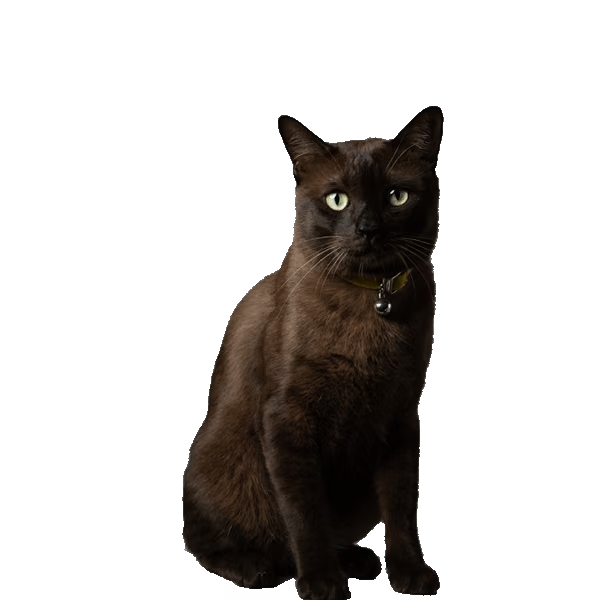
Havana Brown
The Havana Brown is an affectionate, intelligent breed cherished for its rich mahogany coat and devoted, people-oriented charm.
- Size
- Medium
- Lifespan
- 12–15 years
- Origin
- United Kingdom
- Temperament
- Affectionate
- Standard colors
- Lilac and Chocolate
Characteristics
Coat and grooming
How the Havana Brown coat is built, and what that means when you groom it.
- Coat layers
- Single coat
- Coat texture
- Smooth
- Coat length
- Short
- Shedding
- Low shedding
Havana Brown colors and patterns
What each club's breed standard says about every Havana Brown color and pattern. Point at a ruling to see the club's own wording.
Breed standards describe the Havana Brown in Lilac and Chocolate. Standard patterns: Solid.
| Color or pattern | TICA | CFA |
|---|---|---|
| Lilac | Standard (“lilac”) | No ruling |
| Chocolate | Standard (“Chocolate”) | Standard (“Brown”) |
| Patterns | ||
| Solid | Standard (“Solid”) | No ruling |

| Color or pattern | TICA | CFA |
|---|---|---|
| Green | Standard (“green”) | Standard (“green”) |
| Color or pattern | CFA |
|---|---|
| Brown | Standard (“brown with a rosy flush”) |
| Color or pattern | CFA |
|---|---|
| Pink | Standard (“rosy toned”) |
What the rulings mean
- Standard
- Described by the club's breed standard.
Color changes
How a Havana Brown's colors can change over its life.
Tabbychanges toSolid
Coat · With age
Solidchanges toSmoke
Coat · With age · from 3 to 104 weeks
Pinkchanges toSeal
Paw pads · With age · from 1 to 52 weeks
Pinkchanges toBlue
Paw pads · With age · from 1 to 52 weeks
Pinkchanges toChocolate
Paw pads · With age · from 1 to 52 weeks
Pinkchanges toLilac
Paw pads · With age · from 1 to 52 weeks
%22%3E%3Cpath%20d%3D%22M20%2021Q34%2018.8%2048%2022%22%20fill%3D%22none%22%20stroke%3D%22%231C1C1C%22%20stroke-width%3D%222.2%22%20stroke-linecap%3D%22round%22%20stroke-linejoin%3D%22round%22%2F%3E%3Cpath%20d%3D%22M25%2021.5q3%206%20-.5%2016M31.5%2020.8q3%207%20-.5%2016.6M38%2021q3%207%20-.5%2016.6M44.5%2022q2.6%206%20-.5%2014%22%20fill%3D%22none%22%20stroke%3D%22%231C1C1C%22%20stroke-width%3D%222.6%22%20stroke-linecap%3D%22round%22%20stroke-linejoin%3D%22round%22%2F%3E%3Cpath%20d%3D%22M15%2044H50M15%2048H50%22%20fill%3D%22none%22%20stroke%3D%22%231C1C1C%22%20stroke-width%3D%221.8%22%20stroke-linecap%3D%22round%22%20stroke-linejoin%3D%22round%22%2F%3E%3Cpath%20d%3D%22M50%2022H62M51%2017H62M52%2012H63%22%20fill%3D%22none%22%20stroke%3D%22%231C1C1C%22%20stroke-width%3D%221.8%22%20stroke-linecap%3D%22round%22%20stroke-linejoin%3D%22round%22%2F%3E%3Ccircle%20cx%3D%2259.8%22%20cy%3D%227.8%22%20r%3D%222%22%20fill%3D%22%231C1C1C%22%2F%3E%3Cpath%20d%3D%22M12.6%2015.5l.6%204.2M15%2015.5l-.2%204.2M9%2025.2l4.6%201M9.6%2027.4l4%20.2%22%20fill%3D%22none%22%20stroke%3D%22%231C1C1C%22%20stroke-width%3D%221.1%22%20stroke-linecap%3D%22round%22%20stroke-linejoin%3D%22round%22%2F%3E%3C%2Fg%3E%3Cuse%20href%3D%22%23s%22%20fill%3D%22none%22%20stroke%3D%22%233B2A20%22%20stroke-opacity%3D%220.6%22%20stroke-width%3D%221%22%20stroke-linejoin%3D%22round%22%2F%3E%3Cpath%20d%3D%22M3.4%2022.3L5.4%2022.5L4.3%2024Z%22%20fill%3D%22%23E8A0B4%22%2F%3E%3Ccircle%20cx%3D%229.6%22%20cy%3D%2221.2%22%20r%3D%221.1%22%20fill%3D%22%231C1C1C%22%2F%3E%3C%2Fsvg%3E)
%22%3E%3Crect%20x%3D%220%22%20y%3D%220%22%20width%3D%2264%22%20height%3D%2264%22%20fill%3D%22%231C1C1C%22%2F%3E%3Crect%20x%3D%220%22%20y%3D%220%22%20width%3D%2264%22%20height%3D%2264%22%20fill%3D%22url(%23g)%22%2F%3E%3Cpath%20d%3D%22M17.5%2030.4l0.2%203.7M48.5%2036.2l-0.3%203.1M40.1%2038.4l0.7%202.8M21.3%2029.4l0.3%202.9M38.5%2024l-0.7%202.7M19.4%2041l0.9%203.8M47.2%2026.3l0.3%203M28.1%2031.1l-0.4%202.6M21%2027l-0.7%203.4M20.1%2035l0.7%202.8M27.4%2035.9l1.2%203.6M31.5%2032.2l0.5%202.5M43.7%2038.4l0.2%202.9M15.5%2027.6l0.2%203M33.5%2029.7l0%203.8M50%2028l0.5%203.8M50.1%2029.5l-0.2%203.3M39.4%2037.1l0.8%203M31.1%2025l1%203.1M19.5%2028.3l0.3%203.1M29.5%2034.2l-0.3%203.8M50.4%2033.8l-0.5%202.6M39.3%2028.8l1.2%203.8M36.6%2037.2l-0.3%202.8M41.6%2026.3l-0.7%202.7M24.2%2038.3l-0.2%203.3M20.5%2033.1l0.7%203M24%2032.2l-0.7%203.3M42.7%2038.5l-0.6%203.8M20.4%2038.2l0.2%203.3M37.5%2036.9l-0.8%202.4M36%2035.3l-0.7%202.9M46.2%2033.2l-0.8%203.8M38.1%2030.5l-0.6%203.6M29%2038.9l-0.7%203.7M42.8%2031.3l0.1%203.1M22.5%2025.1l0.4%202.9M47.4%2025l0.2%203M24.7%2032l-0.8%203.2M14.8%2024.5l1.1%203.3%22%20fill%3D%22none%22%20stroke%3D%22%23F5F5F0%22%20stroke-width%3D%221%22%20stroke-opacity%3D%220.85%22%20stroke-linecap%3D%22round%22%20stroke-linejoin%3D%22round%22%2F%3E%3C%2Fg%3E%3Cuse%20href%3D%22%23s%22%20fill%3D%22none%22%20stroke%3D%22%233B2A20%22%20stroke-opacity%3D%220.6%22%20stroke-width%3D%221%22%20stroke-linejoin%3D%22round%22%2F%3E%3Cpath%20d%3D%22M3.4%2022.3L5.4%2022.5L4.3%2024Z%22%20fill%3D%22%23E8A0B4%22%2F%3E%3Ccircle%20cx%3D%229.6%22%20cy%3D%2221.2%22%20r%3D%221.1%22%20fill%3D%22%231C1C1C%22%2F%3E%3C%2Fsvg%3E)
Sources
Each ruling comes from the club's published breed standard or color list.
About the Havana Brown cat
The Havana Brown is a medium, people-oriented cat with a solid mahogany-brown coat and green eyes. It bonds closely with its household and stays playful into adulthood.
The Havana Brown is so rare that it almost certainly has no presence in Singapore at all. Fewer than 1,000 exist worldwide, concentrated almost entirely with a small network of specialist breeders in the United States and United Kingdom. Singapore cat owners who know the breed by name typically know it from registries and photographs rather than from any encounter in person.
For the segment of Singapore's pet community that takes breed ownership seriously, that scarcity is part of the draw. The city-state has a well-established premium pet culture, and Singaporeans have shown consistent willingness to source rare animals from overseas when the breed appeals. The import process through the Animal and Veterinary Service (AVS) is navigable for buyers who plan carefully, and a kitten brought in with the correct documentation and health certification can settle into a Singapore home without difficulty.
The chocolate coat carries cultural weight in its own right. A deep, even brown carrying no mixed tones is unusual in any cat breed, and in several Asian traditions such tones are associated with warmth and good fortune. The Cat Welfare Society Singapore, which advocates for responsible cat ownership, supports keeping cats as indoor pets, which aligns precisely with what the Havana Brown needs.
| Attribute | Detail |
|---|---|
| Origin | United Kingdom |
| Size | Medium (2.7 to 4.5 kg) |
| Lifespan | 12 to 15 years |
| Role | Companion cat |
| Good with | Families, attentive single owners, other cats, calm dogs |
Who it suits
The Havana Brown fits a home where someone is around for much of the day. It dislikes long stretches alone and does better with company, whether human or another pet. As an indoor cat that stays close to its people, it adapts well to a flat provided it gets daily play and vertical space to climb. Meshed windows and a cat tree handle the safety and climbing needs in most Singapore apartments. Anyone wanting a quiet, self-sufficient cat will find this breed too involved, but for someone prepared to go to the considerable effort of importing one, the Havana Brown is a genuinely singular companion.
History and origin of the Havana Brown
The Havana Brown was developed in England during the 1950s by crossing chocolate-gene Siamese with black domestic shorthairs. Breeders set out to fix a self-brown cat as its own breed.
Solid brown cats appeared in Britain long before the modern breed took shape. Cats described as brown were shown in England in the late 1800s, but interest fell away and the type was never kept up as a breed.
The Havana Brown as it is known today began in England in the early 1950s. A small group of breeders crossed Siamese cats that carried the chocolate (brown) gene with black domestic shorthairs, and in some lines added Russian Blue, to produce a cat with a solid brown coat instead of the pointed pattern of the Siamese.
The first cats of this type were registered in Britain in the 1950s. Breeding stock went to the United States, where the breed grew along a separate line. North American breeders kept a more rounded head and a moderate body, while the British line was later folded into the Oriental Shorthair standard, so the two diverged.
Because the founding population was small and the breed never became widespread, the Havana Brown has stayed one of the less common pedigreed cats. Careful outcrossing has been used at times to keep the gene pool viable. In Singapore the breed can be registered through the Cat Fanciers' Association of Singapore (CFAS) and internationally through bodies such as TICA.
Havana Brown appearance and breed standard
The Havana Brown is a medium cat with a firm muscular body, a distinctive corn-cob muzzle, large forward-tilted ears, and oval green eyes against a solid mahogany coat.
The Havana Brown is a medium, well-muscled cat that feels heavier than it looks. The head is a little longer than it is wide, and the muzzle has a shape of its own, narrowing to a rounded end that is often compared to a corn cob. That muzzle profile is one of the clearest markers of the breed. The ears are large, set wide, and tilt forward, giving the cat an alert expression. The whiskers are brown to match the coat, which is unusual among cats.
| Trait | Standard |
|---|---|
| Height | 23 to 28 cm at the shoulder |
| Weight | 2.7 to 4.5 kg |
| Coat | Short, smooth, close-lying |
| Colours | Solid mahogany brown (warm reddish brown) |
| Eyes | Oval, vivid green |
Coat and colour
The coat is short, smooth, and lies close to the body, with a sheen when the cat is in good condition. Colour is the defining feature: a solid warm brown leaning towards mahogany, even across the whole body with no white markings, tabby pattern, or paler undercoat. Kittens may show faint ghost tabby markings that fade as they mature. Nose leather is brown with a rosy tone, and paw pads are a pinkish brown. Eye colour deepens to a clear green as the cat reaches adulthood; a yellow cast in the eyes counts as a fault in the show ring.
Havana Brown temperament and personality
The Havana Brown is affectionate, curious, and strongly people-oriented. It seeks out human company, stays playful into adulthood, and uses its paws to explore and interact.
The Havana Brown is a companion cat that wants to be near its people. It commonly follows the household around and settles close by or on a lap when it gets the chance. Many reach out with a paw to touch faces, tap objects, or examine something new, a behaviour owners often note as a signature of the breed.
With family the breed is warm and demonstrative. With strangers it is usually curious rather than shy, though a new visitor may get a careful inspection first. The Havana Brown generally gets along with other cats and with dogs that stay calm around cats, and it does well in a multi-pet home where it has company.
The breed is intelligent and playful. It keeps an interest in toys, puzzles, and games well past kittenhood and benefits from regular interaction. Havana Browns are moderately vocal, using a soft voice to ask for attention rather than calling loudly all day. They do not cope well with being left alone for long periods and can grow bored or withdrawn without enough stimulation and company.
| Trait | Rating |
|---|---|
| Affection | 5 |
| Energy | 4 |
| Trainability | 4 |
| Vocalness | 3 |
| Shedding | 2 |
Havana Brown care and grooming
The Havana Brown is low-maintenance to groom thanks to its short coat, but it needs daily interaction and play to stay content. It is an indoor-suited cat that depends on company.
The Havana Brown is easy to keep clean but demanding of attention. Its short coat needs little grooming, while its social nature makes daily engagement part of the care rather than an extra.
Grooming
- Brush or wipe the coat once a week to remove loose hair and keep the sheen
- Run a hand or a soft cloth over the coat between brushings to spread the natural oils
- Trim nails every two to three weeks
- Check ears weekly and clean gently if needed
- Brush teeth regularly to limit dental disease, which is common in cats
Exercise
- Set up two or more active play sessions a day with wand toys or chase toys
- Offer puzzle feeders and a rotating set of toys to keep the mind busy
- Add a cat tree or wall shelves for climbing and perching, which also help in a compact flat
- Use interactive play to channel the breed's strong urge to investigate
Environment
The Havana Brown is best kept indoors with safe access to vertical space and windows to watch. In an HDB flat, meshed windows and a cat tree let it climb and observe safely. It thrives where someone is home for much of the day, or where a compatible pet gives it company. A quiet home with no daytime presence is a poor match for this breed.
Havana Brown nutrition and feeding
The Havana Brown does well on a complete, meat-based cat food suited to its life stage. Portion control matters because the breed is food-motivated and can gain weight if free-fed.
Cats are obligate carnivores, so the Havana Brown needs a diet built around animal protein. Choose a complete and balanced commercial food formulated for the cat's life stage, whether kitten, adult, or senior. A mix of wet and dry food can support hydration while keeping some dry food on hand for dental and practical reasons. Fresh water should always be available.
| Life stage | Amount per day | Meals |
|---|---|---|
| Kitten (to 12 months) | Per package, fed to appetite | 3 to 4 |
| Adult (1 to 7 years) | About 110 to 170 g wet, or label amount | 2 |
| Senior (7+ years) | Adjusted to weight and activity | 2 |
Treats and supplements
Keep treats to roughly 10 percent of daily calories so the main diet stays balanced. A cat on a complete commercial food usually needs no extra supplements; add any only on a veterinarian's advice. Because the Havana Brown is food-motivated and prone to weight gain, measure portions rather than free-feeding, and weigh the cat now and then to catch any creep early.
Havana Brown health and common conditions
The Havana Brown is generally healthy with a 12 to 15 year lifespan. Its small gene pool means responsible breeding and routine veterinary care matter, with dental disease and weight gain the main daily concerns.
The Havana Brown is a robust breed with a typical lifespan of 12 to 15 years, and many cats live longer with good care. Because the breed descends from a small founding population, buyers should use breeders who screen their cats and outcross responsibly to keep the line sound. The conditions below occur across cats generally rather than being unique to the breed.
| Condition | Signs | Note |
|---|---|---|
| Dental disease | Bad breath, drooling, trouble eating | Common in cats; managed with home and vet dental care |
| Obesity | Weight gain, low activity | Linked to free-feeding; controlled by portioning |
| Upper respiratory issues | Sneezing, nasal discharge | Keep vaccinations current |
| Kidney disease (older cats) | Increased thirst, weight loss | Screen with senior bloodwork |
Preventive care
- Annual wellness checks, moving to twice a year for senior cats
- Core vaccinations kept up to date
- Routine dental checks and at-home tooth brushing
- Parasite prevention as advised by a veterinarian
- Weight checks at each visit to catch gain early
- Bloodwork from middle age to monitor kidney and organ health
Havana Brown training and enrichment
The Havana Brown is intelligent and people-oriented, which makes it one of the more trainable cat breeds. It responds to short, reward-based sessions and can learn tricks, recall, and harness walking.
The Havana Brown's intelligence and wish to interact make training easier than with many cats. It can learn its name, come when called, fetch, and accept a harness for supervised time outdoors. Training also gives the breed's curiosity a useful outlet and helps prevent boredom-driven behaviour. Keep sessions short, a few minutes at a time, and end while the cat is still keen.
Basics
- Start litter training early; most kittens take to a clean, accessible tray quickly
- Provide a scratching post and reward its use to protect the furniture
- Teach name recognition and recall with a treat the moment the cat responds
- Introduce a harness indoors before any walking outside
- Add trick training, such as targeting a stick, to keep the mind busy
Breeding and raising Havana Brown kittens
The Havana Brown is bred carefully because of its small gene pool, often with planned outcrosses. Queens carry litters for about 63 to 67 days and usually produce small to moderate litters.
Breeding the Havana Brown calls for planning because the founding population was small. Reputable breeders track pedigrees closely and use approved outcrosses, such as to chocolate or black Oriental Shorthairs and certain domestic shorthairs, to preserve genetic diversity while keeping breed type. Cats reach sexual maturity at around 5 to 9 months, but responsible breeders wait until the cat is fully grown and health-screened before mating.
Gestation lasts roughly 63 to 67 days. Litters tend to be small to moderate in size. Kittens are born with the coat colour still developing over the first weeks, and faint ghost markings may show before fading. Queens raise kittens with normal feline maternal care; kittens should stay with the mother and littermates until at least 12 weeks so they are weaned, socialised, and ready for vaccination before going to new homes. Given the breed's rarity, prospective owners should expect to work with a small number of dedicated breeders and to wait for kittens to become available.
| Metric | Value |
|---|---|
| Sexual maturity | 5 to 9 months |
| Recommended first breeding | After full growth and health screening |
| Gestation | About 63 to 67 days |
| Litter size | Small to moderate |
| Weaning age | Around 8 weeks |
| Earliest to new home | 12 weeks |
Registering your Havana Brown under the new cat rules
With cat licensing phased in from 2024, a free United Pet Club record keeps your Havana Brown's chip pointing at your current mobile.
Havana Brown registration and microchipping in Singapore
Start the paperwork where it costs nothing: your Havana Brown's name, her colouring, a photo, your contact details, saved. The profile lasts her lifetime, takes any chip number the clinic issues, and never sends a bill. Cat registration is the five-minute version of responsible ownership.
The chip under your Havana Brown's skin is a number; the registry is what makes it a phone call. United Pet Club keeps that registry entry free for life, accepts every brand, and never charges when your details change. Microchip registration first, then the free account wraps up the profile.
How do I register my Havana Brown in Singapore?
Create a free United Pet Club account, add her name, colouring, and a photo, and save the profile. The lifetime plan holds it at no cost for her whole life, flat cat or wanderer.
How do I register my Havana Brown's microchip?
Enter the 15-digit number from the clinic's paperwork into your free account with your current contact details. The lifetime plan never charges for the record or for updates, whatever the chip brand.
Do cats need to be licensed and chipped in Singapore?
Yes, AVS is phasing in licensing and microchipping for pet cats from 2024. The licence answers the rules; the United Pet Club record answers the scanner, and it stays free for your Havana Brown's whole life.
What does it cost to register a Havana Brown?
Not a cent. Profile, microchip registration, and all future updates are covered by the free lifetime plan, with nothing to renew.
Havana Brown frequently asked questions
Common questions about the Havana Brown cover its size, temperament, care needs, lifespan, suitability for families, and how readily kittens can be found.
How big does a Havana Brown get?
It is a medium cat, generally 2.7 to 4.5 kg, with males larger than females. The body is muscular and feels heavier than it looks.
What is the Havana Brown's temperament like?
It is affectionate, curious, intelligent, and strongly people-oriented. It seeks out human company, stays playful into adulthood, and often uses a paw to investigate things.
Is there a Havana Brown community in Singapore?
Virtually none exists. With fewer than 1,000 Havana Browns in the entire world and almost all in the United States and United Kingdom, there are likely only a handful in all of Asia. A buyer in Singapore who wants one must find an overseas breeder, join a waiting list that typically runs two to four years, and import the kitten through AVS.
How long do Havana Browns live?
Most live 12 to 15 years, and many reach older ages with good nutrition, routine veterinary care, and weight management.
Is the Havana Brown good with families and other pets?
Yes. It is warm with family, generally friendly with other cats, and gets along with calm dogs. A multi-pet home suits it well because it likes company.
Can I import a Havana Brown into Singapore?
Yes, but it takes planning. The kitten must come from an accredited source and enter Singapore with AVS documentation including health and rabies vaccination records. Given that all breeders of note are in the United States or United Kingdom, most importers use an experienced pet relocation agent to handle the logistics. Budget for a significant wait on the breeder's list before the import process even begins.
Does the Havana Brown shed or meow a lot?
Shedding is low thanks to the short coat. The breed is moderately vocal, using a soft voice to ask for attention rather than calling loudly or constantly.