The Labrador Retriever is a friendly, outgoing breed beloved as a family companion and devoted working dog.
How the Labrador Retriever coat is built, and what that means when you groom it.
Critical: A Labrador Retriever should not be shaved.
The undercoat keeps heat out as well as in, and the outer coat shields the skin from sun and insect bites. Clipping the whole coat off removes both. It often grows back patchy, soft or a different colour, and in some animals the guard hairs never return properly. Brush the undercoat out instead of cutting it off.
Information: A Labrador Retriever drops its undercoat in heavy bursts.
The undercoat comes out in heavy bursts over a few weeks. An undercoat rake, or a bath followed by a proper blow-dry, clears it far faster than daily brushing. Clipping the coat down is not a shortcut for this.
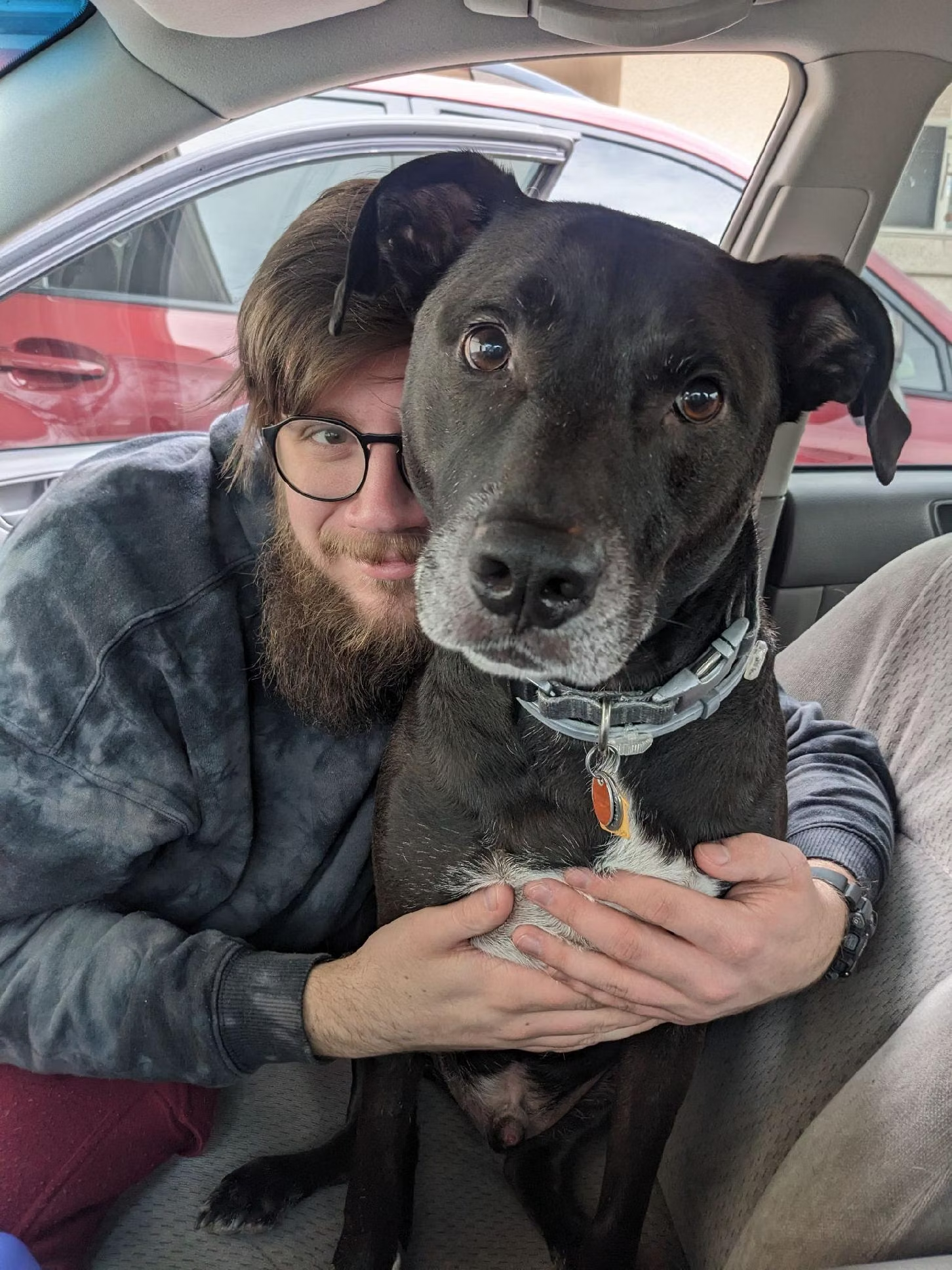
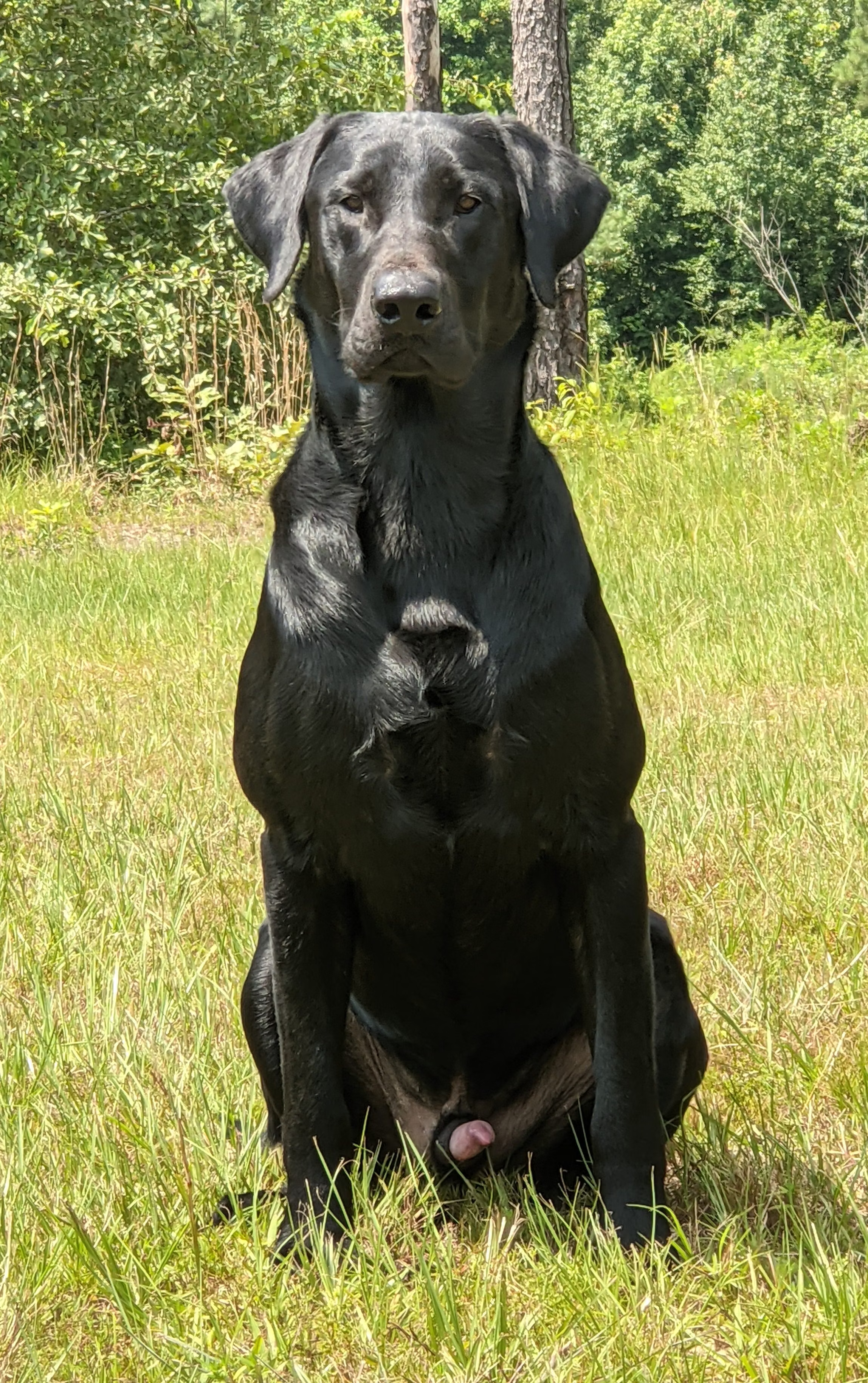
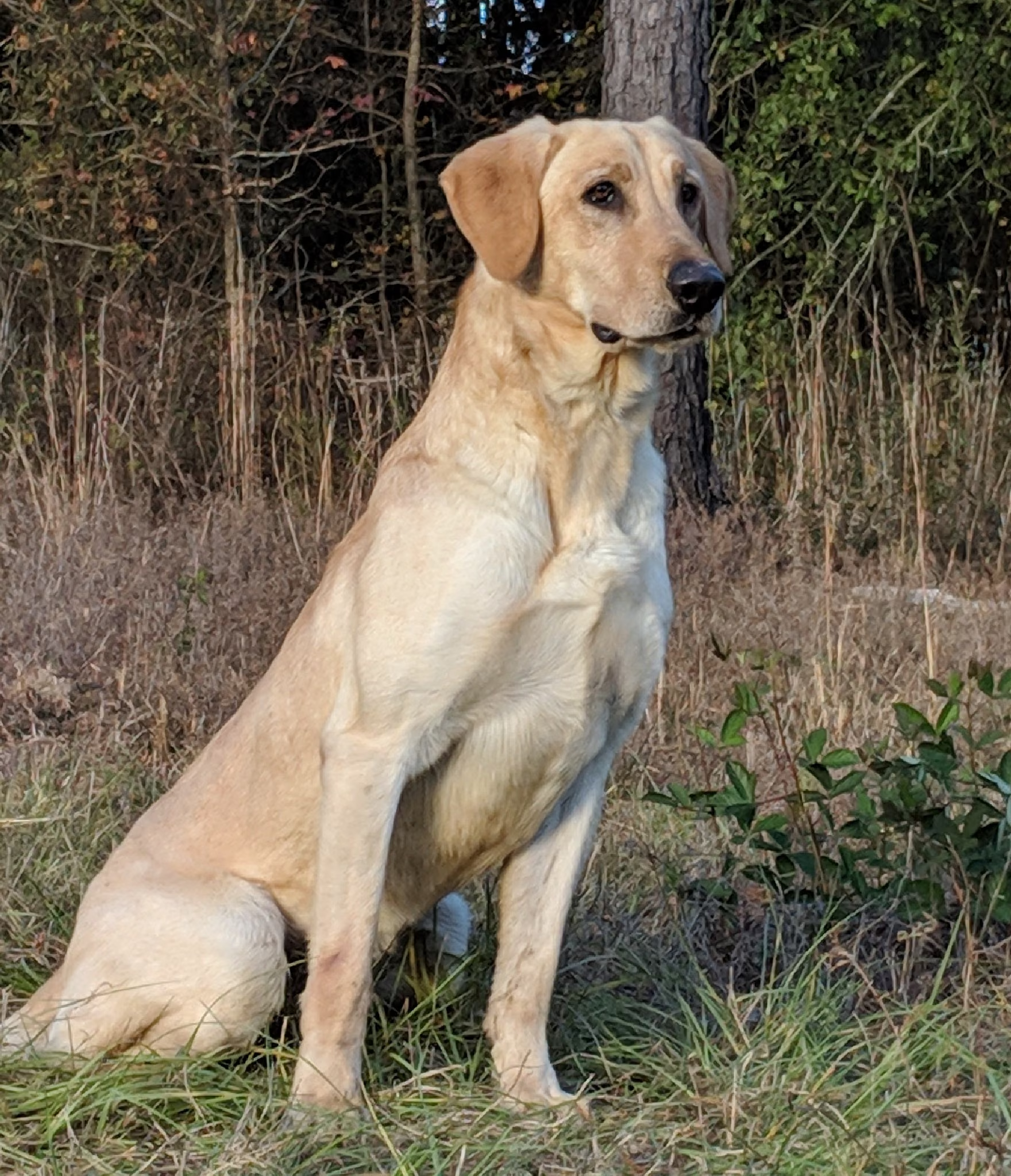
A few of the Labrador Retriever profiles members have added to United Pet Club.
The Labrador Retriever is a medium-to-large sporting breed originally from Newfoundland, recognised for its friendly temperament, trainability, and short dense coat. Adults weigh 25 to 36 kg and typically live 11 to 13 years. In Singapore, the breed is not permitted in HDB flats and requires a condominium with management approval or landed property.
The Labrador Retriever is one of the most widely kept dogs in Singapore, recognised by the Singapore Kennel Club (SKC) and used across guide dog programmes, government detection units, and family households.
As a medium-to-large breed, a Labrador falls outside the Housing and Development Board's approved list. Owners in Singapore must have a private condominium with management committee approval, or landed property, to keep one legally and with adequate space. Prospective owners in HDB flats cannot keep this breed.
The coat is short, dense, and double-layered, and it sheds throughout the year. Three colours are accepted under most international standards: black, yellow, and chocolate. The breed is known for a steady, cooperative temperament that suits both working roles and family life.
| Attribute | Detail |
|---|---|
| Origin | Newfoundland (now part of Canada), further developed in the United Kingdom |
| Size | Medium to large; 25 to 36 kg |
| Lifespan | About 11 to 13 years |
| Group/role | Sporting/gundog; retriever, assistance and detection work |
| Good with | Children, families, other dogs; generally sociable with strangers |
A Labrador suits an active household that can provide daily exercise, consistent training, and regular company. The breed does not tolerate long periods alone well. In Singapore, suitable housing means a private condominium with management approval or landed housing with a secure outdoor area. HDB residents are not eligible to keep this breed. Owners who are new to dogs can do well with a Labrador if they commit to the daily routine it needs.
The Labrador Retriever descends from the St. John's water dog of Newfoundland, was selectively bred on British sporting estates in the nineteenth century, and received formal recognition from The Kennel Club in 1903.
The breed traces its origin to the working water dogs of Newfoundland, known as the St. John's dog or the lesser Newfoundland, which assisted fishermen during the 1700s and early 1800s. These dogs retrieved fish that fell from lines, helped haul nets, and worked alongside boats in cold Atlantic waters.
British traders and visitors brought some of these dogs to England in the early nineteenth century. Sporting estates, including those of the Earl of Malmesbury and the Duke of Buccleuch, bred them for retrieving game on shooting grounds. The name "Labrador" came into use during this period in England, though the dogs originated on Newfoundland rather than the Labrador coast to the north.
Quarantine legislation in Britain and a Newfoundland tax on female dogs during the mid-1800s reduced imports sharply, so British bloodlines became the sole foundation of the modern breed. The Kennel Club in the United Kingdom granted formal recognition in 1903. Black was the most common colour in early registered stock, though yellow and chocolate were also recorded from the beginning.
Labradors are solidly built dogs with a broad skull, deep chest, and the characteristic otter tail. Males stand 57 to 62 cm at the shoulder and females 55 to 60 cm. The short dense double coat comes in black, yellow, or chocolate.
The Labrador Retriever has a muscular, well-balanced build with a broad skull and moderate stop. The ears hang close to the head. A defining feature is the otter tail, which is thick at the base, round in cross-section, and densely coated. The outer coat is short, straight, and water-resistant over a soft insulating undercoat.
| Trait | Detail |
|---|---|
| Height | Males 57 to 62 cm; females 55 to 60 cm |
| Weight | Males 29 to 36 kg; females 25 to 32 kg |
| Coat | Short, dense, straight double coat; water-resistant |
| Colours | Black, yellow, chocolate |
| Eyes | Brown or hazel; kind, alert expression |
Yellow covers a wide range, from pale cream through to fox-red. Small white patches on the chest are permitted under many standards but not preferred. The double coat sheds year-round with two heavier moults each year. Some breeders market "silver" Labradors, a dilute shade of chocolate, but this is not accepted as a distinct colour by major registries, including the SKC.
Labradors are outgoing, affectionate dogs that socialise readily with people and other animals. High energy is a defining trait, and without a consistent outlet it leads to destructive behaviour.
With family, a Labrador is attentive and closely bonded to its people. The breed is generally patient with children, though the combination of size and energy calls for supervision when young children are involved. Around strangers, most Labradors are welcoming rather than guarded, which makes them easy companions in busy environments like condominium common areas and parks, but they are not suited to a guard role.
The breed gets along with other dogs and often with cats, especially those raised together from early on. A strong retrieving instinct means mouthing and carrying objects are natural behaviours. A Labrador without enough daily physical and mental activity will find its own entertainment, and the outcomes are usually destructive.
| Trait | Rating |
|---|---|
| Affection | 5 |
| Energy | 5 |
| Trainability | 5 |
| Vocalness | 3 |
| Shedding | 4 |
Singapore's heat and humidity make exercise timing critical: walks should happen before 8 am or after dark. The breed also needs weekly brushing, regular ear checks, and consistent daily company.
A Labrador needs adequate indoor space and access to a secure outdoor area. HDB flats are not eligible housing for this breed under AVS regulations. A condominium may work if the management committee permits large dogs and the grounds allow for daily exercise. Landed housing with a secure garden is the most practical setting for a dog of this size and energy level. Access to an air-conditioned room during the hottest parts of the day is a sensible comfort measure given Singapore's climate.
Labradors do best on a complete, measured diet suited to their life stage and activity. Adults typically need around 2.5 to 3 cups of dry food daily across two meals, adjusted based on body condition.
Feed a complete and balanced commercial food appropriate for the dog's age and size. Because Labradors gain weight easily, portions should be measured at every meal rather than loosely topped up. Use the feeding guide on the packaging as a starting point and adjust based on body condition and how active the dog is. Fresh water must be available at all times, particularly in Singapore's heat.
| Life stage | Amount per day | Meals per day |
|---|---|---|
| Puppy (2 to 6 months) | About 2 to 3 cups | 3 to 4 |
| Puppy (6 to 12 months) | About 2.5 to 3.5 cups | 2 to 3 |
| Adult | About 2.5 to 3 cups | 2 |
| Senior/less active | About 2 to 2.5 cups | 2 |
Limit treats to no more than about 10 per cent of total daily calories and subtract them from the meal allowance. Using a portion of the dog's weighed kibble as training rewards keeps overall intake controlled. Supplements such as joint support or fish oil are sometimes added, but a complete diet covers the nutritional needs of most healthy dogs. Speak to a veterinarian before introducing any supplement.
Labradors typically live 11 to 13 years and are generally robust, but the breed is predisposed to hip and elbow dysplasia, obesity, and certain inherited conditions. Weight management is the most impactful preventive step available to owners.
The typical lifespan is 11 to 13 years, and most Labradors remain active into their senior years when kept at a healthy weight. Obesity is the most common and most preventable health problem in the breed. It worsens joint conditions and reduces lifespan. Responsible breeders health-screen parent dogs before mating; ask to see certificates for hips, elbows, and hereditary eye conditions when acquiring a puppy.
| Condition | Signs | Note |
|---|---|---|
| Hip dysplasia | Limping, stiffness, difficulty rising | Screened by hip scoring in breeding dogs |
| Elbow dysplasia | Front-leg lameness, reluctance to exercise | Inherited; screening recommended |
| Obesity | Excess weight, reduced stamina | Preventable with measured feeding and regular exercise |
| Progressive retinal atrophy | Night blindness, declining vision | Inherited; DNA tests available |
| Exercise-induced collapse | Weakness or collapse after intense activity | Linked to a known gene; DNA test available |
| Ear infections | Head shaking, odour, scratching | Drop ears trap moisture; weekly cleaning reduces risk in humid conditions |
Labradors are highly trainable and food-motivated, and they cooperate readily with people. Early socialisation and consistent reward-based methods produce reliable results.
The Labrador's cooperative nature is why the breed features in Singapore's guide dog and customs detection programmes. They respond predictably to reward-based training that uses food, toys, or verbal praise. The main practical challenges are managing their energy and curbing the habit of mouthing and grabbing. Begin training while the puppy is still small enough to handle easily; an adult Labrador is a strong animal.
Female Labradors reach sexual maturity between 6 and 12 months, but responsible breeders wait until health screening is complete. Gestation lasts about 63 days and litters commonly contain 6 to 8 puppies.
A female Labrador's first heat typically arrives between 6 and 12 months of age. Responsible breeders defer mating until the dog is fully mature and has passed health screening for hips, elbows, eyes, and relevant genetic conditions. Females cycle roughly twice each year.
Gestation runs approximately 63 days from conception. Litters of 6 to 8 puppies are typical, though the range can be wider in either direction. Newborns are born blind and deaf and depend entirely on the dam during the first two weeks of life.
Weaning begins around 3 to 4 weeks as puppies transition gradually onto solid food. Early handling and socialisation by the breeder during this stage shapes temperament in lasting ways. Puppies are ready to move to new homes at around 8 weeks, once weaned and at least partially vaccinated.
| Metric | Value |
|---|---|
| Sexual maturity | About 6 to 12 months |
| Heat cycles | Roughly twice per year |
| Gestation | About 63 days |
| Average litter size | 6 to 8 puppies |
| Weaning age | About 6 to 8 weeks |
| Age to new home | About 8 weeks |
AVS handles the licence; United Pet Club keeps a free, searchable record behind your Labrador Retriever's microchip for life.
The Animal & Veterinary Service requires every dog here to be licensed and microchipped by three months of age, so for a Labrador Retriever the chip is settled law. What stays on you is the record behind it. A free United Pet Club profile holds your contact details against the dog for as long as he is yours, and it keeps working even outside Singapore. Registering your dog takes minutes and never costs a cent.
Your Labrador Retriever's chip went in before his third month, as the rules require; whether the number leads anywhere is a separate question. Give it a live answer with United Pet Club: registration free for life, every brand accepted, every update free. Microchip registration plus a free account, and the whole thing is squared away.
Set up a free United Pet Club account, key in your Labrador Retriever's details and a photo, and save. The lifetime plan keeps the profile live at no cost for as long as he is with you, alongside whatever AVS requires.
Key the 15-digit chip number into your free account together with your address, mobile, and email. The lifetime plan covers the registration and every update free, whichever brand the clinic used.
Yes. AVS requires dogs to be licensed and microchipped by three months of age. The licence is the legal part; a registered, searchable record with your current mobile is the part that gets a lost Labrador Retriever home, and that part is free.
Nothing. United Pet Club's lifetime plan covers the profile, the chip record, and unlimited updates, with no renewal, ever.
Answers to common questions about keeping a Labrador Retriever in Singapore, covering housing eligibility, heat management, size, shedding, licensing, and care demands.
No. Labradors are a medium-to-large breed and are not on the HDB approved breed list. They require a private condominium with management committee approval or landed property with enough space for a dog of this size and energy level.
Schedule walks before 8 am or after 8 pm, when temperatures are lower. Midday heat above 30 degrees C poses a genuine heat stroke risk for the breed. Carry water, avoid hot tarmac and concrete, and watch for heavy panting, drooling, or unsteady movement.
Adult males stand 57 to 62 cm at the shoulder and weigh 29 to 36 kg. Females stand 55 to 60 cm and weigh 25 to 32 kg.
Yes. The double coat sheds year-round, with two heavier moults per year. Weekly brushing, increased to two or three times weekly during moults, helps control loose hair.
Dogs must be licensed through the National Parks Board (NParks) and the Animal and Veterinary Service (AVS). Microchipping is mandatory. Dogs must be kept on a leash in public spaces under the Animals and Birds Act.
Generally yes. They are sociable and patient with children. Because they are large and energetic, supervision is advisable when young children play with the dog, as they can knock small children over accidentally.
Grooming is low-maintenance and training is straightforward, but the breed demands daily exercise and regular company. Weight monitoring and measured feeding are ongoing commitments, since Labradors gain weight easily and are predisposed to obesity.