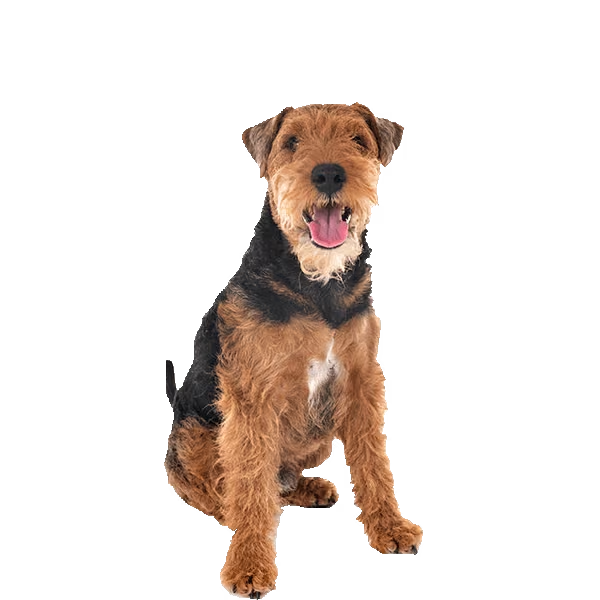
The Welsh Terrier is a spirited, friendly Welsh breed with a wiry black-and-tan coat, known for its cheerful energy and intelligence.
How the Welsh Terrier coat is built, and what that means when you groom it.
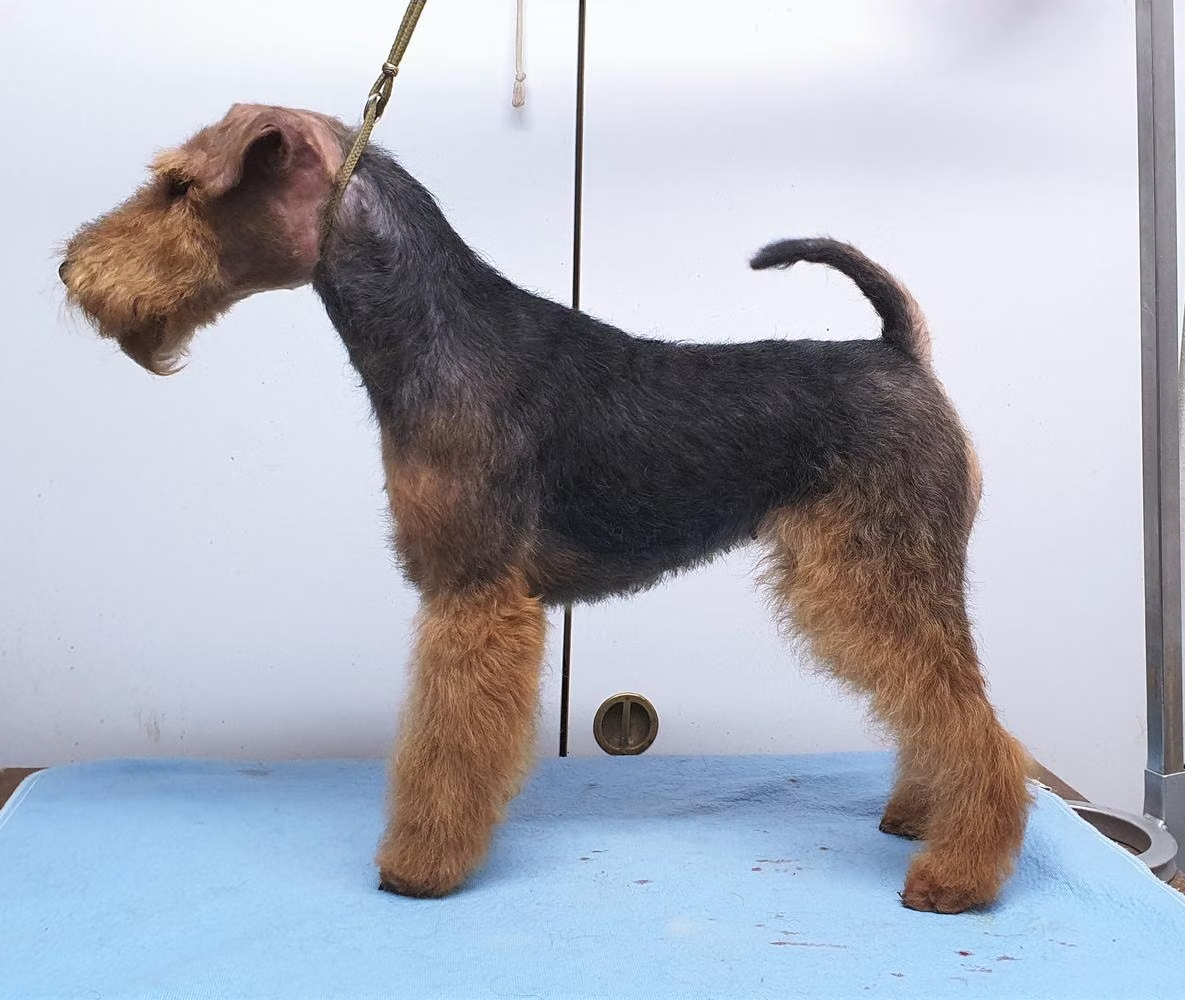
Caution: A Welsh Terrier coat should be hand-stripped rather than clipped.
A wire coat is meant to be pulled out at the root once the hair is ready to release. Clippers cut it off part way instead, leaving the soft undercoat behind. The result is a coat that grows back limp and faded, and the weatherproof texture only returns after the hair is stripped out again.
A few of the Welsh Terrier profiles members have added to United Pet Club.
The Welsh Terrier is a small, spirited terrier from Wales with a wiry black-and-tan coat, valued in India for its alert, low-shedding, family-friendly nature.
The Welsh Terrier is a small working terrier that originated in Wales. It stands about knee height, with a square, sturdy build and the black-and-tan wiry jacket typical of the rugged terrier group. Breeders developed the dog to hunt foxes, badgers and rodents, so its body is compact and athletic rather than delicate. In India the breed stays uncommon and is kept mostly by pet parents in metro cities, usually sourced through Kennel Club of India-affiliated breeders or imported from abroad.
In temperament the Welsh Terrier is friendly and outgoing, without the highly-strung edge seen in some terrier breeds. It stays alert, curious and confident, and keeps a playful streak well into adulthood. Owners in India often describe it as cheerful and game for activity, with just enough independence to keep a household on its toes.
The coat is one of the breed's most recognisable features. The wiry outer layer sheds very little, a genuine advantage in Indian homes where dog hair on furniture and floors is a real concern. Even so, the coat needs regular upkeep to hold its correct texture, particularly through the monsoon when dampness can soften it.
| Attribute | Detail |
|---|---|
| Origin | Wales |
| Size | Small (about 9 to 9.5 kg) |
| Lifespan | 12 to 15 years |
| Group / role | Terrier; originally bred for hunting and vermin control |
| Good with | Families and active pet parents; supervise around small pets |
The Welsh Terrier suits active individuals and families who can commit to daily exercise and consistent, patient training. It does well in homes with older children who understand how to handle a lively dog. Households with small pets such as rabbits, guinea pigs or caged birds should stay watchful, since the breed retains a strong prey drive. Pet parents wanting a quiet, low-energy lapdog will likely find this terrier too much of a handful.
The Welsh Terrier developed in Wales as a working terrier bred to hunt foxes, badgers and rodents; it ranks among the older recognised terrier breeds.
The Welsh Terrier comes from Wales, where local working terriers were kept to hunt fox, badger and otter, and to control rodents on farms. These dogs needed to be small enough to follow quarry to ground, yet bold and hardy enough to face it. The black-and-tan wire-coated terriers of Wales formed the foundation of the modern breed.
Through the nineteenth century the type was refined and standardised as breeders worked toward a consistent look and working ability. The Welsh Terrier shares ancestry and appearance with the old black-and-tan terrier types of Britain, and resembles a smaller version of the Airedale Terrier in coat colour and pattern.
As dog showing grew in popularity in Britain, the Welsh Terrier moved from a purely working dog toward the show ring and the family home. It was among the terrier breeds recognised in the late nineteenth century and built a steady following among people who valued its size and even temperament.
The breed later spread beyond Wales to the rest of Britain and overseas, including India, where it remains a rare sight outside a small circle of enthusiasts and show breeders. Today it is kept mainly as a companion and show dog, though it retains the build and instincts of its working past.
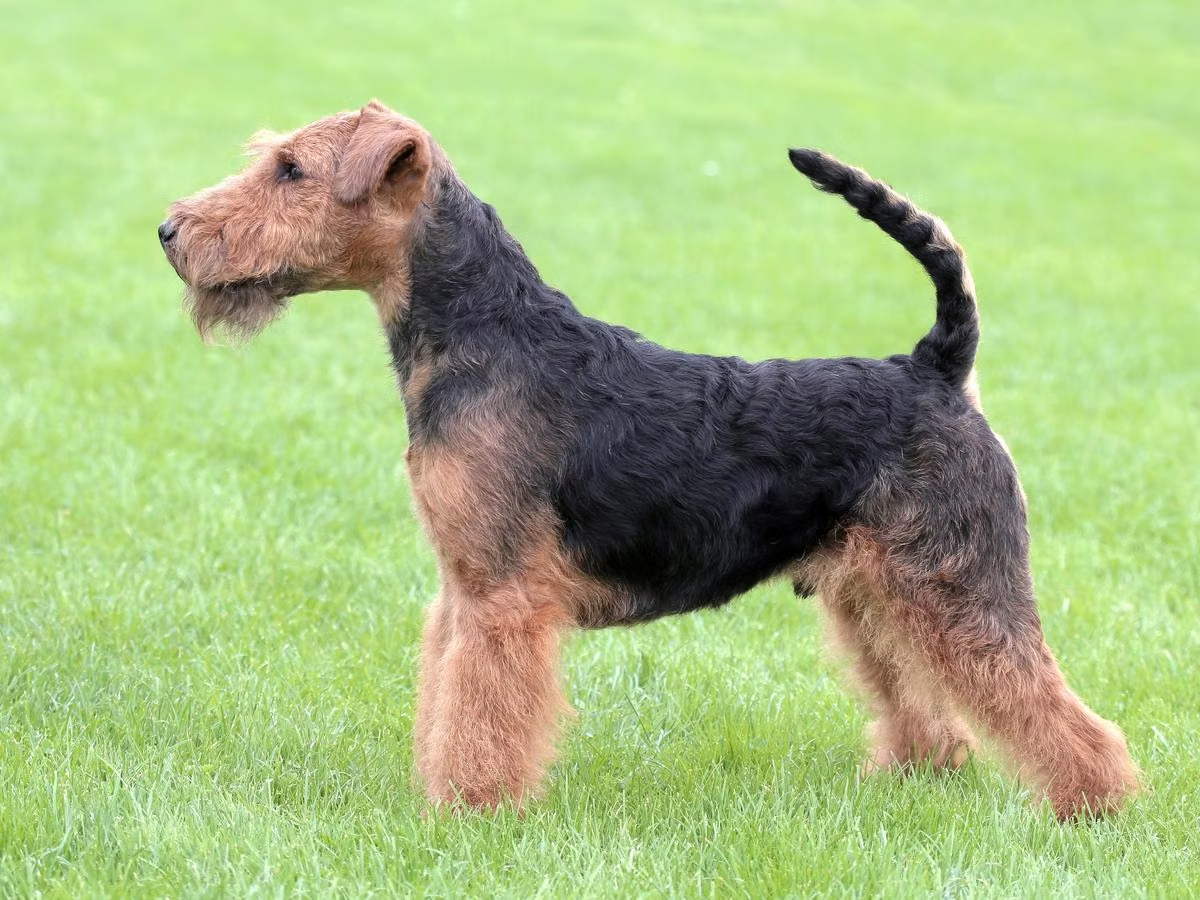
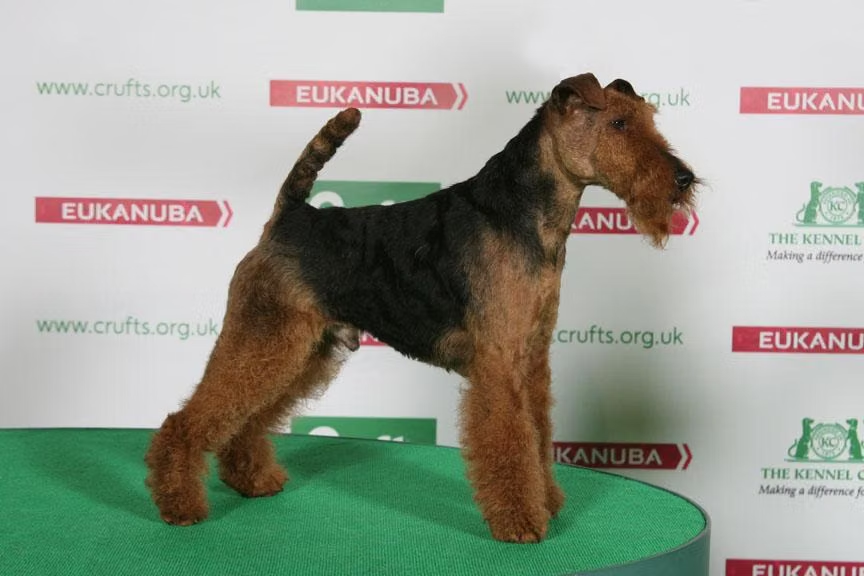
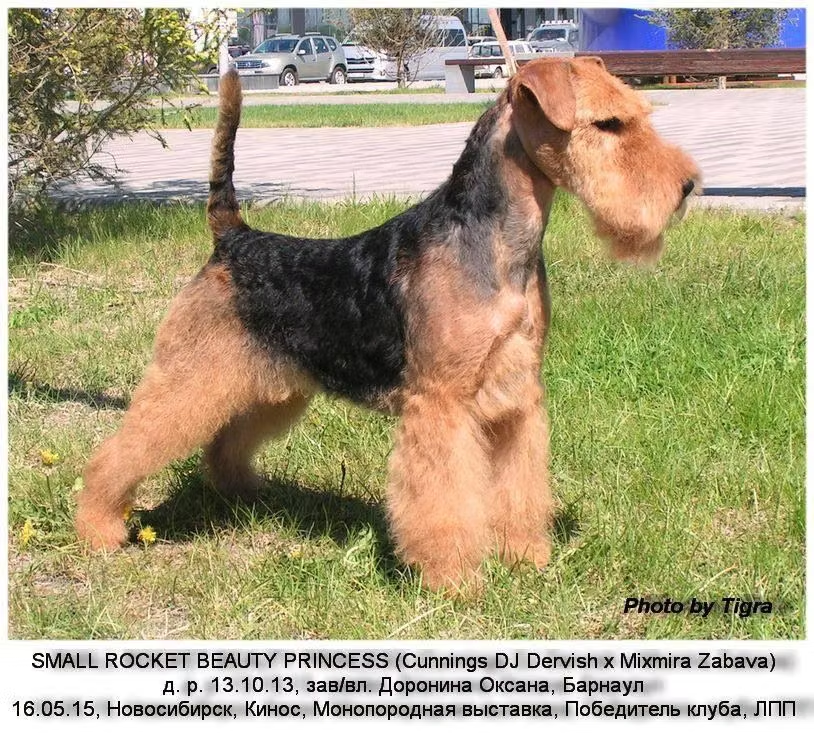
The Welsh Terrier is a small, square dog with a wiry black-and-tan coat, a rectangular head and a compact, well-balanced body.
The Welsh Terrier is a small dog with a square, balanced outline, meaning its height at the shoulder is roughly equal to the length of its body. The head is long and rectangular with a flat skull, small folded ears that drop forward, and dark eyes that give an alert expression. The build is sturdy and workmanlike, with straight legs and a level back.
| Trait | Standard |
|---|---|
| Height | Up to about 39 cm (15.5 in) at the shoulder |
| Weight | About 9 to 9.5 kg (20 to 21 lb) |
| Coat | Wiry, dense double coat with a hard outer layer |
| Colours | Black and tan, or grizzle and tan |
| Eyes | Small, dark, set well into the head |
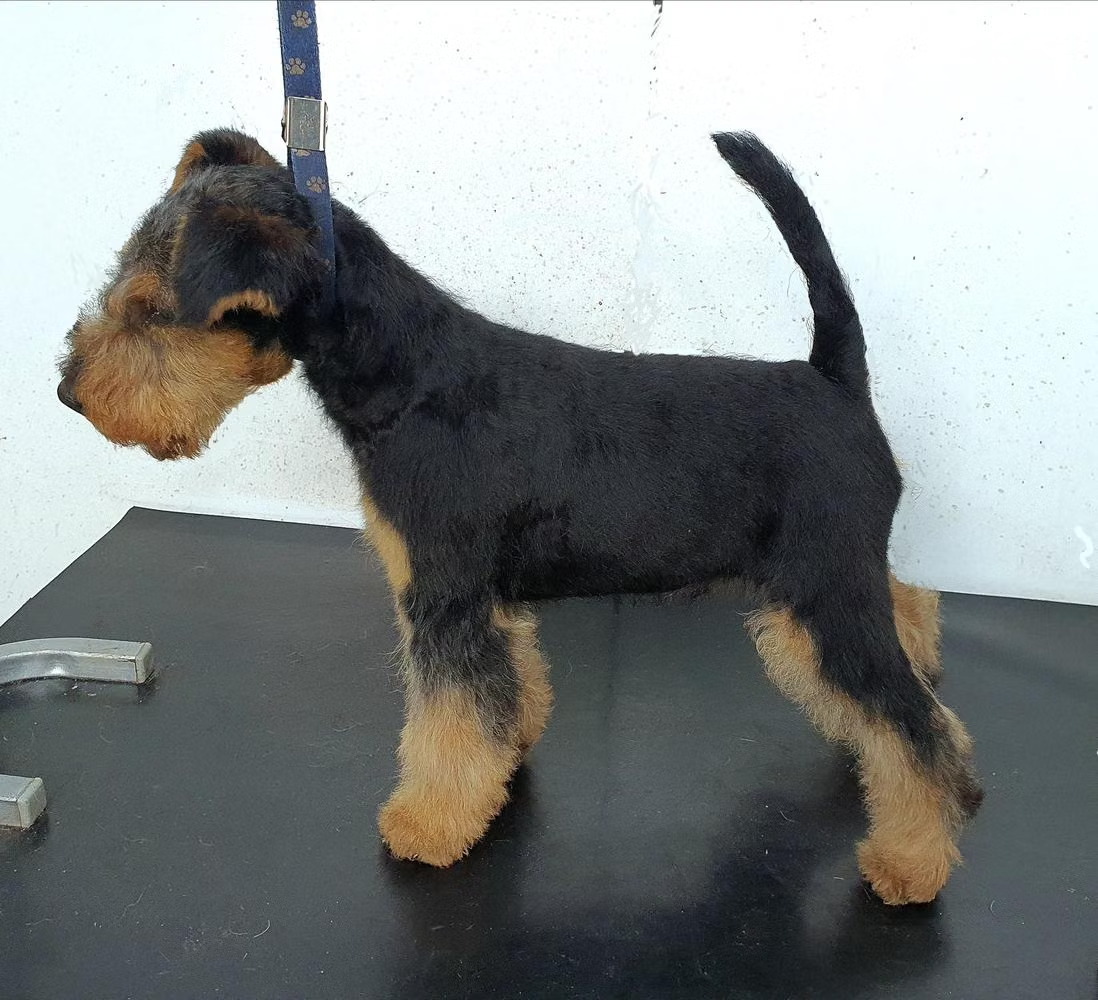
The defining feature is the harsh, wiry double coat. The undercoat is soft while the outer coat is dense and hard to the touch, which protected the dog from weather and rough terrain back in Wales. The standard colour is black and tan, with a black or dark grizzle saddle over the back and tan on the head, legs and underside. Puppies are often born mostly black and develop the adult tan markings as they mature. To keep its proper texture and colour, the coat is traditionally hand stripped rather than clipped, a skill that only a handful of groomers in India currently offer.
The Welsh Terrier is friendly, spirited and intelligent, generally good with families while keeping a strong terrier prey drive toward small animals.
The Welsh Terrier is known for a friendly, cheerful disposition paired with classic terrier spirit. It is confident and energetic, often staying playful and puppyish for years. The breed is intelligent and curious, which makes it engaging company, though it also needs mental stimulation to stay content.
With family members the Welsh Terrier is affectionate and people-oriented. It usually gets along with children, especially older ones who can match its activity level and handle it gently. Toward strangers it tends to be alert and will announce visitors at the gate, though it is not typically nervous or aggressive.
With other dogs the breed can be sociable but may be assertive, and some individuals do not back down from a challenge, including with the street dogs common around Indian neighbourhoods. Its hunting heritage gives it a high prey drive, so small pets such as rodents, rabbits and sometimes cats can trigger chasing. Early socialisation helps it learn appropriate behaviour around other animals.
| Trait | Rating |
|---|---|
| Affection | 4 |
| Energy | 4 |
| Trainability | 4 |
| Vocalness | 3 |
| Shedding | 1 |
The Welsh Terrier needs regular coat upkeep, daily exercise timed around India's heat, and a home that can handle a busy, intelligent dog.
The Welsh Terrier adapts to independent houses or flats as long as it gets enough daily activity. A securely fenced garden is a benefit, since the breed likes to explore and dig. It prefers to be around its people and can turn bored or noisy if left alone for long stretches, and it should have access to shade and cool flooring during hot months.
The Welsh Terrier does well on a complete diet portioned to its small, active build, with treats controlled to prevent weight gain in India's climate.
The Welsh Terrier needs a complete and balanced diet suited to a small, active dog. A quality food with adequate protein supports its muscle and energy needs. Because the breed is energetic but compact, portions should match its size and activity level so it stays lean. Measure meals rather than free-feeding, and adjust amounts based on body condition. Good-quality dry food is now widely available across Indian cities, and a vet can help balance a home-cooked diet if that is the preferred route.
| Life stage | Amount per day | Meals |
|---|---|---|
| Puppy (2 to 6 months) | Per product guide for growth | 3 to 4 |
| Adult | About 3/4 to 1 cup of dry food | 2 |
| Senior / less active | Slightly reduced to maintain weight | 2 |
Keep treats to roughly ten percent of daily calories, since this breed gains weight easily when overfed. Small, low-calorie treats work well as training rewards. Most Welsh Terriers on a complete diet do not need supplements; speak to a vet before adding anything, including joint or skin supplements.
The Welsh Terrier is generally hardy, living 12 to 15 years, with a few inherited and skin-related conditions worth watching, especially in humid weather.
The Welsh Terrier is a generally healthy and hardy breed with a typical lifespan of 12 to 15 years. Like all breeds it has some conditions that appear more often than in the general dog population, including eye problems, skin allergies and a few inherited issues. Buying from a breeder who screens their stock and keeping up with routine veterinary care reduce the risk of problems. India's humidity and monsoon dampness can make skin and ear issues flare up more often, so extra vigilance during those months helps.
| Condition | Signs | Note |
|---|---|---|
| Skin allergies | Itching, redness, recurrent ear or skin infections | Common in the breed; managed with diet and veterinary care |
| Glaucoma / lens luxation | Cloudy or painful eye, redness, vision changes | Eye screening helps with early detection |
| Hypothyroidism | Weight gain, low energy, coat changes | Diagnosed by blood test, treated with medication |
| Patellar luxation | Skipping or intermittent hind-leg lameness | Severity varies; some cases need surgery |
The intelligent, eager Welsh Terrier learns quickly but has an independent streak, so it responds best to consistent, reward-based training started early.
The Welsh Terrier is intelligent and willing to work, so it can learn a wide range of commands and tricks. At the same time it has the independent, sometimes stubborn streak typical of terriers, so training takes consistency and patience. Short, varied sessions hold its attention better than long, repetitive drills. Early socialisation with people, other dogs and everyday situations, including the sounds and crowds of Indian streets, helps it grow into a steady adult, and managing its prey drive around small animals should be part of training from the start.
Welsh Terrier breeding follows standard small-dog practice, with health screening of parents and litters of around three to six puppies.
Welsh Terriers reach sexual maturity in their first year, but responsible breeders wait until a dog is physically and mentally mature, usually around two years of age, before breeding. Before any mating, both parents should be screened for known breed concerns such as eye conditions and have a sound temperament, since both health and disposition are inherited.
Gestation in dogs lasts about 63 days. The Welsh Terrier typically produces a litter of roughly three to six puppies. Puppies are usually born mostly black and develop their tan markings as they grow.
Raising the young involves keeping the dam well nourished, providing a warm, clean whelping area, and beginning gentle socialisation once the puppies are a few weeks old. Puppies are normally weaned by around seven to eight weeks and should stay with the litter long enough to learn social skills before going to new homes. Breeders in India typically register the litter with the Kennel Club of India once the paperwork and health checks are in order.
| Metric | Value |
|---|---|
| Sexual maturity | Around 6 to 12 months |
| Recommended breeding age | About 2 years |
| Gestation | About 63 days |
| Average litter size | 3 to 6 puppies |
| Weaning age | 7 to 8 weeks |
Municipal licences cover the paperwork; a free United Pet Club record is what actually connects your Welsh Terrier to your phone.
Municipal corporations in Delhi, Mumbai, Bengaluru, and numerous other cities require dogs to be registered or licensed under their by-laws, and a United Pet Club profile complements whichever rules apply where you live. The profile holds your contact information against your Welsh Terrier for its entire life, at no charge whatsoever. Registering your dog requires only a few minutes.
A microchip without a registration is merely a number under the skin. File your Welsh Terrier's fifteen digit number with United Pet Club and it becomes a working address: free for life, open to every chip brand, and searchable from any clinic or shelter in the country or abroad. Microchip registration first, the free account alongside.
Create a free United Pet Club account, enter your Welsh Terrier's details along with a photograph, and save the profile. The lifetime plan maintains the record at no cost, and any municipal licence you hold sits alongside it rather than replacing it.
Enter the fifteen digit chip number into your free account together with your current address, phone number, and email. The lifetime plan covers the registration and every subsequent update without charge, whatever the chip's manufacturer.
Several municipal corporations, Delhi and Mumbai among them, require dogs to be licensed under local by-laws. The United Pet Club profile is separate and voluntary, and it is the record a finder anywhere can actually search, free of cost.
Nothing whatsoever. The free lifetime plan includes the profile, the microchip record, and unlimited updates, with no renewal fee at any point.
Common questions about the Welsh Terrier's size, temperament, care needs, lifespan and suitability as a pet in Indian homes.
The Welsh Terrier is a small dog standing up to about 39 cm (15.5 in) at the shoulder and weighing roughly 9 to 9.5 kg (20 to 21 lb).
It is friendly, spirited, intelligent and energetic. The breed is affectionate with its family and alert toward strangers, while keeping a strong terrier prey drive toward small animals.
Care is moderate. The dog needs daily exercise timed to avoid the peak summer heat, mental stimulation, and regular coat upkeep, including hand stripping a few times a year to keep the wiry coat in proper condition.
The typical lifespan is 12 to 15 years, and the breed is generally hardy when given routine veterinary care and a healthy weight.
They usually do well with older children who can handle an active dog. They can live with other dogs but may be assertive, and their prey drive means small pets such as rodents and rabbits need supervision.
No. The wiry coat sheds very little, which suits pet parents who prefer a low-shedding dog, but it does need regular brushing and hand stripping to maintain its texture.
They are intelligent and learn quickly but have an independent streak. Consistent, reward-based training started early gives the best results.