The Welsh Springer Spaniel is an affectionate, loyal flushing spaniel with a striking red-and-white coat and a tireless work ethic.
How the Welsh Springer Spaniel coat is built, and what that means when you groom it.
Critical: A Welsh Springer Spaniel should not be shaved.
The undercoat keeps heat out as well as in, and the outer coat shields the skin from sun and insect bites. Clipping the whole coat off removes both. It often grows back patchy, soft or a different colour, and in some animals the guard hairs never return properly. Brush the undercoat out instead of cutting it off.
Caution: A Welsh Springer Spaniel coat mats easily.
Fine or long hair tangles at the base of the coat, out of sight, where the mats tighten and pull on the skin. Brushing has to reach right down to the roots in sections, not just skim the surface.
A few of the Welsh Springer Spaniel profiles members have added to United Pet Club.
The Welsh Springer Spaniel is a medium flushing spaniel from Wales, known for its red-and-white coat, affectionate nature, and steady stamina in the field.
The Welsh Springer Spaniel is a medium-sized gundog developed in Wales to flush and retrieve game across rough country. It stands apart from the larger English Springer Spaniel by its consistent dark red and white coat and its slightly more compact, workmanlike build. Owners describe a dog that is affectionate and loyal at home and tireless in the field.
This is an active breed with a strong work ethic. A Welsh Springer needs daily exercise and mental engagement, and it bonds closely with its family. Adults usually weigh between 16 and 25 kilograms and live 12 to 15 years. In a warm climate, take care to exercise it during the cooler morning and evening hours.
The breed is friendly with people it knows but can be reserved with strangers, a long-standing trait rather than a fault. Early, consistent socialisation helps a Welsh Springer become a settled, confident companion.
| Attribute | Detail |
|---|---|
| Origin | Wales |
| Size | Medium (16-25 kg) |
| Lifespan | 12-15 years |
| Group/role | Sporting (flushing and retrieving spaniel) |
| Good with | Families, older children, other dogs with socialisation |
The Welsh Springer Spaniel suits active households that can give it an hour or more of daily exercise plus regular training or scent work. It fits homes with a garden or compound and people who are present for much of the day, since the breed dislikes long stretches alone. It is less suited to sedentary owners or anyone wanting an aloof, low-maintenance dog. In apartments it can manage only if its exercise needs are met faithfully.
The Welsh Springer Spaniel descends from red-and-white land spaniels used in Wales for centuries and was recognised as a distinct breed in the early 1900s.
Red-and-white spaniels have been used for hunting in Wales for several centuries. Working land spaniels of this colour appear in Welsh records and in art well before formal breed records existed, used to spring, or flush, game birds for hunters who worked with nets, falcons, and later guns.
Through the nineteenth century these Welsh spaniels were kept and bred for function rather than appearance. They were prized for stamina, a good nose, and the ability to work close in dense cover and on hilly ground. For a time they were grouped with other land spaniels and sometimes shown alongside the English Springer.
The breed gained separate standing at the start of the twentieth century. The Kennel Club in Britain recognised the Welsh Springer Spaniel as a distinct breed in 1902, separating it from the English Springer. The American Kennel Club recognised the breed in 1906.
Numbers dropped sharply during the two World Wars, and dedicated breeders rebuilt the population afterward from a limited base. The Welsh Springer remains less common than the English Springer today but keeps a steady following among hunters and active families.
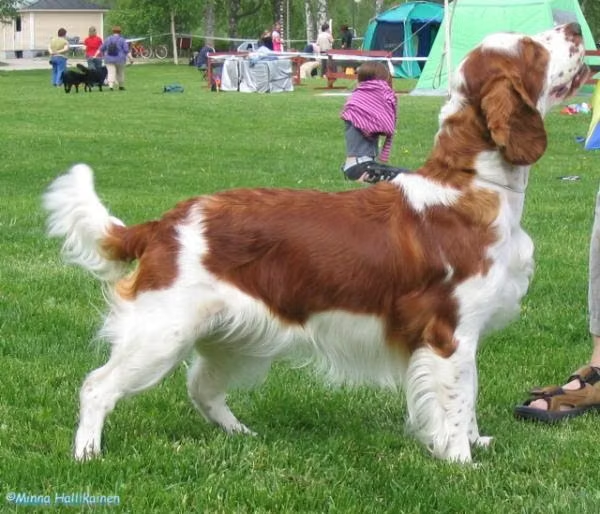
The Welsh Springer Spaniel is a compact, balanced gundog with a flat, silky red-and-white coat, a slightly domed head, and a kind, oval eye.
The Welsh Springer Spaniel is built for endurance rather than speed. The body is slightly longer than tall, with a deep chest, well-sprung ribs, and strong, muscular hindquarters. The head is proportionate, with a slightly domed skull, a straight muzzle, and long, low-set ears shaped roughly like a vine leaf. The overall impression is of an active, hard-working dog of medium substance.
| Trait | Standard |
|---|---|
| Height | Males 46-48 cm, females 43-46 cm at the withers |
| Weight | 16-25 kg |
| Coat | Straight or flat, soft and silky, with feathering on ears, chest, legs, and underside |
| Colours | Red (dark to rich red) and white only |
| Eyes | Medium, oval, hazel to dark brown, with a kind expression |
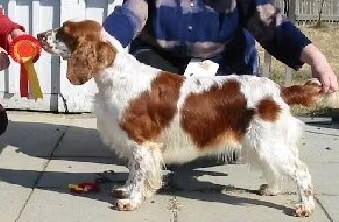
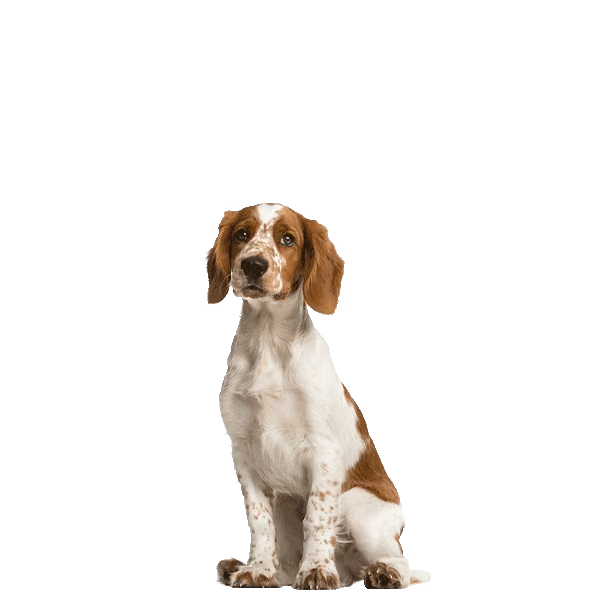
The Welsh Springer carries only one colour pattern: red and white. The red ranges from a deep mahogany to a lighter rich shade, marked in patches or roan over a white base. The coat is straight and silky, never wiry or curly, with moderate feathering on the ears, chest, backs of the legs, and tail. The single colour combination is a defining feature and helps distinguish the breed at a glance from the more variably marked English Springer.
The Welsh Springer Spaniel is friendly, affectionate, and loyal with its family, reserved with strangers, and generally good with other dogs and children when socialised.
The Welsh Springer Spaniel forms strong attachments to its people and likes to stay near them, sometimes following from room to room. With family it is affectionate, gentle, and playful, and it usually gets on well with children who treat it kindly. The breed is active and keen to work, so it does best when it has a job, whether that is fieldwork, training games, or scent activities.
With strangers the Welsh Springer tends to be reserved rather than outgoing. This caution is a normal breed trait, not shyness or aggression, and it can make a decent watchdog that alerts to visitors at the gate. Early socialisation helps a reserved dog become confident rather than wary.
Most Welsh Springers coexist well with other dogs and can live with cats if raised together, though their flushing instinct means small fleeing animals may trigger a chase. The breed is sensitive and responds poorly to harsh handling. It can develop separation-related behaviours if left alone for long periods, so it suits homes where someone is around much of the day.
| Trait | Rating |
|---|---|
| Affection | 5 |
| Energy | 4 |
| Trainability | 4 |
| Vocalness | 3 |
| Shedding | 3 |
The Welsh Springer Spaniel needs weekly brushing, ear care to prevent infections, and at least an hour of daily exercise with mental work.
The Welsh Springer adapts to most homes that offer regular outdoor activity. A house with a secure garden is ideal, but the breed can live in smaller flats if exercise needs are met. It prefers to be with its family and is not suited to being kennelled alone or left for long working days without company. In hot regions, provide shade, fresh water, and a cool spot indoors.
An active Welsh Springer Spaniel needs a complete, balanced diet matched to its life stage, fed in measured meals to keep it lean.
The Welsh Springer Spaniel does well on a complete, balanced diet formulated for medium-sized active dogs. Choose food appropriate to the dog's life stage, with adequate protein and fat to support a working metabolism. Because the breed enjoys food and can gain weight when under-exercised, measure portions and adjust to activity level and body condition rather than feeding free-choice.
| Life stage | Amount per day | Meals |
|---|---|---|
| Puppy (2-6 months) | Per product guide for growth, divided | 3-4 |
| Junior (6-12 months) | Per product guide, tapering | 2-3 |
| Adult (1-7 years) | Roughly 200-300 g of quality dry food | 2 |
| Senior (7+ years) | Slightly reduced, watch weight | 2 |
Keep treats to about 10 percent of daily calories and account for them in the overall ration, especially during training when food rewards are frequent. Most Welsh Springers on a complete diet need no extra supplements. Discuss any joint, skin, or coat supplements with a veterinarian before adding them, and provide fresh water at all times.
The Welsh Springer Spaniel is a generally healthy breed living 12 to 15 years, with hip dysplasia, eye conditions, and ear infections among the issues to watch.
The Welsh Springer Spaniel is a hardy, generally healthy breed with a typical lifespan of 12 to 15 years. Like most pedigree dogs it has a few conditions that responsible breeders screen for, and routine veterinary care helps catch problems early. Keeping the dog lean and well-exercised supports joint health and overall longevity.
| Condition | Signs | Note |
|---|---|---|
| Hip dysplasia | Stiffness, limping, reluctance to jump | Buy from hip-scored parents; keep the dog lean |
| Glaucoma | Red or cloudy eye, pain, vision loss | An urgent condition; the breed is screened for it |
| Hypothyroidism | Weight gain, lethargy, coat changes | Diagnosed by blood test, managed with daily medication |
| Ear infections | Head shaking, odour, scratching at ears | More likely due to the drop ear; prevent with ear care |
The Welsh Springer Spaniel is intelligent and eager to please, responding best to early socialisation and consistent, reward-based training.
The Welsh Springer Spaniel is intelligent, willing, and quick to learn, which makes it a rewarding dog to train. It is also sensitive, so firm but gentle methods work far better than harsh correction. The breed's reserved streak with strangers means early, varied socialisation is important: introduce puppies to new people, dogs, places, and sounds during the first months to build confidence.
Channel the natural flushing and retrieving instincts into structured activities such as gundog work, fetch, or scent games. A Welsh Springer that has an outlet for its drive is calmer and easier to live with.
Welsh Springer Spaniels reach maturity around two years, carry litters of about 6 to 10 puppies after a roughly 63-day pregnancy, and benefit from early socialisation.
Welsh Springer Spaniels reach physical and mental maturity at around 18 months to 2 years. Responsible breeders wait until a bitch is fully mature and health-screened before her first litter, and they health-test both parents for hip and eye conditions. Mating is timed to the bitch's season, and pregnancy lasts roughly 63 days from conception.
Litters typically range from about 6 to 10 puppies. The dam usually whelps and rears her litter with little intervention, but a clean, quiet whelping area and close monitoring in the first days help protect the puppies. Weaning begins at around three to four weeks.
From three weeks onward, gentle handling and exposure to everyday sights, surfaces, and sounds lay the groundwork for a confident adult. Given the breed's reserved nature with strangers, breeders who socialise litters carefully give the puppies a strong start. Puppies normally go to new homes at about eight weeks.
| Metric | Value |
|---|---|
| Sexual maturity | About 18-24 months for breeding |
| Gestation | Approximately 63 days |
| Average litter size | 6-10 puppies |
| Weaning age | 3-4 weeks |
| Homing age | About 8 weeks |
Municipal licences cover the paperwork; a free United Pet Club record is what actually connects your Welsh Springer Spaniel to your phone.
Municipal corporations in Delhi, Mumbai, Bengaluru, and numerous other cities require dogs to be registered or licensed under their by-laws, and a United Pet Club profile complements whichever rules apply where you live. The profile holds your contact information against your Welsh Springer Spaniel for its entire life, at no charge whatsoever. Registering your dog requires only a few minutes.
Should your Welsh Springer Spaniel already carry a microchip, the number must still be recorded separately, since the vet performs only the implant. Registering the microchip under the free lifetime plan accepts chips from any manufacturer an Indian vet works with, keeps every update free should your household shift cities, and leaves the record searchable at any hour. Create your free account and complete both tasks in one sitting.
Create a free United Pet Club account, enter your Welsh Springer Spaniel's details along with a photograph, and save the profile. The lifetime plan maintains the record at no cost, and any municipal licence you hold sits alongside it rather than replacing it.
Enter the fifteen digit chip number into your free account together with your current address, phone number, and email. The lifetime plan covers the registration and every subsequent update without charge, whatever the chip's manufacturer.
Several municipal corporations, Delhi and Mumbai among them, require dogs to be licensed under local by-laws. The United Pet Club profile is separate and voluntary, and it is the record a finder anywhere can actually search, free of cost.
Nothing whatsoever. The free lifetime plan includes the profile, the microchip record, and unlimited updates, with no renewal fee at any point.
Common questions about the Welsh Springer Spaniel's size, temperament, care needs, lifespan, suitability, and availability.
It is a medium-sized dog. Males stand about 46 to 48 cm at the shoulder and females about 43 to 46 cm, with most adults weighing between 16 and 25 kilograms.
Yes. They are affectionate and loyal with their families and generally good with children who treat them gently. They can be reserved with strangers, so early socialisation helps.
Care is moderate. They need at least an hour of daily exercise plus mental work, weekly brushing, and regular ear cleaning to prevent infections in the drop ears.
The typical lifespan is 12 to 15 years. Good nutrition, a healthy weight, exercise, and routine veterinary care support a long life.
Most do well with other dogs and can live with cats if raised together. Their flushing instinct means small fleeing animals may trigger a chase, so supervise introductions.
No. The breed bonds closely with its people and can develop separation-related behaviours if left alone for long periods. It suits homes where someone is around much of the day.
They are less common than the English Springer Spaniel but are bred steadily by dedicated breeders. Expect to join a waiting list rather than find a litter immediately.