
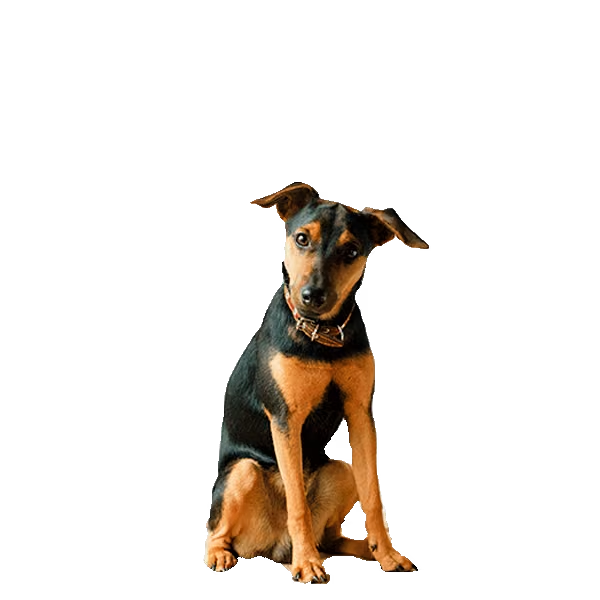
Transylvanian Hound
The Transylvanian Hound is a good-natured, determined Hungarian scenthound prized for its courage and tracking endurance.
- Size
- Medium
- Lifespan
- 10–14 years
- Origin
- Hungary
- Temperament
- Good-natured
- Standard colors
- Black, White, Tan and Red
Characteristics
Coat and grooming
How the Transylvanian Hound coat is built, and what that means when you groom it.
- Coat layers
- Double coat
- Coat texture
- Smooth
- Coat length
- Short
- Shedding
- Seasonal shedding
Grooming guidance
Critical: A Transylvanian Hound should not be shaved.
The undercoat keeps heat out as well as in, and the outer coat shields the skin from sun and insect bites. Clipping the whole coat off removes both. It often grows back patchy, soft or a different colour, and in some animals the guard hairs never return properly. Brush the undercoat out instead of cutting it off.
Information: A Transylvanian Hound drops its undercoat in heavy bursts.
The undercoat comes out in heavy bursts over a few weeks. An undercoat rake, or a bath followed by a proper blow-dry, clears it far faster than daily brushing. Clipping the coat down is not a shortcut for this.
Transylvanian Hound colors and patterns
What each club's breed standard says about every Transylvanian Hound color and pattern. Point at a ruling to see the club's own wording.
Breed standards describe the Transylvanian Hound in Black, White, Tan and Red. Standard patterns: Bicolour, Tricolour and Tan point.
| Color or pattern | FCI | AKC | UKC |
|---|---|---|---|
| Black | Standard (“The primary colour of the Hungarian Hound is black”) | Standard (“Black & Tan”) | Standard (“a black base color”) |
| White | Standard (“a white marking may occur”) | Standard (“Black Tan & White”) | Standard (“white markings on the head, neck, chest, lower legs and tip of tail”) |
| Tan | Standard (“Tan markings on muzzle and legs”) | Standard (“Black & Tan”) | Standard (“tan on the muzzle, legs and eyebrows”) |
| Red | No ruling | Standard (“Red & White”) | No ruling |
| Albino | No ruling | No ruling | Disqualifying (“Albinism”) |
| Blue | Disqualifying (“blue colour with markings”) | Disqualifying (“blue colour with markings”) | Disqualifying (“blue base color”) |
| Brown | Disqualifying (“Brown ... colour with markings”) | Disqualifying (“Brown ... colour with markings”) | Disqualifying (“Brown ... base color”) |
| Patterns | |||
| Bicolour | No ruling | Standard (“Red & White”) | No ruling |
| Tricolour | Standard (“On the nose, a white marking may occur”) | Standard (“Black Tan & White”) | Standard (“Tri-color”) |
| Tan point | Standard (“Tan markings on muzzle and legs”) | Standard (“Black & Tan”) | Standard (“tan on the muzzle, legs and eyebrows”) |
%22%3E%3Cpath%20d%3D%22M0%2023L9.5%2020.4L14%2025.4L19%2029.6Q21%2035%2023.5%2035.5Q36%2033%2050%2036L56%2040V64H0Z%22%20fill%3D%22%23F5F5F0%22%2F%3E%3C%2Fg%3E%3Cuse%20href%3D%22%23s%22%20fill%3D%22none%22%20stroke%3D%22%233B2A20%22%20stroke-opacity%3D%220.6%22%20stroke-width%3D%221%22%20stroke-linejoin%3D%22round%22%2F%3E%3Cellipse%20cx%3D%223.2%22%20cy%3D%2221.7%22%20rx%3D%221.3%22%20ry%3D%221.2%22%20fill%3D%22%231C1C1C%22%2F%3E%3Ccircle%20cx%3D%2210.8%22%20cy%3D%2219.3%22%20r%3D%221.1%22%20fill%3D%22%231C1C1C%22%2F%3E%3C%2Fsvg%3E)
%22%3E%3Cellipse%20cx%3D%2212.6%22%20cy%3D%2222.6%22%20rx%3D%223.2%22%20ry%3D%222.8%22%20fill%3D%22%23847865%22%2F%3E%3Ccircle%20cx%3D%2212%22%20cy%3D%2217.2%22%20r%3D%221.25%22%20fill%3D%22%23847865%22%2F%3E%3Crect%20x%3D%220%22%20y%3D%2247%22%20width%3D%2264%22%20height%3D%2217%22%20fill%3D%22%23847865%22%2F%3E%3Cpath%20d%3D%22M8.6%2018L12%2015.8L5.8%2021.8L3.2%2021.4Z%22%20fill%3D%22%23F5F5F0%22%2F%3E%3Cpath%20d%3D%22M1.5%2021.2L9%2018.6L12.6%2021L12.2%2026.2L3.5%2024.4Z%22%20fill%3D%22%23F5F5F0%22%2F%3E%3Cpath%20d%3D%22M14%2024.5L18.5%2026Q19.5%2033%2023%2039L18%2040Q17%2033%2014%2028Z%22%20fill%3D%22%23F5F5F0%22%2F%3E%3Cpath%20d%3D%22M21%2035.5Q35%2033.5%2048%2036.5V42H21Z%22%20fill%3D%22%23F5F5F0%22%2F%3E%3Crect%20x%3D%220%22%20y%3D%2252.5%22%20width%3D%2264%22%20height%3D%2212%22%20fill%3D%22%23F5F5F0%22%2F%3E%3Ccircle%20cx%3D%2258.4%22%20cy%3D%2212.8%22%20r%3D%222.6%22%20fill%3D%22%23F5F5F0%22%2F%3E%3C%2Fg%3E%3Cuse%20href%3D%22%23s%22%20fill%3D%22none%22%20stroke%3D%22%233B2A20%22%20stroke-opacity%3D%220.6%22%20stroke-width%3D%221%22%20stroke-linejoin%3D%22round%22%2F%3E%3Cellipse%20cx%3D%223.2%22%20cy%3D%2221.7%22%20rx%3D%221.3%22%20ry%3D%221.2%22%20fill%3D%22%231C1C1C%22%2F%3E%3Ccircle%20cx%3D%2210.8%22%20cy%3D%2219.3%22%20r%3D%221.1%22%20fill%3D%22%231C1C1C%22%2F%3E%3C%2Fsvg%3E)
%22%3E%3Ccircle%20cx%3D%2212%22%20cy%3D%2217.2%22%20r%3D%221.25%22%20fill%3D%22%23C4996A%22%2F%3E%3Cpath%20d%3D%22M1.5%2021.2L9%2018.6L12.6%2021L12.2%2026.2L3.5%2024.4Z%22%20fill%3D%22%23C4996A%22%2F%3E%3Cpath%20d%3D%22M10%2026L14.5%2026.4L18.2%2029.2L13.5%2029.8Z%22%20fill%3D%22%23C4996A%22%2F%3E%3Cellipse%20cx%3D%2221.2%22%20cy%3D%2230.6%22%20rx%3D%221.6%22%20ry%3D%222.3%22%20fill%3D%22%23C4996A%22%2F%3E%3Crect%20x%3D%220%22%20y%3D%2247%22%20width%3D%2264%22%20height%3D%2217%22%20fill%3D%22%23C4996A%22%2F%3E%3Cpath%20d%3D%22M51.5%2024.5L55%2027L54.2%2032L50.5%2028.5Z%22%20fill%3D%22%23C4996A%22%2F%3E%3Cpath%20d%3D%22M45%2038.5L48%2039L48.5%2047L45.5%2047Z%22%20fill%3D%22%23C4996A%22%2F%3E%3C%2Fg%3E%3Cuse%20href%3D%22%23s%22%20fill%3D%22none%22%20stroke%3D%22%233B2A20%22%20stroke-opacity%3D%220.6%22%20stroke-width%3D%221%22%20stroke-linejoin%3D%22round%22%2F%3E%3Cellipse%20cx%3D%223.2%22%20cy%3D%2221.7%22%20rx%3D%221.3%22%20ry%3D%221.2%22%20fill%3D%22%231C1C1C%22%2F%3E%3Ccircle%20cx%3D%2210.8%22%20cy%3D%2219.3%22%20r%3D%221.1%22%20fill%3D%22%231C1C1C%22%2F%3E%3C%2Fsvg%3E)
| Color or pattern | FCI | AKC | UKC |
|---|---|---|---|
| Dark brown | Standard (“The colour is dark brown”) | Standard (“The colour is dark brown”) | Standard (“dark brown in color”) |
| Color or pattern | FCI | AKC | UKC |
|---|---|---|---|
| Black | Standard (“the colour is black”) | Standard (“the colour is black”) | Standard (“The nose is wide and black”) |
What the rulings mean
- Standard
- Described by the club's breed standard.
- Disqualifying
- The club's breed standard disqualifies an animal of this colour or pattern.
Color changes
How a Transylvanian Hound's colors can change over its life.
Blackchanges toRust
Coat · With body condition · can change back
Blackchanges toGrey
Coat · Progressive
Blackchanges toBrown
Coat · In the sun · can change back
Whitechanges toRoan
Coat · With age · from 2 weeks
Tan pointchanges toSaddle
Coat · With age · from 6 to 156 weeks
Blackchanges toSnow nose
Nose · With the season · can change back
Blackchanges toPink
Nose · With the season · can change back
%22%3E%3Cg%20fill%3D%22none%22%20stroke%3D%22%23F5F5F0%22%20stroke-width%3D%221.15%22%20stroke-linecap%3D%22round%22%20stroke-linejoin%3D%22round%22%3E%3Cpath%20d%3D%22M28.6%2025h.1M51.3%2028.8h.1M34.7%2024.3h.1M34.2%2041.6h.1M51%2044.2h.1M55.9%2024.7h.1M27.5%2026.3h.1M18.5%2028.6h.1M25.2%2028.9h.1M24.2%2019.3h.1M20.6%2017.6h.1M34.1%2030.6h.1M57.3%2023.3h.1M23.5%2030.7h.1M26.5%2023.1h.1M40%2031.5h.1M51.7%2038.6h.1M20.2%2022.1h.1M40.4%2037.8h.1M35%2043.1h.1M20.6%2031.7h.1M27.8%2031.9h.1M17.2%2021.1h.1M38.1%2037.7h.1M25.3%2040.5h.1M32%2029.3h.1M41.6%2039.5h.1M23.6%2024h.1M26.4%2018.6h.1M30.3%2031.9h.1M31.2%2035.2h.1M36.5%2043.7h.1M35.2%2026.3h.1M55.6%2019.1h.1M22.4%2036.8h.1M39.2%2020h.1M49.5%2039.1h.1M33.6%2033.5h.1M36.4%2032.4h.1M56.3%2042.4h.1M54.8%2031.2h.1M36.9%2023.2h.1M52.7%2019.1h.1M21.5%2033.8h.1M48.6%2028h.1M36.6%2017.5h.1M45.6%2031.3h.1M37.9%2030.5h.1M17%2031.8h.1M21.1%2043.1h.1M55.7%2021.1h.1M30.8%2041.9h.1M57.4%2038.4h.1M54.8%2026.9h.1M29.1%2017.5h.1M24.3%2037.7h.1M26%2032h.1M39.3%2022.8h.1M53.5%2029h.1M53.3%2023.3h.1M20%2038.4h.1M28.3%2044.7h.1M28.6%2039.8h.1M51.9%2041.1h.1M52.3%2033.7h.1M19.6%2042.2h.1M19%2033h.1M47.8%2021.7h.1M45.7%2024.8h.1M24.6%2035.5h.1M29.8%2036.8h.1M50.7%2032h.1M29.5%2043.5h.1M28.2%2041.5h.1M47.4%2034.8h.1M25.4%2033.7h.1M50.2%2041.2h.1M27.7%2029.5h.1M21.5%2024.8h.1M55.5%2017.5h.1M41.2%2044.3h.1M39.2%2018.4h.1M41.1%2042.5h.1M54.7%2035.3h.1M42.8%2034.5h.1M30.1%2023h.1M42.6%2025.1h.1M32.9%2024.4h.1M42.4%2032.4h.1M49.7%2022.2h.1M49.1%2043.1h.1M38%2035.2h.1M47.7%2043.8h.1M43.1%2022.4h.1M22.4%2040.4h.1M44.4%2019.8h.1M53.3%2040.1h.1M20.7%2029.3h.1M55.6%2043.9h.1M17.6%2039.2h.1M41.7%2028.9h.1M44.1%2036.3h.1M24.3%2043.6h.1M26.4%2038.1h.1M30.3%2029.2h.1M31.5%2030.8h.1M32.1%2023h.1M18.3%2040.9h.1M48%2033.4h.1M36.4%2038.7h.1M31.9%2020.8h.1M32.6%2026.2h.1M22%2031.2h.1M53.4%2021.7h.1M41.9%2017.7h.1M53.3%2037.3h.1M47.7%2040.3h.1M54.4%2033.7h.1M33.6%2037.5h.1M25.3%2017.2h.1M37.6%2019.7h.1M31.6%2019h.1M29.2%2019.6h.1M50.7%2027.3h.1M22%2022.1h.1M31%2037.8h.1M56.5%2026.6h.1M34.7%2039.5h.1M56.5%2040.8h.1M47.6%2038h.1M48.6%2026.1h.1M49.7%2034.2h.1M45.4%2027.4h.1M22.6%2038.9h.1M56.5%2035.3h.1M35.1%2021h.1M41.9%2020.1h.1M37.6%2040h.1M32.6%2044.4h.1M37.9%2025.2h.1M26.6%2043h.1M18.9%2036.7h.1M47.2%2028.9h.1M30.5%2026.2h.1M17.4%2027.3h.1M47.1%2017.2h.1M22.3%2044.3h.1M32.5%2042.4h.1M23.6%2025.7h.1M31.4%2024.9h.1%22%2F%3E%3Cpath%20d%3D%22M26%2020.9h.1M41.2%2023.8h.1M39.9%2026.4h.1M28.5%2033.4h.1M42.8%2043.8h.1M17.6%2034.3h.1M34%2017.1h.1M31.2%2017.2h.1M46.5%2036.1h.1M25.1%2022.1h.1M50.3%2023.7h.1M20.2%2026.6h.1M20.8%2020.4h.1M50.9%2017.3h.1M49.5%2020.2h.1M52.9%2044.1h.1M23.9%2017.8h.1M43.2%2028.1h.1M57.6%2030h.1M52%2025.6h.1M19.2%2019.1h.1M19.5%2024.4h.1M32.8%2040.1h.1M36.1%2027.7h.1M39.6%2029.5h.1M38.4%2041.5h.1M47.9%2019.4h.1M49.1%2031.7h.1M55.9%2036.9h.1M29.2%2027.2h.1M46%2043.5h.1M44.6%2028.8h.1M47.5%2031.5h.1M22.8%2020h.1M27.6%2017.1h.1M43.1%2018.6h.1M54.3%2020h.1M57.2%2033.8h.1M44.5%2043.8h.1M27.1%2035.5h.1M45.3%2041.8h.1M56.7%2028.8h.1M36.7%2021.4h.1M43.3%2042.3h.1M17.3%2022.9h.1M32.7%2035.5h.1M30.5%2039.8h.1M29.1%2021.2h.1M34.5%2018.8h.1M25.8%2027h.1%22%2F%3E%3C%2Fg%3E%3Cpath%20d%3D%22M56.3%2038.4l0%201.2M40%2027.2l-0.3%201.3M32.6%2043.6l-0.4%201.5M29%2023.3l0.8%201.5M55.1%2044l0.4%201.1M47.5%2022.5l-0.2%201.6M42.9%2038.6l0.7%201.2M35.2%2041.8l-0.5%201.7M26.9%2040l-0.1%201.2M41%2042.8l-0.1%201.6M18.4%2021.2l0.7%201.3M49.4%2019.3l-0.5%201.4M50.1%2041.7l0%201.8M28.2%2041.8l-0.6%201.2M55.5%2027.1l0.2%201.2M44.7%2019.3l0.5%201.7M48.6%2020.5l-0.8%201.4M43.7%2039.6l0.3%201.1M22.1%2033.8l-0.6%201.6M50.1%2038.1l-0.5%201.3M51.8%2044.1l-0.1%201.8M39%2017.5l0%201.4M30.2%2026.7l0.2%201.4M25.8%2031.2l0.2%201.6M29.6%2043.5l0.1%201M43.7%2018.3l0.1%201.5M29.6%2018.2l0.3%201.6M24.4%2017.6l0.3%201.1M22%2028.2l-0.6%201.6M25.9%2043.3l-0.3%201.4M22.2%2024.3l0.3%201.3M47.3%2029.2l-0.2%201.4M21.8%2033.2l0.5%200.9M32.9%2037l0.4%201M40%2029.9l0.8%201.4M17.4%2038.3l0.2%201.3M31%2039.2l0%201.2M37.3%2033.7l0.3%201.5M48.1%2040.5l0%201.6M33.9%2031.2l0.1%201.2M29.8%2035.2l-0.4%201M25.1%2037.3l-0.2%201.5M30.2%2039.8l0.5%201M44.6%2034.8l0.4%200.9M55.3%2034.2l0%201.7M50.6%2017.9l0.4%201M30.2%2034.9l-0.4%201.4M19.5%2035.7l-0.5%201.7M40.7%2028.7l0.8%201.4M23.3%2029l-0.4%201.4M17%2040.5l-0.2%201M48.4%2023.2l-0.3%201M37.3%2025.1l-0.4%201.3M23%2021.4l-0.4%201.3M20.4%2017.2l-0.1%201.3M42.3%2020.4l0.6%201.4M41%2031.8l0.6%201.2M45.4%2034.3l-0.1%201.2M32.5%2018l0%201.3M46.2%2021.6l0.1%201.4M30.5%2022.3l0.5%201.1M58%2044.6l0.3%201.5M57.1%2033.9l0.8%201.4M18.3%2042.6l0.3%201M40.5%2035.1l-0.6%201.4M38.8%2044.3l-0.3%201.1%22%20fill%3D%22none%22%20stroke%3D%22%23F5F5F0%22%20stroke-width%3D%220.8%22%20stroke-linecap%3D%22round%22%20stroke-linejoin%3D%22round%22%2F%3E%3C%2Fg%3E%3Cuse%20href%3D%22%23s%22%20fill%3D%22none%22%20stroke%3D%22%233B2A20%22%20stroke-opacity%3D%220.6%22%20stroke-width%3D%221%22%20stroke-linejoin%3D%22round%22%2F%3E%3Crect%20x%3D%2220%22%20y%3D%2258%22%20width%3D%223.6%22%20height%3D%222%22%20fill%3D%22%234A4038%22%2F%3E%3Crect%20x%3D%2226%22%20y%3D%2258%22%20width%3D%223.6%22%20height%3D%222%22%20fill%3D%22%234A4038%22%2F%3E%3Crect%20x%3D%2244%22%20y%3D%2258%22%20width%3D%223.6%22%20height%3D%222%22%20fill%3D%22%234A4038%22%2F%3E%3Crect%20x%3D%2250%22%20y%3D%2258%22%20width%3D%223.6%22%20height%3D%222%22%20fill%3D%22%234A4038%22%2F%3E%3Ccircle%20cx%3D%229.5%22%20cy%3D%2211.5%22%20r%3D%221.1%22%20fill%3D%22%231C1C1C%22%2F%3E%3C%2Fsvg%3E)
%22%3E%3Cpath%20d%3D%22M22.5%2018.5Q24%2021%2025%2021.5L47%2022.5Q50%2022.5%2051.5%2023.5L54%2026Q55%2032%2053%2034Q46%2031.5%2038%2033Q30%2034.5%2025.5%2032Q22.5%2026%2022.5%2018.5Z%22%20fill%3D%22%231C1C1C%22%2F%3E%3Cpath%20d%3D%22M51%2024L56%209L63%209L61%2019L54.5%2028Z%22%20fill%3D%22%231C1C1C%22%2F%3E%3Cpath%20d%3D%22M2%2021.2L7.5%2019.2L8.5%2023.6L3.5%2024.2Z%22%20fill%3D%22%231C1C1C%22%20fill-opacity%3D%220.85%22%2F%3E%3C%2Fg%3E%3Cuse%20href%3D%22%23s%22%20fill%3D%22none%22%20stroke%3D%22%233B2A20%22%20stroke-opacity%3D%220.6%22%20stroke-width%3D%221%22%20stroke-linejoin%3D%22round%22%2F%3E%3Cellipse%20cx%3D%223.2%22%20cy%3D%2221.7%22%20rx%3D%221.3%22%20ry%3D%221.2%22%20fill%3D%22%231C1C1C%22%2F%3E%3Ccircle%20cx%3D%2210.8%22%20cy%3D%2219.3%22%20r%3D%221.1%22%20fill%3D%22%231C1C1C%22%2F%3E%3C%2Fsvg%3E)
%22%3E%3Crect%20x%3D%2217%22%20y%3D%2210%22%20width%3D%2230%22%20height%3D%2242%22%20fill%3D%22url(%23g)%22%2F%3E%3C%2Fg%3E%3Cuse%20href%3D%22%23s%22%20fill%3D%22none%22%20stroke%3D%22%233B2A20%22%20stroke-opacity%3D%220.6%22%20stroke-width%3D%221%22%20stroke-linejoin%3D%22round%22%2F%3E%3Cpath%20d%3D%22M12.5%2037Q13%2032%2018.5%2032Q23.5%2032.5%2023.5%2036.5Q20.5%2035.5%2018.8%2037Q17.4%2038.6%2018%2041.5Q13.6%2040.4%2012.5%2037Z%22%20fill%3D%22%231C1C1C%22%20fill-opacity%3D%220.8%22%20stroke%3D%22%23F5F5F0%22%20stroke-opacity%3D%220.4%22%20stroke-width%3D%220.9%22%2F%3E%3Cpath%20d%3D%22M51.5%2037Q51%2032%2045.5%2032Q40.5%2032.5%2040.5%2036.5Q43.5%2035.5%2045.2%2037Q46.6%2038.6%2046%2041.5Q50.4%2040.4%2051.5%2037Z%22%20fill%3D%22%231C1C1C%22%20fill-opacity%3D%220.8%22%20stroke%3D%22%23F5F5F0%22%20stroke-opacity%3D%220.4%22%20stroke-width%3D%220.9%22%2F%3E%3Cpath%20d%3D%22M32%2040V50%22%20fill%3D%22none%22%20stroke%3D%22%231C1C1C%22%20stroke-width%3D%221.3%22%20stroke-opacity%3D%220.5%22%20stroke-linecap%3D%22round%22%20stroke-linejoin%3D%22round%22%2F%3E%3Cellipse%20cx%3D%2232%22%20cy%3D%2221%22%20rx%3D%2212%22%20ry%3D%223.5%22%20fill%3D%22%23F5F5F0%22%20fill-opacity%3D%220.18%22%2F%3E%3C%2Fsvg%3E)
Sources
Each ruling comes from the club's published breed standard or color list.
About the Transylvanian Hound
The Transylvanian Hound is a medium-sized Hungarian scenthound, good-natured and driven, though its cold-climate coat needs real planning for owners in India's heat.
The Transylvanian Hound is a medium-sized scenthound that hails from Hungary, developed to track game through the forests and hills of the Carpathian region. It is first and foremost a working dog, with the stamina to hold a scent trail for hours together and the grit to stand up to large quarry. At home, owners find it steady and easygoing; on a trail, it turns alert and single-minded.
The coat is short and dense, usually black with tan markings on the face, chest, and legs. The build is athletic rather than heavy, with a deep chest and strong legs meant for long days outdoors in cold conditions. This is worth noting for prospective owners in India, since the breed was shaped for cold Carpathian winters and does not cope well with the heat and humidity found across most of the country. Adults stand in the medium range and carry enough weight to push through brush and snow without tiring quickly.
The Transylvanian Hound bonds closely with its family and gets along well with children, though it keeps the independent streak typical of hounds. It needs a daily task to occupy its mind. Left in a quiet home with no outlet for its drive, it tends to grow restless and start baying.
| Attribute | Detail |
|---|---|
| Origin | Hungary |
| Size | Medium |
| Lifespan | 10 to 14 years |
| Group / role | Scenthound, tracking and hunting |
| Good with | Families, older children, and other dogs when socialised |
Who this breed suits
The Transylvanian Hound suits an active household that can offer it genuine exercise and time outdoors, ideally in a cooler climate such as a hill station or the higher reaches of the Himalayas or the Nilgiris. It does well with people who trek, run, or take an interest in scent work and tracking sports. Flat life or long hours alone do not suit it. Early socialisation helps it settle around smaller pets, given how strong its prey drive can be.
History of the Transylvanian Hound
The Transylvanian Hound developed in the Carpathian Basin as a hunting dog of Hungarian nobility, nearly vanished in the twentieth century, and was rebuilt through a dedicated recovery effort.
The Transylvanian Hound goes back to the medieval Kingdom of Hungary, where it was used to hunt game across the Carpathian Basin. The mix of high mountains, dense forest, and open valleys in that region shaped a dog capable of working varied terrain, and over time two forms emerged: a taller type for big game such as bison, bear, and boar, and a shorter-legged type for fox and hare.
For centuries the breed stayed close to Hungarian and Transylvanian nobility, who prized its nose and its nerve on demanding hunts. As hunting habits changed and the large game it once pursued grew scarce, demand for the dog fell away. By the early twentieth century its numbers had dropped sharply, and the shorter-legged type disappeared for all practical purposes.
The breed reached its lowest point around the middle of the twentieth century, when the population nearly vanished altogether. A deliberate recovery programme then began in Hungary to gather the surviving dogs and rebuild the line, concentrating on the tall type that had held on in small numbers in remote pockets of the country.
That effort stabilised and standardised the breed, and it is recognised today as a national breed of Hungary. It remains rare outside its home region, kept largely by hunters and by enthusiasts working to keep the bloodlines healthy; in India it turns up only rarely, brought in by a small circle of hound enthusiasts.
Appearance of the Transylvanian Hound
The Transylvanian Hound is an athletic medium-sized dog with a short black-and-tan coat, a deep chest, and the lean, balanced build of a working scenthound.
The Transylvanian Hound has the clean, functional outline of a scenthound built for endurance. The body is a shade longer than it is tall, with a deep chest, level back, and well-muscled hindquarters. The head is elongated with a moderate stop, and the ears hang flat against the cheeks. The overall impression is of a dog that is strong without being bulky, built to cover ground for hours at a stretch.
| Trait | Standard |
|---|---|
| Height | About 55 to 65 cm (22 to 26 in) at the shoulder |
| Weight | About 25 to 35 kg (55 to 77 lb) |
| Coat | Short, dense, smooth double coat that lies flat |
| Colours | Black with tan markings; tan points over the eyes, on the muzzle, chest, and legs |
| Eyes | Dark brown, oval, with an alert and calm expression |
Coat and colours
The coat is short and weather-resistant, with a dense undercoat that once protected the dog on cold, wet hunts in the Carpathians, though this same coat can work against it during an Indian summer or the humid stretch of the monsoon. The standard colour is black with clearly defined tan markings, including spots above the eyes that give the face its distinctive look, plus tan on the muzzle, chest, lower legs, and under the tail. A small white mark on the chest or toes turns up occasionally. Upkeep is minimal beyond regular brushing, though shedding picks up during the change of seasons, and owners in humid regions should keep an eye on the skin underneath for irritation.
Temperament of the Transylvanian Hound
The Transylvanian Hound is good-natured and loyal at home, courageous and single-minded on a trail, and generally friendly with people and other dogs.
At home, the Transylvanian Hound is even-tempered and affectionate, and it forms a close bond with its family. It is patient with children and usually gets along with other dogs, particularly when raised together from puppyhood. With strangers, it tends to hang back and observe rather than react, warming up once it has judged the situation safe. This watchfulness makes it a useful alert dog, though guarding is not really its calling.
The working side of its nature comes out on a trail. Once it locks on to a scent, it turns single-minded and can be next to impossible to call off. The same drive means it will chase cats, squirrels, or the neighbourhood strays, so a secure compound and a dependable recall matter a great deal. The breed is intelligent and picks things up fast, but it keeps a hound's independent streak and responds better to patient, consistent handling than to harsh correction. Left bored, it tends to dig, look for a way out of the garden, or bay for long stretches.
| Trait | Rating |
|---|---|
| Affection | 4 |
| Energy | 4 |
| Trainability | 3 |
| Vocalness | 4 |
| Shedding | 3 |
Caring for a Transylvanian Hound
The Transylvanian Hound needs a low-maintenance coat routine, plenty of daily exercise, and a secure outdoor space, with extra care during India's hot, humid months.
Grooming
- Brush the short coat once a week to clear loose hair and spread natural oils
- Step up brushing during the seasonal shed, typically around the change of seasons
- Bathe only when genuinely dirty, since frequent washing strips the coat of its natural protection
- Check and clean the drop ears regularly, especially through the monsoon, to keep moisture and infection at bay
- Trim nails every few weeks and brush teeth several times a week
Exercise
- Set aside at least 60 to 90 minutes of activity a day
- Combine walking or running with off-leash time in a safe, enclosed area
- Offer scent games, tracking work, or canine sport to give the nose something to do
- Keep the dog on lead or within a fenced space in open ground, since a scent trail can override recall in an instant
- Exercise in the early morning or evening during hot weather, and skip strenuous activity through the peak afternoon heat
Environment
The Transylvanian Hound does best in a home with a securely fenced garden and access to the outdoors. Its dense coat handles cold and wet conditions well, which suited it to the Carpathian winters, but this also means it needs help coping with Indian heat: shade, ventilation, and cool water through the day, with the peak summer months being the hardest stretch. It should live indoors with the family rather than being kept in a kennel by itself. Boundary walls or fencing need to be solid and tall enough to stop a determined climber or digger. Flats and long stretches alone do not suit this breed.
Feeding a Transylvanian Hound
The Transylvanian Hound does well on a balanced diet matched to its activity level, fed in measured meals to keep the dog lean and to lower bloat risk.
As an active, medium-sized working dog, the Transylvanian Hound needs a complete, balanced diet with enough protein and fat to support its stamina. A dog that is out tracking or working needs larger portions during active periods, while a less active pet dog can put on weight fast if overfed. Feed an amount suited to age, weight, and workload, and adjust by body condition rather than by the packet alone. Fresh, clean drinking water should be available at all times, particularly through the hot months.
| Life stage | Amount per day | Meals |
|---|---|---|
| Puppy (2 to 6 months) | Per puppy-formula guidance, by weight | 3 to 4 |
| Junior (6 to 12 months) | Tapering toward adult portion | 2 to 3 |
| Adult (1 to 7 years) | About 250 to 400 g of quality dry food | 2 |
| Senior (8+ years) | Slightly reduced, watch weight | 2 |
Treats and supplements
Keep treats to around ten percent of daily calories and trim the main meal to match, particularly when food rewards feature heavily in training. Most dogs on a complete diet need no extra supplements; add joint, skin, or other supplements only on a vet's advice. Deep-chested dogs can be prone to bloat, so avoid strenuous exercise right before and after meals, and consider splitting the daily food into two servings rather than one large one.
Health of the Transylvanian Hound
The Transylvanian Hound is a generally hardy breed with a 10 to 14 year lifespan, though it shares the joint and ear concerns common to active drop-eared dogs.
The Transylvanian Hound is considered a robust, healthy breed, a result of its working background and the careful recovery programme that rebuilt it. With good care, most dogs live 10 to 14 years. The narrow gene pool left behind by the breed's near-extinction means responsible breeders pay close attention to genetic diversity and screening. As with most active, drop-eared dogs, the main everyday concerns are joints and ears, and in India's climate, ticks and heat-related skin issues deserve attention too.
| Condition | Signs | Note |
|---|---|---|
| Hip dysplasia | Stiffness, limping, reluctance to jump or climb | Screen breeding stock; keep the dog lean |
| Elbow dysplasia | Foreleg lameness, especially after exercise | More likely in larger, active dogs |
| Ear infections | Head shaking, odour, scratching at the ears | Drop ears trap moisture; clean and dry regularly |
| Bloat (gastric torsion) | Swollen abdomen, retching, restlessness | Deep-chested build raises risk; an emergency |
Preventive care
- Keep vaccinations and parasite control up to date, including tick prevention given the outdoor work and the Indian climate
- Maintain a lean body condition to protect the joints
- Clean and dry the ears after wet outings, especially during the monsoon
- Book annual checkups, with more frequent visits for older dogs
- Use hip and elbow screening when selecting dogs for breeding
Training a Transylvanian Hound
The Transylvanian Hound is intelligent and willing but independent, so it learns best with early, consistent, reward-based training and a strong focus on recall.
The Transylvanian Hound is a sharp dog that picks up commands quickly, but it carries a scenthound's independent mindset. It works well for a handler it respects and tends to switch off during repetitive drilling or harsh handling. Short, varied sessions with clear rewards hold its attention far better than long, repetitive ones. Start training and socialisation early, while the puppy is still open to new people, dogs, and situations.
Recall deserves particular attention. Once this hound picks up a scent, it can turn deaf to every command, so a dependable recall and a secure space are safety essentials, not optional extras. Channelling the breed's nose into tracking or scent sport gives it the mental work it craves and makes it a far easier dog to live with day to day.
Basics
- Socialise early with a range of people, dogs, places, and sounds
- Teach name response and attention before anything else
- Build a solid recall using high-value rewards in low-distraction settings, then raise the difficulty gradually
- Establish lead manners to manage the pulling that comes with chasing scents
- Add scent or tracking games to give the nose a proper outlet
Breeding the Transylvanian Hound
Breeding the Transylvanian Hound calls for health screening and careful pairing because of the breed's limited gene pool, with litters and rearing typical of a medium working dog.
Breeding the Transylvanian Hound calls for care, given that the breed nearly disappeared in the twentieth century and was rebuilt from a small number of surviving dogs. Responsible breeders work to preserve genetic diversity, avoid close matings, and screen for hip and elbow issues before pairing dogs. Bitches should reach full physical maturity before breeding, and a mating is usually planned around the female's heat cycle.
Gestation in dogs runs to about 63 days. Litter sizes are typical for a medium breed, and the dam usually manages whelping and early rearing with little help, though a quiet, warm whelping area and a vet on standby are sensible precautions. Puppies are weaned gradually onto solid food and should start socialisation early, since what they are exposed to in the first weeks shapes the calm, confident temperament the breed is known for. Given how uncommon the breed is, prospective owners in India would typically need to import a puppy or work with an overseas breeder, and should register any litter with the Kennel Club of India where applicable.
| Metric | Value |
|---|---|
| Sexual maturity | About 6 to 12 months (breed later) |
| Recommended breeding age | From about 2 years, after health screening |
| Cycle | Female comes into heat roughly twice a year |
| Gestation | About 63 days |
| Average litter size | Around 6 to 8 puppies |
| Weaning | About 6 to 8 weeks |
Registering a Transylvanian Hound in India: profile and microchip
Municipal licences cover the paperwork; a free United Pet Club record is what actually connects your Transylvanian Hound to your phone.
How to register a Transylvanian Hound in India
Begin with the essentials: your Transylvanian Hound's name, its date of birth, a clear photograph, and your mobile number, saved to a registry that levies no charge at any stage. Dog registration functions with or without a microchip, so nothing need wait for the next clinic visit.
A microchip without a registration is merely a number under the skin. File your Transylvanian Hound's fifteen digit number with United Pet Club and it becomes a working address: free for life, open to every chip brand, and searchable from any clinic or shelter in the country or abroad. Microchip registration first, the free account alongside.
How do I register my Transylvanian Hound in India?
Create a free United Pet Club account, enter your Transylvanian Hound's details along with a photograph, and save the profile. The lifetime plan maintains the record at no cost, and any municipal licence you hold sits alongside it rather than replacing it.
How do I register my Transylvanian Hound's microchip?
Enter the fifteen digit chip number into your free account together with your current address, phone number, and email. The lifetime plan covers the registration and every subsequent update without charge, whatever the chip's manufacturer.
Is registration compulsory for a Transylvanian Hound in India?
Several municipal corporations, Delhi and Mumbai among them, require dogs to be licensed under local by-laws. The United Pet Club profile is separate and voluntary, and it is the record a finder anywhere can actually search, free of cost.
What does it cost to register a Transylvanian Hound?
Nothing whatsoever. The free lifetime plan includes the profile, the microchip record, and unlimited updates, with no renewal fee at any point.
Transylvanian Hound frequently asked questions
Common questions about the Transylvanian Hound cover its size, temperament, care needs in Indian conditions, lifespan, suitability as a pet, and how hard it is to find.
How big does a Transylvanian Hound get?
It is a medium-sized dog, standing roughly 55 to 65 cm (22 to 26 in) at the shoulder and weighing about 25 to 35 kg (55 to 77 lb) once fully grown.
What is the temperament of a Transylvanian Hound like?
It is good-natured and devoted at home, patient with children, and generally friendly with other dogs. On a trail it turns focused and courageous, with the independent streak typical of scenthounds.
Is the Transylvanian Hound hard to maintain?
Coat care is simple, but exercise needs are high, and Indian heat is a real challenge for this cold-climate breed. It needs daily activity, a secure compound, and ideally a job for its nose, along with shade and rest during the hottest hours. It does not suit flats or long hours left alone.
How long does a Transylvanian Hound live?
Most live 10 to 14 years with good nutrition, regular veterinary care, and a healthy body weight.
Does the Transylvanian Hound make a good family dog?
Yes, for an active family that can meet its exercise needs. It bonds closely with its people and is patient with children. Its prey drive means smaller pets at home need careful, supervised introductions.
Is the Transylvanian Hound easy to find in India?
No. It is rare outside Hungary and the surrounding region, and there is no established breeding population in India, so most buyers would need to import from a recognised overseas breeder. Always choose one who health-screens and works to maintain genetic diversity, and check quarantine and import rules well in advance.
Are Transylvanian Hounds vocal dogs?
They can be. As a scenthound, the breed will bay and bark, particularly when bored or on a scent trail, so giving it an outlet for its energy and nose helps keep the noise down, worth knowing for anyone in an apartment complex or a housing society with close neighbours.
From the community
Ask about the Transylvanian HoundNo questions about the Transylvanian Hound yet. Be the first to ask.
Browse Dog breeds