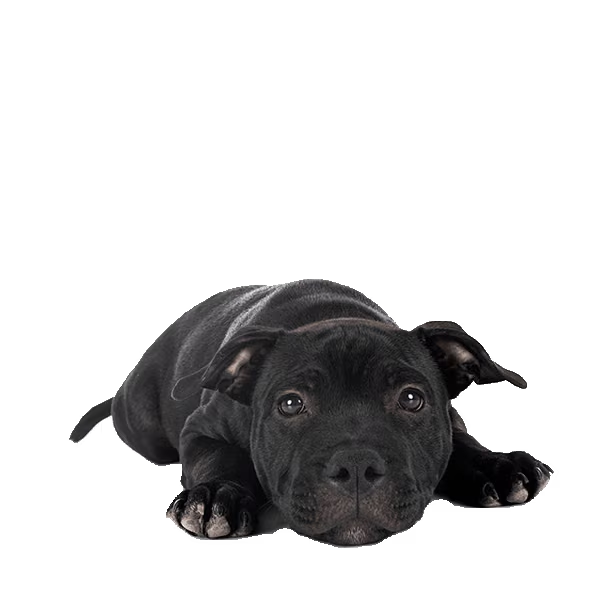
The Taiwan Dog is a loyal, agile island breed known for its intelligence, alertness, and deep bond with its owner.
How the Taiwan Dog coat is built, and what that means when you groom it.
The Taiwan Dog is a medium-sized breed from Taiwan known for loyalty, agility and sharp intelligence, forming a close bond with its family while staying wary of strangers.
The Taiwan Dog is a medium-sized working and companion breed native to the island of Taiwan. It has a lean, athletic build, a short coat and an alert expression. Owners often describe it as deeply attached to the family and wary of people it does not know. It usually settles with one household and keeps a close watch over its surroundings, whether that is a farmhouse compound or a city flat.
The breed grew out of a need for a versatile working partner: hunting, guarding and general farm duties in Taiwan's hilly and forested terrain. That working past still shows in the dog's build, its quick reflexes, good stamina and sharp problem-solving sense. The Taiwan Dog reads a situation before reacting rather than rushing in.
Its nature combines warmth at home with reserve outside it. With people it knows, it is affectionate and responsive. With strangers, including the watchman or delivery staff who visit most Indian homes daily, it tends to hold back until it has sized them up. This is why early, steady socialisation matters, so the dog learns to take new situations in its stride.
| Attribute | Detail |
|---|---|
| Origin | Taiwan |
| Size | Medium |
| Lifespan | 10 to 13 years |
| Group/role | Hunting, guarding and companion |
| Good with | Familiar family members; needs early socialisation with strangers and other pets |
The Taiwan Dog suits an owner who can provide steady leadership, daily exercise and continuous socialisation. It does well with families who are home for most of the day and want an alert, devoted companion. Households willing to put in training time, and to introduce the dog calmly to new people, children and animals, get the most out of the breed. It is not the right fit for someone who wants a dog that welcomes every visitor with instant friendliness.
The Taiwan Dog traces back to native dogs kept by Taiwan's indigenous communities for hunting and guarding, long before it was recognised as a distinct breed.
The Taiwan Dog originates on the island of Taiwan, where dogs of this type lived alongside indigenous communities for generations. These dogs worked across hilly, forested terrain, and their agility and alertness made them valuable for hunting game and guarding settlements. The breed's exact early history is not documented with certainty.
For most of its existence, the breed stayed close to the communities that kept it, and daily working life shaped its build and temperament far more than any formal breeding programme did. Dogs were chosen, in practice, for traits that mattered on the ground: stamina, quick reactions, loyalty to the household and caution towards outsiders.
As Taiwan modernised and foreign dog breeds arrived in greater numbers, the native island type became rarer and cross-breeding increased. Enthusiasts who wanted to protect the breed's working heritage took an interest in identifying and preserving the original type, and organised efforts to define and stabilise the breed followed.
Today the Taiwan Dog is kept both as a companion and a guard dog. It is not currently recognised by the Kennel Club of India, so most owners in India acquire the breed through direct contact with overseas breeders or through import, rather than through KCI-registered litters. The breed still carries the character shaped by the rural, mountainous environment where it developed.
The Taiwan Dog is a lean, muscular, medium-sized breed with a short coat, erect ears, a curved tail and a watchful, ready expression.
The Taiwan Dog has a balanced, athletic build made for quick movement over uneven ground. The body is slightly longer than it is tall, with a deep chest, a tucked-up waist and clean, muscular legs. The head is wedge-shaped, the ears stand erect, and the eyes are almond-shaped and dark. The tail sits high and curves over the back when the dog is alert or active. Overall, the dog looks fit and ready to move at short notice.
| Trait | Detail |
|---|---|
| Height | Approximately 40 to 52 cm (16 to 20 in) at the shoulder |
| Weight | Approximately 12 to 18 kg (26 to 40 lb) |
| Coat | Short, dense and close-lying |
| Colours | Black, brindle, fawn, white and combinations of these |
| Eyes | Almond-shaped, dark |
The coat is short and lies flat against the body, which keeps upkeep low and suits India's hot climate well. Common colours include black, brindle and fawn, along with white and mixed patterns. Many dogs show white markings on the chest, feet or muzzle. The short coat gives little protection against cold, so dogs kept in hill stations or through a Delhi winter may need a jacket outdoors.
The Taiwan Dog is loyal, alert and intelligent, devoted at home but reserved with strangers, so early socialisation and steady handling matter.
The Taiwan Dog forms a strong bond with its household and stays attentive to the people it trusts. It is intelligent and reads a situation fast, which makes it responsive to a handler it respects. With its family it is affectionate and often trails its owner from room to room.
With strangers, the breed stays naturally aloof. It does not warm up on the first meeting and prefers to watch before it accepts a new person, whether that is a house guest or the building's security guard. This reserve, paired with its alertness, gives it a strong natural watchdog streak. It will notice and announce anything out of the ordinary well before most people do.
Around other pets, behaviour depends heavily on early exposure. A Taiwan Dog raised alongside other animals can live with them without trouble, but its hunting background means small pets, including the neighbourhood strays and cats common around Indian homes, may set off a chase instinct. Calm, structured introductions and steady socialisation from puppyhood help the dog settle around children, visitors and other pets.
| Trait | Rating |
|---|---|
| Affection (with family) | 5 |
| Energy | 4 |
| Trainability | 4 |
| Vocalness | 3 |
| Shedding | 2 |
The Taiwan Dog needs little grooming thanks to its short coat, but daily exercise and mental engagement matter, especially through hot, humid weather.
The Taiwan Dog is a practical breed to keep clean, but it has real exercise needs that owners should plan for around India's climate. The short coat and sharp mind mean grooming takes little time, while daily activity is the main commitment.
The Taiwan Dog adjusts to different homes once its exercise needs are met, but it does best with a securely fenced yard or a compound it can move around in. It is a capable jumper and something of an escape artist, so boundary walls and gates need regular checking. The short coat suits India's warm climate well, though the dog should have shade and water through summer, and dry shelter during the monsoon. It prefers staying close to its family over being left alone for long stretches, which matters in flats where the dog may otherwise be confined for hours.
A complete, balanced diet suited to its active, medium build keeps the Taiwan Dog in lean condition; measured meals work better than free feeding.
The Taiwan Dog is active and lean, and does well on a complete, balanced diet with good-quality protein to support muscle and stamina. Portion sizes should match the dog's age, weight and activity level. Since the breed is naturally athletic, owners should keep it lean rather than overfeed it. Clean drinking water should be available at all times, and more so during the hot months when the dog drinks more.
| Life stage | Amount per day | Meals |
|---|---|---|
| Puppy (2 to 6 months) | Per product guidance for growth | 3 to 4 |
| Junior (6 to 12 months) | Per product guidance, tapering | 2 to 3 |
| Adult | Approximately 1.5 to 2.5 cups of quality dry food | 2 |
| Senior | Adjusted down for lower activity | 2 |
Keep treats to roughly 10 percent of daily calories so the overall diet stays balanced. Use small, low-fat treats for training sessions. Most dogs on a complete commercial diet do not need extra supplements, but a veterinary doctor may suggest joint or skin support for individual dogs. Bring in any diet change gradually, over about a week, to avoid an upset stomach.
The Taiwan Dog is generally hardy with a 10 to 13 year lifespan, though routine veterinary checks help catch common issues early, especially skin problems in humid weather.
The Taiwan Dog is considered a robust breed, a trait linked to its history as a working dog in demanding terrain. Most dogs stay healthy and active well into their senior years, with a typical lifespan of 10 to 13 years. As with any breed, certain conditions can occur, and regular veterinary care supports a long, healthy life.
| Condition | Signs | Note |
|---|---|---|
| Hip dysplasia | Stiffness, limping, reluctance to jump | Keep the dog lean to reduce joint stress |
| Skin allergies | Itching, redness, hair loss | Humid, monsoon weather can make skin issues worse |
| Ear infections | Head shaking, odour, scratching | Erect ears benefit from routine checks, more so in the monsoon |
| Dental disease | Bad breath, tartar, sore gums | Regular brushing and cleaning help prevent it |
The Taiwan Dog is intelligent and trainable but independent and reserved, so it responds best to early socialisation and steady, reward-based training.
The Taiwan Dog picks things up quickly and enjoys mental challenges, which makes it capable at obedience and activity training. It also has an independent streak and a degree of natural wariness, so it works best with a handler who stays patient and consistent. The breed responds to fairness and builds trust over time rather than obeying from day one. Early socialisation matters a great deal, so the dog learns to stay settled around new people and animals.
The Taiwan Dog reaches breeding maturity between one and two years and usually has moderate litters, with attentive dams needing a calm whelping space.
Responsible breeding of the Taiwan Dog starts with healthy, well-tempered parents screened for known issues such as hip problems. Dogs usually reach physical and behavioural maturity between one and two years of age, and breeding is best held off until both parents are fully grown. Gestation in dogs runs to around 63 days. Expectant dams need a quiet, clean whelping area, kept cool and dry, along with good nutrition through pregnancy and nursing.
Litter sizes vary from dog to dog, with a typical range of several puppies. The dam is usually attentive, but the breeder should keep a close eye on the litter in the early weeks for steady weight gain and warmth. Puppies should stay with the mother and littermates until at least eight weeks of age. Early handling and gentle exposure to everyday sights and sounds lay the groundwork for the socialisation this breed needs. Prospective owners should look for breeders who put health, temperament and proper early rearing first, since the breed is not yet established through KCI-registered breeding programmes in India.
| Metric | Value |
|---|---|
| Breeding maturity | 1 to 2 years |
| Gestation period | Approximately 63 days |
| Typical litter size | Around 4 to 8 puppies |
| Weaning age | Approximately 6 to 8 weeks |
| Recommended rehoming age | 8 weeks or older |
Municipal licences cover the paperwork; a free United Pet Club record is what actually connects your Taiwan Dog to your phone.
A Taiwan Dog that slips past the gate of the housing society is identified by its record, not by its pedigree. Provide that record without spending a rupee: the free United Pet Club profile carries your telephone number, the dog's photograph, and its details for life. Register your dog and the matter is settled.
Should your Taiwan Dog already carry a microchip, the number must still be recorded separately, since the vet performs only the implant. Registering the microchip under the free lifetime plan accepts chips from any manufacturer an Indian vet works with, keeps every update free should your household shift cities, and leaves the record searchable at any hour. Create your free account and complete both tasks in one sitting.
Create a free United Pet Club account, enter your Taiwan Dog's details along with a photograph, and save the profile. The lifetime plan maintains the record at no cost, and any municipal licence you hold sits alongside it rather than replacing it.
Enter the fifteen digit chip number into your free account together with your current address, phone number, and email. The lifetime plan covers the registration and every subsequent update without charge, whatever the chip's manufacturer.
Several municipal corporations, Delhi and Mumbai among them, require dogs to be licensed under local by-laws. The United Pet Club profile is separate and voluntary, and it is the record a finder anywhere can actually search, free of cost.
Nothing whatsoever. The free lifetime plan includes the profile, the microchip record, and unlimited updates, with no renewal fee at any point.
Common questions about the Taiwan Dog cover its size, temperament, care needs, lifespan, suitability for families and availability in India.
It is a medium-sized breed, standing roughly 40 to 52 cm (16 to 20 in) at the shoulder and weighing about 12 to 18 kg (26 to 40 lb), with a lean, athletic build.
It is loyal, intelligent, agile and alert. It bonds closely with its family but stays aloof with strangers, which gives it a strong natural watchdog instinct.
Grooming is simple thanks to the short coat, but the breed needs plenty of exercise and consistent socialisation. It suits an active owner who can offer daily activity and steady training.
The typical lifespan is 10 to 13 years. Regular veterinary care, a healthy weight and good nutrition support a long life.
It can be a devoted family dog when socialised early. Its reserve with strangers and hunting background mean calm introductions to children, visitors and other animals matter.
The breed stays closely tied to its place of origin and is uncommon elsewhere, including in India, where it is not yet recognised by the Kennel Club of India. Prospective owners should look for breeders abroad who focus on health, temperament and proper early socialisation.
