
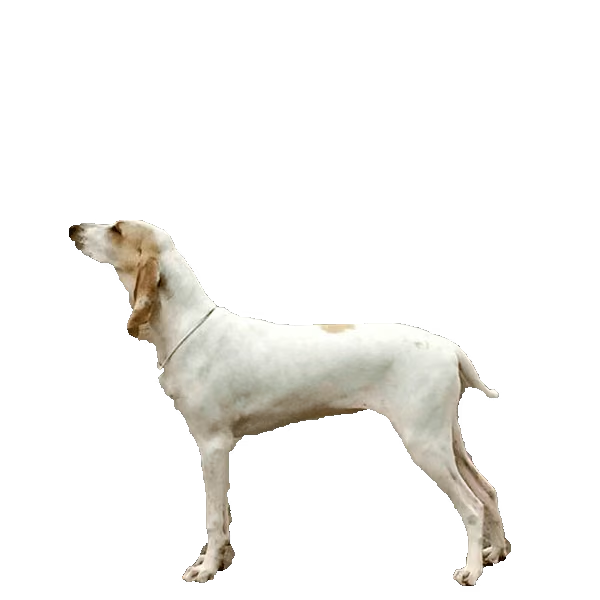
Sloughi
The Sloughi is a noble North African sighthound known for its reserved grace, deep loyalty, and elegant athletic build.
- Size
- Medium
- Lifespan
- 12–15 years
- Origin
- Morocco
- Temperament
- Reserved
- Standard colors
- Black, Mahogany and Red and 2 more
Characteristics
Coat and grooming
How the Sloughi coat is built, and what that means when you groom it.
- Coat layers
- Single coat
- Coat texture
- Smooth
- Coat length
- Short
- Shedding
- Low shedding
Sloughi colors and patterns
What each club's breed standard says about every Sloughi color and pattern. Point at a ruling to see the club's own wording.
Breed standards describe the Sloughi in Black, Mahogany, Red, Cream and Sandy. Standard patterns: Solid, Brindle, Sable, Mantle and Reverse brindle.
| Color or pattern | FCI | AKC | UKC | KC | KUSA |
|---|---|---|---|---|---|
| Black | Standard (“with or without black mantle”) | Standard (“black mantle (black and sand or black and brindle)”) | Standard (“black mantle”) | Standard (“Black mantle with sand or brindle points”) | Standard (“With or without black mantle”) |
| Mahogany | Disqualifying | Standard (“Mahogany”) | Standard (“mahogany red fawn”) | Not recognised | Disqualifying |
| Red | Standard (“red sand (fawn)”) | Standard (“Red”) | Standard (“mahogany red fawn”) | Standard (“Light to red sand”) | Standard (“red sand (fawn)”) |
| Cream | Standard (“light sand”) | Standard (“Cream”) | Standard (“light sand (cream)”) | Standard (“Light to red sand”) | Standard (“light sand”) |
| Sandy | Standard (“light sand through all possible different shades to red sand”) | Standard (“Sandy”) | Standard (“all shades of light sand (cream) to mahogany red fawn”) | Standard (“Light to red sand”) | Standard (“light sand through all possible different shades to red sand”) |
| White | Disqualifying (“White stockings, larger white markings”) | Disqualifying (“solid white extending above the toes or white anywhere else on the dog”) | Disqualifying (“Extensive white markings such as parti-color, white socks and white blaze”) | Not recognised | Disqualifying (“White stockings, larger white markings”) |
| Patterns | |||||
| Solid | Standard (“with or without black mask, ... mantle, ... brindling, ... overlay”) | Standard (“with or without brindling or with or without black markings”) | Standard (“with or without black markings”) | Standard (“Sand”) | Standard (“with or without black mask, ... mantle, ... brindling, ... overlay”) |
| Brindle | Standard (“with or without black brindling”) | Standard (“Brindle”) | Standard (“brindling”) | Standard (“Brindle with or without black mask”) | Standard (“With or without black brindling”) |
| Sable | Standard (“with or without black overlay”) | Standard (“Darker Overlay”) | Standard (“dark overlay”) | Not recognised | Standard (“With or without black overlay”) |
| Mantle | Standard (“with or without black mantle”) | Standard (“Mantle”) | Standard (“black mantle”) | Standard (“Black mantle with sand or brindle points”) | Standard (“With or without black mantle”) |
| Reverse brindle | Standard (“with or without black brindling”) | Standard (“Brindle”) | Standard (“brindling”) | Standard (“Brindle with or without black mask”) | Standard (“With or without black brindling”) |
| Parti-colour | Disqualifying | Disqualifying | Disqualifying (“Extensive white markings such as parti-color”) | Not recognised | Disqualifying |


| Color or pattern | FCI | AKC | UKC | KC | KUSA |
|---|---|---|---|---|---|
| Dark brown | Standard (“dark”) | Standard (“shades of dark brown to dark amber”) | Standard (“shades of dark brown to dark amber”) | Standard (“dark to dark amber”) | Standard (“dark”) |
| Amber | Standard (“With a light coat, the eye can be amber-coloured”) | Standard (“shades of dark brown to dark amber”) | Standard (“shades of dark brown to dark amber”) | Standard (“dark to dark amber”) | Standard (“With a light coat, the eye can be amber-coloured”) |
| Light brown | Fault (“Too light-coloured eyes”) | No ruling | No ruling | No ruling | Fault (“Too light-coloured eyes”) |
| Color or pattern | FCI | AKC | UKC | KC | KUSA |
|---|---|---|---|---|---|
| Black | Standard (“Black”) | Standard (“The nose is black”) | Standard (“Black”) | Standard (“Nose and lips black, may be slightly lighter in dilute colours”) | Standard (“Black”) |
| Patterns | |||||
| Butterfly nose | Disqualifying (“Depigmented areas on the mucous membranes”) | No ruling | Fault (“Unpigmented areas on nose”) | No ruling | Disqualifying (“Depigmented areas on the mucous membranes”) |

What the rulings mean
- Standard
- Described by the club's breed standard.
- Fault
- Named by the club's breed standard as a fault: the animal can be shown but is penalised.
- Disqualifying
- The club's breed standard disqualifies an animal of this colour or pattern.
- Not recognised
- The club does not accept this colour or pattern for the breed.
Color changes
How a Sloughi's colors can change over its life.
Blackchanges toRust
Coat · With body condition · can change back
Blackchanges toGrey
Coat · Progressive
Blackchanges toBrown
Coat · In the sun · can change back
Blackchanges toSnow nose
Nose · With the season · can change back
Blackchanges toPink
Nose · With the season · can change back

Sources
Each ruling comes from the club's published breed standard or color list.
Meet some of our Sloughi
A few of the Sloughi profiles members have added to United Pet Club.

About the Sloughi
The Sloughi is a medium-sized North African sighthound from Morocco, reserved by nature, deeply attached to its family, and built lean for speed.
The Sloughi is a short-coated sighthound that took shape across North Africa, with Morocco acknowledged as its country of origin. It belongs to the same wider family as the Saluki and the Azawakh, dogs built for speed and stamina over open ground. The breed is of medium height, with a fine, dry frame, long legs and a deep chest, giving it the racing silhouette one associates with coursing hounds.
In temperament the Sloughi is loyal and forms a strong attachment to its own household. With strangers it tends to hold back, sometimes appearing standoffish, and indoors it keeps a calm, dignified manner. This is an independent dog that thinks for itself rather than looking to a handler at every step, a trait common to most sighthounds bred to hunt at a distance from their owner.
The breed suits owners who value a quiet, sensitive companion and who can offer a secure space for it to run flat out. It is not the right fit for harsh handling or for a household wanting an outgoing, eager-to-please dog. Early socialisation and a settled daily routine help a Sloughi grow into a confident adult.
| Attribute | Detail |
|---|---|
| Origin | Morocco (North Africa) |
| Size | Medium |
| Lifespan | 12 to 15 years |
| Group / role | Sighthound, coursing and hunting hound |
| Good with | Bonded family; reserved with strangers; needs careful introductions to small pets |
Who should get a Sloughi
The Sloughi suits active, patient owners who want a quiet house dog that turns athletic the moment it steps outdoors. A securely fenced plot or compound for it to gallop matters a great deal, since the breed has a strong urge to chase anything that moves. Anyone looking for a dog that bonds closely with one household, and who can respect its sensitive, independent streak, will get on well with a Sloughi.
History and origin
The Sloughi is an ancient North African sighthound long linked to Morocco and nearby regions, once used to hunt game across desert and open country.
The Sloughi took shape in North Africa and is closely tied to Morocco, the country recognised as its place of origin. Lean, smooth-coated sighthounds of this type have existed in the region for a very long time, kept by people across the Maghreb to hunt game over open terrain.
The breed earned its keep as a hunting hound rather than a household pet. It coursed hare, gazelle and other desert game, relying on sharp sight, speed and stamina across rough ground. Hounds lived close to the family and were looked after with genuine care, reflecting the working bond between hunter and dog rather than a purely ornamental one.
The Sloughi shares ancestry and a family resemblance with other African and Middle Eastern sighthounds, including the Saluki and the Azawakh, though it remains a separate breed with its own regional history. Differences in coat, build and colour set it apart from these relatives.
In recent decades the Sloughi has been bred and shown outside North Africa and is registered with major kennel bodies abroad. In India it stays a rare sight; the Kennel Club of India does not run a dedicated breed club for it, and most Indian owners who keep one have imported the dog or gone through an overseas breeder connected to the parent stock. It remains a breed for enthusiasts who value its working history and its quiet temperament.
Appearance and breed standard
The Sloughi is a lean, smooth-coated sighthound with a deep chest, long legs and a fine head, giving it the elegant racing outline typical of coursing hounds.
The Sloughi carries a dry, athletic build with barely any spare flesh. The body shows clear bone structure, a deep chest, a tucked-up waist and long, straight legs. The head is fine and refined on a long neck, with large, dark eyes that give the breed a gentle, watchful look. The tail is thin, carried low, and curves upward at the tip when the dog is relaxed.
| Trait | Standard |
|---|---|
| Height | Roughly 60 to 72 cm (24 to 28 in) at the shoulder; females smaller |
| Weight | About 18 to 28 kg (40 to 62 lb) |
| Coat | Short, fine and smooth, lying close to the body |
| Colours | Shades of sand and fawn through to red, with or without black markings or a dark mask; brindle also occurs |
| Eyes | Large, dark, set well into the skull |
Coat and colours
The coat is short and smooth and needs no clipping. Colour runs across the sand spectrum, from pale cream through fawn to a deeper red. Many dogs carry a black mask, a dark mantle or brindle striping. The skin is fine, and the overall look is of a sleek, low-maintenance hunting hound rather than a heavily coated breed, which suits India's warmer months rather well.
Temperament and personality
The Sloughi is loyal and devoted to its family, reserved or aloof with strangers, and independent by nature, with the strong chase instinct typical of sighthounds.
The Sloughi builds a close, lasting bond with its household and is gentle and affectionate with people it trusts. With strangers it stays reserved and can come across as aloof, holding back rather than seeking attention. This reserve is normal for the breed and should not be mistaken for aggression.
Around family the Sloughi is calm and quiet indoors, often happy to rest near its people. It can live with children when raised together and introduced carefully, though its sensitive nature means it does best in a settled home free of rough handling. With other dogs it is generally sociable, but its strong prey drive means small pets such as cats or rabbits may get chased unless the dog is raised alongside them and watched closely.
The breed is independent and was bred to make its own calls while hunting at a distance from the handler. It is intelligent but not eager to please the way some working breeds are, so it answers to patient, respectful handling rather than pressure or repetition.
| Trait | Rating |
|---|---|
| Affection (with family) | 4 |
| Energy | 4 |
| Trainability | 3 |
| Vocalness | 2 |
| Shedding | 2 |
Care and grooming
The Sloughi is low-maintenance to groom but needs regular hard exercise, secure space to run, and protection from chill, since its thin coat offers little natural insulation.
Grooming
- Brush the short coat once a week with a soft brush or grooming glove to lift out loose hair
- Bathe only when needed, as the coat stays clean on its own most of the time
- Check and trim nails on a regular basis, since overgrown nails throw off the dog's gait
- Clean the ears and brush the teeth on a set schedule
Exercise
- Give the dog daily exercise, with chances to run flat out in a safe, enclosed area
- Use a long lead or a fully fenced space, because the chase instinct is strong and recall can go out the window around anything that moves
- Mix free running with walks to keep muscle tone and the mind occupied
- Skip hard exercise during the peak heat of summer afternoons or on cold winter mornings
Environment
The Sloughi settles well into a calm home and stays quiet indoors, but it needs access to open space where it can gallop. Sighthounds in India often deal with harsh summer heat, so exercise is best kept to early mornings or evenings, with shade and water on hand. The thin coat and low body fat also mean the breed feels the cold on winter nights in northern India; a light coat and a warm, padded corner to sleep in are sensible. A secure garden, terrace enclosure or compound wall matters, as a Sloughi can cover ground in seconds once it sets off after something.
Nutrition and feeding
The Sloughi does well on a complete, good-quality diet matched to its lean frame and activity level, fed in measured amounts to keep its natural slim outline.
The Sloughi is naturally lean, and a slight outline of the last ribs is normal for the breed rather than a sign that it is underfed. Feed a complete, balanced diet suited to a medium-sized active dog, and adjust the quantity to the individual dog's weight, age and activity. Being a deep-chested breed, the Sloughi may carry a higher risk of bloat, so splitting the daily ration into two meals and holding off on strenuous activity right after a meal is a sensible precaution.
| Life stage | Amount per day | Meals |
|---|---|---|
| Puppy (2 to 6 months) | Per product guidance for growth, split across the day | 3 to 4 |
| Junior (6 to 12 months) | Growth ration tapering toward adult | 2 to 3 |
| Adult | About 250 to 400 g of quality dry food, by size and activity | 2 |
| Senior | Adult ration adjusted for lower activity | 2 |
Treats and supplements
Keep treats to a small share of the day's calories to protect the breed's lean build. Most Sloughis on a complete diet need no extra supplements; check with a veterinarian before adding anything, especially for puppies, pregnant dogs or seniors with health concerns.
Health and lifespan
The Sloughi is generally a healthy, long-lived sighthound with a lifespan of 12 to 15 years, though it shares a few sighthound-specific sensitivities owners should know about.
The Sloughi is typically a hardy breed with a lifespan of 12 to 15 years. As a sighthound it carries a low percentage of body fat and reacts differently to certain anaesthetics and drugs, so it matters to use a veterinarian who understands sighthound physiology, which can mean travelling a little further in cities where such expertise is limited. Responsible breeders screen for known concerns, and routine veterinary care supports a long, healthy life.
| Condition | Signs | Note |
|---|---|---|
| Anaesthesia sensitivity | Slow recovery, exaggerated drug response | Low body fat affects how drugs are handled; tell the vet the breed type |
| Bloat / gastric torsion | Swollen abdomen, retching, restlessness | Risk in deep-chested dogs; treat as an emergency |
| Eye conditions (e.g. PRA) | Night vision loss, cloudiness | Breeders may screen; veterinary eye checks advised |
| Heat or cold stress | Shivering in the cold, overheating in the heat | Thin coat and low fat lower its tolerance for temperature extremes |
Preventive care
- Stay current on vaccinations and parasite control, including tick prevention through the monsoon
- Book annual veterinary checks, including teeth and eyes
- Keep the dog at a lean, healthy weight with good muscle tone
- Use a sighthound-aware vet for anaesthesia and medication
- Shield the dog from temperature extremes at both ends of the year
Training and socialisation
The Sloughi is intelligent but independent, and responds best to patient, reward-based training and early socialisation rather than repetition or pressure.
The Sloughi is a thinking, independent dog rather than a handler-focused worker, so training calls for patience and consistency. It learns well when it sees the point but loses interest in repetitive drilling, and it reacts poorly to harsh corrections, which can knock the trust of a sensitive breed. Short, upbeat sessions work better than long ones. Given how strong the chase instinct is, off-lead reliability around moving animals is hard to guarantee, so a secure area or a long line is the safer default, particularly near open plots where stray dogs or livestock may wander.
Basics
- Start socialisation early, introducing the puppy gently to people, places and other dogs
- Teach name response and a solid recall inside a fenced space before trusting the dog outdoors
- Build basic cues (sit, down, stay) through short, calm sessions
- Practise lead walking and settled behaviour around distractions
- Reinforce a dependable recall and a firm "leave it" given the prey drive
Breeding and raising puppies
Sloughi breeding follows the pattern of medium sighthounds, with health-screened parents, an average gestation near nine weeks, and modest litter sizes.
Sloughis generally reach physical and mental maturity slowly, as many sighthounds do, and breeding is best left until the dog is fully grown and health-tested. Responsible breeders confirm temperament and screen for known concerns before mating. Gestation in dogs averages about 63 days, and Sloughi litters tend to be moderate in size.
Raising Sloughi puppies is largely about gentle, early socialisation, since the breed's reserved nature means confident exposure to people and situations in the first months shapes how the adult dog turns out. Puppies should be kept warm, fed well for steady growth, and introduced to handling, sounds and other animals at a measured pace. Reputable breeders place puppies only with homes that understand the breed's exercise needs and its sensitive character, and in India that often means a longer wait, given how few litters are bred here.
| Metric | Value |
|---|---|
| Sexual maturity | Reached during the first year; breed only once fully mature |
| Gestation | About 63 days (roughly nine weeks) |
| Average litter size | Around 4 to 8 puppies |
| Weaning | About 6 to 8 weeks |
| Key focus | Health screening of parents and early socialisation of puppies |
Registering a Sloughi in India: profile and microchip
Municipal licences cover the paperwork; a free United Pet Club record is what actually connects your Sloughi to your phone.
How to register a Sloughi in India
Begin with the essentials: your Sloughi's name, its date of birth, a clear photograph, and your mobile number, saved to a registry that levies no charge at any stage. Dog registration functions with or without a microchip, so nothing need wait for the next clinic visit.
Should your Sloughi already carry a microchip, the number must still be recorded separately, since the vet performs only the implant. Registering the microchip under the free lifetime plan accepts chips from any manufacturer an Indian vet works with, keeps every update free should your household shift cities, and leaves the record searchable at any hour. Create your free account and complete both tasks in one sitting.
How do I register my Sloughi in India?
Create a free United Pet Club account, enter your Sloughi's details along with a photograph, and save the profile. The lifetime plan maintains the record at no cost, and any municipal licence you hold sits alongside it rather than replacing it.
How do I register my Sloughi's microchip?
Enter the fifteen digit chip number into your free account together with your current address, phone number, and email. The lifetime plan covers the registration and every subsequent update without charge, whatever the chip's manufacturer.
Is registration compulsory for a Sloughi in India?
Several municipal corporations, Delhi and Mumbai among them, require dogs to be licensed under local by-laws. The United Pet Club profile is separate and voluntary, and it is the record a finder anywhere can actually search, free of cost.
What does it cost to register a Sloughi?
Nothing whatsoever. The free lifetime plan includes the profile, the microchip record, and unlimited updates, with no renewal fee at any point.
Frequently asked questions
Common questions about the Sloughi cover its size, temperament, care needs, lifespan, suitability as a pet, and availability in India.
How big does a Sloughi get?
The Sloughi is a medium-sized sighthound. Most stand roughly 60 to 72 cm (24 to 28 in) at the shoulder and weigh about 18 to 28 kg (40 to 62 lb), with females usually smaller than males.
What is a Sloughi's temperament like?
It is loyal and affectionate with its family, reserved or aloof with strangers, and independent by nature. Indoors it stays quiet and calm, while outdoors it shows the athletic drive of a coursing hound.
Is a Sloughi hard to look after?
Grooming is easy thanks to the short coat, but the breed needs regular hard exercise and secure space to run. Its thin coat and low body fat mean it needs protection from cold and damp, and its chase instinct calls for fenced areas or a long lead.
How long does a Sloughi live?
The typical lifespan is 12 to 15 years. Routine veterinary care, a lean healthy weight and a sighthound-aware vet all help support a long life.
Is a Sloughi a good family dog?
It can be, in a calm home that suits its sensitive nature. It bonds closely with its household and can live with respectful children, but it needs careful introductions to small pets because of its prey drive.
Are Sloughis easy to find in India?
No. The Sloughi is an uncommon breed even internationally, and it stays rarer still in India, kept mainly by a small circle of enthusiasts. Finding a puppy usually means reaching out to dedicated breeders abroad, and a wait is common.
From the community
Ask about the SloughiNo questions about the Sloughi yet. Be the first to ask.
Browse Dog breeds