
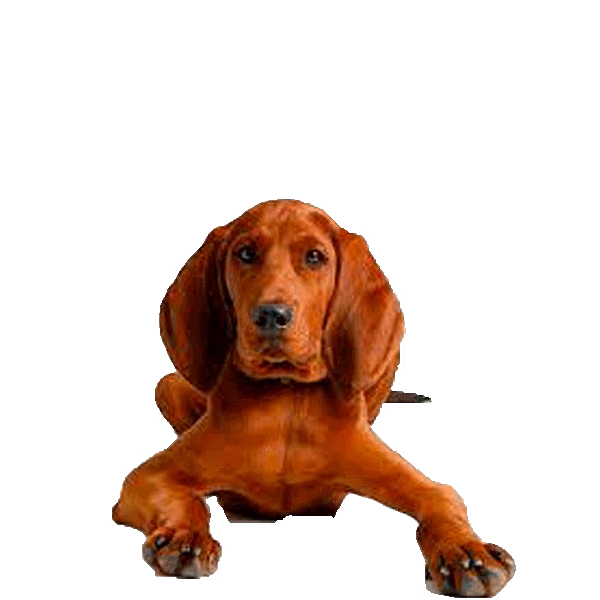
Redbone Coonhound
The Redbone Coonhound is an even-tempered, striking red scenthound known for its eager hunting drive and amiable family nature.
- Size
- Large
- Lifespan
- 12–15 years
- Origin
- United States
- Temperament
- Even-tempered
- Standard colors
- Red
Characteristics
Coat and grooming
How the Redbone Coonhound coat is built, and what that means when you groom it.
- Coat layers
- Single coat
- Coat texture
- Smooth
- Coat length
- Short
- Shedding
- Moderate shedding
Redbone Coonhound colors and patterns
What each club's breed standard says about every Redbone Coonhound color and pattern. Point at a ruling to see the club's own wording.
Breed standards describe the Redbone Coonhound in Red. Standard patterns: Solid.
| Color or pattern | UKC | AKC |
|---|---|---|
| Red | Standard (“Solid red preferred”) | Standard (“Red”) |
| Albino | Disqualifying (“Albinism”) | No ruling |
| Patterns | ||
| Solid | Standard (“Solid red preferred”) | Standard (“Solid red preferred”) |

| Color or pattern | UKC | AKC |
|---|---|---|
| Brown | Standard (“brown to hazel in color, with the darker color preferred”) | No ruling |
| Dark brown | No ruling | Standard (“Dark brown to hazel in color, dark preferred”) |
| Hazel | Standard (“brown to hazel in color”) | Standard (“Dark brown to hazel in color”) |
| Yellow | No ruling | Fault (“Yellow eyes”) |
What the rulings mean
- Standard
- Described by the club's breed standard.
- Fault
- Named by the club's breed standard as a fault: the animal can be shown but is penalised.
- Disqualifying
- The club's breed standard disqualifies an animal of this colour or pattern.
Color changes
How a Redbone Coonhound's colors can change over its life.
Blackchanges toSnow nose
Nose · With the season · can change back
Blackchanges toPink
Nose · With the season · can change back

Sources
Each ruling comes from the club's published breed standard or color list.
Meet some of our Redbone Coonhound
A few of the Redbone Coonhound profiles members have added to United Pet Club.


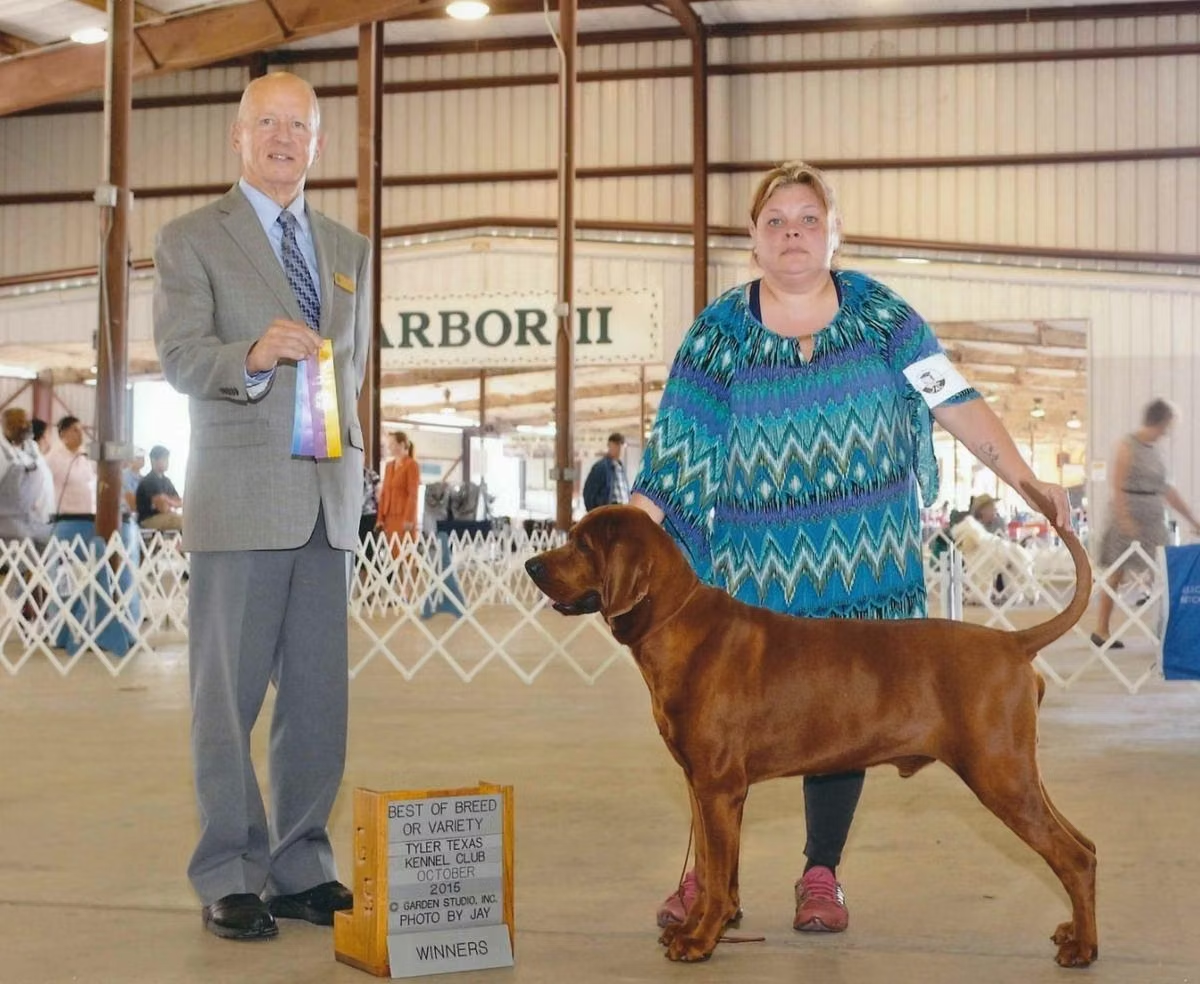


About the Redbone Coonhound in India
The Redbone Coonhound is a large, solid-red American scenthound with a calm nature at home, best suited to Indian owners with outdoor space, daily exercise time, and patience for a vocal dog.
The Redbone Coonhound is a medium to large scenthound that was developed in the United States to hunt raccoon and other game. It is the only coonhound with a solid red coat, which sets it apart from the rest of the American coonhound family. Adult males usually stand 56 to 69 cm at the shoulder and weigh 20 to 32 kg.
At home, the breed is friendly and even-tempered, yet in the field it keeps a strong drive to work. Redbones track by scent, do well in a pack, and bay or bark once they find their quarry, which is part of the job rather than a flaw. They form close bonds with their families and are usually good with children who have grown up around them.
This is a breed that needs a job to do. Without daily exercise and something to occupy its nose, a Redbone gets bored fast and turns vocal. In India, this breed is still uncommon and is not recognised by the Kennel Club of India, so most owners bring dogs in through specialist importers or a handful of breeders, and pups are best suited to homes with land, a farmhouse, or a large, securely fenced compound rather than a flat in the city.
| Trait | Detail |
|---|---|
| Origin | United States (imported and rare in India) |
| Size | Large (20 to 32 kg) |
| Lifespan | 12 to 15 years |
| Group/role | Hound; scenthound bred to track and tree game |
| Good with | Families and children; gets along with other dogs, especially with early socialisation |
Who should get one
The Redbone Coonhound suits people who want an active, sociable dog and can commit to exercising it every day, ideally before the heat sets in during the morning or after it eases off in the evening. It fits well with hunters, trackers, and households that enjoy long walks or scent-based dog sports. The breed is vocal and follows its nose without a second thought, so a secure boundary wall and solid recall training are non-negotiable. It is a poor match for apartment living or for owners who are out of the house for long stretches at work.
History and origin of the Redbone Coonhound
The Redbone Coonhound took shape in the southern United States from red foxhounds and imported stock through the 1800s, bred into a fast, solid-red hound that trees game; it remains unrecognised by the Kennel Club of India.
The Redbone Coonhound goes back to red-coloured foxhounds that Scottish and other European settlers brought to North America in the late 1700s and early 1800s. Breeders crossed these dogs with imported hounds, including stock from Ireland, to shape a hound that could handle American terrain and game.
Through the 1800s, hound breeders in the southern United States worked toward a dog that was quick on the trail, sure of its nose, and able to tree raccoon as well as bigger quarry such as bear and cougar. The breed's name is often traced to early breeders who had a hand in shaping the line, and the coat gradually settled into the solid red that defines it today.
Careful breeding bred out the black saddle markings seen on earlier red hounds, leaving a hound with a clean, uniform red coat. This focus on colour, combined with working ability, marked the Redbone out from the other American coonhound breeds.
The American Kennel Club recognised the Redbone Coonhound in 2009 and placed it in the Hound Group. In India, the breed has no formal recognition from the Kennel Club of India and is kept mainly as a companion or scent-work dog rather than for hunting, since the Wildlife Protection Act restricts hunting of wild game. It remains a working coonhound in its country of origin and a family companion wherever it is kept.
Appearance and breed standard of the Redbone Coonhound
The Redbone Coonhound is a lean, muscular hound with a short, solid red coat, long drop ears, and a build made for stamina rather than short summer sprints in Indian heat.
The Redbone Coonhound has an athletic, well-proportioned build with a deep chest, straight legs, and a body a shade longer than it is tall. The overall impression is one of speed and stamina rather than bulk. The head is moderately broad with a clean muzzle, and the long, low-set ears hang close to the cheeks. The expression is soft, almost pleading, which is typical of scenthounds.
| Feature | Detail |
|---|---|
| Height | 53 to 69 cm at the shoulder |
| Weight | 20 to 32 kg |
| Coat | Short, smooth, and coarse enough to handle fieldwork |
| Colours | Solid red; a little white on the chest or feet is sometimes seen |
| Eyes | Dark brown to hazel, round, with a soft expression |
Coat and colours
The defining trait is the solid red coat, ranging from a light shade to a deep mahogany. A small white patch on the chest or feet is allowed under the breed standard, but it should stay minimal. The coat is short, smooth, and lies flat against the body, giving some protection against thorny scrub during fieldwork, though it offers little insulation against India's peak summer heat, so shade and water matter more than coat care. The nose is dark, and dark pigment around the eyes adds to the breed's calm, attentive look.
Temperament and nature of the Redbone Coonhound
The Redbone Coonhound is friendly, even-tempered, and affectionate indoors, with a strong scent drive and a vocal streak that needs daily exercise and a secure compound to manage.
The Redbone Coonhound is even-tempered and easygoing, and it bonds closely with its family. Indoors it is affectionate and often content to stretch out near its people once the day's activity is done. The breed is generally good with children and tends to be patient, though its size and energy mean playtime with very young children needs supervision.
With strangers, Redbones lean friendly rather than wary, so they make poor guard dogs, even if a loud bay will announce a visitor well before the doorbell does. They come from a long line of pack hounds and usually get along with other dogs. Cats and smaller pets are a different story, since a strong prey drive can switch on around smaller animals, so introductions need care, especially in homes that already keep birds or cats.
The breed is vocal by nature. Baying and barking are part of how a coonhound works, and a Redbone left bored or alone for long hours will use its voice, which can become a genuine issue in a housing society with close neighbours. A scent on the ground can pull a Redbone away in seconds, so a secure boundary and trained recall matter.
| Trait | Rating |
|---|---|
| Affection | 5 |
| Energy | 4 |
| Trainability | 3 |
| Vocalness | 5 |
| Shedding | 2 |
Caring for a Redbone Coonhound in Indian conditions
The Redbone Coonhound is low-maintenance to groom but needs long daily exercise, a securely fenced compound, and extra attention to ears and coat during India's humid monsoon months.
The Redbone Coonhound is simple to keep clean but asks for a lot when it comes to activity. Its short coat takes little upkeep, while its body and mind need plenty of work to stay settled.
Grooming
- Brush weekly with a rubber curry brush or hound mitt to lift loose hair and spread natural oils through the coat.
- Bathe only when required, since the coat carries a natural hound smell that returns soon after a wash.
- Check and clean the long drop ears often, as their shape traps moisture, and this gets worse during the monsoon.
- Trim the nails every few weeks and brush the teeth a few times a week.
Exercise
- Give at least 60 to 90 minutes of activity a day through walks, running, or fieldwork, scheduled for the cooler hours of early morning or evening.
- Use scent games, tracking, or trailing exercises to satisfy the working drive.
- Keep the dog on a leash or inside a fenced area in open spaces, since a scent trail can override recall in an instant.
- Add short training sessions and puzzle feeders to tire the mind along with the body.
Environment
A Redbone does best in a home with a securely fenced compound and room to run, such as a farmhouse or an independent house with a garden, rather than a flat. It does not suit apartment living or a household with neighbours who might object to baying. The breed copes with a range of climates thanks to its working coat, but India's summer heat calls for shade and water through the day, and the monsoon brings a higher risk of ticks, fungal skin trouble, and ear infections that need watching.
Diet and feeding for the Redbone Coonhound
The Redbone Coonhound needs a complete diet sized to its activity level, split into two meals to guard against bloat, with onion and garlic from Indian cooking kept well away.
Feed a complete and balanced dog food suited to a large, active breed. A working or hunting dog needs more calories than one kept mainly as a house pet, so adjust the amount to the individual dog and how much it does through the day. Protein and fat levels should support muscle and stamina without piling on weight. Split the daily ration into two meals to lower the risk of bloat, a serious stomach condition that deep-chested breeds like this one can face.
| Life stage | Amount per day | Meals |
|---|---|---|
| Puppy (2 to 12 months) | As per the puppy formula label, split through the day | 3 to 4 |
| Adult (pet, moderate activity) | Roughly 300 to 400 grams of dry kibble | 2 |
| Adult (working or hunting) | Increased to match energy spent | 2 |
| Senior (7+ years) | Reduced to keep a healthy weight | 2 |
Treats and supplements
Keep treats to about 10 percent of daily calories so the main diet stays balanced. Plain cooked chicken or mutton in small pieces, or a commercial training treat, both work well. Most Redbones on a complete diet do not need extra supplements, but a vet may recommend joint support for a dog that is ageing or working hard. Keep fresh water available at all times, and top it up more often around exercise and through the hotter months.
Health and lifespan of the Redbone Coonhound
The Redbone Coonhound is generally hardy with a 12 to 15 year lifespan, though hip dysplasia, ear infections worsened by humidity, and bloat are conditions worth watching.
The Redbone Coonhound is a hardy working breed and typically lives 12 to 15 years. As with many large dogs, a handful of conditions are worth watching for, and responsible breeders screen their breeding stock to bring down the risk of inherited problems. Routine visits to the vet and a healthy weight go a long way toward a long, active life.
| Condition | Signs | Note |
|---|---|---|
| Hip dysplasia | Stiffness, limping, reluctance to get up | Hereditary; breeders should screen the hips of both parents |
| Ear infections | Head shaking, odour, scratching at the ears | The long, low-set ears trap moisture, worse in India's humid and monsoon months; clean them often |
| Bloat (gastric torsion) | Swollen belly, retching with nothing coming up, visible distress | A medical emergency; feed smaller meals and avoid exercise right after eating |
| Obesity | Weight gain, low energy | Watch portions and keep the dog active |
Preventive care
- Keep vaccinations and parasite control current, including protection against fleas, ticks, and heartworm, which are a bigger concern through the monsoon.
- Book a yearly vet check-up, and more frequent visits once the dog is a senior.
- Clean and dry the ears regularly to keep infection at bay, especially in humid weather.
- Maintain a healthy weight to protect the joints.
- Ask the breeder about hip and eye screening carried out on both parents.
Training the Redbone Coonhound
The Redbone Coonhound is intelligent and eager to please but independent and scent-driven, so it does best with early, consistent, reward-based training and plenty of patience.
The Redbone Coonhound is intelligent and willing, but it carries the independent streak common to scenthounds. A dog that picks up an interesting scent can tune out every command, so training calls for patience and consistency. Start early, keep sessions short and varied, and build a solid recall before trusting the dog off leash anywhere near open ground. Redbones respond poorly to harsh handling and do far better with food, praise, and play used as rewards. Their strong nose can be channelled into tracking and scent games, which also burn off energy and cut down on nuisance baying.
Basics
- Socialise the puppy early with people, places, dogs, and other animals.
- Teach name response and a marker word, such as "yes," to mark the right behaviour.
- Build sit, down, and stay through short, frequent sessions.
- Train a solid recall, starting in a fenced area and rewarding generously.
- Work on loose-leash walking, since a Redbone will pull hard toward a scent.
- Add scent or tracking games to give the working drive an outlet.
Breeding the Redbone Coonhound
Redbone Coonhounds reach breeding maturity at one to two years, carry a roughly 63-day pregnancy, and typically have litters of 6 to 10 puppies that need registration and early vaccination.
Breeding a Redbone Coonhound should be planned around health and temperament rather than a single litter for its own sake. Dogs are best bred once they are physically mature and have cleared health screening, usually from one to two years of age, rather than at the first season. Hip and eye screening of both parents helps cut the risk of inherited problems in the litter.
Pregnancy in dogs runs about 63 days. Litters in this breed commonly fall between 6 and 10 puppies, though the number varies with the individual female. The pregnant dam needs good nutrition, calm surroundings, and veterinary care right through gestation and whelping.
Newborn puppies are blind and deaf and depend fully on the mother for warmth and feeding. The eyes open at around two weeks, and weaning usually starts near four weeks. Early handling and gentle socialisation from a few weeks of age help the puppies grow into stable, friendly adults. Puppies usually go to their new homes at about eight weeks, and in India, that is also the point to register the litter and complete the puppy's first vaccination round before travel.
| Metric | Value |
|---|---|
| Breeding maturity | 1 to 2 years |
| Gestation | About 63 days |
| Average litter size | 6 to 10 puppies |
| Eyes open | About 2 weeks |
| Weaning begins | About 4 weeks |
| Typical age to new home | About 8 weeks |
Registering a Redbone Coonhound in India: profile and microchip
Municipal licences cover the paperwork; a free United Pet Club record is what actually connects your Redbone Coonhound to your phone.
How to register a Redbone Coonhound in India
A Redbone Coonhound that slips past the gate of the housing society is identified by its record, not by its pedigree. Provide that record without spending a rupee: the free United Pet Club profile carries your telephone number, the dog's photograph, and its details for life. Register your dog and the matter is settled.
A microchip without a registration is merely a number under the skin. File your Redbone Coonhound's fifteen digit number with United Pet Club and it becomes a working address: free for life, open to every chip brand, and searchable from any clinic or shelter in the country or abroad. Microchip registration first, the free account alongside.
How do I register my Redbone Coonhound in India?
Create a free United Pet Club account, enter your Redbone Coonhound's details along with a photograph, and save the profile. The lifetime plan maintains the record at no cost, and any municipal licence you hold sits alongside it rather than replacing it.
How do I register my Redbone Coonhound's microchip?
Enter the fifteen digit chip number into your free account together with your current address, phone number, and email. The lifetime plan covers the registration and every subsequent update without charge, whatever the chip's manufacturer.
Is registration compulsory for a Redbone Coonhound in India?
Several municipal corporations, Delhi and Mumbai among them, require dogs to be licensed under local by-laws. The United Pet Club profile is separate and voluntary, and it is the record a finder anywhere can actually search, free of cost.
What does it cost to register a Redbone Coonhound?
Nothing whatsoever. The free lifetime plan includes the profile, the microchip record, and unlimited updates, with no renewal fee at any point.
Redbone Coonhound: frequently asked questions
Common questions about the Redbone Coonhound cover its size, temperament, care needs, lifespan, and how to find one responsibly in India.
How big does a Redbone Coonhound grow?
It is a large breed, standing about 53 to 69 cm at the shoulder and weighing 20 to 32 kg, with males usually bigger than females.
Is the Redbone Coonhound a good family dog?
Yes. It is friendly and even-tempered, affectionate with its family, and usually good with children who have grown up around it. Supervise play with very young children given the dog's size and energy.
Is the Redbone Coonhound easy to maintain?
Grooming is easy thanks to the short coat, but the breed needs plenty of exercise and is vocal by nature. Owners who can offer daily activity, a fenced compound, and some protection from the summer heat find the breed manageable.
What is the lifespan of a Redbone Coonhound?
It typically lives 12 to 15 years with good care, a healthy weight, and regular visits to the vet.
Does the Redbone Coonhound bark a lot?
It can be loud. Baying and barking come from its hunting background, and a bored or under-exercised dog will use its voice often. Regular activity and training help keep the noise down, which matters in a housing society with neighbours nearby.
Does the Redbone Coonhound get along with other pets?
It usually gets along well with other dogs, since it was bred to work in packs. A strong prey drive means cats and small pets need careful, supervised introductions.
Where can I get a Redbone Coonhound in India?
The breed is uncommon in India and is not recognised by the Kennel Club of India, so most pups come through specialist importers or a small number of breeders abroad, with proper health screening and paperwork. Ask about hip and eye screening of both parents, and check import and quarantine requirements before bringing a puppy home.
From the community
Ask about the Redbone CoonhoundNo questions about the Redbone Coonhound yet. Be the first to ask.
Browse Dog breeds