
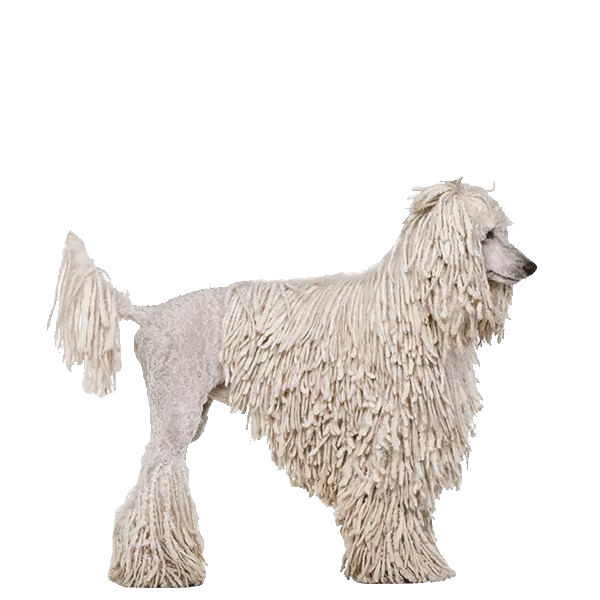
Poodle (Standard)
The Standard Poodle is a highly intelligent, athletic dog that excels at training and water retrieving while remaining a devoted family companion.
- Size
- Large
- Lifespan
- 12–15 years
- Origin
- Germany
- Temperament
- Intelligent
- Standard colors
- Black, White and Grey and 8 more
Characteristics
Coat and grooming
How the Poodle (Standard) coat is built, and what that means when you groom it.
- Coat layers
- Single coat
- Coat texture
- Curly
- Coat length
- Medium
- Shedding
- Low shedding
Grooming guidance
Caution: A Poodle (Standard) coat mats easily.
Fine or long hair tangles at the base of the coat, out of sight, where the mats tighten and pull on the skin. Brushing has to reach right down to the roots in sections, not just skim the surface.
Information: A Poodle (Standard) needs clipping every few weeks.
This coat keeps growing rather than shedding out, so it has to be trimmed every few weeks. Left to grow it mats down against the skin and traps moisture, dirt and heat.
Poodle (Standard) colors and patterns
What each club's breed standard says about every Poodle (Standard) color and pattern. Point at a ruling to see the club's own wording.
Breed standards describe the Poodle (Standard) in Black, White, Grey, Blue, Silver, Brown, Tan, Red, Cream, Apricot and Beige. Standard patterns: Solid, Tricolour, Brindle, Parti-colour, Tuxedo, Mantle, Tan point and Reverse brindle.
| Color or pattern | FCI | AKC | UKC | KC | KUSA |
|---|---|---|---|---|---|
| Black | Standard (“Black”) | Standard (“Black”) | Standard (“black”) | Standard (“Black”) | Standard (“All solid colours”) |
| White | Standard (“white”) | Standard (“White”) | Standard (“white”) | Standard (“White”) | Standard (“All solid colours”) |
| Grey | Standard (“Grey”) | Standard (“Gray”) | Standard (“gray”) | Standard (“All solid colours”) | Standard (“All solid colours”) |
| Blue | Standard (“Blue/grey and white”) | Standard (“Blue”) | Standard (“blue”) | Standard (“Blue”) | Standard (“All solid colours”) |
| Silver | Not recognised | Standard (“Silver”) | Standard (“silver”) | Standard (“Silver”) | Standard (“All solid colours”) |
| Brown | Standard (“brown”) | Standard (“Brown”) | Standard (“brown”) | Standard (“Brown”) | Standard (“All solid colours”) |
| Tan | Standard (“Black with fawn markings”) | Disqualifying (“Black & Tan”) | Disqualifying | Not recognised (“Black & Tan”) | Not recognised |
| Red | Standard (“red fawn”) | Standard (“Red”) | Standard (“red”) | Standard (“Red”) | Standard (“All solid colours”) |
| Cream | Standard (“pale fawn”) | Standard (“Cream”) | Standard (“cream”) | Standard (“Cream”) | Standard (“All solid colours”) |
| Apricot | Standard (“orange fawn (apricot)”) | Standard (“Apricot”) | Standard (“apricot”) | Standard (“Apricot”) | Standard (“All solid colours”) |
| Beige | Not recognised (“Beige and its paler derivatives are not admitted”) | Standard (“Cafe Au Lait”) | Standard (“café-au-lait, and silver beige”) | Standard (“All solid colours”) | Standard (“All solid colours”) |
| Albino | Not recognised | No ruling | Disqualifying (“Albinism”) | Not recognised | Not recognised |
| Patterns | |||||
| Solid | Standard (“Solid colours”) | Standard (“an even and solid color at the skin”) | Standard (“Coat color is solid and even”) | Standard (“All solid colours”) | Standard (“All solid colours”) |
| Tricolour | Standard (“Tricoloured: Black, white and marked with fawn”) | Disqualifying | No ruling | Not recognised | Not recognised |
| Brindle | Standard (“Brindle and white; Brindle”) | Disqualifying | No ruling | Not recognised | Not recognised |
| Parti-colour | Standard (“Parti-coloured dogs, two colours”) | Disqualifying (“Parti-colored dogs shall be disqualified”) | No ruling | Not recognised (“Particolour”) | Not recognised |
| Tuxedo | Standard (“dogs with mantle, tuxedo”) | Disqualifying | No ruling | Not recognised | Not recognised |
| Mantle | Standard (“dogs with mantle, tuxedo”) | Disqualifying | No ruling | Not recognised | Not recognised |
| Tan point | Standard (“Brown with fawn markings; Black with fawn markings”) | Disqualifying (“Black & Tan”) | No ruling | Not recognised (“Black & Tan”) | Not recognised |
| Reverse brindle | Standard (“Brindle and white; Brindle”) | Disqualifying | No ruling | Not recognised | Not recognised |
| Merle | Not recognised | Disqualifying | Disqualifying (“merle coloring”) | Not recognised | Not recognised |
| Sable | Not recognised | Disqualifying | No ruling | Not recognised (“Sable”) | Not recognised |
| Double merle | Not recognised | Disqualifying | No ruling | Not recognised | Not recognised |


| Color or pattern | FCI | AKC | UKC | KC | KUSA |
|---|---|---|---|---|---|
| Black | Standard (“Black or dark brown colour”) | No ruling | No ruling | No ruling | No ruling |
| Dark brown | Standard (“Black or dark brown colour”) | Standard (“very dark eyes”) | Standard (“dark brown”) | Standard (“dark eyes”) | Standard (“dark eyes”) |
| Amber | Standard (“In brown subjects, the colour may be dark amber”) | Standard (“dark amber eyes”) | Standard (“dark brown to dark amber for dogs with liver pigment”) | Standard (“Browns to have dark amber eyes”) | Standard (“Browns: To have dark amber eyes”) |
| Light brown | Fault (“not dark enough”) | No ruling | Fault (“very light eyes”) | No ruling | No ruling |
| Blue | No ruling | No ruling | Disqualifying (“Any variation of blue eyes”) | No ruling | No ruling |
| Patterns | |||||
| Marbled | No ruling | No ruling | Disqualifying (“Any variation of blue eyes, including ... marbling”) | No ruling | No ruling |
| Sectoral | No ruling | No ruling | Disqualifying (“Any variation of blue eyes, including flecks”) | No ruling | No ruling |


| Color or pattern | FCI | AKC | UKC | KC | KUSA |
|---|---|---|---|---|---|
| Black | Standard (“Black nose in black, white and grey subjects”) | Standard (“black noses”) | Standard (“black pigment”) | Standard (“black nose”) | Standard (“black nose”) |
| Liver | Standard (“brown nose in brown subjects”) | Standard (“liver-colored noses”) | Standard (“Nose leather is liver”) | Standard (“dark liver nose”) | Standard (“dark liver nose”) |
| Pink | Disqualifying (“Nose completely depigmented”) | No ruling | No ruling | No ruling | No ruling |
| Patterns | |||||
| Butterfly nose | Fault (“Partially depigmented nose”) | Fault (“color of nose, lips and eye-rims incomplete”) | Fault (“Incomplete nose pigment”) | No ruling | No ruling |

What the rulings mean
- Standard
- Described by the club's breed standard.
- Fault
- Named by the club's breed standard as a fault: the animal can be shown but is penalised.
- Disqualifying
- The club's breed standard disqualifies an animal of this colour or pattern.
- Not recognised
- The club does not accept this colour or pattern for the breed.
Color changes
How a Poodle (Standard)'s colors can change over its life.
Blackchanges toRust
Coat · With body condition · can change back
Blackchanges toGrey
Coat · Progressive
Blackchanges toBlue
Coat · Progressive
Blackchanges toSilver
Coat · Progressive
Brownchanges toBeige
Coat · Progressive
Creamchanges toWhite
Coat · With age
Blackchanges toBrown
Coat · In the sun · can change back
Whitechanges toRoan
Coat · With age · from 2 weeks
Tan pointchanges toSaddle
Coat · With age · from 6 to 156 weeks
Blackchanges toSnow nose
Nose · With the season · can change back
Blackchanges toPink
Nose · With the season · can change back


Sources
Each ruling comes from the club's published breed standard or color list.
Health
Conditions recorded as more common in the Poodle (Standard) than in its species as a whole. A higher risk is not a diagnosis: many never develop any of them, and your vet can say which screening tests are worth doing.
Moderate risk
- Gastrointestinal system
Gastric dilatation-volvulus
Moderate evidence
This content is for educational purposes and is not a substitute for professional veterinary advice. If you are worried about your pet, contact your veterinarian.
All health conditionsMeet some of our Poodle (Standard)
A few of the Poodle (Standard) profiles members have added to United Pet Club.
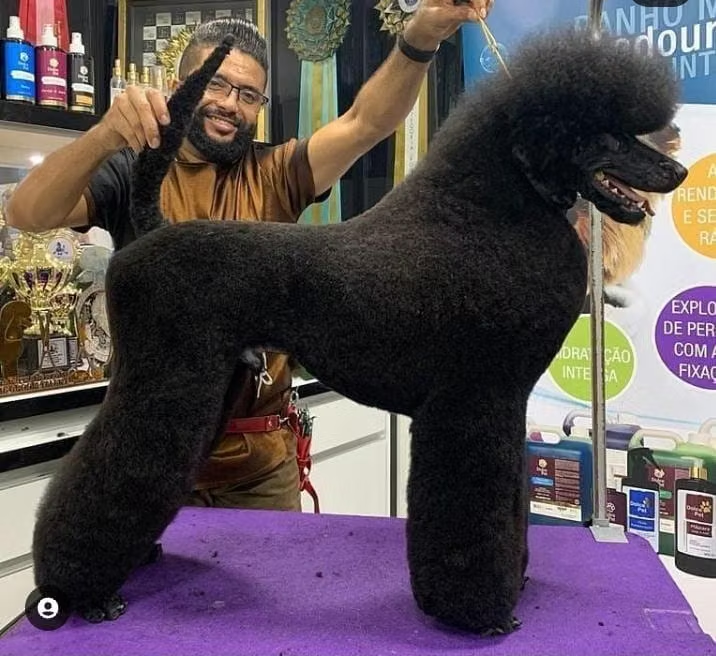
About the Standard Poodle
The Standard Poodle is a large, highly intelligent dog from Germany, gaining popularity in Indian cities as a trainable, low-shedding companion.
The Standard Poodle is the largest of the three Poodle varieties and one of the most trainable dogs anywhere. Most people picture the elaborate show clip first, but the breed actually began as a working water retriever. The athletic build, dense curly coat, and quick mind all trace back to that original job.
Standard Poodles are friendly and eager to please. They bond closely with their families and prefer to stay involved in whatever the household is doing rather than off on their own. That mix of intelligence and willingness to work makes the breed a strong candidate for obedience, agility, scent work, and assistance roles, and it is slowly gaining a following among urban dog owners in India who want a trainable, low-shedding breed.
The coat sheds very little, one reason it appeals to owners who want a large dog without hair all over the sofa. That low-shedding trait comes at a cost: the dense curls mat quickly without routine brushing and clipping, and access to a groomer who understands the breed's coat still varies a fair bit between Indian cities.
| Attribute | Detail |
|---|---|
| Origin | Germany |
| Size | Large |
| Lifespan | 12 to 15 years |
| Group / role | Non-sporting (originally a water retriever) |
| Good with | Families, children, and other dogs when socialised |
Who it suits
The Standard Poodle suits an active household that can offer both exercise and mental work. Owners who enjoy training get the most out of the breed, since a Poodle left under-stimulated can turn bored and restless. The low-shedding coat suits families managing allergies or simply wanting less hair around the home, provided someone commits to grooming every few weeks, whether at home or through a professional groomer, now easier to find in most metro cities than it was a few years ago. It's a good match for a committed first-time owner and equally rewarding for an experienced handler after a dog that learns fast.
History and origins
The Poodle developed in Germany as a water retriever, its name from the German word for splashing, before France made it a national favourite.
Germany is where the Poodle originated, developed specifically as a dog that could retrieve waterfowl for hunters after a shot. The name itself explains the job: 'pudel' is the German word for splashing in water. To handle cold lakes and rivers, the breed carries a dense, curly coat that functions almost like natural insulation.
The elaborate show clip seen today also has a working explanation. Hunters trimmed the coat away from the legs and hindquarters so the dog wasn't slowed down while swimming, while leaving hair over the chest and joints for warmth and protection. What looks purely decorative now started out as a practical solution to a real problem.
The breed later became closely linked with France, where breeders bred it down into the smaller Miniature and Toy sizes and positioned it mainly as a companion animal. That history is why it is sometimes still called the French Poodle, even though the breed itself is German. Of the three sizes, the Standard stayed closest to the original working type, since it was never bred down for size the way the smaller two were.
All three sizes, Standard, Miniature, and Toy, are officially recognised as varieties of one breed rather than as separate breeds. The Standard is both the original and the largest form, and continues to be used for retrieving, assistance work, and dog sports. In India it remains far less common than a Labrador or a Golden Retriever, but it does appear at Kennel Club of India shows and among owners looking for a distinctly different, highly trainable breed.
Appearance and breed standard
The Standard Poodle is a tall, square-built dog with a dense, curly single coat that comes in a range of solid colours.
Square proportions define the Standard Poodle's frame, and the dog holds itself upright with a balanced, confident posture. The build favours athleticism over bulk: a deep chest, a level back, and legs angled well enough for both swimming and running. The head is long and refined, finished with long drop ears and dark, oval eyes that give the breed its alert expression.
| Trait | Standard |
|---|---|
| Height | Over 38 cm (15 inches) at the shoulder; many stand 46 to 61 cm (18 to 24 inches) |
| Weight | Roughly 18 to 32 kg (40 to 70 pounds) |
| Coat | Dense, curly, single coat; low shedding |
| Colours | Solid colours including black, white, apricot, cream, brown, silver, blue, and red |
| Eyes | Dark, oval shaped, alert |
Coat and colours
The coat consists of one dense layer of curling hair, with no soft undercoat beneath it. This single-layer structure explains both the minimal shedding and the tendency to mat quickly when grooming is skipped. The breed standard calls for solid colours only, ranging from black and white through apricot, cream, brown, silver, blue, and red. Because the hair keeps growing instead of shedding seasonally, clipping counts as routine maintenance rather than an occasional task, and in India's climate, keeping that clip short through the hot months does more than just look tidy. A few owners still opt for the more elaborate show trims for competitions, though these need considerably more upkeep.
Temperament and personality
Standard Poodles are friendly, intelligent, and eager to please, bonding closely with their families and generally getting on with children and other pets.
Human company matters a great deal to the Standard Poodle. It bonds closely with its family and prefers staying nearby rather than being left alone for extended periods, something worth planning for in households where the dog spends much of the day indoors. Intelligence defines the breed just as much as friendliness does, and it shows in how fast the dog absorbs a routine, reads its owner's mood, and picks up new commands.
With children, a well-socialised Standard Poodle tends to be patient and playful, although its adult size means supervision around very young kids remains sensible. Strangers usually get a cautious rather than unfriendly reception at first, with the dog warming up once it decides things are fine, and a bark to announce a visitor or delivery is common. Around other dogs, including the street dogs a Poodle may encounter on daily walks, careful early introductions help, and household pets are usually accepted without much fuss when raised together.
The flip side of that intelligence is a genuine need for mental engagement. A bored or under-exercised Standard Poodle can become anxious or develop habits nobody wants. Regular training combined with daily activity keeps the temperament steady and the dog content.
| Trait | Rating |
|---|---|
| Affection | 5 |
| Energy | 4 |
| Trainability | 5 |
| Vocalness | 3 |
| Shedding | 1 |
Care and grooming in Indian conditions
Standard Poodles need frequent grooming, careful heat management, and daily exercise to stay comfortable in India's hot, humid climate.
Grooming
- Brush the coat several times a week, daily if you can manage it, so the curls don't mat down against the skin.
- Book a clip every four to six weeks. Groomers experienced with a Standard Poodle's coat are easiest to find in larger cities, so ask other owners for recommendations if you're new to the breed.
- Bathe around clipping time as needed, choosing a shampoo that won't strip the coat.
- Check and clean the drop ears often, since their shape traps moisture, and that matters even more during the monsoon.
- Trim nails every few weeks and brush teeth several times a week.
Exercise
- Aim for a minimum of 60 minutes of activity daily, split between walks and play.
- Walk early morning or after sunset during summer, since midday heat and hot pavement can be genuinely dangerous for a heavily coated dog.
- Running, fetch, and swimming where safe water access exists are all worth including, since the breed enjoys each one.
- Work in training games or a dog sport such as agility or obedience to exercise the mind alongside the body.
- Long idle stretches tend to bring on restlessness, especially in a flat with limited outdoor space, so keep the dog occupied.
Environment
The Standard Poodle can adapt to an apartment as well as to a house with a garden, provided it gets enough daily exercise and company, since floor space matters less than a proper daily walk. It's an indoor dog that wants to live with its family rather than be kept outside or on a balcony. Indian summers are hard on a heavy coat, so clipping shorter before the hot months and keeping the dog indoors with fans or air conditioning during peak heat both help. Through the monsoon, dry the coat and ears thoroughly after every walk, since damp conditions raise the risk of skin and ear infections.
Nutrition and feeding
Standard Poodles do well on a complete diet suited to a large, active dog, fed in measured meals to maintain a lean, healthy build.
Because the Standard Poodle is a large, active breed, its diet needs to be complete and properly balanced rather than generic. Quality protein supports the muscle that comes with an athletic build, fat provides energy, and calorie intake should stay controlled to keep the dog lean rather than overweight. Splitting the daily food into two meals rather than one large serving suits the breed and also helps lower the risk of bloat in deep-chested dogs. Fresh water should always be available, particularly through the hotter months. Adjust the amount for your individual dog's age, weight, and activity level, and rely on body condition as the real guide rather than the feeding chart on the bag alone, since imported and Indian-made large-breed foods can vary in calorie density.
| Life stage | Amount per day | Meals |
|---|---|---|
| Puppy (2 to 12 months) | Per puppy-food label, by age and weight | 3 to 4 |
| Adult (1 to 7 years) | Roughly 2 to 3 cups of dry food | 2 |
| Senior (7+ years) | Slightly reduced to match lower activity | 2 |
Treats and supplements
Treats should stay around 10 percent of daily calories so they don't unbalance the diet or add unwanted weight. Most Standard Poodles eating a complete commercial food don't need additional supplements, so add them only on a veterinarian's advice. Because the breed is so keen to learn, treats double well as training rewards, so count them toward the daily total instead of adding them separately.
Health and lifespan
Standard Poodles typically live 12 to 15 years and are generally healthy, though heat stress, tick-borne disease, and inherited conditions need attention.
As a breed, the Standard Poodle holds up well and typically lives 12 to 15 years. Like most large dogs, though, it carries a short list of inherited and size-related conditions that responsible breeders screen for before mating. Choosing a breeder who health tests both parents cuts the odds of the most common problems, and in India, managing heat stress and tick-borne illness matters just as much as watching for the inherited conditions below.
| Condition | Signs | Note |
|---|---|---|
| Hip dysplasia | Stiffness, limping, trouble rising | More common in large breeds; parents should be hip-screened |
| Gastric dilatation-volvulus (bloat) | Swollen abdomen, retching, restlessness, distress | Emergency; deep-chested dogs are at higher risk |
| Progressive retinal atrophy | Night blindness, declining vision | Inherited; eye screening of breeding dogs helps |
| Sebaceous adenitis | Patchy hair loss, scaly skin | Skin condition seen in the breed |
| Addison's disease | Weakness, vomiting, low energy | Hormonal; manageable once diagnosed |
Preventive care
- Keep vaccinations and parasite control up to date. Tick-borne diseases such as ehrlichiosis and babesiosis are common in Indian dogs, so year-round tick and flea prevention matters, not just during one season.
- Get a veterinary checkup once a year, moving to twice a year once your dog reaches senior age.
- Keep the dog lean to protect the joints from extra strain.
- Keep up with regular tooth brushing and book dental cleans as your vet advises.
- Clean the ears on a routine basis, especially through the monsoon.
Training the Standard Poodle
The Standard Poodle is one of the most trainable breeds and responds best to consistent, reward-based training that keeps its quick mind engaged.
Training generally comes easily with a Standard Poodle. It absorbs new commands quickly, retains them well, and genuinely seems to enjoy working alongside its handler rather than merely complying. That same intelligence works both ways, though: unwanted habits get learned just as fast as the ones being taught on purpose, so early, consistent training carries real weight. Keep sessions varied and short enough to hold the dog's attention. Wide socialisation matters too: expose the puppy to different people, dogs, traffic noise, and busy streets so its natural reserve toward strangers stays balanced rather than turning nervous in a crowded city environment.
Basics
- Begin with name recognition and simple attention exercises during the first weeks at home.
- Teach sit, down, and stay using small food rewards.
- Build a dependable recall in a quiet, low-distraction space before testing it somewhere busier.
- Start loose-leash walking early, since this dog grows into a large, strong adult, and Indian streets bring plenty of distraction.
- Introduce calm crate time and brief periods alone to prevent separation anxiety.
- Once the basics are solid, add a dog sport such as agility, obedience, or scent work, increasingly available through clubs in major cities, for extra mental exercise.
Breeding
Standard Poodles reach breeding maturity at one to two years, typically carry around seven puppies, and need both parents health screened first.
Responsible breeding of Standard Poodles begins with health-tested parents, with both the dam and sire screened for hip and eye issues, among other conditions known in the breed, before any mating is planned. Although dogs can technically reach sexual maturity earlier, most reputable breeders wait until the dam is physically mature, generally around two years of age, so that carrying and raising a litter does not put undue strain on her.
Gestation in dogs lasts roughly 63 days from mating to whelping. A Standard Poodle litter tends to be large, often around seven puppies, though the number varies considerably between individual dams. Most dams whelp without assistance, but a veterinarian should be reachable in case a first litter or a difficult birth requires support.
How the litter is raised matters just as much as the breeding decision itself. Puppies need to remain with the dam and littermates for the early weeks, during which they learn bite inhibition and basic dog-to-dog manners. Early handling combined with gentle exposure to household sounds and new people builds the friendly, confident temperament the breed is known for. Puppies are typically ready to move to new homes from around eight weeks of age, and new owners should factor summer heat into travel plans if a puppy is coming from another city.
| Metric | Value |
|---|---|
| Breeding maturity | About 1 to 2 years (breed at full maturity) |
| Gestation | Roughly 63 days |
| Average litter size | Around 7 puppies |
| Weaning | About 6 to 8 weeks |
| Ready for new homes | From about 8 weeks |
Registering a Poodle (Standard) in India: profile and microchip
Municipal licences cover the paperwork; a free United Pet Club record is what actually connects your Poodle (Standard) to your phone.
How to register a Poodle (Standard) in India
Municipal corporations in Delhi, Mumbai, Bengaluru, and numerous other cities require dogs to be registered or licensed under their by-laws, and a United Pet Club profile complements whichever rules apply where you live. The profile holds your contact information against your Poodle (Standard) for its entire life, at no charge whatsoever. Registering your dog requires only a few minutes.
A microchip without a registration is merely a number under the skin. File your Poodle (Standard)'s fifteen digit number with United Pet Club and it becomes a working address: free for life, open to every chip brand, and searchable from any clinic or shelter in the country or abroad. Microchip registration first, the free account alongside.
How do I register my Poodle (Standard) in India?
Create a free United Pet Club account, enter your Poodle (Standard)'s details along with a photograph, and save the profile. The lifetime plan maintains the record at no cost, and any municipal licence you hold sits alongside it rather than replacing it.
How do I register my Poodle (Standard)'s microchip?
Enter the fifteen digit chip number into your free account together with your current address, phone number, and email. The lifetime plan covers the registration and every subsequent update without charge, whatever the chip's manufacturer.
Is registration compulsory for a Poodle (Standard) in India?
Several municipal corporations, Delhi and Mumbai among them, require dogs to be licensed under local by-laws. The United Pet Club profile is separate and voluntary, and it is the record a finder anywhere can actually search, free of cost.
What does it cost to register a Poodle (Standard)?
Nothing whatsoever. The free lifetime plan includes the profile, the microchip record, and unlimited updates, with no renewal fee at any point.
Frequently asked questions
Common questions Indian owners ask about the Standard Poodle's size, temperament, grooming, lifespan, and fit as a family dog.
How big does a Standard Poodle get?
The Standard Poodle is a large dog. It stands over 38 cm (15 inches) at the shoulder, with many between 46 and 61 cm (18 to 24 inches), and weighs roughly 18 to 32 kg (40 to 70 pounds).
Are Standard Poodles good family dogs?
Yes. They're friendly, devoted, and bond closely with their families. Well-socialised Poodles are patient with children, and their size means supervision around very young kids is still sensible.
Do Standard Poodles shed a lot?
No, they shed very little because the coat is a single curly layer with no soft undercoat. The trade-off is regular grooming, including brushing several times a week and a clip every four to six weeks.
Are Standard Poodles difficult to maintain?
Care is moderate to demanding. The dog is easy to train but needs daily exercise, mental work, and steady grooming. A Poodle left under-stimulated can become bored and restless.
How long do Standard Poodles live?
A typical Standard Poodle lives 12 to 15 years. Good nutrition, a lean weight, regular veterinary care, and choosing a breeder who health tests the parents all support a longer life.
Are Standard Poodles easy to train?
Very. It's one of the most trainable breeds around, intelligent and eager to please. It does best with consistent, reward-based methods and early socialisation.
Can a Standard Poodle handle Indian summers?
It takes some management. The dense coat makes the dog more heat-sensitive than a short-coated breed, so clip it shorter before summer, walk in the early morning or after sunset, and keep it indoors with fans or air conditioning during the hottest hours. Fresh water and shade are non-negotiable, and heavy panting or weakness in hot weather needs a vet straight away.
From the community
Ask about the Poodle (Standard)No questions about the Poodle (Standard) yet. Be the first to ask.
Browse Dog breeds