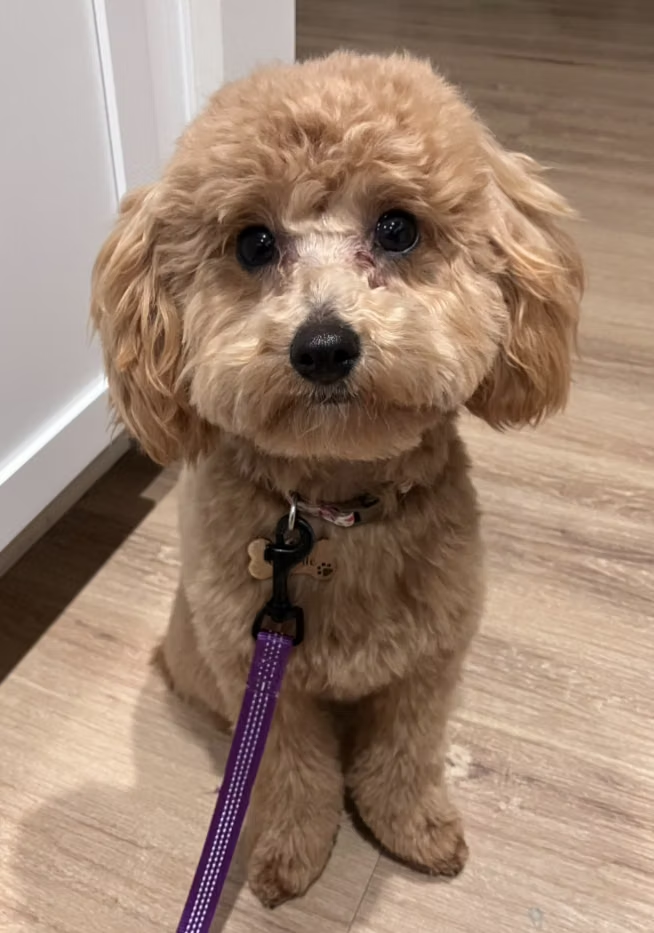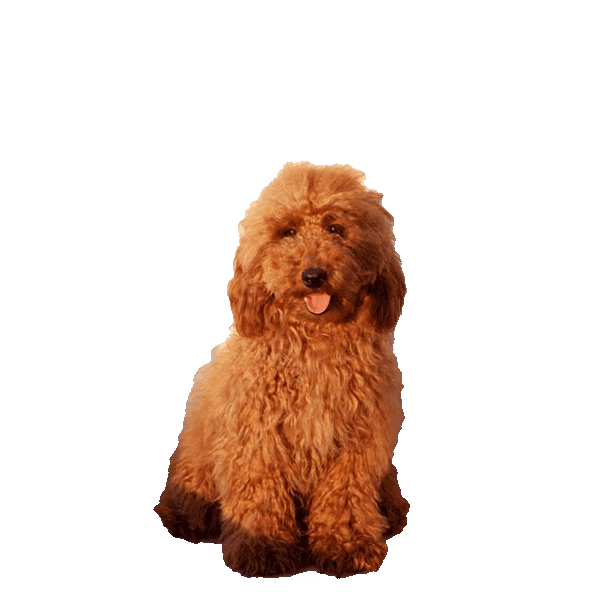
The Miniature Poodle is a brilliant, eager-to-please companion combining elegance with one of the keenest minds in the dog world.
How the Poodle (Miniature) coat is built, and what that means when you groom it.
Caution: A Poodle (Miniature) coat mats easily.
Fine or long hair tangles at the base of the coat, out of sight, where the mats tighten and pull on the skin. Brushing has to reach right down to the roots in sections, not just skim the surface.
Information: A Poodle (Miniature) needs clipping every few weeks.
This coat keeps growing rather than shedding out, so it has to be trimmed every few weeks. Left to grow it mats down against the skin and traps moisture, dirt and heat.
A few of the Poodle (Miniature) profiles members have added to United Pet Club.
The Miniature Poodle is a small, sharp-witted companion breed from Germany, standing 28 to 38 cm tall and living 13 to 15 years in Indian homes.
The Miniature Poodle is a small dog with a quick mind and a nature that stays close to its people. It is the middle of the three Poodle sizes, smaller than the Standard and larger than the Toy. The neat show clip seen at conformation events run under the Kennel Club of India can be misleading: underneath the styling is a working retriever, bred down from bigger water dogs built for daily activity.
This variety weighs about 4.5 to 7 kg and stands 28 to 38 cm at the shoulder. The coat is dense, curly, and grows all year round instead of shedding in a seasonal cycle, so a fixed grooming routine is part of owning one, not an optional extra, particularly in India's humid stretches when the curls mat faster. Coat colours include solid black, white, apricot, cream, silver, brown, and other shades.
Miniature Poodles attach themselves firmly to the household and expect to be part of daily routines, from the morning walk to evening chores around the house. They pick up new commands fast, train well, and stay playful long after puppyhood. Because the breed is small, biddable, and settles into flat or bungalow living, it is a frequent pick for first-time owners in Indian cities who are ready for the coat upkeep and the mental stimulation this dog needs.
| Attribute | Detail |
|---|---|
| Origin | Germany |
| Size | Small (4.5 to 7 kg, 28 to 38 cm) |
| Lifespan | 13 to 15 years |
| Group / role | Companion dog, formerly a water retriever |
| Good with | Families, children, other dogs, attentive first-time owners |
The Miniature Poodle suits households that can offer daily company, short training sessions, and a grooming appointment every few weeks. It manages well in a city flat or an independent house, provided it gets its exercise and is not left on its own for long stretches. Owners who travel often or work long hours away from home should think twice, since the breed dislikes isolation and tends to develop nuisance habits, such as excessive barking or chewing, when bored.
The Poodle was developed in Germany as a water retriever, and the Miniature size was bred down later for companionship and lighter working roles.
The Poodle's roots trace back to Germany, where it worked as a water retriever for waterfowl hunters. Its name comes from the German word pudeln, to splash about in water, and the traditional clipped coat had a working purpose rather than a decorative one: shaving sections of the body cut drag while swimming, while hair left over the joints and chest guarded them against cold water.
Germany gave the breed its start, but France took to the Poodle with enthusiasm and shaped much of its later history. There the dog moved out of the marshes and into parlours, circuses, and street performances, where its speed at learning tricks made it a crowd favourite.
The Miniature Poodle came from selectively breeding down the larger Standard Poodle. Breeders picked smaller dogs to keep the intelligence and coat of the original while producing a size that suited town life and smaller homes. A still smaller Toy Poodle followed later. The three sizes are treated as one breed split by height rather than as separate breeds, and this grouping is followed by the Kennel Club of India as well as international registries.
By the twentieth century, the Poodle in its several sizes had become one of the most widely kept companion breeds across Europe, North America, and eventually India, prized for its trainability and a coat that sheds little in a country where allergy-friendly pets are increasingly sought after.
The Miniature Poodle is a squarely built small dog, 28 to 38 cm tall, with a dense, curly, low-shedding coat in several solid colours.
The Miniature Poodle has a square, balanced frame, standing roughly as tall at the shoulder as it measures from chest to rump. It carries itself upright and alert, never slouched. The head is long and refined, the muzzle straight, and the eyes dark, oval, and watchful. The ears hang close to the skull and are covered in long hair that needs regular attention to avoid matting, especially during the monsoon.
| Trait | Standard |
|---|---|
| Height | 28 to 38 cm (11 to 15 in) at the shoulder |
| Weight | 4.5 to 7 kg (10 to 15 lb) |
| Coat | Dense, curly, continuously growing, low-shedding |
| Colours | Black, white, apricot, cream, silver, brown, blue, others (solid) |
| Eyes | Dark, oval, alert |
The coat is what sets this breed apart. It is curly, firm to the touch, and grows without a seasonal shed, matting quickly if brushing and clipping fall behind schedule, a real risk in India's hot, humid months when moisture gets trapped in the curls. Because loose hair stays caught in the coat rather than falling around the house, the breed suits owners who want a dog that does not shed everywhere.
Recognised colours are solid throughout and include black, white, apricot, cream, silver, blue, grey, and shades of brown such as cafe au lait. Some puppies lighten or change shade as they grow into adults. Clips range from a practical short trim, sensible for Indian summers, to the elaborate styles seen in the show ring at KCI-affiliated events.
The Miniature Poodle is affectionate, playful, and exceptionally intelligent, bonding closely with its family and usually getting along with children and other pets.
The Miniature Poodle is sharp, responsive, and firmly attached to its family. It sits consistently among the most intelligent dog breeds and tends to grasp commands and household routines faster than most. That intelligence needs an outlet: a Miniature Poodle left with nothing to do will usually invent its own entertainment, and the results are not always welcome to the household.
Within the family the breed is affectionate and playful, often trailing whoever is home from room to room. It generally gets along well with children when play is supervised, and it usually settles peacefully alongside other dogs and pets it grows up with. The breed forms a tight bond with its people and is not suited to being left alone for long periods, a common situation in households where everyone works away from home.
Around strangers the Miniature Poodle tends to be reserved rather than aggressive, and many individuals bark readily at the gate or doorbell, making them decent alert dogs for a flat or an independent house. Early socialisation helps keep wariness and excess barking in check. The breed reads its owner's mood closely, so a firm but gentle hand works far better than harsh correction.
| Trait | Rating |
|---|---|
| Affection | 5 |
| Energy | 4 |
| Trainability | 5 |
| Vocalness | 3 |
| Shedding | 1 |
The Miniature Poodle needs regular brushing, professional clipping every four to six weeks, daily exercise, and steady mental engagement, especially in India's heat.
The Miniature Poodle settles well into a flat or an independent house as long as it gets daily exercise and company. It is an indoor dog that wants to stay near its people and should not be left alone for long stretches. A securely fenced garden helps but does not replace time spent together, and outdoor time should avoid the peak heat of the afternoon.
Feed a complete diet matched to life stage in measured portions, splitting an adult Miniature Poodle's daily food into two meals.
A Miniature Poodle does well on a complete and balanced diet formulated for its life stage and size. Since the breed is small and gains weight easily when overfed, portions should be measured out rather than left down free choice through the day. Adjust the amount to the individual dog's age, activity level, and body condition; you should be able to feel the ribs without pressing hard through the coat.
| Life stage | Amount per day | Meals |
|---|---|---|
| Puppy (2 to 6 months) | As per pack guide for the puppy's weight | 3 to 4 |
| Puppy (6 to 12 months) | As per pack guide for the puppy's weight | 2 to 3 |
| Adult | About 60 to 120 g dry kibble | 2 |
| Senior | Adjusted down for lower activity | 2 |
Treats should not make up more than about ten percent of daily calories, with the main meals adjusted to account for them. Most Miniature Poodles on a complete commercial diet need no extra supplements; discuss anything additional, such as joint or skin support, with a vet before starting it. Keep fresh water available at all times, topped up more often in hot weather.
The Miniature Poodle is generally long-lived at 13 to 15 years but is predisposed to eye, joint, and certain endocrine conditions.
The Miniature Poodle is generally a healthy, long-lived breed, with a typical lifespan of 13 to 15 years. Like most purebred dogs, it carries a few inherited predispositions. Buying from a breeder who screens the parent dogs, ideally one registered with the Kennel Club of India, and keeping up routine vet visits, lowers the risk and severity of most of these conditions.
| Condition | Signs | Note |
|---|---|---|
| Progressive retinal atrophy | Night blindness, declining vision | Inherited; DNA tests available for breeders |
| Patellar luxation | Skipping gait, occasional hind-leg lifting | Kneecap slips out of place; severity varies |
| Hip dysplasia | Stiffness, reluctance to exercise | Less common in small Poodles but possible |
| Legg-Calve-Perthes disease | Limping, hind-leg pain in young dogs | Affects the hip joint in small breeds |
| Epilepsy | Seizures | Manageable with veterinary care in many cases |
| Cushing's disease | Increased thirst, appetite, coat changes | Endocrine disorder, more common in middle age |
The Miniature Poodle is one of the easiest breeds to train, picking things up quickly through reward-based methods and short, varied sessions.
The Miniature Poodle ranks among the most trainable of all dogs. It picks up commands quickly, retains them well, and enjoys the mental work, which makes it a strong candidate for obedience, agility, and trick training, including events run under Kennel Club of India rules. The flip side of this intelligence is that the breed gets bored with repetition and notices inconsistency fast, so sessions should stay short, varied, and upbeat. The breed is sensitive and does not respond well to harsh corrections.
Miniature Poodles typically have small to medium litters and should be bred only from health-screened parents that have reached full maturity.
Responsible breeding of Miniature Poodles starts with health-tested parents. Both the dam and the sire should be screened for the conditions known in the breed, including eye and patella checks, before mating, and registering the litter with the Kennel Club of India helps keep the breed's records straight. A bitch should be physically and behaviourally mature before her first litter, generally past about two years of age, rather than bred on her first season.
Gestation in dogs runs about 63 days from conception. Litter sizes in the Miniature variety are typically small to medium, often three to six puppies, with individual variation. Whelping in small breeds can carry added risk, so a breeder should arrange veterinary support well in advance, including a plan for the nearest clinic that handles emergencies.
Puppies are born blind and deaf and depend entirely on the dam through the first weeks. Eyes open at around two weeks, and weaning starts at roughly three to four weeks. The window from about three to twelve weeks is critical for socialisation, so well-raised puppies are handled gently and exposed to ordinary household sights and sounds, including the noise of the monsoon and festival crackers, before going to new homes, usually at eight weeks or later.
| Metric | Value |
|---|---|
| Female maturity for breeding | About 2 years |
| Gestation | About 63 days |
| Typical litter size | 3 to 6 puppies |
| Eyes open | About 14 days |
| Weaning begins | 3 to 4 weeks |
| Earliest rehoming | About 8 weeks |
Municipal licences cover the paperwork; a free United Pet Club record is what actually connects your Poodle (Miniature) to your phone.
Begin with the essentials: your Poodle (Miniature)'s name, its date of birth, a clear photograph, and your mobile number, saved to a registry that levies no charge at any stage. Dog registration functions with or without a microchip, so nothing need wait for the next clinic visit.
Should your Poodle (Miniature) already carry a microchip, the number must still be recorded separately, since the vet performs only the implant. Registering the microchip under the free lifetime plan accepts chips from any manufacturer an Indian vet works with, keeps every update free should your household shift cities, and leaves the record searchable at any hour. Create your free account and complete both tasks in one sitting.
Create a free United Pet Club account, enter your Poodle (Miniature)'s details along with a photograph, and save the profile. The lifetime plan maintains the record at no cost, and any municipal licence you hold sits alongside it rather than replacing it.
Enter the fifteen digit chip number into your free account together with your current address, phone number, and email. The lifetime plan covers the registration and every subsequent update without charge, whatever the chip's manufacturer.
Several municipal corporations, Delhi and Mumbai among them, require dogs to be licensed under local by-laws. The United Pet Club profile is separate and voluntary, and it is the record a finder anywhere can actually search, free of cost.
Nothing whatsoever. The free lifetime plan includes the profile, the microchip record, and unlimited updates, with no renewal fee at any point.
Common questions about the Miniature Poodle's size, temperament, grooming demands, lifespan, and suitability for families and first-time owners in India.
A Miniature Poodle stands 28 to 38 cm at the shoulder and weighs about 4.5 to 7 kg, placing it between the larger Standard Poodle and the smaller Toy Poodle.
It is affectionate, playful, and highly intelligent. The breed bonds closely with its family, usually gets along well with children and other pets, and tends to be reserved but not aggressive with strangers.
The main demand is grooming. The coat grows continuously and needs brushing several times a week plus a professional clip every four to six weeks, more carefully managed through the monsoon. Beyond that, the breed needs daily exercise and mental stimulation.
Most Miniature Poodles live 13 to 15 years, which is a long life for a dog and typical for a healthy small breed.
Yes, for owners who can commit to grooming and daily engagement. The breed's intelligence and eagerness to please make it one of the easier dogs to train.
Very little. The curly coat sheds minimally and traps loose hair within the curls, which is why the breed suits people who want a low-shedding dog, though regular grooming is still needed, particularly in humid weather.
The Poodle, across its size varieties, is one of the more widely kept companion breeds in Indian cities, so Miniature Poodles are generally available through reputable breeders registered with the Kennel Club of India and through breed rescues. Look for breeders who health-test their dogs.