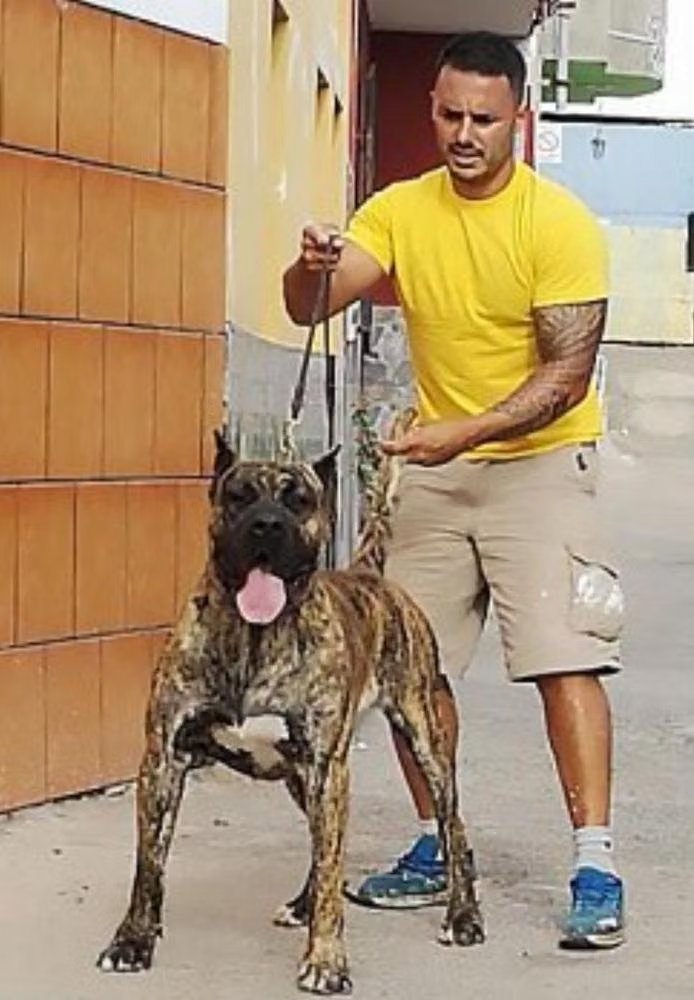
The Perro de Presa Canario is a confident, powerful Canary Islands guardian deeply devoted to its family and protective of its territory.
How the Perro de Presa Canario coat is built, and what that means when you groom it.
A few of the Perro de Presa Canario profiles members have added to United Pet Club.
The Perro de Presa Canario is a heavy-boned guardian breed from Spain's Canary Islands, loyal to its own household and wary of outsiders, with a lifespan of 9 to 11 years.
The Perro de Presa Canario is a heavy, muscular working dog that was developed on the Canary Islands off Spain. The name means roughly "Canary catch dog," a nod to its old job of gripping and holding cattle that strayed on the islands' farms. It also goes by Dogo Canario or Canary Mastiff. A grown male typically stands 61 to 66 cm at the shoulder and weighs 45 kg or more, with a broad skull, thick bone and a short coat that copes well with heat.
This is, first and foremost, a guard dog. Inside the house it is settled and affectionate with people it knows, but it turns watchful the moment a stranger enters the gate, and it guards its territory by instinct rather than by training. Owners describe the temperament as steady and self-assured rather than excitable. Given its size, strength and protective streak, the breed calls for a handler who already has experience with large dogs and who starts socialisation early, before the puppy grows into its full weight.
The Presa Canario suits someone who wants a property guardian and a devoted family dog rolled into one, and who has the physical strength and the time to manage a large, strong-willed animal. It is not the right fit for a first-time dog owner, a flat without a secure compound, or a household that cannot keep training consistent through the year.
| Attribute | Detail |
|---|---|
| Origin | Canary Islands, Spain |
| Size | Large (often 45 kg or more) |
| Lifespan | 9 to 11 years |
| Group / role | Working / guardian, livestock catch dog |
| Good with | Family it knows; needs early socialisation with strangers and other pets |
The breed suits a confident owner who has managed large dogs before and who keeps training consistent across the seasons. A securely walled or fenced compound and an early commitment to socialisation are close to essential. It does not suit a small flat, nor an owner who travels often and leaves the dog without a routine.
The Perro de Presa Canario developed on Spain's Canary Islands as a working cattle catch dog and farm guardian, nearly disappeared in the twentieth century, and was rebuilt from the 1970s onward.
The breed takes both its name and its home from the Canary Islands, a Spanish archipelago in the Atlantic Ocean off the north-west coast of Africa. The Spanish word "presa" means grip or catch, and the dogs were bred to seize and hold cattle and other livestock for the farmhands working the islands. They also stood guard over farms and property, and this dual job shaped both their build and their temperament.
The Presa is a molosser, descended from heavy mastiff-type working dogs brought to the islands and crossed with local farm dogs across generations. Breeders selected for working ability, courage and physical strength rather than a uniform show look, which is why the early dogs varied a good deal in appearance.
Through the twentieth century, the breed's numbers fell away sharply. Changes in farming methods cut the demand for cattle catch dogs, and the population dropped low enough that the type was nearly lost. From roughly the 1970s, breeders on the islands set about recovering and stabilising the breed from the dogs that were left.
That recovery effort produced a written breed standard and steadily growing recognition abroad. The Presa Canario went on to be accepted by major kennel bodies, and "Dogo Canario" became an official alternate name for the breed. It remains a point of regional pride on the Canary Islands to this day.
The Perro de Presa Canario is a large, powerfully built molosser with a broad head, heavy bone and a short, coarse coat in fawn or brindle, often with a dark mask.
The Presa Canario is built for strength rather than speed. The body is rectangular and substantial, with a deep chest, a thick neck and heavy bone throughout. The head is large and broad with a powerful jaw, and the overall look is one of controlled power. Males are noticeably bigger and heavier than females.
The coat is short, coarse and lies flat against the body, which suits the warm climate of its home islands, and it copes reasonably well with Indian summers too, provided the dog has shade and water through the hottest hours. The skin around the head and neck is thick. Cropped ears are seen in places where the practice is allowed, though natural drop ears are common wherever cropping is restricted or banned, including in India.
| Trait | Typical range |
|---|---|
| Height | Males about 61 to 66 cm; females about 56 to 61 cm |
| Weight | Males about 45 to 59 kg; females about 38 to 50 kg |
| Coat | Short, coarse, flat-lying, almost no undercoat |
| Colours | Fawn and brindle in various shades, often with white markings |
| Eyes | Oval, medium size, dark to medium brown |
The two main colour families are fawn and brindle, each appearing in lighter and darker shades. Many dogs carry a dark mask on the face. White markings on the chest, feet or throat are common and accepted within limits. The short coat needs very little upkeep and suits India's warmer regions well, but it gives almost no protection against cold, so the breed struggles through hill-station winters and is best kept in plains and coastal climates.
The Perro de Presa Canario is calm and devoted with its own family, naturally wary of strangers, and territorial, so early socialisation and an experienced owner matter a great deal.
Inside the home with people it knows, the Presa Canario is generally calm, steady and affectionate. It bonds closely with its family and stays alert to its surroundings without being noisy or restless. Many owners appreciate how settled the breed becomes indoors once its exercise and structure needs are met.
Toward strangers, the dog is naturally reserved and watchful. This is a guardian breed by trade, and an unfamiliar visitor at the gate will draw its full attention. Calm introductions handled by the owner help the dog learn to read a situation correctly rather than react on instinct alone. With other dogs and pets it can turn territorial, and same-sex aggression is a real possibility, so socialisation from puppyhood, kept up through adulthood, matters.
The Presa is confident and strong-willed by nature. It works best for an owner who stays consistent and clearly in charge, and it will test boundaries with a handler who hesitates or changes the rules. Around children in its own family it can be gentle, but its sheer size means any time spent with young children needs an adult watching closely.
| Trait | Rating |
|---|---|
| Affection (with family) | 4 |
| Energy | 3 |
| Trainability | 3 |
| Vocalness | 2 |
| Shedding | 3 |
The Perro de Presa Canario needs very little grooming thanks to its short coat, but it needs daily exercise, a secure compound and a structured routine to stay balanced.
The breed does best in a home with a securely walled or fenced compound and a clear role within the household. It handles India's heat reasonably well given its short coat and island origins, but it feels the cold and should not be left outdoors overnight in the hills or through a north Indian winter. A bored, under-exercised or isolated Presa is more likely to develop guarding issues or other behaviour problems.
The Perro de Presa Canario needs a complete large-breed diet with controlled portions and slow, steady growth as a puppy to protect its joints.
Feed a complete, balanced diet formulated for large breeds. As a big, muscular dog, the Presa Canario needs enough protein and a calorie level matched to how active it is, but it should never be allowed to run overweight. Extra weight puts real strain on the joints of a dog this heavy. During puppyhood, slow and steady growth serves the dog far better than rapid weight gain, so a large-breed puppy formula fed in measured portions matters.
Deep-chested large breeds carry a risk of bloat (gastric dilatation-volvulus). Feeding two measured meals a day instead of one large one, and keeping heavy activity away from mealtimes, helps lower that risk. Keep fresh water available at all times, particularly through the hot months.
| Life stage | Amount per day | Meals |
|---|---|---|
| Puppy (2 to 6 months) | Per large-breed puppy formula, divided | 3 to 4 |
| Junior (6 to 12 months) | Per large-breed puppy formula | 2 to 3 |
| Adult | About 500 to 700 grams large-breed kibble, by weight and activity | 2 |
| Senior | Reduced calories, monitor weight | 2 |
Keep treats to a small share of the day's calories so they do not add unwanted weight. Small pieces of plain cooked chicken or mutton, or a commercial training treat, work well. Joint supplements such as glucosamine are sometimes recommended for large breeds, but check with a veterinarian before adding any supplement to the diet.
The Perro de Presa Canario lives about 9 to 11 years and, being a large molosser, is prone to hip and elbow problems, bloat and heart concerns, so preventive care matters a great deal.
The Perro de Presa Canario generally lives about 9 to 11 years, which is typical for a dog of its size, since larger breeds tend to have shorter lifespans than small ones. Most of the breed's health concerns trace back to its size and build, so weight control, joint care and regular veterinary check-ups sit at the centre of keeping a Presa healthy. Buying from a breeder who screens the parent dogs for known issues cuts down the risk of inherited problems considerably.
| Condition | Signs | Note |
|---|---|---|
| Hip dysplasia | Stiffness, limping, trouble rising | Common in large breeds; screen breeding stock |
| Elbow dysplasia | Front-leg lameness, reluctance to exercise | Keep puppy growth slow and steady |
| Bloat (GDV) | Swollen belly, retching, distress | Medical emergency; feed measured meals |
| Heart conditions | Tiring easily, coughing, fainting | Discuss screening with your vet |
| Osteochondrosis / joint issues | Lameness in a young dog | Avoid overexercise while growing |
The Perro de Presa Canario is intelligent and capable but strong-willed, so it needs early, consistent, reward-based training from a confident handler.
The Presa Canario is intelligent and picks things up readily, but it is also independent and strong-willed. It looks to a handler who stays calm, consistent and clearly in charge, and it can turn difficult for an owner who hesitates or applies the rules unevenly. Given the breed's size and guarding instinct, training and socialisation should start in puppyhood and carry on through the dog's whole life, not stop after a short obedience course.
Socialisation matters just as much as obedience for this breed. Introducing the puppy to many people, places, sounds and other animals, in calm and positive settings, helps it grow into a stable adult that can tell an ordinary situation apart from a real threat. Harsh or punishment-heavy methods tend to backfire with a confident guardian and can damage the trust between dog and owner.
Breeding the Perro de Presa Canario should be done responsibly with health-tested parents, typically large litters, and careful raising of the puppies through the early weeks.
Breeding a guardian breed of this size comes with real responsibility. Dogs should reach full physical and mental maturity before being bred, and both parents ought to be health-screened for the conditions common in the breed, including hip and elbow problems and heart issues. Temperament counts for as much as physical soundness, since only stable, well-socialised dogs should be bred, given that temperament is partly inherited in a powerful guardian breed.
Gestation in dogs runs to about 63 days on average. The Presa Canario produces large puppies, and litters often run sizable, which can make whelping demanding, so veterinary support through pregnancy and birth is worth arranging in advance. Raising the litter well means early gentle handling, careful feeding for steady growth, and starting socialisation during the critical weeks before the puppies move to new homes. Responsible breeders also screen prospective buyers carefully, given the breed's strength and guarding nature.
| Metric | Value |
|---|---|
| Sexual maturity | Around 1 to 2 years; breed only at full maturity |
| Gestation | About 63 days |
| Average litter size | Typically large; commonly several to many puppies |
| Weaning | Around 6 to 8 weeks |
| Go-home age | Usually 8 weeks or older, after early socialisation |
Municipal licences cover the paperwork; a free United Pet Club record is what actually connects your Perro de Presa Canario to your phone.
Begin with the essentials: your Perro de Presa Canario's name, its date of birth, a clear photograph, and your mobile number, saved to a registry that levies no charge at any stage. Dog registration functions with or without a microchip, so nothing need wait for the next clinic visit.
A microchip without a registration is merely a number under the skin. File your Perro de Presa Canario's fifteen digit number with United Pet Club and it becomes a working address: free for life, open to every chip brand, and searchable from any clinic or shelter in the country or abroad. Microchip registration first, the free account alongside.
Create a free United Pet Club account, enter your Perro de Presa Canario's details along with a photograph, and save the profile. The lifetime plan maintains the record at no cost, and any municipal licence you hold sits alongside it rather than replacing it.
Enter the fifteen digit chip number into your free account together with your current address, phone number, and email. The lifetime plan covers the registration and every subsequent update without charge, whatever the chip's manufacturer.
Several municipal corporations, Delhi and Mumbai among them, require dogs to be licensed under local by-laws. The United Pet Club profile is separate and voluntary, and it is the record a finder anywhere can actually search, free of cost.
Nothing whatsoever. The free lifetime plan includes the profile, the microchip record, and unlimited updates, with no renewal fee at any point.
Common questions about the Perro de Presa Canario cover its size, temperament, care needs, lifespan, suitability for families, and ownership rules in India.
It is a large breed. Males typically stand about 61 to 66 cm at the shoulder and weigh 45 to 59 kg, while females run somewhat smaller. This is a heavy, muscular dog, so plan for the space and physical strength needed to manage it.
With its own family the Presa Canario is calm, devoted and affectionate. Toward strangers it stays naturally reserved and watchful, and it is territorial by instinct. Early and ongoing socialisation matters a great deal in raising a balanced adult.
Grooming itself is easy thanks to the short coat, but the breed is demanding in other ways. It needs daily exercise, a secure compound, consistent training and an experienced owner. It is not a good fit for a first-time dog owner.
The typical lifespan runs about 9 to 11 years, which is normal for a dog of this size. Keeping the dog at a healthy weight and arranging regular veterinary care supports a full life.
It can be a devoted family guardian and is often gentle with its own household. Because of its size and strength, time spent with young children should always be supervised, and the home needs an owner capable of handling a powerful dog.
Several countries and some Indian states and civic bodies regulate or restrict large guardian and molosser breeds, and rules on practices such as ear cropping vary by area. Check local laws, housing society rules and any insurance requirements before bringing one home.
The breed is available through dedicated breeders, and it is worth checking with the Kennel Club of India and specialist molosser clubs for contacts, since it is not commonly bred here. Choose a breeder who health-tests the parents, breeds for stable temperament and screens prospective owners carefully.