The Norwegian Elkhound is a bold, hardy Nordic hound known for its confident spirit and ancient role tracking big game.
How the Norwegian Elkhound coat is built, and what that means when you groom it.
Critical: A Norwegian Elkhound should not be shaved.
The undercoat keeps heat out as well as in, and the outer coat shields the skin from sun and insect bites. Clipping the whole coat off removes both. It often grows back patchy, soft or a different colour, and in some animals the guard hairs never return properly. Brush the undercoat out instead of cutting it off.
Information: A Norwegian Elkhound drops its undercoat in heavy bursts.
The undercoat comes out in heavy bursts over a few weeks. An undercoat rake, or a bath followed by a proper blow-dry, clears it far faster than daily brushing. Clipping the coat down is not a shortcut for this.
A few of the Norwegian Elkhound profiles members have added to United Pet Club.
The Norwegian Elkhound is a medium-sized Nordic hunting breed, alert and confident by temperament, with a dense grey coat meant for snow country rather than Indian summers.
The Norwegian Elkhound is a medium-sized spitz breed that comes from Norway, where it was developed to track and hold moose (what Europeans call elk) at bay until the hunter arrived. The dog works entirely by scent, and once it corners the quarry, it holds ground with steady, persistent barking rather than attacking.
The build is square and compact, with a tightly curled tail sitting over the back and a thick double coat in grey shades tipped with black. The face carries a keen, friendly look. A full-grown Elkhound weighs 20 to 25 kg and stands roughly 49 to 52 cm at the shoulder, a size that suits most Indian homes with a decent-sized compound or terrace to move about in.
Elkhounds are devoted to their families and settle into the household rather than fixing on one person alone. They are alert and quick to announce visitors, which makes them dependable watchdogs, and they carry an easy, self-assured manner. Bred for generations to work in snow and hill country, the breed brings along real stamina, though owners in Indian cities will need to plan around the heat rather than the cold.
| Attribute | Detail |
|---|---|
| Origin | Norway |
| Size | Medium, about 20 to 25 kg |
| Lifespan | 12 to 15 years |
| Group or role | Hound, big-game tracker and watchdog |
| Good with | Families, older children, active households with a garden or a large terrace |
This breed suits an active family who can commit to a daily walk or run, not a household looking for a low-maintenance pet. The Elkhound is built for cold country, so it copes poorly with peak Indian summers and needs shade, fans or air conditioning, and fresh water at all times through the hot months. It is a vocal dog by nature, so a flat with thin walls or close neighbours in a housing society may not be the best fit. Owners who enjoy long walks at dawn or dusk, and who do not mind an independent-minded dog that thinks for itself, will get along well with an Elkhound.
The Norwegian Elkhound is an ancient Nordic breed used for centuries to hunt moose and other big game in Norway, formally recognised only in the late 1800s.
The Norwegian Elkhound ranks among the oldest spitz breeds of Scandinavia. Dogs of a similar type have lived and worked alongside people in that region for thousands of years, and the remains of spitz-type dogs have turned up at Nordic archaeological sites of considerable age. The breed took shape in Norway as a hunting and guarding companion suited to a harsh, cold climate, a far cry from the tropical and subcontinental conditions most Indian dog owners are familiar with.
Its principal task was moose hunting. The dog ranged out ahead of the hunter, tracked the animal by scent, and then held it in place with sustained barking until the hunter closed in. This kind of work called for stamina, nerve, and a dog capable of working things out on its own, qualities that still show through in the breed today. The Elkhound was also used against other large game and doubled as a guardian on farms and homesteads.
Interest in fixing the type through a written standard grew in the late nineteenth century. Norway's first organised dog shows were held in the 1870s, and the Elkhound featured among the breeds exhibited. Breed clubs and formal standards soon followed, giving the breed the recognisable shape it has today.
The Elkhound later travelled beyond Norway to the rest of Europe and to North America, gaining recognition from major kennel clubs in the early twentieth century. It reached India only in small numbers, mostly through specialist and hobby breeders, and stays a national symbol of Norway even as it continues to work as both a hunting hound and a family dog.
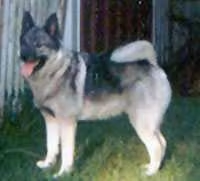
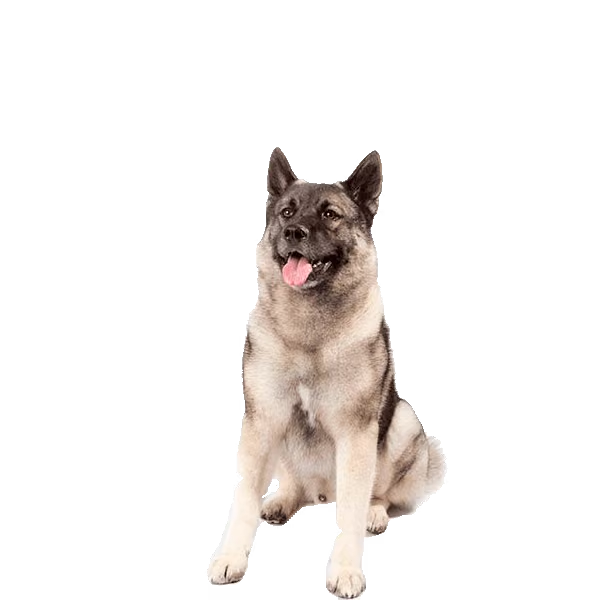
The Norwegian Elkhound is a square, compact spitz with a grey double coat, a tightly curled tail, and dark, alert eyes, built for cold country rather than the Indian plains.
The Norwegian Elkhound carries a square, balanced outline, with the body roughly as long as it is tall at the shoulder. The frame is sturdy without being heavy, with good bone and a deep chest built for endurance. The head is wedge-shaped, the ears stand erect and pointed, and the muzzle is clean. The tail is set high, thickly furred, and curls tightly over the back.
| Trait | Standard |
|---|---|
| Height | Males about 52 cm, females about 49 cm at the shoulder |
| Weight | Males about 23 kg, females about 20 kg |
| Coat | Dense double coat, coarse guard hairs over a soft undercoat |
| Colours | Grey with black-tipped guard hairs, darker along the back, lighter on the chest and legs |
| Eyes | Dark brown, oval, with a keen and friendly look |
The coat is what marks this breed out at first glance. A coarse, weatherproof top layer sits over a dense, woolly undercoat built to trap warmth, a feature with little practical use in most of India outside the hills. The standard colour is grey, formed by black-tipped guard hairs over a lighter base, usually darker along the saddle and back and lighter underneath, on the chest, legs, and the underside of the tail. A black mask and dark ears are common markings. The undercoat sheds heavily during seasonal coat blow, and owners in warmer parts of India often find the dog drops undercoat almost year-round rather than in two neat spells, which calls for steady grooming.
The Norwegian Elkhound is affectionate and confident with family, alert and vocal with strangers, and independent enough to need firm, patient handling.
The Norwegian Elkhound is bold, warm-natured, and sure of itself. Within its own family it is affectionate and steady, and it tends to bond with the whole household rather than latch onto one person. The breed is loyal and likes to be included in the day's activities rather than left to its own devices.
Around strangers the Elkhound stays alert and watchful. It announces anyone at the gate without hesitation, which makes it a reliable watchdog, though it barks far more than it bites. Regular, early exposure to new people, sounds, and situations helps it stay calm rather than reactive.
With other pets the breed generally gets on well with dogs it has been raised alongside. Its hunting instinct runs deep, though, so cats, poultry, and other small animals kept around an Indian home or farm may set off a chase, and early introductions need close supervision. The Elkhound is clever and independent, a mix that can look like plain stubbornness, so it responds best to an owner who is firm, fair, and consistent rather than harsh.
| Trait | Rating |
|---|---|
| Affection | 4 |
| Energy | 4 |
| Trainability | 3 |
| Vocalness | 5 |
| Shedding | 5 |
The Norwegian Elkhound needs regular brushing with heavy seasonal shedding, plenty of daily exercise, and a cool, shaded setup to manage Indian heat and humidity.
The Norwegian Elkhound is built for snow and cold and copes well with outdoor activity in cool or freezing weather, but Indian heat is a real challenge for this coat. Exercise should move to early morning or after sunset once temperatures climb, and shade, cross-ventilation or a fan, and fresh water must be available at all times, especially through the humid pre-monsoon months. The breed settles well into a home with a garden or an open terrace and prefers to stay close to its people rather than being left alone in a back room or on a chain for long stretches.
The Norwegian Elkhound does well on a measured, balanced diet, with portions watched closely since the breed puts on weight easily.
The Norwegian Elkhound needs a complete, balanced diet suited to its age, weight, and activity level. The breed eats with real enthusiasm and gains weight easily, so meals should be measured out rather than left down all day. Keeping the dog lean protects the joints and supports a long, active life. Clean drinking water should be available at all times, and topped up more often in hot, humid weather when the dog drinks more.
| Life stage | Amount per day | Meals |
|---|---|---|
| Puppy (2 to 6 months) | As per the product guide for growth, split through the day | 3 to 4 |
| Junior (6 to 12 months) | About 1.5 to 2 cups of good-quality dry food | 2 to 3 |
| Adult | About 1.5 to 2 cups, adjusted to activity level | 2 |
| Senior | Slightly reduced, watch closely for weight gain | 2 |
Treats should stay under about 10 percent of the day's calories, and the main meal should be cut back a little when extra treats are given. Most Elkhounds on a good complete commercial diet do not need extra supplements. Anything added on top, such as a joint supplement for an older dog, should be discussed with a vet first rather than picked up on the recommendation of a pet shop or a neighbour.
The Norwegian Elkhound is generally hardy and lives 12 to 15 years, though hip dysplasia, eye conditions, and weight gain are worth watching.
The Norwegian Elkhound is a sturdy, hardy breed with a typical lifespan of 12 to 15 years. Sound breeding, sensible feeding, and regular exercise go a long way towards keeping the dog healthy. As with most breeds, there are a handful of inherited and lifestyle-linked conditions worth keeping an eye on.
| Condition | Signs | Note |
|---|---|---|
| Hip dysplasia | Stiffness, limping, reluctance to jump | Screening the breeding stock helps cut the risk |
| Progressive retinal atrophy | Night blindness, gradually failing vision | An inherited eye disease; DNA and eye testing help catch it early |
| Hypothyroidism | Weight gain, low energy, coat changes | Managed with daily medication once diagnosed |
| Obesity | Excess weight, poor stamina | Kept in check with measured feeding and regular exercise |
The Norwegian Elkhound is intelligent but independent, and responds best to early, consistent, reward-based training along with steady socialisation.
The Norwegian Elkhound is sharp and capable, but it was bred to work well away from the hunter and to make its own calls in the field. That streak of independence means it does not always fall in line simply because it has been told to. Training works best when sessions are short, consistent, and rewarding, and when the dog can see a reason to cooperate. Harsh handling tends to backfire with this breed and only makes it more stubborn.
Early socialisation matters a great deal. Introducing the puppy to different people, dogs, places, and everyday sounds, including the noise of Indian streets, festivals, and traffic, builds a settled, confident adult. Since the breed is naturally vocal, teaching a solid quiet cue early on helps keep the barking within limits, which matters in flats and housing societies with close neighbours.
Norwegian Elkhounds reach breeding maturity at one to two years, carry litters of around six puppies after roughly nine weeks, and raise sturdy young.
Responsible breeding of Norwegian Elkhounds starts with health-tested parents and a solid understanding of the breed. Dogs reach physical maturity at around one to two years of age, and most breeders hold off until the second year before a first litter so the dam is fully grown. Screening for hip and eye conditions before mating helps cut down on inherited problems, and buyers should ask to see these results along with the KCI registration papers of the parents.
Pregnancy runs about 63 days. Litters average around six puppies, though the number varies from dog to dog. The dam usually whelps without trouble, but a quiet, warm space and a vet on call are sensible precautions.
Newborn puppies are blind and deaf and depend entirely on the mother for warmth and milk. The eyes open at around two weeks. Weaning starts near the three to four week mark, and structured socialisation should begin in the weeks that follow. Puppies are usually ready to go to new homes at about eight weeks, once they are eating solid food and showing steady, healthy development.
| Metric | Value |
|---|---|
| Breeding maturity | About 1 to 2 years |
| Gestation | About 63 days |
| Average litter size | About 6 puppies |
| Eyes open | About 14 days |
| Weaning | About 3 to 4 weeks |
| Ready for new home | About 8 weeks |
Municipal licences cover the paperwork; a free United Pet Club record is what actually connects your Norwegian Elkhound to your phone.
A Norwegian Elkhound that slips past the gate of the housing society is identified by its record, not by its pedigree. Provide that record without spending a rupee: the free United Pet Club profile carries your telephone number, the dog's photograph, and its details for life. Register your dog and the matter is settled.
A microchip without a registration is merely a number under the skin. File your Norwegian Elkhound's fifteen digit number with United Pet Club and it becomes a working address: free for life, open to every chip brand, and searchable from any clinic or shelter in the country or abroad. Microchip registration first, the free account alongside.
Create a free United Pet Club account, enter your Norwegian Elkhound's details along with a photograph, and save the profile. The lifetime plan maintains the record at no cost, and any municipal licence you hold sits alongside it rather than replacing it.
Enter the fifteen digit chip number into your free account together with your current address, phone number, and email. The lifetime plan covers the registration and every subsequent update without charge, whatever the chip's manufacturer.
Several municipal corporations, Delhi and Mumbai among them, require dogs to be licensed under local by-laws. The United Pet Club profile is separate and voluntary, and it is the record a finder anywhere can actually search, free of cost.
Nothing whatsoever. The free lifetime plan includes the profile, the microchip record, and unlimited updates, with no renewal fee at any point.
Common questions about the Norwegian Elkhound cover its size, temperament, grooming needs, lifespan, suitability for families, and availability in India.
It is a medium-sized breed. Males stand about 52 cm at the shoulder and weigh around 23 kg, while females run slightly smaller at about 49 cm and 20 kg.
It is affectionate and confident with its family, alert and vocal around strangers, and independent by nature. It makes a dependable watchdog and a loyal companion.
Care is moderate but the climate needs planning. The main demands are heavy seasonal shedding that calls for daily brushing, regular exercise, and protection from peak summer heat through shade, fans or air conditioning, and plenty of water.
The typical lifespan is 12 to 15 years, helped along by a lean body weight, regular exercise, and routine vet care.
Yes. It bonds closely with the whole household and gets along well with older children. As with any dog, time with young children should be supervised.
Yes. The breed is naturally vocal, a trait that goes back to its work holding game at bay with barking. Teaching a quiet cue early keeps this in check, which helps in flats and housing societies.
Not really. The breed is recognised by major kennel clubs internationally, including through KCI-affiliated shows, but it stays rare on the ground in India compared with popular breeds. Finding a breeder who does proper health testing may mean joining a waiting list or importing.