The Miniature Schnauzer is a spirited, intelligent German breed beloved for its bristly beard, friendly nature, and alert watchdog instincts.
How the Miniature Schnauzer coat is built, and what that means when you groom it.
Caution: A Miniature Schnauzer coat should be hand-stripped rather than clipped.
A wire coat is meant to be pulled out at the root once the hair is ready to release. Clippers cut it off part way instead, leaving the soft undercoat behind. The result is a coat that grows back limp and faded, and the weatherproof texture only returns after the hair is stripped out again.
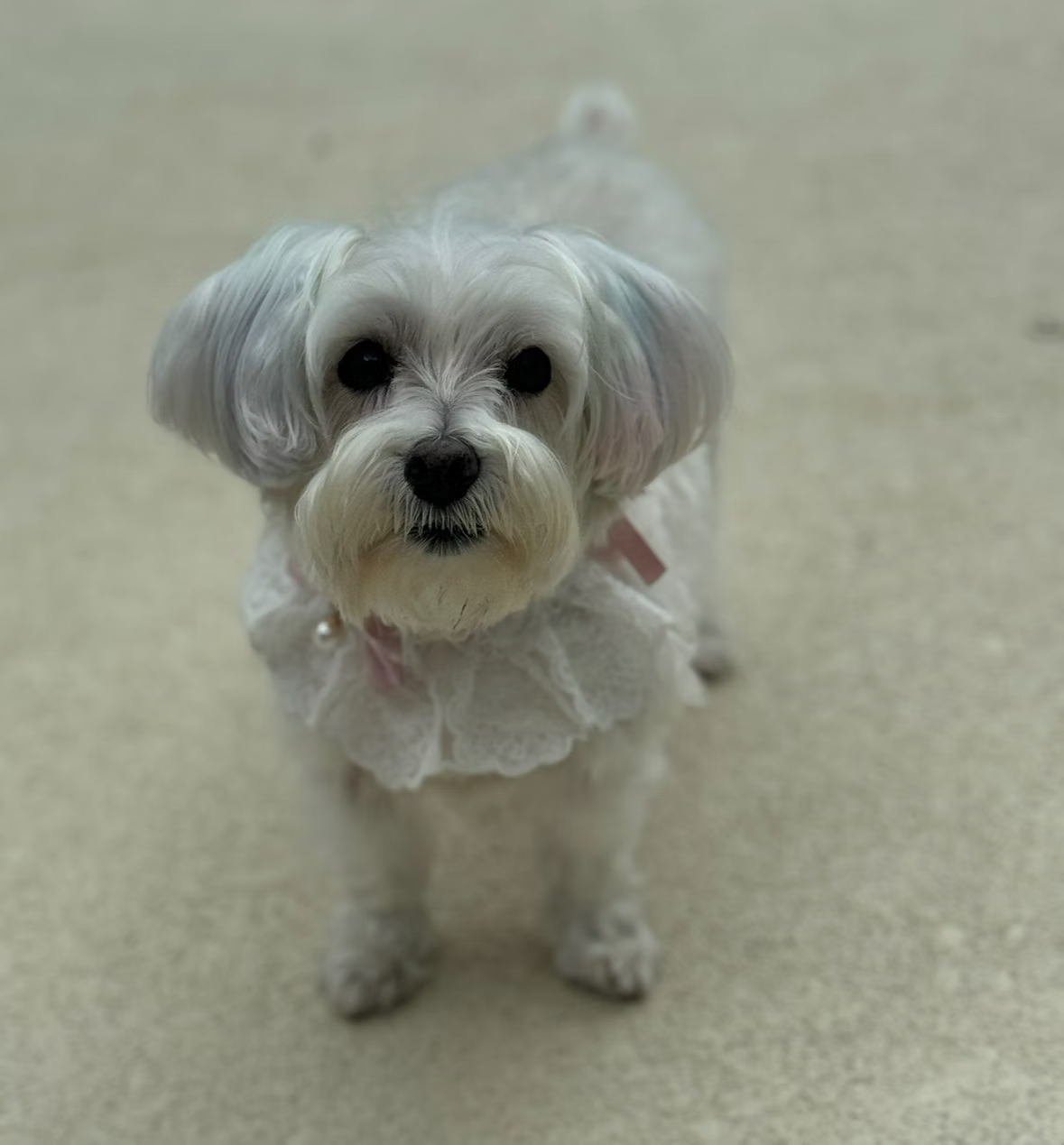
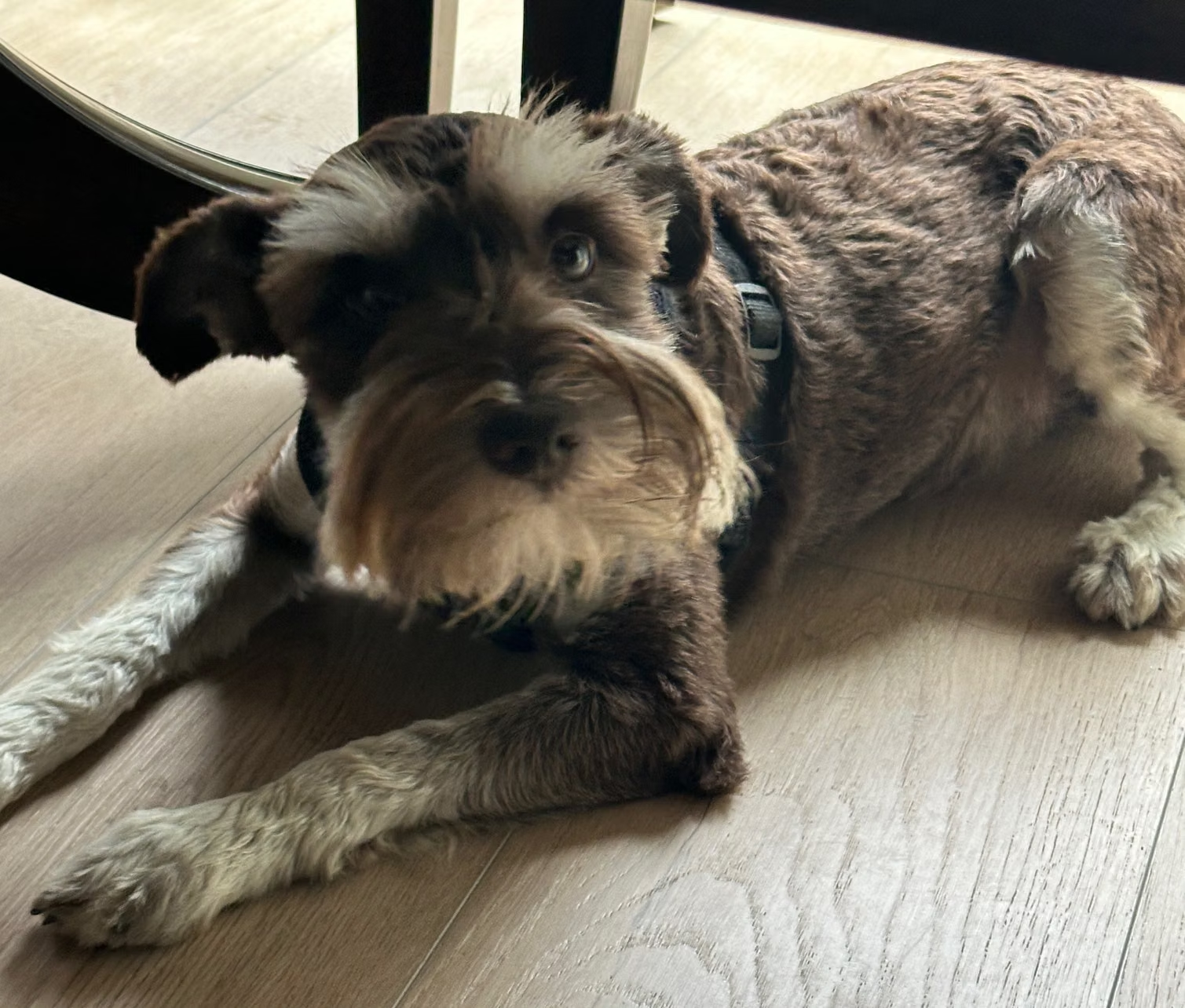
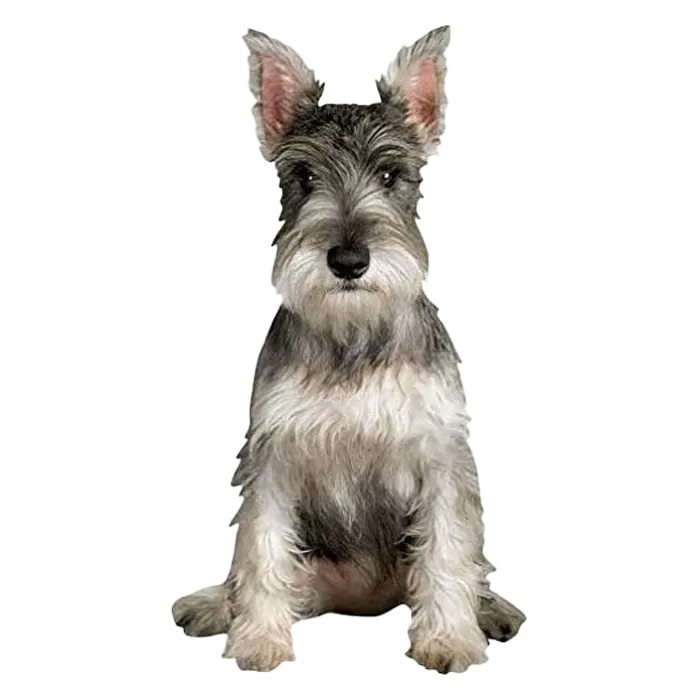
A few of the Miniature Schnauzer profiles members have added to United Pet Club.
The Miniature Schnauzer is a small, alert German breed with a wiry coat, a bushy beard and eyebrows, and a lively, affectionate temperament.
The Miniature Schnauzer originated in Germany as a compact version of the Standard Schnauzer. A wiry, harsh coat, a thick beard, and arched eyebrows give the breed its unmistakable face. Fully grown dogs weigh between 5 and 9 kg and measure roughly 30 to 36 cm at the shoulder, so the breed sits comfortably in the small category while retaining the solid, muscular build of a working terrier.
Bred originally as a farm ratter, the Miniature Schnauzer is alert, intelligent, and quick to sound an alarm at anything unfamiliar. It forms strong bonds with its family and tends to stay close to whoever it lives with rather than wandering off on its own.
The coat sheds very little, which many pet parents appreciate in homes without much outdoor space, and the breed settles well in both independent houses and flats. Its manageable size, trainable nature, and spirited character have made it one of the more sought-after small breeds in Indian cities and abroad.
| Attribute | Detail |
|---|---|
| Origin | Germany |
| Size | Small (5 to 9 kg) |
| Lifespan | 12 to 15 years |
| Group/role | Farm ratter and companion dog; classified under the Terrier group by some kennel clubs and under the Utility/Working group by others |
| Good with | Families, children, and other dogs when socialised early; small pets need supervision because of the breed's prey drive |
The Miniature Schnauzer suits owners who want a small, trainable dog with a strong personality and a watchful streak. It adapts to flats as well as independent houses, provided it gets its daily walk and some mental engagement. Households that want a low-shedding companion often find the coat a plus, though it does call for regular grooming. Families that need a quiet dog around the house should look elsewhere, since this breed tends to announce visitors and street noise alike.
The Miniature Schnauzer was developed in Germany in the late 1800s by crossing the Standard Schnauzer with smaller breeds to create a compact farm ratter.
Wiry-coated working dogs have been part of farm life in southern Germany for centuries, employed as ratters, guards, and cattle drovers. The name Schnauzer comes from the German word for muzzle or snout, a nod to the breed's bearded face. Of the three Schnauzer sizes, the Standard is the oldest and gave rise to the Miniature.
German breeders in the late nineteenth century wanted a smaller Schnauzer that could still clear rats from barns and stables while living comfortably inside the farmhouse. Crossing the Standard Schnauzer with smaller dogs, among them the Affenpinscher and probably the Miniature Pinscher, brought the size down without losing the characteristic look or working drive.
By the 1890s the Miniature Schnauzer was being exhibited as a separate variety in Germany, and the Pinscher-Schnauzer Club of Germany entered it in early stud records. The breed reached the United States in the early twentieth century and was recognised by the American Kennel Club in 1926, placed in the Terrier group even though it has no British terrier ancestry.
Through the twentieth century the breed moved from working ratter to household companion, a shift helped along by its size, low-shedding coat, and trainability. In India, pedigree Miniature Schnauzers are registered with the Kennel Club of India (KCI), the country's apex body for purebred dog registration, and the breed continues to appear at KCI shows and in urban households.
The Miniature Schnauzer is a small, square-built dog with a wiry double coat, a prominent beard and eyebrows, and a compact, muscular frame.
The Miniature Schnauzer carries a compact, almost square outline, its body length roughly matching its height at the withers. The frame is sturdy rather than fine-boned, a legacy of its farm-dog origins. The head is rectangular, with a strong muzzle set off by the trademark beard, while bushy eyebrows arch over small, dark oval eyes. Ears may be left natural and folded or, in a few countries, cropped to stand erect; cropping is prohibited in many places and is increasingly uncommon.
| Trait | Standard |
|---|---|
| Height | 30 to 36 cm at the withers |
| Weight | 5 to 9 kg |
| Coat | Double coat: a harsh, wiry outer layer over a soft undercoat |
| Colours | Salt and pepper, black and silver, solid black, and white |
| Eyes | Small, oval, dark brown, deep-set |
The outer coat is hard and wiry, a texture that sheds off dirt easily and gives the breed good weather resistance, useful in India's dusty, humid conditions. Underneath sits a softer, denser undercoat. Salt and pepper, a grey created by hairs banded in light and dark, is the colour seen most often. Black and silver dogs have a black body set off by silver on the eyebrows, muzzle, chest, and legs. Solid black and solid white also occur, though not every kennel club accepts white. The beard and leg furnishings are usually left longer than the body coat. Dogs shown in the ring are traditionally hand-stripped to preserve the wiry texture; pet dogs are more commonly clipped, which softens the coat's texture over successive clips.
The Miniature Schnauzer is affectionate, spirited, and sharp-witted, staying close to its family while remaining alert and vocal with strangers.
Life with a Miniature Schnauzer is rarely quiet, in the best sense. The dog stays involved in whatever the household is doing and does not take well to being left alone for long stretches. It is curious and quick witted, and it responds well to owners who keep it occupied with tasks and attention rather than leaving it to its own devices.
Strangers get a thorough announcement. The breed barks readily at visitors, delivery staff, and unfamiliar sounds, which suits it well as an alarm dog in a flat or a gated house, though the barking does need training to keep it within limits. Once the newcomer is accepted, most Miniature Schnauzers turn sociable rather than staying suspicious.
Around other dogs, early socialisation makes a real difference, and most turn out friendly. The terrier instinct behind the breed means small creatures, squirrels, birds, or the neighbour's cat, can set off a chase, so introductions to smaller pets call for care and supervision. With children the breed is typically playful and patient, and its sturdy frame copes with boisterous play better than many toy breeds manage.
| Trait | Rating |
|---|---|
| Affection | 4 |
| Energy | 4 |
| Trainability | 4 |
| Vocalness | 4 |
| Shedding | 1 |
The Miniature Schnauzer needs regular coat care, a daily walk, and mental stimulation, and adjusts well to both flats and independent houses.
The Miniature Schnauzer settles into flats and independent houses equally well, as long as its exercise needs are met. It prefers to stay near its family and can turn bored or noisy if left alone too often. A secure garden suits the breed nicely, but fencing should be solid, since it will dig and explore given the chance. Much of India has a hot, humid climate with a distinct monsoon season, and this affects the breed's coat and skin: damp weather encourages matting and skin irritation, so drying the coat thoroughly after walks in the rain and keeping grooming sessions regular through the monsoon months matters more here than in drier climates. Daily mental work, whether through training or puzzle feeders, keeps nuisance barking and destructive habits in check.
The Miniature Schnauzer thrives on a balanced diet portioned for its small size, with high-fat foods best avoided because of a tendency toward pancreatitis.
A Miniature Schnauzer needs a complete, balanced diet suited to its life stage and activity level. The breed puts on weight easily, so meals should be measured out rather than left down all day, and any treats counted against the day's calories. It also tends toward high blood fat levels, which is why many owners and vets choose lower-fat foods and skip fatty scraps from the table.
| Life stage | Amount per day | Meals |
|---|---|---|
| Puppy (2 to 6 months) | Per product guide, by weight | 3 to 4 |
| Junior (6 to 12 months) | Per product guide, by weight | 2 to 3 |
| Adult | Roughly 70 to 130 g of dry food | 2 |
| Senior | Reduced calories, adjusted to activity | 2 |
Keep treats to under about 10 percent of daily calories, and pick low-fat options for this breed. Clean drinking water should be available at all times, particularly in the hotter months. Most dogs on a good-quality complete diet need no extra supplements, but a vet may suggest something for joint support, or a prescription diet for a dog with high blood fat. Check with a vet before adding any supplement.
The Miniature Schnauzer typically lives 12 to 15 years and is generally healthy, though it is prone to pancreatitis, high blood fat, and some eye and urinary conditions.
The Miniature Schnauzer is a fairly hardy small breed, typically living 12 to 15 years. As with any breed, a handful of inherited and acquired conditions are worth watching for, and choosing a breeder who screens breeding stock, along with keeping the dog at a healthy weight, lowers the risk of several of them.
| Condition | Signs | Note |
|---|---|---|
| Pancreatitis | Vomiting, abdominal pain, loss of appetite, lethargy | Linked to fatty meals; can turn serious and needs prompt veterinary care |
| Hyperlipidaemia (high blood fat) | Often no visible signs; picked up on blood tests | Common in the breed; managed with a low-fat diet |
| Bladder and kidney stones | Straining to urinate, blood in urine, frequent urination | Breed carries a raised risk; diet and good hydration help |
| Eye disease (cataracts, progressive retinal atrophy) | Cloudy eyes, poor night vision, bumping into objects | Screening of breeding dogs lowers the risk |
| Portosystemic shunt | Stunted growth, confusion after meals, poor weight gain | A congenital liver vessel defect seen in some lines |
The Miniature Schnauzer is clever and eager to learn, and responds best to consistent, reward-based training that also keeps its barking in check.
Training a Miniature Schnauzer tends to go smoothly, since the breed picks things up fast and enjoys working alongside its handler. Obedience, tricks, and dog sports such as agility and scent work all come easily to it. That same intelligence means a bored dog invents its own entertainment, so regular training sessions keep its mind busy. An independent streak, a holdover from its ratter days, shows up now and then, so consistency counts for more than a firm hand. Because the breed alerts so readily, managing barking is usually part of any training plan.
Miniature Schnauzers mature by about 18 months, carry a litter for roughly 63 days, and typically produce three to six puppies.
Miniature Schnauzers reach sexual maturity between six and twelve months, but responsible breeders wait until the dog is fully grown physically and behaviourally, usually around 18 to 24 months, before breeding. Health screening of both parents, eye testing included, is standard practice in the breed and helps keep inherited disease out of future litters.
Gestation runs about 63 days from conception. Litters usually number three to six puppies, though smaller or larger ones do turn up. Most dams whelp without help, but a vet should be reachable in case complications arise.
Puppies arrive deaf and blind, with their eyes opening at around 10 to 14 days. Weaning starts near the four-week mark and generally wraps up by seven to eight weeks. Gentle handling and exposure to household sounds and new experiences in these early weeks shape the adult dog's temperament, so breeders who do this properly introduce puppies to everyday life before sending them to new homes, typically not before eight weeks. Buyers should ask for Kennel Club of India registration papers along with health records when taking home a puppy.
| Metric | Value |
|---|---|
| Sexual maturity | 6 to 12 months |
| Recommended breeding age | 18 to 24 months |
| Gestation | About 63 days |
| Average litter size | 3 to 6 puppies |
| Eyes open | 10 to 14 days |
| Weaning | About 7 to 8 weeks |
| Typical rehoming age | 8 weeks or later |
Municipal licences cover the paperwork; a free United Pet Club record is what actually connects your Miniature Schnauzer to your phone.
Municipal corporations in Delhi, Mumbai, Bengaluru, and numerous other cities require dogs to be registered or licensed under their by-laws, and a United Pet Club profile complements whichever rules apply where you live. The profile holds your contact information against your Miniature Schnauzer for its entire life, at no charge whatsoever. Registering your dog requires only a few minutes.
A microchip without a registration is merely a number under the skin. File your Miniature Schnauzer's fifteen digit number with United Pet Club and it becomes a working address: free for life, open to every chip brand, and searchable from any clinic or shelter in the country or abroad. Microchip registration first, the free account alongside.
Create a free United Pet Club account, enter your Miniature Schnauzer's details along with a photograph, and save the profile. The lifetime plan maintains the record at no cost, and any municipal licence you hold sits alongside it rather than replacing it.
Enter the fifteen digit chip number into your free account together with your current address, phone number, and email. The lifetime plan covers the registration and every subsequent update without charge, whatever the chip's manufacturer.
Several municipal corporations, Delhi and Mumbai among them, require dogs to be licensed under local by-laws. The United Pet Club profile is separate and voluntary, and it is the record a finder anywhere can actually search, free of cost.
Nothing whatsoever. The free lifetime plan includes the profile, the microchip record, and unlimited updates, with no renewal fee at any point.
Common questions about the Miniature Schnauzer cover its size, temperament, grooming needs, lifespan, suitability, and availability.
It is a small breed, standing about 30 to 36 cm at the shoulder and weighing roughly 5 to 9 kg once fully grown.
Yes. They are affectionate with their families and generally playful and patient with children. They are alert and bark readily at strangers, which makes them good watchdogs, and their prey drive means small pets need supervision around them.
Maintenance is moderate. The coat is the main task, needing brushing several times a week and clipping or hand-stripping every six to eight weeks. They also need a daily walk and mental stimulation, but they shed very little, which suits many Indian homes well.
Most live 12 to 15 years. Keeping the dog at a healthy weight, feeding a low-fat diet, and regular vet visits all support a longer life.
They are naturally vocal and quick to react to sounds and visitors. Early training, including a quiet cue, keeps the barking manageable.
Yes, provided their exercise and mental needs are met. They adjust well to flat life, though the alert barking may need some management in close quarters.
The breed is popular and available in India. Buyers should still choose breeders who health-test their dogs and register litters with the Kennel Club of India, or consider breed-specific rescue where available.