The Labrador Retriever is a friendly, outgoing breed beloved as a family companion and devoted working dog.
How the Labrador Retriever coat is built, and what that means when you groom it.
Critical: A Labrador Retriever should not be shaved.
The undercoat keeps heat out as well as in, and the outer coat shields the skin from sun and insect bites. Clipping the whole coat off removes both. It often grows back patchy, soft or a different colour, and in some animals the guard hairs never return properly. Brush the undercoat out instead of cutting it off.
Information: A Labrador Retriever drops its undercoat in heavy bursts.
The undercoat comes out in heavy bursts over a few weeks. An undercoat rake, or a bath followed by a proper blow-dry, clears it far faster than daily brushing. Clipping the coat down is not a shortcut for this.
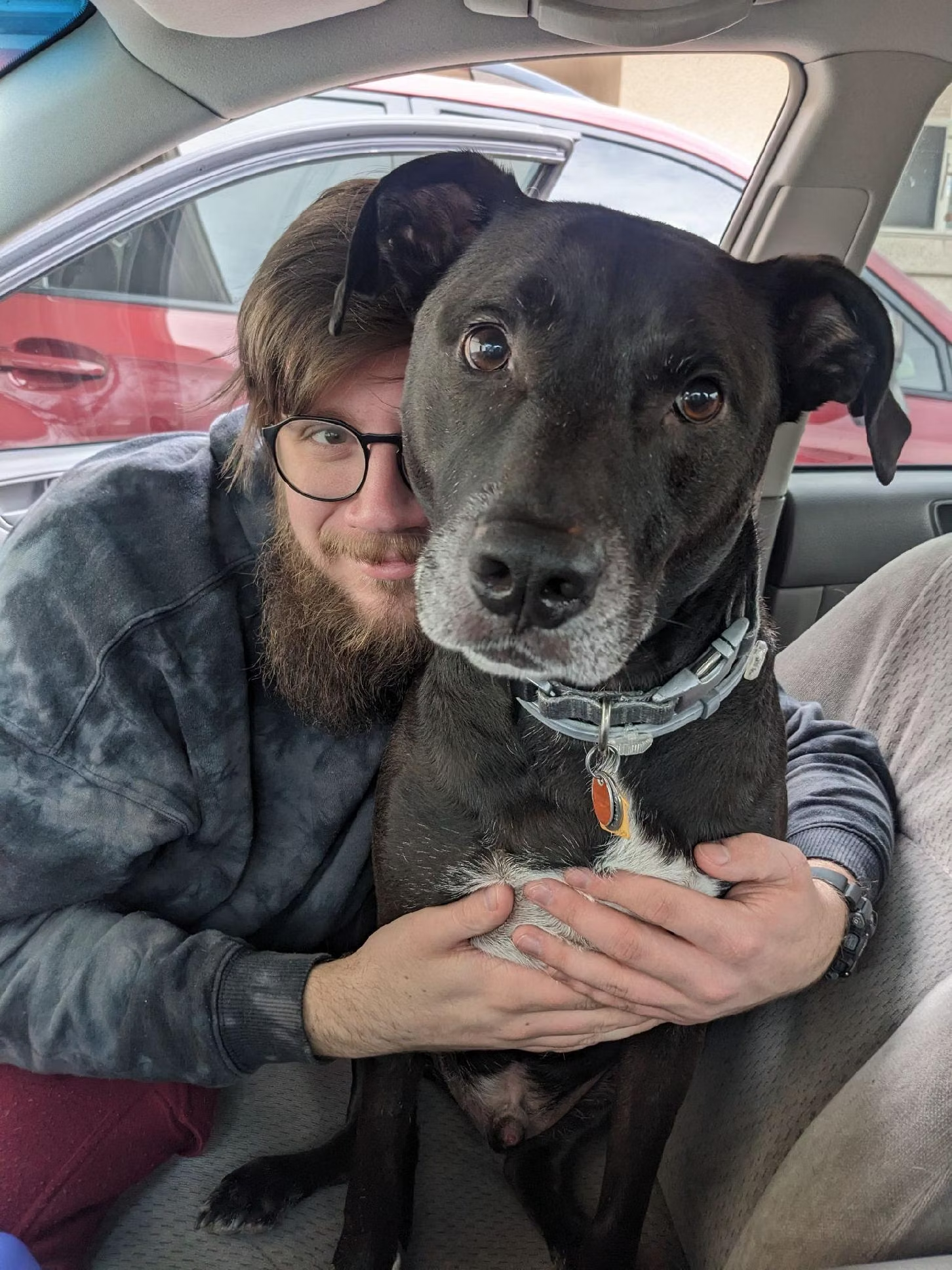
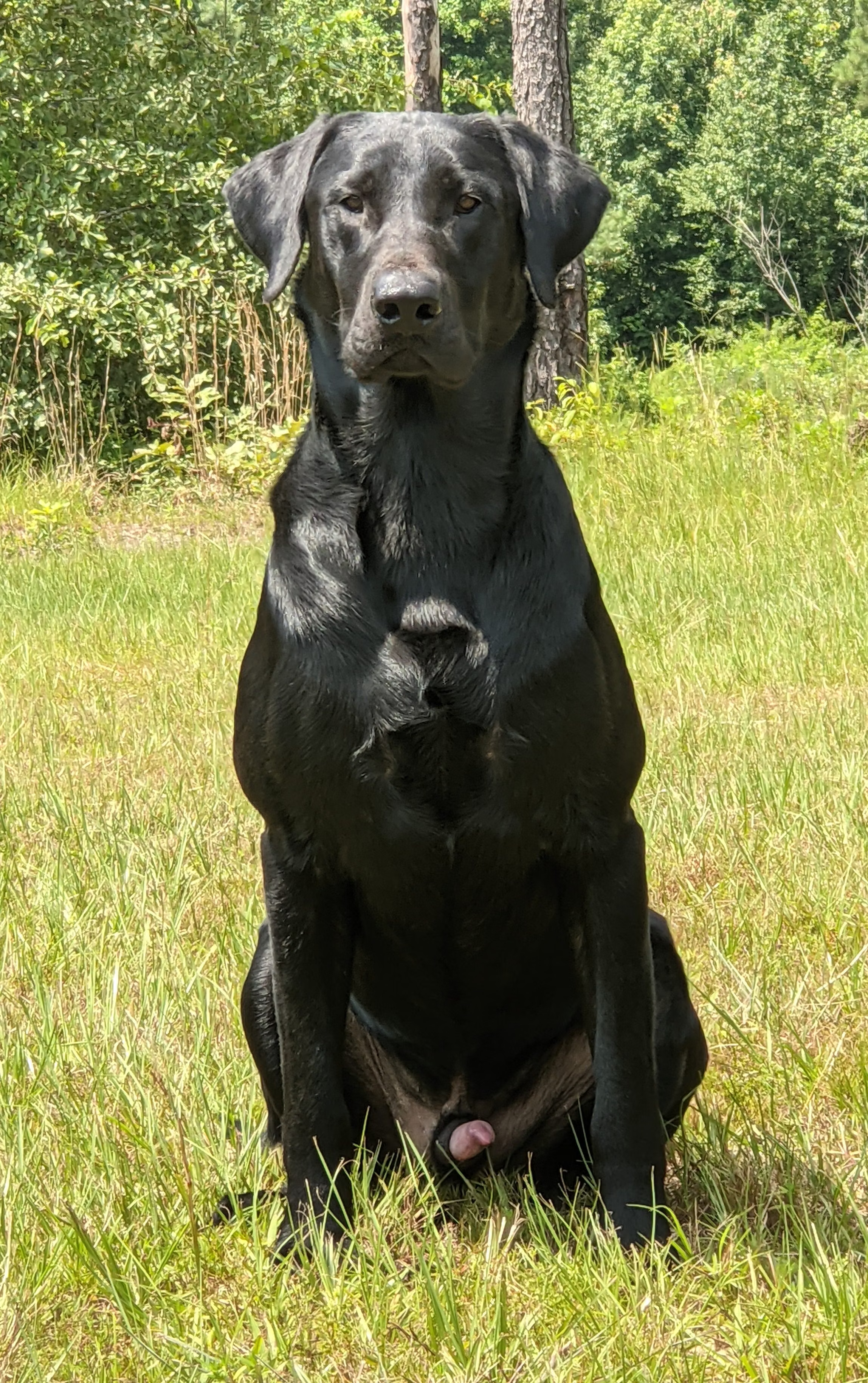
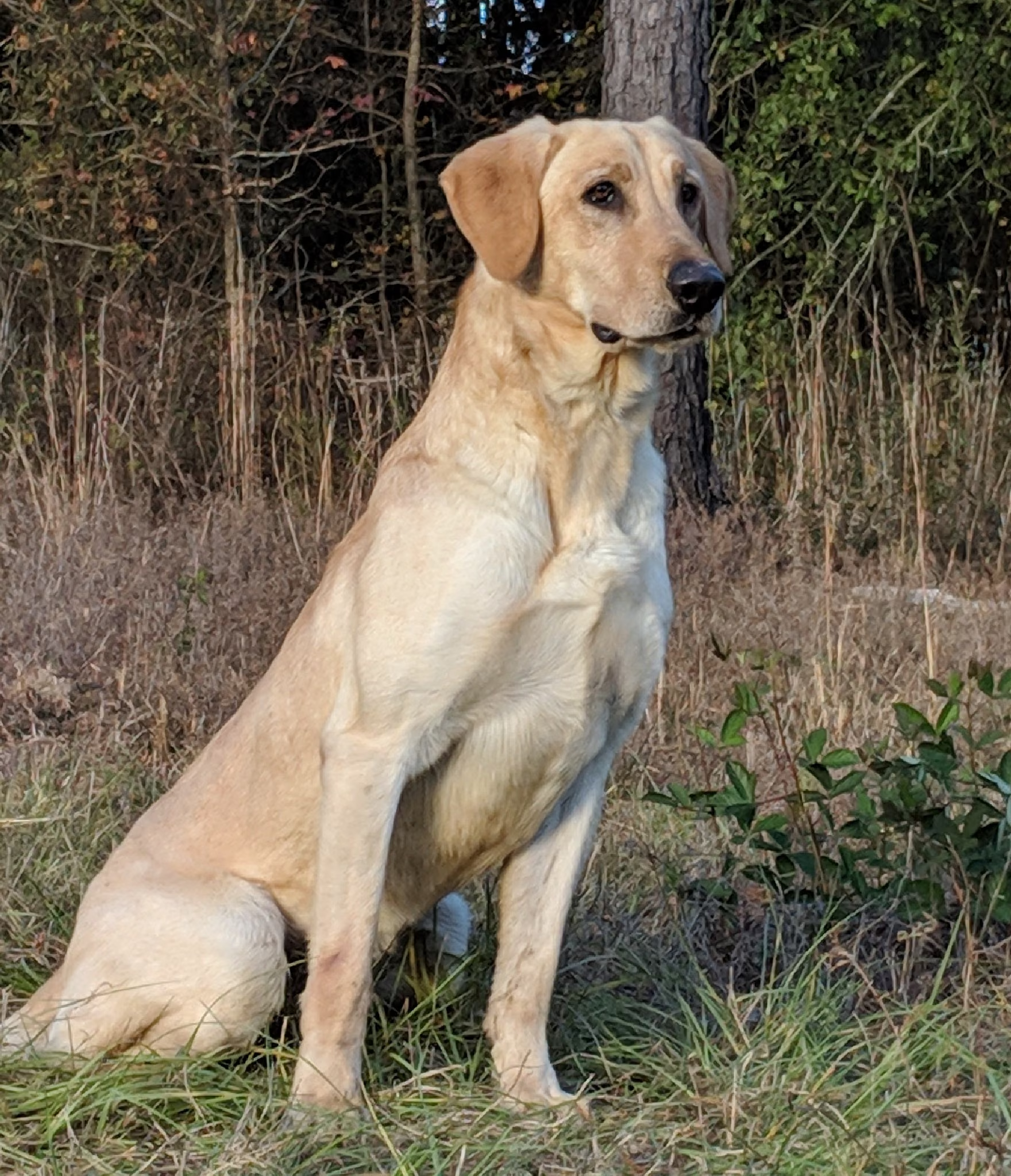
A few of the Labrador Retriever profiles members have added to United Pet Club.
The Labrador Retriever is a medium-to-large sporting dog originally from Newfoundland, widely kept across Indian metros and registered with the Kennel Club of India. Adults weigh roughly 25 to 36 kg and live about 11 to 13 years.
The Labrador Retriever is one of the most widely kept breeds in Indian cities, found in society flats in Mumbai and Delhi as readily as in independent houses with compounds in Coimbatore or Nagpur. Registered with the Kennel Club of India (KCI), the breed is recognised for its steady temperament, willingness to cooperate with people, and high trainability.
Labradors were originally bred to retrieve game and fish in cold North Atlantic water. That working background shows in their drive, their love of swimming, and their tendency to carry or mouth objects. In Indian homes, these instincts translate into a dog that needs regular activity and company more than most breeds.
The coat is short, dense, and double-layered. It sheds year-round with two heavier shedding periods. Three colours are recognised: black, yellow, and chocolate. The double coat does not suit India's climate naturally, so managing heat and humidity is a genuine and ongoing part of ownership here.
| Attribute | Detail |
|---|---|
| Origin | Newfoundland (now part of Canada), developed further in the United Kingdom |
| Size | Medium to large; 25 to 36 kg |
| Lifespan | About 11 to 13 years |
| Group/role | Sporting/gundog; retriever, assistance and detection work |
| Good with | Children, families, other dogs; generally social with strangers |
Labradors suit active households that can provide daily exercise and consistent training. They are a reasonable match for first-time owners prepared to invest time, and for families with children. They are less suited to those wanting a low-energy or low-shedding dog, or to households where the dog will be left alone all day, since the breed is social and gains weight quickly without sufficient activity. In a flat, daily outdoor exercise is not optional.
The Labrador Retriever descends from Newfoundland's St. John's water dog, was shaped into a breed on British shooting estates in the 1800s, and was recognised by The Kennel Club in 1903. In India, the breed is registered and documented under the Kennel Club of India.
Labradors as a named and refined breed were shaped on British shooting estates in the 19th century, though the original dogs came from much further away. The founding stock was the St. John's dog, a working retriever from Newfoundland that helped fishermen pull fish from icy Atlantic water, haul nets, and manage lines throughout the 1700s and early 1800s.
British visitors and traders brought some of these dogs back to England in the early 19th century. Estates in England, including those of the Earl of Malmesbury and the Duke of Buccleuch, bred them for retrieving game on shooting estates. The name "Labrador" came into use during this period, despite the dogs having originated on Newfoundland rather than the Labrador region. Quarantine laws and a Newfoundland tax on female dogs reduced imports over time, so British lines became the foundation of the breed worldwide.
The Kennel Club in the United Kingdom recognised the Labrador Retriever in 1903. Yellow and chocolate coats were documented alongside black in the early formal records, though black predominated in the earliest registered stock. The breed is today registered in India under the Kennel Club of India (KCI), the recognised authority for pedigree documentation and breed standards in the country.
Labradors are solidly built dogs with a broad head, a distinctive otter tail, and a short dense double coat in black, yellow, or chocolate. Males stand 57 to 62 cm and females 55 to 60 cm at the shoulder.
A well-built Labrador stands square and muscular, with a deep chest and a level topline. The head is broad with a moderate stop, and the ears hang flat against the head. The tail, commonly called the "otter tail," is thick at the base, rounded in cross-section, and covered in dense fur; it tapers toward the tip and is carried level or slightly raised rather than curled. The coat is short, straight, and water-resistant, sitting over a soft undercoat that provides insulation against cold water.
| Trait | Detail |
|---|---|
| Height | Males 57 to 62 cm; females 55 to 60 cm |
| Weight | Males 29 to 36 kg; females 25 to 32 kg |
| Coat | Short, dense, straight double coat; water-resistant |
| Colours | Black, yellow, chocolate |
| Eyes | Brown or hazel; kind, alert expression |
The three recognised colours are black, yellow, and chocolate. Yellow spans a range from pale cream to a deep fox-red. Small white markings on the chest are permitted in most standards but not preferred. The double coat sheds steadily all year, with two heavier seasonal periods. In India's warm and humid conditions, loose undercoat can accumulate against the skin and cause irritation if not brushed out consistently, particularly during monsoon months.
Some breeders market "silver" Labradors, which are a dilute shade of chocolate. This colour is not accepted as a separate colour by the KCI or other major breed registries.
Labradors are friendly, outgoing, and people-oriented. They tend to greet strangers warmly, get along with children and other dogs, and need consistent daily activity to stay settled.
In Indian households where multiple family members, domestic staff, and frequent visitors move through the home, a Labrador typically adjusts without difficulty. They are affectionate with family and tend to stay close to their owners through the day.
With children, Labradors are generally patient and friendly. Their size and enthusiasm mean young children should be supervised during outdoor play, since an excited Labrador can knock over a small child without any intent. The breed has little guarding instinct and greets strangers with interest rather than wariness, which makes them poor watchdogs but comfortable companions in busy homes.
With enough daily exercise, Labradors settle well indoors. Without it, they may chew, dig, or become difficult to manage. They retrieve instinctively and will carry objects through the house if not given appropriate outlets. Clear and consistent routines help them remain calm.
| Trait | Rating |
|---|---|
| Affection | 5 |
| Energy | 5 |
| Trainability | 5 |
| Vocalness | 3 |
| Shedding | 4 |
Labrador care in India centres on heat management, monsoon skin and ear hygiene, and daily exercise. The double coat needs weekly brushing, ear care is especially important in humid months, and outdoor exercise must be timed around peak summer temperatures.
Labradors can live in a flat in a metro society provided daily outdoor exercise is reliable. A ground-floor flat with direct outdoor access is more practical than one accessed by lift, given the dog's size and energy. In smaller cities, an independent house with a compound works well, though the dog still needs supervised outdoor exercise beyond simply being let into the garden.
The breed is social and does not manage well when left alone throughout the working day. If the household is out for long hours, a reliable dog walker or a family member who can check in midday helps considerably. During summer, ensure the indoor space has sufficient ventilation or air conditioning. The double coat makes Labradors less tolerant of high ambient temperatures than many short-coated breeds.
Feed a complete, balanced dog food in measured portions split into two meals per day for adults. Labradors overeat readily, so free-feeding is not appropriate for this breed.
Choose a complete and balanced dog food formulated for the dog's age, size, and activity level. Whether you use a commercial dry food, wet food, or a home-cooked diet reviewed by a veterinary nutritionist, portions should be measured rather than estimated. Labradors are highly food-motivated and gain weight easily, so use the feeding guide on the packaging as a starting point and adjust based on body condition rather than appetite.
Fresh water should be available at all times. During India's summer months, a Labrador's water intake rises considerably. Check the bowl and refill it more frequently in hot weather.
| Life stage | Amount per day | Meals per day |
|---|---|---|
| Puppy (2 to 6 months) | About 2 to 3 cups | 3 to 4 |
| Puppy (6 to 12 months) | About 2.5 to 3.5 cups | 2 to 3 |
| Adult | About 2.5 to 3 cups | 2 |
| Senior/less active | About 2 to 2.5 cups | 2 |
Limit treats to roughly 10 per cent of daily calorie intake and subtract them from the main meal portion accordingly. Using a small portion of the day's measured kibble as training rewards is a practical way to avoid overfeeding. Supplements such as fish oil or joint support products are sometimes used for Labradors, particularly as the dog ages, but a complete commercial diet generally meets a healthy dog's nutritional needs. Speak to a veterinarian before adding any supplement.
Labradors live about 11 to 13 years and are a generally robust breed, but they are prone to hip and elbow dysplasia, obesity, and certain inherited conditions. In India, tick-borne illness and rabies vaccination compliance are additional practical priorities.
Labradors are generally healthy dogs with a typical lifespan of about 11 to 13 years. Weight management is the single most significant everyday health concern, since obesity worsens joint problems, reduces stamina in heat, and shortens life. Responsible breeders screen parent dogs for inherited conditions before mating.
In India, tick and flea load is high across most regions and is not seasonal in most states. Tick-borne diseases including Ehrlichiosis and Babesiosis are a genuine risk for dogs that go outdoors regularly. Year-round tick prevention is necessary. Rabies vaccination is also non-negotiable: India carries a significant rabies burden, and keeping the dog's vaccination schedule current is both a health measure and a responsible ownership requirement.
Vet access varies considerably between locations. In metros such as Bengaluru, Chennai, Mumbai, or Delhi, specialist referral, diagnostic imaging, and surgical care are available. In tier-2 cities and smaller towns, access may be limited to a general-practice vet, and some specialist treatments may require travelling to the nearest large city. It is worth knowing what is locally available before a problem arises, rather than finding out in an emergency.
| Condition | Signs | Note |
|---|---|---|
| Hip dysplasia | Limping, stiffness, trouble rising | Screened by hip scoring in breeding dogs |
| Elbow dysplasia | Front-leg lameness, reluctance to exercise | Inherited; screening recommended |
| Obesity | Excess weight, low stamina | Largely preventable with measured diet and exercise |
| Progressive retinal atrophy | Night blindness, declining vision | Inherited; DNA tests available |
| Exercise-induced collapse | Weakness or collapse after intense activity | Linked to a known gene; DNA test available |
| Ear infections | Head shaking, odour, scratching | More frequent in humid climates; routine cleaning reduces risk |
Labradors are intelligent, food-motivated, and cooperative, placing them among the easier breeds to train. Early socialisation and consistent reward-based methods produce reliable and settled dogs.
Food motivation and a cooperative nature make the Labrador one of the more straightforward breeds to train from the beginning. They are used widely as guide dogs, detection dogs, and assistance animals precisely because they learn readily and work willingly with people. They respond to food rewards, toys, and praise, with food being the strongest motivator for most individuals. The main training challenges are managing their energy, curbing mouthing, and building reliable recall given how easily they are distracted by scent. Starting early and keeping sessions short and consistent makes a significant difference.
Female Labradors reach sexual maturity around 6 to 12 months but responsible breeding waits until health screening is complete. Gestation is about 63 days, with litters averaging 6 to 8 puppies.
Females usually come into their first heat between 6 and 12 months of age. Responsible breeders do not mate a female at the first heat; they wait until the dog is physically mature and has passed health evaluations covering hip and elbow condition, eye health, and relevant genetic conditions. Females cycle roughly twice a year.
Gestation lasts about 63 days from conception. Litter size is typically 6 to 8 puppies, though smaller and larger litters occur. Newborn puppies are born blind and deaf and depend entirely on the mother during the first two weeks. They begin weaning onto solid food around 3 to 4 weeks of age.
Puppies should move to their new homes at around 8 weeks, after weaning and with an initial vaccination started. Breeders registered with the KCI are expected to maintain pedigree records and should be able to provide documentation of the parents' health results. If you are shifting house or relocating between regions with a Labrador puppy, plan for any significant change in climate, particularly if moving from a cooler hill station or southern city to a hotter northern or central location.
| Metric | Value |
|---|---|
| Sexual maturity | About 6 to 12 months |
| Heat cycles | Roughly twice per year |
| Gestation | About 63 days |
| Average litter size | 6 to 8 puppies |
| Weaning age | About 6 to 8 weeks |
| Age to new home | About 8 weeks |
Municipal licences cover the paperwork; a free United Pet Club record is what actually connects your Labrador Retriever to your phone.
Municipal corporations in Delhi, Mumbai, Bengaluru, and numerous other cities require dogs to be registered or licensed under their by-laws, and a United Pet Club profile complements whichever rules apply where you live. The profile holds your contact information against your Labrador Retriever for its entire life, at no charge whatsoever. Registering your dog requires only a few minutes.
A microchip without a registration is merely a number under the skin. File your Labrador Retriever's fifteen digit number with United Pet Club and it becomes a working address: free for life, open to every chip brand, and searchable from any clinic or shelter in the country or abroad. Microchip registration first, the free account alongside.
Create a free United Pet Club account, enter your Labrador Retriever's details along with a photograph, and save the profile. The lifetime plan maintains the record at no cost, and any municipal licence you hold sits alongside it rather than replacing it.
Enter the fifteen digit chip number into your free account together with your current address, phone number, and email. The lifetime plan covers the registration and every subsequent update without charge, whatever the chip's manufacturer.
Several municipal corporations, Delhi and Mumbai among them, require dogs to be licensed under local by-laws. The United Pet Club profile is separate and voluntary, and it is the record a finder anywhere can actually search, free of cost.
Nothing whatsoever. The free lifetime plan includes the profile, the microchip record, and unlimited updates, with no renewal fee at any point.
Common questions from Indian owners about Labrador Retrievers, covering flat living, summer heat management, shedding, children, vaccination requirements, lifespan, and suitability as guard dogs.
Yes, provided daily outdoor exercise of at least 60 minutes is reliable. A Labrador kept in a flat without adequate exercise will develop destructive habits. Access to a park, a society compound, or open ground for off-lead activity makes a real practical difference.
They cope, but need careful management. Avoid exercise between roughly 10 am and 6 pm during peak summer months when temperatures are highest. Ensure indoor spaces are ventilated or cooled. Keep fresh water available at all times. Signs of overheating include heavy panting, excessive drooling, lethargy, and loss of coordination; these require prompt veterinary attention.
Yes. The dense double coat sheds year-round, with two heavier shedding periods each year. Weekly brushing, with more frequent brushing during heavy sheds, keeps loose hair manageable and reduces the skin irritation that can build up in humid conditions.
Generally yes. They are patient and sociable by temperament. Because of their size and energy, young children should be supervised during play, particularly outdoors where the dog is more excitable.
Core vaccines include rabies, distemper, parvovirus, hepatitis, and leptospirosis. Rabies vaccination is especially important given the disease burden in India and should not be deferred. Follow the schedule your veterinarian recommends; KCI guidelines and applicable state veterinary requirements should also be checked.
Most Labradors live about 11 to 13 years. Keeping the dog at a healthy weight, current on vaccinations, and protected from tick-borne disease all contribute meaningfully to a longer life.
Not typically. They tend to be friendly towards strangers rather than suspicious, which makes them poor guard dogs. They are companions, family dogs, and working dogs in detection or assistance roles, not watchdogs.