
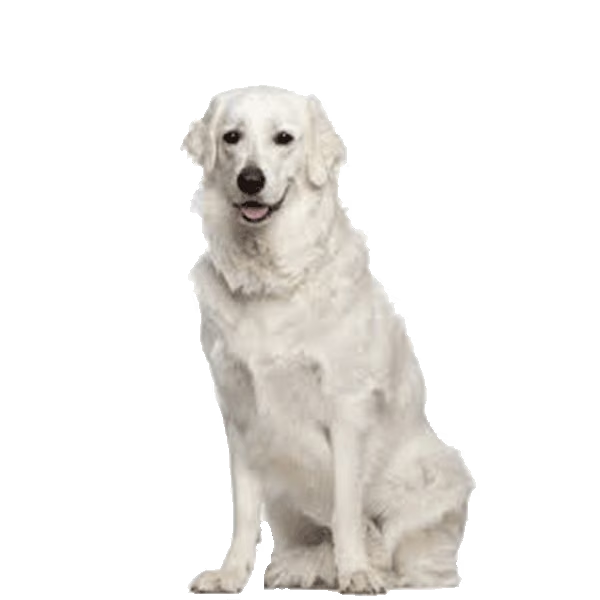
Kuvasz
The Kuvasz is a devoted, dignified Hungarian guardian dog known for its loyalty, independent thinking, and bold protective nature.
- Size
- Large
- Lifespan
- 10–12 years
- Origin
- Hungary
- Temperament
- Devoted
- Standard colors
- White and Cream
Characteristics
Coat and grooming
How the Kuvasz coat is built, and what that means when you groom it.
- Coat layers
- Double coat
- Coat texture
- Wavy
- Coat length
- Medium
- Shedding
- Seasonal shedding
Grooming guidance
Critical: A Kuvasz should not be shaved.
The undercoat keeps heat out as well as in, and the outer coat shields the skin from sun and insect bites. Clipping the whole coat off removes both. It often grows back patchy, soft or a different colour, and in some animals the guard hairs never return properly. Brush the undercoat out instead of cutting it off.
Caution: A Kuvasz coat mats easily.
Fine or long hair tangles at the base of the coat, out of sight, where the mats tighten and pull on the skin. Brushing has to reach right down to the roots in sections, not just skim the surface.
Information: A Kuvasz drops its undercoat in heavy bursts.
The undercoat comes out in heavy bursts over a few weeks. An undercoat rake, or a bath followed by a proper blow-dry, clears it far faster than daily brushing. Clipping the coat down is not a shortcut for this.
Kuvasz colors and patterns
What each club's breed standard says about every Kuvasz color and pattern. Point at a ruling to see the club's own wording.
Breed standards describe the Kuvasz in White and Cream. Standard patterns: Solid.
| Color or pattern | FCI | AKC | UKC | KC | KUSA |
|---|---|---|---|---|---|
| White | Standard (“white”) | Standard (“White”) | Standard (“white, with no markings”) | Standard (“pure white”) | Standard (“white”) |
| Cream | Standard (“ivory colour is permitted”) | Not recognised | Standard (“ivory does occur, but is not preferred”) | Not recognised | Standard (“ivory colour is permitted”) |
| Patterns | |||||
| Solid | Standard | Standard (“white in color with no markings”) | Standard (“white, with no markings”) | Standard (“pure white”) | Standard |

| Color or pattern | FCI | AKC | UKC | KC | KUSA |
|---|---|---|---|---|---|
| Dark brown | Standard (“dark brown”) | Standard (“dark brown, the darker the better”) | Standard (“dark brown, the darker the better”) | Standard (“dark, brown”) | Standard (“dark brown”) |
| Color or pattern | FCI | AKC | UKC | KUSA |
|---|---|---|---|---|
| Black | Standard (“the black noseleather”) | Standard (“nose large, black”) | Standard (“the large, black nose”) | Standard (“the black nose leather”) |
| Pink | Disqualifying (“lack of pigment on nose leather”) | No ruling | No ruling | Disqualifying (“lack of pigment on nose-leather”) |
What the rulings mean
- Standard
- Described by the club's breed standard.
- Disqualifying
- The club's breed standard disqualifies an animal of this colour or pattern.
- Not recognised
- The club does not accept this colour or pattern for the breed.
Color changes
How a Kuvasz's colors can change over its life.
Whitechanges toRoan
Coat · With age · from 2 weeks
Blackchanges toSnow nose
Nose · With the season · can change back
Blackchanges toPink
Nose · With the season · can change back
%22%3E%3Cg%20fill%3D%22none%22%20stroke%3D%22%23F5F5F0%22%20stroke-width%3D%221.15%22%20stroke-linecap%3D%22round%22%20stroke-linejoin%3D%22round%22%3E%3Cpath%20d%3D%22M28.6%2025h.1M51.3%2028.8h.1M34.7%2024.3h.1M34.2%2041.6h.1M51%2044.2h.1M55.9%2024.7h.1M27.5%2026.3h.1M18.5%2028.6h.1M25.2%2028.9h.1M24.2%2019.3h.1M20.6%2017.6h.1M34.1%2030.6h.1M57.3%2023.3h.1M23.5%2030.7h.1M26.5%2023.1h.1M40%2031.5h.1M51.7%2038.6h.1M20.2%2022.1h.1M40.4%2037.8h.1M35%2043.1h.1M20.6%2031.7h.1M27.8%2031.9h.1M17.2%2021.1h.1M38.1%2037.7h.1M25.3%2040.5h.1M32%2029.3h.1M41.6%2039.5h.1M23.6%2024h.1M26.4%2018.6h.1M30.3%2031.9h.1M31.2%2035.2h.1M36.5%2043.7h.1M35.2%2026.3h.1M55.6%2019.1h.1M22.4%2036.8h.1M39.2%2020h.1M49.5%2039.1h.1M33.6%2033.5h.1M36.4%2032.4h.1M56.3%2042.4h.1M54.8%2031.2h.1M36.9%2023.2h.1M52.7%2019.1h.1M21.5%2033.8h.1M48.6%2028h.1M36.6%2017.5h.1M45.6%2031.3h.1M37.9%2030.5h.1M17%2031.8h.1M21.1%2043.1h.1M55.7%2021.1h.1M30.8%2041.9h.1M57.4%2038.4h.1M54.8%2026.9h.1M29.1%2017.5h.1M24.3%2037.7h.1M26%2032h.1M39.3%2022.8h.1M53.5%2029h.1M53.3%2023.3h.1M20%2038.4h.1M28.3%2044.7h.1M28.6%2039.8h.1M51.9%2041.1h.1M52.3%2033.7h.1M19.6%2042.2h.1M19%2033h.1M47.8%2021.7h.1M45.7%2024.8h.1M24.6%2035.5h.1M29.8%2036.8h.1M50.7%2032h.1M29.5%2043.5h.1M28.2%2041.5h.1M47.4%2034.8h.1M25.4%2033.7h.1M50.2%2041.2h.1M27.7%2029.5h.1M21.5%2024.8h.1M55.5%2017.5h.1M41.2%2044.3h.1M39.2%2018.4h.1M41.1%2042.5h.1M54.7%2035.3h.1M42.8%2034.5h.1M30.1%2023h.1M42.6%2025.1h.1M32.9%2024.4h.1M42.4%2032.4h.1M49.7%2022.2h.1M49.1%2043.1h.1M38%2035.2h.1M47.7%2043.8h.1M43.1%2022.4h.1M22.4%2040.4h.1M44.4%2019.8h.1M53.3%2040.1h.1M20.7%2029.3h.1M55.6%2043.9h.1M17.6%2039.2h.1M41.7%2028.9h.1M44.1%2036.3h.1M24.3%2043.6h.1M26.4%2038.1h.1M30.3%2029.2h.1M31.5%2030.8h.1M32.1%2023h.1M18.3%2040.9h.1M48%2033.4h.1M36.4%2038.7h.1M31.9%2020.8h.1M32.6%2026.2h.1M22%2031.2h.1M53.4%2021.7h.1M41.9%2017.7h.1M53.3%2037.3h.1M47.7%2040.3h.1M54.4%2033.7h.1M33.6%2037.5h.1M25.3%2017.2h.1M37.6%2019.7h.1M31.6%2019h.1M29.2%2019.6h.1M50.7%2027.3h.1M22%2022.1h.1M31%2037.8h.1M56.5%2026.6h.1M34.7%2039.5h.1M56.5%2040.8h.1M47.6%2038h.1M48.6%2026.1h.1M49.7%2034.2h.1M45.4%2027.4h.1M22.6%2038.9h.1M56.5%2035.3h.1M35.1%2021h.1M41.9%2020.1h.1M37.6%2040h.1M32.6%2044.4h.1M37.9%2025.2h.1M26.6%2043h.1M18.9%2036.7h.1M47.2%2028.9h.1M30.5%2026.2h.1M17.4%2027.3h.1M47.1%2017.2h.1M22.3%2044.3h.1M32.5%2042.4h.1M23.6%2025.7h.1M31.4%2024.9h.1%22%2F%3E%3Cpath%20d%3D%22M26%2020.9h.1M41.2%2023.8h.1M39.9%2026.4h.1M28.5%2033.4h.1M42.8%2043.8h.1M17.6%2034.3h.1M34%2017.1h.1M31.2%2017.2h.1M46.5%2036.1h.1M25.1%2022.1h.1M50.3%2023.7h.1M20.2%2026.6h.1M20.8%2020.4h.1M50.9%2017.3h.1M49.5%2020.2h.1M52.9%2044.1h.1M23.9%2017.8h.1M43.2%2028.1h.1M57.6%2030h.1M52%2025.6h.1M19.2%2019.1h.1M19.5%2024.4h.1M32.8%2040.1h.1M36.1%2027.7h.1M39.6%2029.5h.1M38.4%2041.5h.1M47.9%2019.4h.1M49.1%2031.7h.1M55.9%2036.9h.1M29.2%2027.2h.1M46%2043.5h.1M44.6%2028.8h.1M47.5%2031.5h.1M22.8%2020h.1M27.6%2017.1h.1M43.1%2018.6h.1M54.3%2020h.1M57.2%2033.8h.1M44.5%2043.8h.1M27.1%2035.5h.1M45.3%2041.8h.1M56.7%2028.8h.1M36.7%2021.4h.1M43.3%2042.3h.1M17.3%2022.9h.1M32.7%2035.5h.1M30.5%2039.8h.1M29.1%2021.2h.1M34.5%2018.8h.1M25.8%2027h.1%22%2F%3E%3C%2Fg%3E%3Cpath%20d%3D%22M56.3%2038.4l0%201.2M40%2027.2l-0.3%201.3M32.6%2043.6l-0.4%201.5M29%2023.3l0.8%201.5M55.1%2044l0.4%201.1M47.5%2022.5l-0.2%201.6M42.9%2038.6l0.7%201.2M35.2%2041.8l-0.5%201.7M26.9%2040l-0.1%201.2M41%2042.8l-0.1%201.6M18.4%2021.2l0.7%201.3M49.4%2019.3l-0.5%201.4M50.1%2041.7l0%201.8M28.2%2041.8l-0.6%201.2M55.5%2027.1l0.2%201.2M44.7%2019.3l0.5%201.7M48.6%2020.5l-0.8%201.4M43.7%2039.6l0.3%201.1M22.1%2033.8l-0.6%201.6M50.1%2038.1l-0.5%201.3M51.8%2044.1l-0.1%201.8M39%2017.5l0%201.4M30.2%2026.7l0.2%201.4M25.8%2031.2l0.2%201.6M29.6%2043.5l0.1%201M43.7%2018.3l0.1%201.5M29.6%2018.2l0.3%201.6M24.4%2017.6l0.3%201.1M22%2028.2l-0.6%201.6M25.9%2043.3l-0.3%201.4M22.2%2024.3l0.3%201.3M47.3%2029.2l-0.2%201.4M21.8%2033.2l0.5%200.9M32.9%2037l0.4%201M40%2029.9l0.8%201.4M17.4%2038.3l0.2%201.3M31%2039.2l0%201.2M37.3%2033.7l0.3%201.5M48.1%2040.5l0%201.6M33.9%2031.2l0.1%201.2M29.8%2035.2l-0.4%201M25.1%2037.3l-0.2%201.5M30.2%2039.8l0.5%201M44.6%2034.8l0.4%200.9M55.3%2034.2l0%201.7M50.6%2017.9l0.4%201M30.2%2034.9l-0.4%201.4M19.5%2035.7l-0.5%201.7M40.7%2028.7l0.8%201.4M23.3%2029l-0.4%201.4M17%2040.5l-0.2%201M48.4%2023.2l-0.3%201M37.3%2025.1l-0.4%201.3M23%2021.4l-0.4%201.3M20.4%2017.2l-0.1%201.3M42.3%2020.4l0.6%201.4M41%2031.8l0.6%201.2M45.4%2034.3l-0.1%201.2M32.5%2018l0%201.3M46.2%2021.6l0.1%201.4M30.5%2022.3l0.5%201.1M58%2044.6l0.3%201.5M57.1%2033.9l0.8%201.4M18.3%2042.6l0.3%201M40.5%2035.1l-0.6%201.4M38.8%2044.3l-0.3%201.1%22%20fill%3D%22none%22%20stroke%3D%22%23F5F5F0%22%20stroke-width%3D%220.8%22%20stroke-linecap%3D%22round%22%20stroke-linejoin%3D%22round%22%2F%3E%3C%2Fg%3E%3Cuse%20href%3D%22%23s%22%20fill%3D%22none%22%20stroke%3D%22%233B2A20%22%20stroke-opacity%3D%220.6%22%20stroke-width%3D%221%22%20stroke-linejoin%3D%22round%22%2F%3E%3Crect%20x%3D%2220%22%20y%3D%2258%22%20width%3D%223.6%22%20height%3D%222%22%20fill%3D%22%234A4038%22%2F%3E%3Crect%20x%3D%2226%22%20y%3D%2258%22%20width%3D%223.6%22%20height%3D%222%22%20fill%3D%22%234A4038%22%2F%3E%3Crect%20x%3D%2244%22%20y%3D%2258%22%20width%3D%223.6%22%20height%3D%222%22%20fill%3D%22%234A4038%22%2F%3E%3Crect%20x%3D%2250%22%20y%3D%2258%22%20width%3D%223.6%22%20height%3D%222%22%20fill%3D%22%234A4038%22%2F%3E%3Ccircle%20cx%3D%229.5%22%20cy%3D%2211.5%22%20r%3D%221.1%22%20fill%3D%22%231C1C1C%22%2F%3E%3C%2Fsvg%3E)
%22%3E%3Crect%20x%3D%2217%22%20y%3D%2210%22%20width%3D%2230%22%20height%3D%2242%22%20fill%3D%22url(%23g)%22%2F%3E%3C%2Fg%3E%3Cuse%20href%3D%22%23s%22%20fill%3D%22none%22%20stroke%3D%22%233B2A20%22%20stroke-opacity%3D%220.6%22%20stroke-width%3D%221%22%20stroke-linejoin%3D%22round%22%2F%3E%3Cpath%20d%3D%22M12.5%2037Q13%2032%2018.5%2032Q23.5%2032.5%2023.5%2036.5Q20.5%2035.5%2018.8%2037Q17.4%2038.6%2018%2041.5Q13.6%2040.4%2012.5%2037Z%22%20fill%3D%22%231C1C1C%22%20fill-opacity%3D%220.8%22%20stroke%3D%22%23F5F5F0%22%20stroke-opacity%3D%220.4%22%20stroke-width%3D%220.9%22%2F%3E%3Cpath%20d%3D%22M51.5%2037Q51%2032%2045.5%2032Q40.5%2032.5%2040.5%2036.5Q43.5%2035.5%2045.2%2037Q46.6%2038.6%2046%2041.5Q50.4%2040.4%2051.5%2037Z%22%20fill%3D%22%231C1C1C%22%20fill-opacity%3D%220.8%22%20stroke%3D%22%23F5F5F0%22%20stroke-opacity%3D%220.4%22%20stroke-width%3D%220.9%22%2F%3E%3Cpath%20d%3D%22M32%2040V50%22%20fill%3D%22none%22%20stroke%3D%22%231C1C1C%22%20stroke-width%3D%221.3%22%20stroke-opacity%3D%220.5%22%20stroke-linecap%3D%22round%22%20stroke-linejoin%3D%22round%22%2F%3E%3Cellipse%20cx%3D%2232%22%20cy%3D%2221%22%20rx%3D%2212%22%20ry%3D%223.5%22%20fill%3D%22%23F5F5F0%22%20fill-opacity%3D%220.18%22%2F%3E%3C%2Fsvg%3E)
Sources
Each ruling comes from the club's published breed standard or color list.
About the Kuvasz
A large Hungarian livestock guardian known for devotion, independent judgment, and a bold protective instinct. It suits experienced owners with space and a clear role for the dog.
The Kuvasz is a large working dog developed in Hungary to guard livestock and property. Adults typically stand 66 to 76 cm at the shoulder, carry a pure white double coat, and pair size with surprising speed and agility. The breed was bred to live alongside flocks and make its own decisions when no shepherd was present, so independence and watchfulness are built into its character.
With its own family the Kuvasz is affectionate and steady. It bonds strongly with the people it lives with and tends to keep watch over them rather than seek constant attention. Toward strangers it is reserved and slow to warm, a trait that comes straight from its guarding past. This is a dog that thinks before it acts and does not take direction simply because it was given.
The Kuvasz needs an owner who understands large guardian breeds. It does best with room to patrol, a job to do, and consistent boundaries set from puppyhood. In the right home it is a calm, loyal companion. In the wrong one its size, drive, and willingness to act on its own can become hard to manage. In India it is best suited to cooler regions, since the white double coat is built for cold plains winters, not heat.
| Attribute | Detail |
|---|---|
| Origin | Hungary |
| Size | Large |
| Lifespan | 10 to 12 years |
| Group / role | Working dog, livestock and property guardian |
| Good with | Its own family and children it is raised with; reserved toward strangers |
Who the Kuvasz suits
This breed fits a confident, active owner with space, a securely walled compound, and a plan to manage the heat. It needs early socialisation, especially around the visitors and household staff common to Indian homes. The Kuvasz is a poor match for a flat, first-time owners, hot lowland cities without cooling, or homes that want a dog friendly with every caller. Cooler hill regions suit it far better than the plains.
History and origin
An ancient Hungarian guardian breed that protected livestock and, later, served the nobility, and nearly vanished after World War II before careful breeding restored it.
The Kuvasz is one of Hungary's oldest breeds. Its ancestors are generally traced to large guardian dogs that reached the Carpathian Basin with migrating peoples more than a thousand years ago. For most of that history the breed worked as a livestock guardian, living with flocks of sheep and protecting them from predators and thieves.
In the late medieval period the Kuvasz became linked with the Hungarian nobility. It was kept at royal courts and large estates, valued both as a guard and as a hunting companion for large game. The white coat helped shepherds tell the dog from predators at night, and that practical preference shaped the breed's look over time.
As the great estates declined, the Kuvasz returned to its older role as a farm and flock guardian across the Hungarian countryside. Formal breed standards were drawn up in the late nineteenth and early twentieth centuries, fixing the type recognised today.
The two world wars were nearly fatal to the breed. Numbers collapsed, and by the end of World War II only a small number of dogs are reported to have remained in Hungary. Dedicated breeders rebuilt the population from those survivors. The Kuvasz remains uncommon outside Hungary but is kept in working and companion homes in several countries, and is recognised by the Kennel Club of India.
Appearance
A large, sturdy white dog with a dense double coat, dark almond eyes, and a powerful yet agile build. The coat is always white, from pure white to ivory.
The Kuvasz is a big, well-muscled dog built for endurance rather than bulk. The body is slightly longer than tall, the chest is deep, and the legs are strong and straight. Despite its size the breed moves with a light, free gait that lets it cover ground quickly. The head is wedge-shaped and counted one of the breed's most distinctive features, with a black nose and dark, expressive eyes.
| Trait | Standard |
|---|---|
| Height | Males about 71 to 76 cm (28 to 30 in); females about 66 to 71 cm (26 to 28 in) |
| Weight | Males about 45 to 52 kg (100 to 115 lb); females about 32 to 41 kg (70 to 90 lb) |
| Coat | Dense double coat, medium length, ranging from wavy to fairly straight |
| Colours | White, from pure white to ivory |
| Eyes | Almond-shaped, dark brown |
Coat and colours
The Kuvasz carries a weatherproof double coat. A coarse outer layer sheds dirt and moisture, while a soft undercoat insulates the dog against both cold and heat. Coat length varies across the body, with shorter hair on the head and the front of the legs and longer hair forming a ruff around the neck and feathering on the backs of the legs and tail. The only accepted colour is white, though the skin beneath is darkly pigmented and the nose, lips, and eye rims are black. In the Indian heat the double coat is a liability rather than an asset, so shade, airflow, and cool water matter, and the coat should never be shaved, since it also shields the skin from strong sun.
Temperament
Devoted and protective with its family, independent in its thinking, and naturally reserved toward strangers. A serious guardian rather than an easygoing pet.
The Kuvasz is loyal, courageous, and strongly bonded to its household. Within the family it is gentle and patient, and it is usually careful and tolerant with children it has been raised alongside. Indoors it tends to be a quiet presence, watching over the family rather than demanding play or attention.
With strangers the Kuvasz is wary and slow to accept newcomers. This is normal guardian behaviour, not a fault, but it means visitors should be introduced calmly and on the dog's terms. Early and ongoing socialisation is important so the dog learns to tell a genuine threat from ordinary daily life. Given the frequent visitors, delivery staff, and household help in many Indian homes, early and steady socialisation is essential so the dog does not treat every caller as an intruder.
The breed is independent by design. Centuries of working alone with flocks produced a dog that reads situations and acts on its own judgment. That makes the Kuvasz capable and self-reliant, but it also means it will not follow commands blindly. With other dogs and pets it can do well when raised with them, though same-sex aggression and a protective response to perceived intruders can appear, especially in unneutered adults.
| Trait | Rating |
|---|---|
| Affection (with family) | 4 |
| Energy | 3 |
| Trainability | 3 |
| Vocalness | 3 |
| Shedding | 4 |
Care and grooming
Regular brushing for a heavy double coat, daily exercise and space to patrol, and a securely fenced environment. Moderate maintenance with high shedding seasons.
The Kuvasz is a hardy, outdoor-capable breed, but it still relies on consistent grooming, exercise, and a suitable living setup to stay healthy and well-behaved.
Grooming
- Brush the coat one to three times a week to remove loose hair and prevent mats.
- Step up to daily brushing during the two main shedding periods in spring and autumn.
- Bathe only as needed, since the coat is largely self-cleaning and frequent washing strips natural oils.
- Check and trim nails every few weeks and clean the ears regularly to prevent buildup.
- Brush the teeth several times a week for dental health.
Exercise
- Provide 60 to 90 minutes of activity a day, but take it in the cool of the early morning and evening, never in the midday heat.
- Offer a job or structured task, as a bored guardian dog can become destructive or overly territorial.
- Avoid hard, repetitive exercise during the first year while joints are still developing, and any hard exercise in hot, humid weather.
- Keep the dog on lead or in a fenced area in public, since its guarding instinct and independence can override recall.
Environment
The Kuvasz does best with a house and a large, securely walled compound where it can move and keep watch. It handles cold well but struggles in heat, so in most of India it needs deep shade, constant water, good airflow, and often cooling through summer. Cooler hill regions suit it far better than hot plains. It is not suited to a flat or to long spells alone without space or purpose, and it can be vocal when guarding.
Nutrition and feeding
A complete large-breed diet fed in measured meals to support the frame without pushing fast growth. Adults usually eat split daily portions across two meals.
Feed the Kuvasz a complete, balanced food made for large breeds. Puppies should be on a large-breed puppy formula that supports slow, steady growth, which helps protect developing joints. Because the breed is large and deep-chested, meals should be measured and divided rather than fed as one large portion. Exact amounts depend on age, weight, and activity, so the figures below are general guidance. In hot weather many dogs eat less and drink more, so keep cool, clean water available at all times.
| Life stage | Amount per day | Meals |
|---|---|---|
| Puppy (2 to 6 months) | About 3 to 5 cups, by growth and brand | 3 to 4 |
| Puppy (6 to 12 months) | About 4 to 6 cups | 2 to 3 |
| Adult | About 4 to 6 cups | 2 |
| Senior / less active | Reduce portions to match lower needs | 2 |
Treats and supplements
Keep treats to no more than about ten percent of daily calories so the dog does not gain excess weight. Fresh water should always be available. Many large-breed owners feed two meals a day and avoid heavy exercise right before and after eating, since deep-chested dogs can be prone to bloat. Discuss any joint, coat, or growth supplements with a vet rather than adding them on your own.
Health
Generally healthy with a lifespan of 10 to 12 years, but as a large breed it can face joint, eye, and bloat-related concerns. Screening and preventive care reduce the risks.
The Kuvasz is a robust working breed that often stays sound into older age. Its typical lifespan is 10 to 12 years. As with most large dogs, the main concerns relate to the joints, the digestive system, and a few inherited conditions. In India, heat stress is a serious added concern for a double-coated white dog, so climate management is part of keeping it healthy.
| Condition | Signs | Note |
|---|---|---|
| Hip dysplasia | Stiffness, limping, trouble rising | Screening of breeding dogs helps reduce incidence |
| Elbow dysplasia | Front-leg lameness, reluctance to exercise | More likely in fast-growing large breeds |
| Bloat (gastric dilatation-volvulus) | Swollen abdomen, retching without bringing anything up, distress | Medical emergency; seek immediate veterinary care |
| Osteochondritis dissecans (OCD) | Joint lameness in young dogs | Linked to rapid growth and overfeeding in puppies |
| Progressive retinal atrophy | Night blindness, declining vision | Inherited eye disease; identified through eye testing |
| Heat stress / heatstroke | Heavy panting, drooling, weakness, collapse | A real risk for a double-coated dog in the Indian heat; cool the dog and seek a vet at once |
Preventive care
- Keep up routine veterinary checkups and vaccinations.
- Maintain a healthy weight to ease load on the joints.
- Feed measured meals and limit hard exercise around feeding to lower bloat risk.
- Choose puppies from parents with hip, elbow, and eye screening.
- Keep parasite prevention current and care for teeth, ears, and nails.
Training
Intelligent but independent, so training takes patience, consistency, and respect rather than force. Early socialisation and clear boundaries are essential for this guardian breed.
The Kuvasz is a smart dog bred to think for itself, which shapes how it should be trained. It learns quickly but will question commands that seem pointless, and it does not respond well to harsh or repetitive drilling. The aim is a working partnership built on trust and clear rules. An owner who is calm, fair, and consistent earns the dog's cooperation; one who relies on force usually meets resistance. Start training and socialisation in puppyhood, while the dog is still small and impressionable.
Basics
- Socialise early and widely, exposing the puppy to many people, places, sounds, and other animals.
- Set house rules and boundaries from the first day and keep them consistent across the household.
- Teach core obedience: name response, sit, down, stay, and a reliable recall.
- Practise calm greetings so the dog learns to accept visitors without overreacting.
- Keep sessions short, varied, and positive to hold the attention of an independent thinker.
- Channel the guarding drive into acceptable behaviour rather than trying to suppress it entirely.
Breeding
The Kuvasz reaches breeding maturity slowly for a large breed, carries litters of several puppies after a roughly two-month pregnancy, and benefits from health screening of both parents.
The Kuvasz matures slowly, as large breeds often do, and is generally not bred until it is physically and mentally mature, usually around two years of age. Responsible breeding starts with health screening of both parents for hip, elbow, and eye conditions, along with sound temperament, since the breed's guarding character is partly inherited.
The female's pregnancy lasts about 63 days. Litters commonly hold around six to eight puppies, though size varies. Because the breed is large and protective, the mother should have a quiet, secure whelping space where she feels safe. Puppies are born helpless and depend entirely on the dam in the first weeks.
Raising Kuvasz puppies well means early handling and exposure. The weeks between roughly three and sixteen weeks of age are a key socialisation window. Gentle introductions to people, household sounds, and other animals during this time strongly influence how stable and manageable the adult guardian becomes. Puppies usually go to new homes after about eight weeks, by which point they should be weaned and well started on socialisation.
| Metric | Value |
|---|---|
| Breeding maturity | About 2 years |
| Gestation | About 63 days |
| Typical litter size | About 6 to 8 puppies |
| Weaning age | About 6 to 8 weeks |
| Socialisation window | About 3 to 16 weeks |
Registering a Kuvasz in India: profile and microchip
Municipal licences cover the paperwork; a free United Pet Club record is what actually connects your Kuvasz to your phone.
How to register a Kuvasz in India
A Kuvasz that slips past the gate of the housing society is identified by its record, not by its pedigree. Provide that record without spending a rupee: the free United Pet Club profile carries your telephone number, the dog's photograph, and its details for life. Register your dog and the matter is settled.
A microchip without a registration is merely a number under the skin. File your Kuvasz's fifteen digit number with United Pet Club and it becomes a working address: free for life, open to every chip brand, and searchable from any clinic or shelter in the country or abroad. Microchip registration first, the free account alongside.
How do I register my Kuvasz in India?
Create a free United Pet Club account, enter your Kuvasz's details along with a photograph, and save the profile. The lifetime plan maintains the record at no cost, and any municipal licence you hold sits alongside it rather than replacing it.
How do I register my Kuvasz's microchip?
Enter the fifteen digit chip number into your free account together with your current address, phone number, and email. The lifetime plan covers the registration and every subsequent update without charge, whatever the chip's manufacturer.
Is registration compulsory for a Kuvasz in India?
Several municipal corporations, Delhi and Mumbai among them, require dogs to be licensed under local by-laws. The United Pet Club profile is separate and voluntary, and it is the record a finder anywhere can actually search, free of cost.
What does it cost to register a Kuvasz?
Nothing whatsoever. The free lifetime plan includes the profile, the microchip record, and unlimited updates, with no renewal fee at any point.
Frequently asked questions
Common questions about the Kuvasz cover its size, temperament, care needs, lifespan, suitability as a pet, and how readily it can be found.
How big does a Kuvasz get?
It is a large breed. Males stand about 71 to 76 cm and weigh roughly 45 to 52 kg, while females stand about 66 to 71 cm and weigh roughly 32 to 41 kg.
What is the Kuvasz like to live with?
It is devoted and gentle with its own family, protective by nature, and reserved toward strangers. It is independent and thinks for itself, so it is a serious guardian rather than an easygoing companion.
Can a Kuvasz cope with the Indian climate?
Only with care. The white double coat is built for cold and the dog overheats in the plains heat. It suits cooler hill regions far better; in hot cities it needs shade, water, airflow, and often cooling, and exercise only in the cool of the day. Never shave the coat to cool it, as this exposes the skin to sun.
How long does a Kuvasz live?
Most Kuvasz dogs live about 10 to 12 years, which is typical for a large breed.
Is the Kuvasz a good family dog?
It can be an excellent family guardian for experienced owners with space and a securely walled compound. It is usually careful with children it is raised with, but it is not suited to first-time owners or homes that want a dog friendly with every caller.
Are Kuvasz dogs easy to find?
The breed is uncommon in India. Finding a well-bred puppy often means contacting breed clubs or dedicated breeders and being prepared to wait or travel.
From the community
Ask about the KuvaszNo questions about the Kuvasz yet. Be the first to ask.
Browse Dog breeds