

Irish Water Spaniel
The Irish Water Spaniel is an intelligent, clownish retriever recognized by its curly coat and distinctive rat-like tail.
- Size
- Large
- Lifespan
- 12–13 years
- Origin
- Ireland
- Temperament
- Intelligent
- Standard colors
- Liver
Characteristics
Coat and grooming
How the Irish Water Spaniel coat is built, and what that means when you groom it.
- Coat layers
- Single coat
- Coat texture
- Curly
- Coat length
- Medium
- Shedding
- Low shedding
Grooming guidance
Caution: A Irish Water Spaniel coat mats easily.
Fine or long hair tangles at the base of the coat, out of sight, where the mats tighten and pull on the skin. Brushing has to reach right down to the roots in sections, not just skim the surface.
Information: A Irish Water Spaniel needs clipping every few weeks.
This coat keeps growing rather than shedding out, so it has to be trimmed every few weeks. Left to grow it mats down against the skin and traps moisture, dirt and heat.
Irish Water Spaniel colors and patterns
What each club's breed standard says about every Irish Water Spaniel color and pattern. Point at a ruling to see the club's own wording.
Breed standards describe the Irish Water Spaniel in Liver. Standard patterns: Solid.
| Color or pattern | FCI | AKC | UKC | KC | KUSA |
|---|---|---|---|---|---|
| Liver | Standard (“A very rich puce liver”) | Standard (“Liver”) | Standard (“Solid liver in color”) | Standard (“Rich, dark liver with purplish tint or bloom peculiar to the breed”) | Standard (“A very rich puce liver”) |
| Patterns | |||||
| Solid | No ruling | Standard (“Liver”) | Standard (“Solid liver in color”) | Standard (“Liver”) | No ruling |

| Color or pattern | FCI | AKC | UKC | KC | KUSA |
|---|---|---|---|---|---|
| Brown | No ruling | Standard (“a warm tone of medium to dark brown”) | No ruling | Standard (“medium to dark brown”) | No ruling |
| Dark brown | No ruling | Standard (“a warm tone of medium to dark brown”) | No ruling | Standard (“medium to dark brown”) | No ruling |
| Hazel | Standard (“dark amber or dark hazel”) | No ruling | Standard (“dark amber or dark hazel in color”) | No ruling | Standard (“dark amber or dark hazel”) |
| Amber | Standard (“dark amber or dark hazel”) | Standard (“dark amber but never yellow”) | Standard (“dark amber or dark hazel in color”) | No ruling | Standard (“dark amber or dark hazel”) |
| Yellow | No ruling | Not recognised (“dark amber but never yellow”) | No ruling | No ruling | No ruling |
| Color or pattern | FCI | AKC | UKC | KC | KUSA |
|---|---|---|---|---|---|
| Liver | Standard (“of dark liver colour”) | Standard (“dark liver in color”) | Standard (“Liver colored”) | Standard (“dark liver colour”) | Standard (“of dark liver colour”) |
What the rulings mean
- Standard
- Described by the club's breed standard.
- Not recognised
- The club does not accept this colour or pattern for the breed.
Sources
Each ruling comes from the club's published breed standard or color list.
Meet some of our Irish Water Spaniel
A few of the Irish Water Spaniel profiles members have added to United Pet Club.

![Harp [Colonel the Hon. W. Le Poer Trench], a Female Irish Water Spaniel registered with United Pet Club](https://media.unitedpetclub.com/m/5FFuhpTGq4/harp-colonel-the-hon-w-le-poer-trench-irish-water-spaniel_orig.avif "Harp [Colonel the Hon. W. Le Poer Trench] — Irish Water Spaniel")



About the Irish Water Spaniel
The Irish Water Spaniel is a large, liver-coloured retriever from Ireland, recognised by its dense coat of tight curls and a smooth, tapering rat tail. Alert, playful, and devoted, it typically lives 12 to 13 years.
The Irish Water Spaniel is a large gundog developed in Ireland for retrieving game from water and rough terrain. It is the tallest of the spaniels, recognised by its dense coat of liver-coloured curls and a distinctive smooth, tapering tail known informally as a rat tail. Despite carrying the spaniel name, it functions as a retriever, equally at home in cold water and on land.
Owners describe the breed as devoted and genuinely comic. An Irish Water Spaniel bonds closely with the people it lives with and frequently invents attention-seeking behaviours that look deliberate. Behind the comedy is real focus: the breed pays close attention to routines and to the moods of the people around it. It is quick to learn but equally quick to disengage from training it finds dull or repetitive.
For prospective owners in India, the breed's dense, oily double coat is the starting point for any practical discussion. It provides excellent water resistance but retains heat, so management through India's long, hot summers is a real consideration rather than a minor footnote. The breed is rare in the country. Locating a responsible breeder registered with the Kennel Club of India is likely to involve a waiting period.
| Attribute | Detail |
|---|---|
| Origin | Ireland |
| Size | Large |
| Lifespan | 12 to 13 years |
| Group / role | Gundog / water retriever |
| Good with | Active families, older children, committed owners |
Who it suits
The Irish Water Spaniel fits active households that can provide daily exercise, mental work, and consistent coat care. It does well with families that enjoy outdoor activity and, where possible, access to water. Those living in flats in metros can keep this breed, but the exercise commitment is non-negotiable. An independent house with a compound gives the dog more options during the day, and secure fencing matters given how athletic this breed is.
History of the breed
The Irish Water Spaniel was standardised in Ireland in the mid-1800s, with Justin McCarthy of Dublin credited as the central figure. It appeared at early dog shows in Britain and Ireland in the second half of the nineteenth century and remains uncommon worldwide.
Water dogs with curled coats existed in Ireland well before the modern breed was fixed. Various regional types retrieved waterfowl from rivers, bogs, and the coast, and early accounts distinguish a southern and a northern Irish water dog. The breed as it stands today descends mainly from the southern line.
Justin McCarthy of Dublin is credited with establishing the modern type. His dog Boatswain, whelped around 1834, is considered the foundation sire of the breed. McCarthy's line set the curly coat, the topknot, and the smooth rat tail that define the Irish Water Spaniel today. He kept no record of the crosses used, so the precise ancestry remains debated among breed historians.
The breed gained wider attention through the second half of the nineteenth century, appearing at early dog shows in Britain and Ireland. It was among the first breeds registered by the American Kennel Club in 1884. Through the twentieth century it remained a modest but established gundog, bred more for working ability than for show volume.
In India the breed is extremely rare. Prospective owners should approach the Kennel Club of India for guidance on registered breeders and should expect limited availability and likely waiting lists.
Appearance and breed standard
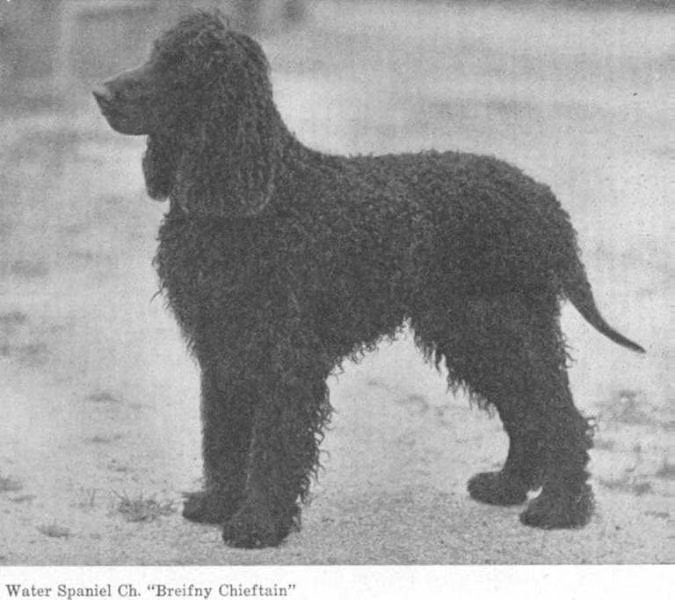
The Irish Water Spaniel is a large, solidly built dog with a dense liver-coloured coat of tight curls, a peaked topknot of loose curls, and a smooth, tapering rat tail that is unique among the spaniel group.
The Irish Water Spaniel is the tallest of the spaniels. Its body is strong and slightly rectangular, built for swimming and working in dense cover. A defined topknot of long, loose curls falls in a peak between the eyes, while the face and muzzle are comparatively smooth. The overall impression is of a robust, athletic dog rather than a refined or delicate one.
| Trait | Standard |
|---|---|
| Height | Males 56 to 61 cm; females 53 to 58 cm |
| Weight | Males 25 to 31 kg; females 20 to 26 kg |
| Coat | Dense, tight liver-coloured curls; smooth face and lower tail |
| Colours | Solid liver (a dark reddish brown), sometimes with a faint purplish cast |
| Eyes | Small, almond-shaped, hazel to dark amber |
Coat and colours
The coat is the defining feature of this breed. Tight, crisp ringlets cover the body, neck, and upper legs, while the face, throat, and the lower part of the tail are smooth and short. This contrast between the curled body coat and the bare, tapering tail produces the rat-tail appearance that sets the breed apart visually. The only accepted colour is solid liver, a dark reddish brown that can carry a faint purplish sheen in certain light.
The double coat is water-resistant and naturally oily, which helps the dog stay warm in cold water. In India's heat and monsoon humidity, however, this same coat requires careful management. It retains warmth and holds moisture against the skin, so thorough drying after any wetting is essential to prevent skin irritation and fungal problems.
Temperament and personality
The Irish Water Spaniel is devoted, playful, and intelligent, affectionate with its own household, reserved with people it does not know, and generally sociable with other dogs it has been raised alongside.
At home the Irish Water Spaniel is affectionate, loyal, and often comic. It bonds closely with the people in its household and tends to invent ways of drawing attention that owners find entertaining. The playfulness sits alongside genuine attentiveness: this is a breed that notices routines and reads the mood of the household quite accurately.
With strangers it is reserved. It watches and assesses before warming up, which means early socialisation carries real weight. Indian city life involves dense foot traffic, busy markets, festivals with large crowds, and frequent visitors to most homes. A dog with this temperament needs steady exposure, from puppyhood, to varied people, street sounds, vehicles, and situations so that its natural caution stays within reasonable bounds.
With other dogs it is generally sociable when raised together or introduced carefully. It carries a moderate prey drive as a retriever, so small pets deserve supervised introductions. A dog that is under-exercised or mentally unstimulated becomes noisy or destructive, two outcomes that matter in a society flat or a building with shared walls.
| Trait | Rating |
|---|---|
| Affection | 5 |
| Energy | 4 |
| Trainability | 4 |
| Vocalness | 2 |
| Shedding | 1 |
Care and grooming
Heat management during Indian summers and coat care year-round are the two largest practical demands of owning an Irish Water Spaniel in India. The breed needs at least 60 minutes of daily exercise and regular grooming to prevent matting and skin problems.
Climate and heat management
Across most of northern and central India, summer temperatures exceed 40 degrees Celsius and remain high for weeks on end. The Irish Water Spaniel's dense, oily double coat was designed for cold Irish water conditions, and it retains heat effectively, which is a liability in the Indian summer. Exercise should be restricted to early morning and after sunset during peak heat months. The dog must have constant access to fresh water and a shaded resting area. Air-conditioned rooms during the hottest part of the day provide genuine relief.
The monsoon brings a different challenge. Prolonged humidity and repeated wetting create conditions for fungal skin infections, particularly under the dense coat on the chest and underside. Ears are especially vulnerable because the long, curly ear flap traps moisture. Checking and drying the ears after rain, and inspecting the skin beneath the coat regularly from June through September, are basic monsoon routines for this breed.
Grooming
- Brush through the curls every two to three days to prevent matting, paying attention to the topknot, ears, and legs
- Trim or shape the coat every six to eight weeks to keep it manageable
- Clean and dry the ears thoroughly after bathing, swimming, or rain exposure
- Bathe when needed, then dry the coat completely before leaving the dog in a cool or enclosed space
- Trim the nails monthly and check the feet, which carry hair between the toes
Exercise
- Provide at least 60 minutes of activity per day, split across two sessions to avoid peak heat
- Swimming is ideal for this breed where a safe, clean water source is available
- Retrieving games and scent work channel the working instinct productively
- Mental engagement through training and puzzle work reduces boredom-driven behaviour
Environment
Flat-dwellers in metros can keep this breed provided they commit to daily scheduled outings. The absence of a private garden or compound makes meeting the exercise requirement the owner's full responsibility. A building with a lift presents no difficulty. Independent houses with a compound offer more flexibility and let the dog have short outdoor access without a full outing each time. Secure fencing is important: this is an athletic dog with both the ability and the inclination to explore.
Nutrition and feeding
Feed an Irish Water Spaniel a complete diet formulated for large, active dogs, divided into two meals daily, with portions adjusted to body condition and activity level.
An Irish Water Spaniel does best on a complete, balanced diet suited to an active large breed. Choose food at the appropriate life stage, with sufficient protein to support muscle and moderate fat for an energetic working build. Because this breed is uncommon in India and specialist breeders are few, dietary guidance from the breeder or a vet experienced with large working breeds is particularly useful. Daily portions depend on the individual dog's age, weight, and activity level, so body condition is the best practical guide. A dog carrying excess weight will be less tolerant of the heat, which is an added reason to keep the diet calibrated carefully. Fresh water should be available at all times, especially after exercise.
| Life stage | Amount per day | Meals |
|---|---|---|
| Puppy (2 to 6 months) | Per product guide, by weight | 3 to 4 |
| Junior (6 to 12 months) | About 2.5 to 3.5 cups | 2 to 3 |
| Adult | About 2 to 3 cups | 2 |
| Senior | About 1.75 to 2.5 cups | 2 |
Treats and supplements
Keep treats to roughly 10 per cent of daily calories. Excess weight worsens heat tolerance in a dog that already carries a warm, dense coat. Most dogs on a complete commercial diet do not need supplements, though a vet may recommend joint or skin support in specific cases. When shifting the dog to a new food, introduce the change gradually over about a week to avoid digestive upset.
Health and common conditions
The Irish Water Spaniel is generally a hardy breed with a lifespan of 12 to 13 years. In India, tick and flea burden, heat stress, monsoon-related skin and ear infections, and rabies vaccination compliance deserve particular attention alongside the standard large-breed concerns.
The Irish Water Spaniel is a generally sound breed with a typical lifespan of 12 to 13 years. Joint health and weight management have the most direct effect on a long, comfortable life, as with most large breeds. Responsible breeders screen for known heritable conditions, so asking for health clearances on both parents before acquiring a puppy is always worthwhile.
For owners in India, several health considerations go beyond the standard large-breed checklist. Tick and flea loads are high across most of the country year-round, and the dense, curly coat provides good cover for both. Regular tick checks after outdoor outings and a vet-recommended parasite prevention programme are basic requirements. In areas where tick-borne diseases such as ehrlichiosis and babesiosis are present, prompt tick removal and vigilance for fever or lethargy after exposure matter.
Rabies vaccination is legally required in India and must be kept current throughout the dog's life. Heat stress during summer months and fungal skin infections during the monsoon are two other India-specific risks that owners need to manage proactively. Vet access varies considerably: major metros generally have well-equipped clinics and specialist referral options, while tier-2 cities may offer fewer choices. Identifying a reliable veterinarian before the need becomes urgent is sensible.
| Condition | Signs | Note |
|---|---|---|
| Hip dysplasia | Stiffness, limping, reluctance to jump | Common in large breeds; health-tested breeding stock lowers risk |
| Ear infections | Head shaking, odour, scratching at ears | Particularly frequent during the monsoon; regular drying and cleaning are essential |
| Fungal skin infections | Itching, redness, odour under the coat | Humidity and a damp coat create conditions for fungal growth; dry thoroughly |
| Hypothyroidism | Weight gain, low energy, coat changes | Manageable with daily medication once diagnosed |
| Eye conditions | Cloudiness or reduced vision | Includes cataracts; periodic eye checks help detect changes early |
| Tick-borne diseases | Fever, lethargy, loss of appetite | Year-round risk across India; consistent parasite prevention is necessary |
Preventive care
- Keep rabies and core vaccinations current as required under Indian law
- Use a vet-recommended parasite prevention product year-round for ticks and fleas
- Clean and dry the ears after rain, bathing, or swimming
- Check the skin under the coat regularly during the monsoon months
- Schedule annual veterinary checkups, more frequently for senior dogs
- Maintain lean body condition to reduce joint strain and improve heat tolerance
- Provide regular dental care and tooth brushing to limit tartar build-up
Training the Irish Water Spaniel
The Irish Water Spaniel is intelligent and a capable learner but has an independent streak and dislikes repetitive drilling. Short, varied sessions using positive reinforcement, started early in puppyhood, produce the best results.
The Irish Water Spaniel picks things up quickly and genuinely enjoys having a task. It is a capable student in obedience, retrieving, and dog sports. The independent side of its character means it will disengage from sessions it finds dull or pointlessly repetitive. Short sessions that change activities regularly, and that use food rewards and play rather than correction, produce far better results than extended drilling.
The breed's natural reserve with strangers is a real training consideration in India. City life here involves busy streets, festival crowds, frequent visitors, and a density of people and noise that a cautious dog can find overwhelming without adequate preparation. Starting socialisation in puppyhood, exposing the puppy to varied people, traffic sounds, markets, and different settings, is the most effective way to raise a dog that remains settled rather than anxious in everyday Indian environments.
Basics
- Begin socialisation in puppyhood: varied people, street sounds, vehicles, crowds, and situations
- Teach core commands such as sit, stay, recall, and walking on a loose lead using food rewards and play
- Keep training sessions short, ideally under 15 minutes, and vary the activities
- Use retrieving and water games as part of the training programme where access allows
- Build a reliable recall before allowing off-lead freedom in open areas
Breeding and raising young
Irish Water Spaniels reach breeding maturity at around two years, carry litters of roughly four to seven puppies, and follow the standard canine gestation of about 63 days.
Breeding an Irish Water Spaniel demands careful planning, particularly in India where the breed population is very small. Maintaining sound, healthy stock requires prioritising health testing over convenience. Although dogs become physically mature before two years, responsible breeders wait until that point so that hip evaluations and eye examinations can be completed before pairing. Mating follows the female's oestrus cycle, and gestation lasts approximately 63 days from conception.
Litter size typically ranges from four to seven puppies, though the individual female determines the actual number. Newborns are blind and deaf at birth and rely entirely on the mother for warmth and nutrition. Eyes and ears open during the first two to three weeks, and weaning begins around three to four weeks as the puppies start taking solid food. The period from three to twelve weeks is the most formative for temperament, when gentle handling, exposure to varied sensory experiences, and contact with the litter shape how the adult dog responds to its environment. Puppies typically move to new homes at eight weeks or older.
Anyone seeking a puppy should ask for KCI registration documentation and proof of health testing on both parents. Given how few litters are produced in India, waiting lists are to be expected. Caution is warranted with any advertised litter that cannot provide registration papers or parent health clearances.
| Metric | Value |
|---|---|
| Breeding maturity | About 2 years |
| Gestation | About 63 days |
| Average litter size | 4 to 7 puppies |
| Eyes and ears open | 2 to 3 weeks |
| Weaning | 3 to 4 weeks |
| Ready for new homes | 8 weeks or older |
Registering an Irish Water Spaniel in India: profile and microchip
Municipal licences cover the paperwork; a free United Pet Club record is what actually connects your Irish Water Spaniel to your phone.
How to register an Irish Water Spaniel in India
Begin with the essentials: your Irish Water Spaniel's name, its date of birth, a clear photograph, and your mobile number, saved to a registry that levies no charge at any stage. Dog registration functions with or without a microchip, so nothing need wait for the next clinic visit.
Should your Irish Water Spaniel already carry a microchip, the number must still be recorded separately, since the vet performs only the implant. Registering the microchip under the free lifetime plan accepts chips from any manufacturer an Indian vet works with, keeps every update free should your household shift cities, and leaves the record searchable at any hour. Create your free account and complete both tasks in one sitting.
How do I register my Irish Water Spaniel in India?
Create a free United Pet Club account, enter your Irish Water Spaniel's details along with a photograph, and save the profile. The lifetime plan maintains the record at no cost, and any municipal licence you hold sits alongside it rather than replacing it.
How do I register my Irish Water Spaniel's microchip?
Enter the fifteen digit chip number into your free account together with your current address, phone number, and email. The lifetime plan covers the registration and every subsequent update without charge, whatever the chip's manufacturer.
Is registration compulsory for an Irish Water Spaniel in India?
Several municipal corporations, Delhi and Mumbai among them, require dogs to be licensed under local by-laws. The United Pet Club profile is separate and voluntary, and it is the record a finder anywhere can actually search, free of cost.
What does it cost to register an Irish Water Spaniel?
Nothing whatsoever. The free lifetime plan includes the profile, the microchip record, and unlimited updates, with no renewal fee at any point.
Frequently asked questions
Common questions from Indian owners cover the breed's size, its ability to cope with the Indian climate, grooming demands, lifespan, suitability for flat living, and how to find a KCI-registered puppy.
How big does an Irish Water Spaniel get?
It is a large breed, the tallest of the spaniels. Males stand 56 to 61 cm at the shoulder and weigh 25 to 31 kg. Females stand 53 to 58 cm and weigh 20 to 26 kg.
Can an Irish Water Spaniel cope with India's climate?
It needs active management in the Indian heat. The dense double coat retains warmth, so summer exercise should be limited to early mornings and evenings. The dog needs shade, fresh water, and ideally a cool indoor space during peak afternoon temperatures. During the monsoon, humidity and repeated wetting create a risk of fungal skin infections and ear problems, requiring thorough drying after any exposure to rain or water.
What is the Irish Water Spaniel's temperament like?
It is devoted, playful, and alert, with a streak of comedy that owners tend to find endearing. The breed bonds closely with its household and is affectionate at home. With strangers it is reserved and takes time to warm up, so early and thorough socialisation is important.
Is the Irish Water Spaniel hard to care for?
Yes, it is a moderate to high-maintenance breed. The curly coat needs brushing every two to three days and trimming every six to eight weeks. Ears need regular cleaning, especially during the monsoon. The dog also needs at least 60 minutes of exercise daily, split across sessions to avoid peak heat.
How long do Irish Water Spaniels live?
The typical lifespan is 12 to 13 years. Lean body condition, consistent parasite control, regular ear care, and annual veterinary checkups each contribute to a longer, more comfortable life.
Are Irish Water Spaniels suitable for flats in metros?
They can adapt to flat living if the owner commits fully to daily exercise outings. The breed's energy level is substantial, and without a private garden or compound the owner must cover all exercise needs through scheduled walks and outdoor sessions. A building with a lift presents no difficulty. The exercise commitment is what matters, not the flat itself.
How do I find a KCI-registered Irish Water Spaniel in India?
Contact the Kennel Club of India for a list of registered breeders. The breed is rare in India and litters are infrequent, so a waiting period is likely. Be wary of advertisements offering puppies without KCI registration papers or without health clearances for the parents.
From the community
Ask about the Irish Water SpanielNo questions about the Irish Water Spaniel yet. Be the first to ask.
Browse Dog breeds