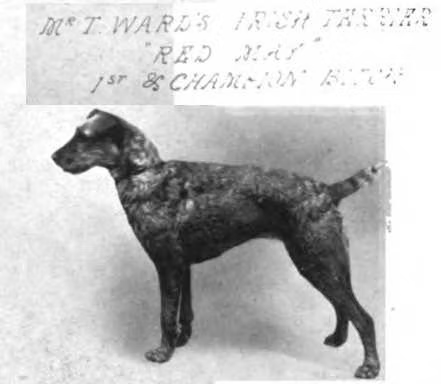
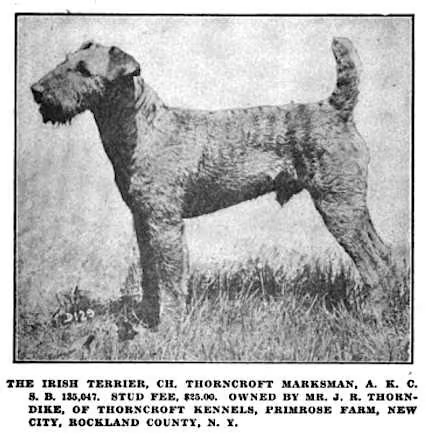
The Irish Terrier is a fiery, courageous breed known as the daredevil of terriers, fiercely loyal and bold-hearted with its family.
How the Irish Terrier coat is built, and what that means when you groom it.
Caution: A Irish Terrier coat should be hand-stripped rather than clipped.
A wire coat is meant to be pulled out at the root once the hair is ready to release. Clippers cut it off part way instead, leaving the soft undercoat behind. The result is a coat that grows back limp and faded, and the weatherproof texture only returns after the hair is stripped out again.
A few of the Irish Terrier profiles members have added to United Pet Club.
A medium-sized Irish working terrier with a wiry red coat, loyal and bold in temperament, living 13 to 15 years, and still a rare sight in Indian households.
The Irish Terrier is a medium-sized dog developed in Ireland to guard farms and clear out rats and other vermin. It ranks among the oldest terrier breeds and is known at once by its solid red coat and long, leggy frame. Early admirers called it the "daredevil" of the terrier world, a nod to how fearlessly it would take on animals many times its size.
This is an alert, active dog that bonds closely with its household. Irish Terriers are loyal, spirited, intelligent, courageous and sure of themselves. Bred to hunt rats and other pests on their own initiative, they carry a strong independent streak and back their own judgement rather than waiting for instructions. Around people they trust, they are warm and dependable.
The breed suits an owner who can commit to daily exercise, firm and consistent handling, and genuine companionship. Irish Terriers can be wary or assertive with unfamiliar dogs, and their instinct to chase stays sharp around squirrels, street cats and other small animals common in Indian neighbourhoods, so secure fencing and close supervision matter. Given structure and attention, they settle well into family life, whether in an independent house or a gated housing society.
| Attribute | Detail |
|---|---|
| Origin | Ireland |
| Size | Medium |
| Lifespan | 13 to 15 years |
| Group / role | Terrier; farm vermin control and companion |
| Good with | Family members; needs supervision around other dogs and small pets |
The Irish Terrier fits an active person or family in India who wants a hardy, devoted dog and can commit to training and daily exercise, ideally with access to a park or open ground for a proper run. It is a poor match for owners who travel often or who keep small caged pets without separation. Early socialisation helps take the edge off its wariness towards unfamiliar dogs, including the community dogs found in most Indian neighbourhoods.
The Irish Terrier took shape in Ireland as a farm and vermin dog and was among the first terrier breeds to gain formal recognition, in the 1870s.
The Irish Terrier comes from Ireland, where farmers bred hardy red terriers to keep down rats and other vermin and to stand guard over the homestead. The breed's precise early ancestry was never documented in detail, but it is counted among the oldest terrier types of the British Isles. Working ability, not looks, shaped its early development.
Organised interest built up through the second half of the nineteenth century. Irish dog shows began offering classes for the breed in the 1870s, which pushed breeders towards a more uniform type. A breed club formed in Dublin in 1879, and the standard for size, coat and colour was settled around that period. The solid red coat became the feature that set it apart from other terriers.
The Irish Terrier travelled beyond Ireland to Britain and then to North America in the late 1800s, earning a name for courage and gameness along the way. During the First World War, dogs of the breed served as messengers and sentries, which only added to its reputation.
Today the Irish Terrier is kept mainly as a companion and show dog, though it has not lost the working drive of its origins. It remains a rare breed in most parts of the world, including India, where it is seen only occasionally, usually with owners connected to specialist breed circles or the Kennel Club of India.
The Irish Terrier is a medium, leggy dog with a dense wiry red coat, a long flat-skulled head and dark eyes set fairly close together.
The Irish Terrier has a racy, balanced outline with a moderately long body, straight front legs and a chest that is deep rather than broad. The overall look is of a dog built for speed and stamina, not bulk. The head is long with a flat skull, the ears are small and V-shaped, folding forward close to the head, and the tail is carried with a slight upward set.
| Trait | Standard |
|---|---|
| Height | About 46 to 48 cm (18 to 19 in) at the shoulder |
| Weight | About 11 to 12 kg (25 to 27 lb) |
| Coat | Dense, wiry, harsh outer coat with a softer undercoat |
| Colours | Solid red, red wheaten, or golden red |
| Eyes | Small, dark, set fairly close |
The coat is the breed's signature feature. It is hard and wiry to the touch, lies close to the body and shrugs off wet weather, useful given India's monsoon season. A little white on the chest sometimes appears and is generally tolerated, but the desired colour is a clear, even red across the body. Puppies can show darker shading that clears as they mature. The wiry texture holds up best with hand stripping, which keeps both the colour and the harsh texture intact, rather than clipping, which softens and dulls the coat over time.
The Irish Terrier is loyal and bold, deeply attached to its family, often assertive with unfamiliar dogs, and quick to chase cats or squirrels.
The Irish Terrier is spirited and courageous, with a strong attachment to its household. With family it is affectionate, playful and protective, and it often takes on the role of watchdog without being asked. The breed is intelligent and quick to read a situation, which makes it good company but also means it can be strong-willed when it does not agree with its handler.
With strangers the Irish Terrier is alert and can be reserved at first, warming up once it decides a visitor is acceptable. Towards other dogs it can be assertive or quarrelsome, particularly with dogs of the same sex, a trait behind its bold reputation. Early and ongoing socialisation takes the edge off this tendency but rarely removes the underlying readiness to hold its ground, something worth remembering in Indian neighbourhoods where street dogs and other pets are commonly met on walks.
The hunting drive runs strong. Cats, squirrels, rodents and other small animals can set off a chase, so households that also keep small pets need careful management. Around children the breed generally does well when raised with them, though its energy means supervision with very young children is sensible. This is a dog that needs a job, mental engagement and a confident owner.
| Trait | Rating |
|---|---|
| Affection | 4 |
| Energy | 5 |
| Trainability | 3 |
| Vocalness | 3 |
| Shedding | 2 |
Caring for an Irish Terrier means regular hand stripping of its wiry coat, daily vigorous exercise, and precautions for India's heat and monsoon.
The Irish Terrier adjusts to house or flat life if exercised well, but it does best with a securely fenced yard or terrace to patrol. Fencing should be solid and dug-proof, since the breed will dig and chase. Its dense coat handles cold and wet weather without trouble, though the hot, humid stretch before the monsoon calls for shade, fresh water and exercise timed away from the midday heat. It should not be left alone for long periods, as boredom can lead to barking and digging, which matters in housing societies with shared walls.
Feed the Irish Terrier a complete diet suited to its life stage, split into measured meals, with portions watched to keep this active dog lean.
The Irish Terrier does well on a complete, balanced dog food suited to its age and activity level. As an active medium breed it needs enough protein and fat to fuel its energy, but portions should be watched carefully to prevent weight gain, since extra weight puts strain on the joints. Choose a food suited to the dog's life stage and judge by body condition rather than going only by the guide printed on the pack. Clean, fresh water should be available at all times, especially through the hotter months.
| Life stage | Amount per day | Meals |
|---|---|---|
| Puppy (2 to 6 months) | Per puppy-food guide, divided | 3 to 4 |
| Junior (6 to 12 months) | About 1 to 1.5 cups | 2 to 3 |
| Adult | About 1.25 to 1.75 cups | 2 |
| Senior | Slightly reduced, monitor weight | 2 |
Keep treats to about 10 percent of daily calories and count them within the day's meal portions. Most Irish Terriers on a complete diet need no extra supplements. A veterinary doctor may suggest joint or skin support in specific cases, but supplements should be added only on professional advice.
The Irish Terrier is generally a hardy breed with a lifespan of 13 to 15 years, though a few inherited conditions are worth watching for.
The Irish Terrier is considered a robust, healthy breed with a typical lifespan of 13 to 15 years. Responsible breeding and regular veterinary care keep most dogs in good condition well into old age. As with any breed, a handful of inherited and acquired conditions turn up more often than in dogs generally, and knowing the signs helps with early detection.
| Condition | Signs | Note |
|---|---|---|
| Hyperkeratosis (corny feet) | Thickened, cracked footpads | An inherited condition documented in the breed; managed, not cured |
| Hypothyroidism | Weight gain, lethargy, coat changes | Diagnosed by blood test, controlled with medication |
| Cystinuria | Bladder stones, straining to urinate | A urinary stone disorder; needs veterinary management |
| Eye disorders | Cloudiness, vision changes | Periodic eye checks recommended |
The Irish Terrier is intelligent and capable but independent minded, so it responds best to firm, consistent, reward-based training from puppyhood.
The Irish Terrier is intelligent and picks things up fast, but it was bred to work on its own initiative, so it can be stubborn and choosy about obeying. Training works best when it is consistent, firm and fair, with clear rules set from the start. Harsh methods tend to backfire and leave a dog that resists rather than cooperates. Short, varied sessions hold the breed's attention better than long, repetitive drills.
Socialisation matters as much as obedience. Exposure to other dogs, people and situations from puppyhood cuts down the breed's tendency towards dog-directed aggression, useful given how often walks in India involve encounters with neighbourhood dogs. Recall is a challenge because of the strong prey drive, so it needs heavy practice, and the dog should stay leashed wherever small animals or traffic are around.
Irish Terriers reach breeding maturity in their second year, carry a litter for about nine weeks, and produce moderate litters needing early socialisation.
Responsible breeding of Irish Terriers focuses on temperament, conformation and health screening. Breeding dogs should be fully mature physically, which usually means waiting until the second year rather than the first season or two. Both parents should be checked for known inherited conditions in the breed before mating, and registration with the Kennel Club of India is worth arranging where the litter will be shown or sold onward.
Gestation runs about 63 days from conception. Litters are generally moderate in size. The dam typically whelps without major trouble, but a quiet whelping area and a veterinary doctor on standby are sensible precautions. Puppies are born deaf and blind and depend entirely on the mother through the first weeks.
Early handling and socialisation shape this breed's temperament for life. Puppies should be exposed to gentle handling, household sounds and different surfaces from a young age, and should stay with the dam and littermates until old enough to leave, usually around eight weeks. Given the breed's drive and its assertiveness towards other dogs, early social experience pays off for years afterward.
| Metric | Value |
|---|---|
| Breeding maturity | Usually after about 18 to 24 months |
| Gestation | About 63 days |
| Average litter size | Roughly 4 to 7 puppies |
| Weaning age | About 6 to 8 weeks |
| Recommended age to leave dam | Around 8 weeks |
Municipal licences cover the paperwork; a free United Pet Club record is what actually connects your Irish Terrier to your phone.
An Irish Terrier that slips past the gate of the housing society is identified by its record, not by its pedigree. Provide that record without spending a rupee: the free United Pet Club profile carries your telephone number, the dog's photograph, and its details for life. Register your dog and the matter is settled.
A microchip without a registration is merely a number under the skin. File your Irish Terrier's fifteen digit number with United Pet Club and it becomes a working address: free for life, open to every chip brand, and searchable from any clinic or shelter in the country or abroad. Microchip registration first, the free account alongside.
Create a free United Pet Club account, enter your Irish Terrier's details along with a photograph, and save the profile. The lifetime plan maintains the record at no cost, and any municipal licence you hold sits alongside it rather than replacing it.
Enter the fifteen digit chip number into your free account together with your current address, phone number, and email. The lifetime plan covers the registration and every subsequent update without charge, whatever the chip's manufacturer.
Several municipal corporations, Delhi and Mumbai among them, require dogs to be licensed under local by-laws. The United Pet Club profile is separate and voluntary, and it is the record a finder anywhere can actually search, free of cost.
Nothing whatsoever. The free lifetime plan includes the profile, the microchip record, and unlimited updates, with no renewal fee at any point.
Common questions about the Irish Terrier cover its size, temperament, care needs, lifespan, suitability for Indian homes, and availability.
It is a medium-sized dog, standing about 46 to 48 cm (18 to 19 in) at the shoulder and weighing roughly 11 to 12 kg (25 to 27 lb).
It is loyal, spirited, intelligent and courageous. It is affectionate with its family, alert with strangers, and often assertive towards other dogs, with a strong urge to chase small animals.
Maintenance is moderate. The wiry coat needs hand stripping a few times a year plus weekly brushing, and the dog needs at least an hour of exercise daily along with mental work. It is not a low-maintenance breed.
The typical lifespan is 13 to 15 years, and the breed is generally hardy when given regular veterinary care.
Yes, for active families that can manage exercise and consistent training. It gets on well with children it is raised alongside, but it needs supervision around small pets and other dogs, including community dogs met on walks.
The breed is uncommon in India, so prospective owners usually need to get in touch with breed clubs, check with the Kennel Club of India, or wait for a litter from a reputable breeder, sometimes importing from abroad.
No. The wiry coat sheds very little, especially when hand stripped, which is part of the breed's appeal for people sensitive to loose hair around the house.


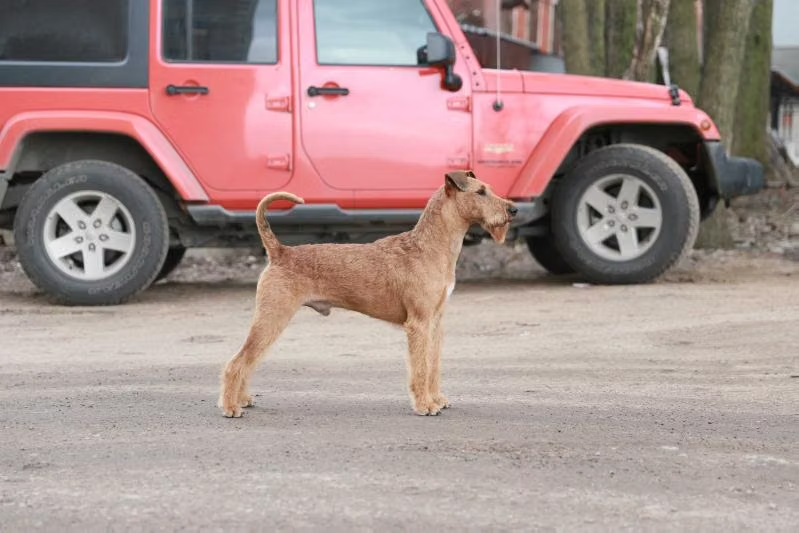

![Ted Malone [Mrs. Butcher's], a Male Irish Terrier registered with United Pet Club](https://media.unitedpetclub.com/m/udqt44FdYl/ted-malone-mrs-butcher-s-irish-terrier_orig.avif "Ted Malone [Mrs. Butcher's] — Irish Terrier")


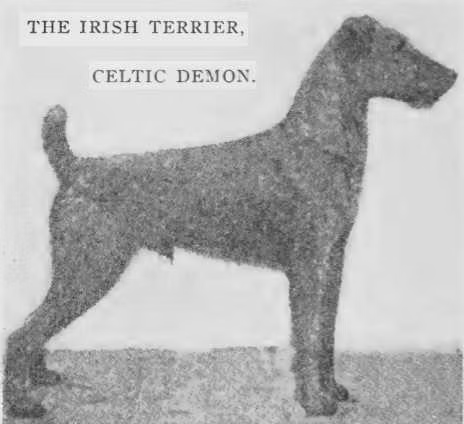
![Sport [Mr Jamison's], a Male Irish Terrier registered with United Pet Club](https://media.unitedpetclub.com/m/G4RVCgYDbI/sport-mr-jamison-s-irish-terrier_orig.avif "Sport [Mr Jamison's] — Irish Terrier")
![Badger [Dr. Mark's], a Male Irish Terrier registered with United Pet Club](https://media.unitedpetclub.com/m/KKEFCHScxd/badger-dr-mark-s-irish-terrier_orig.avif "Badger [Dr. Mark's] — Irish Terrier")
![Kate [Dr. Mark's], a Female Irish Terrier registered with United Pet Club](https://media.unitedpetclub.com/m/fGUbeif4or/kate-dr-mark-s-irish-terrier_orig.avif "Kate [Dr. Mark's] — Irish Terrier")