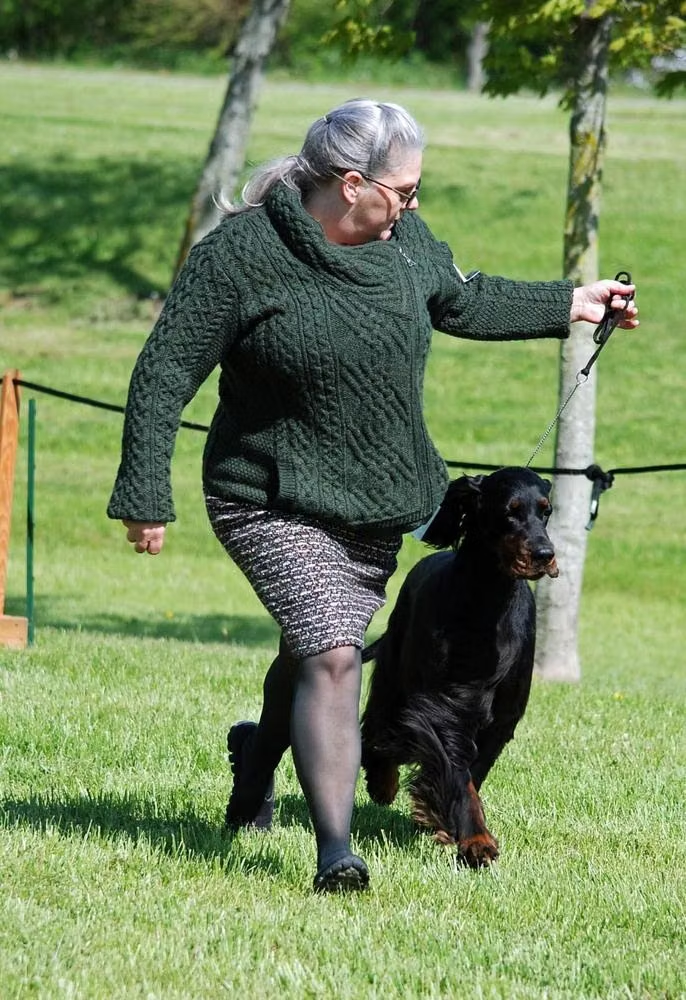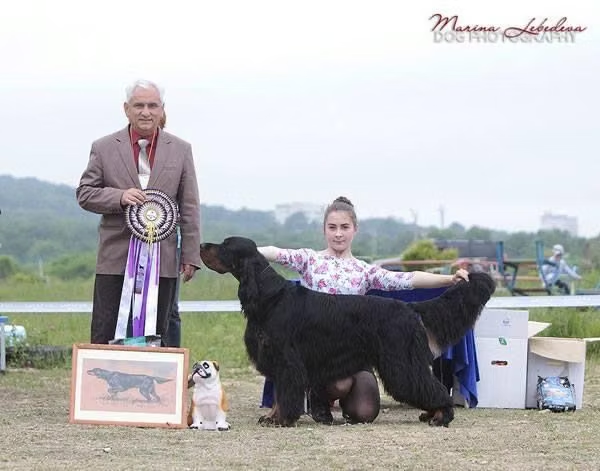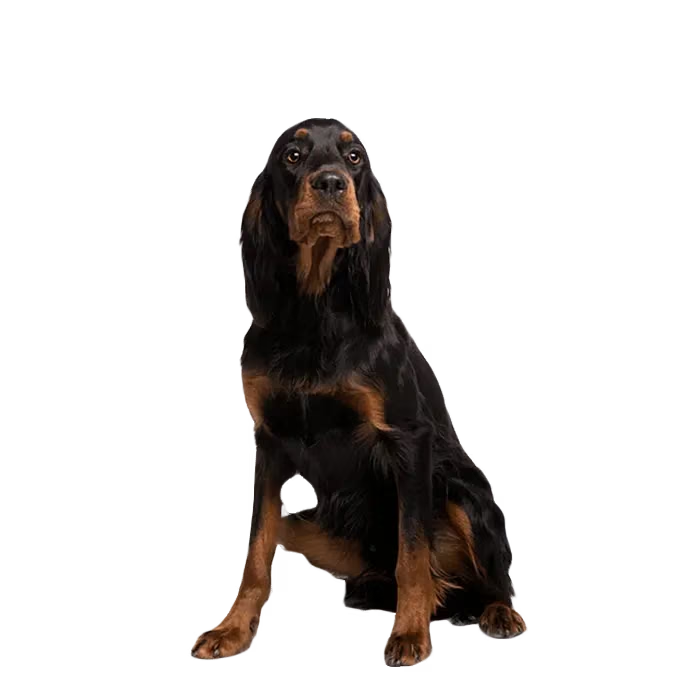
The Gordon Setter is a confident, loyal bird dog distinguished by its striking black-and-tan coat and steadfast devotion.
How the Gordon Setter coat is built, and what that means when you groom it.
Caution: A Gordon Setter coat mats easily.
Fine or long hair tangles at the base of the coat, out of sight, where the mats tighten and pull on the skin. Brushing has to reach right down to the roots in sections, not just skim the surface.
A few of the Gordon Setter profiles members have added to United Pet Club.
A large bird dog from Scotland, known for its black-and-tan coat, loyalty, and high energy. It typically lives 10 to 12 years and suits active homes that can meet its exercise, grooming, and heat-management needs.
The Gordon Setter is a large gundog developed in Scotland to point and retrieve game birds. It is the heaviest and most substantial of the setter breeds, built for stamina over rough terrain rather than speed alone.
The breed is recognised by its glossy black coat with clear tan or chestnut markings on the muzzle, legs, chest, and over the eyes. It carries itself with an alert, confident bearing and stays closely attached to its people.
Gordon Setters are loyal and intelligent. They tend to bond strongly with one household and can be reserved with strangers until they take their measure. Without enough physical and mental work, they become restless and may develop nuisance habits. In India the breed is rare, and its dark, long coat means heat management is an important part of care.
| Attribute | Detail |
|---|---|
| Origin | Scotland |
| Size | Large |
| Lifespan | 10 to 12 years |
| Group / role | Sporting (gundog), bird dog used for pointing and retrieving |
| Good with | Families and older children; can live with other dogs and pets when raised together |
The Gordon Setter fits owners who are active and can commit to daily exercise. It does well with people who run, hike, or train in dog sports. It is less suited to flat living without significant outdoor activity, or to households away for long hours, since the breed dislikes being left alone for extended periods. In warmer regions the owner must be ready to manage the heat with care.
The Gordon Setter takes its name from the kennels of the Dukes of Gordon at Gordon Castle in Scotland, where the black-and-tan type was established by the early 19th century. It was bred as a working bird dog and later recognised by major kennel clubs.
Setters as a working type existed in Britain for centuries before the Gordon emerged as a distinct breed. These dogs were used to locate game birds and then crouch, or set, so hunters could net or shoot them.
The black-and-tan setter became associated with the kennels of the Dukes of Gordon at Gordon Castle in Banffshire, Scotland. The fourth Duke of Gordon kept and promoted these dogs around the late 1700s and early 1800s, and the breed came to carry the family name.
Early Gordon Setters were valued for steady, methodical work and good scenting ability rather than flashy speed. The breed was sometimes called the Gordon Castle Setter before the name was shortened. Coat colour varied in the early stock, but the black-and-tan pattern was fixed as the standard over time.
The breed reached North America in the 19th century and spread to other countries over later decades. It remains in use both as a working gundog and as a companion, but it is very rarely seen in India, kept only by a small number of enthusiasts.
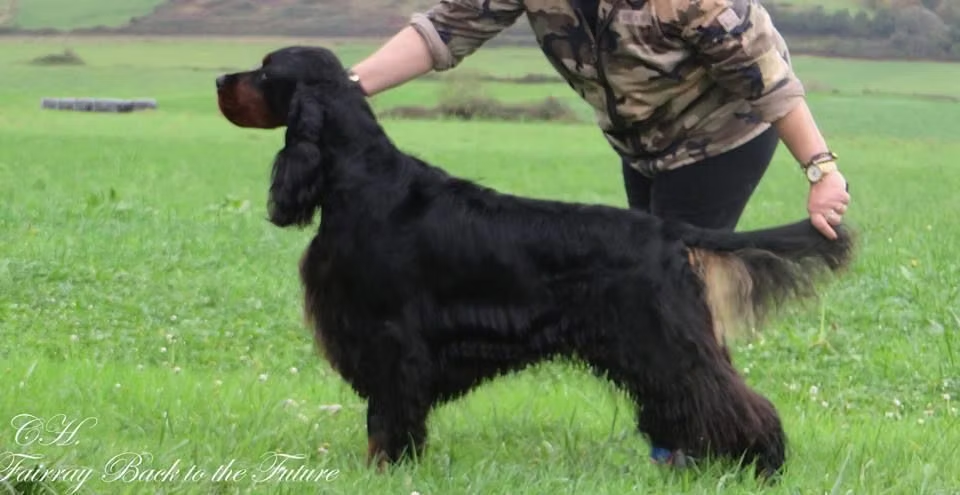
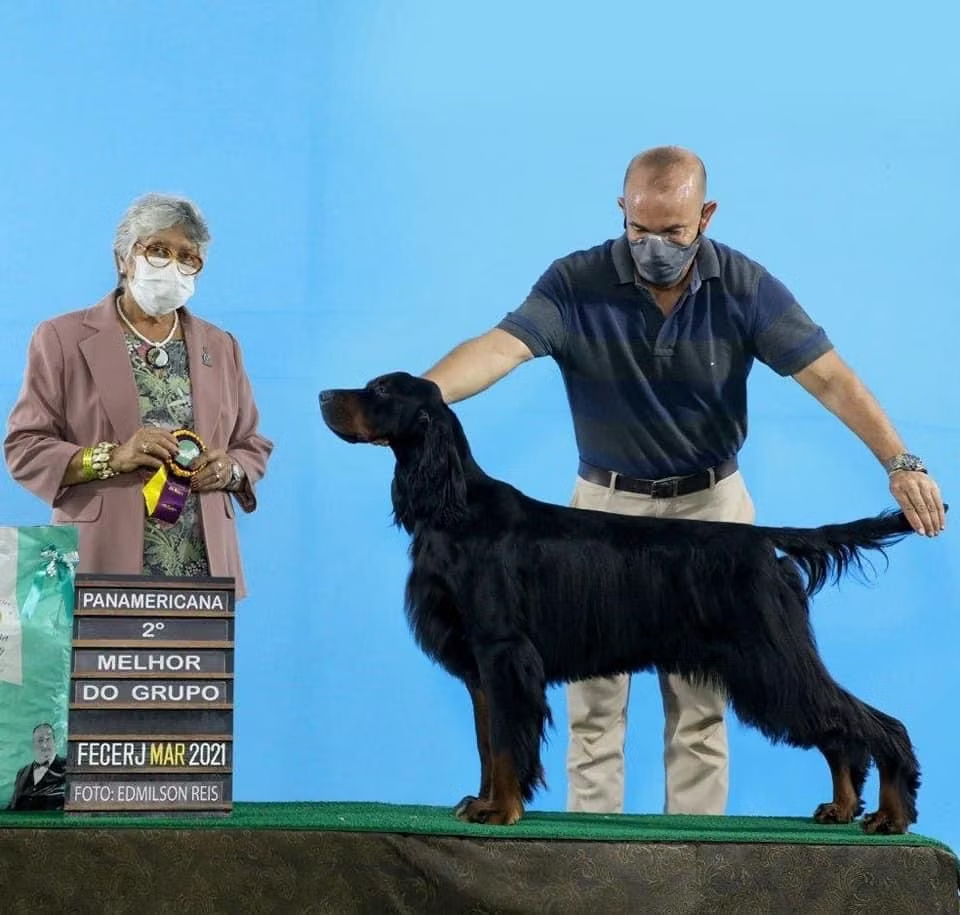
A sturdy, large dog with a black coat marked by tan points. Males stand around 61 to 69 cm at the shoulder, and the breed has a long, feathered coat that is straight or slightly wavy.
The Gordon Setter is the most substantial of the setters, with heavier bone and a deeper body than the English or Irish Setter. The outline is balanced, with a level back, a deep chest, and a head carried proudly. The tail is fairly short and carried roughly level with the back, often described as flag-like.
| Trait | Detail |
|---|---|
| Height | Males about 61 to 69 cm; females about 58 to 66 cm at the shoulder |
| Weight | Males about 25 to 36 kg; females about 20 to 32 kg |
| Coat | Soft and shining, straight or slightly wavy, with longer feathering on the ears, chest, legs, underside, and tail |
| Colours | Black with tan or chestnut markings (black-and-tan) |
| Eyes | Dark brown, oval, set fairly wide apart, giving an alert and intelligent expression |
The defining mark of the breed is a deep black coat with well-defined tan points. The tan appears over the eyes, on the sides of the muzzle, on the throat and chest, on the lower legs and feet, and under the tail. A small white spot on the chest is permitted in the standard, though large areas of white are not typical. The dark coat absorbs heat, which is worth remembering in the Indian climate. The feathering on the ears, legs, and tail gives the breed its elegant outline and needs regular attention to stay free of tangles.
Loyal, intelligent, and energetic, with a strong attachment to its family. Alert and can be reserved or protective with strangers, and does best with consistent training and plenty of activity.
Gordon Setters form close bonds with their households and like to stay near their people. They are affectionate at home and often follow family members from room to room. The breed is generally good with children when raised with them, though its size and energy mean play with very young children should be supervised.
With strangers, the Gordon tends to be alert and watchful. Many are reserved at first and will bark to announce visitors, which makes them effective watchdogs. Early and ongoing socialisation helps them stay confident rather than suspicious.
The breed can live with other dogs and with pets it has grown up alongside. As a bird dog, it may chase smaller animals outdoors, so introductions to cats or small pets should be careful. Gordons are intelligent and learn quickly, but they can be independent and need a handler who is consistent. Boredom and too little exercise often lead to chewing, digging, or barking.
| Trait | Rating |
|---|---|
| Affection | 5 |
| Energy | 5 |
| Trainability | 4 |
| Vocalness | 3 |
| Shedding | 3 |
Needs regular brushing of its long coat, substantial daily exercise timed for the cooler hours, and space to move. A working breed that does poorly when under-exercised or left alone for long stretches.
The Gordon Setter does best in a home with a compound and an active routine. Its dark, heavy coat makes it a cool-weather dog, so in the Indian heat it needs shade, constant fresh water, a cool indoor space, and exercise timed for the cooler hours. It should not be left outdoors alone for long periods, as it wants to be with its family, and it tolerates isolation poorly, becoming destructive or anxious if left alone too often.
Needs a balanced diet formulated for a large, active dog, divided into two meals a day to lower the risk of bloat. Portions depend on age, weight, and activity level.
Feed a complete and balanced food suitable for the dog's life stage and size. Active and working Gordon Setters burn more calories than companion dogs, so portions should match the individual dog's workload and body condition. Keep the dog at a lean, healthy weight, since excess weight strains joints and worsens hip problems. Keep fresh, clean water available at all times, which matters even more in the heat. As a deep-chested breed, the Gordon is at risk of bloat (gastric dilatation-volvulus), so meals are usually split across the day and heavy exercise is avoided right before and after eating.
| Life stage | Amount per day | Meals per day |
|---|---|---|
| Puppy (2 to 6 months) | Per puppy food label, divided into smaller portions | 3 to 4 |
| Puppy (6 to 12 months) | Per large-breed puppy food label | 2 to 3 |
| Adult | About 2 to 3 cups of dry food, by weight and activity | 2 |
| Senior or less active | Reduced portion to maintain healthy weight | 2 |
Keep treats to no more than about 10 per cent of daily calories to avoid weight gain. A complete commercial diet usually supplies the nutrients a healthy Gordon needs, so supplements are generally unnecessary. Some owners use joint supplements for older or working dogs on a veterinarian's advice. Always provide fresh water, especially around exercise.
Generally healthy with a typical lifespan of 10 to 12 years. Known concerns include hip dysplasia, bloat, eye disease, hypothyroidism, and, locally, tick-borne disease and heat stress.
Most Gordon Setters live 10 to 12 years. The breed is reasonably hardy, but like many large dogs it has a few inherited and structural health risks. Buying from breeders who screen their stock and keeping the dog at a healthy weight reduce the chance of several problems. In India, tick-borne disease and heat stress are added concerns for this cool-weather breed.
| Condition | Signs | Note |
|---|---|---|
| Hip dysplasia | Limping, stiffness, trouble rising or climbing | Inherited joint malformation; breeding dogs should be hip-screened |
| Bloat (gastric dilatation-volvulus) | Swollen abdomen, retching without vomiting, restlessness, distress | A medical emergency; deep-chested breeds are at higher risk |
| Progressive retinal atrophy | Night blindness, declining vision over time | Inherited eye disease; DNA and eye testing available |
| Hypothyroidism | Weight gain, low energy, coat and skin changes | Manageable with daily medication once diagnosed |
| Ear and tick-borne infections | Head shaking, odour, fever, lethargy, loss of appetite | Long ears trap moisture; ticks spread ehrlichiosis and babesiosis |
Intelligent and capable but can be independent, so it responds best to consistent, reward-based training started early. Socialisation helps temper its natural reserve toward strangers.
Gordon Setters learn quickly and enjoy having a job. They are sensitive dogs that respond well to praise, food, and play, and they do not take well to harsh handling. The breed can be stubborn or distracted by scents, so training works best in short, varied sessions that keep the dog engaged, and short sessions also help in the heat. Early socialisation with people, places, and other animals is important to build a confident adult, given the breed's tendency to be reserved with strangers.
Reach sexual maturity around 1 to 2 years, carry a litter for about 63 days, and usually have litters of roughly 6 to 10 puppies. Health screening of the parents is important before breeding.
Female Gordon Setters generally reach sexual maturity between about 6 and 12 months, but responsible breeders wait until the dog is physically and mentally mature, usually around 2 years, and has passed health screening before breeding. Gestation lasts roughly 63 days from conception. Litters typically range from about 6 to 10 puppies, though numbers vary.
Newborn puppies depend fully on the mother for warmth and milk in the first weeks. Weaning usually begins around 3 to 4 weeks and is complete by about 7 to 8 weeks. Early handling and gentle exposure to household sights and sounds during this period help shape a stable temperament. Puppies should stay with the mother and littermates until at least 8 weeks of age. Breeding dogs should be screened for hip, eye, and thyroid conditions, and in a warm climate the whelping area should be kept cool and well ventilated.
| Metric | Value |
|---|---|
| Sexual maturity | About 6 to 12 months (breeding usually delayed to around 2 years) |
| Gestation | About 63 days |
| Average litter size | About 6 to 10 puppies |
| Weaning age | About 7 to 8 weeks |
| Recommended age to leave mother | 8 weeks or older |
Municipal licences cover the paperwork; a free United Pet Club record is what actually connects your Gordon Setter to your phone.
Begin with the essentials: your Gordon Setter's name, its date of birth, a clear photograph, and your mobile number, saved to a registry that levies no charge at any stage. Dog registration functions with or without a microchip, so nothing need wait for the next clinic visit.
A microchip without a registration is merely a number under the skin. File your Gordon Setter's fifteen digit number with United Pet Club and it becomes a working address: free for life, open to every chip brand, and searchable from any clinic or shelter in the country or abroad. Microchip registration first, the free account alongside.
Create a free United Pet Club account, enter your Gordon Setter's details along with a photograph, and save the profile. The lifetime plan maintains the record at no cost, and any municipal licence you hold sits alongside it rather than replacing it.
Enter the fifteen digit chip number into your free account together with your current address, phone number, and email. The lifetime plan covers the registration and every subsequent update without charge, whatever the chip's manufacturer.
Several municipal corporations, Delhi and Mumbai among them, require dogs to be licensed under local by-laws. The United Pet Club profile is separate and voluntary, and it is the record a finder anywhere can actually search, free of cost.
Nothing whatsoever. The free lifetime plan includes the profile, the microchip record, and unlimited updates, with no renewal fee at any point.
Common questions about the Gordon Setter cover its size, temperament, care needs, lifespan, suitability for the Indian climate, and how easy the breed is to find.
It is a large breed. Males generally stand about 61 to 69 cm at the shoulder and weigh roughly 25 to 36 kg. Females are a little smaller, around 58 to 66 cm and 20 to 32 kg.
It is a cool-weather breed with a dark, heavy coat, so it feels the heat. It can live in India with committed heat management: shade, constant water, a cool indoor space, and exercise limited to the early morning and evening. Hot, humid regions are the hardest on it.
They are moderately demanding. The long coat needs brushing two or three times a week, the ears need regular cleaning, and the dog needs a good deal of daily exercise. Owners who cannot meet the exercise needs often see boredom-related behaviour problems.
Most live about 10 to 12 years. Good nutrition, regular veterinary care, and keeping the dog at a healthy weight support a full lifespan.
They can live with other dogs and with pets raised alongside them. Because they are bird dogs with a chase instinct, introductions to cats or small animals should be careful, and a reliable recall is important outdoors.
No. They are very rare here. Expect a long search, careful checks on any breeder's health testing, and possibly import. Be cautious of sellers who cannot show health clearances for the parents.
They are alert and will bark to announce strangers or unusual activity, which makes them good watchdogs. Excessive barking is usually a sign of boredom or too little exercise rather than a fixed trait.