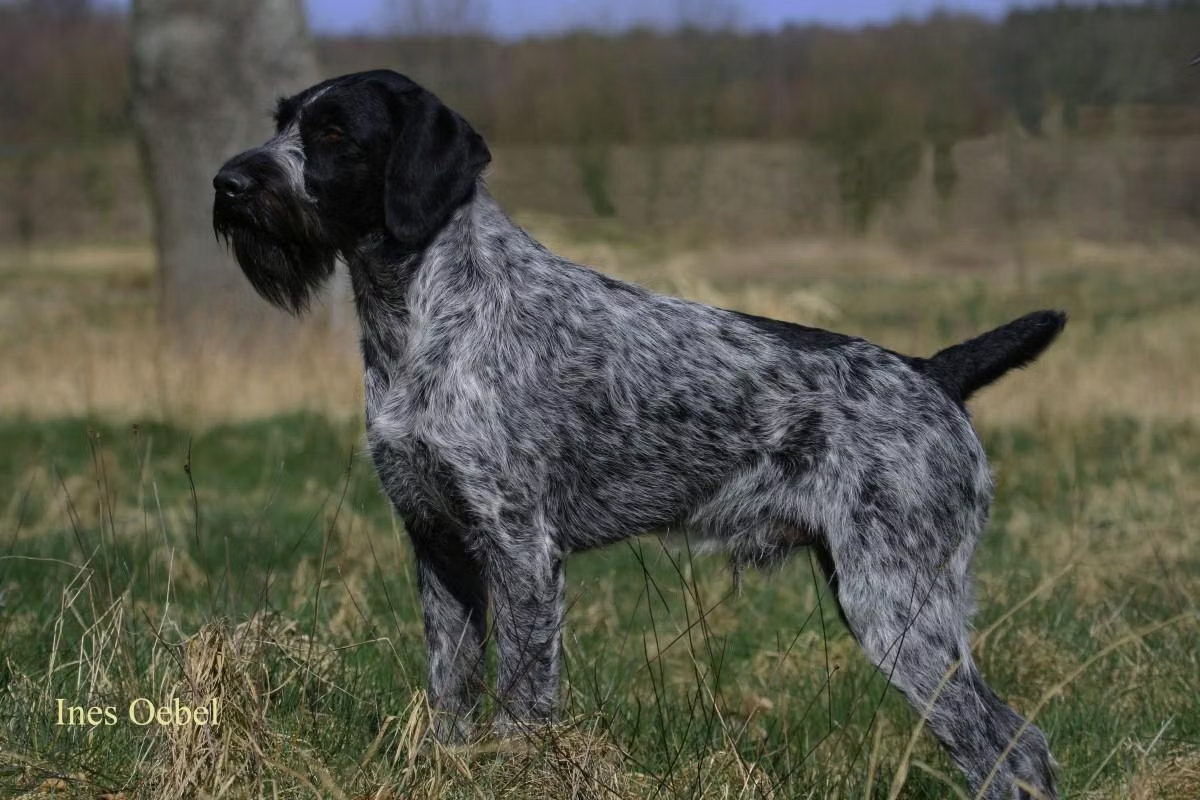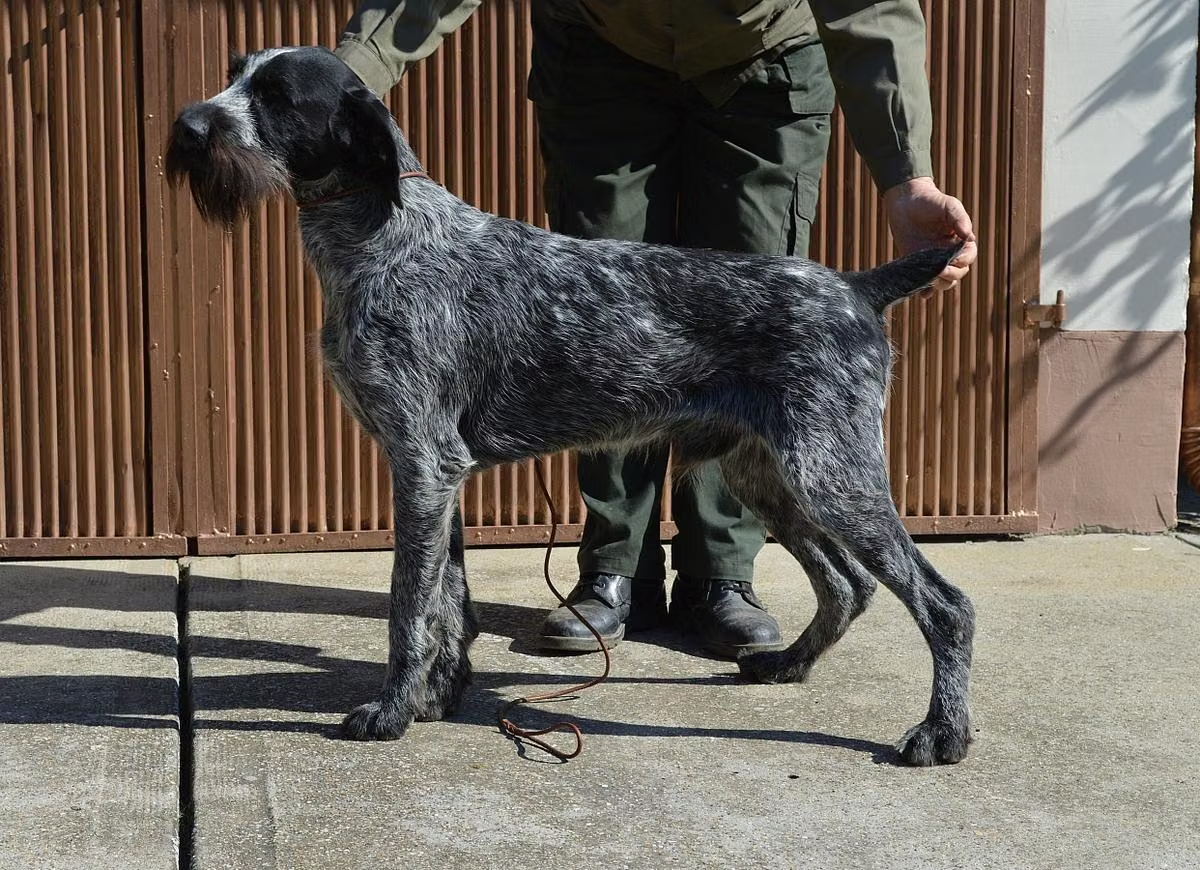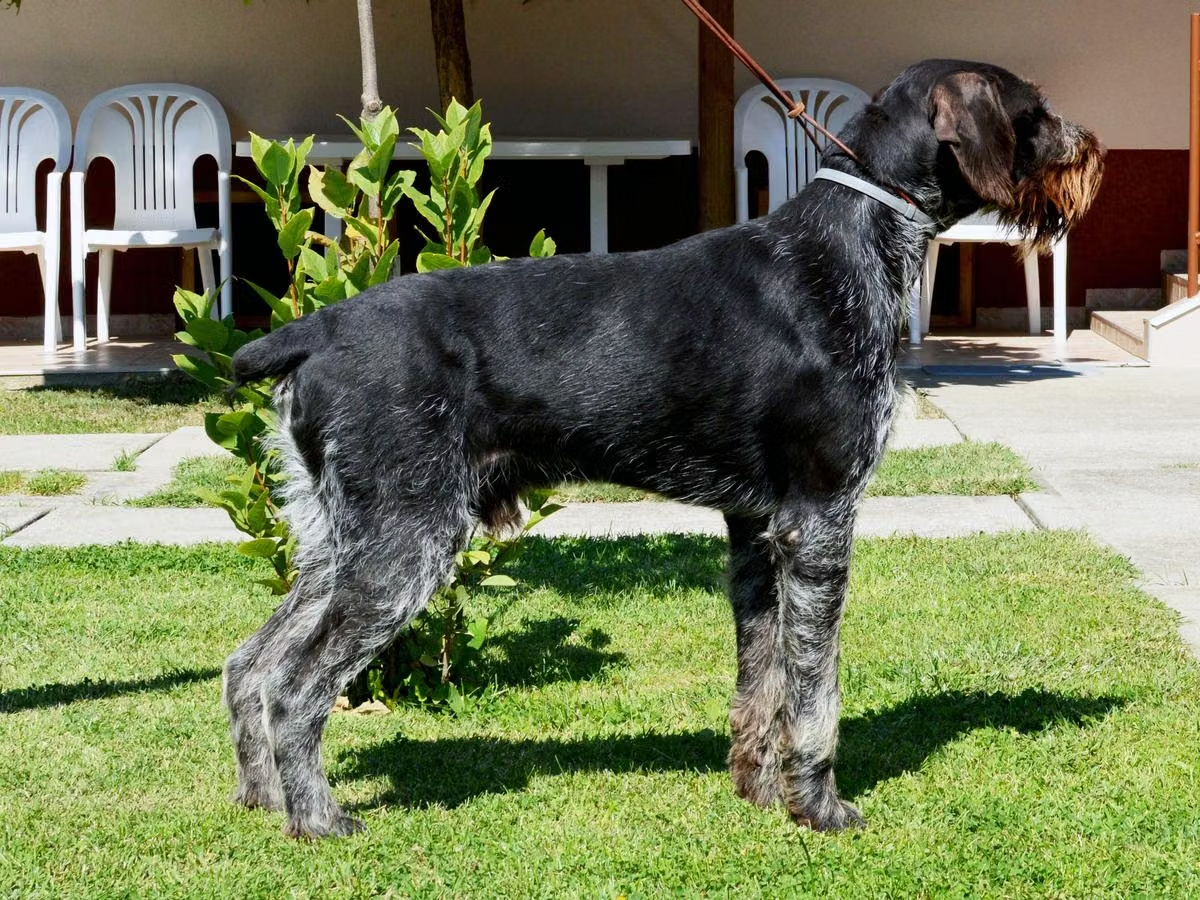
The German Wirehaired Pointer is a devoted, all-purpose hunting companion known for its rugged coat and tireless work ethic.
How the German Wirehaired Pointer coat is built, and what that means when you groom it.
Critical: A German Wirehaired Pointer should not be shaved.
The undercoat keeps heat out as well as in, and the outer coat shields the skin from sun and insect bites. Clipping the whole coat off removes both. It often grows back patchy, soft or a different colour, and in some animals the guard hairs never return properly. Brush the undercoat out instead of cutting it off.
Caution: A German Wirehaired Pointer coat should be hand-stripped rather than clipped.
A wire coat is meant to be pulled out at the root once the hair is ready to release. Clippers cut it off part way instead, leaving the soft undercoat behind. The result is a coat that grows back limp and faded, and the weatherproof texture only returns after the hair is stripped out again.
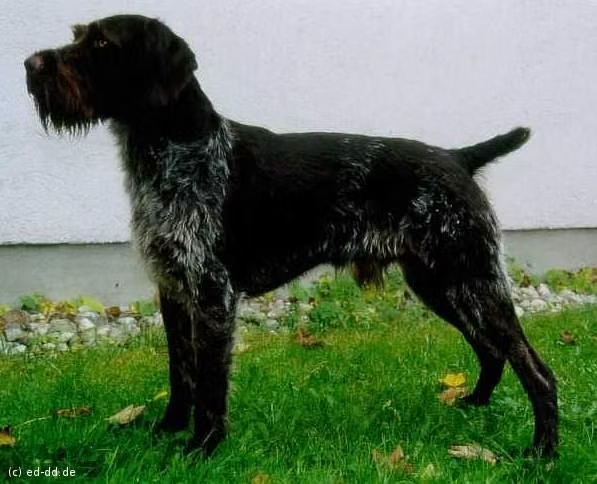
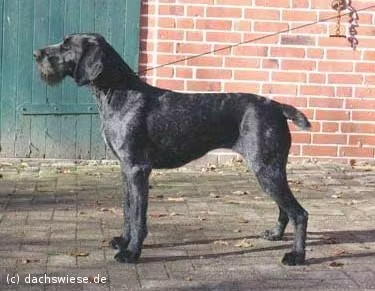
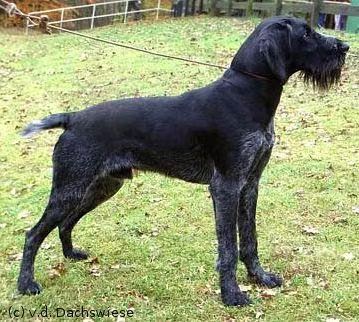
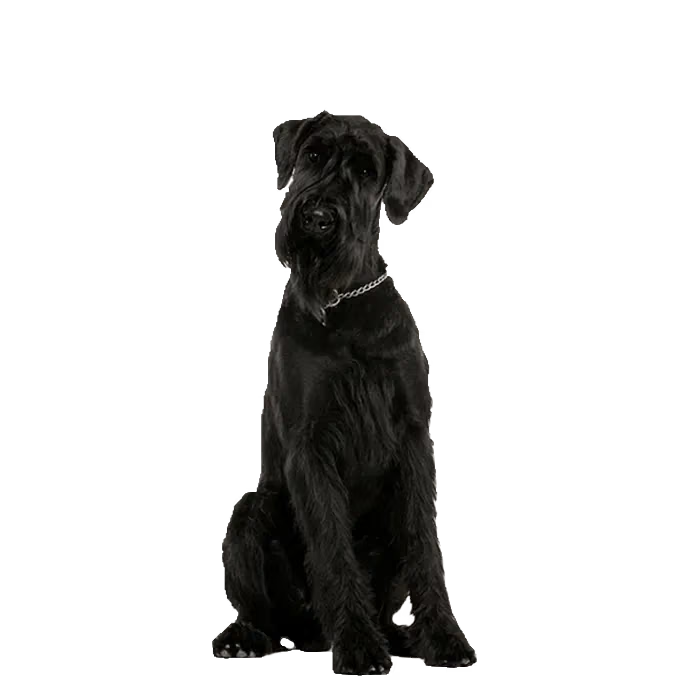
A few of the German Wirehaired Pointer profiles members have added to United Pet Club.
The German Wirehaired Pointer is a large gun dog from Germany with a harsh weatherproof coat, a lifespan of 12 to 14 years, and a working drive that demands at least one to two hours of vigorous exercise every day.
The German Wirehaired Pointer, known in Germany as the Deutsch Drahthaar, is a large versatile hunting dog built for all-day work across varied terrain. Its most recognisable features are the coarse, water-repellent outer coat, bushy eyebrows, and a thick beard on the muzzle, all of which protect the dog in cold water and heavy brush.
The breed bonds closely with its household and tends to be reserved with strangers, which gives it a natural watchfulness without the aggression that would make it difficult to manage. Its mental energy is equally high. A dog that does not receive daily engagement finds its own outlets, which typically means barking, chewing, or digging.
Adults live 12 to 14 years. The breed is uncommon in India and its exercise needs are genuinely high, making it a poor match for most flat-dwelling households unless the owner can commit to long daily outings regardless of the season.
| Item | Detail |
|---|---|
| Origin | Germany |
| Size | Large |
| Lifespan | 12 to 14 years |
| Group/role | Sporting and pointing gun dog (versatile hunting breed) |
| Good with | Family members it knows well; older, calm children; can live with other dogs when socialised early |
This dog suits hunters, runners, hikers, and people who train for dog sports and want a working companion for those activities. In the Indian context, independent houses with a compound give the dog more scope than a flat in a high-rise society. It can work for first-time owners who are genuinely prepared for daily rigorous exercise and consistent training. It is a poor fit for households where the dog is alone for most of the day, or for owners who cannot meet the exercise requirement in summer heat.
The German Wirehaired Pointer was developed in Germany in the late 1800s by crossing the Pudelpointer, the German Shorthaired Pointer, and rough-coated hunting stock to produce a single all-purpose gun dog, and was formally recognised in the early twentieth century.
The breeding programme behind the German Wirehaired Pointer drew on several existing types: the Pudelpointer, the German Shorthaired Pointer, and rougher-coated breeds such as the Griffon and the Stichelhaar. The purpose was to stop keeping multiple specialist breeds and produce one dog capable of pointing upland birds, trailing game, retrieving on land and in water, and working through dense cover. Selection focused on the harsh wiry coat above all else, since it was the feature that allowed the dog to work in cold water and heavy brush without injury.
The Deutsch Drahthaar breed club was established in 1902 in Germany. From the beginning, German breeders required registered dogs to pass working-performance tests rather than qualify on appearance alone. That link between registry and field ability has been maintained ever since, and it still distinguishes German-registered dogs from those registered under other schemes.
The dog reached the United States in the 1920s and was recognised by the American Kennel Club in 1959. In Germany, a separate register continues to operate under the Deutsch Drahthaar name with performance testing attached. The Kennel Club of India (KCI) recognises the breed under the German Wirehaired Pointer name.
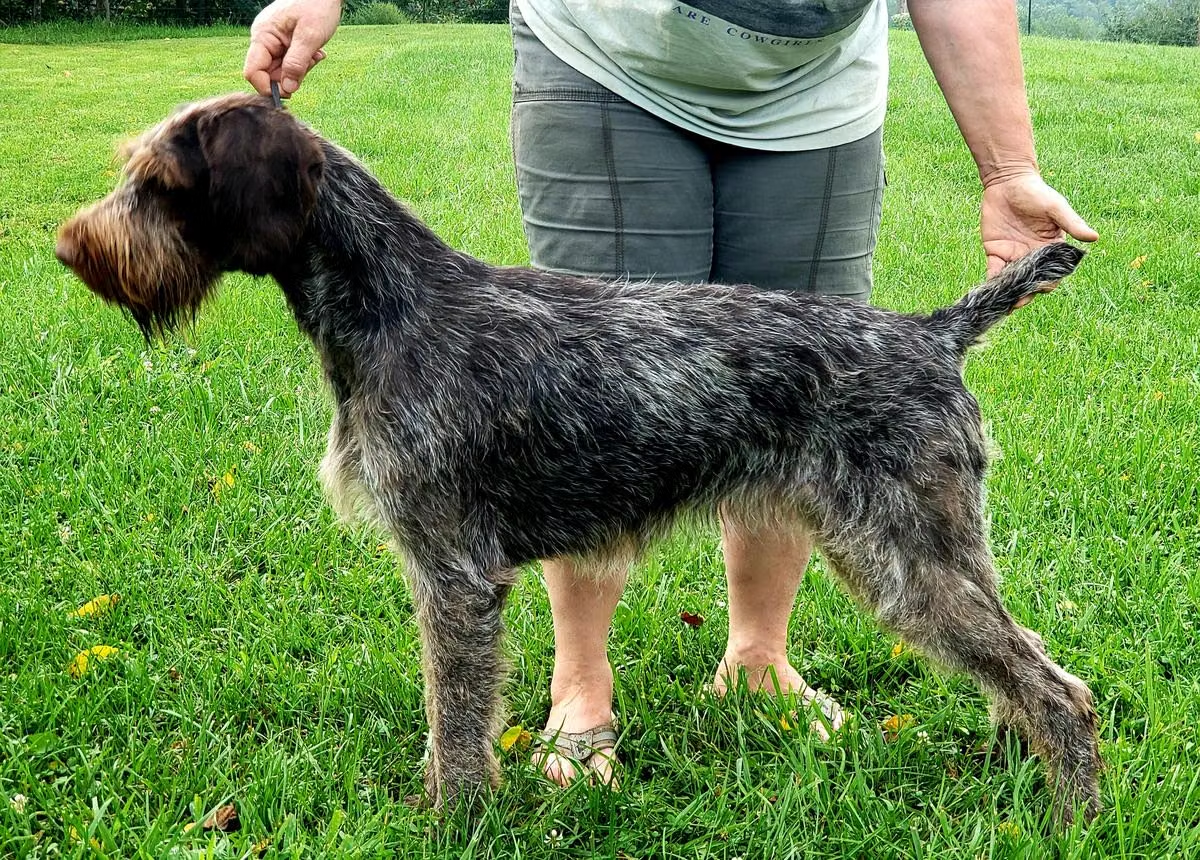
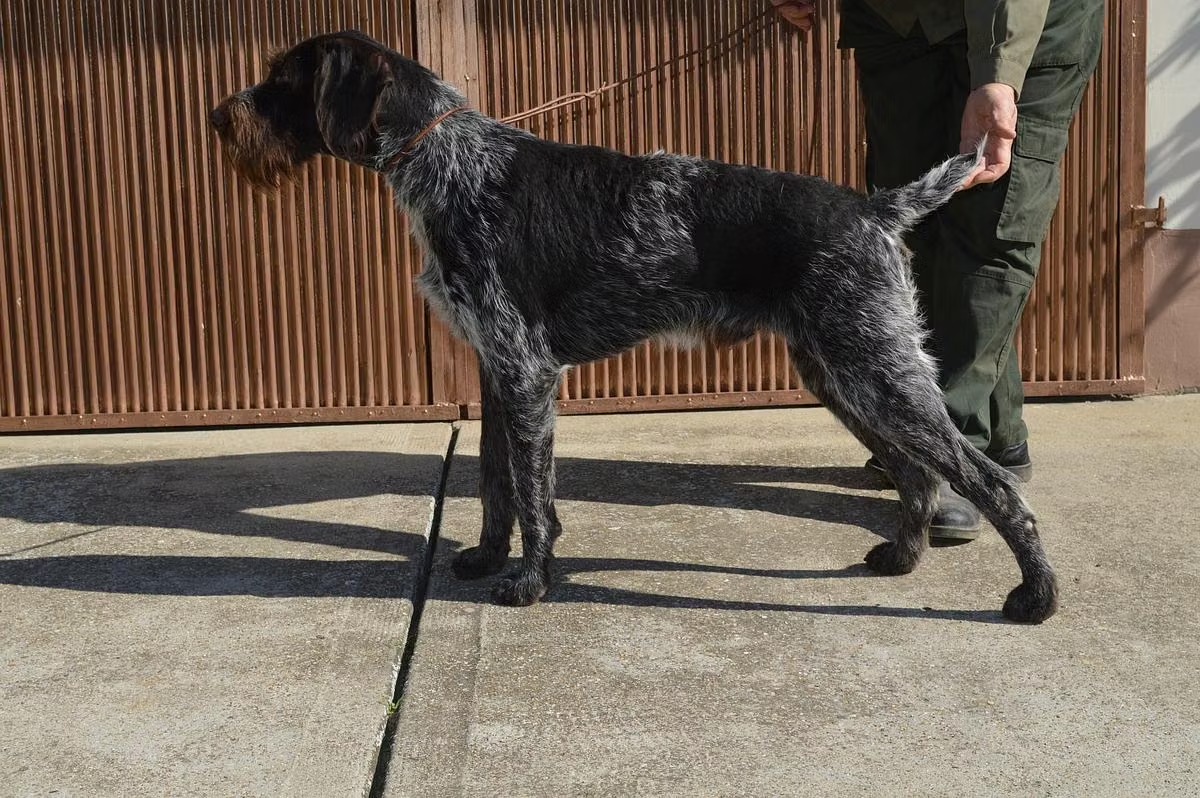
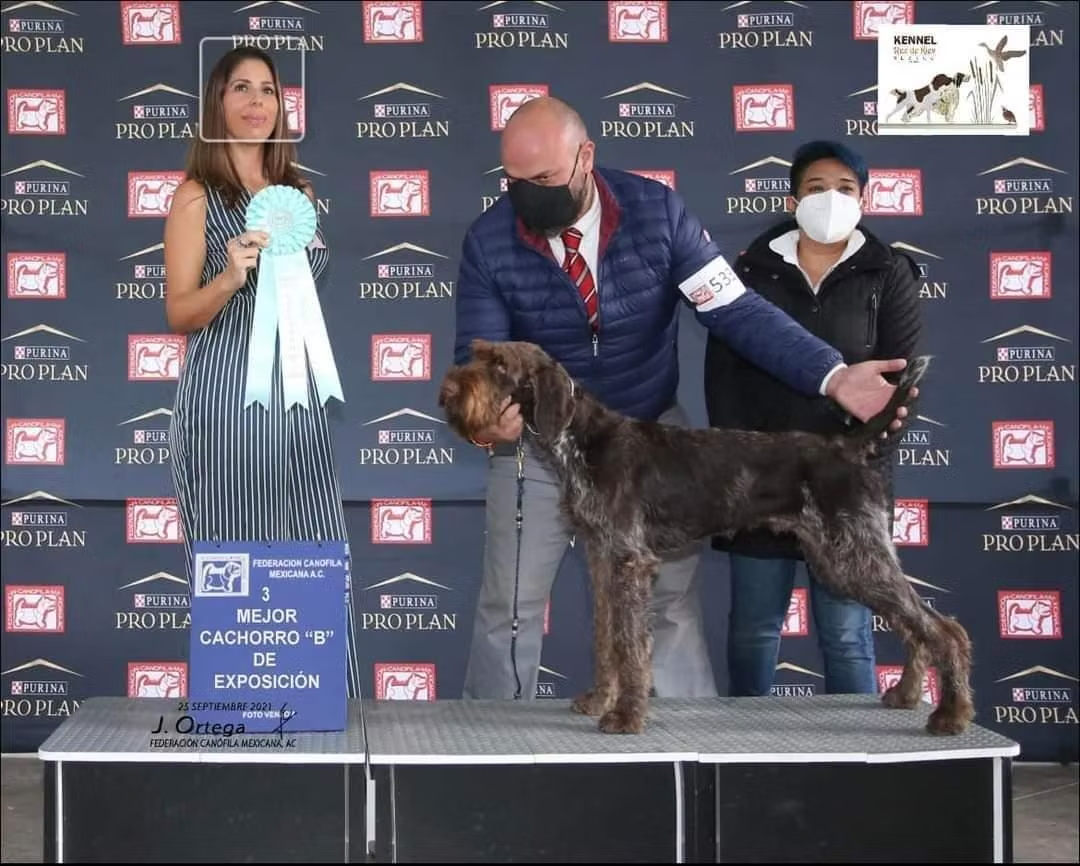
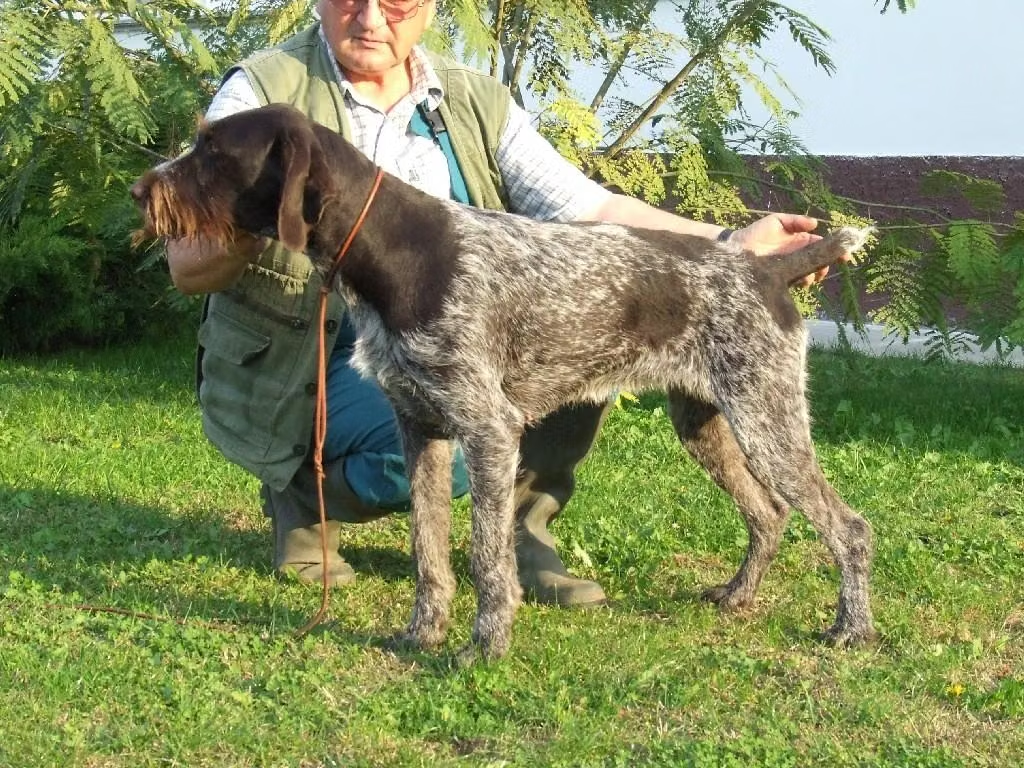
The German Wirehaired Pointer stands 56 to 66 cm at the shoulder and weighs 23 to 32 kg, with a harsh wiry coat, bushy eyebrows, and a beard that together give the dog a distinctive appearance.
The build is that of a working dog: slightly longer than tall, deep-chested, with strong legs built for endurance. The tail is docked in countries where docking is permitted. The face stands out because of the pronounced eyebrows and thick beard on the muzzle. The coat is the defining characteristic of the breed: a flat, harsh outer layer sits over a denser undercoat that thickens in cooler months. In India's warm climate this undercoat is less relevant for cold-water insulation, but the outer coat still shields the skin in heavy vegetation.
| Trait | Detail |
|---|---|
| Height | Males 61 to 66 cm at the shoulder; females 56 cm and above |
| Weight | 23 to 32 kg, with males heavier than females |
| Coat | Harsh, wiry, weather-resistant outer coat roughly 2.5 to 5 cm long over a dense undercoat; prominent eyebrows and beard on the face |
| Colours | Liver and white in spotted, ticked, or roan patterns; solid liver also occurs; the head is usually solid liver, sometimes with a white blaze |
| Eyes | Oval, brown, set beneath pronounced eyebrows, with an alert expression |
The outer coat is straight and harsh to the touch. It repels water and debris when the dog is working and lies close to the body. Seasonal shedding reduces the undercoat in warmer months. Colouring combines liver and white, with ticking and roan patterns both common. The head is typically solid liver. Solid black coats do not meet the breed standard.
The German Wirehaired Pointer is loyal to its household, reserved with strangers, and highly energetic, with a strong prey drive that requires active management in environments where street animals, cats, or small dogs are nearby.
The breed forms a close attachment to its people and is often particularly bonded to one person in the household. With familiar family it is affectionate and steady. With unfamiliar people it remains watchful and aloof. Well-socialised dogs keep this reserve within acceptable bounds and do not become aggressive, but the wariness is consistent and genuine.
The prey drive is strong and has specific implications for the Indian setting. Street cats, birds, squirrels, and even small street dogs can trigger a chase response in a split second. A reliable recall is a real safety requirement here, not a training nicety, and it is genuinely difficult to build in a high-prey-drive breed. A secure lead in any open or public space is the practical answer until recall is thoroughly proofed.
With children the dog knows and has been raised with, it is generally patient, though its size and energy mean younger children can be knocked over during play. Around other dogs it can coexist when introduced early. The working drive does not disappear in a pet home. Without daily outlets it redirects into barking, chewing, and destructive behaviour.
| Trait | Rating |
|---|---|
| Affection | 5 |
| Energy | 5 |
| Trainability | 4 |
| Vocalness | 3 |
| Shedding | 3 |
India's heat, monsoon humidity, and year-round tick load are the dominant care concerns for this breed; the coat needs moderate grooming, but the exercise requirement of at least one to two hours daily is non-negotiable.
India's climate is the most pressing practical challenge for this breed. Summers across north and central India regularly reach 40°C and above, and the German Wirehaired Pointer does not tolerate sustained heat well. The monsoon brings high humidity that promotes fungal skin infections, particularly under the beard, in the ear canals, and in any fold where moisture collects.
The wiry coat is less demanding than it looks, but it does need regular attention.
This is a high-output breed designed for full working days. In a pet home it needs at least one to two hours of vigorous activity daily, beyond routine toilet walks.
Feed a complete diet suited to a large, active dog, split across two meals daily, and adjust quantities to the individual dog's workload and body condition; the deep chest makes splitting meals a sensible precaution against bloat.
A complete, balanced dog food formulated for large or sporting breeds covers the German Wirehaired Pointer's nutritional needs. Protein and fat support the working build and energy demands. Always keep fresh water available; in India's heat a dog dehydrates quickly after outdoor activity and must be able to drink freely. Split the daily ration across two meals rather than one large feeding, and avoid strenuous exercise for at least an hour before and after eating. The deep-chested build puts this breed at meaningful risk of bloat (gastric dilatation-volvulus), and a single large meal combined with exercise is a known risk factor.
| Life stage | Amount per day | Meals per day |
|---|---|---|
| Puppy (2 to 6 months) | Per product label for projected adult weight, divided across meals | 3 to 4 |
| Young dog (6 to 12 months) | Per label, tapering toward adult amount | 2 to 3 |
| Adult (1 to 7 years) | Roughly 300 to 400 g of dry food; more for active or working dogs | 2 |
| Senior (7+ years) | Slightly reduced if activity drops; monitor body condition | 2 |
Keep treats within about 10 per cent of the daily calorie total so they do not displace balanced nutrition or add excess weight. Small, low-calorie rewards work well for a breed that trains frequently and learns quickly. Dogs eating a complete commercial food generally do not need additional supplements. Consult a veterinarian before adding any joint, skin, or fish-oil products, as individual needs vary and over-supplementation can cause harm.
The German Wirehaired Pointer generally lives 12 to 14 years and is hardy, but owners in India should pay close attention to ear infections, tick-borne illness, heat management, and bloat alongside the inherited conditions that responsible breeders screen for.
The breed has solid constitution and most individuals live 12 to 14 years with proper care. Because the German Wirehaired Pointer is uncommon in India, finding a veterinarian with specific experience of the breed can be harder outside the major metros. In tier-2 cities and smaller towns, a good general small-animal vet is more realistic to find than a breed specialist. Establishing that relationship early, before a health issue arises, is worthwhile. The conditions listed below are seen in the breed; they are not certainties for any individual dog.
Tick-borne infections such as babesiosis and ehrlichiosis are a genuine and common risk for outdoor dogs in India. Monthly tick prevention is not optional for this breed, and any episode of sudden lethargy, fever, or pale gums after outdoor activity warrants prompt veterinary assessment.
| Condition | Signs | Note |
|---|---|---|
| Hip dysplasia | Stiffness, limping, difficulty rising, reluctance to jump | Inherited joint malformation; responsible breeders screen both parents |
| Elbow dysplasia | Front-leg lameness after exercise | Also screened in responsible breeding lines |
| Eye conditions (cataracts, retinal disease) | Cloudiness, vision changes, bumping into objects | Routine eye checks help identify problems early |
| Ear infections | Head shaking, scratching, discharge, odour | Drop ears and India's humidity raise the risk; dry ears thoroughly after every water contact or monsoon walk |
| Bloat (gastric dilatation-volvulus) | Hard swollen abdomen, repeated retching without vomiting, restlessness, obvious distress | A medical emergency in deep-chested breeds; requires immediate veterinary care |
The German Wirehaired Pointer is intelligent and works well with a consistent handler, but building a reliable recall and solid impulse control is a priority from early on, particularly given the street-animal environment in most Indian cities.
This breed learns quickly and genuinely wants to work alongside its handler. The difficulty is that it is also independent, and a dog without clear guidance from puppyhood will make its own decisions. In the Indian urban setting, where street dogs, cats, crows, and other animals are a constant presence, a weak recall is a safety problem. A dog that bolts after a street animal on a busy road is in serious danger.
Harsh corrections tend to make this breed evasive or shut down. Clear rules, consistent reward-based training, and short varied sessions work better. Keep individual sessions to 10 to 15 minutes and end while the dog is still engaged. Early socialisation to traffic noise, crowds, auto-rickshaws, motorbikes, and other dogs is important for a breed that is naturally wary of unfamiliar people and situations.
Female German Wirehaired Pointers reach sexual maturity in the first year but responsible breeders wait until the dog is mature and health-tested, with litters averaging 7 to 9 puppies after a gestation of about 63 days.
Females usually reach sexual maturity between 6 and 12 months, but responsible breeders delay mating until the dog is physically and mentally mature, generally around the second year, and until hip, elbow, and eye screenings have been completed on both parents. Gestation lasts approximately 63 days from conception. Litters typically produce 7 to 9 puppies, though smaller and larger litters do occur.
Newborns are blind and deaf and are entirely dependent on the mother for warmth and nutrition. Eyes open at around 10 to 14 days. Weaning onto solid food begins near 3 to 4 weeks and is usually complete by 7 to 8 weeks. Early gentle handling and exposure to everyday sights and sounds during the first weeks help produce stable adults. Puppies can go to new homes from 8 weeks onwards.
The breed is uncommon in India, and prospective owners should expect to contact KCI-registered breeders directly and be prepared for a waiting period. Verify that the breeder can show health clearances on the parents. Breeders who prioritise temperament and health test results alongside appearance are the right starting point.
| Metric | Value |
|---|---|
| Sexual maturity | 6 to 12 months (breeding recommended at around 2 years) |
| Gestation | About 63 days |
| Average litter size | 7 to 9 puppies |
| Eyes open | About 10 to 14 days |
| Weaning | About 7 to 8 weeks |
| Go-home age | 8 weeks or later |
Municipal licences cover the paperwork; a free United Pet Club record is what actually connects your German Wirehaired Pointer to your phone.
Municipal corporations in Delhi, Mumbai, Bengaluru, and numerous other cities require dogs to be registered or licensed under their by-laws, and a United Pet Club profile complements whichever rules apply where you live. The profile holds your contact information against your German Wirehaired Pointer for its entire life, at no charge whatsoever. Registering your dog requires only a few minutes.
A microchip without a registration is merely a number under the skin. File your German Wirehaired Pointer's fifteen digit number with United Pet Club and it becomes a working address: free for life, open to every chip brand, and searchable from any clinic or shelter in the country or abroad. Microchip registration first, the free account alongside.
Create a free United Pet Club account, enter your German Wirehaired Pointer's details along with a photograph, and save the profile. The lifetime plan maintains the record at no cost, and any municipal licence you hold sits alongside it rather than replacing it.
Enter the fifteen digit chip number into your free account together with your current address, phone number, and email. The lifetime plan covers the registration and every subsequent update without charge, whatever the chip's manufacturer.
Several municipal corporations, Delhi and Mumbai among them, require dogs to be licensed under local by-laws. The United Pet Club profile is separate and voluntary, and it is the record a finder anywhere can actually search, free of cost.
Nothing whatsoever. The free lifetime plan includes the profile, the microchip record, and unlimited updates, with no renewal fee at any point.
Common questions about the German Wirehaired Pointer cover its size, suitability for Indian conditions, exercise demands, health needs, compatibility with other pets, and how to find one in India.
Males stand 61 to 66 cm at the shoulder and females are somewhat smaller, typically 56 cm and above. Most dogs weigh between 23 and 32 kg.
It copes poorly with sustained heat above 35°C. Outdoor activity during afternoon hours must be avoided entirely in summer, and the dog needs access to a cool, ventilated space indoors. The breed is genuinely heat-sensitive and this is the most important management consideration for keeping one in India.
It can work in a flat only with exceptional commitment to daily exercise. Without a compound, the owner must take the dog out for at least one to two hours of vigorous activity every day, in addition to toilet walks. Most flat-dwellers in Indian metros find this impractical over the long term, and an under-exercised dog of this breed becomes difficult to live with.
The typical lifespan is 12 to 14 years, with regular veterinary care, appropriate nutrition, and daily exercise.
They generally coexist with dogs they have been raised alongside. The strong prey drive makes them likely to chase cats, birds, and small animals, so careful introductions and ongoing supervision are needed in any home with cats or smaller pets.
Shedding is moderate. It increases during seasonal coat changes, and weekly brushing keeps loose hair under reasonable control.
The breed is uncommon in India. Contact the Kennel Club of India (KCI) for a list of registered breeders and expect a waiting period. Avoid breeders who cannot provide health clearances on both parents or who are not KCI-registered.