The German Pinscher is a spirited, confident companion known for its keen intelligence, athleticism, and fearless watchdog instincts.
How the German Pinscher coat is built, and what that means when you groom it.
A few of the German Pinscher profiles members have added to United Pet Club.
The German Pinscher is a medium-sized German working dog with high intelligence, strong athleticism, and watchdog instincts, suited to active owners who can give it daily exercise and consistent training.
The German Pinscher is a medium-sized dog from Germany, built lean and square with a short, glossy coat. It is one of the older German breeds and sits behind several more familiar dogs in pedigree, including the Doberman and the Miniature Pinscher. The name pinscher refers to a type of working, terrier-like dog kept to control vermin on farms and stable yards.
This is a spirited, confident animal with a strong drive to stay busy. It bonds closely with its household and tends to be reserved with strangers, which makes it an effective watchdog for a family home. Owners describe it as alert and quick to react, with a high energy level that needs a daily outlet.
The German Pinscher suits an experienced, active owner more than a first-time handler. It responds well to clear structure and regular work, and it can turn bored or wilful without enough mental and physical activity. The short coat is an advantage in the Indian heat, though the dog still needs shade and water and exercise in the cooler hours.
| Attribute | Detail |
|---|---|
| Origin | Germany |
| Size | Medium |
| Lifespan | 12 to 14 years |
| Group / role | Working and companion; historical vermin control and watchdog |
| Good with | Older children and committed, active families; supervise with small pets given prey drive |
This breed works best for people who want an involved, athletic dog and have time for daily exercise and training. It does well in homes with a secure compound or yard, though it can live in a flat if it gets enough activity. Households after a quiet, low-maintenance pet, or owners away for long hours, are usually a poor match. Its short coat copes reasonably with warm weather but offers no sun protection, so avoid the midday heat.
The German Pinscher developed in Germany as a farm and stable dog used for vermin control, and it contributed to the development of the Doberman and Miniature Pinscher before nearly dying out and being revived in the mid-20th century.
The German Pinscher comes from Germany, where smooth-coated pinscher-type dogs were kept on farms and in stable yards to kill rats and other vermin. These working dogs were valued for speed, sharp senses, and a willingness to confront prey rather than for any fixed appearance.
During the 19th century, breeders in Germany began to standardise the type. The German Pinscher and the wire-coated Schnauzer were at one stage regarded as the same breed differing only in coat, and they were bred together before being separated into distinct lines.
The breed had an outsized influence on later German dogs. It is part of the background of the Doberman, developed by Louis Dobermann in the late 1800s, and it is closely tied to the Miniature Pinscher, a smaller relative. Breed clubs in Germany worked to formalise the German Pinscher around the turn of the 20th century.
The two World Wars cut the population sharply, and registrations nearly stopped. The breed was rebuilt in West Germany in the mid-20th century, with work in the 1950s that drew on a small number of surviving dogs to re-establish the line. From that base the German Pinscher spread to other countries, and a small number are now registered with the Kennel Club of India.
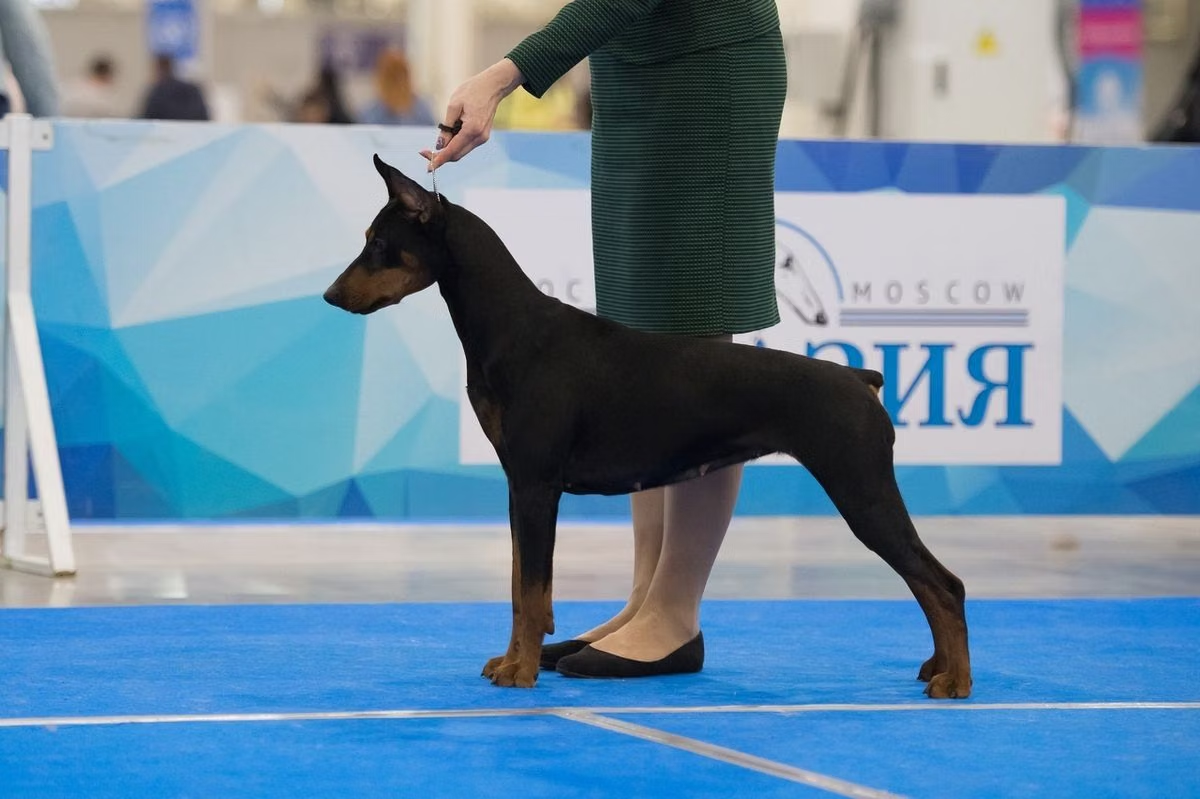
The German Pinscher is a square, muscular medium dog of about 43 to 51 cm at the shoulder with a short, dense, shining coat in solid red or black-and-tan.
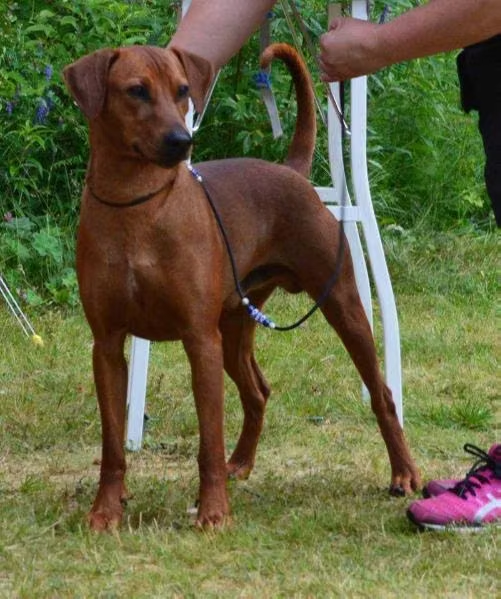
The German Pinscher has a balanced, square outline, with body length roughly equal to height at the shoulder. The build is muscular but elegant, with a deep chest, clean lines, and a smooth, flowing gait. The head is wedge-shaped, the ears set high and folded, and the eyes dark and oval. The tail is carried high. Under the current standard the ears and tail are kept natural.
| Trait | Standard |
|---|---|
| Height | About 43 to 51 cm at the shoulder |
| Weight | About 11 to 20 kg |
| Coat | Short, dense, smooth, with a glossy sheen |
| Colours | Solid red shades, or black with tan or red markings |
| Eyes | Dark, oval, medium-sized |
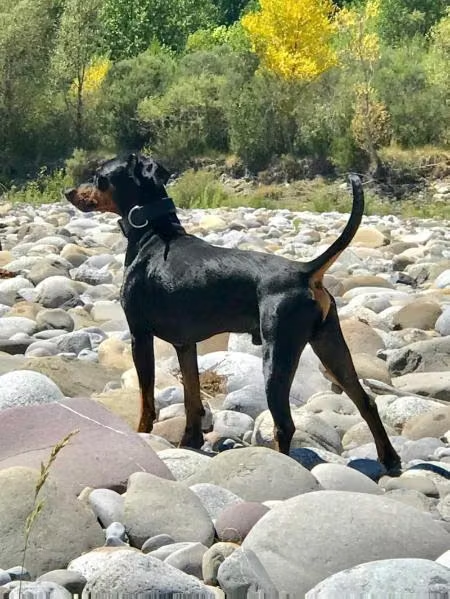
The coat is short and lies close to the body with a hard, shining texture, which suits a warm climate. Two colour patterns are standard: solid red ranging from a deep stag red to a lighter shade, and black with sharply defined tan or red markings on the muzzle, chest, legs, and over the eyes. The short coat needs little grooming and sheds at a low to moderate level through the year.
The German Pinscher is spirited, intelligent, and confident, devoted to its family and watchful with strangers, with high energy and a strong prey drive that call for firm, consistent handling.
The German Pinscher is lively, intelligent, and self-assured. It forms a strong attachment to its household and likes to be part of daily activity rather than left on its own. With family members it is affectionate and playful, often staying close and tracking what everyone is doing.
With strangers the breed is reserved and watchful, which makes it a reliable alarm dog. It is quick to notice anything out of place and will sound off, though it is not a constant barker when properly settled. Early and ongoing socialisation is important in a home that sees frequent visitors, domestic help, and delivery callers, so the dog learns to tell a genuine concern from an ordinary visitor.
With other pets the picture is mixed. A German Pinscher raised with another dog can live alongside it, but the breed has a strong prey drive and may chase cats, rodents, or small animals. The same instinct, plus a confident streak, means it can test boundaries. It needs an owner who sets clear, fair rules and keeps to them.
| Trait | Rating |
|---|---|
| Affection | 4 |
| Energy | 5 |
| Trainability | 4 |
| Vocalness | 3 |
| Shedding | 2 |
The German Pinscher is low-maintenance to groom but needs substantial daily exercise and mental work, plus a secure environment that keeps its prey drive in check.
The German Pinscher does best in a home with a securely fenced yard or compound, since it can jump and dig and will follow a scent or small animal. It can adapt to flat living if exercise needs are met, but it should not be left alone for long stretches, which can lead to boredom and unwanted behaviour. During the hot season keep the dog cool indoors in the middle of the day and provide constant water.
Feed the German Pinscher a complete diet matched to its life stage and activity level, usually around 1 to 2 cups of quality dry food a day split into two meals.
The German Pinscher is an active medium dog and does well on a complete, balanced diet with adequate protein to support muscle and energy. Choose a food formulated for the dog's life stage, and adjust the amount to keep the dog lean, with ribs easy to feel but not see. Active working dogs may need more than the figures below, while less active or older dogs need less. Store dry food sealed against the humidity.
| Life stage | Amount per day | Meals |
|---|---|---|
| Puppy (2 to 6 months) | About 1 to 1.5 cups, by weight and brand | 3 to 4 |
| Junior (6 to 12 months) | About 1.5 to 2 cups | 2 to 3 |
| Adult | About 1 to 2 cups | 2 |
| Senior | About 1 to 1.5 cups, adjusted for activity | 2 |
Keep treats to no more than about 10 percent of daily calories so they do not unbalance the diet or add weight. Fresh, clean water should be available at all times. Supplements are usually unnecessary on a complete diet; discuss any joint, skin, or other supplement with a veterinarian before adding it.
The German Pinscher is generally a healthy, hardy breed with a typical lifespan of 12 to 14 years, though responsible owners should watch for a few hereditary and eye conditions.
The German Pinscher is a sturdy breed with a typical lifespan of 12 to 14 years. The relatively small gene pool from its mid-century revival makes health screening of breeding stock important. Most dogs stay healthy with good care, but a few conditions appear in the breed more than in the general dog population. In Indian conditions, tick-borne disease and heat stress are added everyday concerns.
| Condition | Signs | Note |
|---|---|---|
| Hip dysplasia | Stiffness, limping, trouble rising | Screen breeding dogs; keep weight in check |
| Hereditary cataracts | Cloudy eye, vision loss | Detected on eye exams; can be inherited |
| Von Willebrand disease | Excess bleeding from minor cuts or surgery | A blood-clotting disorder; DNA testing exists |
| Heart disease | Coughing, tiring easily, fainting | Detected on veterinary cardiac checks |
The German Pinscher is highly trainable and quick to learn, but its intelligence and independent streak call for consistent, reward-based training started early.
The German Pinscher is intelligent and learns quickly, which makes training rewarding for an owner who stays consistent. The same sharp mind comes with an independent, confident streak, so the dog will test rules and lose interest in dull, repetitive drills. Short, varied sessions hold its attention better than long ones, and in a bilingual household it helps to pick one language for cues. Early socialisation with people, places, and other animals is important to channel its watchful nature and prey drive.
The German Pinscher reaches breeding maturity at around 2 years, carries litters of roughly 4 to 8 puppies after a gestation of about 63 days, and benefits from health screening of both parents.
Responsible breeding of the German Pinscher centres on health and temperament. Although dogs can reproduce younger, breeders generally wait until both parents are physically and behaviourally mature, around 2 years of age, so that hip, eye, and clotting screening can be completed. Given the breed's narrow founding population after its revival, careful pedigree and genetic diversity management matters.
Gestation runs about 63 days. Litters are typically medium in size. The dam usually whelps without help, but a calm, clean, cool space and veterinary backup should be arranged. Puppies are weaned at around 6 to 8 weeks, and early handling and socialisation in the litter set the foundation for a stable adult temperament. Puppies should not leave the litter before about 8 weeks. Kennel Club of India registration supports traceable pedigrees.
| Metric | Value |
|---|---|
| Breeding maturity | About 2 years |
| Gestation | About 63 days |
| Litter size | About 4 to 8 puppies |
| Weaning age | 6 to 8 weeks |
| Recommended health tests | Hips, eyes, von Willebrand / clotting |
Municipal licences cover the paperwork; a free United Pet Club record is what actually connects your German Pinscher to your phone.
Municipal corporations in Delhi, Mumbai, Bengaluru, and numerous other cities require dogs to be registered or licensed under their by-laws, and a United Pet Club profile complements whichever rules apply where you live. The profile holds your contact information against your German Pinscher for its entire life, at no charge whatsoever. Registering your dog requires only a few minutes.
A microchip without a registration is merely a number under the skin. File your German Pinscher's fifteen digit number with United Pet Club and it becomes a working address: free for life, open to every chip brand, and searchable from any clinic or shelter in the country or abroad. Microchip registration first, the free account alongside.
Create a free United Pet Club account, enter your German Pinscher's details along with a photograph, and save the profile. The lifetime plan maintains the record at no cost, and any municipal licence you hold sits alongside it rather than replacing it.
Enter the fifteen digit chip number into your free account together with your current address, phone number, and email. The lifetime plan covers the registration and every subsequent update without charge, whatever the chip's manufacturer.
Several municipal corporations, Delhi and Mumbai among them, require dogs to be licensed under local by-laws. The United Pet Club profile is separate and voluntary, and it is the record a finder anywhere can actually search, free of cost.
Nothing whatsoever. The free lifetime plan includes the profile, the microchip record, and unlimited updates, with no renewal fee at any point.
Common questions about the German Pinscher's size, temperament, care needs, lifespan, suitability, and availability.
It is a medium dog standing about 43 to 51 cm at the shoulder and weighing roughly 11 to 20 kg.
It is spirited, intelligent, confident, and energetic. The breed is devoted to its family, reserved and watchful with strangers, and has a strong prey drive.
Grooming is easy thanks to the short coat, but the breed is demanding on exercise and training. It needs one to two hours of activity a day and consistent handling, which makes it better for active, experienced owners.
The typical lifespan is 12 to 14 years with good care, exercise, and routine veterinary attention.
It can do well with older children in an active household. Care is needed with small pets because of its prey drive, and early socialisation helps it live with other dogs.
The breed is uncommon in India, so prospective owners may need to wait for a litter from a Kennel Club of India registered breeder. Avoid buying from unregulated sellers.
No. The short, smooth coat sheds at a low to moderate level and needs only weekly brushing to stay neat.