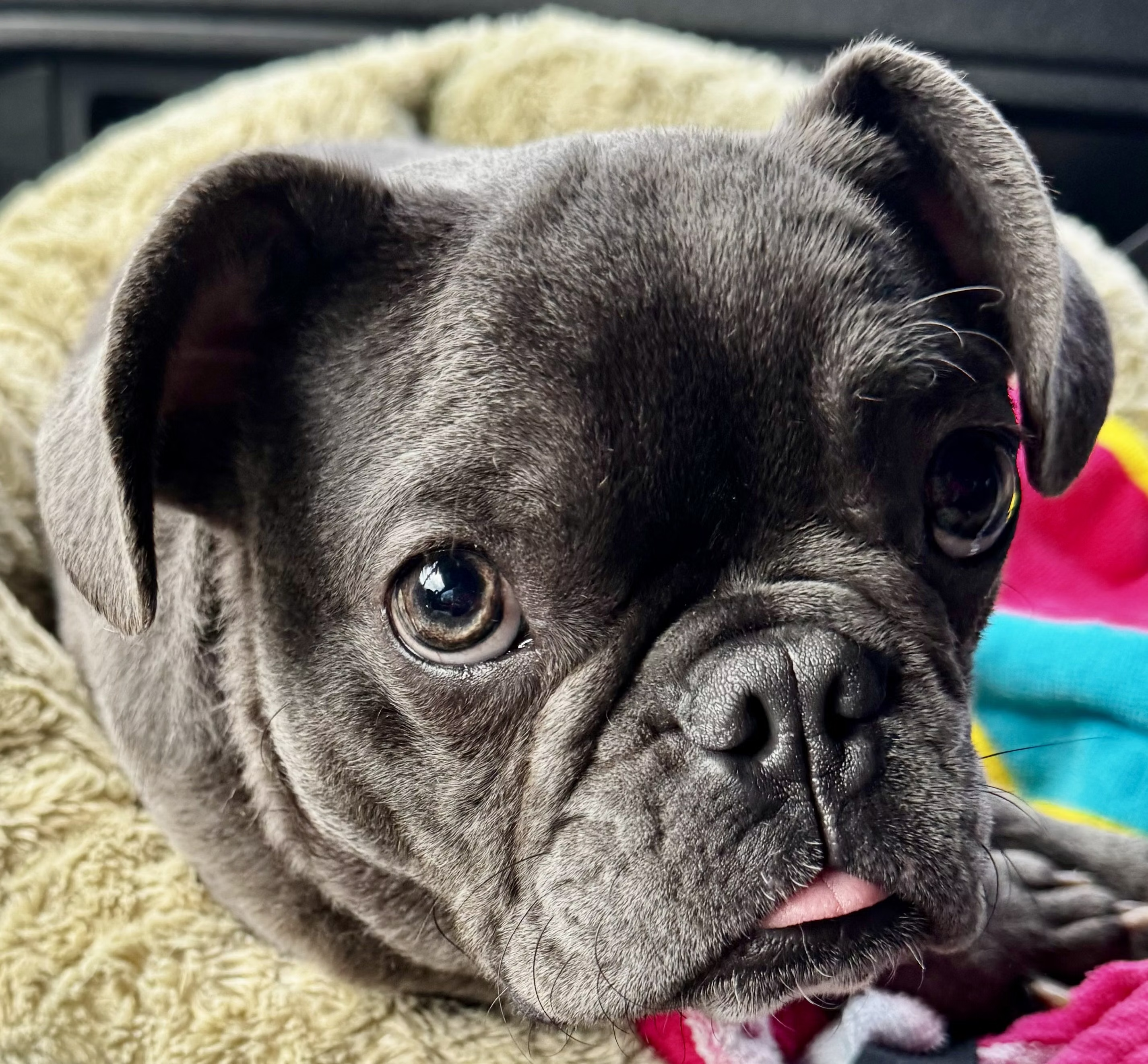
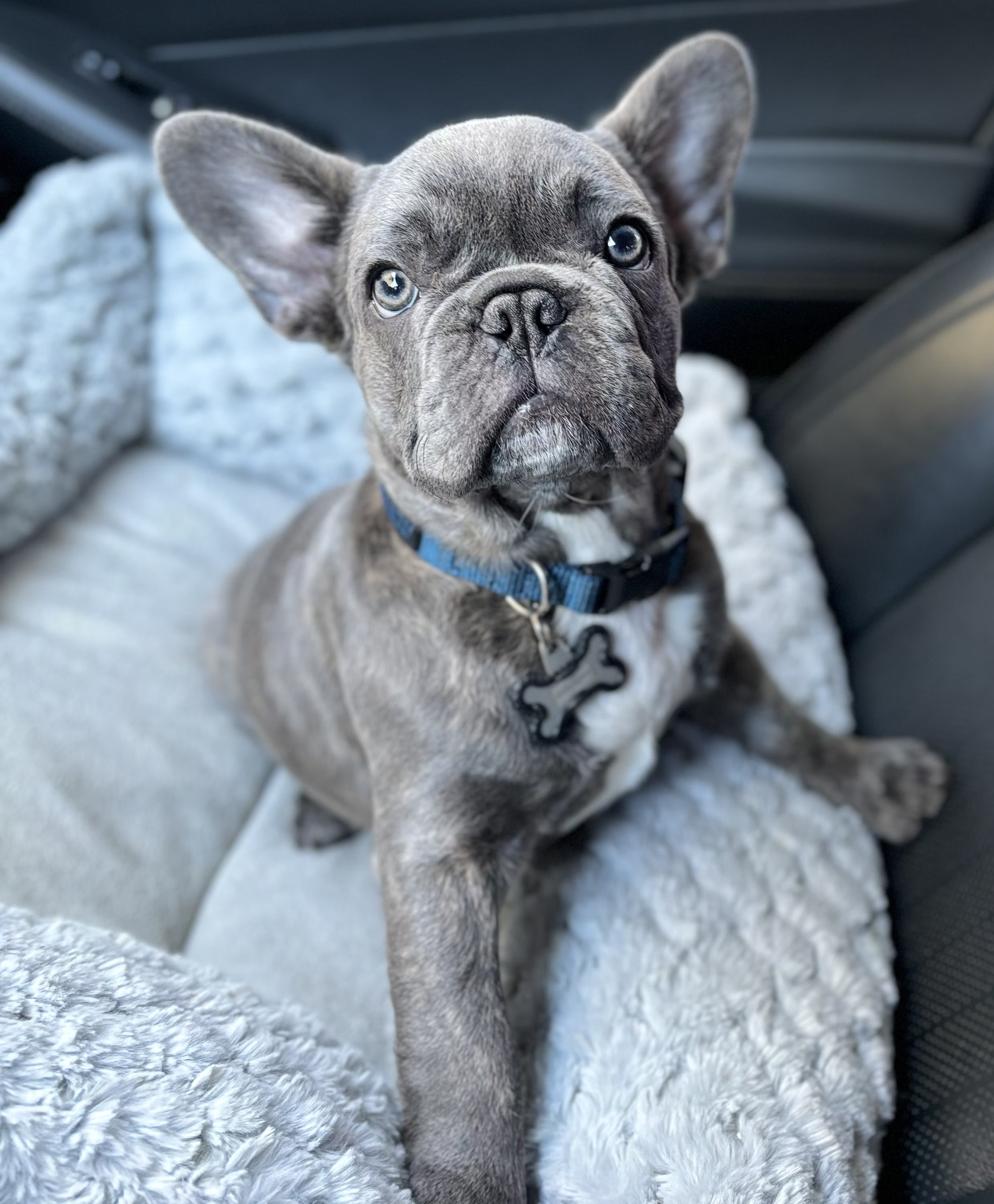
The French Bulldog is a playful, affectionate breed with signature bat ears and an adaptable, easygoing charm that suits city living.
How the French Bulldog coat is built, and what that means when you groom it.
A few of the French Bulldog profiles members have added to United Pet Club.
The French Bulldog is a small, affectionate companion breed with bat ears and a compact body, popular in flats across Indian cities but sensitive to heat.
The French Bulldog is a small companion breed weighing under 12.7 kg (28 lb) and standing about 28 to 33 cm (11 to 13 in) at the shoulder, with a heavy-boned, compact frame, a short muzzle, and upright, rounded ears known as bat ears. The smooth single coat lies close to the body and comes in a range of solid and patterned colours.
The breed was developed in nineteenth-century France from small bulldog stock and became a fixture of city households there. It was bred purely for companionship rather than work, and the temperament reflects that: French Bulldogs are friendly, affectionate, playful, and alert, forming close bonds with the people they live with.
Small flats and compact urban homes suit the breed well, which is a big part of why it has caught on in Indian metros such as Mumbai, Bangalore, and Delhi. It needs only modest daily exercise and is quieter than most small breeds. Its flat face makes it sensitive to heat, though, and that single trait shapes most of the day-to-day care an owner in India needs to think about, especially through the summer months.
| Attribute | Detail |
|---|---|
| Origin | France |
| Size | Small (up to 12.7 kg / 28 lb) |
| Lifespan | 10 to 12 years |
| Group / role | Companion dog |
| Good with | Families, singles, seniors, apartment households |
The French Bulldog fits an owner who wants a small, easygoing companion rather than a dog for long runs or treks. It works well in flats across Indian cities, for first-time dog owners, and for households where someone is home for much of the day, since the breed does not do well left alone for long hours. Anyone in a hot part of the country needs to plan seriously around summer heat management, since this breed cannot handle high temperatures the way many other dogs can. Regular health monitoring is also part of owning a flat-faced breed.
The French Bulldog descends from small English bulldogs brought to France in the 1800s, where it was refined into the bat eared companion breed now popular in urban India.
Long before Paris, this breed's ancestors were working the bull rings of England. Once bull baiting was outlawed there in 1835, the old bulldog no longer had a job, and breeders started shrinking it down into a companion animal instead. Nottingham's lace industry, along with towns across the English Midlands, took a particular shine to these smaller bulldogs.
Then came the Industrial Revolution, and with it a wave of lace workers who crossed over to France looking for work, small dogs in tow. By the later decades of the nineteenth century, the toy bulldogs had built a real following in Normandy and Paris, and local breeders began crossing them with French stock, gradually settling on a type of their own.
What made that type distinctive was the ear: upright and rounded rather than the folded rose ear of the English original, and it soon became the breed's calling card. Paris took to the dog quickly, first among shopkeepers and cafe workers, then among artists and the well-off, and by the end of the century breed clubs had formed to put the standard in writing.
America got its first French Bulldogs in the 1890s, and when the French Bull Dog Club of America organised in 1897, its members insisted on the upright ear over the English rose ear, locking it in for good. Companionship has stayed the breed's only real job ever since, and today it counts among the small breeds gaining ground fastest in Indian cities, where the Kennel Club of India registers a growing number of litters each year.
The French Bulldog is a small, muscular dog with a flat face, large upright bat ears, a short smooth coat, and a compact, heavy boned body.
Pick up a French Bulldog and the weight catches you off guard: the frame is dense with muscle under a deceptively small footprint. The head is broad and square for the dog's size, the muzzle short, with heavy wrinkling above the nose and a jaw that carries a slight undershot bite. Everything about the ears sets the breed apart: wide at the base, rounded on top, standing fully upright, and recognisable from across a room. The body stays short and muscular throughout, with a flat topline, a deep chest, and a stubby tail that runs either straight or with a screw.
| Trait | Standard |
|---|---|
| Height | 28 to 33 cm (11 to 13 in) at the shoulder |
| Weight | Up to 12.7 kg (28 lb) |
| Coat | Short, smooth, fine, single layer |
| Colours | Brindle, fawn, white, cream, and combinations such as brindle and white |
| Eyes | Dark, round, set wide and low on the skull |
Upkeep on the coat itself is minimal: short, fine, smooth, one layer, with almost no undercoat to speak of. The standard palette covers brindle, fawn, white, and cream, plus pied combinations where patches of colour sit against a white base. A handful of coat types, solid black, liver, and merle among them, do not meet most breed club standards and get turned away in the show ring. Where the coat asks little, the facial folds ask more: keeping them clean and properly dried takes real consistency, particularly once the monsoon humidity sets in.
French Bulldogs are friendly, affectionate, and playful companions that bond closely with their household, stay fairly quiet, and suit close quarters flat living.
Human company is the one thing a French Bulldog cannot get enough of. Indoors it is affectionate and playful, usually choosing to sit near its favourite person rather than off on its own, and it will register a visitor at the door without turning into a nuisance about it, since persistent barking is simply not typical of the breed and a dependable guard dog it is not.
Family life tends to bring out a gentle, patient side, and supervised time with children usually goes smoothly. Strangers are more likely to get curiosity than caution from most individuals. The breed generally shares a home well with other dogs and cats, especially when introduced young, though a particular dog might still guard a favourite toy from time to time.
Long hours alone are where this breed struggles, and whining or chewed furniture can follow if it happens often, which is worth factoring in for owners who work long days. A predictable routine and early socialisation both cut that risk down. Add in a stubborn side and a fair amount of comic timing, and it becomes clear why patient, reward-based training beats repetition with this breed every time.
| Trait | Rating |
|---|---|
| Affection | 5 |
| Energy | 2 |
| Trainability | 3 |
| Vocalness | 2 |
| Shedding | 3 |
French Bulldogs need light daily exercise, simple coat care, and serious heat management through India's hot summer months and humid monsoon season.
French Bulldog care in India boils down to a short list: keep the flat face comfortable, keep the skin folds clean, and stay ahead of heat that can turn genuinely dangerous for weeks at a stretch. Handle those three well and there is little else to worry about, since the breed asks very little otherwise and settles happily into flat life.
The French Bulldog is built for indoor living and adapts well to flats, which suits the housing common in Indian cities. It needs a cool, well-ventilated space, since it cannot regulate its own temperature efficiently, and air conditioning or at least a fan running through the hottest months makes a real difference to its comfort and safety. Power cuts are worth planning for in areas where they still happen, since even a short stretch without cooling can be risky for this breed on a hot day. The dog should never be left outdoors in the sun, and it is a poor swimmer, since its heavy front and short muzzle make staying afloat difficult. Keep water available at all times and never leave the dog in a parked car.
French Bulldogs do best on a measured, complete diet fed in two daily meals, with portions controlled to prevent the weight gain the breed is prone to.
A complete, life-stage-appropriate diet is non-negotiable for a French Bulldog, and portion size deserves more attention here than with most breeds. Weight creeps on easily, and every extra kilogram adds pressure to a breathing system that already works harder than it should. Measuring meals rather than leaving food out, and keeping the dog lean enough that the ribs are easy to find under a thin layer of fat, both help keep that in check.
| Life stage | Amount per day | Meals |
|---|---|---|
| Puppy (2 to 6 months) | Per puppy-formula label, by weight | 3 to 4 |
| Puppy (6 to 12 months) | Per puppy-formula label, by weight | 2 to 3 |
| Adult | About 1 to 1.5 cups of dry food | 2 |
| Senior | Reduced calories, adjusted to activity | 2 |
Cap treats at roughly 10 percent of the day's calories, and trim regular meals to make room for them. Most Frenchies do fine without any added supplements on a good complete diet, though a vet may suggest one for a specific problem, joint support being a common example. Fresh water needs to be out constantly, especially through the hotter months, in a bowl shallow enough that the short muzzle can use it without a fight.
French Bulldogs live about 10 to 12 years and are prone to breathing, spinal, eye, and skin problems linked to their flat face and compact body.
Ten to 12 years is the typical French Bulldog lifespan. The breed makes an affectionate, solidly built companion, but its distinctive shape does bring a higher chance of certain health issues than most dogs face. Catching these early keeps the majority manageable, and choosing a careful breeder, keeping the dog lean, and staying current on vet visits all work in an owner's favour.
| Condition | Signs | Note |
|---|---|---|
| Brachycephalic airway syndrome | Noisy breathing, snoring, exercise and heat intolerance | Linked to the flat face; severe cases may need surgery |
| Intervertebral disc disease | Back pain, weakness, dragging hind legs | The short, screwed tail and spine raise risk |
| Skin fold dermatitis | Redness, odour, or irritation in facial and tail folds | Prevented with regular cleaning and drying |
| Eye problems (cherry eye, ulcers) | Red mass in the eye corner, squinting, discharge | Prominent eyes are easily injured |
| Allergies | Itching, ear infections, paw licking | May be food or environmental |
French Bulldogs are intelligent but independent, so short, reward based sessions and early socialisation work better than repetitive drilling.
Willing but not always obedient describes the French Bulldog's approach to training fairly well. It is a genuinely smart breed that also has a mind of its own, and it responds far better to short, food-and-play-based sessions than to anything long or repetitive, which tends to switch it off entirely. A handful of minutes, finishing while things are still going well, beats a marathon session every time. House-training rewards patience and a fixed schedule, ideally backed by a crate routine, since flat living leaves less room for accidents to go unnoticed.
French Bulldog breeding is demanding: small litters, frequent artificial insemination, and a high rate of caesarean section due to the breed's narrow hips.
Breeding a French Bulldog is not a casual undertaking. The costs, risks, and veterinary involvement all run higher than with most other breeds. Females can reach sexual maturity as early as 8 months, sometimes as late as 12, but a responsible breeder holds off until the dog is at least 2 years old and has cleared health screening before allowing any mating.
Body shape gets in the way of natural mating often enough that artificial insemination has become the norm rather than the exception. Pregnancy runs close to 63 days, and litters stay small, usually averaging around three pups. Large puppy heads combined with a narrow maternal pelvis mean most litters are delivered by planned caesarean section rather than naturally, with a vet present throughout.
The early weeks after birth demand close attention, and India's heat adds another layer of care, since newborn pups need a warm, clean, temperature-controlled whelping space and frequent nursing to get through those first days safely. Daily weight checks through the early weeks help catch problems before they escalate. Weaning generally happens between 6 and 8 weeks, and socialisation should already be underway by the time puppies leave for new homes. Given how much can go wrong physically with this breed, breeders registered with the Kennel Club of India who put health screening ahead of looks are the ones worth seeking out.
| Metric | Value |
|---|---|
| Sexual maturity | About 8 to 12 months |
| Recommended breeding age | From about 2 years |
| Gestation | About 63 days |
| Average litter size | Around 3 puppies |
| Typical delivery | Planned caesarean section |
| Weaning age | About 6 to 8 weeks |
Municipal licences cover the paperwork; a free United Pet Club record is what actually connects your French Bulldog to your phone.
Municipal corporations in Delhi, Mumbai, Bengaluru, and numerous other cities require dogs to be registered or licensed under their by-laws, and a United Pet Club profile complements whichever rules apply where you live. The profile holds your contact information against your French Bulldog for its entire life, at no charge whatsoever. Registering your dog requires only a few minutes.
A microchip without a registration is merely a number under the skin. File your French Bulldog's fifteen digit number with United Pet Club and it becomes a working address: free for life, open to every chip brand, and searchable from any clinic or shelter in the country or abroad. Microchip registration first, the free account alongside.
Create a free United Pet Club account, enter your French Bulldog's details along with a photograph, and save the profile. The lifetime plan maintains the record at no cost, and any municipal licence you hold sits alongside it rather than replacing it.
Enter the fifteen digit chip number into your free account together with your current address, phone number, and email. The lifetime plan covers the registration and every subsequent update without charge, whatever the chip's manufacturer.
Several municipal corporations, Delhi and Mumbai among them, require dogs to be licensed under local by-laws. The United Pet Club profile is separate and voluntary, and it is the record a finder anywhere can actually search, free of cost.
Nothing whatsoever. The free lifetime plan includes the profile, the microchip record, and unlimited updates, with no renewal fee at any point.
Common questions Indian owners ask about French Bulldog size, temperament, heat tolerance, lifespan, suitability for flats, and availability.
It is a small breed: about 28 to 33 cm (11 to 13 in) at the shoulder and up to 12.7 kg (28 lb) in weight, with a compact frame that carries more muscle than its size suggests.
Expect a friendly, affectionate, playful dog that stays alert without being noisy. Frenchies form tight bonds with their household, usually accept children and other pets without fuss, and rarely bark for no reason, which suits flats with close neighbours.
Not in terms of grooming or exercise, both of which are light. The demanding part is heat management through the Indian summer, along with regular facial-fold cleaning and health monitoring tied to the flat face, so day-to-day care sits at a moderate level with summer as the toughest stretch.
Most reach 10 to 12 years. Keeping the dog at a healthy weight, arranging early vet care, and staying disciplined about heat and over-exertion all push towards the longer end of that range.
Very much so. Small spaces suit them, exercise needs stay light, and the temperament is generally easygoing, which is exactly why the breed does so well in flat living across Indian metros. First-time owners tend to manage well too, as long as someone is around for a good part of the day.
Not without real help from the owner. This breed struggles badly once temperatures climb and needs a cool, ventilated indoor space, especially from April through June. Swimming is also a weak point given the build, so keep the dog away from unsupervised water.
The breed has become one of the more sought-after small dogs in Indian cities and puppies are not hard to locate, but demand outpaces supply from properly screened parents. Reputable breeders registered with the Kennel Club of India often keep waiting lists as a result.