

Dutch Shepherd
The Dutch Shepherd is an intelligent, versatile herding dog from the Netherlands, highly trainable and loyal with boundless working drive.
- Size
- Medium
- Lifespan
- 11–14 years
- Origin
- Netherlands
- Temperament
- Intelligent
- Standard colors
- Black, Silver, Brown and Gold
Characteristics
Coat and grooming
How the Dutch Shepherd coat is built, and what that means when you groom it.
- Coat layers
- Double coat
- Coat texture
- Smooth
- Coat length
- Short
- Shedding
- Seasonal shedding
Grooming guidance
Critical: A Dutch Shepherd should not be shaved.
The undercoat keeps heat out as well as in, and the outer coat shields the skin from sun and insect bites. Clipping the whole coat off removes both. It often grows back patchy, soft or a different colour, and in some animals the guard hairs never return properly. Brush the undercoat out instead of cutting it off.
Information: A Dutch Shepherd drops its undercoat in heavy bursts.
The undercoat comes out in heavy bursts over a few weeks. An undercoat rake, or a bath followed by a proper blow-dry, clears it far faster than daily brushing. Clipping the coat down is not a shortcut for this.
Dutch Shepherd colors and patterns
What each club's breed standard says about every Dutch Shepherd color and pattern. Point at a ruling to see the club's own wording.
Breed standards describe the Dutch Shepherd in Black, Silver, Brown and Gold. Standard patterns: Brindle and Reverse brindle.
| Color or pattern | FCI | AKC | UKC | KUSA |
|---|---|---|---|---|
| Black | Fault (“Too much black is undesirable”) | Standard (“The brindle may be black or a dark brown”) | Standard (“a black or very dark streaked or striped effect”) | Fault (“Too much black is undesirable”) |
| Silver | Standard (“silver”) | Standard (“Silver Brindle”) | Standard (“Brindle, on either brown or gray ground”) | Standard (“silver”) |
| Brown | Not recognised | Standard (“The brindle may be black or a dark brown”) | Fault | Not recognised |
| Gold | Standard (“golden”) | Standard (“Gold Brindle”) | Standard (“Brindle, on either brown or gray ground”) | Standard (“golden”) |
| Yellow | Not recognised | Alternate (“Yellow”) | Fault | Not recognised |
| Albino | Not recognised | Not recognised | Disqualifying (“Albinism”) | Not recognised |
| Patterns | ||||
| Brindle | Standard (“Brindle”) | Standard (“Gold Brindle”) | Standard (“Must be brindle”) | Standard (“Brindle”) |
| Reverse brindle | Standard (“Brindle”) | Standard (“Gold Brindle”) | Standard (“Must be brindle”) | Standard (“Brindle”) |
| Solid | Not recognised | Alternate (“Yellow”) | Fault (“Wrong colors”) | Not recognised |


| Color or pattern | FCI | AKC | UKC | KUSA |
|---|---|---|---|---|
| Dark brown | Standard (“Dark coloured”) | Standard (“dark colored”) | Standard (“The dark, medium-sized, almond-shaped eyes”) | Standard (“Dark-coloured”) |
| Blue | No ruling | Disqualifying (“distinctly yellow or blue eyes”) | No ruling | No ruling |
| Yellow | No ruling | Disqualifying (“distinctly yellow or blue eyes”) | No ruling | No ruling |
| Color or pattern | FCI | AKC | UKC | KUSA |
|---|---|---|---|---|
| Black | Standard (“Black”) | Standard (“black without spots or discolored areas”) | Standard (“The nose is black”) | Standard (“Black”) |
What the rulings mean
- Standard
- Described by the club's breed standard.
- Alternate
- Registrable with the club but not described by its breed standard, such as an AKC alternate colour.
- Fault
- Named by the club's breed standard as a fault: the animal can be shown but is penalised.
- Disqualifying
- The club's breed standard disqualifies an animal of this colour or pattern.
- Not recognised
- The club does not accept this colour or pattern for the breed.
Color changes
How a Dutch Shepherd's colors can change over its life.
Blackchanges toRust
Coat · With body condition · can change back
Blackchanges toGrey
Coat · Progressive
Blackchanges toBrown
Coat · In the sun · can change back
Blackchanges toSnow nose
Nose · With the season · can change back
Blackchanges toPink
Nose · With the season · can change back

Sources
Each ruling comes from the club's published breed standard or color list.
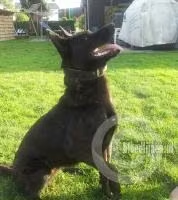
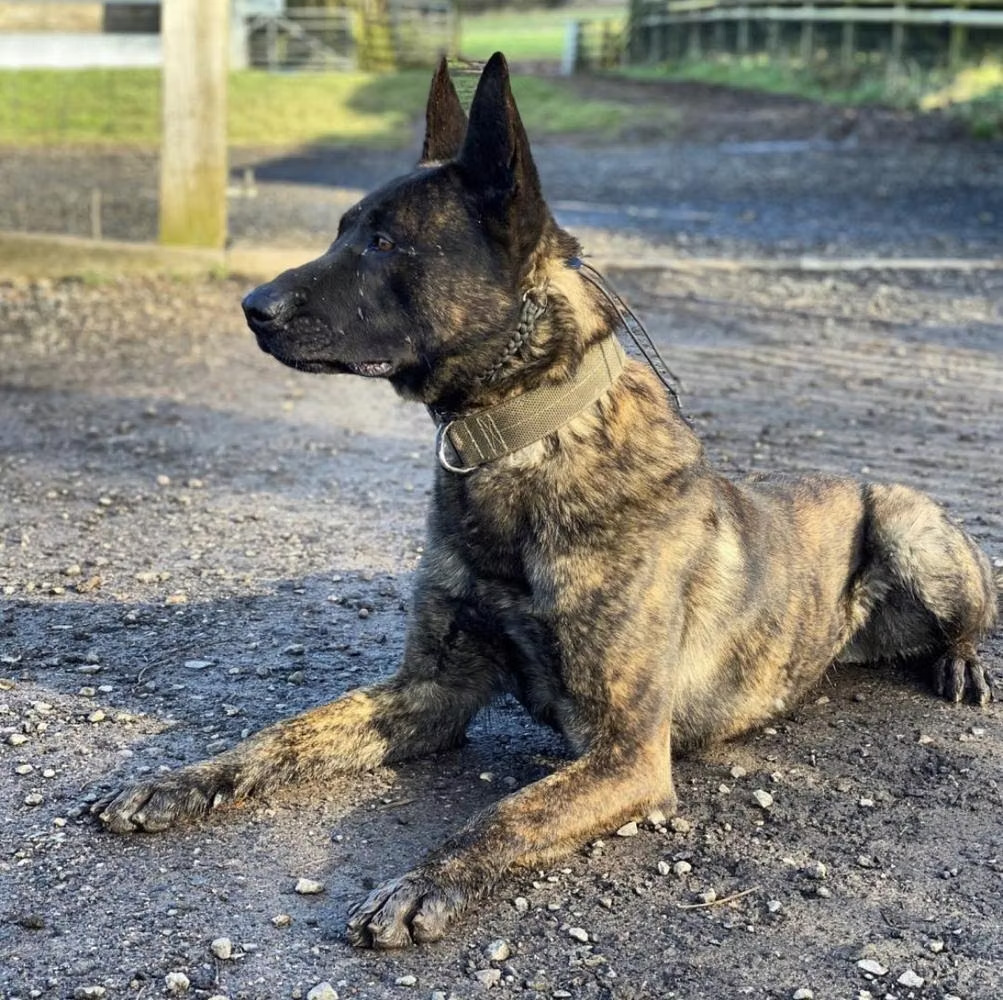
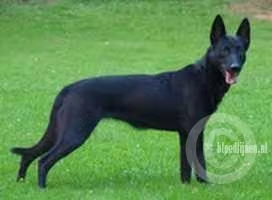
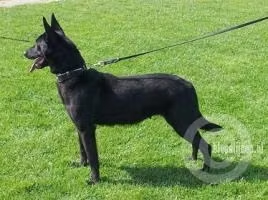
Meet some of our Dutch Shepherd
A few of the Dutch Shepherd profiles members have added to United Pet Club.





About the Dutch Shepherd
The Dutch Shepherd is a medium-sized Dutch herding dog prized for intelligence and drive, well suited to active Indian owners who can meet its daily exercise and training needs.
The Dutch Shepherd is a medium-sized working dog that comes from farms in the southern Netherlands. Dutch farmers originally used it as an all-rounder: herding sheep, guarding the homestead, and pulling small carts. That same all-purpose usefulness still marks the breed out today. The dog learns fast, keeps a steady head, and carries a high energy reserve that must be worked off every single day, monsoon or no monsoon.
Three coat types exist, short-haired, long-haired, and rough-haired, and all three share the brindle pattern that is the breed's calling card. A grown dog usually stands 55 to 62 cm at the shoulder and weighs 23 to 32 kg, putting it firmly in the medium category, similar in build to a working-line German Shepherd but leaner.
The Dutch Shepherd is devoted to its people and forms tight bonds with the family. It stays watchful around strangers without turning snappy, which makes it a dependable watchdog for a home or farm. In several countries, including India, the breed's biddable nature and physical stamina have found it a place with police and paramilitary units and in search-and-rescue and sport work, though numbers here remain small compared to the German Shepherd.
| Attribute | Detail |
|---|---|
| Origin | Netherlands |
| Size | Medium (55-62 cm, 23-32 kg) |
| Lifespan | 11-14 years |
| Group/role | Herding and general-purpose working dog |
| Good with | Families, older children, and other dogs when socialised early |
Who this breed suits
The Dutch Shepherd fits an owner who can commit to daily training and real physical work, not just a walk around the colony park. It suits active individuals and families, dog-sport handlers, and working-dog trainers. It is a poor fit for a household that is out at work all day or content with a sedentary routine, since a Dutch Shepherd left without enough to do turns restless and picks up nuisance habits such as chewing or excessive barking.
History and origin
The Dutch Shepherd developed on southern Dutch farms in the 1800s as an all-purpose working dog, with its first breed standard set down in 1898.
The Dutch Shepherd's story begins in the rural southern provinces of the Netherlands, where a farming family needed one dog capable of several jobs at once. Through the 1800s these dogs kept sheep inside unfenced fields, guarded the farmstead and its stock, hauled small carts, and kept an eye on the children while the adults worked. Nobody bred them for looks; ability on the farm was the only test that mattered.
The breed shares its early ancestry with the Belgian Shepherd and the German Shepherd, all three descending from the same regional landrace of herding dogs found across the Low Countries. Once national breed clubs began forming in the late nineteenth century, Dutch breeders started to define their own type apart from the Belgian and German lines. The first breed standard was set down in 1898, and at that stage several coat colours were still permitted.
That standard was revised later to fix brindle as the breed's defining colour, a change that drew a clear line between the Dutch Shepherd and its Belgian and German cousins. The three coat varieties, short, long, and rough, were formally recognised because the working population already carried all three naturally.
As farming mechanised and pastures were fenced across Europe, the demand for an all-purpose herding dog fell away, and the Dutch Shepherd's numbers dropped through much of the twentieth century. Police and military work kept the breed alive, since its trainability and stamina were valued there even as farm work dried up. It stays a minority breed next to the German Shepherd, including in India, where imports and Kennel Club of India registrations remain few, but it holds a loyal base among working-dog handlers worldwide.
Appearance
The Dutch Shepherd is a muscular, medium-sized dog with a wedge-shaped head and a brindle coat available in short, long, or rough varieties.
The Dutch Shepherd is built for stamina rather than bulk, an athletic, balanced dog with a body slightly longer than it is tall. The chest is deep, the back level, and the hindquarters well-angled, giving a ground-covering trot that the dog can hold for hours. The head is wedge-shaped with a flat skull, the ears are medium and stand erect, and the dark almond eyes give the face a permanently alert look.
| Trait | Standard |
|---|---|
| Height | Males 57-62 cm, females 55-60 cm at the shoulder |
| Weight | 23-32 kg depending on sex and build |
| Coat | Three varieties: short-haired, long-haired, rough-haired |
| Colours | Brindle in gold or silver tones over a black base |
| Eyes | Dark, almond-shaped, set slightly oblique |
Coat and colours
All three coat varieties carry brindle: dark stripes over a gold or silver base. Gold brindle can run from a light sandy shade to deep red, while silver brindle sits on a cooler, greyer base. The short-haired variety has a dense, hard-textured outer coat over a woolly undercoat, well suited to India's hot months since it sheds heat better than a heavy double coat. The long-haired variety carries straight, harsh guard hair lying flat to the body. The rough-haired variety has a dense, tousled coat with a beard and eyebrows, and needs the closest grooming attention in humid weather. A little white on the chest or feet is accepted, but heavy white patches are not typical of the breed.
Temperament
Dutch Shepherds are loyal, sharp, and alert, forming close bonds with family while staying watchful with strangers and quick to learn new tasks.
The Dutch Shepherd is even-tempered, loyal, and firmly attached to its own people. At home it is affectionate and watchful, often staying a step behind its handler and reading moods before a word is said. Around strangers it tends to hold back rather than turn hostile, sizing up a new visitor before deciding whether to accept them, which is exactly what a household wants from a watchdog without wanting an aggressive dog on the property.
With children the breed is patient and protective when it grows up alongside them, though its size and energy mean playtime with toddlers needs an adult standing by. It generally gets along with other dogs when introduced young, and many Dutch Shepherds share a home comfortably with a second or third dog. The herding instinct can surface as nipping or chasing anything that moves fast, cyclists, joggers, the neighbour's cat, so early guidance is worth the effort.
Mental work matters as much as physical exercise. Left bored, a Dutch Shepherd finds its own project, and that usually means digging up the garden, chewing furniture, or barking at every sound from the street. Give it structure and a job, and it turns into a calm, settled companion indoors.
| Trait | Rating |
|---|---|
| Affection | 4 |
| Energy | 5 |
| Trainability | 5 |
| Vocalness | 3 |
| Shedding | 3 |
Care and grooming
The Dutch Shepherd needs vigorous daily exercise, regular mental work, and coat care suited to India's heat and monsoon humidity, varying by coat type.
Grooming
Coat variety decides the grooming routine:
- Short-haired: brush once a week, more often during the two big seasonal sheds.
- Long-haired: brush once or twice a week so the flat coat does not mat, particularly through the monsoon when damp fur tangles faster.
- Rough-haired: brush weekly and hand-strip roughly twice a year; never clip this coat, as clipping ruins its texture and weather resistance.
- Bathe only when genuinely needed. Over-bathing strips the coat's natural oils, which matters more given India's hard, often chlorinated tap water.
- Check ears weekly, since humid weather raises the risk of ear infections, trim nails every few weeks, and brush teeth several times a week.
Exercise
This is a high-drive breed that needs a real daily workout, not a short stroll.
- Aim for 1 to 2 hours of exercise a day, split across the cooler parts of the day, early morning and after sunset, to avoid the peak heat of Indian summers.
- Mix leash walks or runs with off-leash play in a securely fenced area.
- Add a structured outlet such as obedience, agility, tracking, herding, or a protection sport; several clubs across Indian metros now run these.
- On days the weather keeps exercise short, use puzzle feeders and scent games indoors to tire the mind instead.
Environment
The weatherproof coat lets the Dutch Shepherd cope with most Indian climates, though the hot, humid stretch before the monsoon is the hardest test, and fresh water and shade are non-negotiable through it. An independent house with a securely fenced yard suits the breed best, but it can manage in a smaller flat if its exercise needs are genuinely met each day. It does not do well left alone for long hours and should live indoors as part of the household rather than tied up outside or kept in a kennel run.
Nutrition and feeding
Dutch Shepherds thrive on a complete diet matched to their activity level, fed in measured portions to stay lean and protect their joints.
The Dutch Shepherd is active and muscular, and needs a complete, balanced diet with enough protein and fat to fuel its workload. Pick a food formulated for medium to large active breeds, and set the portion by the individual dog's age, weight, and daily output rather than by the bag's generic chart. A working dog in heavy training needs noticeably more calories than a companion dog of the same size doing gentler exercise. Keep the dog lean: a visible waist and ribs you can feel without pressing are the targets, since extra weight puts real strain on the joints.
| Life stage | Amount per day | Meals |
|---|---|---|
| Puppy (2-6 months) | Per product label, divided | 3-4 |
| Puppy (6-12 months) | Per product label, divided | 2-3 |
| Adult (working/active) | Roughly 2.5-4 cups of dry food | 2 |
| Adult (companion) | Roughly 2-3 cups of dry food | 2 |
| Senior (7+ years) | Slightly reduced to match lower activity | 2 |
Treats and supplements
Keep treats to about 10 percent of daily calories, and use the dog's own kibble or small bits of plain cooked chicken or mutton as training rewards instead of packaged biscuits. Most Dutch Shepherds on a complete diet need no extra supplements. Talk to a vet about joint support such as glucosamine or omega-3 fatty acids for dogs in heavy work or for seniors. Keep fresh water available at all times, and top it up more often during exercise in the heat.
Health
The Dutch Shepherd is a hardy breed living 11 to 14 years, with a few inherited conditions worth screening for, plus year-round tick and heartworm prevention in India.
The Dutch Shepherd counts among the sturdier working breeds, partly because it was bred for a job rather than for a show ring and has avoided heavy over-breeding. Most dogs live 11 to 14 years. A handful of inherited and structural conditions still turn up in the breed, so buying from a breeder who screens breeding stock is the soundest safeguard. Routine veterinary care, a lean weight, and sensible exercise while the puppy is still growing all help towards a long, sound life. Owners in India should also keep tick and mosquito prevention current year-round, since tick-borne fever and heartworm risk stay high in the country's warm, humid climate.
| Condition | Signs | Note |
|---|---|---|
| Hip dysplasia | Stiffness, limping, reluctance to jump | Reduced by screening breeding dogs |
| Elbow dysplasia | Front-leg lameness, especially after exercise | Inherited joint malformation |
| Inflammatory myopathy | Muscle weakness, difficulty swallowing | Seen mainly in the rough-haired variety |
| Goniodysgenesis | Cloudy eye, redness, vision loss (glaucoma risk) | Detected by eye exam |
| Pannus (chronic eye condition) | Pigment or film over the cornea | More common in active outdoor dogs |
Preventive care
- Keep core vaccinations and parasite prevention current, including tick and flea control through the monsoon.
- Book an annual veterinary check-up, moving to twice a year once the dog is a senior.
- Keep the dog's weight lean to protect the hips and elbows.
- Avoid forced, repetitive exercise on hard surfaces while the puppy is still growing.
- Buy only from breeders who can show hip, elbow, and eye screening results.
Training
The Dutch Shepherd ranks among the most trainable breeds, picking up commands fast with consistent, reward-based methods and steady mental challenge.
The Dutch Shepherd is sharp and genuinely keen to work alongside its handler, which places it near the top of any list of trainable breeds. It picks up new commands quickly, holds onto them well, and does its best work when given an actual job. That same intelligence means repetition bores it fast, and it notices the smallest inconsistency in handling, so training sessions need variety, clarity, and a reward-based approach. Start socialisation and basic obedience while the dog is still a puppy, before habits set in and the breed's drive needs somewhere else to go. Harsh handling tends to backfire badly with a dog this sensitive and this willing.
Basics
- Start socialisation early: introduce the puppy to people, dogs, surfaces, and sounds, including traffic and festival noise, in calm, positive settings.
- Teach a reliable name response and recall before anything else.
- Build the core cues: sit, down, stay, and walking on a loose leash.
- Keep sessions short, 5 to 10 minutes, and run them often rather than one long drill.
- Once the basics hold, add a structured outlet such as obedience, agility, tracking, or herding.
- Practise each cue gradually in busier, more distracting settings; a crowded market or a housing society's common area works well as a test.
Breeding
Dutch Shepherds reach breeding maturity around two years, carry litters for about nine weeks, and typically produce six to ten puppies needing early socialisation.
Responsible Dutch Shepherd breeding puts health, temperament, and working ability ahead of looks alone. Both parents should be fully mature and cleared on hip, elbow, and eye screening before mating, which in practice means waiting until around two years of age even though the dogs are fertile earlier. Females come into season roughly twice a year, and mating is timed to the fertile window of that cycle.
Gestation runs about 63 days. Litters typically number six to ten puppies. The dam handles the first weeks of rearing, and the breeder's job is to keep the whelping area clean and warm and to start gentle handling and socialisation once the puppies are a few weeks old. Early exposure to household sounds, different surfaces, and careful human contact builds the confident, level-headed adult the breed is known for. Puppies usually go to their new homes at eight to nine weeks, once weaned and after a first veterinary check. Buyers in India should also confirm Kennel Club of India registration and ask to see the parents' health-screening paperwork before booking a puppy, since the breed is still uncommon here and demand can outrun the number of responsible litters on offer.
| Metric | Value |
|---|---|
| Breeding maturity | About 2 years |
| Heat cycle frequency | Roughly twice per year |
| Gestation | About 63 days |
| Average litter size | 6-10 puppies |
| Weaning age | 6-8 weeks |
| Typical homing age | 8-9 weeks |
Registering a Dutch Shepherd in India: profile and microchip
Municipal licences cover the paperwork; a free United Pet Club record is what actually connects your Dutch Shepherd to your phone.
How to register a Dutch Shepherd in India
A Dutch Shepherd that slips past the gate of the housing society is identified by its record, not by its pedigree. Provide that record without spending a rupee: the free United Pet Club profile carries your telephone number, the dog's photograph, and its details for life. Register your dog and the matter is settled.
A microchip without a registration is merely a number under the skin. File your Dutch Shepherd's fifteen digit number with United Pet Club and it becomes a working address: free for life, open to every chip brand, and searchable from any clinic or shelter in the country or abroad. Microchip registration first, the free account alongside.
How do I register my Dutch Shepherd in India?
Create a free United Pet Club account, enter your Dutch Shepherd's details along with a photograph, and save the profile. The lifetime plan maintains the record at no cost, and any municipal licence you hold sits alongside it rather than replacing it.
How do I register my Dutch Shepherd's microchip?
Enter the fifteen digit chip number into your free account together with your current address, phone number, and email. The lifetime plan covers the registration and every subsequent update without charge, whatever the chip's manufacturer.
Is registration compulsory for a Dutch Shepherd in India?
Several municipal corporations, Delhi and Mumbai among them, require dogs to be licensed under local by-laws. The United Pet Club profile is separate and voluntary, and it is the record a finder anywhere can actually search, free of cost.
What does it cost to register a Dutch Shepherd?
Nothing whatsoever. The free lifetime plan includes the profile, the microchip record, and unlimited updates, with no renewal fee at any point.
Frequently asked questions
Common questions on the Dutch Shepherd's size, temperament, care, lifespan, family suitability, and availability in India.
How large does a Dutch Shepherd grow?
It is a medium-sized breed. Males stand about 57 to 62 cm at the shoulder and females about 55 to 60 cm, with most dogs weighing between 23 and 32 kg.
What is the Dutch Shepherd's temperament like?
Loyal, intelligent, alert, and athletic. It bonds closely with its family, stays reserved around strangers, and needs a daily outlet, physical and mental both, for its strong drive to work.
Is the Dutch Shepherd difficult to maintain?
Care sits on the demanding side. Grooming itself is simple enough for the short-haired variety, but the breed's exercise and training needs make it a real commitment, best suited to an active, experienced owner rather than a first-time pet parent.
How long do Dutch Shepherds live?
Most live 11 to 14 years. It is a generally hardy breed, and keeping the dog lean along with regular vet visits supports a long life.
Is a Dutch Shepherd a good family dog in India?
Yes, for an active family. It is affectionate and protective with its own people and patient with children it grows up around, though play with very young children needs supervision given the dog's size and energy.
Are Dutch Shepherds available in India?
They remain rare here, rarer than the German Shepherd, and finding a Kennel Club of India registered litter from a responsible breeder can take patience and time on a waiting list. The breed stays popular with police and paramilitary units and in dog-sport circles, where good working lines are always in demand.
Do Dutch Shepherds shed a lot?
They shed moderately right through the year, with two heavier seasonal blowouts. Weekly brushing, stepped up during those shedding spells, keeps loose hair under control across all three coat varieties.
From the community
Ask about the Dutch ShepherdNo questions about the Dutch Shepherd yet. Be the first to ask.
Browse Dog breeds