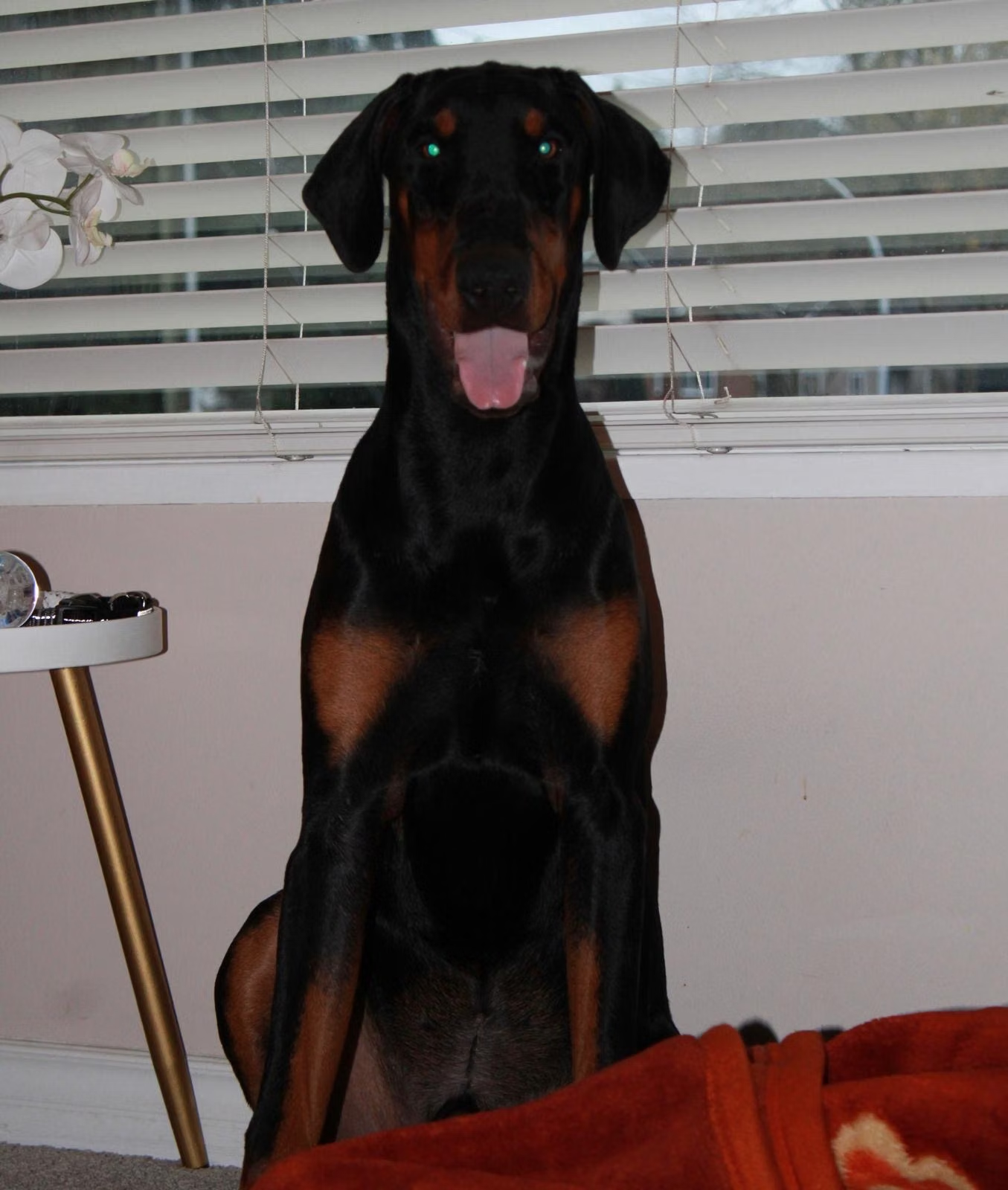
The Doberman Pinscher is a loyal, intelligent breed renowned for its alertness, elegance, and fearless devotion as a guardian.
How the Doberman Pinscher coat is built, and what that means when you groom it.
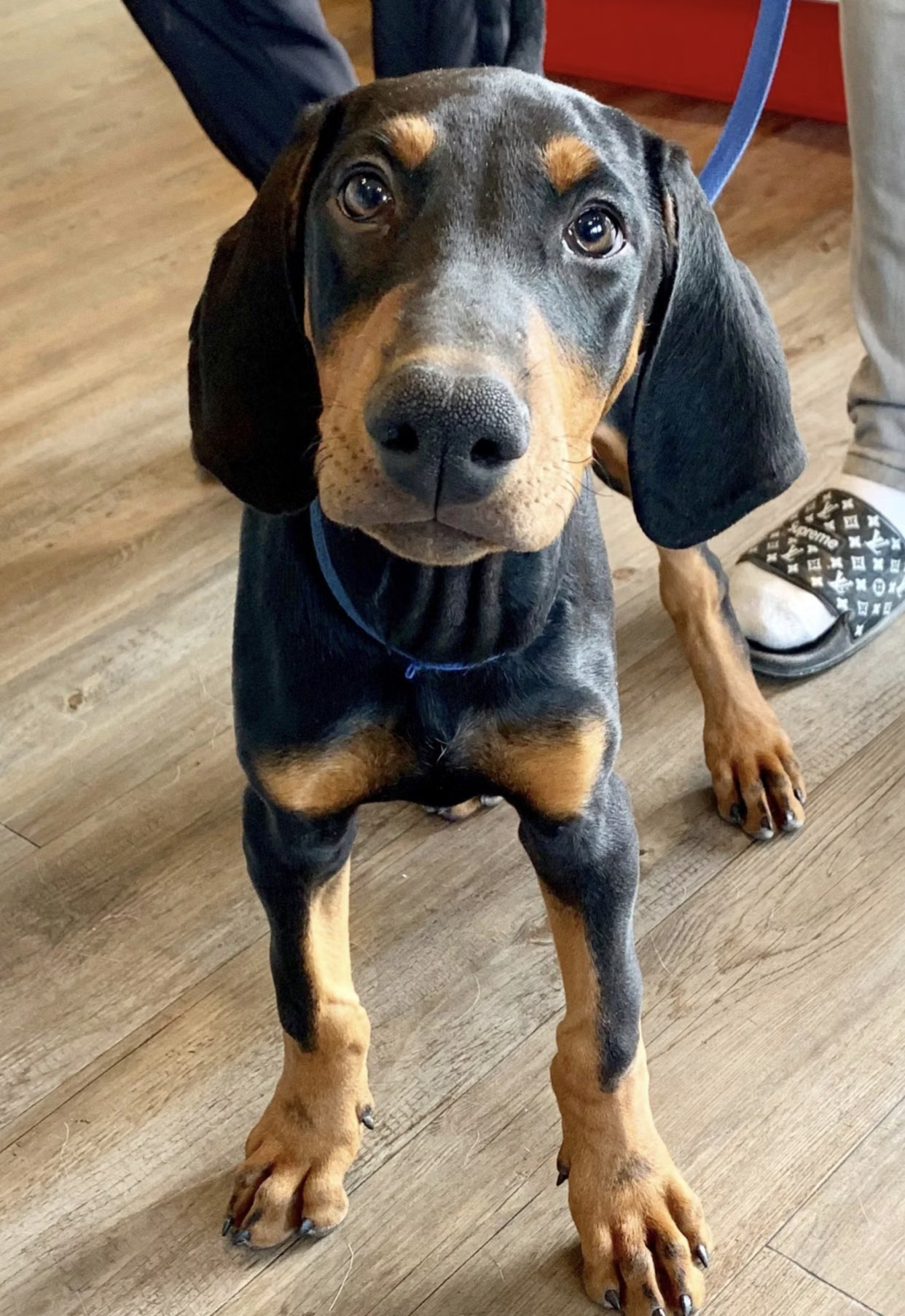
A few of the Doberman Pinscher profiles members have added to United Pet Club.
The Doberman Pinscher is a large German working dog standing 61 to 71 cm and weighing 27 to 45 kg, combining close family loyalty with a protective instinct and a high need for daily exercise and human contact.
Few breeds demand as much from their owners as the Doberman Pinscher, and few reward that investment as consistently. Developed in Germany in the late 1800s, the breed is now registered in India through the Kennel Club of India (KCI) and is kept across the country as a personal protection dog, a sport dog, and a family companion by experienced owners who understand its requirements.
Adults are large dogs. Males stand 66 to 71 cm at the shoulder and weigh 27 to 45 kg; females are 61 to 66 cm and correspondingly lighter. The build is compact and muscular with a square outline. The bearing is alert and confident without being tense.
Intelligence and trainability are central to the breed's character. A Doberman learns quickly, retains what it learns, and forms a close attachment to its household. The same qualities that make it effective as a guardian, that alertness and sensitivity to its environment, also mean it notices inconsistency in handling and needs structured direction to be settled at home.
For owners in India, the climate introduces a practical constraint from the start. The short coat and lean build suit the breed better than heavy-coated breeds for most of the year, but peak summer heat across northern and central regions, where temperatures regularly exceed 40°C, requires deliberate management of exercise timing and resting conditions.
| Attribute | Detail |
|---|---|
| Origin | Germany |
| Size | Large (27 to 45 kg) |
| Lifespan | 10 to 13 years |
| Group / role | Working breed; guardian and companion |
| Good with | Committed families, experienced owners, other pets when socialised early |
This breed fits owners who are home regularly, enjoy structured training, and can deliver daily exercise through the heat, the rains, and the rest of the Indian year. It is a poor fit for someone who wants a low-maintenance dog or who is away from home for long stretches. The Doberman needs close human contact and consistent direction. Without those, the energy built for working roles becomes restlessness at home.
The Doberman Pinscher was created in 1880s Germany by Karl Friedrich Louis Dobermann, a tax collector who needed a capable guard dog for his rounds, with the breed refined after his death and formally recognised before the end of the 19th century.
Karl Friedrich Louis Dobermann worked two jobs in Apolda, a town in the German state of Thuringia, during the 1880s. He collected taxes and managed the local dog pound. The first role meant he carried money and needed protection on his rounds; the second gave him access to a wide range of dogs to breed from. The combination produced a new breed.
Dobermann left no detailed breeding records, so the precise crosses are not established with certainty. Breed historians generally identify contributions from the old German Pinscher, the Rottweiler, the Black and Tan Terrier, and herding dogs of the region. The aim throughout was working temperament rather than a fixed appearance.
After Dobermann died in 1894, Otto Goeller took on refining the type and is credited with establishing a consistent breed. Recognition came in Germany before the century's end, and the breed reached other countries in the early 1900s.
Both World Wars put Dobermans to work as messenger, sentry, and scout dogs. Military and police service dominated the breed's reputation for decades and shaped selection toward the trainability and nerve that characterise the breed today.
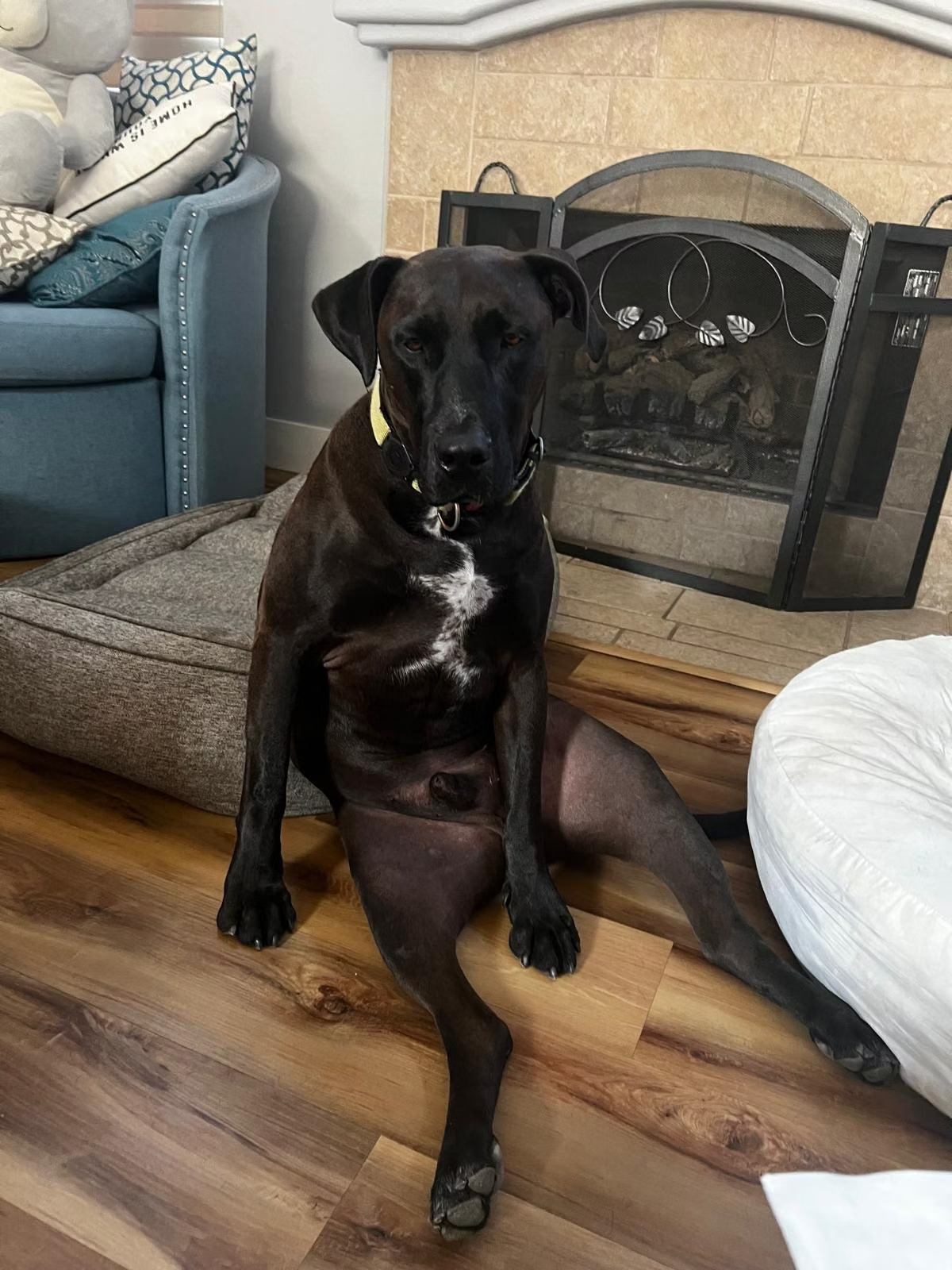
The Doberman Pinscher has a square, muscular build, a short smooth coat in black, red, blue, or fawn with rust markings, and stands 61 to 71 cm, presenting a clean athletic outline that shows the musculature clearly.
The Doberman's frame is square: deep chest, level topline, well-defined muscle, and a long wedge-shaped head on an arched neck. The overall impression is controlled power without bulk. Nothing about the silhouette looks heavy or loose.
| Trait | Description |
|---|---|
| Height | Males 66 to 71 cm; females 61 to 66 cm |
| Weight | 27 to 45 kg |
| Coat | Short, smooth, hard, lying close to the body |
| Colours | Black, red, blue, or fawn, each with rust markings |
| Eyes | Almond-shaped, dark in black and red dogs |
The coat lies flat and shows the muscle beneath it. In the Indian climate this has a practical advantage: the coat dries quickly after monsoon walks or bathing and requires very little daily maintenance. The four recognised colours each carry rust markings in the same positions: above the eyes, on the muzzle, throat, chest, legs, and feet.
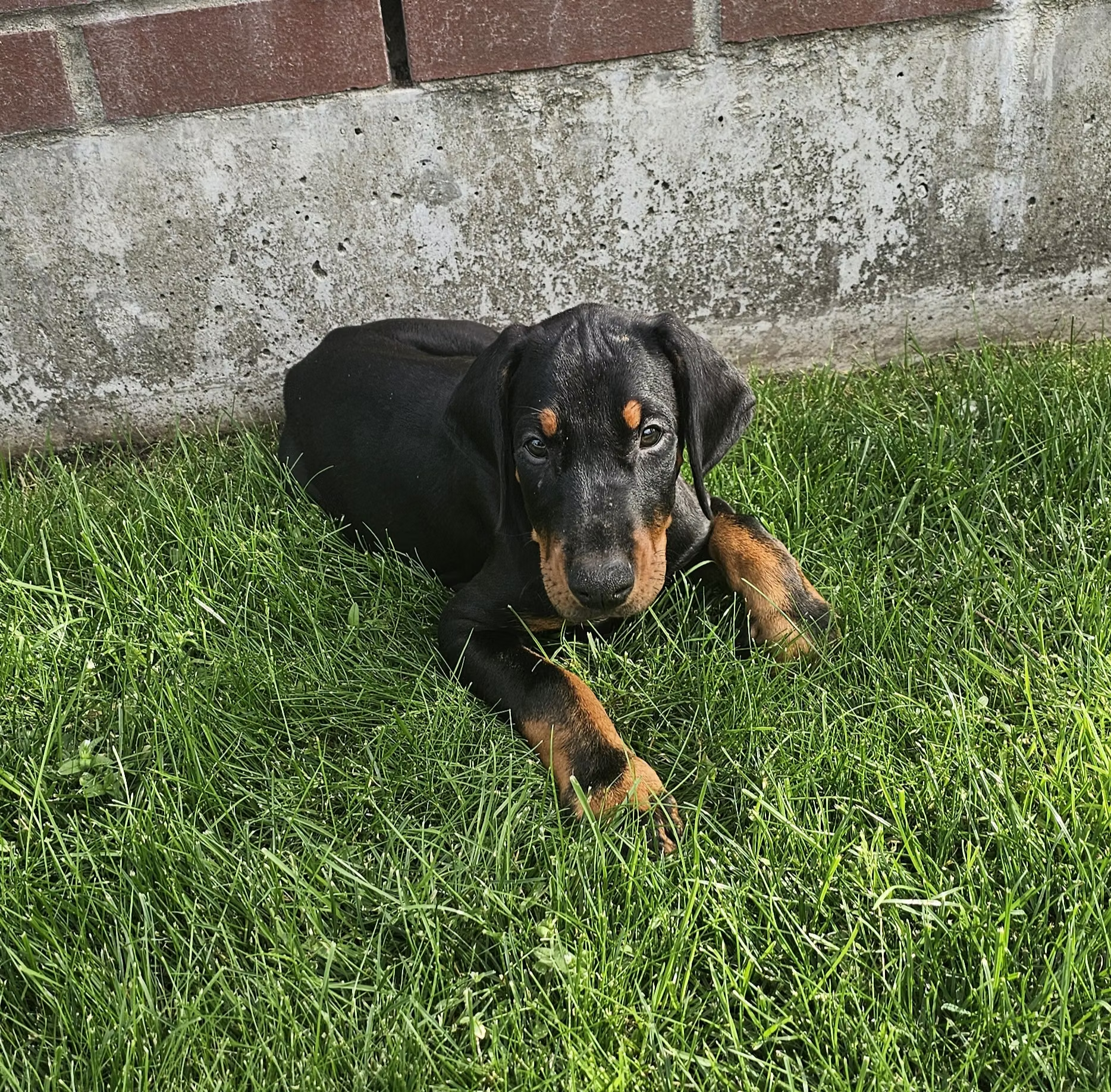
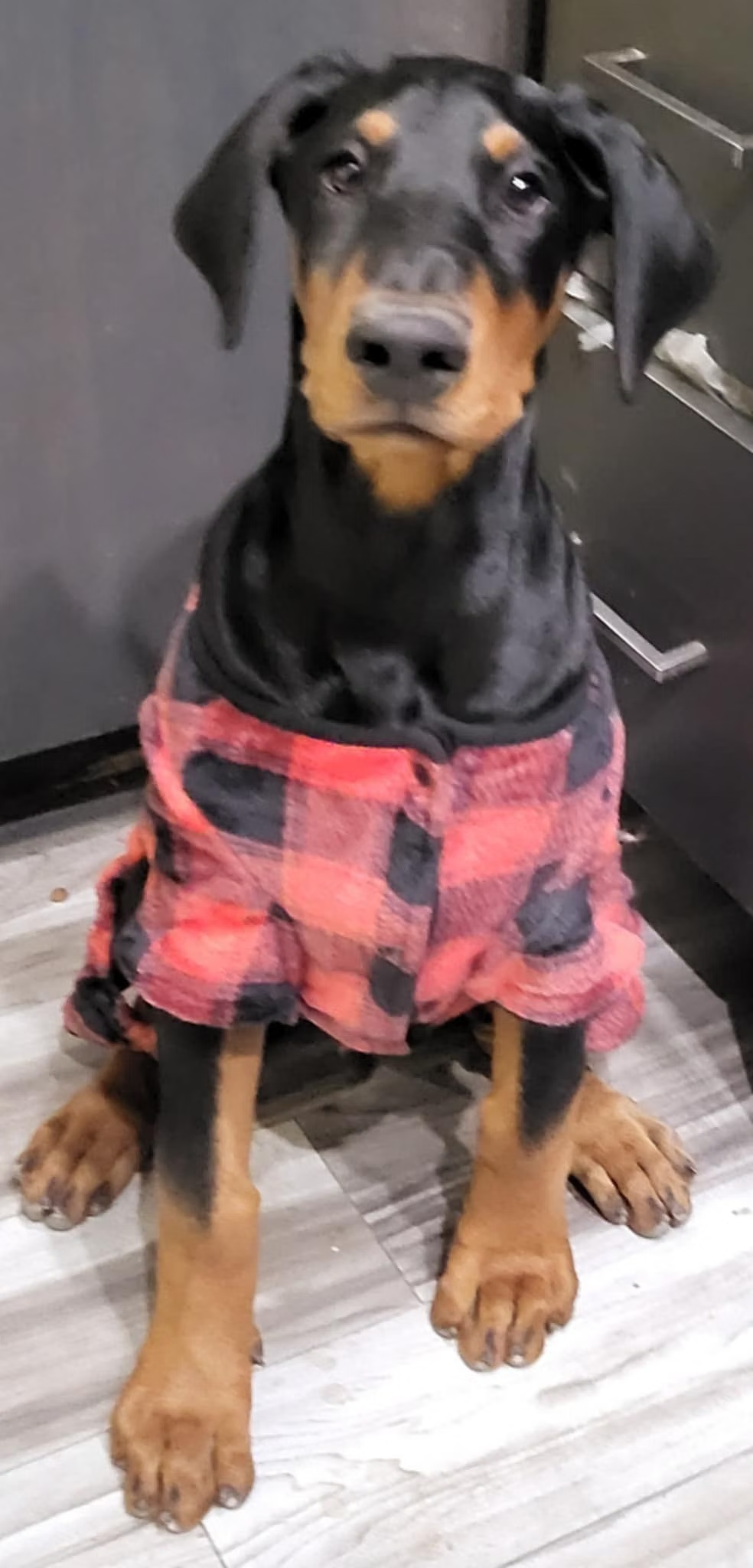
Puppies are born with natural floppy ears and a full-length tail. Ear cropping and tail docking are not performed in India under the Prevention of Cruelty to Animals Act, so Dobermans seen in India today are almost always in their natural form. Black-and-rust is the most common colour combination seen among KCI-registered dogs, though red, blue, and fawn individuals are also registered.
The Doberman Pinscher is loyal and closely attached to its household, reserved and watchful with strangers, generally gentle with children it has grown up with, and steadier around other animals when socialised from puppyhood.
The Doberman follows its people. That is one of the most consistent things said about the breed: it tends to move from room to room with the household rather than settle in one spot alone. With the family it is affectionate; with strangers it is watchful and reserved, waiting for a cue from its owner before relaxing. This is the breed doing what it was made to do.
In the Indian context, urban living adds a layer of complexity. A dog kept in a society flat encounters lifts, stairwells, security guards, domestic helpers, delivery workers, and the irregular rhythms of apartment life several times a day. A Doberman that has not been calmly and regularly exposed to these situations in its early months will have gaps that make daily life harder. Owners in independent houses with compounds in smaller cities face a different environment, but the need for deliberate early socialisation remains the same.
With other dogs and animals, results depend on the individual and on how early socialization was started. Many Dobermans live alongside other pets without difficulty. Same-sex pairings sometimes need managed introductions and careful observation. With children in the household, the breed is generally patient when raised alongside them, though its size alone makes supervision sensible with very small children.
| Trait | Rating |
|---|---|
| Affection | 5 |
| Energy | 5 |
| Trainability | 5 |
| Vocalness | 3 |
| Shedding | 2 |
Heat management is the central care challenge in India: exercise must be timed around peak temperatures, monsoon humidity brings skin and ear checks, and tick prevention needs to be consistent year-round.
In northern and central India, daytime temperatures exceed 40°C for months at a stretch. The Doberman's lean build and short coat release body heat more efficiently than double-coated breeds, but the breed is not immune to heat exhaustion. Across April through June, restrict walks to before 7 a.m. and after sunset. Carry water on any walk where the temperature is above 30°C. In the south, where summer heat is more moderate but humidity is high, the same early-morning timing helps.
During the monsoon, damp conditions after outdoor sessions create conditions for fungal skin issues. After rain walks, dry the coat, check the skin between the toes, and look at the areas under the collar and around the neck. Prolonged moisture against the skin is the common cause of irritation in these months.
The Doberman should live indoors with its household. In a metro flat in a society, the breed can be managed well if the owner commits to daily structured exercise outside, including using the lift and navigating common areas calmly. An independent house with a compound in a smaller city offers more flexibility, but neither setting replaces the need for outdoor activity and human contact. During the hottest months, the dog's resting area needs ventilation or air conditioning in the afternoon hours. Kennelling outside overnight is not appropriate in most of India's climate conditions.
A Doberman needs a complete diet for large active breeds, split into two meals daily to reduce bloat risk, with portions adjusted by body condition and fresh water always available, especially in summer.
Because the Doberman is a deep-chested breed, bloat (gastric dilatation-volvulus) is a genuine risk. Split the daily ration into at least two meals and avoid vigorous exercise for an hour before and after feeding. This single practice reduces the risk more than any other dietary adjustment.
Feed a complete and balanced food formulated for a large, active breed, with quality protein to maintain muscle. Use the label feeding guide as a starting point and adjust the amount to keep the dog lean; you should be able to feel the ribs without pressing hard, but not see them. In summer, dogs in India drink considerably more than usual. Fresh water must be available at all times, and the supply needs replenishing through the day in hot weather.
| Life stage | Amount per day | Meals |
|---|---|---|
| Puppy (2 to 6 months) | Per label, growth formula | 3 to 4 |
| Adolescent (6 to 12 months) | Per label, adjust to body condition | 2 to 3 |
| Adult | Roughly 270 to 450 g depending on size and activity | 2 |
| Senior | Reduced calories to manage body weight | 2 |
Keep treats to about ten per cent of daily calories so they do not unbalance the diet. Most Dobermans on a complete food do not need supplements, though a vet may suggest joint support for older or working dogs. Introduce any new food gradually over several days to avoid digestive upset.
The Doberman Pinscher has a lifespan of 10 to 13 years and carries a significant inherited risk of dilated cardiomyopathy; in India, rabies vaccination compliance and year-round tick prevention are additional health priorities alongside standard cardiac screening.
Dilated cardiomyopathy is the most important health concern in the breed. This disease of the heart muscle affects a significant proportion of Dobermans and is the leading cause of early death. Choosing a puppy from health-screened parents lowers the risk but does not eliminate it, because the condition can appear even in lines that have been carefully managed.
In India, access to the diagnostic tools needed for cardiac monitoring varies sharply between locations. Echocardiography and Holter monitoring are available at specialist veterinary hospitals in the major metros. Owners in tier-2 and tier-3 cities may need to travel to a referral centre for thorough cardiac evaluation. Finding the nearest facility before a problem appears is a practical step worth taking early.
Outside the inherited conditions common to the breed, India's environment adds two consistent priorities. Rabies vaccination is legally required and medically essential given the density of stray dogs and wildlife in many areas. Follow the full schedule and do not let boosters lapse. Tick infestation is year-round in most Indian regions, and ticks carry diseases including Babesiosis and Ehrlichiosis that can be serious in dogs. Discuss a year-round prevention protocol with your vet.
| Condition | Signs | Note |
|---|---|---|
| Dilated cardiomyopathy | Weakness, fainting, coughing, sudden collapse | Leading cause of death in the breed; screen with cardiac exams |
| Von Willebrand disease | Excess bleeding, slow clotting | Inherited clotting disorder; DNA test available |
| Hip dysplasia | Stiffness, limping, trouble rising | Choose hip-tested parents |
| Hypothyroidism | Weight gain, coat changes, low energy | Managed with daily medication |
| Gastric dilatation-volvulus (bloat) | Swollen belly, retching, distress | Emergency; deep-chested dogs are at risk |
The Doberman is among the most trainable dog breeds, learning quickly and retaining commands well, but it needs thorough early socialisation, particularly to the sounds and situations of Indian urban life, and consistent calm handling to reach its potential.
Trainability is one of the Doberman's defining traits. It learns fast, remembers clearly, and wants to engage with a handler who gives it something to do. That is an asset with a committed owner and a complication without one: a dog that receives no structured direction will direct itself, and the results are rarely what the household wants.
For Indian owners, early socialisation carries specific content. The breed needs calm exposure to the particular experiences of Indian urban life: heavy traffic, crowded markets, autorickshaws and two-wheelers at close range, firecrackers during festivals, the irregular arrival of domestic helpers and delivery workers, and the shared spaces of a housing society including lifts and stairwells. These are the settings where the dog will spend its daily life. A puppy that encounters them gradually and positively becomes a steadier adult in precisely the places where it most needs to be.
The breed is sensitive and responds well to a calm, consistent handler. Harsh correction produces shutdown or unpredictability rather than compliance. Short, structured sessions with clear and timely feedback work better than long, tiring drills.
Responsible Doberman breeding in India waits until dogs are around 2 years old and health-screened, with KCI litter registration providing a verifiable parentage record, typical litters of six to eight puppies, and a gestation of about 63 days.
Sexual maturity arrives at 6 to 12 months, but reputable breeders wait until a dog is about 2 years old before breeding. By that point, the health screening that the breed requires can be completed: cardiac evaluation for dilated cardiomyopathy, DNA testing for von Willebrand disease, and hip assessment. Breeders registered with the Kennel Club of India are expected to screen their breeding stock, and buyers should ask for documentation of those results when enquiring about a litter. KCI registration of the litter provides a verifiable parentage record and is one of the practical checks worth applying.
Females come into season roughly twice a year. Gestation lasts approximately 63 days. Litters typically produce six to eight puppies, though smaller and larger litters do occur. The dam usually whelps without intervention, but the breeder should be present throughout and have a vet available if labour becomes prolonged or a puppy needs assistance.
Newborn puppies nurse from the dam for the first weeks. Weaning begins gradually from around 3 to 4 weeks. Systematic handling by people and careful socialisation through the first two months build confidence in the adult dog. Puppies should remain with the dam and litter until at least 8 weeks to benefit from the dam's correction and contact with their littermates.
| Metric | Value |
|---|---|
| Sexual maturity | 6 to 12 months |
| Recommended breeding age | About 2 years |
| Gestation | About 63 days |
| Average litter size | 6 to 8 puppies |
| Weaning | Around 3 to 7 weeks |
| Leave for new home | 8 weeks or later |
Municipal licences cover the paperwork; a free United Pet Club record is what actually connects your Doberman Pinscher to your phone.
A Doberman Pinscher that slips past the gate of the housing society is identified by its record, not by its pedigree. Provide that record without spending a rupee: the free United Pet Club profile carries your telephone number, the dog's photograph, and its details for life. Register your dog and the matter is settled.
Should your Doberman Pinscher already carry a microchip, the number must still be recorded separately, since the vet performs only the implant. Registering the microchip under the free lifetime plan accepts chips from any manufacturer an Indian vet works with, keeps every update free should your household shift cities, and leaves the record searchable at any hour. Create your free account and complete both tasks in one sitting.
Create a free United Pet Club account, enter your Doberman Pinscher's details along with a photograph, and save the profile. The lifetime plan maintains the record at no cost, and any municipal licence you hold sits alongside it rather than replacing it.
Enter the fifteen digit chip number into your free account together with your current address, phone number, and email. The lifetime plan covers the registration and every subsequent update without charge, whatever the chip's manufacturer.
Several municipal corporations, Delhi and Mumbai among them, require dogs to be licensed under local by-laws. The United Pet Club profile is separate and voluntary, and it is the record a finder anywhere can actually search, free of cost.
Nothing whatsoever. The free lifetime plan includes the profile, the microchip record, and unlimited updates, with no renewal fee at any point.
Common questions from Indian owners about the Doberman Pinscher cover its size in metric terms, suitability for society flats, how it manages Indian summers, lifespan, temperament with strangers, space needs, and how to find a KCI-registered breeder.
It is a large breed. Males stand 66 to 71 cm at the shoulder and females 61 to 66 cm, with weight ranging from 27 to 45 kg depending on sex and build.
Yes, when well bred, socialised, and trained. The breed bonds closely with its household and is generally good with children it has grown up alongside. Its size means young children should be supervised around it.
With proper management, reasonably well. The short coat helps heat release, but exercise in temperatures above 35°C is risky. Restrict outdoor activity to early morning and evening from March through June, keep water available throughout the day, and ensure the resting area is ventilated or air-conditioned.
The typical lifespan is 10 to 13 years. Dilated cardiomyopathy is the primary condition that shortens it, which is why selecting a puppy from health-screened parents and scheduling regular cardiac checks matters.
A well-bred and well-raised Doberman is alert and protective rather than aggressive. It is reserved and watchful with strangers rather than openly hostile, and steady within its own household. Temperament depends heavily on breeding, socialisation, and how the dog is handled.
Yes, if the owner provides sufficient daily exercise outside. Many Dobermans in Indian metros live in society flats without difficulty. The constraint is not the indoor space but the commitment to structured outdoor activity every day, including during summer heat and monsoon rains.
Look for breeders registered with the Kennel Club of India who can show health screening certificates for both parents, particularly cardiac clearance and von Willebrand disease test results. Avoid buying from pet shops, brokers, or unregistered sources, where health histories are rarely verifiable.