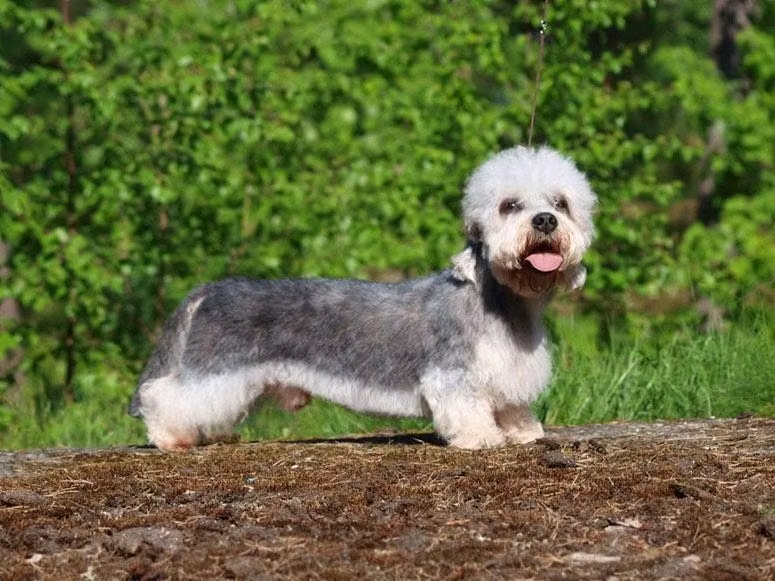
The Dandie Dinmont Terrier is a dignified, distinctive terrier known for its topknot, long body, and surprisingly big personality.
How the Dandie Dinmont Terrier coat is built, and what that means when you groom it.
Caution: A Dandie Dinmont Terrier coat should be hand-stripped rather than clipped.
A wire coat is meant to be pulled out at the root once the hair is ready to release. Clippers cut it off part way instead, leaving the soft undercoat behind. The result is a coat that grows back limp and faded, and the weatherproof texture only returns after the hair is stripped out again.
Caution: A Dandie Dinmont Terrier coat mats easily.
Fine or long hair tangles at the base of the coat, out of sight, where the mats tighten and pull on the skin. Brushing has to reach right down to the roots in sections, not just skim the surface.
Information: A Dandie Dinmont Terrier needs clipping every few weeks.
This coat keeps growing rather than shedding out, so it has to be trimmed every few weeks. Left to grow it mats down against the skin and traps moisture, dirt and heat.
A few of the Dandie Dinmont Terrier profiles members have added to United Pet Club.
The Dandie Dinmont Terrier is a small, long-bodied Scottish terrier with a soft topknot and a calm, confident nature, generally living 12 to 15 years.
The Dandie Dinmont Terrier is a small dog with a shape nobody mistakes for another breed: a long, low body, big soft eyes, and a tuft of hair on the head called a topknot. It comes from the border country between Scotland and England, where it was kept to go after badgers and otters. For all its small size, it moves and sits with a calm, almost dignified air, more like a pocket-sized elder statesman than a typical terrier.
This is a dog with two clear modes. Inside the house it is quiet and settled, happy to sit close to its people rather than bounce around. Once outdoors, the old hunting instinct switches on and it will dig, chase, and sniff out anything that moves, with real focus. Owners often say it carries a big personality inside a small frame.
The Dandie Dinmont bonds closely with its household, usually attaching itself to one or two people in particular. It can amuse itself for a while but does not do well left alone for long stretches. In India the breed is close to unknown outside a handful of enthusiasts, so anyone set on owning one should expect to search hard, most likely through an overseas breeder or an import, rather than a local litter.
| Attribute | Detail |
|---|---|
| Origin | Scotland |
| Size | Small |
| Lifespan | 12 to 15 years |
| Group/role | Terrier; originally bred to hunt badgers and otters |
| Good with | Families and considerate older children; can live with other pets when socialised early |
The Dandie Dinmont suits an owner looking for a small dog with real terrier character, not a placid lap dog. It fits households that can manage daily walks, a bit of mental engagement, and company through most of the day. Because of its long back, it does best in a home where it is not encouraged to jump on and off sofas or beds, something worth planning for in a typical Indian flat with limited floor space. First-time dog owners can manage the breed well enough if they are ready for an independent animal that makes up its own mind.
The Dandie Dinmont Terrier developed along the Scotland-England border to hunt badgers and otters, and takes its name from a character in Sir Walter Scott's 1815 novel Guy Mannering.
The breed traces back to the hill country straddling the border between Scotland and England. Farmers and travelling communities in the region kept long-bodied, short-legged terriers to deal with badgers, otters, and other vermin. Written records of these dogs go back to the 1700s, by which time they were already working terriers with an established type.
It is one of the few breeds named after a character from fiction rather than a place or a person. In his 1815 novel Guy Mannering, Sir Walter Scott wrote of a farmer named Dandie Dinmont who kept a pack of these terriers. The name stuck to the breed and has been used ever since.
A breeder called James Davidson of Hindlee is usually credited as a foundation figure, and is thought to have partly inspired Scott's character; his dogs turn up in many of the earliest pedigrees. Over the course of the 1800s, breeders refined the type into the dog recognised today, with its long body, low stance, and topknot.
The Dandie Dinmont was among the earlier breeds to get formal recognition, with a breed club set up in 1875. Numbers have never been large, and today the breed is listed among the more vulnerable native breeds in the United Kingdom, kept going by a small group of committed breeders. It is not registered in any numbers with the Kennel Club of India, and Indian enthusiasts wanting one typically look to breeders in the UK or Europe.
The Dandie Dinmont is a long, low terrier with a curved topline, a large domed head with a silky topknot, and a coat in pepper or mustard colouring.
The Dandie Dinmont has a long body set on short, sturdy legs, with a gentle curve over the loin and a topline that arches distinctly along the back. The head is large for the size of the dog, broad and domed, topped with a soft, silky topknot in a lighter shade. The eyes are large, round, and dark, set well apart, and this is what gives the breed its soft, intelligent expression. The ears hang close to the cheek and taper to a point, often carrying a thin feathering of hair at the tip.
| Feature | Standard |
|---|---|
| Height | Approximately 20 to 28 cm (8 to 11 in) at the shoulder |
| Weight | Approximately 8 to 11 kg (18 to 24 lb) |
| Coat | Double coat; a crisp, harder topcoat over a soft undercoat, about 5 cm long |
| Colour | Pepper (bluish grey to silvery) or mustard (reddish brown to fawn) |
| Eyes | Large, round, dark hazel, set wide apart |
The coat has two textures, a harder outer layer over a soft, linty undercoat, giving a crisp feel that is neither wiry nor woolly. Only two colour patterns are recognised: pepper, running from a dark bluish black to a pale silvery grey, and mustard, running from reddish brown to a pale fawn. In both patterns, the topknot, the leg hair, and the feathering are lighter than the body colour. Puppies are usually born much darker than their adult shade and lighten as they grow. In India's heat and humidity, the double coat needs closer attention than it would in a cooler climate, since a damp undercoat close to the skin can turn into a hotspot or skin infection if it is not dried and brushed out properly, especially through the monsoon months.
The Dandie Dinmont is affectionate and steady at home, reserved with strangers, and independent with a clear terrier streak once its hunting instinct switches on.
At home, the Dandie Dinmont is affectionate and settled, often attaching strongly to one or two people in the household rather than spreading its loyalty evenly. It is quieter than most terriers, with a measured, almost dignified manner that many owners come to value. It likes close contact and will happily sit beside its people for long stretches of the day.
With strangers, it tends to be reserved rather than nervous or aggressive, usually taking a minute to size up a new person before warming up. As a watchdog it is alert, and it announces visitors with a bark that is surprisingly deep and loud for its size, though it does not bark constantly.
Around other animals, the picture depends on upbringing. Raised together, a Dandie Dinmont can get along well with other dogs and even cats. Its strong prey drive means small pets such as rats, hamsters, or rabbits are a poor match, and recall outdoors cannot always be trusted once something worth chasing appears, whether that is a squirrel in a park or a stray cat down the gully. The breed is independent and can be stubborn, so it responds best to an owner who stays patient and consistent.
| Trait | Rating |
|---|---|
| Affection | 5 |
| Energy | 3 |
| Trainability | 3 |
| Vocalness | 3 |
| Shedding | 2 |
The Dandie Dinmont needs regular brushing, periodic hand-stripping or trimming, moderate daily exercise, and care to protect its long back in Indian heat and humidity.
The Dandie Dinmont is a moderate-maintenance breed. Its double coat does not shed heavily but needs regular attention to stay in good shape, and its long back calls for a bit of everyday caution to prevent injury.
The Dandie Dinmont settles well into a flat or an independent house, in a city society or in the countryside, provided it gets its daily walks. Because of its long spine, discourage it from jumping on and off sofas and beds repeatedly, and consider a ramp or small steps for a favourite piece of furniture. A harness works better than a collar around the neck, since it spreads pressure away from the spine.
Feed the Dandie Dinmont a complete diet suited to its life stage in measured portions, and keep a close eye on weight since extra kilos strain its long back.
A Dandie Dinmont does well on a complete, balanced dog food suited to its age and activity level. Because the breed carries a long back on a sturdy frame, weight control matters more here than for many small dogs. Extra weight adds load to the spine and joints, so portions are best measured out rather than left down all day.
| Life stage | Amount per day | Meals |
|---|---|---|
| Puppy (2 to 6 months) | As per the food label, split across the day | 3 to 4 |
| Junior (6 to 12 months) | As per the food label for growth | 2 to 3 |
| Adult | Roughly 100 to 180 g of dry food, by weight and activity | 2 |
| Senior | Slightly reduced; a lower-calorie formula if less active | 2 |
Keep treats to about 10 percent of daily calories at most, and subtract them from meals so the dog does not creep up in weight. Most dogs on a complete diet need no supplements; discuss joint support or anything extra with a vet rather than adding it on your own. Keep fresh water available at all times, and top it up more often through the hotter months.
The Dandie Dinmont is generally hardy with a lifespan of 12 to 15 years, but its long back and small gene pool make spinal problems and a few inherited conditions worth watching.
The Dandie Dinmont is a generally robust breed, typically living 12 to 15 years. Its main health concerns follow from its long body shape and from the limited gene pool of a rare breed. Responsible breeders screen their dogs and work to keep the population genetically varied.
| Condition | Signs | Note |
|---|---|---|
| Intervertebral disc disease | Back pain, reluctance to move, weakness or dragging in the hind legs | Linked to the long spine; avoid high jumps and extra weight |
| Glaucoma | Red, painful or cloudy eye, squinting | Inherited in some lines; treat urgently to protect eyesight |
| Hypothyroidism | Weight gain, low energy, coat and skin changes | Diagnosed with a blood test, managed with daily medication |
| Patellar luxation | Intermittent skipping or holding up a hind leg | Common in small breeds; ranges from mild to needing surgery |
The Dandie Dinmont is intelligent but independent and can be stubborn, so it learns best through short, consistent, reward-based sessions started early.
The Dandie Dinmont is intelligent and quite capable of learning, but it has an independent mind and a stubborn streak typical of working terriers. It tends to weigh up whether a task is worth the effort, so training works best when it stays interesting and rewarding. Harsh handling or repetitive drilling tends to make the breed switch off rather than fall in line. Early, patient socialisation with people, places, and other animals helps shape a steady, well-adjusted adult.
The Dandie Dinmont is a rare breed, bred carefully from health-screened parents, with small litters and a strong focus on keeping genetic diversity intact.
Breeding Dandie Dinmonts is left to a small community of committed breeders, since the breed is among the more vulnerable native dogs in the United Kingdom. With such a limited population, careful pairing to protect genetic diversity matters as much as health and type.
Responsible breeders test their dogs before mating, including eye examination and thyroid assessment where advised, and steer clear of pairings that stack up spinal or other inherited risks. Bitches are usually bred only once they are physically mature and in good condition. Litters tend to be small, and puppies are born much darker than their eventual pepper or mustard colour, lightening as they grow.
Newborn pups depend entirely on the mother for the first weeks. Weaning starts around three to four weeks, and pups stay with the litter to pick up early social skills before moving to new homes at about eight weeks or later. Demand usually outstrips supply, so in India in particular, anyone interested should expect a wait, and would do well to look for an overseas breeder who screens properly for health and temperament rather than rushing to the first litter advertised online.
| Metric | Value |
|---|---|
| Sexual maturity | Around 6 to 12 months (best bred later, once mature) |
| Gestation | Approximately 63 days |
| Average litter size | Typically 3 to 6 puppies |
| Weaning | About 4 to 6 weeks |
| Earliest rehoming | From about 8 weeks |
Municipal licences cover the paperwork; a free United Pet Club record is what actually connects your Dandie Dinmont Terrier to your phone.
Begin with the essentials: your Dandie Dinmont Terrier's name, its date of birth, a clear photograph, and your mobile number, saved to a registry that levies no charge at any stage. Dog registration functions with or without a microchip, so nothing need wait for the next clinic visit.
Should your Dandie Dinmont Terrier already carry a microchip, the number must still be recorded separately, since the vet performs only the implant. Registering the microchip under the free lifetime plan accepts chips from any manufacturer an Indian vet works with, keeps every update free should your household shift cities, and leaves the record searchable at any hour. Create your free account and complete both tasks in one sitting.
Create a free United Pet Club account, enter your Dandie Dinmont Terrier's details along with a photograph, and save the profile. The lifetime plan maintains the record at no cost, and any municipal licence you hold sits alongside it rather than replacing it.
Enter the fifteen digit chip number into your free account together with your current address, phone number, and email. The lifetime plan covers the registration and every subsequent update without charge, whatever the chip's manufacturer.
Several municipal corporations, Delhi and Mumbai among them, require dogs to be licensed under local by-laws. The United Pet Club profile is separate and voluntary, and it is the record a finder anywhere can actually search, free of cost.
Nothing whatsoever. The free lifetime plan includes the profile, the microchip record, and unlimited updates, with no renewal fee at any point.
Common questions about the Dandie Dinmont Terrier, covering its size, temperament, grooming and care needs, lifespan, suitability, and availability.
It is a small breed, standing about 20 to 28 cm (8 to 11 in) at the shoulder and weighing roughly 8 to 11 kg (18 to 24 lb). The body is noticeably long and low compared with its height.
Affectionate and devoted at home, with a calm, dignified manner that is quieter than most terriers. It is reserved with strangers, alert as a watchdog, and independent enough to show a stubborn, bold streak once its hunting instinct kicks in.
Maintenance is moderate. It needs brushing once or twice a week, periodic hand-stripping or clipping, and about 30 to 60 minutes of daily exercise, ideally in the cooler hours. The main extra consideration is protecting its long back by avoiding high jumps and keeping it lean.
Most live 12 to 15 years. Keeping the dog at a healthy weight and staying on top of routine vet care, including eye and thyroid checks, supports a long life.
It can make a fine family dog and does well with considerate older children. Raised together, it can live happily with other dogs and cats, but its strong prey drive makes small pets such as rats and rabbits a poor match.
Not really. The breed is rare even in its home country, and there is no established breeder base in India, so interested owners usually have to source a puppy from the UK or Europe and join a waiting list with a reputable, health-testing breeder.
They are not constant barkers, but they have a surprisingly deep, loud bark for their size, and they use it to announce visitors. This makes them effective watchdogs.