

Ca de Bou
The Ca de Bou is a powerful, protective Mallorcan mastiff that is calm and devoted with family while standing as a confident guardian.
- Size
- Large
- Lifespan
- 10–12 years
- Origin
- Spain
- Temperament
- Protective
- Standard colors
- Black and Fawn
Characteristics
Coat and grooming
How the Ca de Bou coat is built, and what that means when you groom it.
- Coat layers
- Single coat
- Coat texture
- Smooth
- Coat length
- Short
- Shedding
- Moderate shedding
Ca de Bou colors and patterns
What each club's breed standard says about every Ca de Bou color and pattern. Point at a ruling to see the club's own wording.
Breed standards describe the Ca de Bou in Black and Fawn. Standard patterns: Brindle and Reverse brindle.
| Color or pattern | FCI | UKC |
|---|---|---|
| Black | Standard (“black”) | Standard (“black”) |
| Fawn | Standard (“fawn”) | Standard (“fawn”) |
| Patterns | ||
| Brindle | Standard (“Brindle, fawn and black, preference in this order”) | Standard (“Brindle, fawn and black, in that order of preference”) |
| Reverse brindle | Standard (“Brindle, fawn and black, preference in this order”) | Standard (“Brindle, fawn and black, in that order of preference”) |
%22%3E%3Cg%20fill%3D%22%231C1C1C%22%3E%3Cpath%20d%3D%22M-3.7%20-4L-4.5%200.5L-5.6%205L-5.7%209.5L-6.7%2014L-8.2%2018.5L-8.6%2023L-9.1%2027.5L-10.7%2032L-10.5%2036.5L-10.7%2041L-11%2045.5L-11%2050L-11.4%2054.5L-11.4%2059L-12.6%2063.5L-13.3%2068L-11.5%2068L-10.1%2063.5L-9.9%2059L-9.2%2054.5L-9%2050L-9.6%2045.5L-9%2041L-8.8%2036.5L-9.1%2032L-6.9%2027.5L-7%2023L-6.2%2018.5L-4.6%2014L-3.1%209.5L-3%205L-3.3%200.5L-1.3%20-4ZM1.6%20-4L0.1%200.5L0.6%205L-1.5%209.5L-2.6%2014L-4%2018.5L-4.3%2023L-5.6%2027.5L-4.7%2032L-4.2%2036.5L-4.7%2041L-4.9%2045.5L-5%2050L-6.1%2054.5L-6.5%2059L-7.8%2063.5L-8.5%2068L-6.9%2068L-5.7%2063.5L-4.8%2059L-3.3%2054.5L-2.1%2050L-2.9%2045.5L-3.1%2041L-3.1%2036.5L-2.3%2032L-2.5%2027.5L-1.6%2023L-1.9%2018.5L-0.6%2014L1%209.5L1.7%205L2.6%200.5L3%20-4ZM7.6%20-4L6.6%200.5L5.6%205L5.2%209.5L3.7%2014L3.4%2018.5L3.5%2023L2.5%2027.5L3%2032L3%2036.5L1.9%2041L2.7%2045.5L1.8%2050L0.3%2054.5L-1.7%2059L-1%2063.5L-3.7%2068L-1.6%2068L0.3%2063.5L0.8%2059L2.7%2054.5L3.2%2050L4.2%2045.5L4.2%2041L4.4%2036.5L4.7%2032L3.8%2027.5L4.8%2023L5.3%2018.5L4.9%2014L6.6%209.5L7.9%205L7.6%200.5L9.7%20-4ZM11.3%20-4L10.8%200.5L11.7%205L11.3%209.5L11.2%2014L10.3%2018.5L10%2023L10.6%2027.5L9.2%2032L8.2%2036.5L7.6%2041L6%2045.5L4.7%2050L5.1%2054.5L3.6%2059L3.8%2063.5L3.7%2068L6.2%2068L5.8%2063.5L5.6%2059L7.4%2054.5L7.3%2050L8.3%2045.5L10%2041L11.1%2036.5L10.8%2032L12.8%2027.5L12.6%2023L13.1%2018.5L12.7%2014L13%209.5L13.6%205L13%200.5L12.9%20-4ZM19.6%20-4L19.4%200.5L18.1%205L18.4%209.5L17.8%2014L16.7%2018.5L15%2023L13.8%2027.5L13.2%2032L13.3%2036.5L11.7%2041L10.9%2045.5L11.9%2050L12.2%2054.5L12.5%2059L11.6%2063.5L11%2068L12.8%2068L13.4%2063.5L14.2%2059L14.8%2054.5L13.3%2050L13.7%2045.5L14.5%2041L14.8%2036.5L14.8%2032L16%2027.5L16.6%2023L18.5%2018.5L19.2%2014L19.3%209.5L20.7%205L21.3%200.5L22.1%20-4ZM23.6%20-4L24.4%200.5L23.9%205L22.2%209.5L21.1%2014L20.3%2018.5L19.2%2023L17.6%2027.5L17.9%2032L18.3%2036.5L17.7%2041L18.3%2045.5L17.9%2050L17.9%2054.5L16.4%2059L15.3%2063.5L14.5%2068L16.5%2068L18.3%2063.5L19.5%2059L19.5%2054.5L20%2050L19.9%2045.5L19.8%2041L19.6%2036.5L21.1%2032L19.9%2027.5L20.6%2023L21.8%2018.5L22.9%2014L24.2%209.5L25.5%205L26.4%200.5L26.7%20-4Z%22%2F%3E%3Cpath%20d%3D%22M28%20-4L27.5%200.5L26.9%205L28.2%209.5L27.2%2014L26.3%2018.5L26.3%2023L25.6%2027.5L25.5%2032L23.2%2036.5L22.1%2041L22.2%2045.5L20.1%2050L20.8%2054.5L19.2%2059L20.6%2063.5L20.3%2068L21.2%2068L22.7%2063.5L22%2059L22.4%2054.5L22.7%2050L23.4%2045.5L25.1%2041L25.7%2036.5L26.9%2032L27.8%2027.5L28.9%2023L29.1%2018.5L28.5%2014L29.9%209.5L29.8%205L29.3%200.5L30.5%20-4ZM36.6%20-4L35.8%20-1.1L35.9%201.7L35.2%204.6L34.6%207.5L33.8%2010.3L32.3%2013.2L33%2016.1L31.7%2018.9L32.1%2018.9L33.8%2016.1L35.3%2013.2L35%2010.3L36.6%207.5L36.6%204.6L37%201.7L37.9%20-1.1L36.8%20-4ZM32.2%2025.4L30.7%2030.7L29.8%2036.1L29.6%2041.4L28.4%2046.7L28.6%2052L28.3%2057.4L29.5%2062.7L28.3%2068L29.2%2068L30.3%2062.7L30.8%2057.4L29.9%2052L30.1%2046.7L30.7%2041.4L31.5%2036.1L32.3%2030.7L32.8%2025.4ZM39%20-4L39.4%200.5L39.3%205L39.2%209.5L40.1%2014L38.4%2018.5L38.6%2023L37.8%2027.5L35.7%2032L35.6%2036.5L34.1%2041L33.6%2045.5L32.8%2050L31.9%2054.5L32.5%2059L32.7%2063.5L32.1%2068L34.9%2068L34.1%2063.5L34.7%2059L35%2054.5L34.9%2050L35%2045.5L37%2041L38.1%2036.5L38.7%2032L39.8%2027.5L39.6%2023L40.8%2018.5L41.2%2014L41.7%209.5L42.1%205L40.6%200.5L42.3%20-4ZM45.7%20-4L43.6%200.1L42.2%204.1L42.7%208.2L40.7%2012.3L41%2016.4L39.5%2020.4L39.9%2024.5L41.2%2028.6L42.1%2028.6L42.7%2024.5L42.5%2020.4L42.8%2016.4L42.6%2012.3L43.4%208.2L45.5%204.1L45.2%200.1L45.8%20-4ZM41.4%2033.9L39%2038.1L39.6%2042.4L37.5%2046.7L37.2%2050.9L36.1%2055.2L35.8%2059.5L35.7%2063.7L36.6%2068L37.1%2068L37.8%2063.7L38.1%2059.5L38.4%2055.2L39%2050.9L39.2%2046.7L40.8%2042.4L41.7%2038.1L42.1%2033.9ZM48.6%20-4L48.4%200.5L48.1%205L47.5%209.5L48%2014L47.5%2018.5L47%2023L47.1%2027.5L47%2032L46.1%2036.5L44.4%2041L43.8%2045.5L42.8%2050L41.1%2054.5L41.2%2059L41.1%2063.5L40.5%2068L41.5%2068L42.4%2063.5L42.8%2059L42.7%2054.5L45%2050L46.3%2045.5L46.2%2041L47.4%2036.5L49%2032L49.8%2027.5L48.9%2023L48.7%2018.5L49.6%2014L49.6%209.5L50%205L49.9%200.5L49.8%20-4ZM57.8%20-4L56.6%200.5L56.8%205.1L55%209.6L53.2%2014.1L52.3%2018.6L51.2%2023.2L51.5%2027.7L52.6%2032.2L53%2032.2L53.7%2027.7L54.3%2023.2L54.7%2018.6L55.7%2014.1L56.4%209.6L58.1%205.1L58.9%200.5L58.7%20-4ZM53.1%2035.2L52.1%2039.3L51.5%2043.4L52%2047.5L51.3%2051.6L50.8%2055.7L50%2059.8L48.8%2063.9L49.2%2068L49.6%2068L50.6%2063.9L51.8%2059.8L52.8%2055.7L53.4%2051.6L53.2%2047.5L53.7%2043.4L54.3%2039.3L53.1%2035.2Z%22%2F%3E%3Cpath%20d%3D%22M61.6%20-4L61.1%200.5L60.4%205L59.9%209.5L58.6%2014L58.3%2018.5L56.8%2023L55.6%2027.5L55.6%2032L54%2036.5L54.7%2041L54.9%2045.5L54.2%2050L54.7%2054.5L54%2059L52.9%2063.5L52.2%2068L55.2%2068L54.9%2063.5L56.9%2059L56.8%2054.5L56.5%2050L56.9%2045.5L57.6%2041L56.9%2036.5L57.3%2032L57.3%2027.5L58.9%2023L59.8%2018.5L60.3%2014L62.3%209.5L62.7%205L63.8%200.5L63.9%20-4ZM67.3%20-4L66.1%201.5L66.8%207L66.3%2012.5L64.8%2018L64%2023.5L62.7%2029L62.2%2034.4L61.4%2039.9L61.8%2039.9L63.8%2034.4L64.9%2029L66.7%2023.5L67.2%2018L67.6%2012.5L68.6%207L68%201.5L67.4%20-4ZM60.6%2044.4L59%2047.3L57.4%2050.3L57.4%2053.2L58%2056.2L57.2%2059.1L57.5%2062.1L57.8%2065L58.1%2068L58.3%2068L59.6%2065L58.8%2062.1L59.5%2059.1L59.8%2056.2L60.2%2053.2L60.3%2050.3L61.6%2047.3L61.2%2044.4Z%22%2F%3E%3C%2Fg%3E%3C%2Fg%3E%3Cuse%20href%3D%22%23s%22%20fill%3D%22none%22%20stroke%3D%22%233B2A20%22%20stroke-opacity%3D%220.6%22%20stroke-width%3D%221%22%20stroke-linejoin%3D%22round%22%2F%3E%3Cellipse%20cx%3D%223.2%22%20cy%3D%2221.7%22%20rx%3D%221.3%22%20ry%3D%221.2%22%20fill%3D%22%231C1C1C%22%2F%3E%3Ccircle%20cx%3D%2210.8%22%20cy%3D%2219.3%22%20r%3D%221.1%22%20fill%3D%22%231C1C1C%22%2F%3E%3C%2Fsvg%3E)
%22%3E%3Crect%20x%3D%220%22%20y%3D%220%22%20width%3D%2264%22%20height%3D%2264%22%20fill%3D%22%231C1C1C%22%2F%3E%3Cg%20fill%3D%22%23D9C3A0%22%3E%3Cpath%20d%3D%22M-3.5%20-4L-5.3%200.5L-5.4%205L-7.4%209.5L-8.2%2014L-8.2%2018.5L-8.6%2023L-9.2%2027.5L-8.4%2032L-8.7%2036.5L-8.3%2041L-9.6%2045.5L-10.2%2050L-10.4%2054.5L-12.6%2059L-13.2%2063.5L-14.8%2068L-13.3%2068L-12.2%2063.5L-11.7%2059L-9.2%2054.5L-9%2050L-8.1%2045.5L-7.6%2041L-8%2036.5L-7.4%2032L-8.6%2027.5L-7.3%2023L-6.9%2018.5L-6.8%2014L-6.1%209.5L-3.9%205L-3.8%200.5L-1.9%20-4ZM2.9%20-4L1.1%20-0.7L0.7%202.5L0%205.8L-0.3%209.1L-0.8%2012.4L-1.6%2015.6L-1.6%2018.9L-0.9%2022.2L-0.7%2022.2L-0.6%2018.9L-0.4%2015.6L0.2%2012.4L0.3%209.1L0.8%205.8L1.6%202.5L2.1%20-0.7L3.2%20-4ZM-2%2025.6L-3.4%2030.9L-3%2036.2L-2.9%2041.5L-3.8%2046.8L-5.3%2052.1L-5.8%2057.4L-7.5%2062.7L-8.1%2068L-8%2068L-6.4%2062.7L-4.8%2057.4L-4.4%2052.1L-2.4%2046.8L-1.3%2041.5L-1.3%2036.2L-2%2030.9L-2.2%2025.6ZM5.6%20-4L4.9%201.6L4.1%207.2L5%2012.8L3.9%2018.4L2.6%2024L1.2%2029.6L-0.9%2035.1L-0.8%2040.7L-0.1%2040.7L0.5%2035.1L2.3%2029.6L3.9%2024L5.1%2018.4L6.2%2012.8L6%207.2L5.6%201.6L6.2%20-4ZM1.8%2045.7L0.8%2048.5L0.6%2051.3L0.9%2054.1L0.1%2056.9L-1.2%2059.7L-1.5%2062.4L-1.7%2065.2L-2.9%2068L-2.5%2068L-0.9%2065.2L0%2062.4L0.2%2059.7L0.6%2056.9L1.6%2054.1L1.3%2051.3L1.8%2048.5L1.8%2045.7ZM9%20-4L7.6%201L7.1%206L6.9%2011L7.7%2016L6.7%2021L6.9%2026L6.3%2031L5.2%2036L5.4%2036L8.7%2031L8.5%2026L8.9%2021L9%2016L8.1%2011L8%206L9.2%201L9.5%20-4ZM2.8%2039.3L2%2042.9L1.7%2046.5L1%2050L2.2%2053.6L1.7%2057.2L2.3%2060.8L0.5%2064.4L1.9%2068L2.3%2068L2.5%2064.4L3%2060.8L2.8%2057.2L3.3%2053.6L2.8%2050L3.7%2046.5L3.2%2042.9L2.7%2039.3ZM17.8%20-4L16%20-1.4L16.1%201.2L16.3%203.8L15.7%206.4L16.3%209L14.8%2011.6L14.2%2014.2L14.4%2016.7L14.8%2016.7L15.5%2014.2L16.4%2011.6L16.7%209L16.4%206.4L16.9%203.8L17.4%201.2L17.2%20-1.4L18%20-4ZM12%2021.8L11.4%2027.6L10.7%2033.4L11%2039.1L10.9%2044.9L10.8%2050.7L10.4%2056.5L8.2%2062.2L7.1%2068L7.3%2068L9.1%2062.2L11.3%2056.5L12.7%2050.7L12.3%2044.9L12.5%2039.1L12.3%2033.4L12.5%2027.6L12%2021.8ZM19.6%20-4L18.6%200.1L18.3%204.3L18.5%208.4L18%2012.6L18.9%2016.7L17.8%2020.8L18%2025L17.9%2029.1L17.9%2029.1L19%2025L19%2020.8L20.2%2016.7L20%2012.6L19.5%208.4L20.2%204.3L19.5%200.1L19.9%20-4ZM14.1%2035.3L13.3%2039.4L13.2%2043.5L12.2%2047.5L11.6%2051.6L12.4%2055.7L12.2%2059.8L11.4%2063.9L11.9%2068L12.1%2068L13.3%2063.9L14.5%2059.8L13.4%2055.7L13.3%2051.6L13%2047.5L13.8%2043.5L14.6%2039.4L14.1%2035.3Z%22%2F%3E%3Cpath%20d%3D%22M23%20-4L24.5%200.5L23.9%205L23.2%209.5L23.4%2014L23.2%2018.5L23.8%2023L22.4%2027.5L21.3%2032L19.2%2036.5L19.5%2041L17.4%2045.5L17.9%2050L17.6%2054.5L17.3%2059L17.2%2063.5L16.7%2068L17.8%2068L18%2063.5L18.6%2059L18.8%2054.5L18.5%2050L19.1%2045.5L20.6%2041L21%2036.5L22.8%2032L23.1%2027.5L24.7%2023L24.4%2018.5L24.3%2014L24.6%209.5L24.5%205L25.5%200.5L24.9%20-4ZM29.3%20-4L29.2%200.5L28.4%205L28%209.5L26.6%2014L25%2018.5L25.1%2023L23.9%2027.5L23.4%2032L22.7%2036.5L22.4%2041L23.8%2045.5L23.4%2050L22.3%2054.5L22.2%2059L21.7%2063.5L20.1%2068L21.3%2068L23%2063.5L23.6%2059L23.9%2054.5L24.8%2050L24.3%2045.5L24.1%2041L24.5%2036.5L24.3%2032L25%2027.5L25.7%2023L26.6%2018.5L28.2%2014L30%209.5L29.6%205L30.8%200.5L30.8%20-4ZM35%20-4L34.2%200.5L32.7%205L32.6%209.5L31.8%2014L31.8%2018.5L31.3%2023L29.9%2027.5L31%2032L30.1%2036.5L30.7%2041L29.2%2045.5L29.4%2050L27.7%2054.5L26.9%2059L24.7%2063.5L24.5%2068L25.2%2068L26.6%2063.5L28%2059L28.9%2054.5L30.1%2050L30.8%2045.5L31.9%2041L31.5%2036.5L32.5%2032L31.6%2027.5L32.7%2023L32.4%2018.5L32.4%2014L33.9%209.5L33.8%205L35.8%200.5L36%20-4ZM40%20-4L39.1%200.5L38.4%205L36.2%209.5L35.7%2014L34.7%2018.5L34.1%2023L33.8%2027.5L33.6%2032L34%2036.5L34.4%2041L33.8%2045.5L32.9%2050L31.9%2054.5L31.9%2059L30.8%2063.5L29.2%2068L30.5%2068L32.2%2063.5L33.2%2059L33.7%2054.5L34.5%2050L35%2045.5L35.3%2041L35.6%2036.5L35.6%2032L35%2027.5L35.2%2023L36.2%2018.5L36.6%2014L38.2%209.5L39.3%205L40.7%200.5L41.8%20-4ZM44.8%20-4L44.7%200.5L44.1%205L43.7%209.5L41.6%2014L41.4%2018.5L39.1%2023L39.8%2027.5L38.4%2032L37.8%2036.5L37.7%2041L38.1%2045.5L37.3%2050L37.7%2054.5L37.2%2059L37.2%2063.5L36.5%2068L37.1%2068L38.4%2063.5L39%2059L38.2%2054.5L39%2050L38.5%2045.5L39.1%2041L39.4%2036.5L40.6%2032L40.6%2027.5L41.3%2023L43%2018.5L43.3%2014L44.9%209.5L44.8%205L46.4%200.5L46.6%20-4ZM48.8%20-4L48.9%200.5L48.5%205L48%209.5L47.9%2014L47.3%2018.5L46.7%2023L45.8%2027.5L43.6%2032L43.1%2036.5L41.7%2041L41.4%2045.5L40.8%2050L41.1%2054.5L40.6%2059L40.7%2063.5L41.1%2068L43%2068L42.1%2063.5L42.2%2059L42.8%2054.5L42.3%2050L42.5%2045.5L43.3%2041L44.4%2036.5L45.4%2032L47.1%2027.5L47.6%2023L48.7%2018.5L49.3%2014L49%209.5L49.9%205L50%200.5L49.5%20-4Z%22%2F%3E%3Cpath%20d%3D%22M51%20-4L51.2%200.5L50.7%205L50.6%209.5L51.6%2014L50.7%2018.5L49.9%2023L49.3%2027.5L47.4%2032L46.8%2036.5L46.1%2041L45.3%2045.5L44.8%2050L44.6%2054.5L44%2059L44.8%2063.5L44.4%2068L45.6%2068L46.5%2063.5L45.3%2059L45.4%2054.5L45.8%2050L46.6%2045.5L46.9%2041L48%2036.5L48.9%2032L50.5%2027.5L50.8%2023L51.4%2018.5L52.9%2014L52.4%209.5L52.8%205L51.9%200.5L52.4%20-4ZM60.5%20-4L58.8%20-0.6L58.7%202.8L57.3%206.3L56.5%209.7L55%2013.1L55.4%2016.5L53.9%2019.9L54.6%2023.3L54.9%2023.3L55.5%2019.9L56.3%2016.5L56.5%2013.1L57.3%209.7L57.5%206.3L59.1%202.8L60.3%20-0.6L60.9%20-4ZM54.6%2028.7L54.1%2033.6L54%2038.5L53.9%2043.4L52.3%2048.3L52.3%2053.3L50.9%2058.2L49.6%2063.1L49.3%2068L49.8%2068L50.6%2063.1L51.9%2058.2L53.4%2053.3L53.9%2048.3L55.7%2043.4L55.2%2038.5L56.2%2033.6L54.7%2028.7ZM64.2%20-4L63.8%200.5L62.1%205L60.6%209.5L60.1%2014L59.6%2018.5L58.6%2023L57.7%2027.5L57.2%2032L56.8%2036.5L57.4%2041L57.3%2045.5L57.8%2050L56.6%2054.5L55.7%2059L54.9%2063.5L53.3%2068L54.3%2068L56.7%2063.5L57.3%2059L58.2%2054.5L59.2%2050L58.4%2045.5L58%2041L58.4%2036.5L59.3%2032L59.4%2027.5L59.9%2023L60.5%2018.5L60.4%2014L62.3%209.5L63.5%205L65.4%200.5L65.6%20-4ZM65.5%20-4L65.6%200.5L65.1%205L65.1%209.5L65%2014L65.4%2018.5L64.5%2023L64.2%2027.5L63.2%2032L62.1%2036.5L60.8%2041L60%2045.5L58.2%2050L58%2054.5L58%2059L57.9%2063.5L58.5%2068L59.8%2068L58.6%2063.5L58.8%2059L59.4%2054.5L59.8%2050L61.1%2045.5L62.6%2041L63.5%2036.5L63.9%2032L65.6%2027.5L65.2%2023L66.5%2018.5L66.2%2014L66.6%209.5L66%205L66.3%200.5L66.1%20-4Z%22%2F%3E%3C%2Fg%3E%3C%2Fg%3E%3Cuse%20href%3D%22%23s%22%20fill%3D%22none%22%20stroke%3D%22%233B2A20%22%20stroke-opacity%3D%220.6%22%20stroke-width%3D%221%22%20stroke-linejoin%3D%22round%22%2F%3E%3Cellipse%20cx%3D%223.2%22%20cy%3D%2221.7%22%20rx%3D%221.3%22%20ry%3D%221.2%22%20fill%3D%22%231C1C1C%22%2F%3E%3Ccircle%20cx%3D%2210.8%22%20cy%3D%2219.3%22%20r%3D%221.1%22%20fill%3D%22%231C1C1C%22%2F%3E%3C%2Fsvg%3E)
| Color or pattern | FCI | UKC |
|---|---|---|
| Dark brown | Standard (“as dark as possible and according to coat colour”) | Standard (“as dark as possible depending on the color of the coat”) |
| Light brown | Disqualifying (“Light or yellow eyes”) | No ruling |
| Yellow | Disqualifying (“Light or yellow eyes”) | Disqualifying (“Yellow eyes”) |
| Color or pattern | FCI | UKC |
|---|---|---|
| Black | Standard (“Black and broad”) | Standard (“Black and broad”) |
What the rulings mean
- Standard
- Described by the club's breed standard.
- Disqualifying
- The club's breed standard disqualifies an animal of this colour or pattern.
Color changes
How a Ca de Bou's colors can change over its life.
Blackchanges toRust
Coat · With body condition · can change back
Blackchanges toGrey
Coat · Progressive
Blackchanges toBrown
Coat · In the sun · can change back
Blackchanges toSnow nose
Nose · With the season · can change back
Blackchanges toPink
Nose · With the season · can change back
%22%3E%3Crect%20x%3D%2217%22%20y%3D%2210%22%20width%3D%2230%22%20height%3D%2242%22%20fill%3D%22url(%23g)%22%2F%3E%3C%2Fg%3E%3Cuse%20href%3D%22%23s%22%20fill%3D%22none%22%20stroke%3D%22%233B2A20%22%20stroke-opacity%3D%220.6%22%20stroke-width%3D%221%22%20stroke-linejoin%3D%22round%22%2F%3E%3Cpath%20d%3D%22M12.5%2037Q13%2032%2018.5%2032Q23.5%2032.5%2023.5%2036.5Q20.5%2035.5%2018.8%2037Q17.4%2038.6%2018%2041.5Q13.6%2040.4%2012.5%2037Z%22%20fill%3D%22%231C1C1C%22%20fill-opacity%3D%220.8%22%20stroke%3D%22%23F5F5F0%22%20stroke-opacity%3D%220.4%22%20stroke-width%3D%220.9%22%2F%3E%3Cpath%20d%3D%22M51.5%2037Q51%2032%2045.5%2032Q40.5%2032.5%2040.5%2036.5Q43.5%2035.5%2045.2%2037Q46.6%2038.6%2046%2041.5Q50.4%2040.4%2051.5%2037Z%22%20fill%3D%22%231C1C1C%22%20fill-opacity%3D%220.8%22%20stroke%3D%22%23F5F5F0%22%20stroke-opacity%3D%220.4%22%20stroke-width%3D%220.9%22%2F%3E%3Cpath%20d%3D%22M32%2040V50%22%20fill%3D%22none%22%20stroke%3D%22%231C1C1C%22%20stroke-width%3D%221.3%22%20stroke-opacity%3D%220.5%22%20stroke-linecap%3D%22round%22%20stroke-linejoin%3D%22round%22%2F%3E%3Cellipse%20cx%3D%2232%22%20cy%3D%2221%22%20rx%3D%2212%22%20ry%3D%223.5%22%20fill%3D%22%23F5F5F0%22%20fill-opacity%3D%220.18%22%2F%3E%3C%2Fsvg%3E)
Sources
Each ruling comes from the club's published breed standard or color list.
Meet some of our Ca de Bou
A few of the Ca de Bou profiles members have added to United Pet Club.
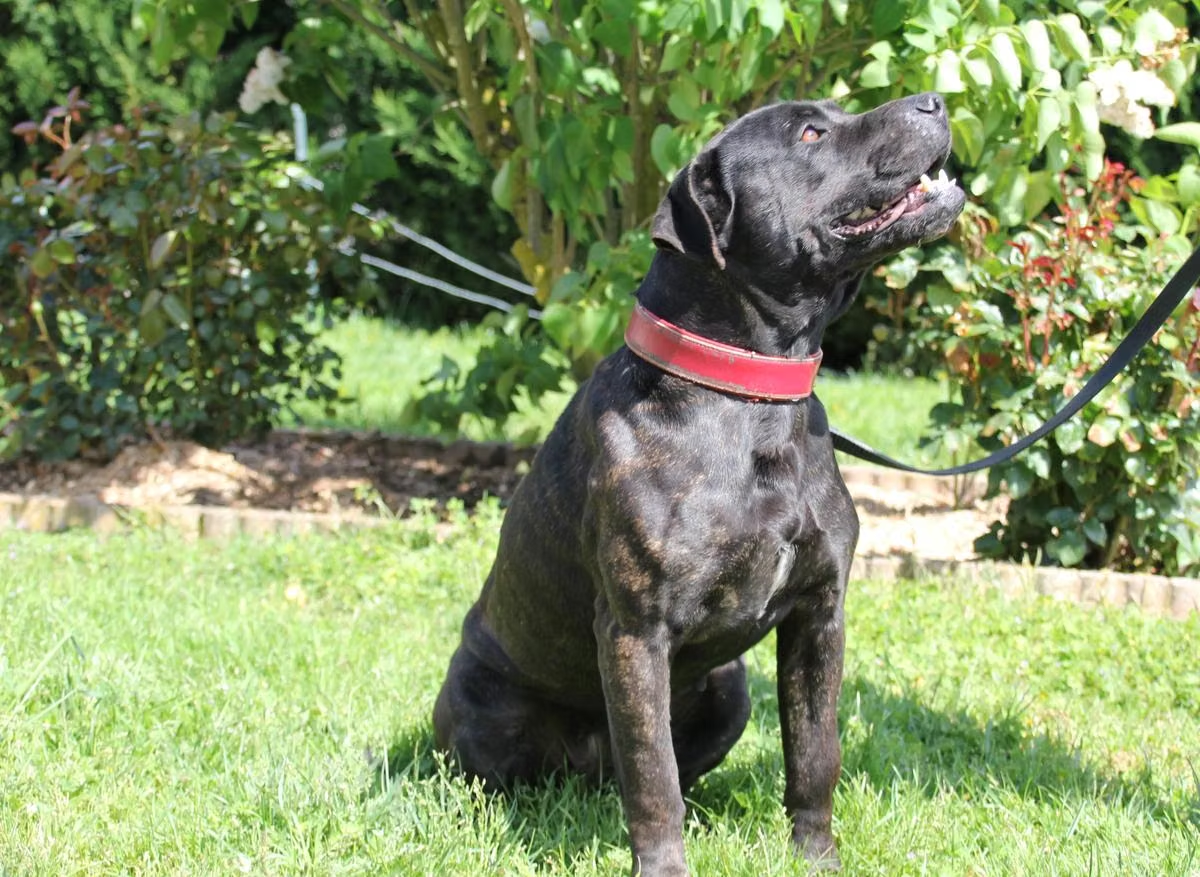



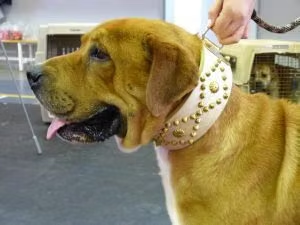
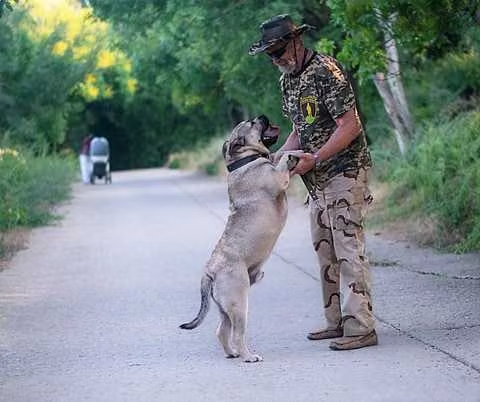
About the Ca de Bou
The Ca de Bou is a large Mallorcan mastiff from Spain, calm and devoted with family, and a confident, watchful guardian suited to a secure Indian home.
The Ca de Bou is a large molosser breed that developed on the Spanish island of Mallorca. The name is Catalan and translates loosely to bulldog, a reference to the work these dogs once did with cattle and in baiting contests. Older references also call the breed Perro de Presa Mallorquin or Mallorquin Mastiff.
This is a heavily built dog with a broad head, strong jaws, and a frame that is slightly longer than tall. Despite the powerful build, a well-raised adult is usually calm and quiet indoors. Breed literature describes it as steady, loyal, protective, courageous, and self-assured. Owners often notice a dog that observes a situation first and only steps in when there is genuine cause.
The Ca de Bou forms close bonds with its own family and tends to be patient with children it has been raised alongside. Around unfamiliar people it stays reserved and watchful. Guarding is instinctive rather than taught, so early socialisation and firm, consistent handling from puppyhood matter a great deal.
| Attribute | Detail |
|---|---|
| Origin | Mallorca, Spain |
| Size | Large |
| Lifespan | 10 to 12 years |
| Group / role | Molosser, guardian and family companion |
| Good with | Family and known children; reserved with strangers |
Who the breed suits
The Ca de Bou suits an owner with time for daily training and socialisation, and who is comfortable managing a strong, protective dog. It does best in a home with a securely walled compound and people around for most of the day. First-time dog owners may find it a handful, since its size and natural wariness call for confident, consistent handling from day one.
History and origin
The Ca de Bou took shape on Mallorca from old molosser and bulldog stock, once used with cattle and in baiting, before Spanish breeders rebuilt the type through the twentieth century.
The Ca de Bou originates on the Balearic island of Mallorca, off the eastern coast of Spain. Its lineage traces back to old molosser and mastiff-type dogs of the Iberian peninsula, crossed over generations with bulldog stock. The breed developed as a working dog, used to control cattle and guard property and livestock on Mallorcan farms.
During the period when animal baiting was practised across parts of Europe, dogs of this build were also pitted against bulls, which is where the name Ca de Bou comes from. The strong jaws, deep chest, and unflinching character were prized for this purpose. Once baiting was banned, numbers of these dogs fell sharply and the type nearly vanished.
Through the twentieth century, breeders in Spain worked to recover and stabilise the breed from the dogs remaining on Mallorca. The standard was formalised to fix the molosser build, the brindle and fawn coats, and the calm, watchful temperament. The breed carries the names Ca de Bou, Perro de Presa Mallorquin, and Mallorquin Mastiff across different registries internationally.
In India the Ca de Bou remains a rare sight and is not registered with the Kennel Club of India at present. A handful of enthusiasts import the breed or seek it out through specialist contacts abroad, drawn to a large protective dog with a measured, dependable temperament rather than a hyperactive one.
Appearance and breed standard
The Ca de Bou is a large, powerfully built molosser with a broad head, short coat, and brindle, fawn, or black colouring.
The Ca de Bou has a compact, muscular body that is slightly longer than it is tall. The head is large and broad, with a strong, deep muzzle and well-developed jaws. The skin around the neck and head can sit a little loose, and males typically carry heavier cheek and head development than females. The overall look is one of strength and balance rather than bulk for its own sake.
| Trait | Standard |
|---|---|
| Height | Males about 55 to 58 cm; females about 52 to 55 cm at the withers |
| Weight | Males about 35 to 38 kg; females about 30 to 34 kg |
| Coat | Short, harsh, close-lying single coat |
| Colour | Brindle, fawn, and black |
| Eyes | Oval, dark, set wide and somewhat deep |
Coat and colours
The coat is short and harsh to the touch, lying flat against the body, which keeps grooming simple. Accepted colours are brindle, fawn, and black, with brindle the most commonly seen. A small white patch on the chest and front feet is permitted under the standard. The short coat gives little protection in cold weather, though that is rarely a concern in most of India; the bigger challenge here is peak summer heat and the humidity of the monsoon months, when the dog needs shade, ventilation, and plenty of water rather than extra warmth.
Temperament and personality
The Ca de Bou is calm and devoted with its family, reserved with strangers, and a confident natural guardian that seldom acts without good reason.
The Ca de Bou is known for a steady, self-assured temperament. Indoors it is usually quiet and undemanding, content to settle near its people rather than seek constant attention. The breed forms strong attachments to its family and is generally gentle and patient with children it has grown up with, though given its size, supervision around small children is only sensible.
With strangers the dog stays reserved and watchful. It is not the type to bark at every sound, but it notices changes quickly and tends to place itself between its family and anything unfamiliar. This guarding behaviour is instinctive, which is why early and ongoing socialisation with people, places, and other animals matters from a young age, whether the dog lives in an independent house or a gated society.
How it gets on with other pets depends largely on upbringing. A Ca de Bou raised alongside other dogs and animals can live with them without trouble, but same-sex aggression and a strong prey drive toward smaller animals can surface without careful introduction. The breed does best with a confident owner who sets clear, consistent rules without resorting to harsh handling.
| Trait | Rating |
|---|---|
| Affection | 4 |
| Energy | 3 |
| Trainability | 3 |
| Vocalness | 2 |
| Shedding | 2 |
Care and grooming
The Ca de Bou needs only basic coat care but requires daily moderate exercise, secure space, and steady company to stay settled.
Day-to-day care of a Ca de Bou is fairly light on the grooming side and more demanding when it comes to exercise and management. The short coat is easy to maintain, but the breed's size and guarding nature mean it needs structure, activity, and time with its people to stay settled and well behaved.
Grooming
- Brush the coat once a week with a rubber grooming mitt or a short-bristle brush to lift out loose hair.
- Bathe only when needed, roughly once every two to three months or when visibly dirty.
- Check and clean the facial and neck skin folds regularly to keep them dry, especially during the monsoon.
- Trim nails every three to four weeks and check the ears for wax or odour.
- Brush teeth a few times a week to support dental health.
Exercise
- Provide two walks a day along with time in a securely fenced yard or compound.
- Aim for about 45 to 60 minutes of activity daily.
- Include short training games and scent work to give the mind some exercise too.
- Avoid hard running or jumping in puppies while the joints are still forming.
- Cut back on strenuous exercise during peak summer and humid spells, since the heavy build raises the risk of heatstroke.
Environment
The Ca de Bou is better suited to a house with a securely walled or fenced compound than to a small flat. It copes with a mild climate far better than with extreme cold or the height of an Indian summer. The breed wants to stay close to its family and can grow frustrated if left alone outdoors or shut away for long stretches, whether that is on a terrace or in a kennel run.
Nutrition and feeding
The Ca de Bou needs a balanced large-breed diet fed in measured meals, with controlled growth in puppies and care taken to avoid bloat and toxic foods.
A Ca de Bou does well on a complete diet formulated for large breeds, with protein and fat levels matched to its age and activity level. Since the breed is heavy-set and prone to joint strain, keeping it at a lean weight matters more than feeding for maximum size. Puppies should grow at a steady, controlled pace on a large-breed puppy food rather than being pushed to bulk up quickly.
| Life stage | Amount per day | Meals |
|---|---|---|
| Puppy (2 to 6 months) | About 300 to 500 g, by growth and food type | 3 to 4 |
| Junior (6 to 12 months) | About 400 to 550 g | 2 to 3 |
| Adult (1 year and older) | About 350 to 500 g | 2 |
| Senior (8 years and older) | Adjusted down for lower activity | 2 |
Treats and supplements
Keep treats to around 10 percent of daily calories and account for them when measuring out meals. Joint supplements containing glucosamine and chondroitin can help a large dog as it ages, and omega-3 fatty acids support the skin and coat. Always keep clean drinking water available, and check it more often in hot weather when the dog drinks more. Feeding two smaller meals rather than one large one, and holding off on strenuous exercise right after eating, lowers the risk of bloat, a real concern in deep-chested breeds. Check with a vet before adding any supplements.
Health and common conditions
The Ca de Bou typically lives 10 to 12 years and is generally hardy, though it can face joint, eye, and heat-related problems common to large molossers.
The Ca de Bou is generally a robust breed with a typical lifespan of 10 to 12 years. As with most large molossers, the main health concerns involve the joints, the heart, and tolerance of heat. Buying from breeders who screen their breeding dogs cuts down the chance of inherited problems considerably.
| Condition | Signs | Note |
|---|---|---|
| Hip dysplasia | Stiffness, limping, trouble rising | Common in large breeds; screen breeding stock |
| Elbow dysplasia | Front-leg lameness, reduced movement | Linked to growth and genetics |
| Entropion | Eyelid rolling inward, eye irritation | May need surgical correction |
| Bloat (gastric torsion) | Swollen abdomen, retching, distress | Medical emergency; act at once |
| Heat sensitivity | Heavy panting, weakness in warm weather | Limit exertion in heat, particularly through the summer and monsoon months |
Preventive care
- Keep vaccinations and parasite control up to date.
- Book annual veterinary check-ups, more often for senior dogs.
- Maintain a lean body weight to protect the joints.
- Ask breeders for hip and elbow screening results before taking a puppy.
- Watch for early signs of joint or eye trouble and act on them promptly.
Training and socialisation
The Ca de Bou is intelligent and capable but independent minded, so it learns best with early socialisation and calm, consistent positive training.
The Ca de Bou is intelligent and learns readily, but it has an independent streak and will test boundaries with an inconsistent handler. It responds well to a calm, confident owner who sets clear rules and applies them the same way every day. Harsh or forceful methods tend to backfire with this breed and can damage the trust between dog and handler. Because the guarding instinct runs strong, socialisation matters as much as obedience: a dog that has met plenty of people, dogs, and situations early on is far easier to manage once it reaches full size.
Basics
- Begin socialisation and handling in the first weeks at home.
- Teach name response and a reliable recall early on.
- Work on loose-lead walking before the dog reaches full size and strength.
- Build a solid sit, down, and stay for control in public places.
- Practise calm greetings so the guarding instinct does not tip into reactivity.
- Keep sessions short, positive, and consistent across everyone in the household.
Breeding and raising young
The Ca de Bou reaches breeding maturity around two years, carries an average litter of six to eight pups after a nine-week pregnancy, and needs health-tested parents.
Responsible breeding of the Ca de Bou centres on health-tested parents and a stable temperament. Dogs are usually bred once they are physically and mentally mature, generally from about two years of age, by which point hip and elbow screening can be assessed properly. Mating follows the usual canine cycle, with females coming into season roughly twice a year.
Pregnancy lasts about 63 days. Litters average six to eight puppies, though larger litters do occur. The mother needs a quiet, warm whelping space and increased nutrition through the later weeks of pregnancy and while nursing. Given the breed's broad heads, some litters may need veterinary support at whelping, so planning the birth with a vet on standby is a sound idea.
Puppies should stay with the mother and littermates until at least eight weeks of age. Early handling, gentle exposure to household sights and sounds, and the first stages of socialisation during this period shape the calm, confident adult the breed is known for.
| Metric | Value |
|---|---|
| Breeding maturity | About 2 years |
| Cycle frequency | Roughly twice a year |
| Gestation | About 63 days |
| Average litter size | 6 to 8 puppies |
| Weaning age | About 6 to 8 weeks |
| Leave for new home | 8 weeks or older |
Registering a Ca de Bou in India: profile and microchip
Municipal licences cover the paperwork; a free United Pet Club record is what actually connects your Ca de Bou to your phone.
How to register a Ca de Bou in India
A Ca de Bou that slips past the gate of the housing society is identified by its record, not by its pedigree. Provide that record without spending a rupee: the free United Pet Club profile carries your telephone number, the dog's photograph, and its details for life. Register your dog and the matter is settled.
Should your Ca de Bou already carry a microchip, the number must still be recorded separately, since the vet performs only the implant. Registering the microchip under the free lifetime plan accepts chips from any manufacturer an Indian vet works with, keeps every update free should your household shift cities, and leaves the record searchable at any hour. Create your free account and complete both tasks in one sitting.
How do I register my Ca de Bou in India?
Create a free United Pet Club account, enter your Ca de Bou's details along with a photograph, and save the profile. The lifetime plan maintains the record at no cost, and any municipal licence you hold sits alongside it rather than replacing it.
How do I register my Ca de Bou's microchip?
Enter the fifteen digit chip number into your free account together with your current address, phone number, and email. The lifetime plan covers the registration and every subsequent update without charge, whatever the chip's manufacturer.
Is registration compulsory for a Ca de Bou in India?
Several municipal corporations, Delhi and Mumbai among them, require dogs to be licensed under local by-laws. The United Pet Club profile is separate and voluntary, and it is the record a finder anywhere can actually search, free of cost.
What does it cost to register a Ca de Bou?
Nothing whatsoever. The free lifetime plan includes the profile, the microchip record, and unlimited updates, with no renewal fee at any point.
Frequently asked questions
Common questions about the Ca de Bou cover its size, temperament, care needs, lifespan, suitability for families, and availability in India.
How big does a Ca de Bou get?
It is a large breed. Males stand about 55 to 58 cm at the withers and weigh around 35 to 38 kg, while females are a little smaller, at about 52 to 55 cm and 30 to 34 kg.
What is the Ca de Bou's temperament like?
It is calm, loyal, and self-assured. The breed is devoted and usually quiet with its family, reserved with strangers, and a natural guardian that watches a situation before it acts.
Is the Ca de Bou difficult to maintain?
Grooming is easy thanks to the short coat, but the breed needs daily exercise, a secure home, early socialisation, and consistent training. Its size and guarding nature make it a fair amount of work for the owner.
What is the lifespan of a Ca de Bou?
The typical lifespan is 10 to 12 years. Keeping the dog lean, screening for joint problems, and regular veterinary check-ups all support a healthy life.
Is the Ca de Bou good with families and children?
Yes, with the right upbringing. It is generally patient and gentle with children it has grown up with, though given its size, young children should always be supervised around it.
Is the Ca de Bou suitable for first-time dog owners?
It is usually better suited to owners with some experience. A strong, protective guardian needs confident, consistent handling, which can be a lot for someone new to dogs.
Where can I find a Ca de Bou in India?
It is fairly uncommon outside Spain and the Balearic Islands, and rarer still in India, where it is not registered with the Kennel Club of India. Finding a puppy usually takes time and means contacting specialist breeders abroad who health-test their dogs.
From the community
Ask about the Ca de BouNo questions about the Ca de Bou yet. Be the first to ask.
Browse Dog breeds