The Brittany is a bright, athletic French pointing breed, beloved for its boundless energy and friendly, eager-to-please nature.
How the Brittany coat is built, and what that means when you groom it.
Caution: A Brittany coat mats easily.
Fine or long hair tangles at the base of the coat, out of sight, where the mats tighten and pull on the skin. Brushing has to reach right down to the roots in sections, not just skim the surface.
A few of the Brittany profiles members have added to United Pet Club.
The Brittany is a medium-sized French pointing breed bred for bird hunting, with an athletic build, high energy and a friendly, eager-to-please nature.
The Brittany is a medium-sized gundog from the Brittany region of north-western France. It was developed to point and retrieve game birds, and it continues to work as a hunter as well as a companion and competition dog. The breed is compact and leggy, built for stamina over long days in the field.
Brittanys learn fast and grow very attached to their people. They are usually friendly with strangers and other dogs, and they are at their best when they have a job or regular activity. Without enough exercise and mental work, the breed can turn restless.
The name was shortened from "Brittany Spaniel" in some registries because the breed works more like a pointer than a spaniel. It points game rather than flushing it at close range.
| Attribute | Detail |
|---|---|
| Origin | France (Brittany region) |
| Size | Medium |
| Lifespan | 12 to 14 years |
| Group/role | Sporting / pointing gundog |
| Good with | Active families, older children, other dogs |
The Brittany suits owners who can give it daily vigorous exercise and want a dog that joins them outdoors. It fits hunters, runners, trekkers and people involved in dog sports such as agility or field trials. It is less suited to flat living with little activity, or to households that are away for long hours, because it forms strong bonds and needs regular stimulation.
The Brittany developed in the Brittany region of France during the 19th century as a versatile bird dog, and it gained formal recognition in France in 1907.
The Brittany comes from the province of Brittany in north-western France, where rural hunters needed a small, fast dog that could find, point and retrieve game birds across varied ground. Dogs of this general type appear in regional records and artwork from earlier centuries, though the modern breed took shape in the 1800s.
The breed is thought to have formed from local land spaniels crossed with pointing and setter-type dogs, some of them brought to the area by visiting bird hunters. The result was a leggy, pointing dog smaller than most continental gundogs but able to cover open country.
The first breed standard was drawn up in France, and the Brittany was officially recognised there in 1907. The early standard described a dog bred for practical hunting rather than show, and field ability stayed central to the breed.
The Brittany later spread to other countries, including the United States, where it was recognised by the American Kennel Club in 1934. For many years English-speaking registries called it the "Brittany Spaniel", but the American Kennel Club dropped "Spaniel" in 1982 to reflect its pointing style of work.
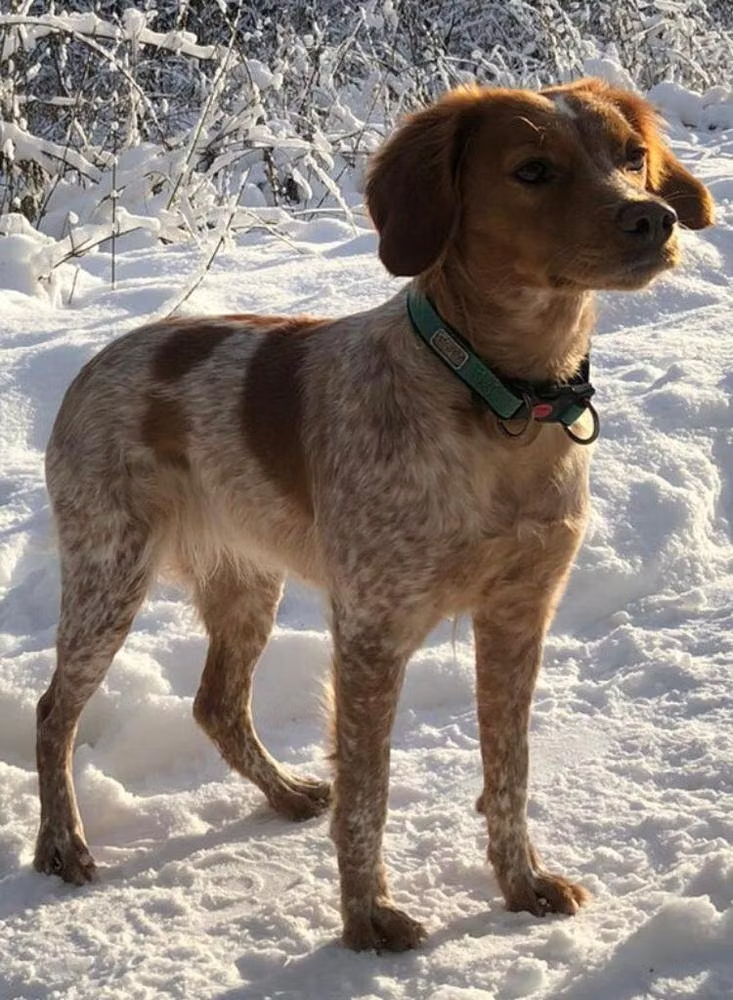
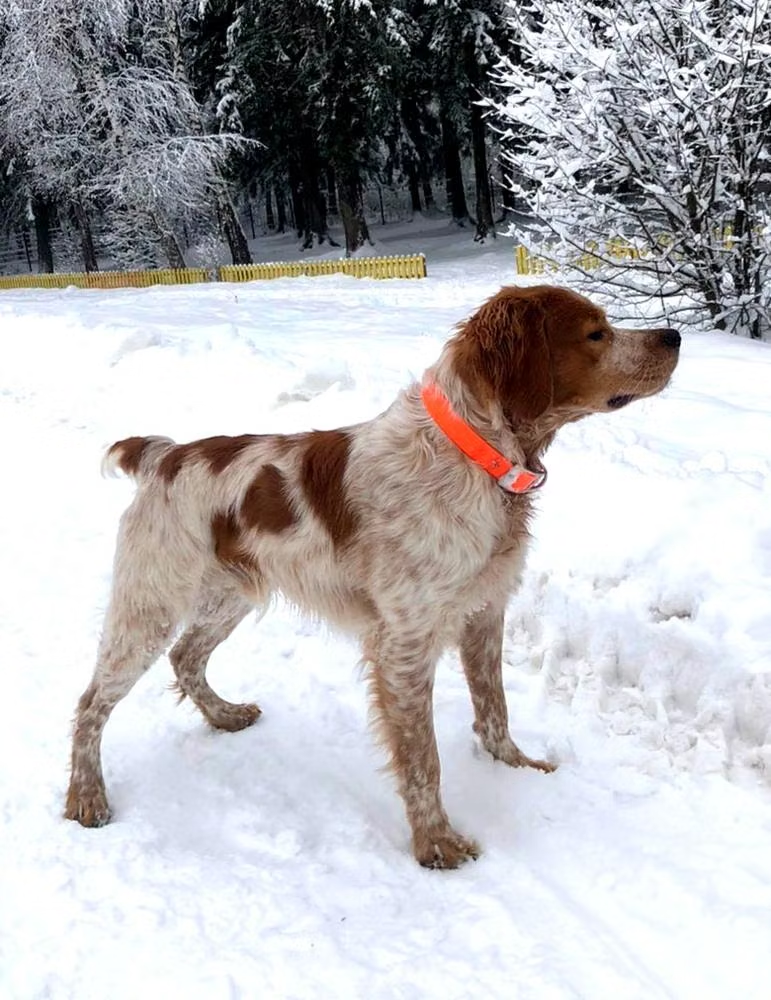
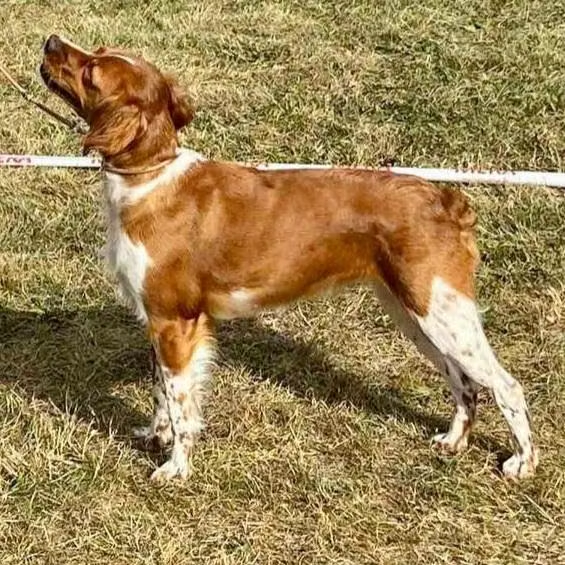
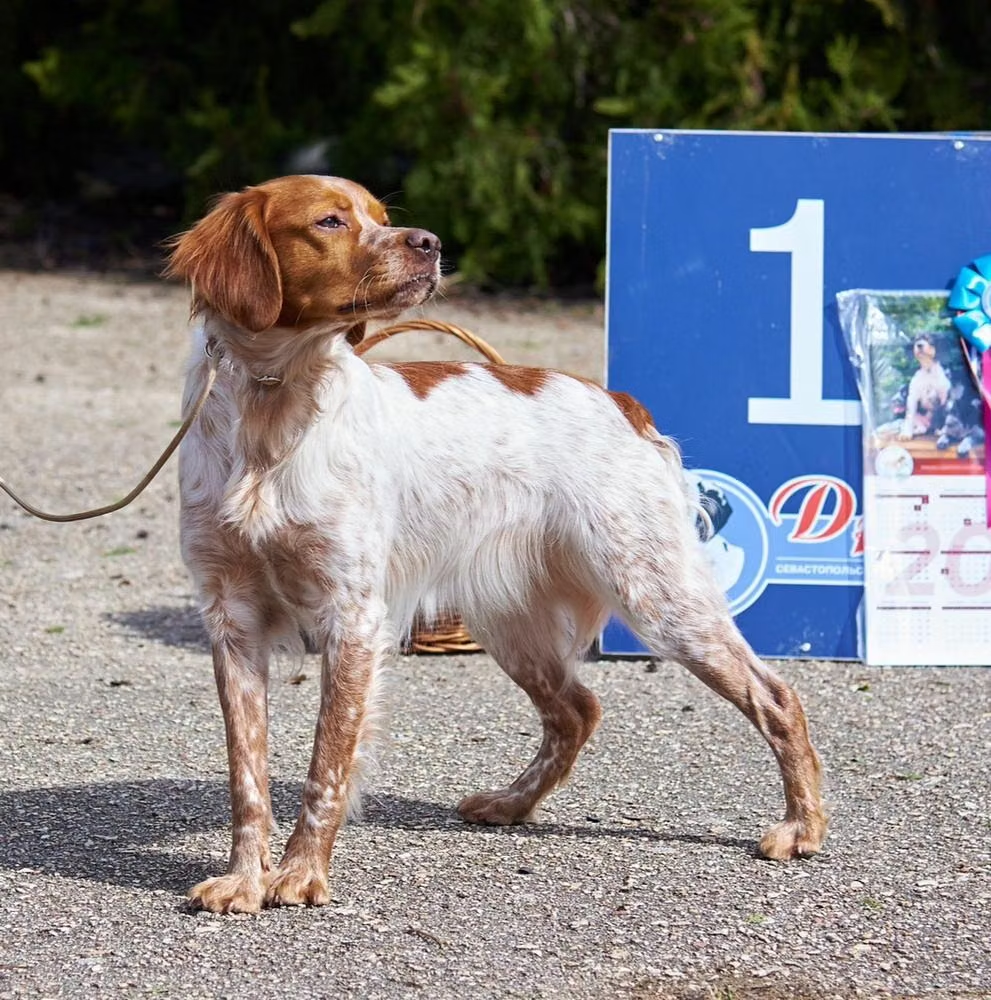
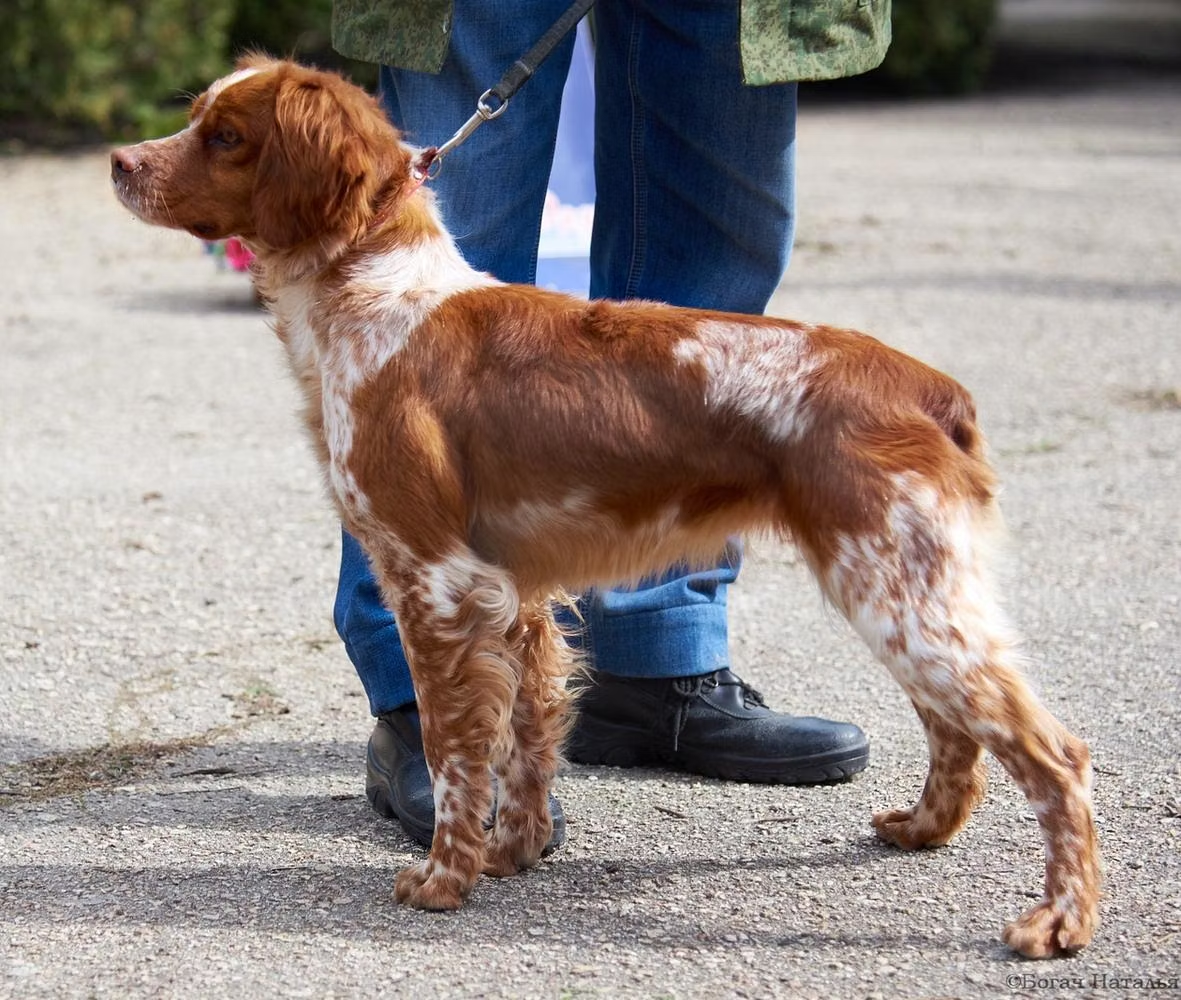
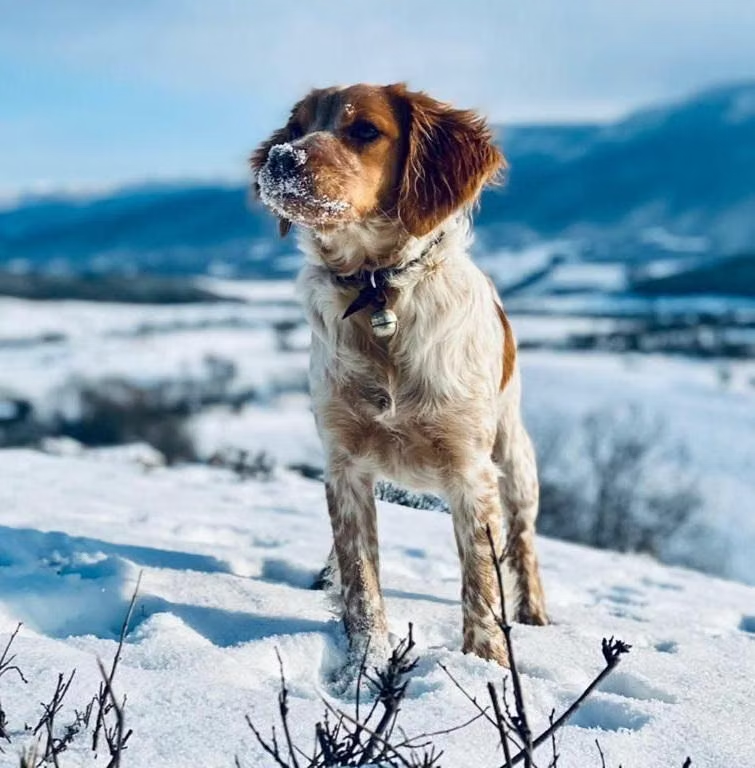
The Brittany is a compact, leggy medium dog standing about 17.5 to 20.5 inches tall, with a dense flat or wavy coat in orange and white, liver and white, or roan patterns.
The Brittany is square in outline, with a body roughly as long as it is tall and legs that give it a high, agile stance. It looks lighter and more athletic than many other gundogs. The expression is alert and soft, and many Brittanys are born with a naturally short tail or no tail, while others have the tail docked where that practice is permitted.
| Trait | Detail |
|---|---|
| Height | Approximately 17.5 to 20.5 inches (44 to 52 cm) at the shoulder |
| Weight | Approximately 30 to 40 pounds (14 to 18 kg) |
| Coat | Dense, flat or slightly wavy, with light feathering on the legs and ears |
| Colours | Orange and white, liver and white, plus roan and tricolour patterns |
| Eyes | Amber to brown, set well back, with an alert and gentle expression |
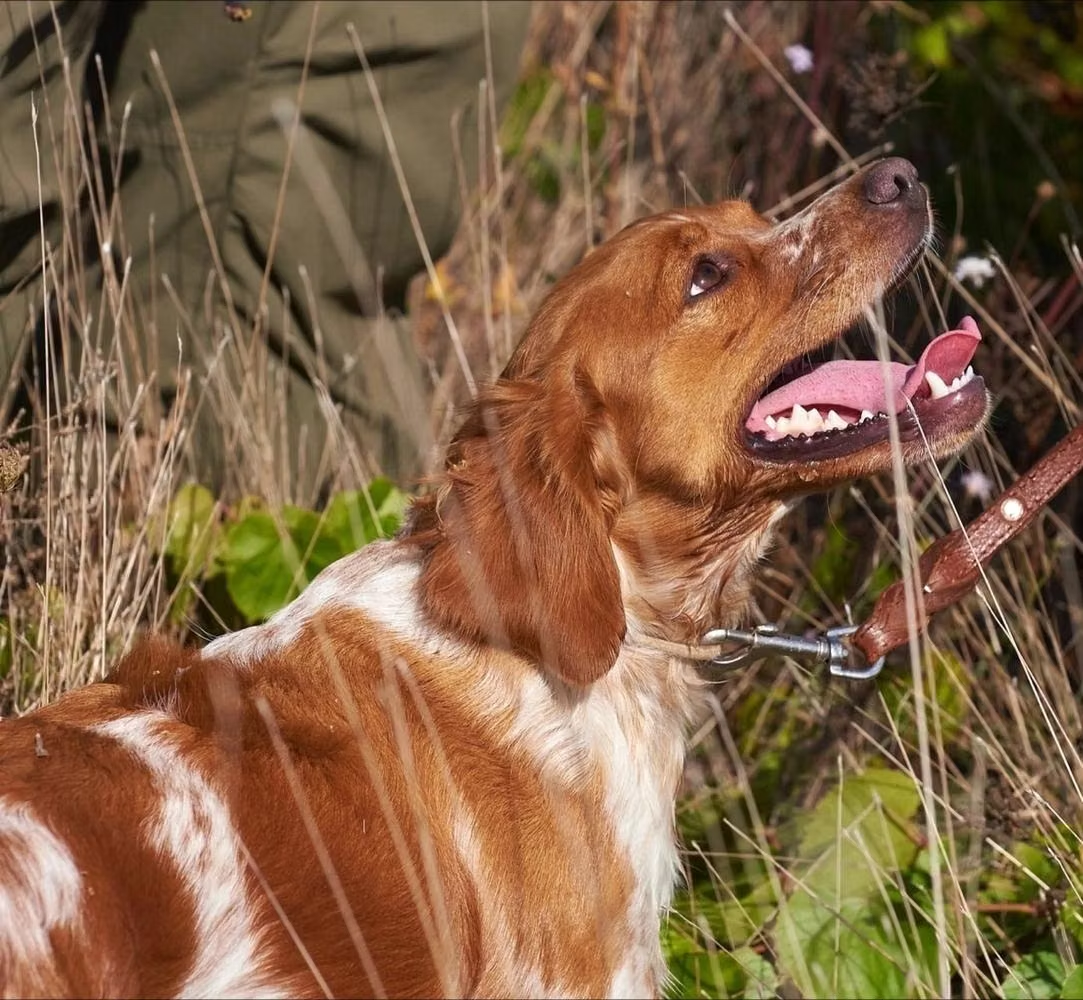
The coat is single, of medium length, and lies flat or with a slight wave. It is never curly or wiry. Feathering on the ears and the backs of the legs is moderate, which keeps grooming manageable for a sporting dog. Orange and white is common, as is liver and white. Roan ticking, where coloured hairs mix into the white, is accepted, and some dogs carry tricolour markings. Black is not accepted in the standard for most registries.
Brittanys are friendly, intelligent and eager to please, usually good with family, strangers and other dogs, but they need an active home to stay settled.
The Brittany is a sociable, upbeat dog that stays close to its family. It is intelligent and reads people well, which makes it responsive in training but also sensitive to harsh handling. Some lines are soft enough that loud corrections cause them to shut down.
With family members the breed is affectionate and playful, and it usually gets along with older children who can match its energy. Towards strangers most Brittanys are open and friendly rather than guarded, so the breed is not a strong watchdog. With other dogs it tends to be social, and many live easily in multi-dog homes. Because of its bird-hunting background, it may chase small pets, so introductions to cats or small animals should be careful.
A Brittany that does not get enough exercise can become anxious, mouthy or destructive. The breed thrives on activity, company and a clear routine.
| Trait | Rating |
|---|---|
| Affection | 5 |
| Energy | 5 |
| Trainability | 5 |
| Vocalness | 3 |
| Shedding | 3 |
The Brittany has modest grooming needs but high exercise demands, requiring at least an hour of vigorous daily activity to stay healthy and calm.
The Brittany adapts to most climates and tolerates cold and wet weather well thanks to its working background. It does best in a home with a yard and an active owner, but it can live in smaller spaces if its exercise needs are fully met. It is an indoor companion that wants to be near its family rather than left alone outdoors.
A Brittany needs a balanced diet suited to an active medium dog, fed in measured meals to support its high energy without overfeeding.
Brittanys are active dogs and generally do well on a complete diet formulated for medium-sized working or sporting breeds. Daily food needs depend on age, weight and activity level, with hard-working hunting dogs needing more than companion dogs of the same size. Choose a food that lists a named animal protein among the first ingredients, and adjust the amount to keep the dog lean. Ribs should be felt easily but not seen.
| Life stage | Amount per day | Meals per day |
|---|---|---|
| Puppy (2 to 6 months) | Per puppy-food label, divided | 3 to 4 |
| Junior (6 to 12 months) | Roughly 1.5 to 2 cups | 2 to 3 |
| Adult (1 to 7 years) | Roughly 1.5 to 2 cups | 2 |
| Senior (8 years and older) | Slightly reduced, adjusted for activity | 2 |
Keep treats to about 10 percent of daily calories so the dog stays lean. Most Brittanys on a complete, balanced diet do not need supplements. Joint support or fish oil may be suggested by a vet for older or hard-working dogs. Always provide constant access to fresh water, especially around exercise.
The Brittany is a generally healthy breed with a typical lifespan of 12 to 14 years, though it can be affected by hip dysplasia, epilepsy and ear infections.
The Brittany is considered one of the hardier sporting breeds and often stays active into old age. The typical lifespan is 12 to 14 years. Responsible breeders screen for inherited conditions, and routine veterinary care helps catch problems early. The breed's drop ears and outdoor lifestyle make ear care a regular concern.
| Condition | Signs | Note |
|---|---|---|
| Hip dysplasia | Stiffness, limping, trouble rising | Inherited joint problem; parents should be hip-screened |
| Epilepsy | Seizures, collapse, disorientation | Can be inherited; managed with veterinary medication |
| Ear infections | Head shaking, odour, scratching at ears | Linked to drop ears and moisture; prevent with regular cleaning |
| Hypothyroidism | Weight gain, low energy, coat changes | Diagnosed by blood test; treated with daily medication |
The Brittany is highly trainable and eager to please, responding best to consistent, reward-based training and early socialisation.
Brittanys learn quickly and want to work with their handlers, which makes them one of the more trainable gundogs. They are sensitive, so they respond far better to encouragement than to harsh corrections. Their energy and intelligence mean they need a steady programme of training and activity, or they will find their own outlets. Early socialisation and basic obedience set the foundation for hunting, sport or simple good manners at home.
Female Brittanys are typically bred after full maturity, carry a litter for about 63 days, and usually produce around six to eight puppies.
Brittanys reach sexual maturity at roughly 6 to 12 months, but responsible breeders wait until the dog is physically and mentally mature, usually around two years, and has passed health screening before breeding. Females come into heat about twice a year. Mating is timed to the female's fertile window, and health tests for hips and inherited conditions should be completed beforehand.
Gestation lasts about 63 days. Litters commonly contain six to eight puppies, though the number varies. Puppies are born blind and deaf and depend fully on the dam in the first weeks. Weaning begins around three to four weeks, and puppies usually go to new homes at about eight weeks, after early socialisation and a first veterinary check. Breeding should be left to knowledgeable breeders who screen their dogs and place puppies responsibly.
| Metric | Value |
|---|---|
| Sexual maturity | About 6 to 12 months |
| Recommended breeding age | Around 2 years, after health screening |
| Heat cycle | Roughly twice per year |
| Gestation | About 63 days |
| Average litter size | 6 to 8 puppies |
| Weaning | About 3 to 4 weeks |
| Typical age to new home | About 8 weeks |
Municipal licences cover the paperwork; a free United Pet Club record is what actually connects your Brittany to your phone.
A Brittany that slips past the gate of the housing society is identified by its record, not by its pedigree. Provide that record without spending a rupee: the free United Pet Club profile carries your telephone number, the dog's photograph, and its details for life. Register your dog and the matter is settled.
A microchip without a registration is merely a number under the skin. File your Brittany's fifteen digit number with United Pet Club and it becomes a working address: free for life, open to every chip brand, and searchable from any clinic or shelter in the country or abroad. Microchip registration first, the free account alongside.
Create a free United Pet Club account, enter your Brittany's details along with a photograph, and save the profile. The lifetime plan maintains the record at no cost, and any municipal licence you hold sits alongside it rather than replacing it.
Enter the fifteen digit chip number into your free account together with your current address, phone number, and email. The lifetime plan covers the registration and every subsequent update without charge, whatever the chip's manufacturer.
Several municipal corporations, Delhi and Mumbai among them, require dogs to be licensed under local by-laws. The United Pet Club profile is separate and voluntary, and it is the record a finder anywhere can actually search, free of cost.
Nothing whatsoever. The free lifetime plan includes the profile, the microchip record, and unlimited updates, with no renewal fee at any point.
Common questions about the Brittany cover its size, temperament, exercise needs, lifespan, suitability for families and availability.
The Brittany is a medium dog. Adults usually stand about 17.5 to 20.5 inches at the shoulder and weigh roughly 30 to 40 pounds, with males slightly larger than females.
Yes, for active families. They are affectionate and friendly, generally good with older children and other dogs, but they need plenty of daily exercise to be calm and content at home.
At least an hour of vigorous activity a day, such as running, fetch, trekking or swimming, plus mental stimulation. Working and hunting lines often need more.
Grooming is fairly easy thanks to the medium single coat, but the breed's high energy makes it demanding. Owners must commit to daily exercise and training to keep the dog well behaved.
The typical lifespan is 12 to 14 years. Good nutrition, regular veterinary care and a healthy weight help a Brittany live a full life.
They are moderately vocal. They may bark to alert or out of excitement or boredom, but they are not known as constant barkers when given enough exercise and attention.
They are a popular sporting breed and are available from breeders in many countries, as well as through breed-specific rescues. Working and field lines can have waiting lists.