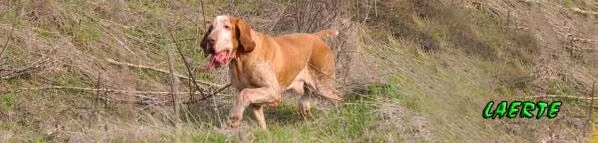
The Bracco Italiano is a gentle, affectionate Italian pointing dog that pairs a sweet family temperament with a strong, methodical hunting style.
How the Bracco Italiano coat is built, and what that means when you groom it.
A few of the Bracco Italiano profiles members have added to United Pet Club.
The Bracco Italiano is a large Italian pointing breed with a gentle, family-oriented temperament and a steady working style. It lives about 12 to 14 years.
The Bracco Italiano is among the oldest pointing breeds native to Europe. Italian hunters developed it to locate game birds and hold a steady point until the gun came up. Rather than sprinting flat out, the breed works at a measured trot, which suits a hunter on foot far better than a dog built purely for speed.
At home, the Bracco is affectionate and stays close to its people. It is not the sort of dog that wanders off to explore on its own; it would rather sit near the family. The long, drooping ears, loose skin around the head, and calm expression give it a somewhat solemn look that matches its even nature.
This is a big dog with genuine working drive, and in India that drive needs an outlet even where there is no hunting tradition to speak of. A Bracco that gets its daily exercise and plenty of company is usually settled indoors. Deny it both, and the same dog turns restless and hard to live with.
| Attribute | Detail |
|---|---|
| Origin | Italy |
| Size | Large |
| Lifespan | 12 to 14 years |
| Group / role | Pointing gundog |
| Good with | Families, children, and other dogs when socialised |
The Bracco Italiano suits an active household that can commit to daily exercise and steady companionship, not a family looking for a low-effort pet. Hunters who want a pointing dog that works close and at a moderate pace will find it a natural fit, and so will family owners with no shooting background, provided they can meet its exercise needs. It does not suit anyone who is out of the house for long stretches at work, since the breed dislikes being left alone for hours on end.
The Bracco Italiano is an ancient Italian pointing breed going back centuries. Two separate regional types were eventually combined into the single standard recognised today.
The Bracco Italiano's roots lie on the Italian peninsula, and it ranks among the oldest pointing breeds anywhere. Dogs of similar build turn up in Italian paintings and writings from the Renaissance, used to find game for hunters who worked first with nets and later with firearms.
For most of its history the breed came in two regional forms. A heavier type, often white and orange, was linked to Piedmont in the northwest, while a leaner, roan-brown type was associated with Lombardy further north. Both shared the same working purpose but differed in build and colour.
Numbers fell sharply during the upheavals of the early twentieth century, low enough to put the breed's survival in doubt. Italian breeders set about rebuilding the population and merging the two regional strains into one recognised standard, which today describes a single Bracco Italiano in two accepted colour patterns.
The breed found a wider following outside Italy from the later twentieth century onward, as gundog enthusiasts abroad imported stock and set up their own breeding lines. In India it remains a rare sight, known mainly to a small circle of gundog and show enthusiasts rather than the general pet-owning public, though interest has grown as the breed has become more visible at international shows.
The Bracco Italiano is a large, powerfully built pointing dog with a long head, drooping ears, and a short, dense coat in white-and-orange or roan-brown patterns.
The Bracco Italiano is a large, athletic dog with solid bone and a squarish to rectangular outline. Its head is the most recognisable feature: long and lean, with a pronounced occiput, a slight downward slope to the muzzle, and long, low-set ears framing the face. Loose skin and a soft, rather serious expression complete the picture. The chest is deep, and the whole build favours steady, ground-covering movement at a trot rather than a sprint.
| Trait | Standard |
|---|---|
| Height | Roughly 55 to 67 cm (about 22 to 26 in) at the withers |
| Weight | About 25 to 40 kg (55 to 88 lb) |
| Coat | Short, dense, and glossy |
| Colours | White, white and orange, white and chestnut, or roan in those shades |
| Eyes | Fairly large, soft expression, amber to ochre depending on coat |
The coat is short, fine, and glossy, lying flat against the body and asking for very little grooming. Two colour families are recognised. The first is white, often with orange or amber patches, sometimes broken up with roan. The second is white with chestnut patches, again sometimes appearing as a darker roan. A symmetrical mask on the head is common and acceptable. Nose pigment ranges from flesh-coloured to brown in the chestnut dogs.
The Bracco Italiano is affectionate, gentle, and intelligent. It bonds closely with its family, generally gets along with children and other dogs, and dislikes being left alone.
The Bracco Italiano has a sweet, steady character. It is affectionate with its family and tends to seek out human company, often trailing its people from room to room around the house. With children it is usually patient and gentle, though given its size, supervision around very young kids is only sensible.
With strangers the Bracco is typically friendly or politely reserved, not sharp or suspicious. It is not a natural guard dog, though its size and deep bark can put off an unexpected visitor at the gate. With other dogs it is generally sociable, particularly when raised alongside them, and many live comfortably with a cat they have grown up with.
The flip side of this devotion is sensitivity. The breed does not respond well to harsh handling and can turn anxious or destructive if left isolated for long periods, something worth keeping in mind in Indian households where domestic help or long office hours can mean the dog is alone for stretches of the day. A bored or under-exercised Bracco may dig, chew, or bark. Regular mental work and daily company keep its temperament at its best.
| Trait | Rating |
|---|---|
| Affection | 5 |
| Energy | 4 |
| Trainability | 4 |
| Vocalness | 3 |
| Shedding | 3 |
The Bracco Italiano needs daily exercise and steady company. Its short coat is low-maintenance, but the long ears and loose facial skin need routine attention, especially through the monsoon.
The Bracco Italiano does best in a home with secure outdoor space and a family around for much of the day. It can adapt to a range of housing, from an independent house with a garden to a large flat, provided its exercise needs are met, but it is not suited to long hours alone or to owners who cannot commit to daily activity. A securely fenced yard helps, since a bird-finding instinct can pull the dog toward interesting scents, and it copes better with hot, humid weather when it has shade and water on hand throughout the day.
The Bracco Italiano needs a balanced diet suited to a large, active dog, with portions adjusted for life stage and workload to keep excess weight off.
Feed a complete diet formulated for large, active breeds, with protein and fat levels matched to the dog's workload. Working and field dogs burn more energy than companion dogs and may need larger portions during an active hunting or field-trial season. Because the breed has a deep chest, splitting the daily ration into two meals and avoiding heavy exercise straight after eating are sensible precautions. Keep the dog lean and well-muscled rather than letting it carry extra weight, particularly in warmer parts of the country where excess body fat makes the heat harder to bear.
| Life stage | Amount per day | Meals |
|---|---|---|
| Puppy (2 to 6 months) | Per puppy-food label, divided | 3 to 4 |
| Junior (6 to 12 months) | Per label for projected adult weight | 2 to 3 |
| Adult (active) | Roughly 350 to 500 g of quality dry food | 2 |
| Senior / less active | Reduced portion, lower calorie | 2 |
Keep treats to about ten percent of daily calories and use them mainly as training rewards. Most dogs on a complete diet need no extra supplements, but a vet may suggest joint support for a large working breed, or a fish-oil source for the coat and skin. Always check with a vet before starting any supplement.
The Bracco Italiano is generally a sound breed with a 12 to 14 year lifespan, though it is prone to a few large-breed orthopaedic problems and ear issues linked to its drooping ears.
The Bracco Italiano is generally a healthy breed and typically lives 12 to 14 years. Being large and deep-chested, it carries some of the orthopaedic and gastric risks common to dogs of that build, and its long ears make ear care an ongoing job rather than an occasional one. Buying from a breeder who screens the parent dogs cuts down the odds of inherited problems considerably.
| Condition | Signs | Note |
|---|---|---|
| Hip and elbow dysplasia | Stiffness, limping, reluctance to rise | Screened in breeding stock; manage weight and joint load |
| Bloat (gastric torsion) | Swollen belly, retching, restlessness | Emergency; split meals and rest after eating help lower the risk |
| Ear infections | Head shaking, odour, scratching at the ears | Linked to long pendulous ears; clean and check regularly, especially in the monsoon |
| Eye conditions (e.g. entropion) | Squinting, discharge, rubbing the eye | Caused by eyelid or lid-margin faults; may need veterinary treatment |
The Bracco Italiano is intelligent and keen to please, which makes it trainable, but it is sensitive and responds best to patient, reward-based methods.
The Bracco Italiano is intelligent and naturally cooperative, and it generally wants to work with its handler rather than against them. That makes the breed responsive to training, especially for field tasks such as pointing and retrieving. The main thing to watch is its sensitivity. Harsh corrections tend to shut the breed down or make it anxious, so calm, consistent handling gets far better results. Early socialisation with people, dogs, and everyday situations, including the noise and bustle typical of Indian streets, helps produce a confident adult dog.
The Bracco Italiano is a large breed that matures slowly, carries an average-sized litter, and does best with health-screened parents and careful early socialisation of the puppies.
Being a large breed, the Bracco Italiano matures slowly and should not be bred until it is physically and mentally grown, generally well into its second year. Responsible breeding starts with screening both parents for hip and elbow dysplasia and known eye conditions, and selecting for a sound temperament as much as for conformation. In India, breeders working with the Kennel Club of India should register litters and follow KCI's breeding guidelines alongside these health checks.
Gestation in dogs runs to about nine weeks. Litters are typically moderate in size for a large breed. The dam needs more food through late pregnancy and lactation, and a quiet, clean whelping area away from household traffic.
Early handling shapes much of the adult dog. Puppies do well with gentle daily handling, exposure to household sounds and surfaces, and plenty of contact with people before they go to new homes. Because the breed is sensitive and people-focused, this early socialisation leaves a lasting mark on confidence and trainability. Puppies should stay with the dam and littermates until they are properly weaned and settled, usually around eight weeks.
| Metric | Value |
|---|---|
| Breeding maturity | Best after about 18 to 24 months |
| Gestation | About 63 days (roughly 9 weeks) |
| Typical litter size | Around 6 to 10 puppies |
| Weaning age | Roughly 6 to 8 weeks |
| Recommended health screens | Hips, elbows, and eyes of both parents |
Municipal licences cover the paperwork; a free United Pet Club record is what actually connects your Bracco Italiano to your phone.
A Bracco Italiano that slips past the gate of the housing society is identified by its record, not by its pedigree. Provide that record without spending a rupee: the free United Pet Club profile carries your telephone number, the dog's photograph, and its details for life. Register your dog and the matter is settled.
Should your Bracco Italiano already carry a microchip, the number must still be recorded separately, since the vet performs only the implant. Registering the microchip under the free lifetime plan accepts chips from any manufacturer an Indian vet works with, keeps every update free should your household shift cities, and leaves the record searchable at any hour. Create your free account and complete both tasks in one sitting.
Create a free United Pet Club account, enter your Bracco Italiano's details along with a photograph, and save the profile. The lifetime plan maintains the record at no cost, and any municipal licence you hold sits alongside it rather than replacing it.
Enter the fifteen digit chip number into your free account together with your current address, phone number, and email. The lifetime plan covers the registration and every subsequent update without charge, whatever the chip's manufacturer.
Several municipal corporations, Delhi and Mumbai among them, require dogs to be licensed under local by-laws. The United Pet Club profile is separate and voluntary, and it is the record a finder anywhere can actually search, free of cost.
Nothing whatsoever. The free lifetime plan includes the profile, the microchip record, and unlimited updates, with no renewal fee at any point.
Common questions about the Bracco Italiano cover its size, temperament, care needs, lifespan, suitability for families, and where to find one in India.
It is a large breed. Adults generally stand about 55 to 67 cm (22 to 26 in) at the shoulder and weigh roughly 25 to 40 kg (55 to 88 lb), with males larger than females.
Yes. The breed is affectionate and gentle and generally does well with children. Given its size, keep an eye on interactions with very young kids.
Grooming itself is easy, thanks to the short coat, but the breed needs one to two hours of daily exercise, regular ear care, and steady company. It asks a lot of your time rather than your grooming kit.
Most live 12 to 14 years with good care, regular veterinary check-ups, and a healthy weight.
It can adjust to different homes if its exercise needs are fully met, but it does better in a house with some outdoor space and people around for much of the day than in a small flat with long hours alone.
Yes. As a working pointing breed, it needs daily physical activity along with mental stimulation. Without enough exercise it can turn restless and destructive.
The breed is uncommon in India, so expect a wait or the need to travel, and check with the Kennel Club of India for registered breeders who health-test their dogs before buying.