The Bedlington Terrier is a gentle, lamb-like terrier known for its distinctive coat and its mix of affectionate calm and terrier fire.
How the Bedlington Terrier coat is built, and what that means when you groom it.
Caution: A Bedlington Terrier coat mats easily.
Fine or long hair tangles at the base of the coat, out of sight, where the mats tighten and pull on the skin. Brushing has to reach right down to the roots in sections, not just skim the surface.
Information: A Bedlington Terrier needs clipping every few weeks.
This coat keeps growing rather than shedding out, so it has to be trimmed every few weeks. Left to grow it mats down against the skin and traps moisture, dirt and heat.
A few of the Bedlington Terrier profiles members have added to United Pet Club.
The Bedlington Terrier is a small English terrier with a lamb-like coat and a temperament that combines gentle affection at home with genuine terrier drive.
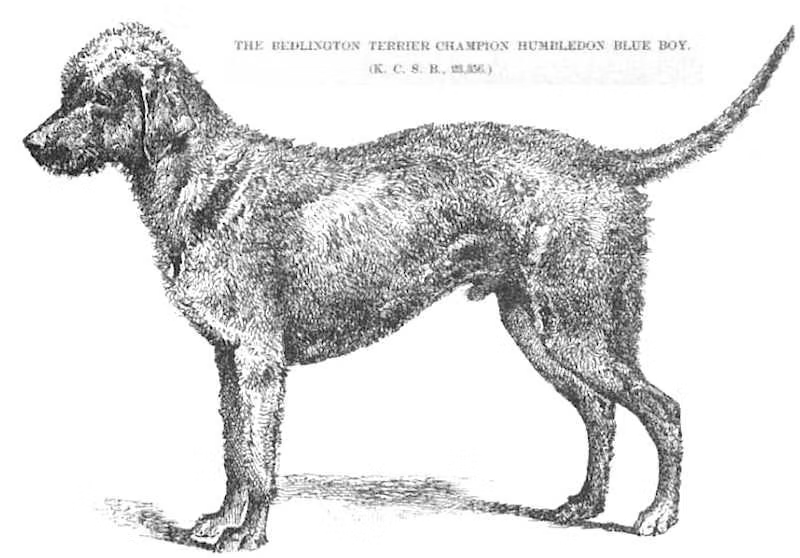
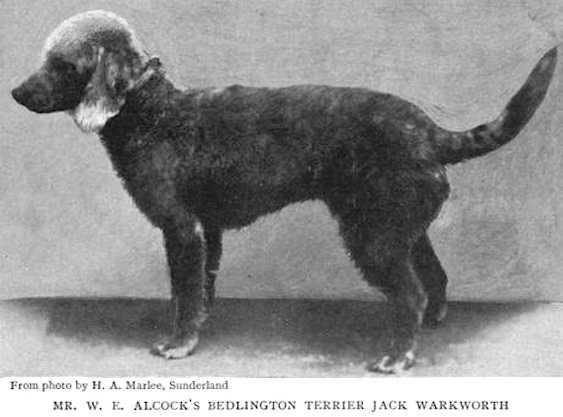
The Bedlington Terrier is a small dog from England, easily recognized by its curly coat, arched back, and pear-shaped head. The breed is often described as lamb-like because of the trimmed fleece and tasseled ears. Behind that soft appearance is a true terrier, originally bred to hunt vermin and small game.
At home the Bedlington tends to be affectionate, playful, and good-natured. It forms close attachments to its family and is usually content to rest beside its people between bursts of activity. The breed weighs roughly 17 to 23 pounds and stands about 15 to 17.5 inches at the shoulder, which makes it suitable for both houses and apartments when its exercise needs are met.
The Bedlington keeps a spirited, alert side. It can chase, dig, and react quickly to small animals, and it may be reserved with strange dogs. Early socialization and consistent handling help channel that energy.
| Attribute | Detail |
|---|---|
| Origin | England |
| Size | Small (about 17 to 23 lb) |
| Lifespan | 11 to 16 years |
| Group/role | Terrier; companion and vermin hunter |
| Good with | Families, older children, owners who can give daily exercise |
The Bedlington fits owners who want a small, low-shedding companion with personality. It does well with active individuals and families with older children. People who want a calm lap dog with no prey drive, or who cannot keep up with regular coat trimming, should consider the commitment carefully before choosing this breed.
The Bedlington Terrier developed in northeast England in the early 1800s, taking its name from the mining town of Bedlington in Northumberland.
The breed takes its name from Bedlington, a mining town in Northumberland in northeast England. Working-class miners and Romani families in the region kept tough, fast terriers used to control rats and to hunt rabbits, hares, and other small game. These dogs were valued for speed and gameness rather than appearance.
The name Bedlington Terrier came into use in the early 1820s. A dog named Old Flint, recorded in the 1780s, is often cited in the breed's early pedigrees, and a dog called Piper became one of the well-known early examples of the type. The breed is closely tied to other terriers of the area and shares ancestry with the Dandie Dinmont Terrier.
The Bedlington's running ability and arched, racy build led to crosses and comparisons with sighthound stock, which some accounts credit for the breed's speed and flexible spine. Whatever the exact mix, the result was a terrier that could both go to ground and run down quarry in the open.
Through the 19th century the breed moved from pit and field work toward the show ring and companion life. Breed clubs and standards formalized the lamb-like trim that is now associated with the Bedlington, and the dog spread well beyond its original mining-district roots.
The Bedlington Terrier is a graceful, arched-back small dog with a pear-shaped head, tasseled ears, and a distinctive crisp, curly coat that is usually trimmed to a lamb-like shape.
The overall impression is of a lithe, slightly arched dog built for both speed and agility. The back rises over the loin and the body is flexible, giving a light, springy gait. The head is narrow and rounded, often called pear-shaped, and is finished with a topknot of lighter, profuse hair. The ears are set low, hang flat, and end in a small tassel of fine hair.
| Trait | Standard |
|---|---|
| Height | About 15 to 17.5 in (38 to 44 cm) at the shoulder |
| Weight | About 17 to 23 lb (8 to 10 kg) |
| Coat | Thick, linty, crisp; mix of hard and soft hair that stands off the skin and tends to curl |
| Colors | Blue, liver, sandy, and these with tan markings |
| Eyes | Small, bright, almond-shaped; color varies with coat shade |
The coat is the breed's most recognized feature. It is a mix of hard and soft hair with a crisp, linty texture that does not lie flat. Standard colors are blue, liver, and sandy, each of which can also appear with tan points. Many puppies are born dark and lighten as they mature. The coat sheds little but grows continuously, so it requires regular clipping to keep the lamb-like outline.
The Bedlington Terrier is affectionate and good-natured with its family while keeping a spirited, alert terrier edge that shows up around small animals and unfamiliar dogs.
The Bedlington has a double-sided character. Indoors it is usually mild, affectionate, and good-natured, content to relax close to its people. Many owners describe a calm housemate that becomes lively and quick the moment play or a chase begins.
With family the breed is loyal and people-oriented, and it generally does well with older children who handle it gently. With strangers the Bedlington tends to be alert and will often announce visitors, though it is not typically aggressive toward people. With other pets the picture is mixed: it can live with dogs it knows but may be scrappy with strange dogs, and its prey drive makes small pets such as rodents a poor match. The breed digs and chases by instinct.
The Bedlington is spirited and can be stubborn. It responds best to consistent, fair handling and early socialization, which reduce reactivity toward other dogs.
| Trait | Rating |
|---|---|
| Affection | 5 |
| Energy | 4 |
| Trainability | 3 |
| Vocalness | 3 |
| Shedding | 1 |
The Bedlington Terrier needs regular professional clipping every six to eight weeks, daily exercise, and consistent mental engagement, but it sheds very little.
The Bedlington is a moderate-maintenance breed. Its low-shedding coat is a benefit for tidy homes, but it grows continuously and needs routine clipping to keep its shape and stay free of mats.
The Bedlington adapts to apartments or houses as long as it gets daily exercise. It prefers to be with its family and can become bored or restless if left alone for long stretches. A secure yard is helpful because the breed likes to dig and may try to chase small animals.
The Bedlington Terrier does well on a complete diet suited to its small size and activity level, with portions controlled to keep it lean.
Feed a complete and balanced dog food appropriate for the Bedlington's life stage, size, and activity. As an active small breed, it generally needs modest portions, and amounts should be adjusted to keep the dog lean. Measure meals rather than free-feeding, and provide fresh water at all times.
| Life stage | Amount per day | Meals |
|---|---|---|
| Puppy (2 to 6 months) | About 0.75 to 1.5 cups, by weight and food | 3 to 4 |
| Puppy (6 to 12 months) | About 1 to 1.5 cups | 2 to 3 |
| Adult | About 1 to 1.5 cups | 2 |
| Senior | Adjust down for lower activity | 2 |
Keep treats to roughly 10 percent of daily calories to prevent weight gain. Most Bedlingtons on a complete diet do not need supplements; ask a veterinarian before adding any. Because copper-related liver disease occurs in the breed, owners should discuss diet and any copper or mineral supplementation with a vet familiar with the condition.
The Bedlington Terrier typically lives 11 to 16 years and is generally hardy, but the breed carries a notable risk of inherited copper-associated liver disease.
The Bedlington Terrier is generally a healthy, long-lived breed with a typical lifespan of 11 to 16 years. The most important breed-specific concern is copper toxicosis, an inherited disorder in which copper builds up in the liver and can cause damage over time. Responsible breeders use DNA testing to reduce its occurrence.
| Condition | Signs | Note |
|---|---|---|
| Copper toxicosis (copper-associated hepatopathy) | Lethargy, poor appetite, vomiting, jaundice | Inherited; DNA test available and used by breeders |
| Eye disorders (such as cataracts and retinal issues) | Cloudiness, vision changes | Screening recommended in breeding stock |
| Patellar luxation | Skipping gait, intermittent hind-leg lameness | More common in small breeds |
| Renal cortical hypoplasia | Increased thirst, weight loss | Less common kidney disorder reported in the breed |
The Bedlington Terrier is intelligent and capable but can be independent, so it trains best with short, consistent, reward-based sessions started early.
The Bedlington is bright and learns quickly, but its terrier independence means it does not always work just to please. It can be stubborn and may lose interest in repetitive drills. Short, varied, motivating sessions work better than long ones. Early socialization with people, dogs, and everyday situations is important and helps reduce reactivity toward strange dogs.
Because the breed has strong prey and chase instincts, a reliable recall and steady leash manners are worth real effort. Practice these in low-distraction settings before testing them around other animals.
Responsible Bedlington Terrier breeding centers on health screening, especially copper toxicosis DNA testing, with typical litters of around three to six puppies.
Breeding Bedlingtons should be undertaken only with health-tested parents. The breed's most important screening is the DNA test for copper toxicosis, and reputable programs also evaluate eyes and patellas. Bitches generally reach sexual maturity within the first year, but breeders usually wait until a dog is physically mature and fully health-cleared before any mating.
Gestation in dogs lasts about 63 days from conception. Bedlington litters are typically small to moderate, often in the range of three to six puppies. Puppies are commonly born dark and lighten toward their adult color as they grow.
Raising young includes keeping the dam well nourished, providing a warm and clean whelping area, and beginning early socialization once the puppies are old enough. Puppies usually go to new homes at around eight weeks, by which point a responsible breeder has started vaccinations, deworming, and basic handling.
| Metric | Value |
|---|---|
| Gestation | About 63 days |
| Typical litter size | About 3 to 6 puppies |
| Weaning age | About 6 to 8 weeks |
| Puppies leave for new homes | Around 8 weeks |
| Key health test | Copper toxicosis DNA test |
Municipal licences cover the paperwork; a free United Pet Club record is what actually connects your Bedlington Terrier to your phone.
Municipal corporations in Delhi, Mumbai, Bengaluru, and numerous other cities require dogs to be registered or licensed under their by-laws, and a United Pet Club profile complements whichever rules apply where you live. The profile holds your contact information against your Bedlington Terrier for its entire life, at no charge whatsoever. Registering your dog requires only a few minutes.
A microchip without a registration is merely a number under the skin. File your Bedlington Terrier's fifteen digit number with United Pet Club and it becomes a working address: free for life, open to every chip brand, and searchable from any clinic or shelter in the country or abroad. Microchip registration first, the free account alongside.
Create a free United Pet Club account, enter your Bedlington Terrier's details along with a photograph, and save the profile. The lifetime plan maintains the record at no cost, and any municipal licence you hold sits alongside it rather than replacing it.
Enter the fifteen digit chip number into your free account together with your current address, phone number, and email. The lifetime plan covers the registration and every subsequent update without charge, whatever the chip's manufacturer.
Several municipal corporations, Delhi and Mumbai among them, require dogs to be licensed under local by-laws. The United Pet Club profile is separate and voluntary, and it is the record a finder anywhere can actually search, free of cost.
Nothing whatsoever. The free lifetime plan includes the profile, the microchip record, and unlimited updates, with no renewal fee at any point.
Common questions about the Bedlington Terrier's size, temperament, grooming, lifespan, suitability, and availability.
It is a small breed, standing about 15 to 17.5 inches at the shoulder and weighing roughly 17 to 23 pounds.
At home it is affectionate, playful, and good-natured, but it keeps a spirited, alert terrier side, including a strong chase instinct and some wariness around strange dogs.
Care is moderate. It sheds very little, but the coat grows continuously and needs clipping every six to eight weeks, plus daily exercise and mental activity.
Most live about 11 to 16 years with good care and routine veterinary attention.
Yes, it suits active families with older children and adapts to apartments or houses as long as it gets daily exercise and is not left alone for long stretches.
The main inherited concern is copper toxicosis, a liver disorder. Buying from breeders who DNA-test their dogs greatly reduces the risk.
They are an uncommon breed, so prospective owners may need to wait for a litter from a health-testing breeder or contact breed clubs and rescues.