
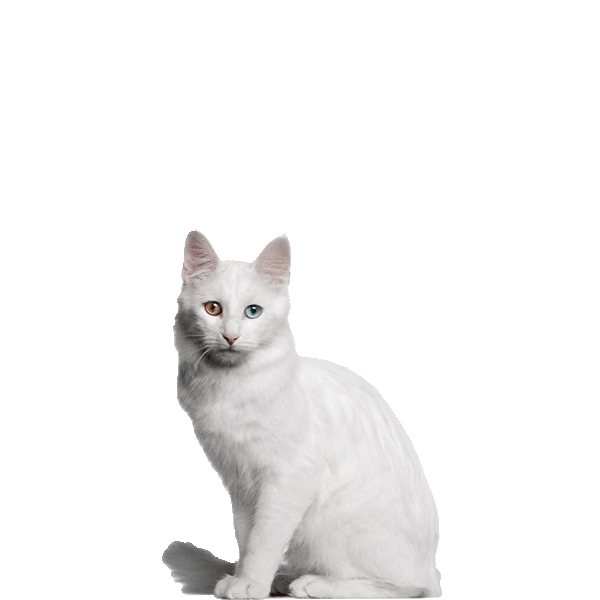
Turkish Vankedisi
The Turkish Vankedisi is the pure-white Van variety, prized for its active, affectionate temperament and loyal bond with its people.
- Size
- Large
- Lifespan
- 12–17 years
- Origin
- Turkey
- Temperament
- Active
- Standard colors
- White
Characteristics
Coat and grooming
How the Turkish Vankedisi coat is built, and what that means when you groom it.
- Coat layers
- Single coat
- Coat texture
- Silky
- Coat length
- Medium
- Shedding
- Seasonal shedding
Grooming guidance
Caution: A Turkish Vankedisi coat mats easily.
Fine or long hair tangles at the base of the coat, out of sight, where the mats tighten and pull on the skin. Brushing has to reach right down to the roots in sections, not just skim the surface.
Information: A Turkish Vankedisi drops its undercoat in heavy bursts.
The undercoat comes out in heavy bursts over a few weeks. An undercoat rake, or a bath followed by a proper blow-dry, clears it far faster than daily brushing. Clipping the coat down is not a shortcut for this.
Turkish Vankedisi colors and patterns
What each club's breed standard says about every Turkish Vankedisi color and pattern. Point at a ruling to see the club's own wording.
Breed standards describe the Turkish Vankedisi in White. Standard patterns: Solid.
| Color or pattern | TICA | GCCF |
|---|---|---|
| White | Standard (“Solid white”) | Standard (“Chalk white”) |
| Patterns | ||
| Solid | Standard (“Solid”) | No ruling |

| Color or pattern | TICA | GCCF |
|---|---|---|
| Blue | Standard (“blue”) | Standard (“Blue-eyed”) |
| Amber | Standard (“amber”) | Standard (“Light to medium amber”) |
| Orange | No ruling | Disqualifying (“Orange”) |
| Copper | No ruling | Disqualifying (“copper”) |
| Patterns | ||
| Odd-eyed | Standard (“odd eyed”) | Standard (“Odd-eyed”) |
%22%3E%3Ccircle%20cx%3D%2216%22%20cy%3D%2232%22%20r%3D%228%22%20fill%3D%22%236E7B8B%22%2F%3E%3Ccircle%20cx%3D%2216%22%20cy%3D%2232%22%20r%3D%223.4%22%20fill%3D%22%231C1C1C%22%2F%3E%3Ccircle%20cx%3D%2213.6%22%20cy%3D%2229.6%22%20r%3D%221.3%22%20fill%3D%22%23F5F5F0%22%2F%3E%3C%2Fg%3E%3Cpath%20d%3D%22M3%2032Q16%2017%2029%2032Q16%2047%203%2032Z%22%20fill%3D%22none%22%20stroke%3D%22%233B2A20%22%20stroke-opacity%3D%220.75%22%20stroke-width%3D%221.4%22%20stroke-linejoin%3D%22round%22%2F%3E%3Cpath%20d%3D%22M35%2032Q48%2017%2061%2032Q48%2047%2035%2032Z%22%20fill%3D%22%23F5F5F0%22%2F%3E%3Cg%20clip-path%3D%22url(%23e1)%22%3E%3Ccircle%20cx%3D%2248%22%20cy%3D%2232%22%20r%3D%228%22%20fill%3D%22%23495059%22%2F%3E%3Ccircle%20cx%3D%2248%22%20cy%3D%2232%22%20r%3D%223.4%22%20fill%3D%22%231C1C1C%22%2F%3E%3Ccircle%20cx%3D%2245.6%22%20cy%3D%2229.6%22%20r%3D%221.3%22%20fill%3D%22%23F5F5F0%22%2F%3E%3C%2Fg%3E%3Cpath%20d%3D%22M35%2032Q48%2017%2061%2032Q48%2047%2035%2032Z%22%20fill%3D%22none%22%20stroke%3D%22%233B2A20%22%20stroke-opacity%3D%220.75%22%20stroke-width%3D%221.4%22%20stroke-linejoin%3D%22round%22%2F%3E%3C%2Fsvg%3E)
| Color or pattern | TICA | GCCF |
|---|---|---|
| Pink | Standard (“pink”) | Standard (“pink”) |
| Color or pattern | TICA | GCCF |
|---|---|---|
| Pink | Standard (“pink”) | Standard (“pink”) |
What the rulings mean
- Standard
- Described by the club's breed standard.
- Disqualifying
- The club's breed standard disqualifies an animal of this colour or pattern.
Color changes
How a Turkish Vankedisi's colors can change over its life.
Whitechanges toShaded
Coat · With age
Whitechanges toChinchilla
Coat · With age
Whitechanges toPointed
Coat · With age · from 1 to 52 weeks
Solidchanges toSmoke
Coat · With age · from 3 to 104 weeks
Bluechanges toGreen
Eyes · With age · from 4 to 17 weeks
Bluechanges toYellow
Eyes · With age · from 4 to 17 weeks
Bluechanges toGold
Eyes · With age · from 4 to 17 weeks
Bluechanges toCopper
Eyes · With age · from 4 to 17 weeks
Bluechanges toOrange
Eyes · With age · from 4 to 17 weeks
Bluechanges toHazel
Eyes · With age · from 4 to 17 weeks
Bluechanges toAmber
Eyes · With age · from 4 to 17 weeks
Pinkchanges toSeal
Nose · With age · from 1 to 52 weeks
Pinkchanges toBlue
Nose · With age · from 1 to 52 weeks
Pinkchanges toChocolate
Nose · With age · from 1 to 52 weeks
Pinkchanges toLilac
Nose · With age · from 1 to 52 weeks
Pinkchanges toSeal
Paw pads · With age · from 1 to 52 weeks
Pinkchanges toBlue
Paw pads · With age · from 1 to 52 weeks
Pinkchanges toChocolate
Paw pads · With age · from 1 to 52 weeks
Pinkchanges toLilac
Paw pads · With age · from 1 to 52 weeks
%22%3E%3Crect%20x%3D%220%22%20y%3D%220%22%20width%3D%2264%22%20height%3D%2264%22%20fill%3D%22url(%23g)%22%2F%3E%3Cg%20fill%3D%22none%22%20stroke%3D%22%231C1C1C%22%20stroke-width%3D%221%22%20stroke-opacity%3D%220.85%22%20stroke-linecap%3D%22round%22%20stroke-linejoin%3D%22round%22%3E%3Cpath%20d%3D%22M18.9%2025.7l0.2%202.1M42.7%2033.1l1%202.1M12.6%2020.7l0.9%201.7M17.3%2012.7l1%201.7M25.9%2022.4l0.4%201.6M50.2%2029l0.1%201.6M29.2%2028l0.5%202.1M43.2%2022.9l1%202.2M42.4%2029.9l0.2%202.2M8.4%2023.4l1%202.1M7.8%2018.4l0.4%202M35%2027.9l0.5%202.2M35.9%2038.5l0.6%201.6M29.3%2032.6l0.5%201.4M34.8%2022l0.7%202.2M37.6%2020.6l0.7%202.2M18.2%2037.7l0.4%202.1M9.9%2029l0%201.5M9.9%2014l0.1%202M37%2030.4l0.5%202.3M13%2028.5l0.6%202M38.3%2049.6l0.6%201.9M18.4%2047.4l0.7%201.4M40%2026.9l0.2%201.6M57.5%2010.7l0.4%201.4M39.6%2030.3l0.3%202.1M54.9%2018.7l0.7%201.5M48%2028.3l0.4%202M23%2050.3l0.1%202.3M28.2%2036.1l0.5%202.1M57.9%2014.4l0.6%201.4M10.6%2023.3l1%202.1M17.5%2042.7l0.8%201.4M52.1%2026l0.1%201.6M38.6%2032.2l0.1%202.2M30.9%2037.8l0.7%201.7M56.6%2017l0.9%201.9M42.5%2028.7l1%201.8M24.4%2048.9l0%201.7M8.7%2022.3l0.4%201.4M16.6%2039.9l0.5%201.4M7.1%2021.8l0.8%202.2M34.1%2034.2l0.3%201.7M9.9%2025.5l0%201.6M43.1%2035.1l0%202M37.7%2051.3l0.3%201.7M31.7%2031.3l0.3%202.3M23.8%2036.6l0.9%201.8M16.6%2053.5l0.4%202.3M24.4%2041.2l0.6%201.8M39.9%2046.6l0.4%201.8M10.4%2021.8l0.1%202.1M47.2%2051l0.7%202.3M42.9%2027.4l0.1%202M20.5%2022.8l0.4%202.1M49.2%2032.2l0.6%201.3M15.8%2030.1l0.4%202.1M46.2%2053.6l0.6%201.4M15.1%2020.1l0.7%202M23.4%2043.9l0.4%201.6M38.8%2029.4l0.4%202.1M36.8%2034.7l0.4%201.9M48.3%2028.4l0.6%202M26.9%2029.6l0.4%201.6M28.4%2036.5l0.4%201.4M19.2%2034.3l0.5%202.1M7.2%2028.1l0.1%201.6M15.9%2019.7l0.6%201.3M23.4%2022.8l0.9%201.8M16.3%2019.8l0.2%202.1M21.9%2053l0.4%202M48.5%2028.5l0.7%201.8M16.9%2012.9l0.6%202.3M26.8%2033.1l0%201.7M46.2%2044.1l0.2%202.1M30.5%2025.1l0.1%201.7M42.1%2032.2l0.1%201.6M8.7%2021.9l0.6%202.2M29.2%2024.5l0.6%202M22.1%2040.7l1.1%201.9M24.3%2033.3l0.7%201.8M53.9%2026.4l0.1%202.4M21.4%2026.6l0.9%202M39.2%2025.3l0.1%201.9M32.4%2035.3l1%202M48.9%2031.4l0%201.6M24.8%2022.1l0.4%202.2M46.4%2054.6l0.7%201.8M25.1%2031.7l0.5%202.1M24.7%2043.5l0%201.4M23.1%2033.3l0.9%201.6M37.9%2039.5l0.5%201.3M45.7%2041.2l0.9%201.8M50.1%2029.5l0.4%201.8M46.6%2049.6l0.5%202.2M54%2024.3l0.5%202.3M5.9%2025.6l0.1%201.5M15.5%2022.8l0.9%202M26.3%2027.8l0%202.1M30.1%2020.3l0.1%202.3M18.1%2016.7l0.5%201.8M19.1%2024.1l0.9%201.8M12.7%2018.8l0.7%201.4M20.8%2031.1l0.6%201.5M16.9%2025.9l0.1%201.5M11.6%2014.8l0.1%202.3M10.8%2018.5l0.8%201.8M33.5%2038l0.6%201.4M30.6%2028.8l0.3%202.1M39.1%2031.7l0.9%201.9M34.6%2021.3l0.3%202%22%2F%3E%3Cpath%20d%3D%22M17.6%2040.5l0.7%202.1M46.2%2038.1l0.4%201.7M5.1%2020.5l0.2%201.6M21.8%2022.3l0.3%201.4M26.3%2021l0.9%201.6M32.6%2037.5l0.5%201.4M33.5%2031.6l0.6%201.6M39.2%2039l0.9%201.6M11.4%2022.8l0.7%201.8%22%2F%3E%3C%2Fg%3E%3C%2Fg%3E%3Cuse%20href%3D%22%23s%22%20fill%3D%22none%22%20stroke%3D%22%233B2A20%22%20stroke-opacity%3D%220.6%22%20stroke-width%3D%221%22%20stroke-linejoin%3D%22round%22%2F%3E%3Cpath%20d%3D%22M3.4%2022.3L5.4%2022.5L4.3%2024Z%22%20fill%3D%22%23E8A0B4%22%2F%3E%3Ccircle%20cx%3D%229.6%22%20cy%3D%2221.2%22%20r%3D%221.1%22%20fill%3D%22%231C1C1C%22%2F%3E%3C%2Fsvg%3E)
%22%3E%3Cg%20fill%3D%22none%22%20stroke%3D%22%231C1C1C%22%20stroke-width%3D%221.1%22%20stroke-opacity%3D%220.9%22%20stroke-linecap%3D%22round%22%20stroke-linejoin%3D%22round%22%3E%3Cpath%20d%3D%22M37.4%2030.7l0.7%201.3M18.9%2028.6l0.1%201.1M46.5%2033.6l0.3%201.3M35.8%2023.2l0.1%201.4M19.6%2045.1l0%201.2M34.4%2037.4l0%200.9M48.4%2037.9l0.2%201.2M29.8%2023.5l0.4%201.4M9.3%2013.8l0.2%201.1M45.6%2044.2l0.3%200.8M24.4%2028.2l0.1%200.8M41.2%2035l0.1%200.9M41%2030.9l0.1%201.2M40.9%2025.1l0.3%201.4M28.4%2034.5l0.6%201.1M26.7%2024.1l0.1%200.8M47.3%2050.1l0.3%201.4M17.7%2049.5l0.5%201.3M29%2024.1l0.4%201.1M38.6%2038.1l0%201M33.4%2026.9l0.6%201M25.7%2028.1l0.1%200.9M18.3%2038.1l0.6%201.2M47.5%2028.1l0.4%201.1M25.6%2022l0.1%200.9M29.5%2027l0.5%201.1M39.5%2021.4l0.1%201.2M40.9%2048.2l0.2%201.1M17.8%2013.2l0.5%201.2M27.3%2031.6l0%201M21.3%2023.5l0.2%200.9M40.9%2054.1l0.3%200.9M20.9%2028.2l0.7%201.2M26.2%2022.2l0.1%200.8M40.9%2050.9l0.3%201.4M35.2%2030.2l0.2%200.8M50.4%2031.3l0.1%201.3M43.6%2036l0.3%200.9M33.7%2039.1l0.3%200.9M48.6%2049.9l0.3%201.1M44.4%2021.9l0.2%200.9M40.3%2040.9l0.4%201M51.8%2031.5l0.1%201.4M42%2038l0.3%201M41.3%2027.1l0.6%201.1M27.2%2032.2l0.3%201.3M28%2024.6l0%201.2M29%2038.5l0.1%201.1M56%2014.4l0.6%201.3M51%2031.2l0.3%200.8M49%2024.2l0.6%201.1M39.1%2029l0.5%201.2M38.7%2037.6l0.2%201.4M24.3%2046.6l0.4%200.8M23.1%2037.4l0.2%200.8M43%2035.9l0%201M35.4%2027l0.5%201M29.7%2039.1l0.2%201.4M32.8%2037.2l0%201M7.4%2022.7l0.1%201.1M31.3%2020.3l0.6%201.1M21.7%2033.3l0.5%201.1M16.5%2043.9l0.2%201.1M22.7%2024l0%201.4M41.6%2034.2l0.7%201.3M27.1%2036.9l0.2%201.1M49.4%2029.1l0.4%200.9M34.4%2020.6l0.3%201.1M21.6%2037.3l0%201.4M47.1%2029.2l0.7%201.3M50.6%2024.8l0.3%201M49.7%2029.2l0.7%201.2M19.4%2045.4l0.2%201.5M48.6%2026.5l0.6%201.2M23%2022.5l0.4%201M39.9%2051.5l0.2%201.1M6.7%2020.5l0.2%200.9M44.8%2033l0.2%201.4M37.7%2045.6l0.4%201.2M29.9%2037.9l0.2%200.9M24%2020.8l0.4%201M42.7%2021l0.4%201M42%2030.3l0.4%201.1M21.6%2045l0.4%201.1M18.5%2017l0.1%201M9.6%2016.4l0.1%201.3M19.5%2045.9l0.1%201M46.9%2049.9l0.4%201.3M18.6%2020.1l0.1%200.9M38.5%2038.8l0.1%201.4M46.9%2032.3l0.5%201.1M49.4%2031.7l0.3%200.9M48.5%2040.7l0.2%201.4M30.5%2033.5l0.4%201.3M46.3%2041.6l0.3%200.9M23.1%2044.7l0.2%201.1M16.7%2027.5l0%201M37.8%2029.3l0.1%201.2M42.9%2036.9l0.2%201.1M31%2025.3l0.2%201.1M17.5%2052.8l0.6%201.1M11%2021.5l0.4%201M22.5%2029.1l0.5%201.1M27.5%2032.1l0.4%200.9M39.6%2023.3l0.1%201.2M52.1%2027l0.6%201.3M28.8%2029.6l0%201.5M37.9%2025.5l0.5%200.8M33.2%2022.6l0.1%201.2M15.7%2015.4l0.3%200.8M47.7%2053.4l0.1%200.9%22%2F%3E%3Cpath%20d%3D%22M20.7%2023.3l0.6%201.1M6.7%2027.8l0.5%201.3M17%2012.8l0.2%201.2M21.7%2036.2l0%201.3M12.3%2019.9l0.2%200.8M17.2%2025.6l0.4%201.2M42.3%2022.6l0%201.2M24.7%2028.4l0.3%201.4M44.5%2038.7l0%201.4%22%2F%3E%3C%2Fg%3E%3Cpath%20d%3D%22M3.5%2022.6L5.4%2022.6%22%20fill%3D%22none%22%20stroke%3D%22%231C1C1C%22%20stroke-width%3D%221%22%20stroke-linecap%3D%22round%22%20stroke-linejoin%3D%22round%22%2F%3E%3C%2Fg%3E%3Cuse%20href%3D%22%23s%22%20fill%3D%22none%22%20stroke%3D%22%233B2A20%22%20stroke-opacity%3D%220.6%22%20stroke-width%3D%221%22%20stroke-linejoin%3D%22round%22%2F%3E%3Cpath%20d%3D%22M3.4%2022.3L5.4%2022.5L4.3%2024Z%22%20fill%3D%22%23E8A0B4%22%2F%3E%3Ccircle%20cx%3D%229.6%22%20cy%3D%2221.2%22%20r%3D%221.1%22%20fill%3D%22%231C1C1C%22%2F%3E%3C%2Fsvg%3E)
%22%3E%3Cpath%20d%3D%22M5.5%2017L7.5%207L12%2015ZM14%2015L17.5%207L20%2018.5Z%22%20fill%3D%22%23847865%22%2F%3E%3Cellipse%20cx%3D%227.6%22%20cy%3D%2223.6%22%20rx%3D%225%22%20ry%3D%225.2%22%20fill%3D%22%23847865%22%2F%3E%3Crect%20x%3D%220%22%20y%3D%2244%22%20width%3D%2264%22%20height%3D%2220%22%20fill%3D%22%23847865%22%2F%3E%3Cpath%20d%3D%22M50%2027L53.5%205L64%203L64%2013L59%2024L53%2033Z%22%20fill%3D%22%23847865%22%2F%3E%3C%2Fg%3E%3Cuse%20href%3D%22%23s%22%20fill%3D%22none%22%20stroke%3D%22%233B2A20%22%20stroke-opacity%3D%220.6%22%20stroke-width%3D%221%22%20stroke-linejoin%3D%22round%22%2F%3E%3Cpath%20d%3D%22M3.4%2022.3L5.4%2022.5L4.3%2024Z%22%20fill%3D%22%23E8A0B4%22%2F%3E%3Ccircle%20cx%3D%229.6%22%20cy%3D%2221.2%22%20r%3D%221.1%22%20fill%3D%22%231C1C1C%22%2F%3E%3C%2Fsvg%3E)
%22%3E%3Crect%20x%3D%220%22%20y%3D%220%22%20width%3D%2264%22%20height%3D%2264%22%20fill%3D%22%231C1C1C%22%2F%3E%3Crect%20x%3D%220%22%20y%3D%220%22%20width%3D%2264%22%20height%3D%2264%22%20fill%3D%22url(%23g)%22%2F%3E%3Cpath%20d%3D%22M17.5%2030.4l0.2%203.7M48.5%2036.2l-0.3%203.1M40.1%2038.4l0.7%202.8M21.3%2029.4l0.3%202.9M38.5%2024l-0.7%202.7M19.4%2041l0.9%203.8M47.2%2026.3l0.3%203M28.1%2031.1l-0.4%202.6M21%2027l-0.7%203.4M20.1%2035l0.7%202.8M27.4%2035.9l1.2%203.6M31.5%2032.2l0.5%202.5M43.7%2038.4l0.2%202.9M15.5%2027.6l0.2%203M33.5%2029.7l0%203.8M50%2028l0.5%203.8M50.1%2029.5l-0.2%203.3M39.4%2037.1l0.8%203M31.1%2025l1%203.1M19.5%2028.3l0.3%203.1M29.5%2034.2l-0.3%203.8M50.4%2033.8l-0.5%202.6M39.3%2028.8l1.2%203.8M36.6%2037.2l-0.3%202.8M41.6%2026.3l-0.7%202.7M24.2%2038.3l-0.2%203.3M20.5%2033.1l0.7%203M24%2032.2l-0.7%203.3M42.7%2038.5l-0.6%203.8M20.4%2038.2l0.2%203.3M37.5%2036.9l-0.8%202.4M36%2035.3l-0.7%202.9M46.2%2033.2l-0.8%203.8M38.1%2030.5l-0.6%203.6M29%2038.9l-0.7%203.7M42.8%2031.3l0.1%203.1M22.5%2025.1l0.4%202.9M47.4%2025l0.2%203M24.7%2032l-0.8%203.2M14.8%2024.5l1.1%203.3%22%20fill%3D%22none%22%20stroke%3D%22%23F5F5F0%22%20stroke-width%3D%221%22%20stroke-opacity%3D%220.85%22%20stroke-linecap%3D%22round%22%20stroke-linejoin%3D%22round%22%2F%3E%3C%2Fg%3E%3Cuse%20href%3D%22%23s%22%20fill%3D%22none%22%20stroke%3D%22%233B2A20%22%20stroke-opacity%3D%220.6%22%20stroke-width%3D%221%22%20stroke-linejoin%3D%22round%22%2F%3E%3Cpath%20d%3D%22M3.4%2022.3L5.4%2022.5L4.3%2024Z%22%20fill%3D%22%23E8A0B4%22%2F%3E%3Ccircle%20cx%3D%229.6%22%20cy%3D%2221.2%22%20r%3D%221.1%22%20fill%3D%22%231C1C1C%22%2F%3E%3C%2Fsvg%3E)
Sources
Each ruling comes from the club's published breed standard or color list.
About the Turkish Vankedisi
The Turkish Vankedisi is an all-white, semi-longhaired cat native to the Lake Van region of eastern Turkey. Preserved as a distinct breed by Turkish universities, it is virtually unknown in Indian cat fancy and represents one of the rarest pedigree cats an Indian enthusiast could attempt to acquire.
In India, where Persian and Siamese cats dominate the registered cat population under the Cat Federation of India (CFAI) and the World Cat Federation (WCF) India chapter, the Turkish Vankedisi occupies a position of almost complete absence. No registered Vankedisi breeders are known to operate within the country, and the breed rarely appears at Indian cat shows even as an import exhibit. For the Indian cat enthusiast, the Vankedisi exists largely as a subject of curiosity rather than a cat one can walk into a cattery and purchase.
The Vankedisi is not simply a white version of the Turkish Van. It is a genetically distinct population, selectively preserved by Yuzuncu Yil University in Van and Ankara University as a Turkish national treasure. The breed carries the all-white coat as its defining standard, with no coloured head or tail markings. The Van bicolor pattern belongs to the Turkish Van; the Vankedisi is the all-white variety, and that distinction matters enormously for anyone researching the breed seriously.
| Characteristic | Detail |
|---|---|
| Origin | Lake Van region, Turkey |
| Coat | All white, semi-longhaired, water-resistant |
| Eye colour | Amber, blue, or odd-eyed (heterochromia) |
| Body type | Large, muscular, semi-foreign |
| Lifespan | 12–17 years |
The Turkish Vankedisi's rarity means that any individual imported to India would be a genuine first-of-kind for most cat clubs in the country. The WCF recognises the breed, which gives Indian fanciers affiliated with WCF India a registration pathway, though the practical steps of importing a cat from Turkey or central Europe require navigating both Turkish export restrictions and India's animal import protocols under the Department of Animal Husbandry and Dairying.
History of the Turkish Vankedisi breed
The Vankedisi developed in the harsh highlands around Lake Van and was formally documented and preserved by Turkish universities in the twentieth century as a distinct all-white variety separate from the Turkish Van.
The cats of the Lake Van region have existed in their mountain environment for centuries, adapting to cold winters and hot summers with a coat that sheds water with unusual efficiency. Historical Ottoman trade routes that connected Anatolia to the Indian subcontinent through Persia meant that Turkish cats were not entirely unknown to South Asian cultures, even if the specific Vankedisi lineage was never formally introduced.
The formal separation of the Vankedisi from the Turkish Van came through Turkish academic and government efforts in the twentieth century. Yuzuncu Yil University and Ankara University established breeding programmes to document and preserve the all-white population, recognising that this variety faced absorption into the broader Van cat gene pool without intervention. The Turkish state has at times restricted the export of these cats to prevent the depletion of a national heritage animal, which explains much of the breed's absence from cat registries outside Turkey.
The WCF was among the first international bodies to grant the Turkish Vankedisi separate breed status, distinguishing it clearly from the Turkish Van on the basis of its coat colour standard. For Indian fanciers working within the WCF India framework, this recognition is the most relevant reference point when discussing the breed's legitimacy and registration prospects.
The connection between the Ottoman world and the Mughal courts, documented through diplomatic exchanges and trade in luxury goods, created a shared cultural vocabulary around animals of prestige. While no historical record places a Vankedisi specifically in a Mughal court, the broader tradition of valuing rare white animals from distant lands fits a pattern well established in South Asian royal history. Today, that cultural appreciation for the rare and the auspicious makes the Vankedisi a breed with unusual symbolic resonance for Indian cat enthusiasts even before they learn its provenance.
Turkish Vankedisi appearance and physical traits
The Vankedisi is a large, muscular cat with a uniformly white semi-longhaired coat, a broad head, and eyes that are frequently odd-coloured, giving the breed a striking and immediately recognisable appearance.
The most immediately striking feature of the Turkish Vankedisi is the eye colour. Heterochromia, where one eye is amber or gold and the other is blue, occurs with high frequency in this breed. In Indian culture, where white animals are traditionally considered auspicious and odd-eyed cats have historically been regarded with particular reverence across several South Asian traditions, this trait carries a significance that goes beyond aesthetic preference. A Vankedisi with odd eyes is both a breed-standard specimen and an animal that many Indian families would consider especially propitious.
The coat is semi-longhaired and lacks a dense undercoat compared to breeds like the Persian. This gives it a silkier texture and reduces the tendency to mat, though the coat does thicken considerably in cooler weather. In the context of India's varied climate zones, this seasonal variation is worth understanding before acquiring the breed.
| Feature | Description |
|---|---|
| Head | Broad, moderately wedge-shaped with rounded contours |
| Body | Large, muscular, with a deep chest and sturdy bone structure |
| Coat length | Semi-long, silky, minimal undercoat |
| Coat colour | Pure white only; any other colour disqualifies from standard |
| Weight | 4–9 kg; males typically larger than females |
The tail is full and plumed, carried with a slight upward curve. The paws are large and round, historically adapted to walking on snow and rocky highland terrain. Kittens are sometimes born with a faint coloured spot on the head that disappears with maturity, a feature that breeders use to confirm the cats are true Vankedisi rather than white Turkish Vans with suppressed pigment.
For Indian show judges working under WCF standards, the key disqualifying feature is any persistent colour on the coat past kittenhood. A truly all-white adult Vankedisi with odd eyes represents the breed ideal, and that combination is rare enough globally that a well-bred example would command significant attention at any WCF India sanctioned show.
Turkish Vankedisi temperament and personality
Active, intelligent, and strongly bonded to their household, Vankedisi cats are energetic companions that require engagement and do not thrive in neglected or isolated environments.
The Turkish Vankedisi is not a lap cat in the conventional sense, though it forms deep bonds with its human family. It is an active, curious breed that retains strong hunting instincts from its highland origins. In an Indian household, whether in a Mumbai apartment or a spacious Delhi home, the Vankedisi will need vertical space, interactive play, and mental stimulation to remain content.
The breed is known for a fascination with water, a trait shared with the Turkish Van and rooted in the cats' historical access to Lake Van. This does not mean the cat will seek out baths willingly, but owners often report that their Vankedisi will investigate running taps, paddle in shallow water dishes, and show unusual tolerance for being near water compared to most cat breeds.
With children and other pets, the Vankedisi adapts well provided introductions are handled thoughtfully. The breed is confident rather than timid, and it will hold its own in a multi-pet household without excessive stress. Early socialisation is particularly important for kittens imported from European or Turkish catteries, as the transition to an Indian home environment, with its different sounds, smells, and household rhythms, can be managed more easily when the cat has a broad socialisation baseline.
| Trait | Description |
|---|---|
| Energy level | High; needs daily active play sessions |
| Affection | Strong family bond; selectively affectionate rather than indiscriminate |
| Vocality | Moderate; communicates without excessive noise |
| Independence | Moderate; tolerates short periods alone but dislikes isolation |
| Adaptability | Good once settled; initial adjustment to new environments takes time |
Caring for a Turkish Vankedisi in India
The Vankedisi needs regular grooming, daily exercise, and careful management in India's warmer climates, particularly for its sun-sensitive white coat.
Grooming the Turkish Vankedisi
The Vankedisi's semi-longhaired coat is less demanding than the Persian's but still requires consistent attention to stay in good condition. The silky texture and minimal undercoat reduce matting risk, but the coat picks up environmental debris and benefits from regular combing.
- Brush or comb the coat two to three times per week with a wide-toothed metal comb
- During seasonal shedding, increase to daily combing to manage loose hair
- Check the base of the tail and behind the ears for early mat formation
- Bathe every four to six weeks or when the coat appears dull; the breed tolerates bathing better than most
- Trim nails every two to three weeks
- Clean ears gently with a vet-approved solution on a fortnightly basis
- Check eyes weekly; white cats can show tear staining that benefits from gentle daily wiping
Exercise needs for the Turkish Vankedisi
The Vankedisi is an energetic breed that needs daily physical and mental activity. In a typical Indian apartment, providing adequate exercise requires deliberate effort from the owner.
- Provide at least two interactive play sessions of fifteen to twenty minutes each day
- Wand toys, feather teasers, and puzzle feeders are all appropriate for this breed
- Install a tall cat tree or wall-mounted shelving to allow climbing and vertical territory
- Rotate toys regularly to prevent boredom; the Vankedisi is intelligent and habituates quickly
- If space allows, a secured balcony with cat-proofing gives the breed access to outdoor stimulation safely
Managing the white coat in India's climate
India's climate presents specific challenges for a white-coated highland cat. In cities like Chennai, Mumbai, or Hyderabad, summer temperatures and intense sunlight require active management.
White cats lack melanin in the skin beneath their coat, which makes them susceptible to sunburn on the ear tips and nose. Direct sunlight through a south-facing window can cause prolonged UV exposure even for an indoor cat. Fit UV-filtering window film to windows that receive strong direct sun. Provide shaded resting areas away from glass on hot afternoons. In regions with high humidity, such as coastal Maharashtra or Kerala, monitor the coat closely for any signs of fungal skin issues, as the dense white coat can trap moisture near the skin if grooming is infrequent. Air-conditioned living spaces ease thermal stress considerably for this highland breed, which is not genetically adapted to tropical temperatures.
Nutrition for the Turkish Vankedisi
A high-protein, meat-based diet suited to an active, large-framed cat, with consideration for the availability of quality cat food in India.
The Vankedisi is a large, muscular cat with a high activity level, and its diet should reflect that. In India, the range of veterinary-grade cat food has expanded significantly in recent years, with brands such as Royal Canin, Hills Science Diet, and Whiskas widely available in urban centres. For a breed this rare, consulting a feline-specialist veterinarian in a major city for a tailored feeding plan is advisable from the outset.
Raw or home-cooked diets are practised by some Indian cat owners, but these require careful nutritional balancing. A Vankedisi fed a home diet without appropriate supplementation risks taurine deficiency, which can lead to cardiac issues. Commercially complete wet food is generally the most practical choice for ensuring nutritional adequacy.
| Life stage | Recommended food type | Approximate daily quantity |
|---|---|---|
| Kitten (up to 12 months) | High-protein kitten wet food or kitten dry kibble | Divided into 3 to 4 meals; follow pack guidelines by weight |
| Adult (1 to 8 years) | Premium adult wet food; dry food as supplement | 60 to 80 g wet food per kg of body weight daily, adjusted for activity |
| Senior (8 years and above) | Senior formula with joint and kidney support | Smaller, more frequent meals; monitor weight closely |
Treats should not exceed ten per cent of daily caloric intake. Given the breed's large frame and active metabolism, owners should weigh the cat monthly and adjust portions if weight trends upward. Obesity is uncommon in active Vankedisi cats but becomes a risk in sedentary indoor environments, which is a real concern in high-rise apartment living without adequate play space.
Turkish Vankedisi health considerations
Generally a robust breed, the Vankedisi carries some breed-associated risks including deafness linked to white coat genetics and sun-related skin conditions relevant in the Indian context.
The Turkish Vankedisi benefits from centuries of natural selection in a demanding environment, and the breed is generally considered healthy and long-lived when properly cared for. However, white coat genetics bring specific health considerations that every owner should understand before acquiring a Vankedisi, particularly given the challenges of accessing specialist veterinary care in India for a breed this rare.
The link between white coat, blue eyes, and congenital deafness is well-established in cats. Odd-eyed Vankedisi cats, with one blue and one amber eye, often have normal hearing in the ear on the amber-eye side and impaired or absent hearing on the blue-eye side. Fully blue-eyed white cats carry the highest deafness risk. Deafness does not preclude a good quality of life, but it does affect how the cat navigates outdoor risks and how owners should adapt their communication with the animal.
| Condition | Risk level | Notes |
|---|---|---|
| Congenital deafness | Moderate to high in blue-eyed individuals | BAER test recommended before purchase; unilateral deafness is common in odd-eyed cats |
| Solar dermatitis and squamous cell carcinoma | Elevated in India | UV filtering at windows; restrict direct sun on ears and nose |
| Hypertrophic cardiomyopathy | Low to moderate | Annual cardiac auscultation recommended; echocardiogram if murmur detected |
| Urinary tract issues | Low | Ensure adequate water intake; wet food diet reduces risk |
Access to feline specialist veterinarians in India has improved in metropolitan areas such as Mumbai, Delhi, Bengaluru, and Hyderabad, but remains limited in smaller cities. An owner importing a Vankedisi should identify a vet with exotic breed experience before the cat arrives. Establishing a relationship with a Turkish or European breeder who can provide health records and genetic information for the cat's lineage is important for ongoing health management.
Core vaccinations in India cover feline panleukopenia, herpesvirus, and calicivirus (FVRCP), plus rabies. Discuss feline leukaemia virus (FeLV) vaccination with your vet based on the cat's indoor-only status. Regular deworming and flea prevention are essential in India's climate even for indoor-only cats.
Training the Turkish Vankedisi
Intelligent and responsive to positive reinforcement, the Vankedisi can be trained to harness-walk, use puzzle feeders, and learn household boundaries with consistent effort.
The Vankedisi's intelligence and curiosity make it one of the more trainable cat breeds, though it retains the independent streak characteristic of cats from working or semi-wild origins. Positive reinforcement using high-value food rewards is the most effective training method, and sessions should be kept short to match the cat's attention pattern.
For Indian owners who live in apartments without access to a garden, harness training is a practical way to give the Vankedisi outdoor enrichment without the risks of free roaming in an urban environment. Begin harness conditioning from kittenhood; an adult cat imported without prior harness exposure will take longer to accept the restraint but can usually be trained with patience over several weeks.
Litter training is straightforward for this breed and rarely requires active intervention beyond providing a clean, appropriately sized tray from day one. For households with multiple cats, provide one tray per cat plus one additional.
Cat-proofing training, teaching the cat to avoid certain areas such as kitchen countertops or balcony railings, works best with redirection and environmental design rather than punishment. Provide appealing alternatives at the same height level, such as a tall cat tree near the balcony, and the Vankedisi will typically choose the approved perch over the forbidden one.
For deaf Vankedisi individuals, hand signal-based training replaces verbal cues effectively. Vibration signals through the floor, such as a gentle stamp, can also serve as attention cues. Deaf cats adapt well to silent communication systems and can learn the same range of behaviours as hearing cats.
Turkish Vankedisi breeding and acquisition in India
Obtaining a Vankedisi in India requires sourcing from Turkish or European breeders and navigating Indian import regulations; no established domestic breeding programme currently exists.
There are no known registered Turkish Vankedisi breeders in India at the time of writing. Any Indian fancier wishing to acquire a Vankedisi must source a kitten or breeding pair from Turkey or from one of the small number of European breeders who hold WCF-registered Vankedisi lines.
The Turkish government has historically placed restrictions on the export of Van cats and Vankedisi cats, treating them as national heritage animals. Buyers should work only with breeders who can demonstrate legal export clearance from Turkish authorities. Importing a cat to India requires CITES documentation where applicable, a health certificate from an accredited veterinarian in the country of origin, a rabies vaccination certificate, and compliance with the Animal Quarantine and Certification Service (AQCS) of India's requirements at the port of entry.
For those interested in establishing a breeding programme in India, WCF India affiliation provides the registration framework. Any breeding programme should begin with health-tested stock with BAER results on file and cardiac screening. The extreme rarity of the breed within India means that Indian-born Vankedisi kittens would be of significant interest to other Indian fanciers and potentially registerable under WCF as an established Indian cattery line over time.
Expect to pay import and quarantine costs that may rival or exceed the cost of the cat itself. Total acquisition cost including the cat, export and import permits, airfreight, and quarantine can reach two to four lakh rupees or more depending on origin country, airline routing, and quarantine facility fees.
| Factor | Detail |
|---|---|
| Litter size | 3 to 5 kittens on average |
| Sexual maturity | 8–14 months; late maturing breed |
| Coat colour in breeding | Two white parents produce all-white offspring; heterochromia inheritance is complex |
| Health tests before breeding | BAER (hearing), cardiac echo, general health panel |
| WCF registration | Available through WCF India; requires pedigree documentation from origin country |
Registering your Turkish Vankedisi and its microchip in India
Municipal by-laws largely overlook cats, so a free United Pet Club record is the one thing standing behind your Turkish Vankedisi's chip.
Turkish Vankedisi registration and microchip registration in India
The profile asks very little: your Turkish Vankedisi's name, her colouring, a photograph, and your contact details. It gives back a lifetime record that no shelter scan can miss, at no charge from first day to last. Cat registration is the sensible first step.
The fifteen digits on the clinic's paperwork identify your Turkish Vankedisi only after they reach a registry. Submit them through your free United Pet Club account and the chip finally speaks for her: every brand accepted, every update free, the record available to any scanner at any hour. Microchip registration completes what the implant began.
How do I register my Turkish Vankedisi in India?
Open a free United Pet Club account, add your Turkish Vankedisi's name, colouring, and a photograph, and save. The lifetime plan maintains the profile at no cost for her entire life, indoors or out.
How do I register my Turkish Vankedisi's microchip?
Submit the fifteen digit number from your vet's paperwork through your free account along with your current contact information. The plan accepts chips from every manufacturer and never charges for updates.
Is microchipping required for cats in India?
No by-law demands it, which is precisely why the record matters: nothing official stands behind a Turkish Vankedisi's chip unless you register it yourself. United Pet Club does that part free, for life.
What is the cost of registering a Turkish Vankedisi?
There is none. Profile, microchip registration, and every future update are covered by the free lifetime plan, with no renewal charges.
Turkish Vankedisi frequently asked questions for Indian cat owners
Answers to the questions Indian cat enthusiasts most commonly ask about acquiring, registering, and living with a Turkish Vankedisi.
Can I register a Turkish Vankedisi with CFAI or WCF India?
WCF India is the most direct registration path, as the WCF internationally recognises the Turkish Vankedisi as a distinct breed. CFAI affiliation depends on the specific club and its member registry agreements. Contact the WCF India chapter directly with your cat's pedigree documents from the country of origin to begin the registration process. An imported cat with a valid WCF pedigree from Turkey or Europe can generally be registered with WCF India without re-evaluation of breed standard.
How do I import a Turkish Vankedisi to India from Turkey or Europe?
Importing a cat to India requires a veterinary health certificate issued within ten days of travel, a rabies vaccination certificate with the vaccination given at least thirty days before travel, an import permit from India's Animal Quarantine and Certification Service (AQCS), and a No Objection Certificate from the country of export. Turkish Vankedisi specifically may require additional documentation from Turkish authorities confirming legal export of a national heritage breed. Use a licensed pet relocation agent with India experience to manage the process, as requirements change and errors lead to costly quarantine extensions.
What is the cost of a Turkish Vankedisi in India, including import expenses?
A Vankedisi kitten from a reputable European or Turkish breeder typically costs the equivalent of INR 1,50,000 to INR 3,00,000 before any transport or import costs. Airfreight, health certificates, AQCS import permit, and quarantine fees at an approved Indian facility typically add INR 80,000 to INR 1,50,000 or more, depending on routing and quarantine duration. Total acquisition cost for a well-bred imported Vankedisi therefore falls in the range of INR 2,30,000 to INR 4,50,000 or higher. There are no established Indian breeders from whom a locally-born kitten could be purchased at lower cost.
Is a white cat with odd eyes considered auspicious in Indian culture?
White animals hold a significant place in Hindu religious and cultural tradition. White cows, white elephants, and white horses appear extensively in religious iconography as symbols of purity and divine favour. White cats are not as specifically codified in the same scriptural texts, but the broader cultural association of whiteness with auspiciousness is widely held. Odd-eyed cats, with one blue and one amber or gold eye, have historically been regarded with fascination and, in some South Asian traditions, with particular respect. Many Indian families who acquire a white odd-eyed Vankedisi report that the cat is seen as a propitious presence in the home, regardless of any formal religious framework.
Are there any white cat superstitions in India I should be aware of?
Cultural attitudes toward white cats in India are predominantly positive, unlike the negative associations white cats carry in some Western European folk traditions. In some regional Indian contexts, a white cat crossing one's path is considered a good omen rather than a bad one. The association with purity in Hindu tradition generally positions white animals favourably. As with all cultural questions, attitudes vary significantly by region, family tradition, and personal belief. If this matters to your household, a conversation within your family before acquiring any cat is worthwhile.
How does the Turkish Vankedisi differ from the Turkish Van, and does it matter for Indian buyers?
The distinction is significant. The Turkish Van has coloured markings on the head and tail against a white body, a pattern called Van bicolor. The Turkish Vankedisi is entirely white, with no coloured markings permitted in the breed standard. They are considered separate breeds by the WCF. For an Indian buyer, the difference matters for registration purposes: a white cat with even faint Van bicolor markings is a Turkish Van, not a Vankedisi, and should be registered accordingly. Unscrupulous sellers may attempt to market a white Turkish Van as a Vankedisi; always verify with a pedigree certificate from a recognised registry.
Are there Indian vets experienced with Turkish Vankedisi health care?
No veterinarian in India currently has extensive Vankedisi-specific experience, given the breed's absence from the country. However, feline specialist vets in metropolitan areas such as Mumbai, Bengaluru, Delhi, and Hyderabad have experience with white-coated breeds generally and can manage the most important health concerns: hearing assessment, cardiac monitoring, and sun protection advice. Before importing a Vankedisi, identify a feline-specialist vet in your city and discuss the breed's specific needs in advance. Connecting with the breeder abroad for ongoing health guidance supplements local veterinary care effectively.