
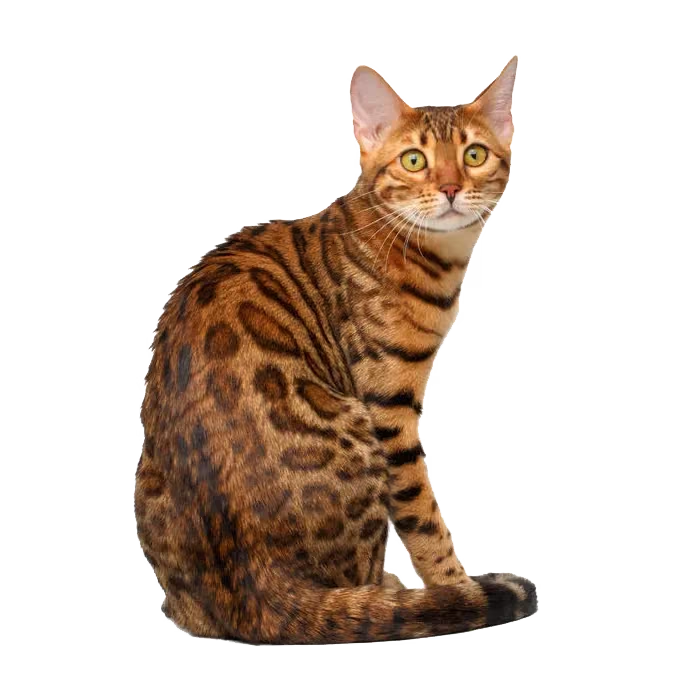
Toyger
The Toyger is a friendly, tiger-striped breed bred for its playful, sociable nature and striking miniature-tiger appearance.
- Size
- Medium
- Lifespan
- 10–15 years
- Origin
- United States
- Temperament
- Friendly
- Standard colors
- Brown
Characteristics
Coat and grooming
How the Toyger coat is built, and what that means when you groom it.
- Coat layers
- Single coat
- Coat texture
- Smooth
- Coat length
- Short
- Shedding
- Moderate shedding
Toyger colors and patterns
What each club's breed standard says about every Toyger color and pattern. Point at a ruling to see the club's own wording.
Breed standards describe the Toyger in Brown. Standard patterns: Mackerel tabby.
| Color or pattern | GCCF | TICA | LOOF |
|---|---|---|---|
| Brown | Standard (“brown”) | Standard (“Brown Mackerel Tabby”) | Standard (“noir”) |
| Lilac | Not recognised (“lilac”) | No ruling | No ruling |
| Chocolate | Not recognised (“chocolate”) | No ruling | No ruling |
| Cinnamon | Not recognised (“cinnamon”) | No ruling | No ruling |
| Fawn | Not recognised (“fawn”) | No ruling | No ruling |
| Patterns | |||
| Mackerel tabby | Standard (“modified mackerel tabby”) | Standard (“Modified mackerel tabby”) | Standard (“mackerel”) |
| Classic tabby | No ruling | Fault (“Classic alignment of mackerel stripes”) | No ruling |
| Solid | Not recognised (“non-agouti pattern”) | No ruling | No ruling |
%22%3E%3Cpath%20d%3D%22M20%2021Q34%2018.8%2048%2022%22%20fill%3D%22none%22%20stroke%3D%22%231C1C1C%22%20stroke-width%3D%222.2%22%20stroke-linecap%3D%22round%22%20stroke-linejoin%3D%22round%22%2F%3E%3Cpath%20d%3D%22M24.5%2021.5q-1.2%208%20.4%2016M28.6%2021q-1.2%208%20.4%2016.6M32.7%2020.7q-1.2%208%20.4%2016.8M36.8%2020.7q-1.2%208%20.4%2016.8M40.9%2021q-1.2%208%20.4%2016.6M45%2021.8q-1%207%20.4%2014%22%20fill%3D%22none%22%20stroke%3D%22%231C1C1C%22%20stroke-width%3D%221.6%22%20stroke-linecap%3D%22round%22%20stroke-linejoin%3D%22round%22%2F%3E%3Cpath%20d%3D%22M15%2044H50M15%2048H50%22%20fill%3D%22none%22%20stroke%3D%22%231C1C1C%22%20stroke-width%3D%221.8%22%20stroke-linecap%3D%22round%22%20stroke-linejoin%3D%22round%22%2F%3E%3Cpath%20d%3D%22M50%2022H62M51%2017H62M52%2012H63%22%20fill%3D%22none%22%20stroke%3D%22%231C1C1C%22%20stroke-width%3D%221.8%22%20stroke-linecap%3D%22round%22%20stroke-linejoin%3D%22round%22%2F%3E%3Ccircle%20cx%3D%2259.8%22%20cy%3D%227.8%22%20r%3D%222%22%20fill%3D%22%231C1C1C%22%2F%3E%3Cpath%20d%3D%22M12.6%2015.5l.6%204.2M15%2015.5l-.2%204.2M9%2025.2l4.6%201M9.6%2027.4l4%20.2%22%20fill%3D%22none%22%20stroke%3D%22%231C1C1C%22%20stroke-width%3D%221.1%22%20stroke-linecap%3D%22round%22%20stroke-linejoin%3D%22round%22%2F%3E%3C%2Fg%3E%3Cuse%20href%3D%22%23s%22%20fill%3D%22none%22%20stroke%3D%22%233B2A20%22%20stroke-opacity%3D%220.6%22%20stroke-width%3D%221%22%20stroke-linejoin%3D%22round%22%2F%3E%3Cpath%20d%3D%22M3.4%2022.3L5.4%2022.5L4.3%2024Z%22%20fill%3D%22%23E8A0B4%22%2F%3E%3Ccircle%20cx%3D%229.6%22%20cy%3D%2221.2%22%20r%3D%221.1%22%20fill%3D%22%231C1C1C%22%2F%3E%3C%2Fsvg%3E)
%22%3E%3Cpath%20d%3D%22M20%2021Q34%2018.8%2048%2022%22%20fill%3D%22none%22%20stroke%3D%22%231C1C1C%22%20stroke-width%3D%222.2%22%20stroke-linecap%3D%22round%22%20stroke-linejoin%3D%22round%22%2F%3E%3Ccircle%20cx%3D%2235%22%20cy%3D%2229.5%22%20r%3D%222.4%22%20fill%3D%22%231C1C1C%22%2F%3E%3Ccircle%20cx%3D%2235%22%20cy%3D%2229.5%22%20r%3D%225.6%22%20fill%3D%22none%22%20stroke%3D%22%231C1C1C%22%20stroke-width%3D%222.2%22%2F%3E%3Ccircle%20cx%3D%2235%22%20cy%3D%2229.5%22%20r%3D%229.4%22%20fill%3D%22none%22%20stroke%3D%22%231C1C1C%22%20stroke-width%3D%222.2%22%2F%3E%3Cpath%20d%3D%22M15%2044H50M15%2048H50%22%20fill%3D%22none%22%20stroke%3D%22%231C1C1C%22%20stroke-width%3D%221.8%22%20stroke-linecap%3D%22round%22%20stroke-linejoin%3D%22round%22%2F%3E%3Cpath%20d%3D%22M50%2022H62M51%2017H62M52%2012H63%22%20fill%3D%22none%22%20stroke%3D%22%231C1C1C%22%20stroke-width%3D%221.8%22%20stroke-linecap%3D%22round%22%20stroke-linejoin%3D%22round%22%2F%3E%3Ccircle%20cx%3D%2259.8%22%20cy%3D%227.8%22%20r%3D%222%22%20fill%3D%22%231C1C1C%22%2F%3E%3Cpath%20d%3D%22M12.6%2015.5l.6%204.2M15%2015.5l-.2%204.2M9%2025.2l4.6%201M9.6%2027.4l4%20.2%22%20fill%3D%22none%22%20stroke%3D%22%231C1C1C%22%20stroke-width%3D%221.1%22%20stroke-linecap%3D%22round%22%20stroke-linejoin%3D%22round%22%2F%3E%3C%2Fg%3E%3Cuse%20href%3D%22%23s%22%20fill%3D%22none%22%20stroke%3D%22%233B2A20%22%20stroke-opacity%3D%220.6%22%20stroke-width%3D%221%22%20stroke-linejoin%3D%22round%22%2F%3E%3Cpath%20d%3D%22M3.4%2022.3L5.4%2022.5L4.3%2024Z%22%20fill%3D%22%23E8A0B4%22%2F%3E%3Ccircle%20cx%3D%229.6%22%20cy%3D%2221.2%22%20r%3D%221.1%22%20fill%3D%22%231C1C1C%22%2F%3E%3C%2Fsvg%3E)

| Color or pattern | GCCF | TICA | LOOF |
|---|---|---|---|
| Hazel | Standard (“hazel”) | No ruling | No ruling |
| Gold | Standard (“gold”) | No ruling | No ruling |
| Green | Standard (“Green”) | No ruling | No ruling |
| Blue | No ruling | Disqualifying (“Blue”) | Disqualifying (“bleu”) |
| Color or pattern | GCCF | TICA | LOOF |
|---|---|---|---|
| Black | Standard (“black”) | Standard (“black”) | Standard (“noir”) |
What the rulings mean
- Standard
- Described by the club's breed standard.
- Fault
- Named by the club's breed standard as a fault: the animal can be shown but is penalised.
- Disqualifying
- The club's breed standard disqualifies an animal of this colour or pattern.
- Not recognised
- The club does not accept this colour or pattern for the breed.
Color changes
How a Toyger's colors can change over its life.
Brownchanges toCopal
Coat · With age · from 0 to 52 weeks
Sources
Each ruling comes from the club's published breed standard or color list.
About the Toyger
The Toyger is a domestic cat bred in the United States to carry the markings of a Bengal tiger -- and India, as the homeland of Panthera tigris tigris, has a unique claim on this breed's origin story.
India is the homeland of the Royal Bengal Tiger. Panthera tigris tigris, the subspecies that gave the world its most iconic big-cat image, lives in the Sundarbans, in Ranthambore, in Bandhavgarh and Jim Corbett National Park. Project Tiger, launched in 1973 under Indira Gandhi's government, was one of the world's first large-scale wild cat conservation efforts, and it helped pull Bengal tiger numbers from the edge of collapse. The tiger is woven into Indian identity in a way that goes beyond wildlife: it is the national animal, it features in the Ashtamangala, it appears in Tipu Sultan's court imagery, and it anchors the cultural imagination from the Sundarbans delta to the Himalayan foothills.
The Toyger was created in California, not in India. But the breed carries an Indian thread in its history that few people know about. Judy Sugden, who began the project in the 1980s with the stated goal of creating a domestic cat that evoked tiger conservation, introduced an Indian street cat into her breeding programme specifically because that cat showed unusual spotting between the ears. That marking helped develop the distinctive circular face pattern that distinguishes a Toyger from an ordinary tabby -- and it came from India's streets.
In that sense, the Toyger is partly an Indian cat dressed up as an American breed. For Indian cat enthusiasts, there is a particular pride in that connection. The breed's inspiration is the Bengal tiger, its facial marking came from an Indian street cat, and the conservation cause that motivated its creation is India's own. TICA recognised the Toyger at championship level in 2007. The Cat Federation of India (CFAI) and TICA's Indian membership base are the starting points for registration and breeder contacts in India.
| Attribute | Detail |
|---|---|
| Origin | United States (with Indian influence) |
| Size | Medium (about 3 to 7 kg) |
| Lifespan | 10 to 15 years |
| Group / role | Companion cat |
| Good with | Families, children, other pets, single owners |
Who it suits
The Toyger suits Indian households -- urban or otherwise -- that want an active, sociable cat with a striking appearance. It adapts well to the multi-generational family environments common across Indian cities: it is tolerant, confident, and comfortable with the noise and activity of large households. Mumbai flats, Delhi apartments, Bengaluru gated communities -- the Toyger fits urban Indian living provided it has enough play and company.
The short coat is practical in India's climate, particularly in humid coastal cities and in the heat of the plains. Weekly brushing and routine nail and dental care cover the grooming commitment. The main investment is daily play and interaction.
History and origin
The Toyger was created by Judy Sugden in California from the 1980s, with the Bengal tiger as its visual inspiration and an Indian street cat as a contributor to its head markings -- making India part of this breed's actual origin.
The story of the Toyger begins with two things: a Californian breeder's vision and the Bengal tiger's coat. Judy Sugden, whose mother Jean Mill created the Bengal cat, began the Toyger project in the 1980s with a stated conservation purpose. She wanted a domestic cat whose striped markings recalled a wild tiger clearly enough that people would stop and ask about it -- and the answer would be about tiger conservation.
Her starting material was domestic shorthair cats with mackerel tabby patterns. Standard tabby stripes flow in parallel lines or break into spots; a Bengal tiger's markings are broad, irregular, and vertical, branching across a warm orange ground with high contrast. Selecting for that structure required identifying the closest animals in each litter and building patiently from them across many generations.
The Indian connection is specific and documented. A street cat from India with unusual spotting between the ears was introduced into the breeding programme to influence the head pattern. Breeders wanted circular markings around the eyes -- rings and bands rather than the conventional tabby "M" on the forehead -- to push the facial pattern toward the tiger reference. That head marking, now a defining feature of the breed, has an Indian street cat in its lineage.
TICA accepted the Toyger as a developing breed in the 1990s and elevated it to championship status in 2007. The breed remains rare globally. In India, TICA-registered breeders and the Cat Federation of India (CFAI) are the best starting points for locating breeding cats or kittens. Interest has grown steadily in Indian metropolitan cat-fancier communities, and TICA India shows in Mumbai and Delhi have featured the breed in exhibition classes.
Appearance and breed standard
The Toyger is a medium, muscular shorthair whose bold vertical stripes on a warm orange ground were specifically designed to recall the Bengal tiger -- an animal central to India's national identity.
For an Indian viewer familiar with the Royal Bengal Tiger, the Toyger's coat carries a specific resonance. The broad, branching dark stripes on a warm orange ground are an unmistakable evocation of Panthera tigris tigris -- not a generic tiger, but the specific subspecies that defines the concept for most of the world. The resemblance is deliberate and is the entire point of the breed.
The body is medium-sized, muscular, and somewhat elongated, with a low, rolling gait. The head is relatively long with small rounded ears. The coat lies short and close. Breeders work toward a circular face pattern around the eyes, which at its best recalls the distinctive ring markings of a tiger's face. Some lines carry a "glitter" quality in the hair that gives the coat a slight glow in direct light.
| Trait | Standard |
|---|---|
| Height | About 23 to 33 cm at the shoulder |
| Weight | 3 to 7 kg (males larger) |
| Coat | Short, dense, close-lying; some lines carry a glittered sheen |
| Colours | Brown mackerel tabby: warm orange-to-tan ground with dark vertical stripes |
| Eyes | Round to slightly almond; gold to brown, deep colour preferred |
Coat and colours
The recognised colour is the brown mackerel tabby pattern with a base from warm orange to tan and stripe markings as dark as possible for contrast. Stripes are vertical on the body and broken into segments. The spine carries a darker dorsal line. Belly and inner legs are lighter. The eye area and whisker pads are paler than the surrounding face. The short coat sheds moderately and is practical in India's climate -- requiring only weekly attention and shedding less than long-haired breeds.
Temperament and personality
The Toyger is sociable, intelligent, and persistently playful -- it adapts well to busy Indian family households and is more trainable than most cat breeds.
The Toyger's personality suits the Indian family environment. It is sociable and tolerant rather than easily startled, which makes it comfortable in the active, multi-person, often multi-generational households common across Indian cities. It does not retreat from noise or activity; it participates.
With children it is patient and confident. With other animals it is sociable when introductions are managed. With strangers it tends toward curiosity rather than wariness. In a Mumbai flat or a Delhi apartment where family members, guests, and domestic staff may come and go throughout the day, the Toyger adapts without becoming stressed.
Trainability is a genuine feature. Toygers learn their names reliably, take to fetch and simple commands, and accept harness and lead training. This is a useful outlet for a breed that needs mental activity as much as physical movement. The vocalness is moderate -- chirps and trills rather than the sustained demands of more vocal breeds.
| Trait | Rating |
|---|---|
| Affection | 5 |
| Energy | 4 |
| Trainability | 5 |
| Vocalness | 3 |
| Shedding | 2 |
Care and grooming
The Toyger needs minimal grooming but consistent daily play; in India's warmer climate, keeping the indoor environment reasonably cool supports the breed's comfort.
Grooming
The short coat is practical and easy to maintain.
- Weekly brush with a rubber grooming mitt or soft bristle brush
- Ear checks every two weeks; clean when needed; watch for wax accumulation, which can increase in humidity
- Nail trim every two to three weeks
- Regular teeth brushing; dental disease is preventable with consistent home care
Exercise
The Toyger needs structured daily activity, not just room to move.
- Two or more interactive play sessions daily, morning and evening
- Puzzle feeders and food-dispensing toys for mental engagement between sessions
- A cat tree or wall shelves for climbing; the breed uses vertical space actively
- Harness and lead walks on a balcony or in a secure garden space; many Toygers adapt readily to this
Environment
The Toyger adapts well to Indian apartment and flat living provided it has activity, company, and reasonable comfort. In India's warmer climate zones -- particularly through summer in Delhi, the pre-monsoon heat of Mumbai, or the year-round warmth of Chennai -- keeping indoor temperatures manageable with fans or air conditioning is advisable. The breed is not adapted to high heat and should not be left in a hot, unventilated space. In Bengaluru's milder climate, the breed handles indoor temperatures without difficulty year round.
Nutrition and feeding
The Toyger needs a complete, meat-based diet measured by life stage; wet food supports hydration in warm climates, and reputable brands are available across Indian metro cities.
The Toyger does well on a complete commercial food built around animal protein. Both wet and dry formats are appropriate; wet food contributes meaningfully to daily fluid intake, which is worth considering in India's warmer climate zones. Fresh water should be available at all times and changed at least daily in hot weather.
A good range of international and domestic cat food brands is available through Indian pet stores and online retailers in Mumbai, Delhi, Bengaluru, Chennai, and Hyderabad. Finding a suitable complete commercial diet is straightforward. Portion control remains important even in a warmer climate: weigh daily rations and adjust to maintain lean body condition.
| Life stage | Amount per day | Meals |
|---|---|---|
| Kitten (to 12 months) | Per package, fed to appetite | 3 to 4 |
| Adult (1 to 7 years) | About 60 to 80 g dry, or equivalent wet | 2 |
| Senior (7+ years) | Adjusted down for lower activity; vet-guided | 2 |
Treats and supplements
Treats should not exceed about 10 percent of daily calorie intake. A cat eating a complete commercial food needs no supplements unless a vet identifies a specific reason. Change foods gradually over about a week to avoid stomach upset.
Health and lifespan
The Toyger is generally healthy and lives 10 to 15 years; the main manageable risks are hypertrophic cardiomyopathy, dental disease, and obesity, and veterinary care is well developed in Indian metro cities.
The Toyger is generally healthy with a typical lifespan of 10 to 15 years. Its small global gene pool makes breeder health testing important; responsible breeders screen before breeding and are willing to show results. Health concerns in the breed are those common to domestic cats rather than anything specific to the Toyger.
Veterinary services for companion animals are well developed in Indian metropolitan areas. Specialist feline clinics operate in Mumbai, Delhi, Bengaluru, and other major cities, and access to good routine and specialist care has improved significantly over the past decade. For CFAI or TICA-registered breeders, health screening records should be standard practice.
| Condition | Signs | Note |
|---|---|---|
| Hypertrophic cardiomyopathy | Laboured breathing, lethargy, reduced activity | Heart muscle thickening seen across many cat breeds; breeders should screen |
| Heart murmurs | Often none; found on exam | May be benign or indicate disease; vet assessment needed |
| Obesity | Weight gain, reduced interest in play | Prevented by measuring food and maintaining daily activity |
| Dental disease | Bad breath, drooling, difficulty eating | Routine brushing and professional cleaning significantly reduce risk |
Preventive care
- Annual wellness exam; twice yearly from age seven
- Core vaccinations and parasite prevention; Indian climate conditions mean tick and flea prevention is particularly relevant year round
- Dental brushing at home; professional cleaning when recommended
- Weight and body-condition checks at each visit
- Cardiac screening for breeding cats
Training
The Toyger is among the most trainable domestic cat breeds; Indian households will find its social attentiveness and food motivation make training accessible and useful.
The Toyger's trainability is a real differentiator from most domestic cats. It learns its name and responds to it, takes to fetch and simple tricks, and walks on a harness and lead more readily than most breeds. In Indian urban apartments where outdoor cat roaming is impractical, harness training creates supervised outdoor time on a balcony or in a building courtyard that otherwise is not available.
Short sessions work best: three to five minutes with a high-value food reward, immediate reinforcement when the behaviour occurs, and ending while the cat is still engaged.
How to start
- Choose a quiet room with no competing distractions
- Use a small food treat the cat does not receive at other times
- Reinforce the behaviour immediately -- the moment it happens
- Add a short verbal cue or clicker to mark the correct response
- Build one behaviour at a time before adding the next
- For harness work, let the cat wear the harness loose indoors for several days; attach a lead and let the cat move freely inside before taking it onto the balcony or outdoors
Breeding
Toyger breeding in India is rare and specialist work; CFAI registration, health testing, and connection with TICA's international breeder network are the practical framework.
Breeding Toygers in India is uncommon and requires specialist knowledge of the breed's standard and health needs. The gene pool is small globally and extremely limited within India. Breeders in the country are part of an international community that coordinates pedigree management and health screening across borders.
The CFAI provides registration services in India, and TICA maintains international breeder listings that Indian breeders can join. Both parents should be health-tested before mating, with cardiac screening a minimum. Importing breeding cats from overseas requires compliance with India's DAHD (Department of Animal Husbandry and Dairying) import requirements, which include health certification and quarantine.
The breeding goal is the standard the breed shares internationally: bold, branching vertical stripes; high contrast; a circular face pattern; and a muscular, somewhat elongated body type. Cats reach sexual maturity between five and ten months but should not be bred before they are physically mature. Gestation runs 63 to 67 days. Litters typically produce three to five kittens. Markings develop over the first months of life and cannot be assessed reliably at birth. Kittens should stay with the queen and litter until 12 to 16 weeks.
| Metric | Value |
|---|---|
| Sexual maturity | Around 5 to 10 months |
| Gestation | About 63 to 67 days |
| Average litter | 3 to 5 kittens |
| Weaning age | About 8 weeks |
| Ready for new home | 12 to 16 weeks |
Registering your Toyger and its microchip in India
Municipal by-laws largely overlook cats, so a free United Pet Club record is the one thing standing behind your Toyger's chip.
Toyger registration and microchip registration in India
The profile asks very little: your Toyger's name, her colouring, a photograph, and your contact details. It gives back a lifetime record that no shelter scan can miss, at no charge from first day to last. Cat registration is the sensible first step.
A microchipped Toyger requires one further step, since implanting and recording are entirely separate matters. Registering the microchip under the free lifetime plan accepts any manufacturer's chip, permits free updates when the household shifts cities for work, and keeps the record searchable around the clock. Create your free account and finish the whole business today.
How do I register my Toyger in India?
Open a free United Pet Club account, add your Toyger's name, colouring, and a photograph, and save. The lifetime plan maintains the profile at no cost for her entire life, indoors or out.
How do I register my Toyger's microchip?
Submit the fifteen digit number from your vet's paperwork through your free account along with your current contact information. The plan accepts chips from every manufacturer and never charges for updates.
Is microchipping required for cats in India?
No by-law demands it, which is precisely why the record matters: nothing official stands behind a Toyger's chip unless you register it yourself. United Pet Club does that part free, for life.
What is the cost of registering a Toyger?
There is none. Profile, microchip registration, and every future update are covered by the free lifetime plan, with no renewal charges.
Frequently asked questions
Common questions from Indian buyers about the Toyger's Indian connection, availability, temperament, and care.
What is the Toyger's connection to India?
Two connections. First, the Bengal tiger -- Panthera tigris tigris, India's national animal -- is the breed's direct visual inspiration. Second, an Indian street cat with unusual spotting between the ears was introduced into the breeding programme and contributed to the Toyger's distinctive circular face markings. The breed has a genuine Indian thread in its origin story.
How does the Toyger relate to Project Tiger?
The Toyger was created with tiger conservation awareness as its stated purpose. Judy Sugden wanted a domestic cat striking enough to start conversations about wild tigers and the threats they face. Project Tiger -- India's conservation programme launched in 1973 -- represents exactly the kind of effort she was hoping to draw attention to.
Are Toygers available in India?
The breed is uncommon in India. TICA-registered breeders and the CFAI are the best starting points. Some kittens are imported from overseas breeders. Verify health test records and vaccination status carefully before purchasing.
Does the Toyger suit Indian apartment living?
Yes. It adapts well to flat and apartment life in Mumbai, Delhi, Bengaluru, and other cities, provided it has play, climbing space, and company. In hotter regions, keeping the indoor environment reasonably cool is advisable.
What is the Toyger's temperament in a busy family household?
Well suited to it. The breed is tolerant, confident, and comfortable with the activity levels of large, busy households. It participates in family life rather than withdrawing from it.
Does the Toyger have wild tiger ancestry?
No. Every generation of the breed traces to domestic shorthair cats. The Bengal tiger-like markings are the product of selective breeding for coat pattern. No hybrid genetics are involved.
How long does a Toyger live?
Typically 10 to 15 years, with routine veterinary care, appropriate feeding, dental attention, and weight management supporting the longer end of that range.