
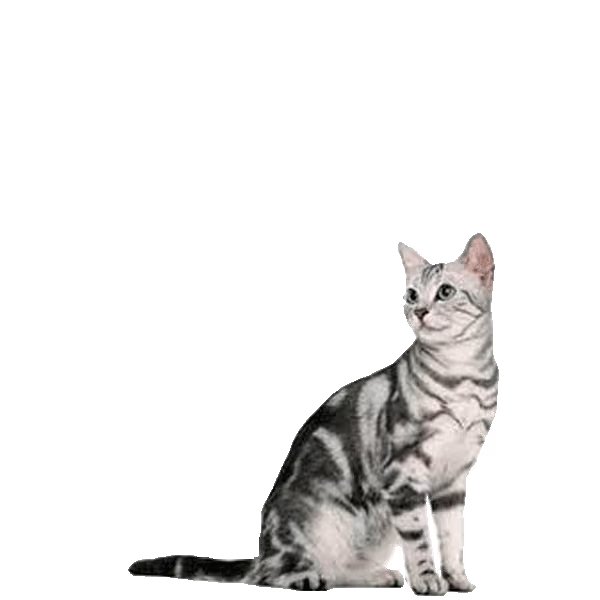
Serrade Petit
The Serrade Petit is a rare small French breed known for its gentle, calm, and quietly affectionate temperament.
- Size
- Small
- Lifespan
- 12–16 years
- Origin
- France
- Temperament
- Gentle
Characteristics
Coat and grooming
How the Serrade Petit coat is built, and what that means when you groom it.
- Coat layers
- Single coat
- Coat texture
- Smooth
- Coat length
- Short
- Shedding
- Moderate shedding
About the Serrade Petit
The Serrade Petit is a rare small cat breed from France, valued for its gentle, calm, and quietly affectionate nature.
The Serrade Petit is a small domestic cat originating from France. It is an uncommon breed, and available accounts consistently describe a cat of modest size possessing a steady, even temperament. The name is derived from a regional reference combined with the French word for small, which accurately reflects the breed's compact physique.
This breed is distinguished more by its behavioural qualities than by any remarkable physical traits. Those who have kept one describe it as affectionate in a restrained manner, content to remain in the proximity of its owners, and largely unperturbed by ordinary household noise or change. It typically forms a close bond with the members of its household whilst remaining noticeably reserved in the presence of unfamiliar persons.
Given that the population is small and formal documentation is limited, the Serrade Petit is rarely encountered outside France. Prospective owners should be prepared for a prolonged search, as the breed is not readily available from breeders in most parts of the world.
| Attribute | Detail |
|---|---|
| Origin | France |
| Size | Small |
| Lifespan | 12 to 16 years |
| Role | Companion cat |
| Good with | Quiet households, families, considerate older children |
Who it suits
The Serrade Petit is most at home in a calm, settled environment. It suits individuals and families who desire a gentle companion that values closeness without requiring constant engagement. Its reserved temperament means it is better placed in a household where it may approach visitors at its own pace. Homes that are regularly noisy or subject to frequent disruption are not well suited to its docile and low-key disposition.
History and origin
The Serrade Petit is a small cat tied to France, with limited formal documentation and a low population.
The Serrade Petit is associated with France. Its name indicates both a regional origin and the small size that characterises the breed. Beyond these basic facts, detailed and reliably documented records of its development are not available in any comprehensive form.
As with many regional breeds, it appears to have emerged from local domestic cat populations rather than from any deliberate programme of crossing established breeds. Small, even-tempered cats maintained in and around homes and farms are the most probable antecedents, with selection apparently favouring a gentle disposition over conspicuous appearance.
The breed has not achieved wide international recognition, and it remains seldom encountered outside France. Population figures are sufficiently low that the Serrade Petit is considered uncommon by any reasonable standard.
Owing to this sparse historical record, persons with an interest in acquiring the breed should approach undated or unsourced origin claims with appropriate scepticism. The points that are well established are the French connection, the small size, and the calm temperament; more precise historical details remain unsettled.
Appearance and coat
The Serrade Petit is a small, compact cat of modest proportions, described more by its size and steady look than by any striking feature.
The Serrade Petit presents a small, compact, and well-proportioned frame. It is neither heavy in build nor rangy, and the overall effect is of a neat, moderate cat without exaggerated physical features of any kind.
| Trait | Typical range |
|---|---|
| Height | About 20 to 25 cm at the shoulder |
| Weight | About 2.5 to 4 kg |
| Coat | Short to medium, close-lying |
| Colours | Varies; no single fixed pattern |
| Eyes | Rounded, set to match the head |
Coat and colours
The coat is generally short to medium in length and lies flat against the body, which makes routine grooming a simple matter. No fixed colour or pattern defines the breed, and considerable variation exists between individual cats. As the Serrade Petit is rare and not subject to widely applied breed standards, the measurements given above should be understood as approximate guides rather than formal show specifications.
Temperament and personality
The Serrade Petit is gentle, calm, and quietly affectionate, bonding closely with its household while staying reserved with strangers.
The Serrade Petit has a gentle and even temperament. It is affectionate towards those it knows well and prefers to remain close to them, though it does so quietly rather than through persistent demands for attention. Calm is the quality most consistently associated with the breed.
With family members, the cat is docile and undemanding. It is inclined to settle in laps or in adjacent spots and responds moderately to the routine activity of a household. With unfamiliar persons, it tends to be cautious and may maintain its distance initially, becoming more at ease gradually over time.
In multi-pet households, a cat of this temperament generally adapts well provided introductions are conducted slowly and without pressure. Its unassertive nature means it is unlikely to seek dominance, and it copes considerably better in a calm and predictable setting than in one prone to noise and commotion.
| Trait | Rating |
|---|---|
| Affection | 4 |
| Energy | 2 |
| Trainability | 3 |
| Vocalness | 2 |
| Shedding | 2 |
Care and grooming
The Serrade Petit needs routine grooming, modest exercise, and a calm environment that matches its quiet nature.
Grooming
The short to medium coat keeps grooming requirements minimal.
- Brush once or twice a week to remove loose hair
- Check ears and clean gently when needed
- Trim claws every few weeks
- Brush teeth regularly to support dental health
Exercise
This is a low-energy cat, so its exercise requirements are moderate but should not be neglected.
- Offer short daily play sessions with toys
- Provide a scratching post and a perch
- Use food puzzles to add light mental stimulation
Environment
The Serrade Petit is most comfortable in a quiet and stable home. A consistent routine, access to calm spaces, and an overall sense of security are well suited to its reserved and docile character. Sudden noise and frequent disruption place more strain on this breed than they would on cats of a more outgoing disposition.
Nutrition and feeding
The Serrade Petit does well on a complete, balanced cat diet fed in measured daily amounts suited to its small size.
Being an obligate carnivore, the Serrade Petit requires a diet centred on animal protein. A complete and balanced commercial cat food, whether wet, dry, or a combination of the two, is adequate for its fundamental nutritional needs. Given its small frame and low activity level, careful portion management is important to prevent unhealthy weight gain. Fresh water must be available at all times.
| Life stage | Amount per day | Meals |
|---|---|---|
| Kitten | Per product guide for age and weight | 3 to 4 |
| Adult | About 200 to 250 kcal, adjusted to weight | 2 |
| Senior | Adjusted to activity and body condition | 2 |
Treats and supplements
Treats should not exceed approximately 10 percent of the daily caloric intake, so that the principal diet remains balanced and nutritionally complete. A cat receiving a complete commercial food generally requires no additional supplements. Any supplementation should be discussed with a veterinarian beforehand, as requirements vary with age and health status.
Health and lifespan
The Serrade Petit typically lives 12 to 16 years and benefits from routine preventive veterinary care.
The Serrade Petit generally has a lifespan of 12 to 16 years. As the breed is rare and has not been the subject of extensive study, there is no substantial body of evidence regarding breed-specific health conditions. In practical terms, it is advisable to monitor for the health issues commonly seen in domestic cats and to maintain a schedule of regular veterinary examinations.
| Condition | Signs | Note |
|---|---|---|
| Dental disease | Bad breath, drooling, trouble eating | Common in cats; aided by dental care |
| Obesity | Weight gain, low activity | Manage portions for a small, calm cat |
| Kidney disease | Increased thirst, weight loss | More common with age |
| Parasites | Scratching, digestive upset | Prevent with routine treatment |
Preventive care
- Annual veterinary exams, more often for seniors
- Keep vaccinations and parasite control current
- Maintain dental hygiene at home
- Monitor weight and body condition
- Provide fresh water and a balanced diet
Training and enrichment
The Serrade Petit responds to patient, reward-based training and benefits from gentle routines that respect its reserved nature.
The Serrade Petit is reasonably amenable to training, particularly in view of its calm and docile temperament. It responds best in a quiet setting with sessions that are brief and conducted in a positive manner. A reserved cat of this kind requires considerable patience; pressing it too hard tends to cause withdrawal rather than cooperation.
Basics
- Establish reliable litter box habits with a clean, quiet box
- Reward use of the scratching post to protect furniture
- Introduce the carrier early as a calm, familiar space
- Teach name response with treats and a steady voice
- Practise gentle handling so that veterinary visits proceed smoothly
Breeding
Breeding the Serrade Petit follows general feline patterns, and its rarity makes responsible, health-focused breeding important.
The Serrade Petit reproduces in accordance with the general pattern observed in domestic cats. Females typically attain sexual maturity within the first year of life, though responsible breeders prefer to wait until the animal has reached full physical maturity before permitting any mating. The gestation period in cats is approximately 63 to 65 days, and litters commonly consist of two to five kittens.
Kittens are born blind and entirely dependent on their mother. The eyes open at approximately one to two weeks of age, weaning commences at around four weeks, and kittens are generally considered ready for new homes at approximately twelve weeks, provided they are eating independently and using the litter box reliably. Early and gentle handling during this period is important in shaping the calm temperament associated with the breed.
Given the small population of the Serrade Petit, breeding efforts should prioritise health, sound temperament, and genetic diversity over quantity. Those considering breeding should engage with a veterinarian and maintain thorough records throughout.
| Metric | Value |
|---|---|
| Female maturity | Around 6 to 12 months |
| Gestation | About 63 to 65 days |
| Litter size | Typically 2 to 5 kittens |
| Eyes open | About 1 to 2 weeks |
| Weaning | Around 4 to 6 weeks |
| Ready for new home | About 12 weeks |
Registering your Serrade Petit and its microchip in India
Municipal by-laws largely overlook cats, so a free United Pet Club record is the one thing standing behind your Serrade Petit's chip.
Serrade Petit registration and microchip registration in India
The profile asks very little: your Serrade Petit's name, her colouring, a photograph, and your contact details. It gives back a lifetime record that no shelter scan can miss, at no charge from first day to last. Cat registration is the sensible first step.
A microchipped Serrade Petit requires one further step, since implanting and recording are entirely separate matters. Registering the microchip under the free lifetime plan accepts any manufacturer's chip, permits free updates when the household shifts cities for work, and keeps the record searchable around the clock. Create your free account and finish the whole business today.
How do I register my Serrade Petit in India?
Open a free United Pet Club account, add your Serrade Petit's name, colouring, and a photograph, and save. The lifetime plan maintains the profile at no cost for her entire life, indoors or out.
How do I register my Serrade Petit's microchip?
Submit the fifteen digit number from your vet's paperwork through your free account along with your current contact information. The plan accepts chips from every manufacturer and never charges for updates.
Is microchipping required for cats in India?
No by-law demands it, which is precisely why the record matters: nothing official stands behind a Serrade Petit's chip unless you register it yourself. United Pet Club does that part free, for life.
What is the cost of registering a Serrade Petit?
There is none. Profile, microchip registration, and every future update are covered by the free lifetime plan, with no renewal charges.
Frequently asked questions
Common questions about the Serrade Petit cover its size, temperament, care, lifespan, suitability, and availability.
How big does a Serrade Petit get?
It is a small breed. Most individuals weigh approximately 2.5 to 4 kg and stand about 20 to 25 cm at the shoulder, with a compact and well-proportioned frame.
What is its temperament like?
It is gentle, calm, and affectionate in a quiet manner. It forms close bonds with its household and tends to be reserved with strangers until it feels at ease.
Is the Serrade Petit hard to care for?
Not particularly. The coat requires brushing once or twice weekly, exercise needs are modest, and the cat's principal requirement is a calm and stable home.
How long does a Serrade Petit live?
Typically 12 to 16 years, provided it receives a balanced diet, regular veterinary attention, and a low-stress living environment.
Is it good for families?
Yes, for calm households. It is well suited to families with considerate older children and is most comfortable where it may approach new people at its own pace.
Is the Serrade Petit easy to find?
No. The breed is rare and seldom encountered outside France, so locating one requires a dedicated search rather than a routine enquiry with a local breeder.
Does it get along with other pets?
Generally yes, provided introductions are carried out slowly. Its unassertive nature means it rarely competes for dominance and adapts well to a calm and predictable household.