
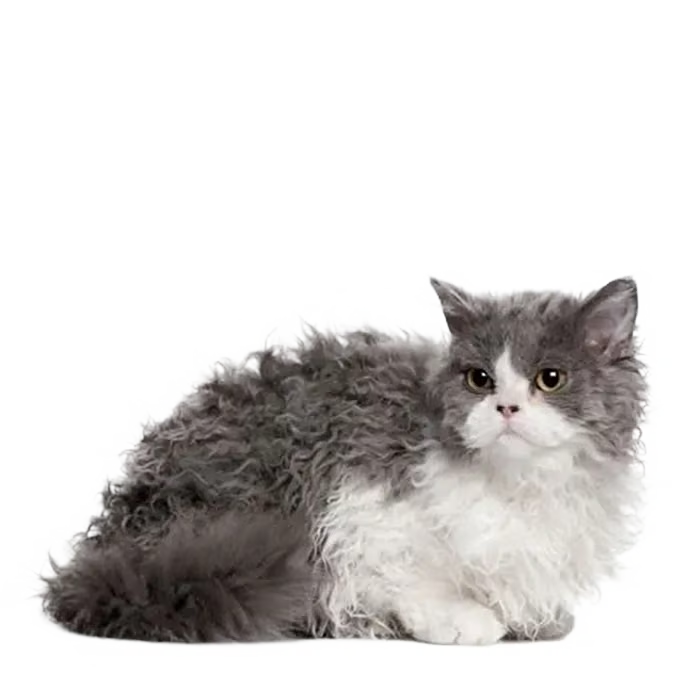
Oregon Rex
The Oregon Rex was a rare curly-coated American cat, remembered as an affectionate, playful, and curious companion.
- Size
- Small
- Lifespan
- 12–15 years
- Origin
- United States
- Temperament
- Affectionate
Characteristics
Coat and grooming
How the Oregon Rex coat is built, and what that means when you groom it.
- Coat layers
- Single coat
- Coat texture
- Curly
- Coat length
- Short
- Shedding
- Low shedding
About the Oregon Rex cat
The Oregon Rex was a small, curly-coated American cat valued for its affectionate, playful and inquisitive nature. It arose in the United States and usually lived 12 to 15 years.
The Oregon Rex was a small domestic cat marked by a soft, curly coat that resulted from a natural genetic mutation. It surfaced in the United States around the middle of the twentieth century and was maintained only as a small population. The breed can no longer be found, and the surviving cats that carried the Oregon Rex mutation were in time absorbed into other rex lines.
In its build the Oregon Rex was fine-boned and light, and the coat lay in close waves rather than the straight fur seen in most cats. Those who kept these cats spoke of them as people-oriented and lively. They were fond of their owners, remained playful well into adulthood, and took a keen interest in whatever went on around the house.
The breed is one of several distinct rex mutations that arose on their own in different places. The Oregon Rex carried its own recessive curl gene, separate from the Cornish Rex and Devon Rex genes, and this is part of the reason the line did not endure once breeders turned their attention to the more numerous rex breeds.
| Attribute | Detail |
|---|---|
| Origin | United States |
| Size | Small |
| Lifespan | 12 to 15 years |
| Group/role | Companion cat |
| Good with | Families, attentive owners, other sociable pets |
Which homes the Oregon Rex suited
The Oregon Rex suited households that wanted an interactive cat willing to seek out attention. Its sociable temperament meant it fared best with people who were at home a good deal and happy to play. The fine coat gave little insulation, so the breed was better placed in warm indoor homes than in cold surroundings.
History and origin of the Oregon Rex
The Oregon Rex appeared in the United States during the 1950s from a chance coat mutation, was bred in small numbers, and faded out as a separate line by the early 1970s.
The Oregon Rex traces back to a single curly-coated kitten born in the United States during the 1950s. As with other rex cats, the curl came about through a chance genetic mutation rather than any planned cross. That kitten and its descendants formed the foundation of a small breeding population.
The mutation behind the Oregon Rex was recessive and separate from the better-known Cornish Rex and Devon Rex mutations. Test matings between Oregon Rex cats and those other rex breeds gave straight-coated kittens, and this confirmed that the Oregon curl was a gene in its own right.
Since the population was very small, the breed relied on a handful of breeders to carry it forward. Interest and resources gathered around the more established rex breeds, and the Oregon Rex was never widely registered or spread beyond a narrow circle.
The separate Oregon Rex line is generally held to have ended by the early 1970s, with the last cats that carried the gene crossed into other rex programmes. The breed survives today chiefly as a record of one of the independent rex mutations that came to light during the twentieth century.
Oregon Rex cat appearance
The Oregon Rex was a small, slender cat with a soft, close-lying curly or wavy coat and fine bone structure.
The Oregon Rex was a small and lightly built cat. Its defining feature was a short, soft coat that curled or waved close against the body, the whiskers included, which were often crinkled. The body was slim and the legs were fine, which gave the cat a delicate look overall.
The head was moderate in size, with large ears set on a fine-boned frame. The coat carried little of the dense undercoat found in straight-haired cats, so the curl pattern and the outline of the cat were both easy to make out.
| Trait | Description |
|---|---|
| Height | Roughly 20 to 25 cm at the shoulder |
| Weight | About 2.5 to 4 kg |
| Coat | Short, soft, curly to wavy; fine and close-lying |
| Colours | A range of coat colours and patterns |
| Eyes | Medium to large, set on a fine-featured head |
Coat and colours
The coat was the breed's most recognisable trait. It was thin and curled rather than straight, which made the cat feel soft and warm to the touch and showed the shape of the body plainly. Coat colour was not tied to any single pattern, so cats turned up in a variety of colours. The sparse coat gave little protection against the cold, and for that reason these cats needed warm surroundings.
Oregon Rex cat temperament
The Oregon Rex was affectionate, playful, inquisitive and sociable, forming close bonds with its owners while staying active and engaged.
The Oregon Rex was an affectionate and sociable cat that sought out human company. Owners spoke of cats that trailed them about the house, enjoyed being handled, and stayed playful long past kittenhood. The breed was inquisitive and clever, taking interest in whatever happened indoors and quickly learning what earned it attention.
With members of the family the breed was warm and interactive. With strangers it was generally friendly, in keeping with its sociable nature, though individual cats differed. Around other pets the Oregon Rex usually settled well when the other animals were calm and introduced by degrees.
Its high level of activity and its attachment to people meant these cats did not fare well when left on their own for long stretches. They preferred company, whether human or another compatible animal, and gained a good deal from regular play and interaction.
| Trait | Rating |
|---|---|
| Affection | 5 |
| Energy | 4 |
| Trainability | 4 |
| Vocalness | 3 |
| Shedding | 2 |
Oregon Rex cat care and grooming
The Oregon Rex needed gentle coat care, warm indoor housing and daily interaction to suit its active, people-oriented nature.
Care for the Oregon Rex centred on its thin, curly coat and its need for company. The coat shed little but was delicate, so grooming stayed light and gentle. Because the coat gave limited insulation, warmth and indoor living carried more weight than for most cats.
Grooming
- Stroke or wipe the coat gently with a soft cloth or with the hand to lift away loose hair
- Avoid stiff brushes, which could damage the fine, curly fur
- Check the ears regularly and clean them when needed, since large ears tend to gather wax
- Trim the claws every few weeks
- Keep up routine dental care to support overall health
Exercise
- Offer daily interactive play with wand toys or chase toys
- Provide climbing posts and perches to use up the cat's energy and curiosity
- Rotate the toys to keep a clever cat interested
- Set aside regular time for handling and attention
Environment
The Oregon Rex was an indoor cat suited to warm, draught-free homes. Heated resting spots and soft bedding helped it stay comfortable, as its sparse coat held little body heat. A home with people present for much of the day matched the sociable temperament of the breed.
Oregon Rex cat nutrition and feeding
The Oregon Rex needed a complete cat diet built around animal protein, given in measured daily portions across two or more meals.
As an obligate carnivore, the Oregon Rex needed a diet built around animal protein. A complete and balanced commercial cat food, or a vet-formulated alternative, met its core nutritional needs. Portion size depended on the weight, age and activity level of the cat, and fresh water was kept available at all times.
| Life stage | Amount per day | Meals |
|---|---|---|
| Kitten | Feed to appetite as per product guidance | 3 to 4 |
| Adult | About 40 to 55 g dry, or the wet equivalent | 2 |
| Senior | Adjusted to weight and activity | 2 |
Treats and supplements
Treats are best held to a small share of the daily calories, so that the cat does not put on weight. A cat on a complete diet usually needs no supplements. Any addition, such as a supplement for the skin or joints, should be discussed with a veterinarian first.
Oregon Rex cat health
The Oregon Rex generally lived 12 to 15 years; its main practical concern was a thin coat that offered little protection from cold, alongside routine feline health care.
The Oregon Rex generally lived 12 to 15 years with good care. Because the breed was kept in very small numbers and is no longer maintained as a line, detailed health data is limited. The most consistent practical concern was the thin coat, which left the cat sensitive to cold and exposure.
Otherwise the Oregon Rex was subject to the same general health needs as other domestic cats, dental care, weight control and routine veterinary checks among them.
| Condition | Signs | Note |
|---|---|---|
| Sensitivity to cold | Seeking warmth, shivering, reluctance to move | Linked to the sparse coat; manage with a warm home |
| Skin sensitivity | Irritation or dryness | The fine coat gives the skin little protection |
| Dental disease | Bad breath, drooling, difficulty eating | Common in cats; prevent with dental care |
| Obesity | Weight gain, low activity | Manage with measured feeding and play |
Preventive care
- Schedule annual veterinary checkups
- Keep vaccinations and parasite control up to date
- Maintain dental hygiene through brushing or vet cleanings
- Monitor the weight and adjust food as needed
- Keep the cat warm and indoors to protect the skin and coat
Oregon Rex cat training
The Oregon Rex was clever and people-oriented, which made it responsive to gentle, reward-based training and play-based learning.
The Oregon Rex was a clever and inquisitive cat that took well to gentle training. Its strong attachment to people gave it reason to engage, and its playful streak made games an effective way to teach. Short, positive sessions worked better than long or forced ones.
Basics
- Establish reliable litter tray habits from kittenhood with a clean, accessible tray
- Use a scratching post and reward the cat for using it
- Teach simple cues such as coming when called, with treats and a calm voice
- Introduce a carrier early so that travel and vet visits cause less stress
- Channel energy into interactive toys to discourage unwanted scratching or climbing
Oregon Rex cat breeding
The Oregon Rex carried a recessive curl gene and was bred in very small numbers; the curly coat showed only when a kitten inherited the gene from both parents.
The curly coat of the Oregon Rex was governed by a recessive gene, so a kitten had to inherit the gene from both parents for the curl to show. Cats that carried a single copy had straight coats but could still pass the trait along. This pattern, together with a very small founding population, made the breed hard to keep going.
Cats reach sexual maturity at several months of age, and females carry a litter for roughly two months. Litters in small domestic cats usually run to a few kittens. Queens raise and nurse their young for several weeks before the kittens are weaned, and kittens are best kept with the mother and littermates through early socialisation.
Because the recessive curl gene was separate from the Cornish Rex and Devon Rex genes, crossing an Oregon Rex with those breeds gave straight-coated kittens. The narrow gene pool and the limited number of breeders meant the line could not be sustained, and the breed died out as a separate population.
| Metric | Value |
|---|---|
| Coat inheritance | Recessive (curl requires two copies) |
| Sexual maturity | About 5 to 10 months |
| Gestation | About 63 to 67 days |
| Typical litter size | Around 3 to 5 kittens |
| Weaning age | About 8 weeks |
| Status | No longer maintained as a separate line |
Registering your Oregon Rex and its microchip in India
Municipal by-laws largely overlook cats, so a free United Pet Club record is the one thing standing behind your Oregon Rex's chip.
Oregon Rex registration and microchip registration in India
An Oregon Rex that darts out during a power cut is identified by whatever record exists, and for cats in India that record is yours to make. Make it in minutes: name, photograph, your mobile number, saved free for life with United Pet Club. Register your cat before the occasion arises.
A microchipped Oregon Rex requires one further step, since implanting and recording are entirely separate matters. Registering the microchip under the free lifetime plan accepts any manufacturer's chip, permits free updates when the household shifts cities for work, and keeps the record searchable around the clock. Create your free account and finish the whole business today.
How do I register my Oregon Rex in India?
Open a free United Pet Club account, add your Oregon Rex's name, colouring, and a photograph, and save. The lifetime plan maintains the profile at no cost for her entire life, indoors or out.
How do I register my Oregon Rex's microchip?
Submit the fifteen digit number from your vet's paperwork through your free account along with your current contact information. The plan accepts chips from every manufacturer and never charges for updates.
Is microchipping required for cats in India?
No by-law demands it, which is precisely why the record matters: nothing official stands behind an Oregon Rex's chip unless you register it yourself. United Pet Club does that part free, for life.
What is the cost of registering an Oregon Rex?
There is none. Profile, microchip registration, and every future update are covered by the free lifetime plan, with no renewal charges.
Frequently asked questions about the Oregon Rex cat
Common questions about the Oregon Rex, covering its size, temperament, care needs, lifespan, suitability and present-day availability.
How big was the Oregon Rex cat?
It was a small cat, generally weighing about 2.5 to 4 kg, with a slender, fine-boned build.
What was the Oregon Rex cat's temperament like?
It was affectionate, playful, inquisitive and sociable. These cats bonded closely with their owners and stayed active and interactive into adulthood.
Was the Oregon Rex cat hard to look after?
Care was straightforward but specific. The coat shed little and needed only gentle handling, yet the cat needed a warm indoor home and regular company, as the thin coat held little heat and the breed disliked being alone.
How long did the Oregon Rex cat live?
With good care, an Oregon Rex usually lived 12 to 15 years.
Whom was the Oregon Rex cat suited to?
It suited people who were at home often and wanted an interactive, affectionate cat, and who could provide a warm indoor setting.
Can I still get an Oregon Rex cat today?
No. The Oregon Rex is no longer maintained as a separate breed. Its line died out by the early 1970s, and cats that carried the gene were crossed into other rex programmes.
How was the Oregon Rex different from the Cornish Rex and Devon Rex?
Its curly coat came from a separate recessive gene. Crossing an Oregon Rex with a Cornish or Devon Rex gave straight-coated kittens, which showed that the mutations were distinct.