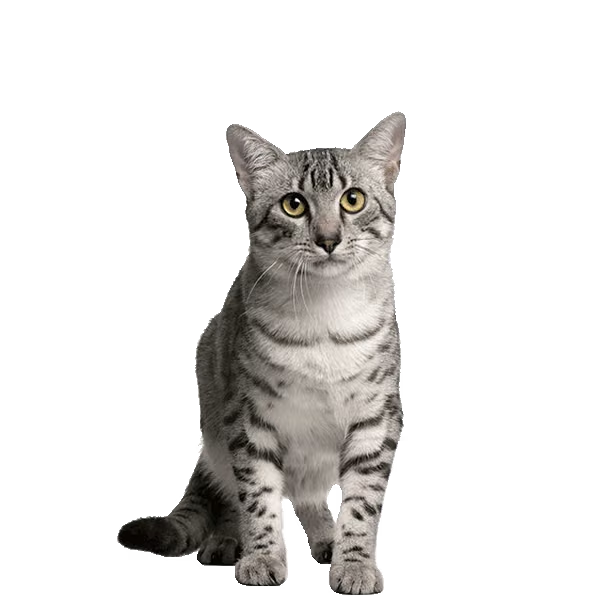
The Kanaani is an active, independent breed developed in Israel for its wild spotted appearance and athletic, curious nature.
How the Kanaani coat is built, and what that means when you groom it.
The Kanaani is a medium-sized cat developed in Israel for a wild spotted coat and an athletic, independent nature.
The Kanaani is a medium-sized domestic cat with a spotted coat that brings to mind the wild cats of the Middle East. The breed took shape in Israel, and its name traces back to the historical region of Canaan. Breeders wanted a cat that carried the look of a desert wildcat alongside the manageable temperament of a house pet.
Curiosity defines this cat. A Kanaani spends much of its waking day exploring, climbing and keeping an eye on the goings-on around it. Independence comes more naturally to it than clinginess; it will amuse itself for long spells, yet it joins in the moment something new appears. Owners tend to describe the breed as intelligent and watchful.
The coat is short and marked with spots, while the body stays lean and athletic. Outside its country of origin the breed remains uncommon, so in India it is rarely seen and availability is limited.
| Attribute | Detail |
|---|---|
| Origin | Israel |
| Size | Medium |
| Lifespan | 12 to 15 years |
| Role | Active companion cat |
| Good with | Older children and homes that can offer space and activity |
The Kanaani is a good match for an owner who wants an interactive yet self-reliant cat. It thrives in a home with room to climb and explore, and it appreciates company that respects its independence. Someone hoping for a quiet lap cat that sits still for long periods may find this breed rather too busy.
The Kanaani was developed in Israel from the 1990s to blend a wild spotted appearance with a domestic temperament.
The Kanaani counts as a relatively new breed. Its development began in Israel during the 1990s under breeder Doris Pollatschek. The idea was a cat that resembled the wild cats native to the Middle East while behaving as a domestic companion.
The breeding programme worked with domestic shorthaired cats chosen for a spotted pattern and a lean, wild type. The name Kanaani points to the land of Canaan, the historical region that covers present-day Israel, linking the breed to the place where it came about.
Cat registries in Europe granted the breed recognition, and a written standard was drawn up to keep type and pattern consistent. Away from Europe and Israel the Kanaani stayed scarce, and its numbers held low against long-established breeds.
The Kanaani is still treated as rare today. Breeding stock is limited, and most catteries that work with it sit in or near its country of origin. In India, anyone keen on the breed should expect very few local sources and may need to look to TICA-registered lines from overseas.
The Kanaani is a lean, medium to large cat with a short spotted coat and an athletic build that suggests a desert wildcat.
The Kanaani carries a long, athletic body on tall legs, which lends it a poised and alert outline. The head is a modified wedge set off by large, upright ears and almond-shaped eyes. The whole impression is of a lean wild cat rather than a heavy or rounded house cat.
Its spotted coat is the defining feature. Spots lie across a ticked background, and the pattern is meant to read as natural rather than uniform. The tail runs moderately long and usually finishes in a darker tip.
| Trait | Description |
|---|---|
| Height | Roughly 25 to 30 cm at the shoulder |
| Weight | About 4 to 6 kg |
| Coat | Short, fine, lying close to the body |
| Colours | Spotted patterns on a ticked ground, often warm sandy or grey tones |
| Eyes | Almond-shaped, typically green |
The coat is short and lies close to the skin, which keeps grooming simple. Accepted colours revolve around spotted tabby patterns in sandy, fawn and grey shades, with the spots showing clearly against a ticked background. A faint pattern on the legs and a darker tail tip are common. Since the breed is built around its pattern, the clarity and contrast of the spots sit at the heart of the standard.
The Kanaani is independent, curious and active, friendly on its own terms and happiest with room to explore.
The Kanaani is an independent cat with a strong urge to explore. It inspects new objects, climbs to high vantage points and keeps tabs on household activity. The breed is intelligent and learns routines quickly, which can leave it adept at opening cupboards or finding hidden nooks.
With family, the Kanaani shows affection but on its own schedule. It often prefers to settle near people rather than on them, and it picks its own moments to seek attention. With strangers it stays cautious at first and comes round once it has read the situation.
Around other pets, a Kanaani can live together well when introductions are gradual, though its high energy and territorial streak mean it fares better with confident animals than with timid ones. That active nature also leaves it happier with a companion or plenty of stimulation when left on its own.
| Trait | Rating |
|---|---|
| Affection | 3 |
| Energy | 5 |
| Trainability | 4 |
| Vocalness | 2 |
| Shedding | 2 |
The Kanaani needs little grooming but a good deal of exercise and mental stimulation to stay content.
The Kanaani does best in a home with vertical space and spots to perch and hide. A cat that cannot climb or explore may turn bored and restless. Window views, secure outdoor runs and a steady routine all help this active breed settle. In warmer parts of India, shaded cool corners and constant fresh water matter through the hotter months.
The Kanaani needs a complete cat diet built around animal protein, portioned to its activity level to avoid weight gain.
Like all cats, the Kanaani is an obligate carnivore, so its diet should revolve around animal protein. A complete and balanced commercial cat food, wet or dry, covers its core needs. Active cats burn a fair amount of energy, yet portions still have to match the cat's weight and activity to keep excess gain in check.
| Life stage | Amount per day | Meals |
|---|---|---|
| Kitten (2 to 12 months) | Follow food label, fed to appetite | 3 to 4 |
| Adult (1 to 7 years) | About 50 to 70 g dry or equivalent wet | 2 |
| Senior (7+ years) | Adjusted to activity and body condition | 2 |
Keep treats to a small share of daily calories, no more than about ten percent. A cat on a complete diet usually needs no extra supplements. Fresh water should be available at all times, and a water fountain can nudge active cats to drink more.
The Kanaani is generally a healthy breed with a typical lifespan of 12 to 15 years and no widely documented breed-specific disorders.
The Kanaani is a robust breed with no long list of inherited problems on record, partly because it is young and built from domestic shorthaired stock. The typical lifespan runs 12 to 15 years with good care. As with any cat, the conditions below are general feline concerns to watch for rather than disorders unique to the breed.
| Condition | Signs | Note |
|---|---|---|
| Dental disease | Bad breath, drooling, reduced eating | Common in all cats; regular cleaning helps |
| Obesity | Weight gain, low activity | Manage portions in an active but indoor cat |
| Urinary tract issues | Straining, frequent or bloody urination | Seek prompt veterinary care |
| Parasites | Itching, weight loss, digestive upset | Routine prevention recommended |
The Kanaani is intelligent and responsive to reward-based training, which channels its energy and curiosity into useful behaviour.
The Kanaani learns fast and takes to training once it sees a reason to cooperate. Its intelligence and interest in food make it a strong candidate for clicker training, leash walking and trick work. As the breed is independent, training works best in short, positive sessions rather than long drills.
The Kanaani reaches maturity within the first year, carries a litter for about nine weeks and produces an average of four to five kittens.
The Kanaani reaches sexual maturity within the first year, though responsible breeders hold off until the cat is physically and behaviourally mature before mating. Gestation lasts roughly 63 to 67 days, much like other domestic cats. Litters commonly run to four or five kittens.
Queens raise their young in the usual feline way: kittens nurse for several weeks, open their eyes around day ten and start weaning by four to five weeks. Early handling and socialisation help kittens grow into the confident adults the breed standard favours. Since the Kanaani is rare, breeding programmes work with a small gene pool, so careful selection and outcrossing where permitted form part of keeping the breed healthy.
| Metric | Value |
|---|---|
| Sexual maturity | Within the first year |
| Gestation | About 63 to 67 days |
| Average litter size | 4 to 5 kittens |
| Weaning age | 4 to 5 weeks |
| Eyes open | About 10 days |
Municipal by-laws largely overlook cats, so a free United Pet Club record is the one thing standing behind your Kanaani's chip.
The profile asks very little: your Kanaani's name, her colouring, a photograph, and your contact details. It gives back a lifetime record that no shelter scan can miss, at no charge from first day to last. Cat registration is the sensible first step.
The fifteen digits on the clinic's paperwork identify your Kanaani only after they reach a registry. Submit them through your free United Pet Club account and the chip finally speaks for her: every brand accepted, every update free, the record available to any scanner at any hour. Microchip registration completes what the implant began.
Open a free United Pet Club account, add your Kanaani's name, colouring, and a photograph, and save. The lifetime plan maintains the profile at no cost for her entire life, indoors or out.
Submit the fifteen digit number from your vet's paperwork through your free account along with your current contact information. The plan accepts chips from every manufacturer and never charges for updates.
No by-law demands it, which is precisely why the record matters: nothing official stands behind a Kanaani's chip unless you register it yourself. United Pet Club does that part free, for life.
There is none. Profile, microchip registration, and every future update are covered by the free lifetime plan, with no renewal charges.
Common questions about the Kanaani cover its size, temperament, care needs, lifespan, suitability and availability.
The Kanaani is a medium-sized cat, usually about 4 to 6 kg with a lean, long-legged build that can make it look larger than it weighs.
It is independent, curious, intelligent and active. The breed is friendly on its own terms and prefers exploring and climbing to long spells on a lap.
Grooming is easy thanks to the short coat, but the breed needs plenty of exercise and mental stimulation. The main effort is keeping an active, intelligent cat occupied.
With good care, a Kanaani typically lives 12 to 15 years.
It suits active households with older children and space to climb and explore. It is less ideal for owners who want a calm, constant lap cat.
No. The breed is rare and was developed in Israel, so availability in India is very limited. Prospective owners usually join waiting lists or look to TICA-registered or WCF India contacts for guidance.
