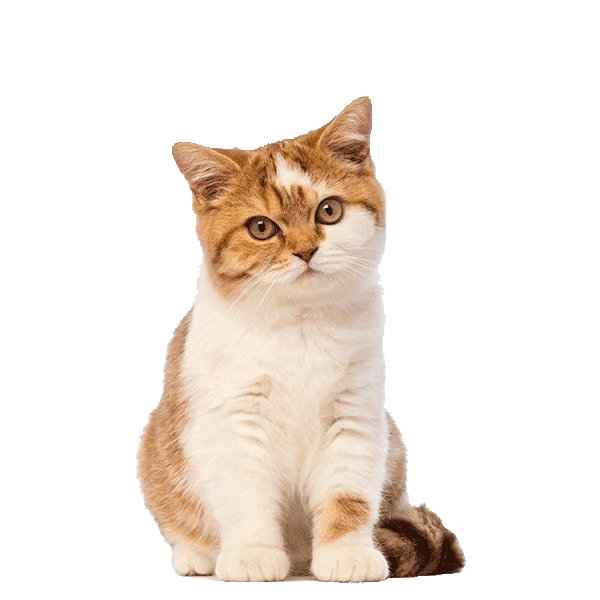
The Burmilla is an affectionate, gentle cat blending Burmese charm with a sparkling silver coat and sweet temperament.
How the Burmilla coat is built, and what that means when you groom it.
Critical: A Burmilla should not be shaved.
The undercoat keeps heat out as well as in, and the outer coat shields the skin from sun and insect bites. Clipping the whole coat off removes both. It often grows back patchy, soft or a different colour, and in some animals the guard hairs never return properly. Brush the undercoat out instead of cutting it off.
Caution: A Burmilla coat mats easily.
Fine or long hair tangles at the base of the coat, out of sight, where the mats tighten and pull on the skin. Brushing has to reach right down to the roots in sections, not just skim the surface.
The Burmilla is a medium-sized cat from Britain, valued for its silver-shaded coat and a gentle, affectionate nature that blends Burmese and Chinchilla Persian traits.
The Burmilla is a medium-sized domestic cat that originated in the United Kingdom. It arose from an accidental cross between a Burmese and a Chinchilla Persian, and it carries features of both parents. Its body has the muscular, compact frame of the Burmese, while the coat shows the silver-shaded or tipped pattern that comes from the Chinchilla line.
Though muscular, the breed is not heavy, and the shorthair variety wears a coat that lies close to the body. Its eyes are large and expressive, usually green, and outlined in a darker shade that gives the face a clear, defined look. Most cats weigh between 3 and 6 kg.
Sociable by nature, the Burmilla is very oriented towards people. It holds on to a playful, curious streak well into adulthood and likes to stay near its household. This gentle, good-natured manner makes it a comfortable fit for homes with children and other pets.
| Attribute | Detail |
|---|---|
| Origin | United Kingdom |
| Size | Medium (3-6 kg) |
| Lifespan | 12-15 years |
| Group/role | Companion cat |
| Good with | Children, other cats, dogs |
The Burmilla suits households that want an affectionate cat with a calm yet playful manner. It settles in well with families, with people who are home often, and in multi-pet households. It does not manage long stretches on its own, so it is best for owners who can give it daily company and interaction.
The Burmilla began in England in 1981 from an unplanned mating between a Lilac Burmese and a Chinchilla Persian, and breeders developed the silver kittens into a recognised breed.
The Burmilla traces to a single accidental pairing in England in 1981. A Lilac Burmese female owned by Baroness Miranda von Kirchberg mated with a Chinchilla Persian male kept in the same household. The mating was unintended, but the four kittens that followed were striking shorthaired cats with shaded silver coats.
The quality of that first litter led breeders to take up the cross deliberately. A breeding programme was set up to fix the type and the silver coat while retaining the Burmese body and the gentle temperament. The breed was named Burmilla, a blend of Burmese and Chinchilla.
Across the 1980s and 1990s the breed was refined further in the United Kingdom and then reached other countries. Breed clubs were formed to lay down a standard and to guide outcrossing back to Burmese wherever needed, keeping the gene pool healthy.
Governing bodies recognised the Burmilla over the years that followed, and it is now registered with several major cat associations. In India, enthusiasts can register the breed through WCF-affiliated clubs, while TICA recognises it at the international level. It stays less common than many older breeds, yet it holds a steady following among owners who value its looks and easy temperament.
The Burmilla is a medium, muscular cat with a silver-shaded or tipped coat, large green eyes, and a gently rounded head inherited from the Burmese.
The Burmilla has a medium build that reads as muscular and well balanced rather than slim or stocky. Its head is gently rounded, with a short muzzle and medium-sized ears set well apart. The eyes are large, set a little wide, and most often green, with darker outlining around the eyes, nose, and lips that frames the face. The legs are of medium length, and the tail runs medium to long with a slight taper.
| Trait | Standard |
|---|---|
| Height | About 25-30 cm at the shoulder |
| Weight | 3-6 kg |
| Coat | Short and close-lying (shorthair); a semi-longhair variety also exists |
| Colours | Silver shaded or silver tipped over black, brown, blue, chocolate, lilac, and red or cream |
| Eyes | Large, usually green, outlined in a darker shade |
The defining feature is a silver undercoat with darker tipping or shading at the ends of the hairs. In a tipped cat only the very tips hold colour, giving a light, sparkling look. In a shaded cat the colour runs further down the hair and yields a deeper tone. The base colour beneath the silver can be black, brown, blue, chocolate, lilac, or red and cream, which produces a range of overall shades. A longhaired variety occurs and is recognised by some registries; it carries the same patterns on a softer, semi-long coat.
The Burmilla is affectionate, playful, and sociable, warm with family and visitors and generally easygoing with other cats and dogs.
The Burmilla is an affectionate, good-natured cat that stays closely bonded to its people. It tends to follow household members from room to room and looks for laps and company, though it is usually less demanding and quieter than the Burmese it descends from. The playful, curious streak of kittenhood lasts for years, so the breed keeps up an interest in toys and games well into adulthood.
Around family, the Burmilla is gentle and patient, a good match for households with children who handle cats kindly. With strangers it stays relaxed and curious rather than shy, and many cats will go up to greet visitors. Around other pets it is sociable and settles in comfortably with other cats and cat-friendly dogs.
The breed is intelligent and enjoys interaction. If it is left alone for long periods without company or stimulation, it can grow bored, so it does best where it has either human attention or another pet for company.
| Trait | Rating |
|---|---|
| Affection | 5 |
| Energy | 3 |
| Trainability | 3 |
| Vocalness | 2 |
| Shedding | 2 |
The Burmilla is low-maintenance, needing weekly brushing for the shorthair coat, daily play, and an indoor or supervised environment with company.
The Burmilla suits indoor life or a home with safe, supervised outdoor access. It values company and does best where it is not left alone for long stretches. A second pet can help when owners are out during the day. Provide scratching posts, resting spots near windows, and quiet corners where it can retreat.
The Burmilla needs a balanced, meat-based diet portioned to keep a lean body, fed in measured daily amounts split across two meals.
The Burmilla is an obligate carnivore like all cats and needs a diet built on animal protein. Choose a complete commercial food that meets recognised feeding standards for the cat's life stage. Both wet and dry foods can work, and many owners feed a combination. Keep fresh water available at all times. Portion food to hold a lean body, since extra weight raises the risk of joint and metabolic problems.
| Life stage | Amount per day | Meals |
|---|---|---|
| Kitten (2-12 months) | Per package guide, fed to appetite | 3-4 |
| Adult (1-7 years) | About 50-70 g dry or equivalent wet | 2 |
| Senior (7+ years) | Adjust to activity and body condition | 2 |
Keep treats to about 10 percent of daily calories and cut back the main meal to match. A cat on a complete, balanced food does not usually need supplements. Speak to a veterinarian before adding any supplement, and ask about diet changes for kittens, pregnant or nursing females, and senior cats.
The Burmilla is generally healthy with a 12 to 15 year lifespan, though it can carry kidney and a few inherited conditions that screening and routine care help manage.
The Burmilla is generally a healthy breed with a typical lifespan of 12 to 15 years, and some cats live longer with good care. Having been developed from a small founding group, it can carry a few inherited conditions, so buying from breeders who screen their cats lowers the risk. Routine veterinary care, vaccination, parasite control, and weight management all support a long life.
| Condition | Signs | Note |
|---|---|---|
| Polycystic kidney disease (PKD) | Increased thirst, weight loss, poor appetite | Inherited from the Persian side; DNA testing is available |
| Chronic kidney disease | Drinking and urinating more, weight loss | More common with age; blood and urine tests detect it early |
| Allergic skin disease | Itching, over-grooming, skin irritation | Reported in some lines; managed with veterinary care |
| Dental disease | Bad breath, drooling, trouble eating | Common in cats generally; regular dental care helps |
The Burmilla is intelligent and willing, responding well to reward-based training for litter use, basic cues, and play routines.
The Burmilla is intelligent and attentive to its people, which makes it easier to train than many cats. It can learn to come when called, use a scratching post, and even perform simple tricks when training is short, positive, and consistent. Cats do not respond to punishment, so the aim is to reward the behaviour you want and redirect the behaviour you do not want.
Burmilla queens mature around 7 to 12 months, carry litters of about four kittens after a roughly 65-day pregnancy, and benefit from outcrossing to Burmese to keep the gene pool healthy.
Female Burmillas usually reach sexual maturity between about 7 and 12 months, though responsible breeders wait until the queen is physically mature before breeding. Pregnancy lasts roughly 63 to 67 days. Litters average around four kittens, in line with the breed's founding litters, though the numbers vary.
Kittens are born with the silver coat pattern already visible in lighter form, and the tipping deepens as they grow. In a normal birth the mother raises the kittens with little need for intervention, but breeders watch weight gain closely in the early weeks. Kittens should stay with the mother and litter until around 12 to 13 weeks so they are weaned, socialised, and ready for vaccination before moving to new homes.
Because the breed came from a small founding group, breeders outcross to Burmese where the registry allows, which keeps the gene pool varied. Screening parents for inherited kidney disease before breeding is part of responsible practice.
| Metric | Value |
|---|---|
| Sexual maturity | About 7-12 months |
| Gestation | About 63-67 days |
| Average litter size | Around 4 kittens |
| Weaning age | About 7-8 weeks |
| Recommended rehoming age | 12-13 weeks |
Municipal by-laws largely overlook cats, so a free United Pet Club record is the one thing standing behind your Burmilla's chip.
A Burmilla that darts out during a power cut is identified by whatever record exists, and for cats in India that record is yours to make. Make it in minutes: name, photograph, your mobile number, saved free for life with United Pet Club. Register your cat before the occasion arises.
The fifteen digits on the clinic's paperwork identify your Burmilla only after they reach a registry. Submit them through your free United Pet Club account and the chip finally speaks for her: every brand accepted, every update free, the record available to any scanner at any hour. Microchip registration completes what the implant began.
Open a free United Pet Club account, add your Burmilla's name, colouring, and a photograph, and save. The lifetime plan maintains the profile at no cost for her entire life, indoors or out.
Submit the fifteen digit number from your vet's paperwork through your free account along with your current contact information. The plan accepts chips from every manufacturer and never charges for updates.
No by-law demands it, which is precisely why the record matters: nothing official stands behind a Burmilla's chip unless you register it yourself. United Pet Club does that part free, for life.
There is none. Profile, microchip registration, and every future update are covered by the free lifetime plan, with no renewal charges.
Common questions about the Burmilla cover its size, temperament, care needs, lifespan, suitability for families, and how easy it is to find.
The Burmilla is a medium-sized cat. Most adults weigh between 3 and 6 kg and stand around 25 to 30 cm at the shoulder, with a muscular but balanced build.
It is affectionate, playful, and sociable. The breed stays close to its people, keeps a curious and playful streak into adulthood, and is generally gentle with children and other pets.
No. The shorthair coat needs only weekly brushing, and the breed's main needs are daily play and company. It is a low-maintenance cat as long as it is not left alone for long periods.
The typical lifespan is 12 to 15 years, and some cats live longer with a good diet, routine veterinary care, and a healthy weight.
Yes. Its gentle, patient nature suits households with children who handle cats kindly, and it adapts well to homes with other cats or cat-friendly dogs.
The Burmilla is less common than many older breeds. It is recognised by TICA internationally and can be registered through WCF-affiliated clubs in India, but you may need to contact a specialist breeder and join a waiting list to get a kitten.
Shedding is light, especially in the shorthair variety. Weekly brushing keeps loose hair under control; the semi-longhair version needs brushing a few times a week.
