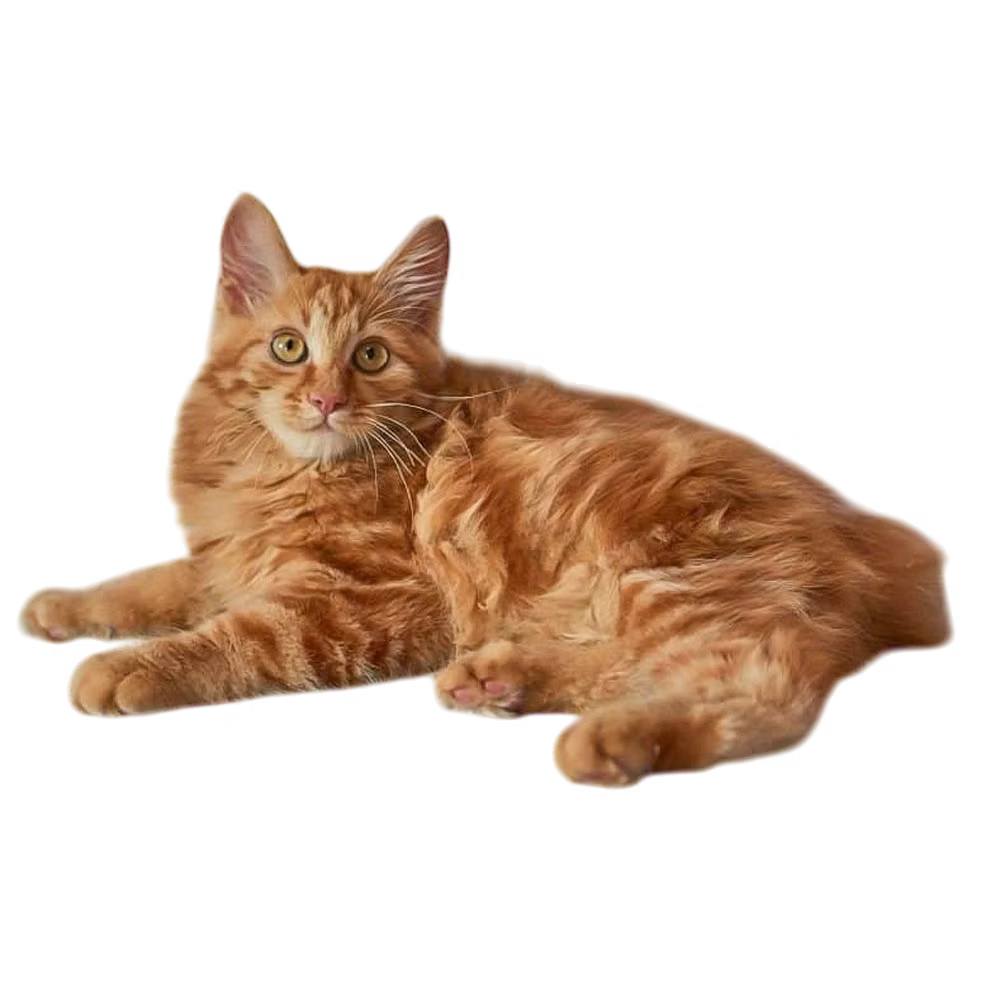
The American Bobtail is an affectionate, dog-like cat with a distinctive short tail and a playful, devoted nature.
How the American Bobtail coat is built, and what that means when you groom it.
Critical: A American Bobtail should not be shaved.
The undercoat keeps heat out as well as in, and the outer coat shields the skin from sun and insect bites. Clipping the whole coat off removes both. It often grows back patchy, soft or a different colour, and in some animals the guard hairs never return properly. Brush the undercoat out instead of cutting it off.
The American Bobtail is a medium-sized cat from the United States, valued for its stubby tail and affectionate, dog-like nature. It is playful and gentle with children.
The American Bobtail is a medium-sized domestic cat identified by its naturally stubby tail, which measures roughly one-third to one-half the length of an ordinary cat's tail. This tail arises from a natural genetic mutation and not from any deliberate mating with wild species, so no two bobtails carry precisely the same tail. The breed is sturdily built and muscular, wears a faintly wild look, and holds an alert expression.
Though its appearance is rugged, the American Bobtail is warm and thoroughly people-oriented. Many owners liken it to a dog, since it trails family members from room to room, welcomes guests at the door, and frequently learns to retrieve a toy or walk in a harness. It forms a firm bond with its household and settles comfortably into a busy family routine.
Maturity comes gradually, with two to three years often needed before the cat attains its full size and coat. American Bobtails are found in both shorthaired and longhaired forms, and each carries a double coat that lends the animal a solid, weatherproof feel.
| Attribute | Detail |
|---|---|
| Origin | United States |
| Size | Medium |
| Lifespan | 13 to 15 years |
| Group / role | Companion cat |
| Good with | Children, families, other pets |
The American Bobtail is well matched to homes that want an interactive, sociable cat. It thrives with families, including those with well-behaved children, and it generally accepts other cats and cat-friendly dogs. Those who travel a great deal or remain away for long hours may find the breed rather too reliant on company, as it prefers steady human contact and tends to grow bored when left on its own for lengthy spells.
The American Bobtail arose in the United States during the 1960s from a short-tailed feral cat and was shaped into a recognised breed across the decades that followed.
The American Bobtail dates to the 1960s in the United States. The founding cat most often cited was a short-tailed brown tabby male, discovered near an Arizona reservation by a couple passing through the region. This tom, sometimes recorded under the name Yodie, was mated to a domestic female, and a number of the resulting kittens inherited the short tail.
The earliest breeding attempts through the 1960s and 1970s gave uneven results, and the original lines never settled into consistency. Breeders subsequently began afresh, drawing on a wider assortment of short-tailed domestic cats from across North America rather than leaning on a single bloodline. This broader base did much to secure the breed's health and its variable, naturally occurring tail.
The short tail stems from a dominant genetic mutation already present in the domestic cat population. Despite the somewhat wild look, the breed was not produced by crossing with wild bobcats, and no wild ancestry is documented in the established lines.
The American Bobtail achieved championship recognition with The International Cat Association during the 2000s, and the standards set out both shorthaired and longhaired forms. It stays a comparatively uncommon breed alongside the more widespread shorthaired cats.
The American Bobtail is a medium to large, muscular cat with a short expressive tail, a wild-looking face, and a double coat available in short and long lengths and most colours.
The American Bobtail carries a solid, athletic body with a broad chest, substantial bone, and well-developed muscle. The hind legs stand slightly longer than the front legs, which gives the cat a natural posture and a self-assured walk. The head forms a broad wedge with a gentle concave curve, and the almond-shaped eyes add to an alert, faintly wild look often likened to that of a hunting cat.
The short tail is the signature feature. It is supple and expressive, ordinarily one-third to one-half the length of a typical tail, and may run straight, curve slightly, or bear a small kink. The tail should sit clearly visible above the back and is never wholly absent.
| Trait | Standard |
|---|---|
| Height | Approximately 23 to 25 cm (9 to 10 in) at the shoulder |
| Weight | 3 to 7 kg (7 to 16 lb), males larger than females |
| Coat | Double coat in shorthair and longhair varieties |
| Colors | All colours and patterns accepted |
| Eyes | Almond-shaped, colour in keeping with coat |
Both coat lengths are double, comprising a resilient outer layer over a softer undercoat. The shorthair is dense and somewhat shaggy rather than sleek, while the longhair runs medium-long with a slight ruff, tufted ears, and feathering along the legs and tail. The breed is accepted in practically every colour and pattern, tabby, solid, tortoiseshell, and pointed variations among them, so coat colour is not a defining mark of the breed.
The American Bobtail is affectionate, playful, and devoted, with a dog-like bond to its family and an easy attitude towards children and other pets.
The American Bobtail is sociable and deeply attached to its people. It looks for company, settles close to family members, and involves itself in whatever is happening about the house. A good many owners remark on dog-like habits such as greeting people at the door, ferrying toys about, and answering to a call.
With its family the breed is warm and interactive without turning demanding. It is by and large patient and forbearing, which makes it a sensible choice for homes with well-behaved children. Towards strangers the American Bobtail is usually inquisitive and confident rather than timid, though individuals differ. It tends to get on with other cats and with dogs that are at ease around cats, aided by its even temper.
The breed is clever and takes pleasure in problem-solving toys, games, and learned tricks. It is moderately active and playful well into adulthood, yet it is not hyperactive and is happy to break up play with quiet companionship. It is typically a quiet cat that speaks through chirps and trills rather than persistent loud meowing.
| Trait | Rating |
|---|---|
| Affection | 5 |
| Energy | 3 |
| Trainability | 4 |
| Vocalness | 2 |
| Shedding | 3 |
The American Bobtail needs regular brushing of its double coat, daily interactive play, and a home offering steady company and enrichment.
The American Bobtail fares best as an indoor cat with room enough to climb, explore, and play. Being people-oriented, it suits homes where someone is present for much of the day or where a second compatible pet supplies company. Provide scratching posts, resting spots near family areas, and a quiet corner for rest.
Feed the American Bobtail a complete, high-protein cat food in measured portions, adjusted for life stage and activity, with fresh water always on hand.
The American Bobtail is an obligate carnivore and requires a diet centred on animal protein. Select a complete and balanced commercial cat food suited to the cat's life stage, with named meat sources placed high on the ingredient list. The breed's muscular frame gains from ample protein, and portions ought to be matched to body condition rather than fed free-choice, since the breed can put on weight when overfed.
Serve measured meals to a routine rather than leaving food out through the day. Adjust the amount by weight, age, and how active the particular cat is, and cut back the calories for cats that are spayed, neutered, or less active.
| Life stage | Amount per day | Meals |
|---|---|---|
| Kitten (up to 12 months) | Per package, fed to appetite | 3 to 4 |
| Adult (1 to 7 years) | Approximately 50 to 70 kcal per kg body weight | 2 |
| Senior (7+ years) | Adjusted for weight and activity | 2 |
Hold treats to no more than about ten percent of daily calories and count them within the overall ration. A cat on a complete commercial diet ordinarily needs no supplements; add any supplement only on veterinary advice. Keep clean fresh water available at all times, and consider a portion of wet food to aid hydration.
The American Bobtail is generally a hardy breed living 13 to 15 years, though tail-related and common feline conditions call for routine veterinary care.
The American Bobtail is widely regarded as a robust breed, helped along by its broad genetic base. Given good care, most cats live between 13 and 15 years. As with any cat, an individual's health rests on genetics, diet, weight management, and routine veterinary attention. Responsible breeders screen their breeding cats and steer clear of pairings that might yield tail or spinal problems.
| Condition | Signs | Note |
|---|---|---|
| Hip dysplasia | Stiffness, reluctance to jump, altered gait | More likely in larger, heavier individuals |
| Tail or spinal sensitivity | Discomfort near the tail base, sensitivity to handling | Linked to the short-tail trait in some lines |
| Obesity | Weight gain, reduced activity | Manage with measured feeding and play |
| Dental disease | Bad breath, drooling, difficulty eating | Common in cats; prevent with dental care |
The American Bobtail is intelligent and trainable, often mastering tricks, fetch, and harness walking through short, reward-based sessions.
The American Bobtail ranks among the more trainable cat breeds. Its intelligence and eagerness to interact mean it often picks up cues quickly and relishes the mental work. Many individuals learn to answer a call, fetch toys, and walk in a harness. Training goes best in short sessions of a few minutes, repeated regularly, with food rewards or play as the motivation.
The American Bobtail matures slowly and produces small to average litters, with the short tail inherited as a dominant trait that calls for careful breeding to protect health.
The American Bobtail matures more slowly than many breeds, frequently reaching full physical and coat development between two and three years of age. Sexual maturity comes earlier, yet reputable breeders wait until the cats are well grown and health-checked before breeding. Females typically come into season seasonally, and queens are on the whole attentive, capable mothers.
Gestation runs to roughly nine weeks, after which the queen delivers a litter that is usually small to average in size. Kittens arrive with their short tails already in place, and tail length and shape differ even within one litter owing to the natural variability of the trait. Kittens remain with the mother and littermates through weaning and early socialisation, and responsible breeders keep them until around twelve weeks so they are well socialised before moving to new homes.
The short tail is inherited as a dominant trait. Breeders steer away from mating two cats in ways that risk spinal or tail defects, and they select for sound, healthy tails. Because the breed leans on a broad outcross base, careful pairing helps preserve genetic diversity and overall health.
| Metric | Value |
|---|---|
| Age at maturity | Full development at 2 to 3 years |
| Gestation | Approximately 63 to 65 days |
| Average litter size | Small to average, commonly 2 to 5 kittens |
| Tail inheritance | Dominant genetic trait, variable expression |
| Weaning / rehoming | Weaned by 8 weeks, rehomed around 12 weeks |
Municipal by-laws largely overlook cats, so a free United Pet Club record is the one thing standing behind your American Bobtail's chip.
Municipal by-laws here concern themselves chiefly with dogs, which leaves an American Bobtail's chip without any official record behind it unless you create one. A free United Pet Club profile provides precisely that, connecting your contact information to your cat for her entire life, whether she keeps to the flat or roams the housing society grounds. Registering your cat costs nothing whatsoever.
The fifteen digits on the clinic's paperwork identify your American Bobtail only after they reach a registry. Submit them through your free United Pet Club account and the chip finally speaks for her: every brand accepted, every update free, the record available to any scanner at any hour. Microchip registration completes what the implant began.
Open a free United Pet Club account, add your American Bobtail's name, colouring, and a photograph, and save. The lifetime plan maintains the profile at no cost for her entire life, indoors or out.
Submit the fifteen digit number from your vet's paperwork through your free account along with your current contact information. The plan accepts chips from every manufacturer and never charges for updates.
No by-law demands it, which is precisely why the record matters: nothing official stands behind an American Bobtail's chip unless you register it yourself. United Pet Club does that part free, for life.
There is none. Profile, microchip registration, and every future update are covered by the free lifetime plan, with no renewal charges.
Common questions about the American Bobtail's size, temperament, care needs, lifespan, suitability, and availability.
It is a medium to large cat. Most weigh between 3 and 7 kg (7 to 16 lb), with males noticeably larger than females, and they stand around 23 to 25 cm at the shoulder.
It is affectionate, playful, devoted, and intelligent. The breed is often called dog-like because it follows its family around, greets guests, and can learn tricks and fetch. It is also good with children.
Care is moderate. The double coat needs brushing once or twice a week for shorthairs and a few times a week for longhairs, along with daily play. Its chief need is company, since it does not care for long stretches alone.
With good care, most live 13 to 15 years. Routine veterinary visits, a balanced diet, and a healthy weight all support a long life.
Yes. It is patient and sociable, generally does well with well-behaved children, and usually gets along with other cats and cat-friendly dogs.
The short tail comes from a natural dominant genetic mutation in domestic cats, not from crossing with wild bobcats. Tail length and shape vary from cat to cat.
They are relatively uncommon next to widespread shorthaired breeds. Kittens are usually obtained through dedicated breeders, and waiting lists are not unusual.
