
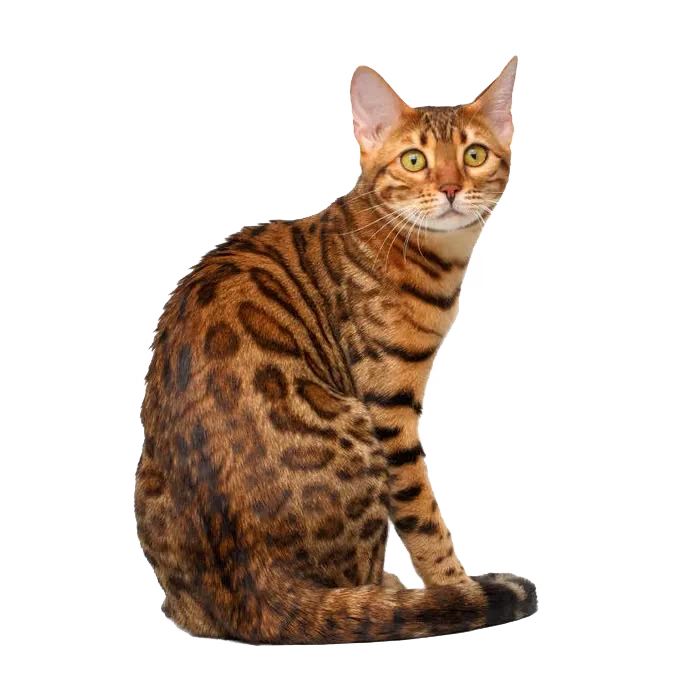
Toyger
The Toyger is a friendly, tiger-striped breed bred for its playful, sociable nature and striking miniature-tiger appearance.
- Size
- Medium
- Lifespan
- 10–15 years
- Origin
- United States
- Temperament
- Friendly
- Standard colors
- Brown
Characteristics
Coat and grooming
How the Toyger coat is built, and what that means when you groom it.
- Coat layers
- Single coat
- Coat texture
- Smooth
- Coat length
- Short
- Shedding
- Moderate shedding
Toyger colors and patterns
What each club's breed standard says about every Toyger color and pattern. Point at a ruling to see the club's own wording.
Breed standards describe the Toyger in Brown. Standard patterns: Mackerel tabby.
| Color or pattern | GCCF | TICA | LOOF |
|---|---|---|---|
| Brown | Standard (“brown”) | Standard (“Brown Mackerel Tabby”) | Standard (“noir”) |
| Lilac | Not recognised (“lilac”) | No ruling | No ruling |
| Chocolate | Not recognised (“chocolate”) | No ruling | No ruling |
| Cinnamon | Not recognised (“cinnamon”) | No ruling | No ruling |
| Fawn | Not recognised (“fawn”) | No ruling | No ruling |
| Patterns | |||
| Mackerel tabby | Standard (“modified mackerel tabby”) | Standard (“Modified mackerel tabby”) | Standard (“mackerel”) |
| Classic tabby | No ruling | Fault (“Classic alignment of mackerel stripes”) | No ruling |
| Solid | Not recognised (“non-agouti pattern”) | No ruling | No ruling |
%22%3E%3Cpath%20d%3D%22M20%2021Q34%2018.8%2048%2022%22%20fill%3D%22none%22%20stroke%3D%22%231C1C1C%22%20stroke-width%3D%222.2%22%20stroke-linecap%3D%22round%22%20stroke-linejoin%3D%22round%22%2F%3E%3Cpath%20d%3D%22M24.5%2021.5q-1.2%208%20.4%2016M28.6%2021q-1.2%208%20.4%2016.6M32.7%2020.7q-1.2%208%20.4%2016.8M36.8%2020.7q-1.2%208%20.4%2016.8M40.9%2021q-1.2%208%20.4%2016.6M45%2021.8q-1%207%20.4%2014%22%20fill%3D%22none%22%20stroke%3D%22%231C1C1C%22%20stroke-width%3D%221.6%22%20stroke-linecap%3D%22round%22%20stroke-linejoin%3D%22round%22%2F%3E%3Cpath%20d%3D%22M15%2044H50M15%2048H50%22%20fill%3D%22none%22%20stroke%3D%22%231C1C1C%22%20stroke-width%3D%221.8%22%20stroke-linecap%3D%22round%22%20stroke-linejoin%3D%22round%22%2F%3E%3Cpath%20d%3D%22M50%2022H62M51%2017H62M52%2012H63%22%20fill%3D%22none%22%20stroke%3D%22%231C1C1C%22%20stroke-width%3D%221.8%22%20stroke-linecap%3D%22round%22%20stroke-linejoin%3D%22round%22%2F%3E%3Ccircle%20cx%3D%2259.8%22%20cy%3D%227.8%22%20r%3D%222%22%20fill%3D%22%231C1C1C%22%2F%3E%3Cpath%20d%3D%22M12.6%2015.5l.6%204.2M15%2015.5l-.2%204.2M9%2025.2l4.6%201M9.6%2027.4l4%20.2%22%20fill%3D%22none%22%20stroke%3D%22%231C1C1C%22%20stroke-width%3D%221.1%22%20stroke-linecap%3D%22round%22%20stroke-linejoin%3D%22round%22%2F%3E%3C%2Fg%3E%3Cuse%20href%3D%22%23s%22%20fill%3D%22none%22%20stroke%3D%22%233B2A20%22%20stroke-opacity%3D%220.6%22%20stroke-width%3D%221%22%20stroke-linejoin%3D%22round%22%2F%3E%3Cpath%20d%3D%22M3.4%2022.3L5.4%2022.5L4.3%2024Z%22%20fill%3D%22%23E8A0B4%22%2F%3E%3Ccircle%20cx%3D%229.6%22%20cy%3D%2221.2%22%20r%3D%221.1%22%20fill%3D%22%231C1C1C%22%2F%3E%3C%2Fsvg%3E)
%22%3E%3Cpath%20d%3D%22M20%2021Q34%2018.8%2048%2022%22%20fill%3D%22none%22%20stroke%3D%22%231C1C1C%22%20stroke-width%3D%222.2%22%20stroke-linecap%3D%22round%22%20stroke-linejoin%3D%22round%22%2F%3E%3Ccircle%20cx%3D%2235%22%20cy%3D%2229.5%22%20r%3D%222.4%22%20fill%3D%22%231C1C1C%22%2F%3E%3Ccircle%20cx%3D%2235%22%20cy%3D%2229.5%22%20r%3D%225.6%22%20fill%3D%22none%22%20stroke%3D%22%231C1C1C%22%20stroke-width%3D%222.2%22%2F%3E%3Ccircle%20cx%3D%2235%22%20cy%3D%2229.5%22%20r%3D%229.4%22%20fill%3D%22none%22%20stroke%3D%22%231C1C1C%22%20stroke-width%3D%222.2%22%2F%3E%3Cpath%20d%3D%22M15%2044H50M15%2048H50%22%20fill%3D%22none%22%20stroke%3D%22%231C1C1C%22%20stroke-width%3D%221.8%22%20stroke-linecap%3D%22round%22%20stroke-linejoin%3D%22round%22%2F%3E%3Cpath%20d%3D%22M50%2022H62M51%2017H62M52%2012H63%22%20fill%3D%22none%22%20stroke%3D%22%231C1C1C%22%20stroke-width%3D%221.8%22%20stroke-linecap%3D%22round%22%20stroke-linejoin%3D%22round%22%2F%3E%3Ccircle%20cx%3D%2259.8%22%20cy%3D%227.8%22%20r%3D%222%22%20fill%3D%22%231C1C1C%22%2F%3E%3Cpath%20d%3D%22M12.6%2015.5l.6%204.2M15%2015.5l-.2%204.2M9%2025.2l4.6%201M9.6%2027.4l4%20.2%22%20fill%3D%22none%22%20stroke%3D%22%231C1C1C%22%20stroke-width%3D%221.1%22%20stroke-linecap%3D%22round%22%20stroke-linejoin%3D%22round%22%2F%3E%3C%2Fg%3E%3Cuse%20href%3D%22%23s%22%20fill%3D%22none%22%20stroke%3D%22%233B2A20%22%20stroke-opacity%3D%220.6%22%20stroke-width%3D%221%22%20stroke-linejoin%3D%22round%22%2F%3E%3Cpath%20d%3D%22M3.4%2022.3L5.4%2022.5L4.3%2024Z%22%20fill%3D%22%23E8A0B4%22%2F%3E%3Ccircle%20cx%3D%229.6%22%20cy%3D%2221.2%22%20r%3D%221.1%22%20fill%3D%22%231C1C1C%22%2F%3E%3C%2Fsvg%3E)

| Color or pattern | GCCF | TICA | LOOF |
|---|---|---|---|
| Hazel | Standard (“hazel”) | No ruling | No ruling |
| Gold | Standard (“gold”) | No ruling | No ruling |
| Green | Standard (“Green”) | No ruling | No ruling |
| Blue | No ruling | Disqualifying (“Blue”) | Disqualifying (“bleu”) |
| Color or pattern | GCCF | TICA | LOOF |
|---|---|---|---|
| Black | Standard (“black”) | Standard (“black”) | Standard (“noir”) |
What the rulings mean
- Standard
- Described by the club's breed standard.
- Fault
- Named by the club's breed standard as a fault: the animal can be shown but is penalised.
- Disqualifying
- The club's breed standard disqualifies an animal of this colour or pattern.
- Not recognised
- The club does not accept this colour or pattern for the breed.
Color changes
How a Toyger's colors can change over its life.
Brownchanges toCopal
Coat · With age · from 0 to 52 weeks
Sources
Each ruling comes from the club's published breed standard or color list.
About the Toyger cat
The Toyger is a medium-sized domestic cat developed in the United States to resemble a miniature tiger, with a friendly, playful, and sociable temperament.
The Toyger is a medium-sized domestic cat developed to carry the bold orange-and-black striping of a wild tiger on a fully domestic animal. The name combines "toy" and "tiger," a reference to the goal of a tiger pattern at house-cat scale. Despite the wild appearance, the Toyger has no recent wild ancestry. It is built from domestic shorthair stock selected over many generations for coat markings.
In personality the Toyger is friendly and people-oriented. Cats of this breed tend to seek out company, follow their owners between rooms, and remain interested in games well into adulthood. They are intelligent and respond to training, including leash walking and simple cues, more readily than many other cats.
A Toyger weighs roughly 3 to 7 kilograms depending on sex and build, with males at the heavier end. The short coat needs little grooming, and the breed adapts to indoor life as long as it has enough play and attention. Typical lifespan is 10 to 15 years.
| Attribute | Detail |
|---|---|
| Origin | United States |
| Size | Medium (about 3 to 7 kg) |
| Lifespan | 10 to 15 years |
| Group / role | Companion cat |
| Good with | Families, children, other pets, single owners |
Who it suits
The Toyger fits households that want an active, interactive cat rather than an independent one. It does well with families, including homes with children and other animals, because of its sociable nature. People who are away for long stretches should plan for company or a second pet, since this breed dislikes prolonged isolation. The low-maintenance coat makes it a practical choice for owners who prefer minimal grooming.
Toyger cat history and origin
The Toyger was developed in the United States starting in the 1980s by breeder Judy Sugden, who set out to create a domestic cat with clear tiger-like striping.
The Toyger originated in the United States. Its development is credited to Judy Sugden, a California breeder who began the project in the 1980s. Sugden's goal was a domestic cat whose markings recalled a wild tiger closely enough to draw attention to tiger conservation, while remaining an ordinary house cat in temperament and ancestry.
Early work used domestic shorthair cats with mackerel tabby patterns. Sugden selected for broken, branching stripes rather than the continuous stripes of a standard tabby, since a true tiger shows vertical, irregular markings. A street cat from India with spotting between the ears is often cited as an influence on the head pattern, which breeders wanted to differ from the typical tabby "M" markings on the forehead.
The breed was accepted into the registration and breeding programme of The International Cat Association (TICA), which recorded the Toyger as a developing breed in the 1990s and later granted championship status. The Toyger remains a relatively young and uncommon breed, with a limited number of breeders worldwide.
Because the breed is recent and still being refined, breeders continue to work toward the written standard, focusing on bolder striping, a circular face pattern, and a body that suggests the look of a tiger in miniature.
Toyger cat appearance and breed standard
The Toyger is a medium, muscular shorthair with a distinctive orange-and-black mackerel pattern of branched vertical stripes meant to evoke a tiger.
The Toyger is a medium-sized cat with a long, muscular body and a rolling, deliberate gait. The overall impression is meant to suggest a tiger scaled down to house-cat size. The head is medium and somewhat long, with small rounded ears, and the coat lies short and close to the body.
The defining feature is the pattern. Markings are dark vertical stripes on an orange to tan ground, broken and branching rather than running in continuous lines. Breeders also aim for a circular face pattern and high contrast between the dark stripes and the lighter background. Some lines show "glitter," a sheen on the coat that catches light.
| Trait | Standard |
|---|---|
| Height | About 23 to 33 cm at the shoulder |
| Weight | 3 to 7 kg (males larger) |
| Coat | Short, dense, close-lying, sometimes with a glittered sheen |
| Colours | Brown (orange to tan) mackerel tabby with dark stripes |
| Eyes | Round to slightly almond; gold to brown, deep colour preferred |
Coat and colours
The recognised colour is a brown mackerel tabby in which the ground ranges from warm orange to tan and the markings are as dark as possible for contrast. Stripes should be vertical on the body, broken into segments, with a darker dorsal line along the spine. The belly and inner legs are usually lighter. Whisker pads and the area around the eyes tend to be paler than the surrounding coat. The short coat requires only routine grooming and sheds moderately.
Toyger cat temperament and personality
The Toyger is friendly, playful, and intelligent, bonding closely with people and getting along with children and other pets.
The Toyger is an outgoing, people-focused cat. It forms strong bonds with its household and often follows family members around, joining in activity rather than watching from a distance. The breed stays playful well past kittenhood and enjoys interactive toys, fetch, and puzzle feeders.
With family the Toyger is affectionate and tolerant, which makes it suitable for homes with children who handle cats gently. With strangers it is generally confident and curious rather than shy, though individual cats vary. With other pets it tends to be sociable and accepts other cats and cat-friendly dogs when introductions are gradual.
This is an intelligent breed that needs mental stimulation. Without enough play and interaction a Toyger can become bored. It is moderately vocal, communicating with chirps and trills, but it is not as loud or demanding as some talkative breeds.
| Trait | Rating |
|---|---|
| Affection | 5 |
| Energy | 4 |
| Trainability | 5 |
| Vocalness | 3 |
| Shedding | 2 |
Toyger cat care and grooming
The Toyger is low-maintenance to groom but needs regular play and interaction to stay content as an indoor cat.
Grooming
The short coat is easy to maintain. A weekly routine keeps it in good condition.
- Brush once a week with a soft brush or grooming mitt to remove loose hair
- Check and clean ears as needed, and watch for wax buildup
- Trim nails every two to three weeks
- Brush teeth regularly and schedule dental checks to limit gum disease
Exercise
The Toyger is active and benefits from daily activity that uses its mind as well as its body.
- Two or more interactive play sessions a day with wand toys or balls
- Puzzle feeders and food-finding games to occupy an intelligent cat
- A cat tree or shelves for climbing and vantage points
- Leash and harness walks, which many Toygers accept with training
Environment
The Toyger adapts well to indoor living, including apartments, provided it has play, climbing space, and company. It is social and does poorly with long periods alone, so households that are out for much of the day should consider a second compatible pet. Keep scratching posts available to protect furniture and give the cat an outlet.
Toyger cat nutrition and feeding
The Toyger needs a balanced, protein-forward cat diet with portions matched to age and activity level to avoid weight gain.
The Toyger does well on a complete, balanced diet built around animal protein, as suits an obligate carnivore. Choose a quality commercial food appropriate to the cat's life stage, whether kitten, adult, or senior. Both wet and dry foods can work; wet food adds moisture, which supports urinary and kidney health. Fresh water should always be available.
Portion control matters because an active but indoor cat can gain weight if free-fed. Measure daily amounts and adjust to keep the cat at a lean body condition where the ribs are easy to feel.
| Life stage | Amount per day | Meals |
|---|---|---|
| Kitten (to 12 months) | Per package, fed to appetite | 3 to 4 |
| Adult (1 to 7 years) | About 30 to 40 g dry, or equivalent wet | 2 |
| Senior (7+ years) | Adjusted down for activity; vet-guided | 2 |
Treats and supplements
Keep treats to no more than about 10 percent of daily calories so they do not unbalance the diet. A cat on a complete commercial food usually needs no supplements; add them only on veterinary advice. If you change foods, do so gradually over about a week to avoid stomach upset.
Toyger cat health and lifespan
The Toyger is generally healthy with a 10 to 15 year lifespan, though as a young breed it can carry conditions seen in domestic cats such as heart disease.
The Toyger is generally a healthy breed with a typical lifespan of 10 to 15 years. Because it is a recent breed drawn from a limited gene pool, responsible breeders screen breeding cats to keep inherited problems low. Most health concerns are those common to domestic cats rather than unique to the Toyger.
Regular veterinary care, a balanced diet, dental attention, and weight control are the main factors in a long, healthy life.
| Condition | Signs | Note |
|---|---|---|
| Hypertrophic cardiomyopathy | Lethargy, fast breathing, reduced activity | Heart muscle thickening seen in many cat breeds; screening helps |
| Heart murmurs | Often none; found on exam | May be benign or linked to heart disease; vet should assess |
| Obesity | Weight gain, reduced activity | Preventable with portion control and play |
| Dental disease | Bad breath, drooling, trouble eating | Routine brushing and cleanings reduce risk |
Preventive care
- Annual wellness exams, with more frequent visits for senior cats
- Core vaccinations and parasite prevention as advised by a veterinarian
- Dental brushing and professional cleanings
- Weight monitoring and body-condition checks
- Heart screening for breeding cats
Toyger cat training
The Toyger is one of the more trainable cat breeds, learning cues, fetch, and leash walking through reward-based methods.
The Toyger is intelligent and willing, which makes it more trainable than many cats. Owners report success teaching it to fetch, respond to its name, perform simple tricks, and walk on a harness and leash. Training also channels the breed's energy and keeps a smart cat engaged. Keep sessions short, a few minutes at a time, and end while the cat is still interested.
Basics
- Start with a quiet space and small, high-value treats
- Reward the cat the instant it offers the behaviour you want
- Add a short cue word or clicker to mark the correct action
- Repeat in brief sessions, building one step at a time
- For leash work, let the cat wear the harness indoors before going out
- Keep early outdoor walks short and in calm surroundings
Toyger cat breeding
Toyger breeding focuses on improving the tiger-like pattern within a small gene pool, with standard feline maturity, gestation, and litter sizes.
Breeding the Toyger is specialised work because the breed is young and the priority is refining the coat pattern toward the standard. Breeders select for bold, broken vertical stripes, a circular face pattern, and high contrast, while keeping temperament and health sound. The gene pool is small, so careful pedigree management and health screening are important to avoid concentrating inherited problems.
Cats reach sexual maturity at several months of age, but responsible breeders wait until the cat is physically mature and health-tested before breeding. Feline gestation runs about 63 to 67 days. Litters are typically small, often around three to five kittens. Kittens are born helpless, with eyes closed, and depend fully on the mother for the first weeks. Pattern quality is assessed as kittens grow, since markings develop and sharpen with age. Kittens should stay with the mother and litter until about 12 to 16 weeks so they are weaned, socialised, and have begun vaccinations before going to new homes.
| Metric | Value |
|---|---|
| Sexual maturity | Around 5 to 10 months |
| Gestation | About 63 to 67 days |
| Average litter | 3 to 5 kittens |
| Weaning age | About 8 weeks |
| Ready for new home | 12 to 16 weeks |
Your Toyger on the registry, microchip included
Free lifetime registration for your Toyger, plus a microchip record that satisfies bylaws like Montreal's and never costs a cent.
Registering a Toyger and its microchip in Canada
Registering a Toyger is a smaller job than most people expect: name, colouring, photo, contact details, save. The record costs nothing for the life of the cat and works chip or no chip. Cat registration is where to start.
A chip the vet implanted but nobody registered reads as a dead end on the scanner. Register the microchip free on the lifetime plan: every brand a Canadian clinic implants is accepted, updates after each move are free, and the record answers the lookup tools shelters lean on. Create your free account and close both gaps tonight.
How do I register my Toyger in Canada?
Sign up free with United Pet Club, add your Toyger's name, colouring, and a photo, and the record is live. Indoor and outdoor cats alike stay covered for life at no charge.
How do I register my Toyger's microchip?
Type the 15-digit number from your vet paperwork into your free account and confirm your contact details. The plan accepts every chip brand and never charges for updates.
Do cats like the Toyger have to be microchipped in Canada?
In some cities, yes. Montreal's bylaw requires pet cats to be chipped and licensed, and other municipalities are moving the same way. The registration behind the chip is yours to keep current, and with United Pet Club that part is free.
What does it cost to register a Toyger in Canada?
Zero. The lifetime plan includes the profile, microchip registration, and every future update, with no renewal fees.
Toyger cat frequently asked questions
Common questions about the Toyger's size, temperament, care, lifespan, suitability, and availability in Canada.
How big does a Toyger cat get?
The Toyger is a medium-sized cat, generally weighing about 3 to 7 kg, with males larger than females. It has a long, muscular body that adds to its substantial look.
What is the Toyger cat's temperament like?
It is friendly, playful, intelligent, and sociable. Toygers bond closely with their people, stay playful into adulthood, and usually get along with children and other pets.
Is the Toyger hard to care for?
No. The short coat needs only weekly brushing, and routine nail, ear, and dental care. The main commitment is daily play and company, since the breed is active and dislikes being alone for long.
How long do Toyger cats live?
Most Toygers live about 10 to 15 years. Regular veterinary care, a balanced diet, dental care, and weight control support a long, healthy life.
Is a Toyger a good cat for families and apartments in Canada?
Yes. The breed is sociable and tolerant, which suits families with children and other animals, and it adapts well to apartments as long as it has play, climbing space, and attention.
Are Toyger cats rare and expensive in Canada?
The Toyger is a young, uncommon breed with few dedicated breeders, so kittens can be limited in availability and cost more than many common breeds. Buy from a reputable breeder who health-tests their cats and is registered with TICA or the Canadian Cat Association (CCA).
Does the Toyger have any wild tiger ancestry?
No. Despite the tiger-like markings, the Toyger was developed entirely from domestic cats. The wild look comes from selective breeding for pattern, not from wild blood.