
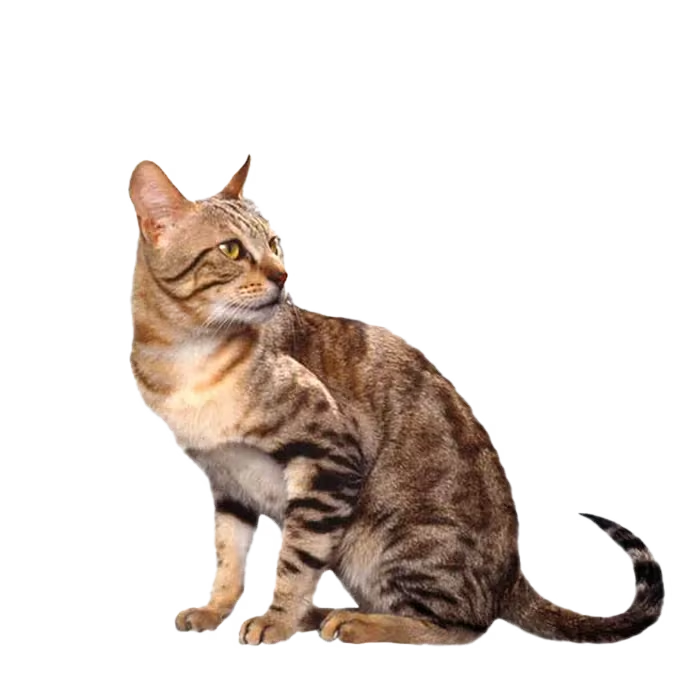
Sokoke
The Sokoke is a rare, athletic African breed admired for its active, intelligent disposition and strong bond with its family.
- Size
- Medium
- Lifespan
- 12–15 years
- Origin
- Unknown
- Temperament
- Active
- Standard colors
- Brown and Seal
Characteristics
Coat and grooming
How the Sokoke coat is built, and what that means when you groom it.
- Coat layers
- Single coat
- Coat texture
- Smooth
- Coat length
- Short
- Shedding
- Low shedding
Sokoke colors and patterns
What each club's breed standard says about every Sokoke color and pattern. Point at a ruling to see the club's own wording.
Breed standards describe the Sokoke in Brown and Seal. Standard patterns: Pointed and Classic tabby.
| Color or pattern | GCCF | FIFE |
|---|---|---|
| Brown | Standard (“Sokoke”) | Standard (“black tabby”) |
| Seal | Standard (“Snow Sokoke”) | No ruling |
| Blue | Not recognised (“Blue Sokoke Variant”) | No ruling |
| Patterns | ||
| Pointed | Standard (“Snow”) | No ruling |
| Classic tabby | Standard (“Modified classic tabby”) | Standard (“blotched”) |
| Solid | Not recognised (“Self”) | No ruling |
%22%3E%3Cpath%20d%3D%22M5.5%2017L7.5%207L12%2015ZM14%2015L17.5%207L20%2018.5Z%22%20fill%3D%22%23847865%22%2F%3E%3Cellipse%20cx%3D%227.6%22%20cy%3D%2223.6%22%20rx%3D%225%22%20ry%3D%225.2%22%20fill%3D%22%23847865%22%2F%3E%3Crect%20x%3D%220%22%20y%3D%2244%22%20width%3D%2264%22%20height%3D%2220%22%20fill%3D%22%23847865%22%2F%3E%3Cpath%20d%3D%22M50%2027L53.5%205L64%203L64%2013L59%2024L53%2033Z%22%20fill%3D%22%23847865%22%2F%3E%3C%2Fg%3E%3Cuse%20href%3D%22%23s%22%20fill%3D%22none%22%20stroke%3D%22%233B2A20%22%20stroke-opacity%3D%220.6%22%20stroke-width%3D%221%22%20stroke-linejoin%3D%22round%22%2F%3E%3Cpath%20d%3D%22M3.4%2022.3L5.4%2022.5L4.3%2024Z%22%20fill%3D%22%23E8A0B4%22%2F%3E%3Ccircle%20cx%3D%229.6%22%20cy%3D%2221.2%22%20r%3D%221.1%22%20fill%3D%22%231C1C1C%22%2F%3E%3C%2Fsvg%3E)
%22%3E%3Cpath%20d%3D%22M20%2021Q34%2018.8%2048%2022%22%20fill%3D%22none%22%20stroke%3D%22%231C1C1C%22%20stroke-width%3D%222.2%22%20stroke-linecap%3D%22round%22%20stroke-linejoin%3D%22round%22%2F%3E%3Ccircle%20cx%3D%2235%22%20cy%3D%2229.5%22%20r%3D%222.4%22%20fill%3D%22%231C1C1C%22%2F%3E%3Ccircle%20cx%3D%2235%22%20cy%3D%2229.5%22%20r%3D%225.6%22%20fill%3D%22none%22%20stroke%3D%22%231C1C1C%22%20stroke-width%3D%222.2%22%2F%3E%3Ccircle%20cx%3D%2235%22%20cy%3D%2229.5%22%20r%3D%229.4%22%20fill%3D%22none%22%20stroke%3D%22%231C1C1C%22%20stroke-width%3D%222.2%22%2F%3E%3Cpath%20d%3D%22M15%2044H50M15%2048H50%22%20fill%3D%22none%22%20stroke%3D%22%231C1C1C%22%20stroke-width%3D%221.8%22%20stroke-linecap%3D%22round%22%20stroke-linejoin%3D%22round%22%2F%3E%3Cpath%20d%3D%22M50%2022H62M51%2017H62M52%2012H63%22%20fill%3D%22none%22%20stroke%3D%22%231C1C1C%22%20stroke-width%3D%221.8%22%20stroke-linecap%3D%22round%22%20stroke-linejoin%3D%22round%22%2F%3E%3Ccircle%20cx%3D%2259.8%22%20cy%3D%227.8%22%20r%3D%222%22%20fill%3D%22%231C1C1C%22%2F%3E%3Cpath%20d%3D%22M12.6%2015.5l.6%204.2M15%2015.5l-.2%204.2M9%2025.2l4.6%201M9.6%2027.4l4%20.2%22%20fill%3D%22none%22%20stroke%3D%22%231C1C1C%22%20stroke-width%3D%221.1%22%20stroke-linecap%3D%22round%22%20stroke-linejoin%3D%22round%22%2F%3E%3C%2Fg%3E%3Cuse%20href%3D%22%23s%22%20fill%3D%22none%22%20stroke%3D%22%233B2A20%22%20stroke-opacity%3D%220.6%22%20stroke-width%3D%221%22%20stroke-linejoin%3D%22round%22%2F%3E%3Cpath%20d%3D%22M3.4%2022.3L5.4%2022.5L4.3%2024Z%22%20fill%3D%22%23E8A0B4%22%2F%3E%3Ccircle%20cx%3D%229.6%22%20cy%3D%2221.2%22%20r%3D%221.1%22%20fill%3D%22%231C1C1C%22%2F%3E%3C%2Fsvg%3E)

| Color or pattern | GCCF | FIFE |
|---|---|---|
| Blue | Standard (“Blue”) | No ruling |
| Amber | Standard (“Amber”) | Standard (“amber”) |
| Green | Standard (“light green”) | Standard (“light green”) |
| Color or pattern | GCCF | FIFE |
|---|---|---|
| Brick red | Standard (“brick red”) | Standard (“brick red”) |
What the rulings mean
- Standard
- Described by the club's breed standard.
- Not recognised
- The club does not accept this colour or pattern for the breed.
Color changes
How a Sokoke's colors can change over its life.
Brownchanges toCopal
Coat · With age · from 0 to 52 weeks
Bluechanges toGreen
Eyes · With age · from 4 to 17 weeks
Bluechanges toYellow
Eyes · With age · from 4 to 17 weeks
Bluechanges toGold
Eyes · With age · from 4 to 17 weeks
Bluechanges toCopper
Eyes · With age · from 4 to 17 weeks
Bluechanges toOrange
Eyes · With age · from 4 to 17 weeks
Bluechanges toHazel
Eyes · With age · from 4 to 17 weeks
Bluechanges toAmber
Eyes · With age · from 4 to 17 weeks
Sources
Each ruling comes from the club's published breed standard or color list.
About the Sokoke cat
The Sokoke is a rare, medium-sized African cat with an athletic build, high intelligence, and a close bond with its household.
The Sokoke is a medium-sized shorthaired cat that traces to the coastal forest region of Kenya. It is one of the less common pedigreed breeds, and registered numbers remain small worldwide. The breed is defined by a lean, leggy frame, a short ticked coat in brown tabby patterns, and a habitually alert, busy manner.
Owners describe the Sokoke as affectionate with its people while staying independent enough to entertain itself. It is curious about its surroundings, quick to learn household routines, and physically capable, with a climbing and jumping drive stronger than that of many domestic cats. It tends to attach to the whole family rather than a single person.
The Sokoke suits an active home that can offer vertical space, daily interaction, and mental stimulation. It is a poor match for a household that wants a quiet, sedentary lap cat. With company and room to move, it is a hardy, healthy, and engaging companion.
| Attribute | Detail |
|---|---|
| Origin | Coastal Kenya (deeper ancestry uncertain) |
| Size | Medium |
| Lifespan | 12 to 15 years |
| Group/role | Companion shorthair |
| Good with | Active families, other cats, cat-savvy dogs |
Who it suits
The Sokoke fits people who want an interactive, athletic cat and can supply climbing furniture, play, and attention. It does well in homes where someone is around for part of the day, and it generally accepts other pets when introduced gradually. It is less suited to owners seeking a calm, low-energy cat or one content to be left alone for long stretches.
Sokoke cat history and origin
The Sokoke was identified in coastal Kenya in the late 1970s and developed into a recognised breed by European and African breeders, though its precise origins remain uncertain.
The breed is named for the Arabuko-Sokoke forest area on the coast of Kenya, where the founding cats were found living among rural communities. Accounts place the first documented cats in the late 1970s, when a Kenyan resident took an interest in local kittens with an unusual ticked tabby coat.
A small number of these cats were sent to Europe, with Denmark a key early centre for the developing breed. Breeders there established a foundation population and began recording pedigrees, working to fix the distinctive coat and conformation while keeping the breed's natural, lean type.
Later imports brought additional cats from the same Kenyan region to broaden the gene pool. Because the early population was small and the breed's deeper background was never fully established, sources describe its ancestry as uncertain. The Sokoke is often presented as a naturally occurring landrace that was later standardised rather than a deliberately created cross.
The Sokoke gained recognition from some cat registries over the following decades, but it has stayed rare. Breeding programmes are limited and concentrated in a few countries, which keeps available kitten numbers low compared with mainstream breeds.
Sokoke cat appearance and coat
The Sokoke is a lean, long-legged medium cat with a short, close-lying brown tabby coat that carries a distinctive ticked, blotched pattern.
The Sokoke has an athletic, elegant outline. The body is medium in length and moderately slender, set on long legs with the hind legs longer than the front, which gives a slightly tiptoe stance and a fluid gait. The head is a modified wedge with large, upright ears and almond-shaped eyes that range from amber to light green. The tail is medium to long and tapers to the tip.
The coat is the breed's signature feature: short, close-lying, and with little undercoat, so the ticked tabby pattern shows clearly across the body. The classic blotched tabby markings often have a translucent, wood-grain look.
| Trait | Typical range |
|---|---|
| Height | Approx. 23 to 28 cm at the shoulder |
| Weight | Approx. 3 to 5 kg |
| Coat | Short, close-lying, minimal undercoat |
| Colours | Brown ticked tabby (blotched/classic pattern) |
| Eyes | Amber to light green, almond-shaped |
Coat and colours
The recognised colouration is brown tabby with agouti ticking on each hair, producing a warm brown ground broken by darker blotched markings. The thin coat lies flat and feels short to the touch. Because there is little undercoat, the breed sheds modestly and is sensitive to cold, so it prefers warm indoor conditions.
Sokoke cat temperament and personality
The Sokoke is affectionate, intelligent, and highly active, forming strong attachments to its family while remaining curious and physically busy throughout the day.
The Sokoke is an engaged, people-oriented cat that bonds closely with its household. It tends to follow family members around, take part in daily activity, and seek interaction rather than waiting to be approached. Many individuals are talkative and use a range of sounds to communicate.
With strangers, the breed is often watchful at first and then sociable once comfortable. With other cats and cat-experienced dogs, the Sokoke usually does well after a measured introduction, helped by its confident, curious nature. Its intelligence shows in problem-solving, learning routines, and a tendency to investigate latches, drawers, and high spaces.
The defining trait is activity. The Sokoke climbs, jumps, and explores throughout the day and needs outlets for that energy. Without enough stimulation it can become restless or find its own entertainment. In a home that meets its needs, it is affectionate, even-tempered, and closely involved with its people.
| Trait | Rating |
|---|---|
| Affection | 4 |
| Energy | 5 |
| Trainability | 4 |
| Vocalness | 3 |
| Shedding | 2 |
Sokoke cat care and grooming
The Sokoke is low-maintenance to groom but needs substantial daily exercise, climbing space, and a warm indoor environment due to its sparse coat.
Day-to-day care centres on activity and warmth more than coat upkeep. The short, thin coat needs little work, but the breed's energy and intelligence call for steady physical and mental engagement.
Grooming
- Brush once a week to remove loose hair and spread skin oils.
- Bathe only when needed; the coat stays clean with minimal effort.
- Check and clean ears periodically and trim claws every few weeks.
- Brush teeth regularly or use veterinary dental aids.
Exercise
- Provide at least two active play sessions a day with wand toys or chase games.
- Offer tall cat trees, shelves, and perches for climbing and jumping.
- Rotate puzzle feeders and foraging toys to work the mind.
- Consider safe, supervised outdoor access such as a catio or harness walks.
Environment
The Sokoke prefers a warm home because of its thin coat and minimal undercoat. Keep it indoors or in secure outdoor enclosures, give it vertical territory, and avoid draughty or cold rooms. A bored Sokoke left alone for long periods may become destructive, so a companion animal or interactive toys can help.
Sokoke cat nutrition and feeding
An active Sokoke needs a complete, protein-forward cat food fed in measured daily portions to fuel its high energy without overfeeding.
The Sokoke is an obligate carnivore like all cats and does best on a complete, balanced diet built around animal protein. Its activity level means it burns energy steadily, but portions should still be measured to keep its lean frame from tipping into excess weight. Fresh water should always be available, and wet food can help support hydration.
| Life stage | Amount per day | Meals |
|---|---|---|
| Kitten (under 12 months) | Feed to appetite per food label | 3 to 4 |
| Adult (1 to 7 years) | Approx. 200 to 280 kcal | 2 |
| Senior (7+ years) | Approx. 180 to 240 kcal | 2 |
Treats and supplements
Keep treats to no more than about 10 percent of daily calories and reduce meal portions to match. A balanced commercial diet usually meets all nutritional needs, so add supplements only on veterinary advice. Choose treats appropriate for cats and avoid sharing seasoned human food.
Sokoke cat health and lifespan
The Sokoke is generally a hardy, healthy breed with a typical lifespan of 12 to 15 years, supported by routine veterinary care and weight management.
The Sokoke is regarded as a robust breed with no widely documented breed-specific genetic disease, partly because of its natural origins. Typical lifespan is 12 to 15 years. As with any cat from a small gene pool, responsible breeders monitor for general feline conditions, and most health issues in the breed are the everyday problems that affect cats overall. Its thin coat also makes it more sensitive to cold than most shorthairs.
| Condition | Signs | Note |
|---|---|---|
| Dental disease | Bad breath, drooling, reduced eating | Common in cats; prevent with dental care |
| Obesity | Weight gain, low activity | Manage with measured feeding and play |
| Cold sensitivity | Seeking heat, reluctance in cold rooms | Linked to the thin, sparse coat |
| Parasites | Itching, digestive upset, coat changes | Keep up with vet-advised prevention |
Preventive care
- Annual or twice-yearly veterinary checkups.
- Core vaccinations and parasite control on a vet schedule.
- Regular dental care at home and professional cleanings as needed.
- Body-condition scoring to keep weight in the lean, healthy range.
- Spaying or neutering unless part of an approved breeding programme.
Training a Sokoke cat
The Sokoke is intelligent and responsive, learning routines, tricks, and harness work well through short, reward-based sessions.
The Sokoke's intelligence and food motivation make it more trainable than the average cat. It can learn its name, basic cues, recall, and tricks, and many individuals take to clicker training, puzzle toys, and even leash walking. Channelling that capacity into structured activity also reduces unwanted behaviour driven by boredom. Keep sessions short, frequent, and positive, and watch for the moment attention drifts.
Basics
- Pick a quiet space and a high-value treat the cat works for.
- Use a clear marker, such as a clicker or a short word, the instant the cat does the wanted action.
- Reward immediately and keep each session under a few minutes.
- Train one behaviour at a time and build difficulty gradually.
- End on a success and repeat daily for consistency.
Sokoke cat breeding
The Sokoke is a rare breed with a small gene pool, so breeding is limited and best left to programmes that prioritise genetic diversity and health.
Cats reach sexual maturity at roughly 6 to 10 months, though responsible breeders typically wait until full physical maturity before mating. Queens are seasonal cyclers that come into heat repeatedly until bred. After a successful mating, feline gestation runs about 63 to 67 days, ending in a litter of kittens that the queen nurses and weans over the following weeks.
Kittens open their eyes around one to two weeks, begin weaning near four weeks, and are usually ready to leave for new homes at 12 to 14 weeks once vaccinated, socialised, and eating independently. Because the Sokoke descends from a small founding population, careful pedigree tracking and outcrossing within the breed are important to maintain genetic health. Breeding should be undertaken only by experienced, registered breeders focused on the breed's long-term welfare.
| Metric | Value |
|---|---|
| Sexual maturity | Approx. 6 to 10 months |
| Gestation | Approx. 63 to 67 days |
| Average litter size | Around 3 to 5 kittens |
| Weaning age | Approx. 4 to 8 weeks |
| Ready for new home | Approx. 12 to 14 weeks |
Your Sokoke on the registry, microchip included
Free lifetime registration for your Sokoke, plus a microchip record that satisfies bylaws like Montreal's and never costs a cent.
Registering a Sokoke and its microchip in Canada
An open balcony door is all it takes for a Sokoke to become a shelter intake. The free United Pet Club profile answers that scan with your name, your postal code, and the cat's photo. Register your cat once; it holds for her whole life.
A chip the vet implanted but nobody registered reads as a dead end on the scanner. Register the microchip free on the lifetime plan: every brand a Canadian clinic implants is accepted, updates after each move are free, and the record answers the lookup tools shelters lean on. Create your free account and close both gaps tonight.
How do I register my Sokoke in Canada?
Sign up free with United Pet Club, add your Sokoke's name, colouring, and a photo, and the record is live. Indoor and outdoor cats alike stay covered for life at no charge.
How do I register my Sokoke's microchip?
Type the 15-digit number from your vet paperwork into your free account and confirm your contact details. The plan accepts every chip brand and never charges for updates.
Do cats like the Sokoke have to be microchipped in Canada?
In some cities, yes. Montreal's bylaw requires pet cats to be chipped and licensed, and other municipalities are moving the same way. The registration behind the chip is yours to keep current, and with United Pet Club that part is free.
What does it cost to register a Sokoke in Canada?
Zero. The lifetime plan includes the profile, microchip registration, and every future update, with no renewal fees.
Sokoke cat frequently asked questions
Common questions about the Sokoke cat cover its size, temperament, care needs, lifespan, suitability for families, and how hard it is to find in Canada.
How big does a Sokoke get?
The Sokoke is a medium-sized cat, typically around 3 to 5 kg, with a lean, long-legged build that can make it look larger than it weighs.
What is the Sokoke's temperament like?
It is affectionate, curious, intelligent, and very active. It bonds closely with its family, stays busy throughout the day, and often enjoys interaction and play.
Is the Sokoke hard to care for?
Grooming is easy thanks to the short coat, but the breed needs daily exercise, climbing space, mental stimulation, and a warm home, so it takes more engagement than a low-energy cat.
How long does a Sokoke live?
The typical lifespan is 12 to 15 years with good nutrition, routine veterinary care, and weight management.
Is the Sokoke a good family pet?
Yes, for active households. It generally does well with children, other cats, and cat-friendly dogs, and it suits people who can give it attention and room to move.
Are Sokoke cats easy to find in Canada?
No. The Sokoke is one of the rarer pedigreed breeds, with few breeders worldwide, so expect limited availability in Canada and possible waiting lists.
Does the Sokoke shed a lot?
Shedding is modest. The thin coat has little undercoat, but that same sparseness makes the cat sensitive to cold and happiest in a warm environment.