
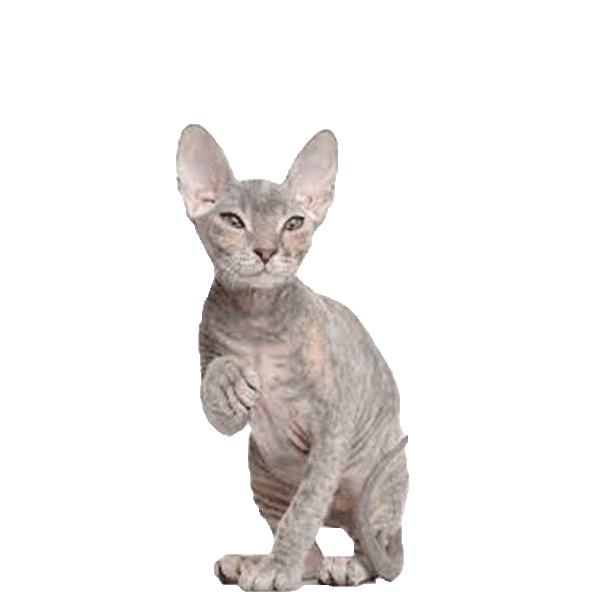
Minskin
The Minskin is a small, affectionate cat with short legs and sparse fur, beloved for its playful and people-oriented personality.
- Size
- Small
- Lifespan
- 12–15 years
- Origin
- United States
- Temperament
- Affectionate
Characteristics
Coat and grooming
How the Minskin coat is built, and what that means when you groom it.
- Coat layers
- Hairless
- Coat length
- Short
- Shedding
- Low shedding
Grooming guidance
Caution: A Minskin needs protection from the sun.
Bare skin burns quickly and offers no insulation against cold either. Time outdoors needs shade, a coat in cool weather, or a sunscreen a vet has approved for animals.

%22%3E%3Cpath%20d%3D%22M0%2023L9.5%2020.4L14%2025.4L19%2029.6Q21%2035%2023.5%2035.5Q36%2033%2050%2036L56%2040V64H0Z%22%20fill%3D%22%23F5F5F0%22%2F%3E%3C%2Fg%3E%3Cuse%20href%3D%22%23s%22%20fill%3D%22none%22%20stroke%3D%22%233B2A20%22%20stroke-opacity%3D%220.6%22%20stroke-width%3D%221%22%20stroke-linejoin%3D%22round%22%2F%3E%3Cellipse%20cx%3D%223.2%22%20cy%3D%2221.7%22%20rx%3D%221.3%22%20ry%3D%221.2%22%20fill%3D%22%231C1C1C%22%2F%3E%3Ccircle%20cx%3D%2210.8%22%20cy%3D%2219.3%22%20r%3D%221.1%22%20fill%3D%22%231C1C1C%22%2F%3E%3C%2Fsvg%3E)
%22%3E%3Cpath%20d%3D%22M5.5%2017L7.5%207L12%2015ZM14%2015L17.5%207L20%2018.5Z%22%20fill%3D%22%23847865%22%2F%3E%3Cellipse%20cx%3D%227.6%22%20cy%3D%2223.6%22%20rx%3D%225%22%20ry%3D%225.2%22%20fill%3D%22%23847865%22%2F%3E%3Crect%20x%3D%220%22%20y%3D%2244%22%20width%3D%2264%22%20height%3D%2220%22%20fill%3D%22%23847865%22%2F%3E%3Cpath%20d%3D%22M50%2027L53.5%205L64%203L64%2013L59%2024L53%2033Z%22%20fill%3D%22%23847865%22%2F%3E%3C%2Fg%3E%3Cuse%20href%3D%22%23s%22%20fill%3D%22none%22%20stroke%3D%22%233B2A20%22%20stroke-opacity%3D%220.6%22%20stroke-width%3D%221%22%20stroke-linejoin%3D%22round%22%2F%3E%3Cpath%20d%3D%22M3.4%2022.3L5.4%2022.5L4.3%2024Z%22%20fill%3D%22%23E8A0B4%22%2F%3E%3Ccircle%20cx%3D%229.6%22%20cy%3D%2221.2%22%20r%3D%221.1%22%20fill%3D%22%231C1C1C%22%2F%3E%3C%2Fsvg%3E)
%22%3E%3Cpath%20d%3D%22M20%2021Q34%2018.8%2048%2022%22%20fill%3D%22none%22%20stroke%3D%22%231C1C1C%22%20stroke-width%3D%222.2%22%20stroke-linecap%3D%22round%22%20stroke-linejoin%3D%22round%22%2F%3E%3Cpath%20d%3D%22M26%2021q-1.2%208%20.4%2016M31%2020.5q-1.2%208%20.4%2016.5M36%2020.8q-1.2%208%20.4%2016.5M41%2021.4q-1.2%208%20.4%2016M45.5%2022.2q-1%207%20.4%2013%22%20fill%3D%22none%22%20stroke%3D%22%231C1C1C%22%20stroke-width%3D%221.8%22%20stroke-linecap%3D%22round%22%20stroke-linejoin%3D%22round%22%2F%3E%3Cpath%20d%3D%22M15%2044H50M15%2048H50%22%20fill%3D%22none%22%20stroke%3D%22%231C1C1C%22%20stroke-width%3D%221.8%22%20stroke-linecap%3D%22round%22%20stroke-linejoin%3D%22round%22%2F%3E%3Cpath%20d%3D%22M50%2022H62M51%2017H62M52%2012H63%22%20fill%3D%22none%22%20stroke%3D%22%231C1C1C%22%20stroke-width%3D%221.8%22%20stroke-linecap%3D%22round%22%20stroke-linejoin%3D%22round%22%2F%3E%3Ccircle%20cx%3D%2259.8%22%20cy%3D%227.8%22%20r%3D%222%22%20fill%3D%22%231C1C1C%22%2F%3E%3Cpath%20d%3D%22M12.6%2015.5l.6%204.2M15%2015.5l-.2%204.2M9%2025.2l4.6%201M9.6%2027.4l4%20.2%22%20fill%3D%22none%22%20stroke%3D%22%231C1C1C%22%20stroke-width%3D%221.1%22%20stroke-linecap%3D%22round%22%20stroke-linejoin%3D%22round%22%2F%3E%3Cpath%20d%3D%22M20%2048.5C19.2%2048.1%2018.3%2046.2%2018.3%2045.3C18.3%2044.5%2019.5%2043.9%2020%2043.4C20.5%2042.9%2020.5%2042.4%2021.2%2042.3C21.9%2042.2%2023.1%2042.6%2024.1%2042.8C25.2%2043%2027.3%2042.9%2027.5%2043.5C27.7%2044%2026.1%2045.4%2025.3%2046.2C24.6%2046.9%2024%2047.4%2023.1%2047.8C22.2%2048.2%2020.8%2049%2020%2048.5ZM19.9%2025.7C19%2026.1%2016.8%2025.2%2015.4%2025.1C14%2024.9%2011.6%2025.3%2011.4%2024.8C11.1%2024.2%2013.2%2022.7%2014%2021.8C14.7%2020.9%2015%2019.8%2015.9%2019.3C16.9%2018.8%2019%2018.4%2019.7%2018.7C20.5%2019.1%2020.3%2020.7%2020.5%2021.4C20.7%2022.1%2020.9%2022.2%2020.8%2023C20.7%2023.7%2020.8%2025.4%2019.9%2025.7ZM36.9%2038.9C35.8%2038.7%2034.3%2038.7%2033.6%2037.9C32.8%2037%2032.4%2035.5%2032.4%2033.9C32.5%2032.4%2033.1%2029.2%2033.9%2028.4C34.7%2027.6%2036.1%2028.7%2037.1%2029.1C38.2%2029.5%2039%2029.7%2040.1%2030.9C41.2%2032%2043.8%2034.5%2043.7%2035.9C43.7%2037.3%2041.2%2038.7%2040.1%2039.2C38.9%2039.8%2037.9%2039.2%2036.9%2038.9ZM38.8%2043.5C37.9%2042.7%2038.4%2041.8%2039%2040.7C39.7%2039.5%2041.5%2037.1%2042.8%2036.7C44.1%2036.4%2045.2%2037.8%2046.6%2038.4C48.1%2038.9%2050.9%2039.1%2051.7%2039.9C52.4%2040.7%2051.5%2042.1%2051%2043C50.4%2043.9%2049.4%2044.9%2048.3%2045.4C47.2%2045.9%2046%2046.3%2044.4%2046C42.8%2045.6%2039.7%2044.4%2038.8%2043.5ZM19.6%2038.8C19%2039.4%2018%2041.4%2017.2%2040.9C16.4%2040.4%2015%2037.1%2014.9%2035.8C14.8%2034.6%2016.2%2034.6%2016.5%2033.6C16.9%2032.7%2016.4%2030.8%2017%2030.2C17.5%2029.5%2018.9%2029.1%2019.9%2029.6C20.9%2030.2%2022.9%2032.2%2023%2033.5C23.2%2034.8%2021.4%2036.3%2020.9%2037.2C20.3%2038.1%2020.2%2038.2%2019.6%2038.8ZM28.5%2025.9C27.7%2026.3%2027.3%2026.5%2026.4%2026.3C25.6%2026.1%2024.2%2025.3%2023.6%2024.7C22.9%2024%2022.2%2022.9%2022.6%2022.3C22.9%2021.6%2024.6%2021.3%2025.6%2020.9C26.6%2020.4%2027.7%2019.3%2028.4%2019.6C29.1%2019.8%2029.2%2021.5%2029.7%2022.3C30.2%2023%2031.5%2023.4%2031.3%2024C31.1%2024.6%2029.3%2025.5%2028.5%2025.9Z%22%20fill%3D%22%23A6402A%22%20fill-opacity%3D%220.85%22%2F%3E%3C%2Fg%3E%3Cuse%20href%3D%22%23s%22%20fill%3D%22none%22%20stroke%3D%22%233B2A20%22%20stroke-opacity%3D%220.6%22%20stroke-width%3D%221%22%20stroke-linejoin%3D%22round%22%2F%3E%3Cpath%20d%3D%22M3.4%2022.3L5.4%2022.5L4.3%2024Z%22%20fill%3D%22%23E8A0B4%22%2F%3E%3Ccircle%20cx%3D%229.6%22%20cy%3D%2221.2%22%20r%3D%221.1%22%20fill%3D%22%231C1C1C%22%2F%3E%3C%2Fsvg%3E)
%22%3E%3Crect%20x%3D%220%22%20y%3D%220%22%20width%3D%2264%22%20height%3D%2264%22%20fill%3D%22%23847865%22%20fill-opacity%3D%220.38%22%2F%3E%3Cpath%20d%3D%22M5.5%2017L7.5%207L12%2015ZM14%2015L17.5%207L20%2018.5Z%22%20fill%3D%22%23847865%22%2F%3E%3Cellipse%20cx%3D%227.6%22%20cy%3D%2223.6%22%20rx%3D%225%22%20ry%3D%225.2%22%20fill%3D%22%23847865%22%2F%3E%3Crect%20x%3D%220%22%20y%3D%2244%22%20width%3D%2264%22%20height%3D%2220%22%20fill%3D%22%23847865%22%2F%3E%3Cpath%20d%3D%22M50%2027L53.5%205L64%203L64%2013L59%2024L53%2033Z%22%20fill%3D%22%23847865%22%2F%3E%3C%2Fg%3E%3Cuse%20href%3D%22%23s%22%20fill%3D%22none%22%20stroke%3D%22%233B2A20%22%20stroke-opacity%3D%220.6%22%20stroke-width%3D%221%22%20stroke-linejoin%3D%22round%22%2F%3E%3Cpath%20d%3D%22M3.4%2022.3L5.4%2022.5L4.3%2024Z%22%20fill%3D%22%23E8A0B4%22%2F%3E%3Ccircle%20cx%3D%229.6%22%20cy%3D%2221.2%22%20r%3D%221.1%22%20fill%3D%22%231C1C1C%22%2F%3E%3C%2Fsvg%3E)
%22%3E%3Crect%20x%3D%220%22%20y%3D%220%22%20width%3D%2264%22%20height%3D%2264%22%20fill%3D%22%231C1C1C%22%2F%3E%3Crect%20x%3D%220%22%20y%3D%220%22%20width%3D%2264%22%20height%3D%2264%22%20fill%3D%22url(%23g)%22%2F%3E%3Cpath%20d%3D%22M17.5%2030.4l0.2%203.7M48.5%2036.2l-0.3%203.1M40.1%2038.4l0.7%202.8M21.3%2029.4l0.3%202.9M38.5%2024l-0.7%202.7M19.4%2041l0.9%203.8M47.2%2026.3l0.3%203M28.1%2031.1l-0.4%202.6M21%2027l-0.7%203.4M20.1%2035l0.7%202.8M27.4%2035.9l1.2%203.6M31.5%2032.2l0.5%202.5M43.7%2038.4l0.2%202.9M15.5%2027.6l0.2%203M33.5%2029.7l0%203.8M50%2028l0.5%203.8M50.1%2029.5l-0.2%203.3M39.4%2037.1l0.8%203M31.1%2025l1%203.1M19.5%2028.3l0.3%203.1M29.5%2034.2l-0.3%203.8M50.4%2033.8l-0.5%202.6M39.3%2028.8l1.2%203.8M36.6%2037.2l-0.3%202.8M41.6%2026.3l-0.7%202.7M24.2%2038.3l-0.2%203.3M20.5%2033.1l0.7%203M24%2032.2l-0.7%203.3M42.7%2038.5l-0.6%203.8M20.4%2038.2l0.2%203.3M37.5%2036.9l-0.8%202.4M36%2035.3l-0.7%202.9M46.2%2033.2l-0.8%203.8M38.1%2030.5l-0.6%203.6M29%2038.9l-0.7%203.7M42.8%2031.3l0.1%203.1M22.5%2025.1l0.4%202.9M47.4%2025l0.2%203M24.7%2032l-0.8%203.2M14.8%2024.5l1.1%203.3%22%20fill%3D%22none%22%20stroke%3D%22%23F5F5F0%22%20stroke-width%3D%221%22%20stroke-opacity%3D%220.85%22%20stroke-linecap%3D%22round%22%20stroke-linejoin%3D%22round%22%2F%3E%3C%2Fg%3E%3Cuse%20href%3D%22%23s%22%20fill%3D%22none%22%20stroke%3D%22%233B2A20%22%20stroke-opacity%3D%220.6%22%20stroke-width%3D%221%22%20stroke-linejoin%3D%22round%22%2F%3E%3Cpath%20d%3D%22M3.4%2022.3L5.4%2022.5L4.3%2024Z%22%20fill%3D%22%23E8A0B4%22%2F%3E%3Ccircle%20cx%3D%229.6%22%20cy%3D%2221.2%22%20r%3D%221.1%22%20fill%3D%22%231C1C1C%22%2F%3E%3C%2Fsvg%3E)
About the Minskin cat
The Minskin is a small, affectionate cat with short legs and sparse fur, known for a playful, people-oriented personality. It typically lives 12 to 15 years.
The Minskin is a small cat developed in the United States. It combines two unusual features: short legs and a coat that is sparse or nearly hairless over much of the body, with finer fur on the points (face, ears, legs, and tail). The result is a compact cat that stays close to people and remains active well into adulthood.
Adults are small and dense for their size. The short legs give the Minskin a low stance, and the body feels warm to the touch because so little coat covers it. Owners often describe the texture of the points as similar to suede or a peach skin.
The breed is people-oriented and seeks out company. Minskins tend to follow household members from room to room, settle on laps, and stay involved in daily activity rather than retreating to sleep alone. They are friendly, curious, and playful, qualities that make them a good fit for homes where someone is around for much of the day.
| Attribute | Detail |
|---|---|
| Origin | United States |
| Size | Small |
| Lifespan | 12 to 15 years |
| Group / role | Companion cat |
| Good with | Children, families, other pets, and people who are home often |
Who it suits
The Minskin suits households that can give it attention and warmth. The sparse coat means the cat loses body heat quickly, so it is best kept indoors in a climate-controlled home. People who want an affectionate lap cat that stays playful, and who are prepared for regular skin care, will find the breed a good match. It is less suited to homes where the cat would be left alone for long stretches.
Minskin history and origin
The Minskin was developed in the United States in the early 2000s by crossing short-legged and hairless cat lines to combine both traits in one small cat.
The Minskin is a recent breed that originated in the United States. It was developed by breeder Paul McSorley, who began the programme in Boston, Massachusetts, in the late 1990s and early 2000s. The goal was to create a small cat that carried both short legs and a sparse coat with fur concentrated on the points.
The foundation crosses combined the short-legged Munchkin with the hairless Sphynx, and breeders also drew on other shorthaired cats to establish the points pattern and body type. The short-leg trait comes from a dominant gene affecting limb length, while the distinctive coat reflects the Sphynx contribution.
The first cats meeting the intended description appeared in the early 2000s, and McSorley continued selective breeding to fix the type. Because the breed pairs two structural traits that each carry their own considerations, breeders worked to manage the genetics carefully across generations.
The Minskin remains a small and uncommon breed. It is recognised in some registries under preliminary or experimental status rather than full championship status, reflecting its recent development and limited population. Numbers are still small compared with long-established cat breeds.
Minskin appearance and coat
The Minskin is a small, compact cat with short legs, a rounded head, large ears, and a sparse coat that leaves much of the body nearly bare while keeping fine fur on the points.
The Minskin has a small, well-rounded body set on short legs. The frame is dense and feels heavier than it looks. The head is rounded with prominent cheekbones, large ears set fairly wide, and large, expressive eyes. The overall outline is low to the ground and compact.
The defining feature is the coat. Most of the body is sparsely covered or appears bare, while the points carry a layer of short, fine fur. The exposed skin is warm and may show wrinkles, especially around the head, neck, and legs.
| Trait | Description |
|---|---|
| Height | Roughly 18 to 20 cm at the shoulder |
| Weight | About 1.8 to 3 kg |
| Coat | Sparse to near-hairless body with fine fur on the points; suede-like texture |
| Colours | All colours and patterns accepted |
| Eyes | Large and round; colour varies with coat |
Coat and colours
Because the body coat is so thin, the cat's skin tone and any pattern show through clearly. The points (face, ears, lower legs, and tail) hold the most visible fur. All colours and patterns are accepted, including solids, tabby, and pointed variations. The exposed skin needs protection from sun and cold, since there is little fur to insulate it.
Minskin temperament and personality
The Minskin is friendly, affectionate, and people-oriented, staying playful and curious throughout life and forming close bonds with its household.
The Minskin is an affectionate and people-oriented cat. It seeks out company, settles on laps, and tends to stay near household members rather than keeping to itself. Many owners report that the cat greets them and follows them around the home.
With family, the breed is warm and attentive. It is generally good with children who handle it gently and often gets along with other cats and with dogs that are calm around cats. The short legs do not slow it down much; Minskins climb, chase toys, and stay curious about activity in the house.
The breed dislikes long periods alone. A Minskin left without company for most of the day can become bored or stressed, so a second pet or a household where someone is usually present helps. Its playful, social nature is a defining part of the breed.
| Trait | Rating |
|---|---|
| Affection | 5 |
| Energy | 4 |
| Trainability | 4 |
| Vocalness | 2 |
| Shedding | 1 |
Minskin care and grooming
The Minskin needs regular skin cleaning rather than brushing, indoor warmth to protect its sparse coat, and daily play and attention to stay content.
Grooming
- Wipe the skin with a soft, damp cloth or use gentle pet-safe bathing to remove oils that build up on the largely bare body
- Bathe occasionally rather than frequently, since over-washing can dry the skin
- Clean the large ears regularly, as wax can accumulate
- Keep nails trimmed and check skin folds around the head and neck for dirt
Exercise
- Provide daily interactive play with wand toys and small chase toys
- Offer low climbing spots and perches the short-legged body can reach
- Rotate toys to keep the curious cat engaged
Environment
The Minskin should live indoors. With so little coat, it loses heat quickly and is vulnerable to both cold and sunburn. Keep the home comfortably warm, provide soft warm resting spots, and offer sunny but shaded windows. Because the breed is social, a household with regular human presence or a companion animal suits it best.
Minskin nutrition and feeding
The Minskin needs a complete, protein-rich cat food fed in measured daily portions, with extra attention to calorie needs because its bare skin loses heat.
The Minskin does well on a complete, balanced cat food with animal protein as the main ingredient. Because the sparse coat means the body uses energy to stay warm, an active Minskin may need slightly more calories than a fully furred cat of the same size. Adjust portions to keep the cat at a lean, healthy weight rather than overfeeding.
Fresh water should always be available. Both wet and dry complete diets are suitable; some owners use wet food to support hydration. Introduce any diet change gradually over about a week.
| Life stage | Amount per day | Meals |
|---|---|---|
| Kitten (to 12 months) | Per package guidance; feed to appetite | 3 to 4 |
| Adult | Roughly 40 to 70 g dry or equivalent wet, by weight | 2 |
| Senior | Adjusted to activity and weight | 2 |
Treats and supplements
Keep treats to a small share of daily calories. A balanced commercial diet meets a healthy cat's nutritional needs, so supplements are usually unnecessary. Ask a veterinarian before adding any supplement, especially for a cat with skin or weight concerns.
Minskin health and lifespan
The Minskin generally lives 12 to 15 years and needs particular attention to skin care and the considerations linked to its short-leg and hairless traits.
The Minskin is generally a healthy small cat with a typical lifespan of 12 to 15 years. Because it combines short legs and a sparse coat, some health attention is specific to those traits. The bare skin needs routine care to prevent oil buildup, irritation, sunburn, and chilling. Responsible breeders screen breeding cats to manage inherited risks.
| Condition | Signs | Note |
|---|---|---|
| Skin irritation or oil buildup | Greasy feel, clogged pores, redness | Manage with gentle cleaning; avoid over-bathing |
| Sunburn and temperature sensitivity | Reddened skin, seeking warmth or shade | Keep indoors and protect from sun and cold |
| Heart conditions (e.g. HCM) | Lethargy, fast breathing | Reported in related breeds; vet screening advised |
| Skeletal considerations | Movement changes | Linked to the short-leg trait; monitor with a vet |
Preventive care
- Annual veterinary checkups, with more frequent visits for seniors
- Keep core vaccinations and parasite prevention current
- Routine skin and ear cleaning between baths
- Dental care, including regular tooth brushing
- Maintain a lean body weight
Training your Minskin
The Minskin is intelligent and people-oriented, which makes it responsive to reward-based training for litter habits, handling, and simple tricks.
The Minskin is smart and eager to interact, so it responds well to gentle, reward-based training. Its strong bond with people keeps it motivated during short sessions. Because the breed accepts frequent handling, early training to tolerate skin cleaning, nail trims, and bathing pays off throughout the cat's life. Keep sessions short and positive, and stop before the cat loses interest.
Basics
- Set up a clean, accessible litter box and reward correct use
- Get the kitten used to gentle handling of paws, ears, and skin
- Introduce a carrier early so vet trips are low-stress
- Use a clicker or marker word to teach simple cues such as sit or come
- Build up to brief, calm grooming and bathing routines
Minskin breeding
Minskin breeding requires careful genetic management because the breed combines the short-leg and hairless traits, and litters are typically small.
Breeding the Minskin calls for care because the breed brings together two specialised traits. The short-leg gene is dominant, and breeders avoid pairing two short-legged cats together; standard practice pairs a short-legged cat with one of normal leg length to keep litters healthy. The hairless trait adds further genetic considerations, so reputable programmes plan matings deliberately and screen breeding cats for health.
Queens reach sexual maturity at several months of age, but responsible breeders wait until the cat is physically mature before breeding. Gestation in cats lasts about 63 to 67 days. Litters tend to be small, and newborn kittens with sparse coats need a consistently warm environment because they cannot regulate temperature well.
Raising young Minskins involves keeping the nest warm, monitoring weight gain, and beginning gentle handling and skin care early so kittens grow up comfortable with grooming. Kittens usually go to new homes after weaning and initial vaccinations, generally around 12 weeks of age.
| Metric | Value |
|---|---|
| Sexual maturity | From about 5 to 9 months (breed later) |
| Gestation | About 63 to 67 days |
| Typical litter size | 2 to 4 kittens |
| Weaning age | Around 6 to 8 weeks |
| Recommended pairing | Short-legged to normal-legged cat |
| Go-home age | Around 12 weeks |
Your Minskin on the registry, microchip included
Free lifetime registration for your Minskin, plus a microchip record that satisfies bylaws like Montreal's and never costs a cent.
Registering a Minskin and its microchip in Canada
Montreal already requires pet cats to be chipped and licensed under its animal bylaw, and shelters across the country see escaped indoor cats daily. Wherever you live, a free United Pet Club profile puts a live phone number behind your Minskin. Registering your cat takes minutes and carries no fee, ever.
A chip the vet implanted but nobody registered reads as a dead end on the scanner. Register the microchip free on the lifetime plan: every brand a Canadian clinic implants is accepted, updates after each move are free, and the record answers the lookup tools shelters lean on. Create your free account and close both gaps tonight.
How do I register my Minskin in Canada?
Sign up free with United Pet Club, add your Minskin's name, colouring, and a photo, and the record is live. Indoor and outdoor cats alike stay covered for life at no charge.
How do I register my Minskin's microchip?
Type the 15-digit number from your vet paperwork into your free account and confirm your contact details. The plan accepts every chip brand and never charges for updates.
Do cats like the Minskin have to be microchipped in Canada?
In some cities, yes. Montreal's bylaw requires pet cats to be chipped and licensed, and other municipalities are moving the same way. The registration behind the chip is yours to keep current, and with United Pet Club that part is free.
What does it cost to register a Minskin in Canada?
Zero. The lifetime plan includes the profile, microchip registration, and every future update, with no renewal fees.
Frequently asked questions about the Minskin
Common questions about the Minskin cover its size, temperament, care needs, lifespan, suitability for families, and how available the breed is in Canada.
How big does a Minskin get?
The Minskin is a small cat. Adults usually weigh about 1.8 to 3 kg and stand roughly 18 to 20 cm at the shoulder, with short legs and a compact, dense body.
What is the Minskin's temperament like?
It is friendly, affectionate, and people-oriented. The breed stays playful and curious, bonds closely with its household, and prefers company to being left alone.
Is the Minskin hard to care for?
It needs more skin care than a typical furred cat. Because the body coat is sparse, owners clean the skin regularly, protect the cat from sun and cold, and keep it indoors in a warm home.
How long does a Minskin live?
With good care, a Minskin typically lives 12 to 15 years.
Is the Minskin good for families?
Yes. It generally does well with gentle children and with other calm pets, and its social nature suits households where someone is home for much of the day.
Are Minskins easy to find in Canada?
No. The Minskin is a recent and uncommon breed with a small population, so kittens can be hard to find across Canada and waiting lists from reputable breeders are common.