
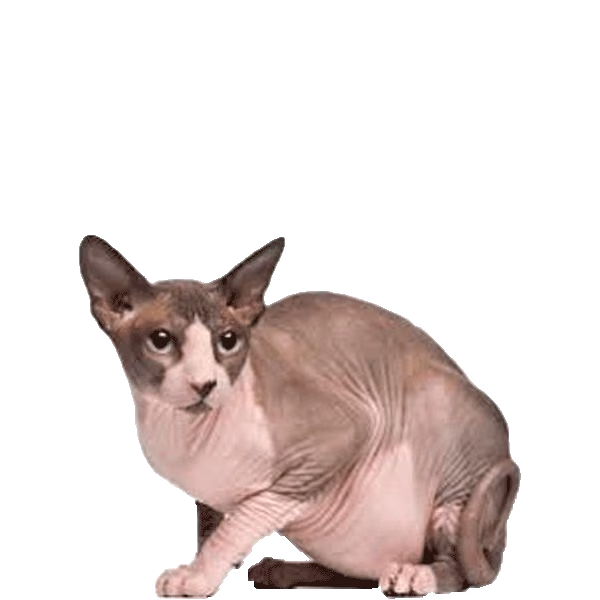
Dwelf
The Dwelf is a playful, affectionate breed combining hairless skin, short legs, and curled ears with an outgoing, curious personality.
- Size
- Small
- Lifespan
- 12–15 years
- Origin
- United States
- Temperament
- Playful
Characteristics
Coat and grooming
How the Dwelf coat is built, and what that means when you groom it.
- Coat layers
- Hairless
- Coat length
- Short
- Shedding
- Low shedding
Grooming guidance
Caution: A Dwelf needs protection from the sun.
Bare skin burns quickly and offers no insulation against cold either. Time outdoors needs shade, a coat in cool weather, or a sunscreen a vet has approved for animals.
About the Dwelf cat
The Dwelf is a small, hairless cat with short legs and curled ears, known for an affectionate, playful, and curious personality. It originated in the United States.
The Dwelf is a small hairless cat developed in the United States by combining three distinct cat breeds. Its name blends "dwarf" and "elf," a nod to its short stature and outward-curling ears. The breed brings together the hairless coat of the Sphynx, the short legs of the Munchkin, and the curled ears of the American Curl.
Dwelfs are people-oriented cats. They tend to follow their owners from room to room, seek out laps, and stay involved in household activity. The combination of high sociability and steady energy makes them interactive companions that do not tolerate being left alone for long stretches.
Because the breed is recent and produced from several parent lines, it remains uncommon. It is recognised by some experimental or rare-breed registries rather than the major mainstream cat associations, and breeding numbers are small.
| Attribute | Detail |
|---|---|
| Origin | United States |
| Size | Small |
| Lifespan | 12 to 15 years |
| Group / role | Companion cat (rare/experimental breed) |
| Good with | Families, children, other pets, attentive owners |
Who the Dwelf suits
The Dwelf fits owners who want a highly interactive indoor cat and can give it daily attention. The hairless coat needs regular skin care, and the short legs mean the cat is best kept indoors. Households where someone is home often, or where another companion animal is present, suit the breed well.
History and origin of the Dwelf cat
The Dwelf was developed in the United States in the 2000s by crossing the Sphynx, Munchkin, and American Curl to combine hairlessness, short legs, and curled ears in one cat.
The Dwelf is a modern breed that emerged in the United States in the early 2000s. It was created deliberately by crossing three established breeds, each chosen for a single defining trait.
The Sphynx contributed the hairless coat, the result of a natural mutation first documented in cats in the 1960s. The Munchkin supplied the short legs caused by a dominant gene affecting limb length. The American Curl added the ears that curve backward away from the face, a trait that appeared in California in 1981.
Breeders combining these lines aimed to fix all three features in a single small cat. Because the short-leg gene and the hairless trait can both carry health considerations, breeding has been approached cautiously and on a limited scale.
The Dwelf is still considered an experimental or rare breed. It does not hold championship status in the largest international cat registries, and most kittens come from a small group of dedicated breeders.
Dwelf cat appearance and breed standard
The Dwelf is a small hairless cat with short legs, a muscular compact body, large ears that curl backward, and wrinkled skin that may show fine downy fuzz.
The Dwelf has a striking and unusual look. The body is small and muscular with noticeably short legs. The head is wedge-shaped with prominent cheekbones and large, wide-set eyes. The most distinctive features are the hairless skin and the large ears that curl backward at the tips.
The skin is wrinkled, particularly around the head, shoulders, and legs, and is warm to the touch. Some individuals carry a fine, almost invisible down rather than being completely bare. The tail is long and tapering relative to the compact body.
| Feature | Standard |
|---|---|
| Height | Approx. 15 to 18 cm at the shoulder |
| Weight | 1.8 to 3.2 kg |
| Coat | Hairless; may have fine down, skin feels suede-like |
| Colours | Skin pigment in any colour or pattern (black, white, grey, pink, tabby-patterned skin) |
| Eyes | Large, wide-set, round to lemon-shaped, colour varies |
Coat and colours
Because the Dwelf is hairless, what would be coat colour shows instead as skin pigment. The skin can be solid, spotted, or patterned, and patterns that would appear as tabby or pointed markings in a coated cat show as variation in skin tone. Without fur, the cat loses body heat quickly and feels warmer to handle than a coated breed.
Dwelf cat temperament and personality
The Dwelf is affectionate, playful, curious, and highly sociable, bonding closely with its family and generally getting along with children and other pets.
The Dwelf is an outgoing and affectionate cat. It forms close bonds with its people and tends to stay near them, often climbing into laps or perching on shoulders. The breed is curious and investigates new objects, rooms, and visitors rather than hiding from them.
With family members the Dwelf is warm and attention-seeking. It usually does well with children who handle it gently and is generally friendly toward strangers once introduced. The breed also tends to coexist well with other cats and with dogs, helped by its sociable nature.
Dwelfs keep a steady level of energy through adulthood and enjoy interactive play. They can become bored or lonely if left alone for long periods, so a second pet or regular human company helps keep them content.
| Trait | Rating |
|---|---|
| Affection | 5 |
| Energy | 4 |
| Trainability | 3 |
| Vocalness | 3 |
| Shedding | 1 |
Dwelf cat care and grooming
The Dwelf needs regular skin cleaning rather than brushing, warmth and indoor housing, and daily interactive play to meet its social and energy needs.
Grooming
- Wipe or bathe the skin regularly (often weekly) to remove the oils that would normally be absorbed by fur
- Clean the ear folds gently, as the curled shape can trap wax and debris
- Keep nails trimmed and check skin folds for redness or irritation
- Pat the skin fully dry after bathing to avoid chilling
Exercise
- Provide daily interactive play with wand toys, balls, and puzzle feeders
- Offer low climbing structures and perches suited to short legs
- Rotate toys to keep the curious mind engaged
- Schedule regular play sessions, since the breed stays active into adulthood
Environment
The Dwelf is an indoor cat. The hairless skin offers little protection from cold, heat, or sun, and the short legs limit jumping and outdoor agility. Keep the home warm, provide soft bedding and warm resting spots, and limit direct sun exposure, which can burn unprotected skin.
Dwelf cat nutrition and feeding
The Dwelf needs a balanced, high-protein diet measured to its small size, with slightly higher energy intake to support the heat loss that comes with being hairless.
The Dwelf does best on a complete, high-protein diet formulated for cats. Because hairless cats lose body heat faster, they often have a slightly higher metabolism and may eat a little more for their size than a coated cat. Portions should still be measured against the cat's small frame to avoid weight gain. Fresh water should always be available.
| Life stage | Amount per day | Meals |
|---|---|---|
| Kitten (2 to 12 months) | Free-fed or 4 small portions | 3 to 4 |
| Adult (1 to 7 years) | Approx. 50 to 70 g (measured to weight) | 2 to 3 |
| Senior (7+ years) | Adjusted to activity and weight | 2 |
Treats and supplements
Keep treats to a small share of daily calories. A diet that is complete and balanced for the cat's life stage usually needs no extra supplements, but any addition (such as omega fatty acids for skin condition) should be discussed with a veterinarian first.
Dwelf cat health and common conditions
The Dwelf typically lives 12 to 15 years and is generally healthy, but its parent breeds carry risks to the skin, skeleton, and ear folds that owners should monitor.
The Dwelf generally lives 12 to 15 years. As a cat built from three breeds with specific mutations, it can inherit health considerations from each parent line. The hairless trait affects skin and temperature regulation, the short-leg gene affects the skeleton, and the curled ears affect ear care. Responsible breeding and regular veterinary checks help manage these risks.
| Condition | Signs | Note |
|---|---|---|
| Skin issues / sunburn | Redness, oily buildup, irritation, blackheads | Linked to hairless skin; limit sun and clean regularly |
| Skeletal / spinal strain | Reluctance to jump, altered gait, back discomfort | Associated with the short-leg gene |
| Ear infections | Head shaking, odour, discharge in ear folds | Curled ears can trap debris |
| Hypothermia / overheating | Shivering or seeking heat; lethargy in heat | Poor temperature regulation without fur |
| Heart conditions | Lethargy, breathing changes | Reported in related hairless lines; vet screening advised |
Preventive care
- Routine veterinary exams and vaccinations
- Regular skin cleaning and skin checks for irritation
- Ear cleaning to prevent buildup in the folds
- Weight monitoring to reduce strain on the spine and joints
- Keeping the cat warm and out of direct sun
Training a Dwelf cat
The Dwelf is intelligent and food-motivated, responding well to short, reward-based sessions for litter habits, handling, and simple tricks or recall.
The Dwelf is intelligent, curious, and eager to interact, which makes it more receptive to training than many cats. It can learn its name, come when called, and perform simple tricks. Short, positive sessions work best, since cats lose interest quickly. Early handling is especially useful because the breed needs regular bathing and skin care throughout its life.
Basics
- Get the kitten used to gentle handling and bathing from an early age
- Reward litter box use and keep the box clean and accessible
- Use a clicker or a marker word paired with a treat to teach simple commands
- Teach the cat to accept ear and nail care in small, calm steps
- Redirect scratching to appropriate posts and reward correct use
Breeding the Dwelf cat
Breeding the Dwelf requires care because it combines three genetic mutations; litters are small and responsible breeders screen for skeletal and skin health.
Breeding the Dwelf is complex because it brings together three separate mutations: hairlessness, short legs, and curled ears. The short-leg gene is associated with skeletal risks, and breeding two short-legged cats together can produce nonviable offspring, so breeders pair carefully and often outcross to manage genetic health.
Queens reach sexual maturity in their first year, but responsible breeders wait until the cat is physically mature before mating. Litters tend to be small. Kittens are born hairless or with very fine down and need warmth from birth, since they cannot regulate their own body temperature well. The mother and kittens benefit from a warm, clean, low-stress environment, and kittens stay with the queen until weaned and well socialised.
| Metric | Value |
|---|---|
| Sexual maturity | Around 6 to 12 months |
| Recommended breeding age | After physical maturity (12+ months) |
| Gestation | Approx. 63 to 67 days |
| Average litter size | 2 to 4 kittens |
| Weaning age | Around 8 to 12 weeks |
Your Dwelf on the registry, microchip included
Free lifetime registration for your Dwelf, plus a microchip record that satisfies bylaws like Montreal's and never costs a cent.
Registering a Dwelf and its microchip in Canada
Registering a Dwelf is a smaller job than most people expect: name, colouring, photo, contact details, save. The record costs nothing for the life of the cat and works chip or no chip. Cat registration is where to start.
Where a bylaw like Montreal's requires the chip, the record behind it still falls to you. United Pet Club keeps that record free for life: any manufacturer, unlimited updates, searchable from any clinic in the country. Microchip registration plus a free account covers cat and chip in one sitting.
How do I register my Dwelf in Canada?
Sign up free with United Pet Club, add your Dwelf's name, colouring, and a photo, and the record is live. Indoor and outdoor cats alike stay covered for life at no charge.
How do I register my Dwelf's microchip?
Type the 15-digit number from your vet paperwork into your free account and confirm your contact details. The plan accepts every chip brand and never charges for updates.
Do cats like the Dwelf have to be microchipped in Canada?
In some cities, yes. Montreal's bylaw requires pet cats to be chipped and licensed, and other municipalities are moving the same way. The registration behind the chip is yours to keep current, and with United Pet Club that part is free.
What does it cost to register a Dwelf in Canada?
Zero. The lifetime plan includes the profile, microchip registration, and every future update, with no renewal fees.
Dwelf cat frequently asked questions
Common questions about the Dwelf cat cover its size, temperament, care difficulty, lifespan, suitability, and availability.
How big does a Dwelf cat get?
The Dwelf is a small cat, typically weighing about 1.8 to 3.2 kg, with short legs and a compact, muscular body.
What is the Dwelf's temperament like?
Dwelfs are affectionate, playful, curious, and highly sociable. They bond closely with their families and usually get along with children and other pets.
Is the Dwelf hard to care for?
It needs more upkeep than an average cat. The hairless skin requires regular cleaning, the curled ears need attention, and the cat must be kept warm and indoors. It also needs daily company and play.
How long does a Dwelf cat live?
A Dwelf usually lives 12 to 15 years with good care, a balanced diet, and regular veterinary checkups.
Is the Dwelf a good family pet?
Yes. Its sociable, affectionate nature suits families and homes with other pets, provided someone is around often and can meet its skin-care and warmth needs.
Are Dwelf cats rare?
Yes. The Dwelf is a recent experimental breed produced by a small number of breeders, so kittens are uncommon and not recognised by the major mainstream registries.
Do Dwelf cats shed?
No. Because the Dwelf is hairless, it does not shed fur. It still produces skin oils and dander, so it is not fully allergen-free.