
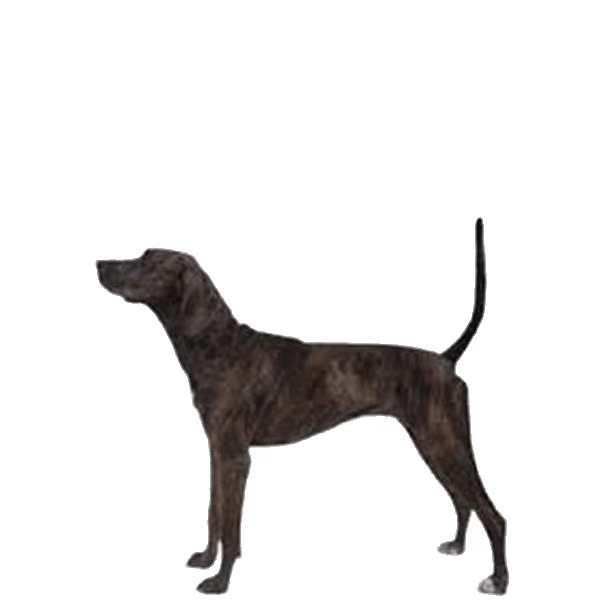
Xoloitzcuintli
The Xoloitzcuintli is an ancient, loyal Mexican hairless breed prized for its calm devotion and watchful, attentive nature.
- Size
- Medium
- Lifespan
- 13–18 years
- Origin
- Mexico
- Temperament
- Loyal
- Standard colors
- Black, White, and Gray and 12 more
Characteristics
Coat and grooming
How the Xoloitzcuintli coat is built, and what that means when you groom it.
- Coat layers
- Hairless
- Coat length
- Short
- Shedding
- Low shedding
Grooming guidance
Caution: A Xoloitzcuintli needs protection from the sun.
Bare skin burns quickly and offers no insulation against cold either. Time outdoors needs shade, a coat in cool weather, or a sunscreen a vet has approved for animals.
Xoloitzcuintli colors and patterns
What each club's breed standard says about every Xoloitzcuintli color and pattern. Point at a ruling to see the club's own wording.
Breed standards describe the Xoloitzcuintli in Black, White, Gray, Blue, Lilac, Slate, Liver, Tan, Red, Copper, Yellow, Palomino, Cream, Fawn, and Isabella. Standard patterns: Solid, Bicolor, Tricolor, Brindle, Merle, Sable, Spotted, Tan point, and Reverse brindle.
| Color or pattern | FCI | AKC | UKC | KC | KUSA |
|---|---|---|---|---|---|
| Black | Standard (“black”) | Standard (“Black”) | Standard (“Any color combination is allowed”) | Standard (“black”) | Standard (“black”) |
| White | Standard (“spots of any colour, including white markings (white: disqualifying)”) | Standard (“white spots and markings are permitted”) | Standard (“Any color combination is allowed”) | Standard (“spots of any colour, including white markings”) | Standard (“spots of any colour, including white markings (white: disqualifying)”) |
| Gray | Standard (“blackish grey, slate grey, dark grey”) | Standard (“Gray”) | Standard (“Any color combination is allowed”) | Standard (“grey in any shade”) | Standard (“blackish grey, slate grey, dark grey”) |
| Blue | Disqualifying | No ruling | Standard (“Any color combination is allowed”) | Standard (“Blue”) | Disqualifying |
| Lilac | Disqualifying | No ruling | Standard (“Any color combination is allowed”) | Standard (“Lilac”) | Disqualifying |
| Slate | Standard (“slate grey”) | Standard (“Slate”) | Standard (“Any color combination is allowed”) | Standard (“grey in any shade”) | Standard (“slate grey”) |
| Liver | Standard (“liver”) | Standard (“Liver”) | Standard (“Any color combination is allowed”) | Standard (“liver”) | Standard (“liver”) |
| Tan | Disqualifying (“black and tan”) | Standard (“Tan Markings”) | Standard (“Any color combination is allowed”) | Standard (“Black & Tan”) | Disqualifying (“black and tan”) |
| Red | Standard (“reddish”) | Standard (“Red”) | Standard (“Any color combination is allowed”) | Standard (“red”) | Standard (“reddish”) |
| Copper | Disqualifying | No ruling | Standard (“Any color combination is allowed”) | Standard (“Copper”) | Disqualifying |
| Yellow | Disqualifying | No ruling | Standard (“Any color combination is allowed”) | Standard (“White & Yellow”) | Disqualifying |
| Palomino | Disqualifying | Standard (“Palomino”) | Standard (“Any color combination is allowed”) | No ruling | Disqualifying |
| Cream | Standard (“blond”) | No ruling | Standard (“Any color combination is allowed”) | Standard (“blonde”) | Standard (“blonde”) |
| Fawn | Disqualifying | Standard (“Fawn”) | Standard (“Any color combination is allowed”) | Standard (“Fawn”) | Disqualifying |
| Isabella | Disqualifying | No ruling | Standard (“Any color combination is allowed”) | Standard (“Isabella”) | Disqualifying |
| Albino | Disqualifying (“Albinism”) | No ruling | Disqualifying (“Albinism”) | No ruling | Disqualifying (“Albinism”) |
| Patterns | |||||
| Solid | Standard (“Solid, uniform, dark colours are preferred”) | Standard (“A dark, uniform color is preferred”) | Standard (“Any color combination is allowed”) | Standard (“Solid, uniform and dark colours are preferable”) | Standard (“Solid, uniform, dark-coloured skin is preferred”) |
| Bicolor | Standard (“spots of any colour, including white markings”) | Alternate (“Black & White”) | Standard (“Any color combination is allowed”) | Standard (“Black & White”) | Standard (“spots of any colour, including white markings”) |
| Tricolor | Disqualifying | Alternate (“Black White & Tan”) | Standard (“Any color combination is allowed”) | Standard (“Tricolour”) | Disqualifying |
| Brindle | Disqualifying (“brindle”) | Standard (“Brindle”) | Standard (“Any color combination is allowed”) | Standard (“Black Brindle”) | Disqualifying (“brindle”) |
| Merle | Disqualifying (“Merle colour”) | Alternate (“Merle”) | Standard (“Any color combination is allowed”) | Not recognized (“Merle unacceptable”) | Disqualifying (“Merle colour”) |
| Sable | Disqualifying (“sable”) | Standard (“Sable”) | Standard (“Any color combination is allowed”) | Standard (“Sable”) | Disqualifying (“sable”) |
| Spotted | Standard (“There may also be spots of any colour”) | Standard (“Spotted”) | Standard (“Any color combination is allowed”) | Standard (“There may also be spots of any colour”) | Standard (“There may also be spots of any colour”) |
| Tan point | Disqualifying (“black and tan”) | Standard (“Tan Markings”) | Standard (“Any color combination is allowed”) | Standard (“Black & Tan”) | Disqualifying (“black and tan”) |
| Reverse brindle | Disqualifying (“brindle”) | Standard (“Brindle”) | Standard (“Any color combination is allowed”) | Standard (“Black Brindle”) | Disqualifying (“brindle”) |
| Double merle | Disqualifying | No ruling | No ruling | No ruling | Disqualifying |


| Color or pattern | FCI | AKC | UKC | KC | KUSA |
|---|---|---|---|---|---|
| Black | Standard (“black”) | Standard (“Black”) | Standard (“Any color combination is allowed”) | Standard (“black”) | Standard (“black”) |
| Gray | Standard (“blackish grey, slate grey, dark grey”) | Standard (“Gray”) | Standard (“Any color combination is allowed”) | Standard (“grey in any shade”) | Standard (“blackish grey, slate grey, dark grey”) |
| Slate | Standard (“slate grey”) | Standard (“Slate”) | Standard (“Any color combination is allowed”) | Standard (“grey in any shade”) | Standard (“slate grey”) |
| Liver | Standard (“liver”) | Standard (“Liver”) | Standard (“Any color combination is allowed”) | Standard (“liver”) | Standard (“liver”) |
| Bronze | Standard (“bronze”) | Standard (“Bronze”) | Standard (“Any color combination is allowed”) | Standard (“bronze”) | Standard (“bronze”) |
| Red | Standard (“reddish”) | Standard (“Red”) | Standard (“Any color combination is allowed”) | Standard (“red”) | Standard (“reddish”) |
| Cream | Standard (“blond”) | No ruling | Standard (“Any color combination is allowed”) | Standard (“blonde”) | Standard (“blonde”) |
| Patterns | |||||
| Solid | Standard (“Solid, uniform, dark coloured skin is preferred”) | Standard (“A dark, uniform color is preferred”) | Standard (“Any color combination is allowed”) | Standard (“Solid, uniform and dark colours are preferable”) | Standard (“Solid, uniform, dark-coloured skin is preferred”) |
| Spotted | Standard (“There may also be spots of any colour, including white markings”) | Standard (“white spots and markings are permitted”) | Standard (“Any color combination is allowed”) | Standard (“There may also be spots of any colour, including white markings”) | Standard (“There may also be spots of any colour, including white markings”) |
| Color or pattern | FCI | AKC | UKC | KC | KUSA |
|---|---|---|---|---|---|
| Black | Standard (“black, brown, hazel, amber or yellow tones”) | Standard (“The color varies from yellow to black”) | No ruling | Standard (“black, brown, hazel, amber or yellow tones”) | Standard (“black, brown, hazel, amber, or yellow tones”) |
| Brown | Standard (“black, brown, hazel, amber or yellow tones”) | No ruling | No ruling | Standard (“black, brown, hazel, amber or yellow tones”) | Standard (“black, brown, hazel, amber, or yellow tones”) |
| Dark brown | No ruling | No ruling | Standard (“ranges from yellow to a very dark brown”) | No ruling | No ruling |
| Hazel | Standard (“black, brown, hazel, amber or yellow tones”) | No ruling | No ruling | Standard (“black, brown, hazel, amber or yellow tones”) | Standard (“black, brown, hazel, amber, or yellow tones”) |
| Amber | Standard (“black, brown, hazel, amber or yellow tones”) | No ruling | No ruling | Standard (“black, brown, hazel, amber or yellow tones”) | Standard (“black, brown, hazel, amber, or yellow tones”) |
| Yellow | Standard (“black, brown, hazel, amber or yellow tones”) | Standard (“The color varies from yellow to black”) | Standard (“ranges from yellow to a very dark brown”) | Standard (“black, brown, hazel, amber or yellow tones”) | Standard (“black, brown, hazel, amber, or yellow tones”) |
| Light brown | Fault (“Light coloured ... eyes”) | No ruling | No ruling | No ruling | Fault (“Light-coloured ... eyes”) |
| Blue | Disqualifying (“Blue eyes”) | No ruling | Disqualifying (“Blue eyes or flecks of blue in the eyes”) | Not recognized (“Blue or wall eyes unacceptable”) | Disqualifying (“Blue eyes”) |
| Patterns | |||||
| Odd-eyed | Disqualifying (“different coloured eyes (Heterocromia)”) | Not recognized (“Both eyes must be of the same color”) | Not recognized (“Both eyes are to be of the same color”) | No ruling | Disqualifying (“different-coloured eyes (Heterocromia)”) |
| Sectoral | No ruling | No ruling | Disqualifying (“flecks of blue in the eyes”) | No ruling | No ruling |


| Color or pattern | FCI | UKC | KUSA |
|---|---|---|---|
| Liver | Standard (“It can be brown or pinkish in bronze-coloured dogs”) | Standard (“brown or pink in bronze and blond dogs”) | Standard (“It can be brown or pinkish in bronze-coloured dogs”) |
| Pink | Standard (“It can be brown or pinkish in bronze-coloured dogs”) | Standard (“brown or pink in bronze and blond dogs”) | Standard (“It can be brown or pinkish in bronze-coloured dogs”) |
| Patterns | |||
| Butterfly nose | Standard (“spotted in spotted dogs”) | Standard (“spotted as the rest of the body only in spotted dogs”) | Standard (“spotted in spotted dogs”) |

| Color or pattern | FCI | UKC | KUSA |
|---|---|---|---|
| Pink | Standard (“The tongue is generally pink”) | No ruling | Standard (“The tongue is generally pink”) |
| Patterns | |||
| Spotted | Standard (“may have black markings, spots or marks”) | Standard (“The tongue may have black markings, spots or stripes”) | Standard (“may have black markings, spots, or marks”) |

Coated
| Color or pattern | FCI | AKC | UKC | KC | KUSA |
|---|---|---|---|---|---|
| Black | Standard (“black”) | Standard (“Black”) | Standard (“Any color combination is allowed”) | Standard (“black”) | Standard (“black”) |
| White | Standard (“spots of any colour, including white markings (white: disqualifying)”) | Standard (“white spots and markings are permitted”) | Standard (“Any color combination is allowed”) | Standard (“spots of any colour, including white markings”) | Standard (“spots of any colour, including white markings (white: disqualifying)”) |
| Gray | Standard (“blackish grey, slate grey, dark grey”) | Standard (“Gray”) | Standard (“Any color combination is allowed”) | Standard (“grey in any shade”) | Standard (“blackish grey, slate grey, dark grey”) |
| Blue | Disqualifying | No ruling | Standard (“Any color combination is allowed”) | Standard (“Blue”) | Disqualifying |
| Lilac | Disqualifying | No ruling | Standard (“Any color combination is allowed”) | Standard (“Lilac”) | Disqualifying |
| Slate | Standard (“slate grey”) | Standard (“Slate”) | Standard (“Any color combination is allowed”) | Standard (“grey in any shade”) | Standard (“slate grey”) |
| Liver | Standard (“liver”) | Standard (“Liver”) | Standard (“Any color combination is allowed”) | Standard (“liver”) | Standard (“liver”) |
| Tan | Disqualifying (“black and tan”) | Standard (“Tan Markings”) | Standard (“Any color combination is allowed”) | Standard (“Black & Tan”) | Disqualifying (“black and tan”) |
| Red | Standard (“reddish”) | Standard (“Red”) | Standard (“Any color combination is allowed”) | Standard (“red”) | Standard (“reddish”) |
| Copper | Disqualifying | No ruling | Standard (“Any color combination is allowed”) | Standard (“Copper”) | Disqualifying |
| Yellow | Disqualifying | No ruling | Standard (“Any color combination is allowed”) | Standard (“White & Yellow”) | Disqualifying |
| Palomino | Disqualifying | Standard (“Palomino”) | Standard (“Any color combination is allowed”) | No ruling | Disqualifying |
| Cream | Standard (“blond”) | No ruling | Standard (“Any color combination is allowed”) | Standard (“blonde”) | Standard (“blonde”) |
| Fawn | Disqualifying | Standard (“Fawn”) | Standard (“Any color combination is allowed”) | Standard (“Fawn”) | Disqualifying |
| Isabella | Disqualifying | No ruling | Standard (“Any color combination is allowed”) | Standard (“Isabella”) | Disqualifying |
| Albino | Disqualifying (“Albinism”) | No ruling | Disqualifying (“Albinism”) | No ruling | Disqualifying (“Albinism”) |
| Patterns | |||||
| Solid | Standard (“Solid, uniform, dark colours are preferred”) | Standard (“A dark, uniform color is preferred”) | Standard (“Any color combination is allowed”) | Standard (“Solid, uniform and dark colours are preferable”) | Standard (“Solid, uniform, dark-coloured skin is preferred”) |
| Bicolor | Standard (“spots of any colour, including white markings”) | Alternate (“Black & White”) | Standard (“Any color combination is allowed”) | Standard (“Black & White”) | Standard (“spots of any colour, including white markings”) |
| Tricolor | Disqualifying | Alternate (“Black White & Tan”) | Standard (“Any color combination is allowed”) | Standard (“Tricolour”) | Disqualifying |
| Brindle | Disqualifying (“brindle”) | Standard (“Brindle”) | Standard (“Any color combination is allowed”) | Standard (“Black Brindle”) | Disqualifying (“brindle”) |
| Merle | Disqualifying (“Merle colour”) | Alternate (“Merle”) | Standard (“Any color combination is allowed”) | Not recognized (“Merle unacceptable”) | Disqualifying (“Merle colour”) |
| Sable | Disqualifying (“sable”) | Standard (“Sable”) | Standard (“Any color combination is allowed”) | Standard (“Sable”) | Disqualifying (“sable”) |
| Spotted | Standard (“There may also be spots of any colour”) | Standard (“Spotted”) | Standard (“Any color combination is allowed”) | Standard (“There may also be spots of any colour”) | Standard (“There may also be spots of any colour”) |
| Tan point | Disqualifying (“black and tan”) | Standard (“Tan Markings”) | Standard (“Any color combination is allowed”) | Standard (“Black & Tan”) | Disqualifying (“black and tan”) |
| Reverse brindle | Disqualifying (“brindle”) | Standard (“Brindle”) | Standard (“Any color combination is allowed”) | Standard (“Black Brindle”) | Disqualifying (“brindle”) |
| Double merle | Disqualifying | No ruling | No ruling | No ruling | Disqualifying |
Hairless
| Color or pattern | FCI | AKC | UKC | KC | KUSA |
|---|---|---|---|---|---|
| Black | Standard (“black”) | Standard (“Black”) | Standard (“Any color combination is allowed”) | Standard (“black”) | Standard (“black”) |
| Gray | Standard (“blackish grey, slate grey, dark grey”) | Standard (“Gray”) | Standard (“Any color combination is allowed”) | Standard (“grey in any shade”) | Standard (“blackish grey, slate grey, dark grey”) |
| Slate | Standard (“slate grey”) | Standard (“Slate”) | Standard (“Any color combination is allowed”) | Standard (“grey in any shade”) | Standard (“slate grey”) |
| Liver | Standard (“liver”) | Standard (“Liver”) | Standard (“Any color combination is allowed”) | Standard (“liver”) | Standard (“liver”) |
| Bronze | Standard (“bronze”) | Standard (“Bronze”) | Standard (“Any color combination is allowed”) | Standard (“bronze”) | Standard (“bronze”) |
| Red | Standard (“reddish”) | Standard (“Red”) | Standard (“Any color combination is allowed”) | Standard (“red”) | Standard (“reddish”) |
| Cream | Standard (“blond”) | No ruling | Standard (“Any color combination is allowed”) | Standard (“blonde”) | Standard (“blonde”) |
| Patterns | |||||
| Solid | Standard (“Solid, uniform, dark coloured skin is preferred”) | Standard (“A dark, uniform color is preferred”) | Standard (“Any color combination is allowed”) | Standard (“Solid, uniform and dark colours are preferable”) | Standard (“Solid, uniform, dark-coloured skin is preferred”) |
| Spotted | Standard (“There may also be spots of any colour, including white markings”) | Standard (“white spots and markings are permitted”) | Standard (“Any color combination is allowed”) | Standard (“There may also be spots of any colour, including white markings”) | Standard (“There may also be spots of any colour, including white markings”) |
What the rulings mean
- Standard
- Described by the club's breed standard.
- Alternate
- Registrable with the club but not described by its breed standard, such as an AKC alternate color.
- Fault
- Named by the club's breed standard as a fault: the animal can be shown but is penalized.
- Disqualifying
- The club's breed standard disqualifies an animal of this color or pattern.
- Not recognized
- The club does not accept this color or pattern for the breed.
Color changes
How a Xoloitzcuintli's colors can change over its life.
Blackchanges toRust
Coat · With body condition · can change back
Blackchanges toGray
Coat · Progressive
Blackchanges toBrown
Coat · In the sun · can change back
Whitechanges toRoan
Coat · With age · from 2 weeks
Tan pointchanges toSaddle
Coat · With age · from 6 to 156 weeks


Sources
Each ruling comes from the club's published breed standard or color list.
About the Xoloitzcuintli
The Xoloitzcuintli is an ancient hairless dog from Mexico, now kept by a small but growing circle of Filipino owners, valued for its calm loyalty and watchful nature.
The Xoloitzcuintli (say it show-low-eats-KEENT-lee, shortened by most owners to Xolo) ranks among the oldest dog breeds in the Americas. It traces back to Mexico, where it lived alongside people for thousands of years before finding its way to enthusiasts in Asia and the Philippines. The breed comes in two coat types: a hairless variety with smooth, tough skin, and a coated variety with a short, flat coat.
This is a medium-sized dog with a calm, even temperament. Xolos form close bonds with their families and stay devoted to the people they live with. They are alert and watchful, quick to notice changes around the house, though they are not the type to bark at every sound. Around strangers they tend to hang back rather than act aggressively.
The breed also comes in toy and standard sizes, though the medium build is the one most local owners encounter. Filipino Xolo keepers value the breed for its loyalty, its quiet manner indoors, and its long lifespan, qualities that suit a condo unit in the city as much as a house with a bakuran (yard) in the province.
| Attribute | Detail |
|---|---|
| Origin | Mexico |
| Size | Medium |
| Lifespan | 13 to 18 years |
| Group / role | Companion and watchdog |
| Good with | Family members, with early socialization for children and other pets |
Who it suits
The Xolo suits owners who want a calm, loyal companion and can commit to consistent socialization and daily exercise. The hairless variety needs sun protection and a bit of shielding from the chill of an air-conditioned room, so it fits households ready to manage those needs. Its watchful nature makes it a good match for anyone who wants an alert dog without constant barking, a real plus in tightly packed subdivisions and condominiums.
History and origin
The Xoloitzcuintli is a native Mexican breed dating back thousands of years, tied to the Aztec and earlier Mesoamerican peoples, and now recognized by PCCI.
The Xoloitzcuintli ranks among the oldest breeds of the Americas. Archaeological finds and pottery from ancient Mexico show hairless dogs matching the type, and experts generally trace the breed back several thousand years.
Its name comes from Nahuatl, the language of the Aztecs. It combines Xolotl, an Aztec deity linked to the underworld, with itzcuintli, the word for dog. Aztec belief held that the dog guided souls, giving the Xolo a place in both religious ritual and daily life.
For centuries the breed lived across central and southern Mexico. Its numbers dropped sharply during the twentieth century and the breed nearly disappeared. A recovery effort in Mexico during the mid-1900s tracked down surviving dogs and rebuilt the population, securing the breed's future.
The Xolo later became recognized as a national dog of Mexico and gained formal standing with major kennel registries abroad. In the Philippines, where the Philippine Canine Club, Inc. (PCCI) oversees breed registration and dog shows, the Xolo remains rare but is a growing presence among hobbyist breeders and show circles, prized for its link to pre-Hispanic Mexican heritage.
Appearance and breed standard
The Xoloitzcuintli is a lean, well-balanced dog with hairless and coated varieties, dark skin or coat, and a watchful, thoughtful expression.
The Xoloitzcuintli carries a lean, athletic frame that runs slightly longer than it is tall. Its body is well-muscled without bulk, giving an overall look of quiet strength and balance. The head tapers into a wedge shape, the ears stand large and erect, and the expression reads thoughtful and alert.
The hairless variety is the most recognized form. It has smooth, tough skin and may carry a few coarse hairs on the crown of the head, the feet, and the tip of the tail. The coated variety wears a short, flat coat over the entire body. Both types can turn up in the same litter, so a breeder pairing two hairless dogs will often still get coated puppies.
| Trait | Standard |
|---|---|
| Height | Roughly 36 to 45 cm at the shoulder (medium) |
| Weight | Roughly 7 to 14 kg (medium) |
| Coat | Hairless with smooth skin, or short flat coat |
| Colors | Dark slate, black, gray, bronze, liver, and red tones |
| Eyes | Almond-shaped, ranging from amber to dark brown |
Coat and colors
Hairless Xolos usually have skin in a dark, solid tone, though lighter shades and spotting do occur. The skin feels firm and warm to the touch, and under the local sun it darkens further with regular time outdoors. Coated Xolos carry the same color range in a short, close coat. Both varieties most often show up in dark, uniform shades, with bronze and red among the lighter options.
Temperament and personality
The Xoloitzcuintli is calm, loyal, and watchful, staying devoted to its family while keeping its distance from strangers and unfamiliar visitors.
The Xoloitzcuintli is a calm, devoted dog. It bonds closely with its family and often picks one or two people to stay near at all times. Indoors it tends to be quiet and settled, content to rest beside the people it trusts, whether that is on a cool tiled floor during the hot months or curled up near the family through a rainy afternoon.
With strangers the Xolo holds back and watches rather than approaches. This makes it a dependable alert dog, since it notices visitors and changes around the home quickly, useful in gated subdivisions and apartment buildings alike. Early and ongoing socialization keeps it confident and stops that natural reserve from turning into shyness.
With children the breed generally does well when raised together and interactions are supervised, especially with younger kids. With other pets it usually settles in when introduced early, though its watchful streak means introductions should be managed with care. The Xolo reads its household closely and does best in a steady, consistent home.
| Trait | Rating |
|---|---|
| Affection | 5 |
| Energy | 3 |
| Trainability | 4 |
| Vocalness | 2 |
| Shedding | 1 |
Care and grooming
The Xoloitzcuintli needs skin or coat care, daily exercise, and protection from strong sun and sudden cold, especially the hairless variety in the local climate.
Grooming
- Hairless variety: wipe the skin clean regularly and bathe as needed to keep pores clear in the humidity, then keep the skin moisturized as your veterinarian advises
- Apply pet-safe sunscreen before letting the dog out under the midday sun
- Coated variety: brush the short coat occasionally to remove loose hair
- Trim nails regularly and check ears for buildup, more often during the rainy season
- Brush teeth several times a week to support dental health
Exercise
- Provide one or two walks a day plus some active play, timed for the cooler early morning or evening hours
- Allow time in a secure yard or open space to move and explore
- Include light training or scent games for mental stimulation
- Skip heavy exercise during peak midday heat for hairless dogs, and stay indoors once a typhoon signal goes up
Environment
The Xolo adapts well to home living, including condo units, as long as it gets daily exercise. The hairless variety feels the heat and humidity of the local climate more than most breeds and needs shade plus sun protection outdoors. It also feels the chill of air-conditioned rooms and cooler evenings in highland areas such as Baguio or Tagaytay, so a light sweater helps in those settings. Indoors it prefers a warm, comfortable spot to rest, away from a direct aircon vent.
Nutrition and feeding
The Xoloitzcuintli does well on a complete, balanced diet portioned to its size and activity, fed in measured daily meals rather than left out all day.
The Xoloitzcuintli thrives on a complete and balanced diet formulated for its life stage and size. A quality food with adequate protein supports its lean, muscular build. Since the breed can gain weight when overfed, portion control matters, and treats should count toward the daily total rather than sit outside it.
Fresh water should always be within reach, particularly during the hot months when the dog drinks more. Feeding amounts vary with the individual dog's weight, age, and activity, so treat the figures below as a starting point and adjust to keep the dog at a healthy weight.
| Life stage | Amount per day | Meals |
|---|---|---|
| Puppy (2 to 6 months) | Per food label, divided | 3 to 4 |
| Junior (6 to 12 months) | Per food label, divided | 2 to 3 |
| Adult | Roughly 1 to 1.5 cups of quality dry food | 2 |
| Senior | Adjusted lower for activity | 2 |
Treats and supplements
Use treats sparingly and keep them under about ten percent of daily calories. Most Xolos on a complete commercial diet do not need supplements. Talk to a veterinarian before adding anything such as joint or skin support, since hairless dogs can have particular skin needs that call for a tailored approach.
Health and lifespan
The Xoloitzcuintli is a generally hardy, long-lived breed with a lifespan of 13 to 18 years, with skin care and dental checks as the main concerns for owners.
The Xoloitzcuintli is considered a hardy and healthy breed. Many dogs live long lives, with a typical lifespan of 13 to 18 years. The hairless variety carries particular skin needs, and the breed is also commonly linked to incomplete dentition, meaning some teeth may be missing, especially in hairless dogs.
Responsible breeding and routine veterinary care keep the breed sound. As with any dog, regular checkups help catch problems early, and clinics in Metro Manila and in the provinces can generally manage a Xolo's health needs without trouble.
| Condition | Signs | Note |
|---|---|---|
| Skin irritation (hairless) | Redness, dryness, acne-like bumps | Linked to exposed skin; managed with a care routine and sun protection |
| Dental issues | Missing teeth, tartar buildup | Hairless dogs often have fewer teeth; brush regularly |
| Sunburn | Reddened or sore skin after sun | Use pet-safe sunscreen and shade |
| Joint problems | Stiffness, reluctance to move | Keep a healthy weight to reduce strain |
Preventive care
- Keep vaccinations and parasite prevention current, since fleas and ticks thrive in the local heat and humidity
- Schedule annual veterinary exams, more often for seniors
- Keep up skin and dental routines suited to the variety
- Manage weight with measured feeding and daily exercise
- Shield the dog from harsh midday sun and from sudden temperature drops indoors
Training
The Xoloitzcuintli is intelligent and trainable, responding best to calm, consistent, reward-based methods along with early socialization.
The Xoloitzcuintli learns quickly and picks up on its handler's tone. It responds best to patient, consistent training, and harsh methods tend to make a Xolo withdraw, so a calm, steady approach works far better.
Early socialization matters. Exposing the dog to different people, places, and animals while it is young helps it grow into a confident adult and softens its natural reserve around strangers. Keeping the rules consistent across the household, from the lolo and lola down to the household help, keeps expectations clear for the dog.
Basics
- Start socialization early with gentle, varied experiences
- Teach name recognition and basic recall first
- Build core commands such as sit, stay, and come
- Keep sessions short and positive to hold its attention
- Practice calm greetings to manage its reserve around strangers and visitors
- Reinforce house manners and crate or settle routines
Breeding
Xoloitzcuintli breeding calls for care with the genetics behind the hairless trait, since pairing two hairless dogs affects the outcome of a litter.
Breeding the Xoloitzcuintli requires a working knowledge of the breed's genetics. The hairless trait is dominant, and the gene involved means puppies that inherit two copies do not survive. For this reason, hairless dogs are usually paired in a way that produces both hairless and coated puppies within the same litter. Coated dogs play an important part in the breed and appear regularly in responsible breeding programs.
Dogs should reach full maturity before breeding, and both parents should undergo health screening and show a sound temperament. Females are typically bred once they are physically mature. Gestation in dogs runs about 63 days. Newborn puppies depend entirely on the mother for warmth and feeding in the early weeks, and the hairless variety feels cold especially sharply, so the whelping area needs to stay warm, particularly in air-conditioned rooms or during the cooler months in highland areas. Puppies are weaned gradually and benefit from early handling and socialization, and PCCI-registered litters follow the club's standards for documentation.
| Metric | Value |
|---|---|
| Sexual maturity | Around 1 to 2 years |
| Gestation | About 63 days |
| Average litter size | Roughly 3 to 7 puppies |
| Weaning age | About 6 to 8 weeks |
| Hairless genetics | Two-copy hairless gene is not viable; coated dogs occur in litters |
Registering your Xoloitzcuintli and its microchip in the Philippines
The city vet office handles the RA 9482 paperwork; a free United Pet Club record is what a finder anywhere can actually search for your Xoloitzcuintli.
How to register a Xoloitzcuintli in the Philippines
The Anti-Rabies Act, Republic Act 9482, tells every dog owner to register with the city or municipal veterinary office and keep the anti-rabies shots current, and that covers the local paperwork for your Xoloitzcuintli. What the city record cannot do is tell a finder two provinces away how to reach you. A free United Pet Club profile fills that gap for life. Registering your dog costs nothing to start and nothing later.
The clinic's part ended with the implant; the tracing part is yours. File your Xoloitzcuintli's 15-digit number with United Pet Club and every scan leads to your phone: free for life, all brands accepted, updates free every time your details change. Microchip registration plus a free account finishes the job.
How do I register my Xoloitzcuintli in the Philippines?
Open a free United Pet Club account, add your Xoloitzcuintli's details and a photo, then save the profile. It stays free for his whole life and sits alongside the city vet office registration RA 9482 requires.
How do I register my Xoloitzcuintli's microchip?
Type the 15-digit chip number into your free account together with your mobile number and address. The lifetime plan charges nothing for the registration or for any update, whatever brand the clinic used.
Is registration required for a Xoloitzcuintli in the Philippines?
Yes, RA 9482 requires dog registration with your city or municipal veterinary office, along with current anti-rabies vaccination. The United Pet Club profile is the searchable half: free, worldwide, and tied to your current mobile.
How much does it cost to register a Xoloitzcuintli?
Nothing. The free lifetime plan covers the profile, the microchip record, and every update, with no renewal fees at all.
Frequently asked questions
Common questions about the Xoloitzcuintli, covering size, temperament, care needs, lifespan, suitability, and where to find one in the Philippines.
How big does a Xoloitzcuintli get?
The breed comes in toy, miniature, and standard sizes. The common medium build stands roughly 36 to 45 cm at the shoulder and weighs about 7 to 14 kg.
What is the temperament of a Xolo dog?
Xolos are calm, devoted, and loyal. They bond closely with their families, stay quiet indoors, and keep a watchful, reserved distance around strangers.
Is the Xoloitzcuintli hard to take care of in the Philippines?
Care is moderate. The main needs are skin protection and a regular routine for hairless dogs, especially against strong sun and humidity, along with daily exercise and basic socialization. Coated dogs need only occasional grooming.
How long do Xoloitzcuintlis live?
They are a long-lived breed, generally living 13 to 18 years with good care.
Is the Xolo a good family dog?
Yes, when socialized early. It stays loyal and gentle with its household and can do well with children and other pets when introductions are managed and interactions supervised.
Does the Xoloitzcuintli need a lot of grooming?
The hairless variety needs skin cleaning, moisturizing as advised, and sun protection rather than brushing. The coated variety needs only occasional brushing, and both shed very little, a plus for households keeping shedding down in a humid climate.
Where can I find a Xoloitzcuintli in the Philippines?
They remain uncommon locally. Finding one usually means contacting a PCCI-registered breeder or a breed-specific rescue group, and waiting lists are common given the limited number of local litters.
From the community
Ask about the XoloitzcuintliNo questions about the Xoloitzcuintli yet. Be the first to ask.
Browse Dog breeds