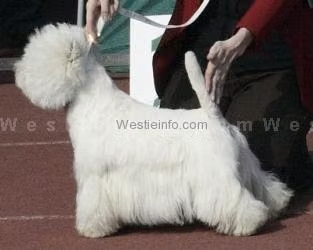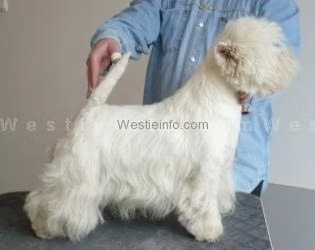
The West Highland White Terrier is a friendly, confident Scottish breed whose bright white coat and spirited charm make it a beloved companion.
How the West Highland White Terrier coat is built, and what that means when you groom it.
Caution: A West Highland White Terrier coat should be hand-stripped rather than clipped.
A wire coat is meant to be pulled out at the root once the hair is ready to release. Clippers cut it off part way instead, leaving the soft undercoat behind. The result is a coat that grows back limp and faded, and the weatherproof texture only returns after the hair is stripped out again.
A few of the West Highland White Terrier profiles members have added to United Pet Club.
The West Highland White Terrier is a small, sturdy terrier from Scotland with a pure white double coat and a lively, confident personality suited to many types of homes in the Philippines.
The West Highland White Terrier, commonly called the Westie, is a small working terrier that originated in Scotland. A full-grown Westie typically stands 25 to 28 cm at the shoulder and weighs about 6.8 to 9.1 kg. Its all-white double coat, dark eyes, and small pointed ears set it apart from other terrier breeds. The breed was originally developed to hunt rats, foxes, and other small game on the ground, and that working instinct still comes through in how alert and busy the dog can be.
Westies are affectionate and easygoing, yet they carry the confident, spirited character common among terriers. They bond closely with their family and like to be part of whatever is happening at home. The small frame does not stop them from acting self-assured; a Westie is rarely shy. A daily walk plus some mental stimulation, such as a short training session or a puzzle toy, keeps the breed content.
The breed adapts well to different types of homes, from a condominium unit to a house with a yard, provided it gets regular walks and company. Because the coat is white, it needs consistent grooming to stay clean and free of mats, especially given the dust and humidity typical in many parts of the country. With a lifespan of 13 to 15 years, a Westie is a companion for the long haul.
| Attribute | Detail |
|---|---|
| Origin | Scotland |
| Size | Small (about 25 to 28 cm, 6.8 to 9.1 kg) |
| Lifespan | 13 to 15 years |
| Group / role | Terrier, originally a small-quarry hunter |
| Good with | Families and active individuals who can commit to daily walks and regular grooming |
The Westie fits well with owners who want a small dog with plenty of personality rather than a quiet lapdog. It does best with people who are home often, or who can bring the dog along, since it does not like being left alone for long stretches. Owners who can keep up with regular brushing and occasional professional grooming will have an easier time keeping the coat looking its best. The breed can get along with children and other household pets when they grow up together, though its terrier instinct may still prompt it to chase small animals it does not know.
The West Highland White Terrier was developed in the western Highlands of Scotland from small white hunting terriers and became a recognized breed in the early 1900s.
The West Highland White Terrier traces its roots to the western Highlands of Scotland, where farms and estates kept small, tough terriers to control rats, foxes, badgers, and other vermin. These working dogs from Argyll and nearby areas share ancestry with several other Scottish breeds, among them the Cairn Terrier, the Scottish Terrier, and the Dandie Dinmont Terrier.
Breeders in the area deliberately selected for white coloring. One well-known account traces this to the Malcolm family of Poltalloch, who began favoring white dogs after a sandy-colored terrier was mistaken for game and accidentally shot during a hunt. A white coat stood out clearly against rough terrain and undergrowth, which lowered the chance of a similar accident happening again. Because of this history, the breed carried earlier names such as Poltalloch Terrier and Roseneath Terrier, the latter after another estate connected to its early development.
The breed took on a settled identity toward the end of the 1800s and into the early 1900s, appearing at shows in Scotland and England under a few different names before West Highland White Terrier became the accepted one. The Kennel Club in Britain recognized the breed within the first decade of the 1900s, and other national kennel clubs followed not long after, including the Philippine Canine Club, Inc. (PCCI), the country's own national kennel club.
Over the twentieth century the Westie moved from a working farm terrier to a well-liked companion and show dog while keeping its compact frame and bold nature. It continues to be one of the more familiar terrier breeds worldwide, including among dog owners in the Philippines.
The West Highland White Terrier is small and compact, with a pure white double coat, dark eyes, a black nose, and small erect ears.
The Westie is a small, well-proportioned terrier built for hard work packed into a compact frame. Its body is deep through the chest, and the legs, though short, are strong enough to give the dog a sturdy, level outline. The head is rounded and held with a confident expression, framed by small, pointed ears that stand fully erect. Dark, deep-set eyes and a black nose stand out against the white coat. The tail is short, carrot-shaped, and carried upright, never curled over the back.
| Trait | Description |
|---|---|
| Height | About 25 to 28 cm at the shoulder |
| Weight | About 6.8 to 9.1 kg |
| Coat | Double coat: harsh straight outer coat with a soft, dense undercoat |
| Colors | White only |
| Eyes | Dark, medium size, set fairly wide apart |
The coat is what makes the breed instantly recognizable. The outer coat is harsh and straight, about 5 cm long, and covers a soft, dense undercoat that gives the dog protection from the weather. White is the only accepted color, and the standard does not allow any other markings. A few dogs may show faint wheaten shading at the tips of the coat, which groomers typically minimize. Hand-stripping keeps the harsh texture intact and is the preferred method for show dogs, while most pet owners simply have the coat clipped, which softens it over time.
The West Highland White Terrier is friendly, confident, and full of energy, affectionate at home but alert and often vocal around strangers and small animals.
The Westie combines a friendly, good-natured temperament with the boldness typical of terriers. It is confident and spirited, quick to take notice of what is going on around it, and generally outgoing rather than timid. Within its own family the breed is affectionate and likes staying close to the action, following household members from room to room and joining in on play.
Around strangers, a Westie is usually watchful and alert. It tends to bark at visitors and unfamiliar sounds, which makes it a decent watchdog for its size. Early socialization helps it settle down and greet new people calmly instead of reacting to every noise it hears.
With other dogs the breed tends to be sociable, although some individuals can be pushy with dogs of the same sex. The strong prey drive is the main thing to watch around other pets: rats, mice, and similar small animals can set off a chase, so households that also keep rabbits, hamsters, or other small pets need to manage introductions with care. Many Westies get along fine with a cat they were raised alongside. With children, the breed is usually playful and patient, and it is happiest with kids who know how to handle a small dog gently.
| Trait | Rating |
|---|---|
| Affection | 4 |
| Energy | 4 |
| Trainability | 3 |
| Vocalness | 4 |
| Shedding | 2 |
The West Highland White Terrier needs regular brushing, periodic coat trimming or stripping, daily exercise, and steady company to stay happy and healthy.
The Westie is a moderate-maintenance breed. Its double coat does not shed much, but it does need consistent upkeep, and the white color shows dirt quickly, so regular cleaning matters more than it might for a darker-coated dog. The breed adjusts well to the size of the home as long as it gets enough exercise and attention.
The breed does well in both condominium units and houses with a yard, as long as it gets its daily walks and is not left alone for long stretches. A securely fenced yard is a plus, since Westies like to dig and may chase after small animals that wander in. The double coat gives some protection against changing weather, but the Philippines' year-round heat and humidity are a real adjustment for a breed that developed in Scotland's much cooler climate, so owners should keep the dog cool, hydrated, and out of the midday sun.
The West Highland White Terrier does well on a complete diet made for small breeds, given in measured portions across two meals a day to avoid excess weight.
A complete and balanced dog food formulated for small breeds works well for the Westie. Since the dog is small and tends to be food-motivated, portions should be measured out rather than left down all day, because extra weight puts strain on the joints and skin. Look for a food built around a quality protein source, and match the formula to the dog's life stage and activity level. Clean, fresh water should be available at all times.
| Life stage | Amount per day | Meals |
|---|---|---|
| Puppy (2 to 6 months) | Per product guide for growth, adjusted to body condition | 3 to 4 |
| Adult | About 90 to 150 g of dry food, by weight and activity | 2 |
| Senior | Slightly reduced calories to match lower activity | 2 |
Keep treats to around 10 percent or less of daily calories, and deduct them from the regular meal portion to avoid overfeeding. Small training treats work well, since the breed is both intelligent and food-driven. Most Westies eating a complete diet do not need extra supplements, though a veterinarian may recommend omega-3 fatty acids for the skin and coat, or joint support for an older dog. Check with a vet before adding any supplement to the diet.
The West Highland White Terrier is generally hardy with a lifespan of 13 to 15 years, though it can be prone to certain skin, joint, and inherited conditions.
The West Highland White Terrier is a generally healthy breed with a typical lifespan of 13 to 15 years. Like any purebred dog, it carries some breed-specific risks worth knowing about. Skin problems are among the most common concerns, and the breed is also linked to several inherited disorders that responsible breeders screen for before mating their dogs.
| Condition | Signs | Note |
|---|---|---|
| Atopic dermatitis | Itching, redness, recurring skin and ear infections | Common in the breed; managed with veterinary care |
| Legg-Calve-Perthes disease | Hind-limb lameness and pain in a young dog | Affects the hip joint; often needs surgery |
| Luxating patella | Skipping gait, intermittent hind-leg lameness | Ranges from mild to cases needing surgery |
| Pulmonary fibrosis (Westie lung disease) | Cough, exercise intolerance, labored breathing | Progressive condition, usually seen in older dogs |
| Globoid cell leukodystrophy | Tremors, weakness, loss of coordination in young dogs | Inherited; DNA testing is available |
The West Highland White Terrier is smart but independent, so training goes best with short, consistent, reward-based sessions that start early.
The Westie is a quick learner, but its terrier independence means it will not always obey simply to please its owner. Training works best when it stays consistent, positive, and interesting for the dog. Short sessions hold its attention far better than long drills, and food rewards work well given how food-driven the breed tends to be. Early socialization with people, other dogs, and everyday situations helps curb excessive barking and wariness later on. Recall is worth extra practice, since a strong prey drive can pull the dog away from its handler once outdoors.
West Highland White Terriers reach breeding maturity within their first year or two, typically have litters of two to five puppies, and should be bred only after health screening.
Responsible breeding of West Highland White Terriers starts with health-tested parents. The breed carries risks for inherited conditions such as globoid cell leukodystrophy and joint disorders, so screening and, where available, DNA testing help lower the chance of passing these problems on to puppies. Most breeders wait until a dog is fully mature, physically and behaviorally, before a first mating rather than breeding at the earliest possible age.
A female typically comes into heat about twice a year. Gestation in dogs runs roughly 63 days from conception. Litters in this breed tend to be small, usually two to five puppies. Whelping should be planned with a veterinarian's support, and the breeder needs to be ready to step in if a small female has trouble delivering.
Raising the puppies depends on a clean, warm whelping area and close monitoring of the mother and litter through the first weeks. Puppies open their eyes at around two weeks old and start weaning from about three to four weeks. Early, gentle handling and exposure to normal household sights and sounds lay the groundwork for the breed's confident temperament later on. Puppies should stay with their mother and littermates until at least eight weeks of age before going to a new home.
| Metric | Value |
|---|---|
| Sexual maturity | About 6 to 12 months (breed later) |
| Heat cycle | Roughly twice a year |
| Gestation | About 63 days |
| Typical litter size | 2 to 5 puppies |
| Weaning | About 3 to 4 weeks, complete by 7 to 8 weeks |
| Leave for new home | At least 8 weeks of age |
The city vet office handles the RA 9482 paperwork; a free United Pet Club record is what a finder anywhere can actually search for your West Highland White Terrier.
A West Highland White Terrier that gets loose during a storm is identified by whatever record answers the scan, not by the barangay it came from. Give it a record that answers: your mobile number, the dog's photo, and his details, free for life with United Pet Club. Register your dog today and it is done for good.
The clinic's part ended with the implant; the tracing part is yours. File your West Highland White Terrier's 15-digit number with United Pet Club and every scan leads to your phone: free for life, all brands accepted, updates free every time your details change. Microchip registration plus a free account finishes the job.
Open a free United Pet Club account, add your West Highland White Terrier's details and a photo, then save the profile. It stays free for his whole life and sits alongside the city vet office registration RA 9482 requires.
Type the 15-digit chip number into your free account together with your mobile number and address. The lifetime plan charges nothing for the registration or for any update, whatever brand the clinic used.
Yes, RA 9482 requires dog registration with your city or municipal veterinary office, along with current anti-rabies vaccination. The United Pet Club profile is the searchable half: free, worldwide, and tied to your current mobile.
Nothing. The free lifetime plan covers the profile, the microchip record, and every update, with no renewal fees at all.
Common questions about the West Highland White Terrier cover its size, temperament, care needs, lifespan, suitability, and where to find one.
It is a small breed, standing about 25 to 28 cm at the shoulder and weighing roughly 6.8 to 9.1 kg once fully grown.
Westies are friendly, good-natured, and confident, with a spirited terrier streak. They are affectionate with their family, alert around strangers, often vocal, and have a strong instinct to chase small animals.
Care is moderate. The white double coat needs brushing two to three times a week plus occasional trimming or stripping, and the dog needs daily exercise and company. Otherwise it is an adaptable, easy-to-manage size.
The typical lifespan is 13 to 15 years, which is fairly long for a dog. Routine veterinary care and a healthy weight help support a full life.
Yes. Westies suit families, singles, and condominium living as long as they get daily walks, grooming, and attention. They generally get along with gentle children and pets they are raised alongside.
They tend to be alert and vocal, barking at visitors and unfamiliar sounds. Early socialization and consistent training help keep the barking in check.
The breed is well established and available through reputable breeders who health-test their dogs. Breed-specific rescue groups also occasionally place adult Westies and older puppies.