

Welsh Sheepdog
The Welsh Sheepdog is a hardy, intelligent herder known for its strong work drive and natural ability with livestock.
- Size
- Medium
- Lifespan
- 12–15 years
- Origin
- Wales
- Temperament
- Intelligent
Characteristics
Coat and grooming
How the Welsh Sheepdog coat is built, and what that means when you groom it.
- Coat layers
- Double coat
- Coat texture
- Wavy
- Coat length
- Medium
- Shedding
- Seasonal shedding
Grooming guidance
Critical: A Welsh Sheepdog should not be shaved.
The undercoat keeps heat out as well as in, and the outer coat shields the skin from sun and insect bites. Clipping the whole coat off removes both. It often grows back patchy, soft or a different colour, and in some animals the guard hairs never return properly. Brush the undercoat out instead of cutting it off.
Caution: A Welsh Sheepdog coat mats easily.
Fine or long hair tangles at the base of the coat, out of sight, where the mats tighten and pull on the skin. Brushing has to reach right down to the roots in sections, not just skim the surface.
Information: A Welsh Sheepdog drops its undercoat in heavy bursts.
The undercoat comes out in heavy bursts over a few weeks. An undercoat rake, or a bath followed by a proper blow-dry, clears it far faster than daily brushing. Clipping the coat down is not a shortcut for this.


Meet some of our Welsh Sheepdog
A few of the Welsh Sheepdog profiles members have added to United Pet Club.

About the Welsh Sheepdog
A hardy, quick thinking Welsh farm dog built for herding, often kept in the Philippines by active households and hobby farms rather than for livestock work.
The Welsh Sheepdog is a working farm dog from Wales, developed over generations to move sheep, cattle, and other stock across hill country rather than to win in the show ring. In the Philippines it remains a rare sight, since most local livestock work with cattle, carabao, and goats does not rely on a dedicated herding breed, so owners here usually keep the Welsh Sheepdog as an active companion, a sport dog, or on a hobby farm rather than for daily stock work.
Welsh Sheepdogs herd in an upright, loose-eyed style, using movement and presence to gather and drive animals, unlike the crouching, fixed stare typical of the Border Collie. Many will work cattle just as readily as sheep. This flexible, independent style comes from generations spent on small Welsh farms, where a single dog often had to manage several kinds of livestock without close direction.
The Welsh Sheepdog Society keeps a working register for the breed rather than a closed conformation standard, so coat and build vary noticeably from one dog to another. There is no dedicated Welsh Sheepdog class within the Philippine Canine Club, Inc. (PCCI) at present, and owners typically source or import dogs through overseas working lines.
| Attribute | Detail |
|---|---|
| Origin | Wales |
| Size | Medium |
| Lifespan | 12 to 15 years |
| Group / role | Herding and farm working dog |
| Good with | Active households, experienced owners, livestock or sport work |
Who it suits
The Welsh Sheepdog suits owners who can commit to daily structured activity, whether on a farm, a large rural property, or through herding trials and dog sports. It is not a good match for a condo unit or a small subdivision lot with only short leash walks, and it struggles in a household where no one has time for real mental work. Left without a job, a Welsh Sheepdog can turn restless indoors and pick up habits such as digging, chewing, or nonstop barking that neighbors in a gated subdivision will not appreciate.
History and origins
The Welsh Sheepdog traces to Welsh farm collies and gained a formal breed register in 1997, a history still unfamiliar to most Filipino dog owners.
The Welsh Sheepdog belongs to the broader family of British herding collies that worked hill farms across the United Kingdom for centuries. In Wales, these dogs developed locally to suit mixed upland farms, where a single dog might need to handle sheep, cattle, ponies, and poultry over rough, wet terrain, conditions not far removed from a muddy Philippine rice-farming barangay during the habagat season, though the stock and landscape differ greatly.
For most of its history the breed had no formal pedigree. Farmers chose dogs on the basis of working ability, not appearance, which produced a population with a shared temperament but a wide range of looks. As the Border Collie took over trials and farms through the twentieth century, the older Welsh working type began to disappear.
Concern that this traditional line would be lost led breeders to found the Welsh Sheepdog Society in 1997, which began registering dogs from recognized Welsh working bloodlines. The Society still registers dogs mainly by working ability and parentage rather than a fixed show standard, and the breed has no recognition from the PCCI or from the major international kennel clubs, a gap that has helped it stay a working dog rather than a show dog.
Appearance
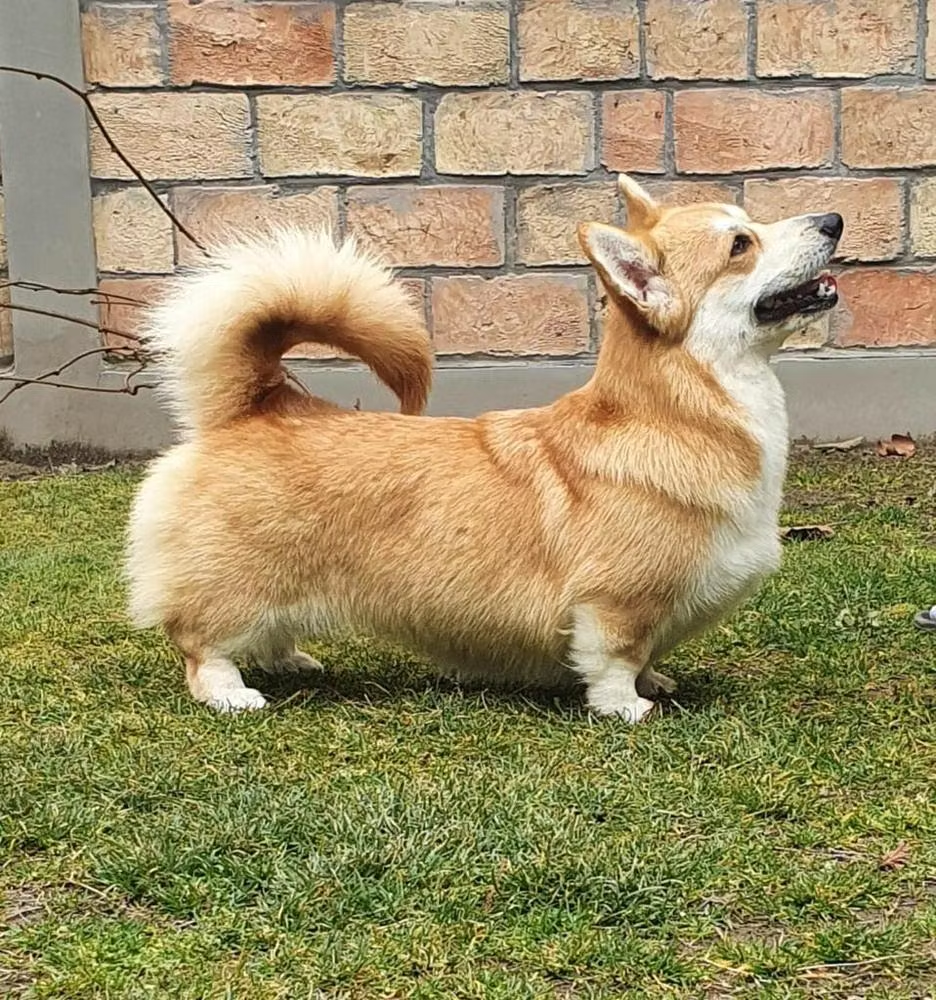
A medium build, weather-ready coat, and noticeable variation between individual dogs mark the Welsh Sheepdog, a breed built for endurance rather than a fixed show look.
The Welsh Sheepdog is medium in size, athletic, and longer in body than tall, built for stamina and quick turns rather than raw power. The head carries a moderate stop, the ears are usually semi-erect or tipped forward, and the tail is well feathered and carried low when the dog is relaxed. Because the breed register favors working ability over a closed standard, size, coat, and markings differ noticeably from one dog to the next, more so than in most kennel club breeds familiar to Filipino owners.
| Trait | Typical range |
|---|---|
| Height | Approx. 43 to 53 cm (17 to 21 in) at the shoulder |
| Weight | Approx. 14 to 20 kg (30 to 45 lb) |
| Coat | Short to medium, dense and weather-resistant, smooth or wavy |
| Colors | Black and white, red and white, tricolor, blue or red merle |
| Eyes | Brown, amber, or blue; one of each color occurs in merles |
Coat and colors
The coat sheds water and dirt easily, ranging from short and smooth to medium with a slight wave, with feathering on the legs and tail on many dogs. White markings on the face, chest, legs, and tail tip are common over a darker base coat. In the Philippine climate, the denser coat some individuals carry can feel heavy during the hot months, so owners should watch for overheating and keep the dog cool and shaded during peak sun hours. Merle patterning occurs in the breed, and as with any merle dog, two merles should never be paired because of the health risks tied to double-merle puppies.
Temperament
Sharp, energetic, and strongly driven to work, the Welsh Sheepdog bonds closely with its handler and tends to size up strangers before warming to them.
The Welsh Sheepdog is a sharp, alert dog with a strong pull toward work and the independence to make decisions without constant direction. With its own household it is loyal and affectionate, and it forms a close bond with whoever handles it day to day.
Around strangers the breed is often watchful rather than instantly friendly, and this makes it a naturally alert house dog, useful in a Philippine setting where many households already keep a dog partly for security. Early and steady socialization keeps this wariness from turning into fearfulness or suspicion of ordinary visitors, delivery riders, or the household helper's relatives dropping by.
The breed's herding instinct shapes how it behaves around other animals. It usually gets along with other dogs and with any livestock it is trained to work, but that same instinct can push it to chase or herd smaller pets, children, or cyclists if the energy has no proper outlet. Supervise interactions with young children and small animals, and give the dog a job before that drive turns into a problem.
| Trait | Rating |
|---|---|
| Affection (with family) | 4 |
| Energy | 5 |
| Trainability | 5 |
| Vocalness | 3 |
| Shedding | 3 |
Care and grooming
Coat upkeep is simple, but the Welsh Sheepdog needs serious daily exercise and mental work, best scheduled around the Philippines' heat and rainy season.
Caring for a Welsh Sheepdog is mostly about meeting its exercise and mental needs rather than its coat. Grooming takes little time for most individuals, but the daily activity and stimulation this breed needs are considerable, which is the main reason it fits best with an active household or a working or sporting setup.
Grooming
- Brush once or twice a week to clear loose hair and stop matting in the feathered areas.
- Brush more often during shedding season, which for many dogs lines up with the shift between the dry and rainy months.
- Bathe only as needed, since the coat sheds dirt on its own as it dries.
- After time outdoors, check the ears, trim the nails, and check the feet and coat for burrs or ticks, which are common in tall grass around the province.
Exercise
- Give at least 1 to 2 hours of vigorous activity a day.
- Pair physical exercise with mental work such as herding practice, obedience training, scent games, or dog sports.
- Schedule outdoor exercise for early morning or late afternoon to avoid the worst of the midday heat and humidity.
- Do not leave the dog idle for long stretches, since boredom tends to show up as digging, barking, or attempts to get out of the yard.
Environment
The Welsh Sheepdog does best with room to move and a job to do, such as a farm, a large rural property, or an active household that treats exercise as non negotiable. It can adapt to a smaller property or a subdivision home only if its owner reliably provides daily exercise and mental engagement. Fencing needs to be secure and checked regularly, since a bored or under-exercised dog of this type will find a gap or a low spot to slip through, and heavy rains during typhoon season can weaken fence lines and gates without an owner noticing right away.
Nutrition and feeding
A complete, balanced diet suited to the Welsh Sheepdog's activity level and life stage supports its work drive, with portions adjusted rather than fixed.
As an active medium-sized breed, the Welsh Sheepdog does well on a complete and balanced diet formulated for its life stage and activity level. Dogs doing real herding or farm work need more calories than one kept mainly as a companion with moderate walks, so set portions by body condition rather than a fixed amount. Keep fresh water available at all times, particularly in the Philippine heat and after any hard exercise.
| Life stage | Amount per day | Meals |
|---|---|---|
| Puppy (2 to 6 months) | Per product guide for projected adult weight | 3 to 4 |
| Junior (6 to 12 months) | Slightly above adult portion | 2 to 3 |
| Adult (active) | Approx. 200 to 350 g of quality dry food | 2 |
| Working / high activity | Increased to match energy output | 2 |
| Senior | Reduced calories, maintained protein | 2 |
Treats and supplements
Keep treats to around 10 percent of daily calories and put them to work during training, where this breed's food motivation makes them useful rewards. Most Welsh Sheepdogs on a complete diet need no added supplements. Talk to a veterinarian before adding joint, skin, or performance supplements, especially for a dog doing heavy work or one getting on in years.
Health
Generally hardy and living 12 to 15 years, the Welsh Sheepdog has a handful of conditions worth watching, helped by routine vet care and sensible breeding.
The Welsh Sheepdog is considered a hardy, functional breed, helped by a working gene pool that has largely avoided the narrowing that comes with intensive show breeding. Most dogs live 12 to 15 years when well cared for. As with any breed, certain inherited and lifestyle-related conditions can turn up, and responsible breeders test their stock wherever a relevant screening exists.
| Condition | Signs | Note |
|---|---|---|
| Hip dysplasia | Stiffness, limping, reluctance to jump | Lower the risk with screened parents and a healthy weight |
| Eye disorders | Cloudiness, vision changes, bumping into objects | Includes inherited conditions seen across collie type breeds |
| Merle-related issues | Deafness or eye defects in double-merle dogs | Prevented by never pairing two merle dogs |
| Injuries and strains | Lameness after hard work | Common in active herding dogs; rest the dog and assess |
Preventive care
- Keep vaccinations and parasite control current, including protection against ticks and mosquito-borne heartworm, both common in the local climate.
- Keep the dog lean to protect the joints.
- Book a veterinary check every year, moving to twice a year for older dogs.
- Care for the teeth with regular brushing or dental chews.
- Breed only from parents with proper hip and eye screening.
Training
Quick to learn and eager to work, the Welsh Sheepdog responds best to consistent, reward-based training that gives its herding drive a proper outlet.
The Welsh Sheepdog ranks among the more trainable breeds, pairing sharp intelligence with a genuine wish to work alongside its handler. It picks up new commands fast and holds on to its training well, though its independent streak means it does best with a handler who stays clear, consistent, and fair. Without enough mental challenge it will invent its own occupation, so training belongs in the daily routine rather than a once-a-week class.
Basics
- Start socialization early, introducing the puppy to people, animals, and different environments, including the noise and bustle of a typical Philippine street or market.
- Teach the core cues: recall, sit, down, and stay.
- Add a reliable stop or down command at a distance, essential for any herding work.
- Give the herding drive a proper outlet through stock training, agility, or other dog sports.
- Keep sessions short, varied, and frequent to hold the dog's attention.
Breeding
Welsh Sheepdogs are typically bred from proven working lines, with medium litters and heavy weight given to temperament and herding ability over appearance.
Breeding the Welsh Sheepdog has traditionally centered on working ability, with the Welsh Sheepdog Society registering dogs from recognized Welsh lines. Females usually reach sexual maturity between 6 and 12 months, though responsible breeders wait for full physical and mental maturity before a first mating, generally around the second season. Gestation runs about 63 days, the same as in any dog.
Litters run to a medium size for the breed. Raising the puppies depends heavily on early socialization and gentle exposure to handling, household sounds, and other animals, since these first weeks shape the adult dog's confidence and how well it takes to work later. Because merle patterning shows up in the breed, breeders never pair two merle dogs, to avoid double-merle puppies that can be born deaf or with eye defects. Screening the parents, particularly for hips and eyes where testing applies, supports the breed's long-term soundness. Anyone in the Philippines considering breeding should also plan for the added cost and logistics of importing suitable working stock, since local numbers remain very small.
| Metric | Value |
|---|---|
| Sexual maturity | Approx. 6 to 12 months |
| Recommended first breeding | After physical maturity, often around 2 years |
| Gestation | Approx. 63 days |
| Average litter size | Approx. 4 to 8 puppies |
| Weaning age | Approx. 6 to 8 weeks |
Registering your Welsh Sheepdog and its microchip in the Philippines
The city vet office handles the RA 9482 paperwork; a free United Pet Club record is what a finder anywhere can actually search for your Welsh Sheepdog.
How to register a Welsh Sheepdog in the Philippines
A Welsh Sheepdog that gets loose during a storm is identified by whatever record answers the scan, not by the barangay it came from. Give it a record that answers: your mobile number, the dog's photo, and his details, free for life with United Pet Club. Register your dog today and it is done for good.
The clinic's part ended with the implant; the tracing part is yours. File your Welsh Sheepdog's 15-digit number with United Pet Club and every scan leads to your phone: free for life, all brands accepted, updates free every time your details change. Microchip registration plus a free account finishes the job.
How do I register my Welsh Sheepdog in the Philippines?
Open a free United Pet Club account, add your Welsh Sheepdog's details and a photo, then save the profile. It stays free for his whole life and sits alongside the city vet office registration RA 9482 requires.
How do I register my Welsh Sheepdog's microchip?
Type the 15-digit chip number into your free account together with your mobile number and address. The lifetime plan charges nothing for the registration or for any update, whatever brand the clinic used.
Is registration required for a Welsh Sheepdog in the Philippines?
Yes, RA 9482 requires dog registration with your city or municipal veterinary office, along with current anti-rabies vaccination. The United Pet Club profile is the searchable half: free, worldwide, and tied to your current mobile.
How much does it cost to register a Welsh Sheepdog?
Nothing. The free lifetime plan covers the profile, the microchip record, and every update, with no renewal fees at all.
Frequently asked questions
Common questions Filipino dog owners ask about the Welsh Sheepdog's size, temperament, upkeep, lifespan, and availability locally.
How big does a Welsh Sheepdog get?
It is a medium-sized breed, standing about 43 to 53 cm (17 to 21 in) at the shoulder and weighing roughly 14 to 20 kg (30 to 45 lb), with some variation from dog to dog.
What is the Welsh Sheepdog's temperament like?
It is sharp, energetic, and hardworking, loyal to its family and often reserved with people it does not know. A strong herding instinct drives much of how it behaves.
Is the Welsh Sheepdog easy to take care of?
Grooming does not take much effort, but the breed asks a lot in exercise and mental stimulation. It suits an active or working household far better than a first-time owner or a mostly indoor, sedentary one.
How long do Welsh Sheepdogs live?
The typical lifespan runs 12 to 15 years with good care, regular exercise, and routine trips to the vet.
Does the Welsh Sheepdog make a good family pet in the Philippines?
It can be a devoted family dog in an active household, though its herding instinct may push it to try to gather children or small pets. Supervision, training, and plenty of activity matter, and the local heat means exercise is best scheduled for the cooler parts of the day.
Are Welsh Sheepdogs hard to find?
Yes, especially in the Philippines, where the breed remains uncommon and is not currently recognized by the PCCI. Most are bred from working lines abroad, and the Welsh Sheepdog Society keeps the main register, so prospective owners typically go through working breeders in Wales and nearby regions and arrange import.
Can a Welsh Sheepdog work cattle as well as sheep?
Yes. The breed grew up working mixed livestock on Welsh farms, and many individuals handle cattle as readily as sheep, using an upright, loose-eyed style rather than the crouching stare of some other herding breeds.
From the community
Ask about the Welsh SheepdogNo questions about the Welsh Sheepdog yet. Be the first to ask.
Browse Dog breeds