
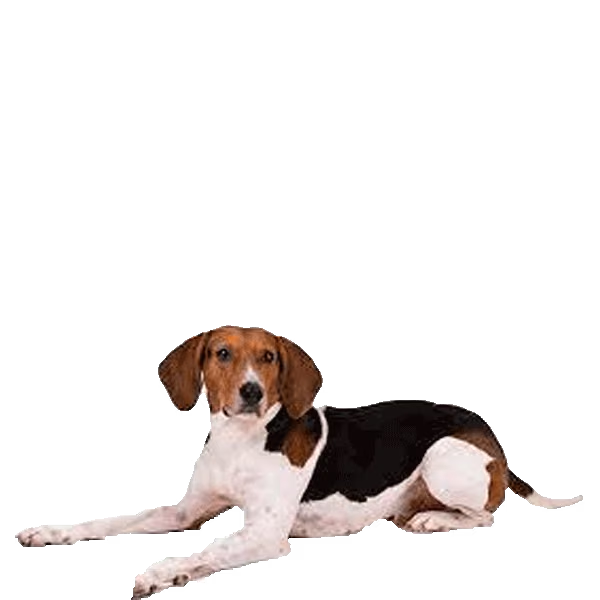
Treeing Walker Coonhound
The Treeing Walker Coonhound is a friendly, energetic scenthound known for its speed, melodious bark, and skill at treeing game.
- Size
- Large
- Lifespan
- 12–13 years
- Origin
- United States
- Temperament
- Friendly
- Standard colors
- Black, White, and Tan
Characteristics
Coat and grooming
How the Treeing Walker Coonhound coat is built, and what that means when you groom it.
- Coat layers
- Single coat
- Coat texture
- Smooth
- Coat length
- Short
- Shedding
- Moderate shedding
Treeing Walker Coonhound colors and patterns
What each club's breed standard says about every Treeing Walker Coonhound color and pattern. Point at a ruling to see the club's own wording.
Breed standards describe the Treeing Walker Coonhound in Black, White, and Tan. Standard patterns: Tricolor, Spotted, and Tan point.
| Color or pattern | AKC | UKC |
|---|---|---|
| Black | Standard (“Black”) | Standard (“black may be the predominant color”) |
| White | Standard (“White”) | Standard (“Tri-colored (white-black-tan)”) |
| Tan | Standard (“Tri-Colored”) | Standard (“Tri-colored (white-black-tan)”) |
| Albino | Fault | Disqualifying (“Albinism”) |
| Patterns | ||
| Tricolor | Standard (“Tri-Colored”) | Standard (“Tri-colored (white-black-tan) is preferred”) |
| Spotted | Standard (“Black Spots”) | Standard (“White with tan spots, or white with black spots is acceptable”) |
| Tan point | Standard (“White Markings, Tan Trim”) | Standard (“tan trim”) |


| Color or pattern | AKC | UKC |
|---|---|---|
| Black | Standard (“dark in color, brown or black”) | Standard (“Color is dark, brown or black”) |
| Dark brown | Standard (“dark in color, brown or black”) | Standard (“Color is dark, brown or black”) |
| Light brown | Fault (“yellow or light eyes”) | No ruling |
| Yellow | Fault (“yellow or light eyes”) | No ruling |
| Color or pattern | AKC | UKC |
|---|---|---|
| Black | Standard (“Nostrils large and black”) | Standard (“black pigment preferred”) |
| Patterns | ||
| Butterfly nose | No ruling | Standard (“White or pink spots inside the nostril or on the outside of the nose are acceptable”) |

What the rulings mean
- Standard
- Described by the club's breed standard.
- Fault
- Named by the club's breed standard as a fault: the animal can be shown but is penalized.
- Disqualifying
- The club's breed standard disqualifies an animal of this color or pattern.
Color changes
How a Treeing Walker Coonhound's colors can change over its life.
Blackchanges toRust
Coat · With body condition · can change back
Blackchanges toGray
Coat · Progressive
Blackchanges toBrown
Coat · In the sun · can change back
Whitechanges toRoan
Coat · With age · from 2 weeks
Tan pointchanges toSaddle
Coat · With age · from 6 to 156 weeks
Blackchanges toSnow nose
Nose · With the season · can change back
Blackchanges toPink
Nose · With the season · can change back


Sources
Each ruling comes from the club's published breed standard or color list.
Meet some of our Treeing Walker Coonhound
A few of the Treeing Walker Coonhound profiles members have added to United Pet Club.

About the Treeing Walker Coonhound
The Treeing Walker Coonhound is a large American scenthound built to trail and tree raccoons, now better known in the Philippines as an energetic, sociable companion with a famously loud bark.
The Treeing Walker Coonhound is a large, athletic scenthound from the United States, built to trail raccoons and other game through rough country, then keep the quarry pinned up a tree with a loud, carrying bark until the hunter catches up. Coon hunting is not something most Filipino dog owners will ever see in person, so here the breed shows up mostly as a striking, high-energy companion or an occasional entry in hound classes rather than a working hunter. Its long legs, deep chest, strong nose, and famous voice all trace back to that original job.
Away from the hunt, the Treeing Walker is friendly and social. It usually gets along with people of every age and, having been bred to work in packs, tends to accept other dogs without much fuss. That same drive that makes it relentless on a scent trail also makes it a demanding companion in a country where many households live in a subdivision or a small compound: it needs a real job, a long daily run, or ideally both. Give it that and it settles down indoors; deny it and it turns restless, noisy, and destructive.
Among coonhound fanciers the breed carries the nickname "People's Choice." It shares ancestry with the English and American Foxhounds and looks similar in build, though breeders selected it specifically to tree game rather than chase it to ground.
| Attribute | Detail |
|---|---|
| Origin | United States |
| Size | Large |
| Lifespan | 12 to 13 years |
| Group/role | Scenthound, treeing hunter |
| Good with | Families, kids, other dogs (with training and exercise) |
Who it fits
This breed suits households that can give it a long daily outlet for running and scent work, plus enough space to keep from bothering the neighbors with its bark. It fits hunters, trail runners, hikers, and families with a secure, fully enclosed yard, ideally outside a crowded subdivision. It is a poor match for condo or apartment living without serious daily exercise, for anyone living close enough to neighbors to mind the noise, or for owners who cannot manage a strong prey drive and a habit of following a scent for kilometers.
History and origins
The Treeing Walker Coonhound descends from English and American Foxhounds developed in 19th-century Kentucky, though it has no separate breed standard under the PCCI.
The Treeing Walker Coonhound goes back to English Foxhounds shipped over to the American colonies. Colonial hunters crossed these imports with local stock to produce hounds suited to American terrain and game, and that foundation stock eventually became the American Foxhound.
The breed name comes from the Walker family of Kentucky, who shaped the Walker strain of hounds through the 1800s. A dog known as "Tennessee Lead," said to have been stolen or traded into the Walker line around the mid-1800s, had an outsized influence: he carried a strong treeing instinct and sharp game sense, and his descendants locked those traits into the strain.
For a long stretch of its history, the Treeing Walker was registered together with other hounds under the general "English" coonhound label. Breeders kept their treeing line separate on purpose, picking dogs that would chase game up a tree and bark to mark it rather than fight it or run it to ground. Over time, that treeing strain earned recognition as its own breed.
In the United States, the United Kennel Club recognized the Treeing Walker Coonhound in 1945. The American Kennel Club followed much later, granting full recognition in 2012 and placing it in the Hound Group. The Philippine Canine Club, Inc. (PCCI), the country's FCI-linked kennel club, does not carry a separate standard for the breed, so most Treeing Walkers registered locally come in through import papers from AKC or UKC bloodlines rather than a PCCI-specific process.
Appearance and breed standard
The Treeing Walker Coonhound is a lean, tall scenthound with a smooth tricolor coat, long legs, and low-set ears built for speed, endurance, and Philippine heat.
The Treeing Walker is built for speed and distance work, not for show-ring exaggeration. It has a lean, muscular frame, a deep chest, well-sprung ribs, and long legs built for reach. The head is moderately broad with a long muzzle, and the large ears sit low and hang close to the skull. Nothing about the outline is exaggerated: every feature points toward a fast, balanced hound.
| Trait | Standard |
|---|---|
| Height | 51 to 69 cm (20 to 27 inches) at the shoulder |
| Weight | 23 to 32 kg (50 to 70 pounds) |
| Coat | Short, smooth, dense, close-fitting |
| Colors | Tricolor (white, black, and tan); also white and black, or white and tan |
| Eyes | Dark, round, soft expression |
Coat and colors
The coat is short, smooth, and lies close to the body, which is exactly the kind of coat that copes best with Philippine heat and humidity: it needs little upkeep and does not trap warmth. The classic pattern is tricolor, a mostly white body marked with black and tan. White-and-black or white-and-tan dogs also turn up. A mostly white coat is easier to spot from a distance in thick brush, which is one reason hunters favored the pattern in the first place.
Temperament and personality
The Treeing Walker Coonhound is friendly, energetic, and social, but its strong scent drive and loud, frequent bark demand plenty of space and daily exercise.
The Treeing Walker is outgoing and genuinely enjoys human company. It tends to be affectionate with its own family and patient around kids, and it usually greets strangers with curiosity rather than suspicion, which makes it a weak guard dog no matter how loud its bark gets. Because it was bred to hunt alongside other dogs, it typically gets along fine with the rest of the pack at home.
The breed runs on a high engine. Without enough physical and mental work, a Treeing Walker gets bored, restless, and destructive around the house. Its nose is very sharp and its prey drive is strong, so once it locks onto a scent it may tune out every command, and it will wander off if the gate is left open or the fence has a gap. Small pets such as cats or the neighborhood's free-roaming chickens can set off the chase instinct, though some dogs raised alongside them learn to leave them alone.
Vocalizing is part of the breed's identity. The bay is loud and carries a long way, meant to mark treed game from a distance. Expect frequent barking and a distinctive howl, which can turn into a real problem in a townhouse row or a subdivision with houses built close together.
| Trait | Rating |
|---|---|
| Affection | 5 |
| Energy | 5 |
| Trainability | 3 |
| Vocalness | 5 |
| Shedding | 3 |
Care and grooming
The Treeing Walker Coonhound is easy to groom but needs heavy daily exercise, secure fencing, and extra ear care during the Philippines' humid, rainy months.
Grooming
- Brush the short coat weekly to loosen dead hair and cut down on shedding
- Bathe only when needed. The breed can carry a natural houndy smell that no amount of shampoo fully gets rid of, and over-bathing strips the coat's natural oils faster in our climate
- Check and clean the long drop ears often. Humidity and the rainy season make ear infections far more likely if moisture sits trapped inside
- Trim nails every few weeks and brush teeth several times a week
Exercise
- Give the dog at least one to two hours of hard activity daily, timed for early morning or late afternoon to avoid the worst of the midday heat
- Offer long runs, hikes, or off-leash time inside a securely fenced compound
- Add scent games and tracking drills to work the nose and the mind, not just the legs
- Keep the dog leashed or fenced in open areas. A fresh scent trail will override any recall training in seconds
Environment
The Treeing Walker needs space and an owner who stays active with it. A house with a tall, solid fence works best; this breed climbs and digs, so containment has to be genuinely secure, including during typhoon season when downed fences and flooded yards create extra chances to escape. It is a poor fit for condominium living unless the owner commits to serious daily exercise, and its loud bark carries easily to the next unit or the house next door.
Nutrition and feeding
The Treeing Walker Coonhound needs a balanced diet sized to its large frame and activity level, with portions adjusted for working dogs versus household pets.
The Treeing Walker is a large, active breed that does well on a complete diet formulated for large or active dogs. A working hound during hunting season burns far more energy than a companion dog kept mostly in the yard or on daily walks, and it may need bigger portions, while a less active pet needs careful portioning to avoid packing on weight. Feed two measured meals a day instead of leaving food out, and always keep fresh water available, especially after exercise in tropical heat.
| Life stage | Amount per day | Meals |
|---|---|---|
| Puppy (2 to 6 months) | Per product guide for growth, divided | 3 to 4 |
| Puppy (6 to 12 months) | Per product guide for growth | 2 to 3 |
| Adult | Roughly 2.5 to 3.5 cups of quality dry food | 2 |
| Working adult (in season) | Increased per activity and condition | 2 to 3 |
| Senior | Reduced to maintain healthy weight | 2 |
Treats and supplements
Keep treats to a small share of the day's calories, especially since food works well as a training reward for a scent-driven breed. Most dogs on a good complete commercial diet do not need extra supplements. Talk to a veterinarian about joint support or other additions, particularly for dogs that work hard in the field or are getting on in years.
Health and common conditions
The Treeing Walker Coonhound is a generally hardy breed living 12 to 13 years, with ear infections, hip dysplasia, and heat-related risks worth watching in a tropical climate.
The Treeing Walker Coonhound is generally a tough, healthy breed, helped along by its working background and the absence of extreme physical traits. Typical lifespan runs 12 to 13 years. As with any large, active dog, joint and ear health need attention, and responsible breeders screen their breeding stock for inherited conditions before pairing them.
| Condition | Signs | Note |
|---|---|---|
| Ear infections | Head shaking, odor, scratching, discharge | Long drop ears trap moisture; clean and check regularly, especially in humid or rainy weather |
| Hip dysplasia | Stiffness, limping, trouble rising | Inherited joint condition; screen breeding dogs |
| Eye conditions | Cloudiness, redness, vision changes | Includes issues such as cataracts; check during exams |
| Injuries and overheating | Cuts, soreness, heavy panting | Field work raises injury and heat risk; watch closely during the hottest months |
Preventive care
- Keep vaccinations and parasite prevention up to date, including tick control for dogs that work in tall grass or brush
- Check ears, eyes, feet, and skin regularly, especially after time outdoors or in the field
- Keep the dog at a healthy weight to protect the joints
- Book annual vet checkups, moving to twice a year once the dog is a senior
Training the Treeing Walker Coonhound
The Treeing Walker Coonhound is intelligent and willing but easily distracted by scent, so training works best when it starts early and stays reward-based.
The Treeing Walker is smart and capable, but it was bred to work a trail on its own judgment, which means it can be single-minded and slow to respond once a scent grabs its attention. Training calls for patience and consistency. Start early, keep sessions short and engaging, and reward with food and praise, since harsh corrections tend to backfire on a sensitive, sociable hound. Recall is the hardest skill to build and may never be fully dependable off-leash in open ground, so a solid fence and a leash remain part of managing this breed for good.
Basics
- Start socialization and handling in puppyhood, introducing the dog to people, other dogs, and different places
- Teach name response and the basic cues (sit, down, stay) somewhere quiet first, before adding distractions
- Build recall gradually with high-value rewards, then test it around distractions bit by bit
- Practice loose-leash walking, since the breed pulls hard toward anything interesting it smells
- Give the nose an approved outlet, such as tracking or scent games, instead of letting it find its own
- Handle barking early by rewarding quiet moments and ignoring demand baying rather than reacting to it
Breeding and raising young
The Treeing Walker Coonhound reaches breeding maturity around 18 months to two years, with roughly 63 days of gestation and typically several puppies per litter.
Breeding the Treeing Walker should be done responsibly, with real attention to temperament, working ability, and health screening in both parents. Females are usually bred once they are physically mature, generally from around 18 months to two years old, rather than at their first heat. Gestation averages about 63 days from conception. Litter size varies, though several puppies is typical for a large hound.
Newborn puppies are helpless and depend completely on the dam for warmth and nursing through the first weeks. Early handling, gentle exposure to household sights and sounds, and socialization that starts before the puppies leave for new homes all help produce stable, sociable adults. Given the breed's strong working drive, matching an energetic puppy to a home that can actually keep up with it is a real part of responsible breeding, not an afterthought.
| Metric | Value |
|---|---|
| Breeding maturity | About 18 months to 2 years |
| Gestation | Approximately 63 days |
| Litter size | Several puppies (large-hound range) |
| Weaning | Around 6 to 8 weeks |
| Recommended health checks | Hips, eyes, general soundness |
Registering your Treeing Walker Coonhound and its microchip in the Philippines
The city vet office handles the RA 9482 paperwork; a free United Pet Club record is what a finder anywhere can actually search for your Treeing Walker Coonhound.
How to register a Treeing Walker Coonhound in the Philippines
The Anti-Rabies Act, Republic Act 9482, tells every dog owner to register with the city or municipal veterinary office and keep the anti-rabies shots current, and that covers the local paperwork for your Treeing Walker Coonhound. What the city record cannot do is tell a finder two provinces away how to reach you. A free United Pet Club profile fills that gap for life. Registering your dog costs nothing to start and nothing later.
The clinic's part ended with the implant; the tracing part is yours. File your Treeing Walker Coonhound's 15-digit number with United Pet Club and every scan leads to your phone: free for life, all brands accepted, updates free every time your details change. Microchip registration plus a free account finishes the job.
How do I register my Treeing Walker Coonhound in the Philippines?
Open a free United Pet Club account, add your Treeing Walker Coonhound's details and a photo, then save the profile. It stays free for his whole life and sits alongside the city vet office registration RA 9482 requires.
How do I register my Treeing Walker Coonhound's microchip?
Type the 15-digit chip number into your free account together with your mobile number and address. The lifetime plan charges nothing for the registration or for any update, whatever brand the clinic used.
Is registration required for a Treeing Walker Coonhound in the Philippines?
Yes, RA 9482 requires dog registration with your city or municipal veterinary office, along with current anti-rabies vaccination. The United Pet Club profile is the searchable half: free, worldwide, and tied to your current mobile.
How much does it cost to register a Treeing Walker Coonhound?
Nothing. The free lifetime plan covers the profile, the microchip record, and every update, with no renewal fees at all.
Frequently asked questions
Common questions Filipino dog owners ask about the Treeing Walker Coonhound, covering its size, temperament, care needs, lifespan, and local availability.
How big does a Treeing Walker Coonhound get?
It is a large breed, standing roughly 51 to 69 cm at the shoulder and weighing about 23 to 32 kg, with a lean, athletic build.
Is the Treeing Walker Coonhound a good family dog?
Yes, it is friendly and social and usually does well with kids and other dogs. It needs a lot of exercise, and its loud bark and strong prey drive are things a family should think through first.
Is it hard to take care of?
Grooming is easy because of the short coat, but the breed is demanding on exercise. It needs one to two hours of hard activity a day plus a genuinely secure yard, so it is not a low-effort dog for a busy household.
How long do Treeing Walker Coonhounds live?
The typical lifespan is 12 to 13 years. Regular exercise, a healthy weight, and routine vet visits help the dog reach a full life span.
Do they bark a lot?
Yes. The breed was developed to bay loudly once it trees game, so frequent, far-carrying barking and howling are normal for it, and this can become an issue in a townhouse or a subdivision with houses close together.
Can it live in a condo or apartment?
It is not an ideal condo dog. Its high energy, need for space, and loud voice make a house with a secure yard a much better setup, unless the owner can commit to intensive, consistent exercise every day.
Where can I get a Treeing Walker Coonhound in the Philippines?
The breed is uncommon locally since coon hunting is not practiced here, so most Treeing Walkers come through specialty importers, hunting dog enthusiast networks, or direct import arrangements with AKC or UKC breeders abroad. Whatever the source, choose one that screens for health and temperament, and check import and quarantine requirements before bringing a puppy in.
From the community
Ask about the Treeing Walker CoonhoundNo questions about the Treeing Walker Coonhound yet. Be the first to ask.
Browse Dog breeds