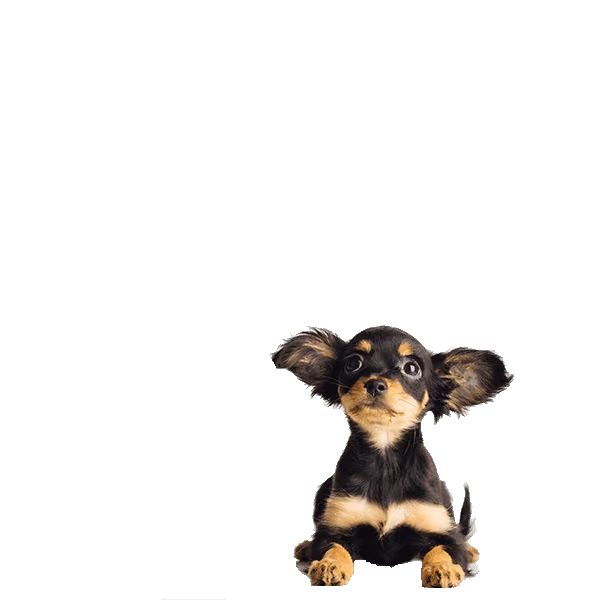
The Toy Fox Terrier is a spirited, clever companion that pairs terrier gameness with affectionate, lapdog devotion.
How the Toy Fox Terrier coat is built, and what that means when you groom it.
A few of the Toy Fox Terrier profiles members have added to United Pet Club.
The Toy Fox Terrier is a small American companion breed with a big terrier personality, weighing only a few kilos yet acting like a full-sized working dog.
The Toy Fox Terrier is a toy breed developed in the United States, bred down from the Smooth Fox Terrier with a handful of small companion breeds. At the shoulder it stands around 22 to 29 centimeters (roughly 8.5 to 11.5 inches) and weighs about 1.6 to 3.2 kilos (3.5 to 7 pounds). The small frame does not stop it from carrying the bold, busy nature of a working terrier.
It is athletic and quick to learn, and it stays alert to whatever is happening around it. The dog forms a tight bond with its household and often shadows one family member from room to room. At rest it settles happily on a lap; once it is up and moving, it turns into an energetic playmate, so it adapts well to different kinds of homes, including condominium units common in Metro Manila.
Most Toy Fox Terriers are confident and outgoing. Visitors usually get a burst of barking before the dog warms up, and it keeps a watchful eye on its territory. Its small size fits apartment and condo living, but its energy and sharp mind mean it needs exercise and mental stimulation every day to stay well behaved.
| Attribute | Detail |
|---|---|
| Origin | United States |
| Size | Toy breed (1.6 to 3.2 kg / 3.5 to 7 lb) |
| Lifespan | 13 to 15 years |
| Group/role | Toy companion, originally bred as a small ratter |
| Good with | Adults, older children, and similarly sized dogs once socialized |
The Toy Fox Terrier fits an owner who wants a small dog with an active mind and body. It works well for singles, couples, and retirees who can offer attention and short play sessions each day. Homes with very young children are less suitable, since the dog's small frame is easy to injure by accident. Owners who enjoy training, games, and dog sports get the most out of this breed's intelligence.
Bred in the United States in the early 1900s from undersized Smooth Fox Terriers and several toy breeds, the Toy Fox Terrier gained recognition from the United Kennel Club in 1936.
The breed traces back to the Smooth Fox Terrier, which came to the United States from England as a working ratter and hunting dog. American breeders started to notice that some Smooth Fox Terrier litters produced pups far smaller than the standard. Instead of setting these runts aside, breeders in the early 1900s began deliberately selecting for the smaller size.
To lock in the toy size and polish the temperament, breeders crossed these small terriers with companion breeds such as the Chihuahua, the Manchester Terrier, and the Italian Greyhound. The Chihuahua brought compact size and a domed skull. The Manchester Terrier added refinement along with the black and tan markings still seen on the breed today. The Italian Greyhound is credited with the graceful, smooth outline.
The outcome was a small dog that kept the terrier's nerve and ratting instinct inside a body built for the lap. The United Kennel Club recognized the Toy Fox Terrier in 1936, among the earliest formal records for the breed. Farmers valued the dogs for vermin control, and circus and vaudeville performers valued their quick learning and trainability.
The American Kennel Club admitted the Toy Fox Terrier into its Toy Group in 2003. The breed stays uncommon next to the larger toy breeds, but it keeps a steady following among owners who want an active, small dog with real terrier drive.
The Toy Fox Terrier is a small, square, athletic dog with a short, smooth coat and a mostly white body marked in black and tan or similar colors. It stands 22 to 29 cm tall and weighs 1.6 to 3.2 kg.
The Toy Fox Terrier has a balanced, square outline: its height at the shoulder is close to its body length. The build is fine yet muscular, with clean lines that hint at both its sighthound and terrier ancestry. The head is slightly rounded with a moderate stop, and the ears are large, erect, and set high, which gives the dog its alert expression. The tail is set high and is customarily docked where local practice allows it.
| Trait | Standard |
|---|---|
| Height | 22 to 29 cm (8.5 to 11.5 in) at the shoulder |
| Weight | 1.6 to 3.2 kg (3.5 to 7 lb) |
| Coat | Short, fine, smooth, and glossy, lying close to the body |
| Colors | Tricolor, white and tan, white and black, white chocolate and tan |
| Eyes | Dark, round, and full, set well apart |
The coat is short and lies flat against the skin, which keeps upkeep simple. The body is mostly white, and the standard calls for a predominantly white head marked with color. Accepted patterns include tricolor (a black-marked head with tan and a white body), white and tan, white and black, and white chocolate and tan. The clean color breaks against the white give the breed its neat, marked look. The skin underneath can be thin, so the short coat gives little protection once the temperature drops, whether from an air-conditioned room or a trip up to cooler spots such as Baguio or Tagaytay.
The Toy Fox Terrier is spirited, intelligent, and devoted to its family, with the alertness and prey drive typical of terriers. It is warm at home but watchful with strangers until properly introduced.
The Toy Fox Terrier blends two sides: a terrier's gameness and a lap dog's attachment. With its family it is warm and physical, often looking for a lap to climb onto and following its chosen person around the house. It stays playful well into adulthood and keeps a curious eye on its surroundings.
With strangers the breed is alert and tends to announce new arrivals before it settles down. Early socialization helps it accept new people and situations calmly. It can get along well with other dogs, though it may challenge a much larger dog without registering the size gap, so supervision matters. Its prey drive means small caged pets such as hamsters or birds are usually not safe around it.
The breed is intelligent and reads its owner well, which makes it responsive to training, but just as quick to pick up bad habits if the rules are loose. It can be vocal and may bark at noises or movement outside, a trait worth planning for in close-quarter condo living. Consistent boundaries and daily mental work keep its sharp mind occupied.
| Trait | Rating |
|---|---|
| Affection | 5 |
| Energy | 4 |
| Trainability | 5 |
| Vocalness | 4 |
| Shedding | 2 |
The Toy Fox Terrier needs little grooming but daily exercise and mental work. Its thin coat means it needs protection whenever the temperature drops.
Day-to-day care of a Toy Fox Terrier is straightforward because of the short coat, but the breed's energy and intelligence call for an active routine. The dog does best indoors and should not be left outside for long stretches, especially during the cooler amihan months or a heavy downpour.
The Toy Fox Terrier adapts well to condominiums and small homes once its exercise needs are met. It feels the cold quickly because of its thin coat and low body mass, so a sweater helps during cooler evenings, heavy air conditioning, or trips to higher elevations. A secure yard or a harness on walks is wise, since the breed can bolt after small animals such as lizards or birds.
The Toy Fox Terrier needs a small amount of high-quality food made for small or toy breeds, fed in two or more meals a day. Careful portions prevent both obesity and low blood sugar.
Because the Toy Fox Terrier is so small, its calorie needs are low, and portions must be measured with care. A high-quality small breed or toy breed food gives the concentrated nutrition and small kibble size the breed needs. Active dogs may need a little more, while older or less active dogs need less to avoid gaining weight. Toy puppies can be prone to low blood sugar, so they need frequent meals during the first few months.
| Life stage | Amount per day | Meals |
|---|---|---|
| Puppy (under 6 months) | About 0.25 to 0.5 cup, divided | 3 to 4 |
| Adult | About 0.25 to 0.5 cup | 2 |
| Senior or less active | About 0.2 to 0.4 cup | 2 |
Keep treats to no more than 10 percent of daily calories, since a few extra bites add up fast in such a small dog. Small, soft training treats work well for a breed that thrives on reward-based learning. Most dogs on a complete commercial diet need no extra supplements, but a veterinarian may suggest a dental chew or joint support for an older dog. Fresh water should be available at all times.
The Toy Fox Terrier is generally healthy, with a lifespan of 13 to 15 years, though like many toy breeds it can develop knee, dental, and eye problems. Routine vet visits and weight control support a long life.
The Toy Fox Terrier is a hardy small breed, and many dogs live to 13 to 15 years or longer. Most health concerns are the ones common to toy dogs: joint, dental, and eye issues. Buying from a breeder who screens their stock, and keeping the dog at a healthy weight, lowers the risk.
| Condition | Signs | Note |
|---|---|---|
| Patellar luxation | Skipping steps, occasional hind leg lameness | Common in toy breeds; ranges from mild to needing surgery |
| Legg-Calve-Perthes disease | Limping, hip pain, muscle loss in the leg | A hip joint disorder seen in some young small dogs |
| Dental disease | Bad breath, tartar, loose teeth, red gums | Common in small mouths; needs regular dental care |
| Hypoglycemia | Weakness, trembling, low energy, especially in puppies | Manage with frequent meals while the dog is young |
| Eye conditions | Cloudiness, changes in vision, redness | Includes cataracts and lens problems in some lines |
The Toy Fox Terrier is highly trainable and eager to learn, a trait that once made it a favorite performing dog. Short, reward-based sessions and early socialization bring out its best side.
The Toy Fox Terrier ranks among the more trainable toy breeds. It is intelligent, attentive, and motivated by food and praise, which is why these dogs once performed in circus acts. That same quick mind picks up bad habits fast if training is inconsistent. Keep sessions short and upbeat, since the breed gets bored with repetition. Start socialization early to soften its watchfulness toward strangers and its tendency to bark.
The Toy Fox Terrier reaches maturity around one year, carries a pregnancy of about 63 days, and produces small litters that often need close attention because of the breed's tiny size.
Breeding a Toy Fox Terrier calls for care because of the breed's small size. A female should reach full physical maturity, usually well past her first season, before any breeding is considered, and a veterinary check helps confirm she is fit for it. Pregnancy runs about 63 days, the same as in other dogs. Litters are small, typically two to four puppies, and the dam's small frame raises the risk of complications during whelping, so close monitoring and veterinary support matter.
Newborn Toy Fox Terriers are tiny and vulnerable to chilling and low blood sugar. They need a warm, draft-free whelping area and frequent nursing. Puppies should stay with the dam and littermates until at least eight weeks old, so they can wean properly and pick up early social skills. Responsible breeders screen the parents for patellar, hip, and eye problems before pairing them.
| Metric | Value |
|---|---|
| Sexual maturity | Around 6 to 12 months; breed only once fully mature |
| Gestation | About 63 days |
| Average litter size | 2 to 4 puppies |
| Weaning age | About 4 to 6 weeks, started gradually |
| Recommended go-home age | 8 weeks or later |
The city vet office handles the RA 9482 paperwork; a free United Pet Club record is what a finder anywhere can actually search for your Toy Fox Terrier.
Type in your Toy Fox Terrier's name, his birth date, and a clear photo, add your mobile number, and save. That is the entire process, and the profile stays free for his whole life. Dog registration works with or without a chip, so the vet visit can come later.
The clinic's part ended with the implant; the tracing part is yours. File your Toy Fox Terrier's 15-digit number with United Pet Club and every scan leads to your phone: free for life, all brands accepted, updates free every time your details change. Microchip registration plus a free account finishes the job.
Open a free United Pet Club account, add your Toy Fox Terrier's details and a photo, then save the profile. It stays free for his whole life and sits alongside the city vet office registration RA 9482 requires.
Type the 15-digit chip number into your free account together with your mobile number and address. The lifetime plan charges nothing for the registration or for any update, whatever brand the clinic used.
Yes, RA 9482 requires dog registration with your city or municipal veterinary office, along with current anti-rabies vaccination. The United Pet Club profile is the searchable half: free, worldwide, and tied to your current mobile.
Nothing. The free lifetime plan covers the profile, the microchip record, and every update, with no renewal fees at all.
Common questions about the Toy Fox Terrier cover its size, temperament, care needs, lifespan, suitability for the home, and how easy it is to find.
It is a toy breed that stands around 22 to 29 cm (8.5 to 11.5 in) at the shoulder and weighs roughly 1.6 to 3.2 kg (3.5 to 7 lb) once fully grown.
It is spirited, intelligent, and affectionate with its family, while staying alert and watchful around strangers. It keeps the bold character and prey drive of a terrier.
Grooming is simple because of the short coat, but the breed needs daily exercise, mental work, and protection whenever the temperature drops. Its small size also calls for careful feeding and dental care.
The typical lifespan is 13 to 15 years, and many stay active well into their senior years with good care.
It suits adults and older children who can handle a small dog gently. Its fragile size makes it less suitable for very young children, and its prey drive means small caged pets are usually not safe around it.
The breed is less common than many other toy breeds locally, so finding a puppy may take patience. Look for breeders who screen their dogs for knee, hip, and eye conditions.

