
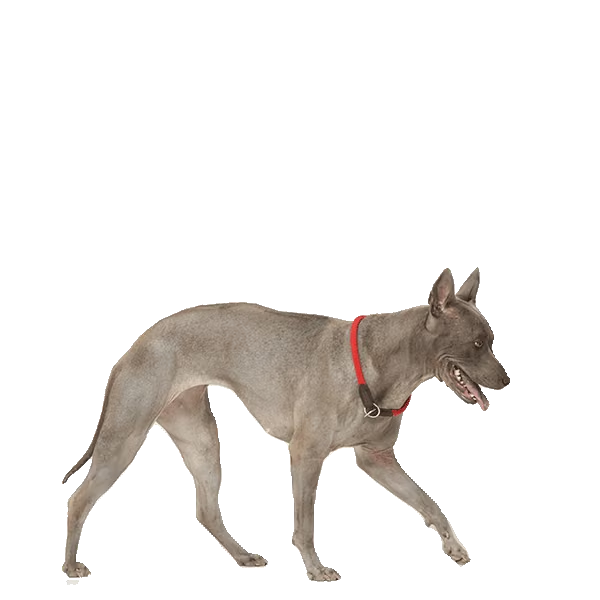
Thai Ridgeback
The Thai Ridgeback is a loyal, athletic breed distinguished by the ridge of hair along its back and its protective devotion.
- Size
- Medium
- Lifespan
- 12–13 years
- Origin
- Thailand
- Temperament
- Loyal
- Standard colors
- Black, Blue, Red, and Isabella
Characteristics
Coat and grooming
How the Thai Ridgeback coat is built, and what that means when you groom it.
- Coat layers
- Single coat
- Coat texture
- Smooth
- Coat length
- Short
- Shedding
- Moderate shedding
Thai Ridgeback colors and patterns
What each club's breed standard says about every Thai Ridgeback color and pattern. Point at a ruling to see the club's own wording.
Breed standards describe the Thai Ridgeback in Black, Blue, Red, and Isabella. Standard patterns: Solid.
| Color or pattern | FCI | AKC | UKC | KUSA |
|---|---|---|---|---|
| Black | Standard (“black”) | Standard (“Black”) | Standard (“black”) | Standard (“black”) |
| Blue | Standard (“blue”) | Standard (“Blue”) | Standard (“blue”) | Standard (“blue”) |
| Red | Standard (“red”) | Standard (“Red”) | Standard (“Red”) | Standard (“red”) |
| Isabella | Standard (“very light fawn (isabella)”) | Standard (“Fawn (Isabella)”) | Standard (“very light fawn (isabella)”) | Standard (“very light fawn (isabella)”) |
| Albino | Not recognized | Not recognized | Disqualifying (“Albinism”) | Not recognized |
| Patterns | ||||
| Solid | Standard (“Solid colour”) | Standard (“Solid colour”) | Standard (“The following solid colors are permitted”) | Standard (“Solid colour”) |

| Color or pattern | FCI | AKC | UKC | KUSA |
|---|---|---|---|---|
| Dark brown | Standard (“The eye colour is dark brown”) | Standard (“The eye colour is dark brown”) | Standard (“Eye color is dark brown”) | Standard (“The eye colour is dark brown”) |
| Amber | Standard (“In blues, amber-coloured eyes are permitted”) | Standard (“In blues, amber-coloured eyes are permitted”) | Standard (“in blue dogs, where amber eyes are permitted”) | Standard (“In blues, amber-coloured eyes are permitted”) |
| Color or pattern | FCI | AKC | UKC | KUSA |
|---|---|---|---|---|
| Black | Standard (“Black”) | Standard (“Black”) | Standard (“Black”) | Standard (“Black”) |
| Blue | Standard (“In blue dogs, the nose is bluish”) | Standard (“In blue dogs, the nose is bluish”) | Standard (“In bluish dogs, the nose is bluish”) | Standard (“In blue dogs, the nose is bluish”) |
| Color or pattern | FCI | AKC | UKC | KUSA |
|---|---|---|---|---|
| Spotted | Standard (“Black marking on the tongue is preferable”) | Standard (“Black marking on the tongue is preferable”) | Standard (“Black marking on the tongue is preferable”) | Standard (“Black marking on the tongue is preferable”) |

What the rulings mean
- Standard
- Described by the club's breed standard.
- Disqualifying
- The club's breed standard disqualifies an animal of this color or pattern.
- Not recognized
- The club does not accept this color or pattern for the breed.
Color changes
How a Thai Ridgeback's colors can change over its life.
Blackchanges toRust
Coat · With body condition · can change back
Blackchanges toGray
Coat · Progressive
Blackchanges toBrown
Coat · In the sun · can change back
Blackchanges toSnow nose
Nose · With the season · can change back
Blackchanges toPink
Nose · With the season · can change back
Pinkchanges toBlue-black
Tongue · With age · from 8 to 26 weeks

Sources
Each ruling comes from the club's published breed standard or color list.
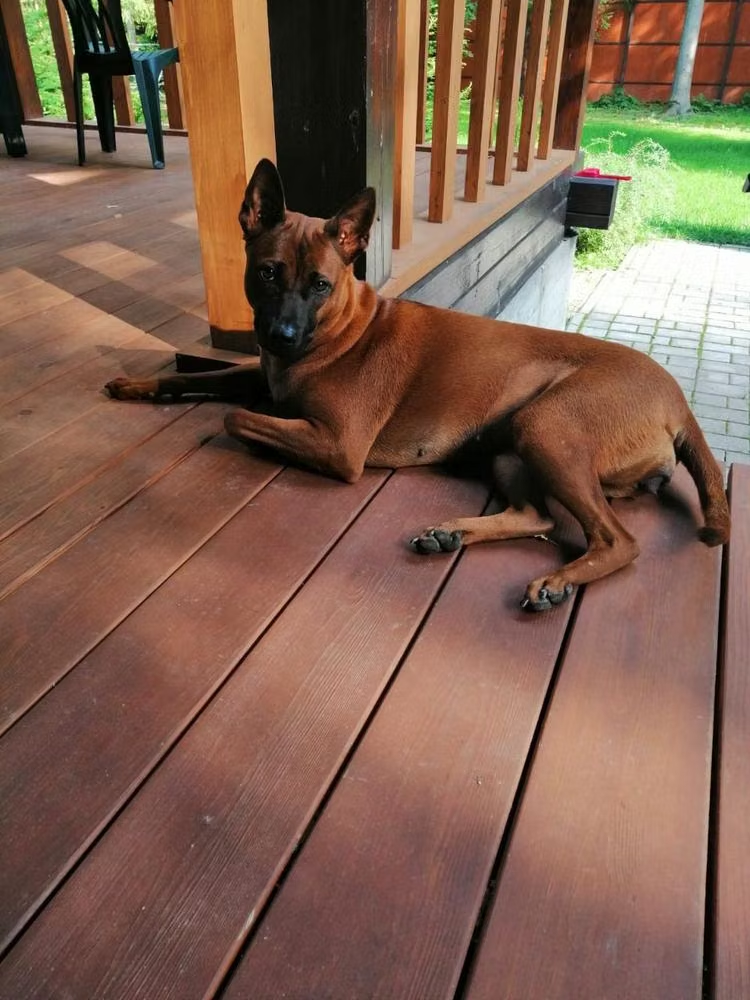
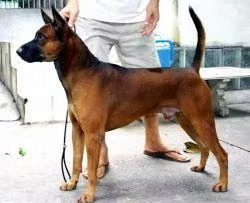
Meet some of our Thai Ridgeback
A few of the Thai Ridgeback profiles members have added to United Pet Club.





About the Thai Ridgeback
The Thai Ridgeback is a medium-sized dog from Thailand with a natural ridge of backward-growing hair, prized by Filipino owners for its loyalty and sharp guarding instinct.
The Thai Ridgeback is a medium-sized dog that originated in Thailand, a country with a climate much like the Philippines: hot, humid, and marked by a long rainy season. Its most recognizable trait is the ridge of hair along the spine that grows against the direction of the rest of the coat. The dog is muscular and athletic, with a short coat, a wedge-shaped head, and a build suited to outdoor work rather than apartment life.
The breed stays devoted to its own family but keeps an independent streak. It reads unfamiliar people and situations with caution, a trait that made it useful as a guard and hunting dog in rural Thai villages and that carries over well to Filipino households that keep a dog to watch a compound or a small farm.
A grown Thai Ridgeback usually weighs 16 to 34 kilograms and stands about 51 to 61 centimeters at the shoulder, with males larger than females as a rule. The short coat needs little upkeep even in tropical humidity, though the breed's strong will and need for daily activity mean it fits an owner who already has some experience handling a working dog. The Philippine Canine Club, Inc. (PCCI) does not currently list the Thai Ridgeback among its recognized breeds, so owners in the country usually register a dog through Thai or other international kennel clubs.
| Attribute | Detail |
|---|---|
| Origin | Thailand |
| Size | Medium |
| Lifespan | 12 to 13 years |
| Group/role | Guard and hunting dog |
| Good with | Households with older kids and an owner who has handled a strong-willed dog before |
Who it suits
The Thai Ridgeback fits an owner who can give it daily exercise, steady training, and early exposure to people and other animals. It works well in a home with a secured yard, since it tolerates heat far better than it tolerates being cooped up indoors all day. It is not the right first dog, and it struggles in a household that is out for long stretches at a time.
History of the Thai Ridgeback
The Thai Ridgeback took shape over centuries in eastern Thailand, where farming families used it to guard property and hunt, and it stayed largely apart from other breeds until recently.
The Thai Ridgeback has existed in Thailand for several centuries, developing mainly in the eastern part of the country, including the area around Phu Quoc island and the provinces along the border with present-day Cambodia. Because these areas stayed isolated for so long, the breed's bloodlines stayed comparatively pure next to breeds that traveled along old trade routes.
For most of its history the dog worked as an all-purpose farm animal. Thai farmers kept it to guard the house and the cart, to hunt small game, and to keep rats and other pests down. Its stamina, alertness, and ability to think on its own mattered in a setting where a dog often had to make decisions without a handler standing over it.
It is one of only a few breeds with a true dorsal ridge, a trait it shares with the Rhodesian Ridgeback and the Phu Quoc dog. Thai breeders held onto this ridge as a defining trait across many generations.
The breed stayed largely unknown outside Thailand until the late twentieth century, when foreign breeders took an interest and brought it to wider notice. Even now it remains uncommon in most countries, the Philippines included, where a Thai Ridgeback owner is still likely to field questions from neighbors about the odd stripe of backward fur down its spine.
Appearance of the Thai Ridgeback
The Thai Ridgeback is a muscular, medium-sized dog with a short coat and a ridge of backward-growing hair running down its spine.
The Thai Ridgeback is well-muscled and athletic, built on the medium side. The body runs slightly longer than it stands tall, with a deep chest, a level topline, and clean, strong legs. The head tapers into a wedge, the ears stand upright and triangular, and the tail carries in a slight upward curve. Taken together, the dog looks built for sprinting and for long stretches of work, not for sitting on a couch.
| Feature | Standard |
|---|---|
| Height | 51 to 61 cm at the shoulder |
| Weight | 16 to 34 kg |
| Coat | Short, smooth, close-lying |
| Colors | Black, blue, red, fawn (isabella) |
| Eyes | Dark, almond-shaped |
Coat and colors
The coat lies short and smooth against the body, so grooming takes little effort even during the wet season, when longer-coated breeds turn into a muddy mess. Four solid colors are recognized: black, blue, red, and fawn. What sets the breed apart is the ridge along the back, hair that grows against the direction of the rest of the coat. The ridge differs in width and shape from one dog to another, and breeders recognize several distinct ridge patterns.
Temperament of the Thai Ridgeback
The Thai Ridgeback stays loyal to its own family, keeps an independent streak, and stays watchful and reserved around strangers.
The Thai Ridgeback attaches strongly to its family and settles into an affectionate, calm presence at home with people it trusts. At the same time, it thinks for itself, a habit left over from generations of working without close supervision. That independence means the dog does not automatically follow a handler's lead without steady, clear guidance.
Around strangers the breed tends to hold back and watch first. Its natural wariness makes it a dependable dog to have around a compound, though it does not bark without reason the way some guard breeds do. Socialization has to start early and continue, so the dog grows up confident rather than fearful around new people and new places, including the noise and crowding common in a Philippine barangay.
Raised alongside other pets from puppyhood, a Thai Ridgeback can get along with them, but its hunting instinct and territorial streak mean any introduction needs a careful hand. It tends to do best with older kids who already know how to read and respect a dog with a mind of its own.
| Trait | Rating |
|---|---|
| Affection | 4 |
| Energy | 4 |
| Trainability | 3 |
| Vocalness | 2 |
| Shedding | 2 |
Caring for a Thai Ridgeback
The Thai Ridgeback needs daily exercise, firm and steady handling, and only light grooming thanks to its short coat.
Grooming
- Brush the short coat once a week to clear out loose hair and keep it clean.
- Bathe only when needed. The coat sheds dirt well on its own.
- Trim the nails every few weeks and check the ears often, especially during the rainy season when moisture builds up.
- Brush the teeth several times a week to keep the gums and teeth healthy.
Exercise
- Give the dog at least 60 minutes of activity every day.
- Mix in brisk walks, running, and off-leash time in a secured area.
- Add puzzle games and short training drills to keep the mind busy.
- Keep the yard properly fenced, since the breed jumps and climbs well.
Environment
The Thai Ridgeback takes to a hot, humid climate naturally and handles heat far better than cold. Most parts of the Philippines suit it well for that reason. It does best with a securely fenced yard rather than a small condo unit, though it can adjust to tighter space if its exercise needs are still met. The short coat offers little protection against cold, which rarely matters in the lowlands but becomes a real concern in cooler areas such as Baguio or Sagada, where a jacket and shorter time outdoors help. Typhoon season also calls for a dry, sheltered spot the dog can retreat to rather than being left out in the open.
Feeding a Thai Ridgeback
A Thai Ridgeback thrives on a balanced diet sized to its weight and activity level, split into two meals a day once it reaches adulthood.
The Thai Ridgeback needs a complete, balanced diet suited to its age, weight, and activity level. Being an athletic breed, it does well on good-quality protein that supports lean muscle. Portions should match the individual dog and get adjusted to keep it at a healthy weight, since the breed is meant to stay lean and well-defined rather than heavy.
| Life stage | Amount per day | Meals |
|---|---|---|
| Puppy (2 to 6 months) | Per product guide for weight | 3 to 4 |
| Junior (6 to 12 months) | Per product guide for weight | 2 to 3 |
| Adult | Approx. 200 to 350 g dry food | 2 |
| Senior | Adjusted lower for activity | 2 |
Treats and supplements
Treats should stay under about ten percent of the dog's daily calories. Most healthy Thai Ridgebacks on a complete diet do not need extra supplements, though joint support can help an older or a very active dog. Check with a veterinarian before adding any supplement. Keep fresh water available at all times, since the heat and humidity typical of most Philippine provinces push the breed to drink more than it would in a cooler climate.
Thai Ridgeback health
The Thai Ridgeback stays generally healthy for 12 to 13 years, though a skin condition tied to its ridge and a few other issues can show up.
The Thai Ridgeback is a hardy, generally healthy breed with a typical lifespan of 12 to 13 years. Limited crossbreeding over its history has kept the gene pool fairly sound. Even so, a handful of conditions turn up in the breed, and responsible breeding paired with routine veterinary care keeps their impact low.
| Condition | Signs | Note |
|---|---|---|
| Dermoid sinus | Tube-like skin opening along the spine, discharge | Linked to the ridge; treated surgically |
| Hip dysplasia | Stiffness, reduced activity, lameness | Screening of breeding stock helps |
| Skin allergies | Itching, redness, hair loss | Manage triggers with veterinary advice |
Preventive care
- Keep vaccinations and parasite control current, including protection against mosquito-borne heartworm, which spreads readily in a tropical climate.
- Book an annual veterinary check-up, more often for a senior dog.
- Keep the dog at a healthy weight through measured feeding and regular exercise.
- Check the ridge and skin for any openings, lumps, or irritation.
- Stay on top of routine dental care.
Training a Thai Ridgeback
The Thai Ridgeback is smart but independent, so training depends on consistency, early socialization, and reward-based methods.
The Thai Ridgeback is capable and quick to learn, but its independent streak can make training more demanding than it is with breeds that are eager to please. It picks things up fast when it sees a reason to, yet it may still decide to do things its own way instead of following a command. Consistency, patience, and clear limits matter, and training pays off most when it starts early. Harsh handling tends to backfire and can break the trust of a dog this sensitive and strong-willed.
Basics
- Start socialization and basic handling as early as possible.
- Teach the core commands: sit, stay, recall, and leave it.
- Keep sessions short, varied, and interesting to hold the dog's attention.
- Work on recall and impulse control, given the breed's strong prey drive.
- Practice calm, controlled greetings with new people and animals, including visitors dropping by the compound unannounced.
Breeding the Thai Ridgeback
The Thai Ridgeback reaches breeding age at around 18 months to 2 years and typically has litters of five to seven puppies after a standard canine pregnancy.
Thai Ridgebacks mature physically and behaviorally later than many breeds, and responsible breeders usually wait until a dog turns at least 18 months to 2 years old before breeding it. Health screening for both parents, including a hip dysplasia check and an inspection for dermoid sinus, helps cut the risk of passing on inherited problems.
Pregnancy runs about 63 days, standard for dogs. Litters usually run five to seven puppies, though the number varies. Because the ridge and certain skin conditions pass down genetically, experienced breeders pay close attention to ridge formation and skin health when they plan a pairing.
Puppies should stay with their mother until at least eight weeks old. Early handling and exposure to people, sounds, and other animals during this stretch matter for raising confident, well-adjusted adults, especially given how reserved the breed tends to be by nature.
| Metric | Value |
|---|---|
| Breeding maturity | 18 months to 2 years |
| Gestation | Approx. 63 days |
| Average litter size | 5 to 7 puppies |
| Weaning age | About 7 to 8 weeks |
| Recommended rehoming age | From 8 weeks |
Registering your Thai Ridgeback and its microchip in the Philippines
The city vet office handles the RA 9482 paperwork; a free United Pet Club record is what a finder anywhere can actually search for your Thai Ridgeback.
How to register a Thai Ridgeback in the Philippines
Type in your Thai Ridgeback's name, his birth date, and a clear photo, add your mobile number, and save. That is the entire process, and the profile stays free for his whole life. Dog registration works with or without a chip, so the vet visit can come later.
If a vet has already implanted a chip, the number still has to be filed where a scanner can trace it, because an unfiled chip points at nobody. Register the microchip free on the lifetime plan: any brand sold in the Philippines qualifies, updates after you move house or change SIM cost nothing, and the record stays searchable here and abroad. Create your free account and cover both in one go.
How do I register my Thai Ridgeback in the Philippines?
Open a free United Pet Club account, add your Thai Ridgeback's details and a photo, then save the profile. It stays free for his whole life and sits alongside the city vet office registration RA 9482 requires.
How do I register my Thai Ridgeback's microchip?
Type the 15-digit chip number into your free account together with your mobile number and address. The lifetime plan charges nothing for the registration or for any update, whatever brand the clinic used.
Is registration required for a Thai Ridgeback in the Philippines?
Yes, RA 9482 requires dog registration with your city or municipal veterinary office, along with current anti-rabies vaccination. The United Pet Club profile is the searchable half: free, worldwide, and tied to your current mobile.
How much does it cost to register a Thai Ridgeback?
Nothing. The free lifetime plan covers the profile, the microchip record, and every update, with no renewal fees at all.
Thai Ridgeback frequently asked questions
Frequently asked questions about the Thai Ridgeback cover its size, temperament, care needs, lifespan, fit for a household, and how easy it is to find.
How big does a Thai Ridgeback get?
It is a medium-sized breed, standing about 51 to 61 centimeters at the shoulder and weighing 16 to 34 kilograms, with males usually bigger than females.
Is the Thai Ridgeback a good family dog?
It can make a loyal, devoted family companion, especially in a household with older kids. Its independent, protective streak means it does better with an experienced handler and early socialization.
Is the Thai Ridgeback hard to take care of?
Grooming is easy because of the short coat, but the breed asks a lot in terms of exercise, training, and socialization. Its independent streak makes it a better fit for an owner who already has some dog experience.
How long do Thai Ridgebacks live?
They typically live 12 to 13 years. Good nutrition, regular exercise, and routine veterinary care support a long, healthy life.
Are Thai Ridgebacks good for first-time dog owners?
They are generally not the best pick for a first-time owner. Their strong will, prey drive, and protective instincts call for a confident, consistent handler.
Are Thai Ridgebacks rare in the Philippines?
Yes. The breed stayed isolated in Thailand for most of its history and is still uncommon in most countries, the Philippines included, so finding a puppy locally can take time and some digging.
Do Thai Ridgebacks shed a lot?
No. The short, close coat sheds lightly and only needs a weekly brushing to stay in good shape.
From the community
Ask about the Thai RidgebackNo questions about the Thai Ridgeback yet. Be the first to ask.
Browse Dog breeds