
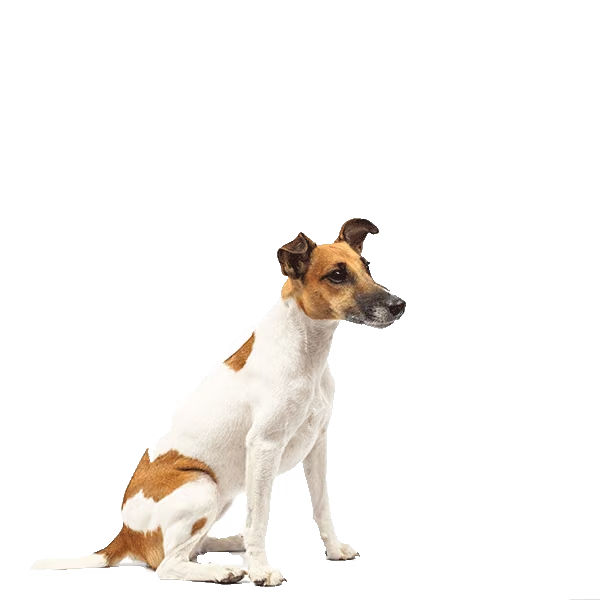
Smooth Fox Terrier
The Smooth Fox Terrier is a lively, spirited English breed with a sleek coat, known for its friendly energy and keen alertness.
- Size
- Small
- Lifespan
- 12–15 years
- Origin
- England
- Temperament
- Spirited
- Standard colors
- Black, White, Blue, and Tan
Characteristics
Coat and grooming
How the Smooth Fox Terrier coat is built, and what that means when you groom it.
- Coat layers
- Double coat
- Coat texture
- Smooth
- Coat length
- Short
- Shedding
- Moderate shedding
Grooming guidance
Critical: A Smooth Fox Terrier should not be shaved.
The undercoat keeps heat out as well as in, and the outer coat shields the skin from sun and insect bites. Clipping the whole coat off removes both. It often grows back patchy, soft or a different colour, and in some animals the guard hairs never return properly. Brush the undercoat out instead of cutting it off.
Smooth Fox Terrier colors and patterns
What each club's breed standard says about every Smooth Fox Terrier color and pattern. Point at a ruling to see the club's own wording.
Breed standards describe the Smooth Fox Terrier in Black, White, Blue, and Tan. Standard patterns: Solid, Bicolor, and Tricolor.
| Color or pattern | FCI | AKC | KC | KUSA | UKC |
|---|---|---|---|---|---|
| Black | Standard (“black and tan or black markings”) | Standard (“White & Black”) | Standard (“black and tan or black markings”) | Standard (“black and tan, or black markings”) | No ruling |
| White | Standard (“White should predominate, all white”) | Standard (“White”) | Standard (“White should predominate, all white”) | Standard (“White should predominate: all white”) | Standard (“White is the predominant color”) |
| Blue | Not recognized | Standard (“Otherwise this point is of little or no importance”) | Not recognized | Not recognized | Fault (“slaty blue”) |
| Tan | Standard (“white with tan, black and tan ... markings”) | Standard (“White & Tan”) | Standard (“white with tan, black and tan ... markings”) | Standard (“white with tan, black and tan ... markings”) | No ruling |
| Liver | Fault (“liver markings highly undesirable”) | Fault (“liver markings are objectionable”) | Fault (“liver markings highly undesirable”) | Fault (“liver markings highly undesirable”) | Fault (“liver”) |
| Red | Fault (“red ... markings highly undesirable”) | Fault (“red ... markings are objectionable”) | Fault (“red ... markings highly undesirable”) | Fault (“red ... markings highly undesirable”) | Fault (“red”) |
| Albino | Not recognized | No ruling | Not recognized | Not recognized | Disqualifying (“Albinism”) |
| Patterns | |||||
| Solid | Standard (“all white”) | Standard (“White”) | Standard (“all white”) | Standard (“all white”) | No ruling |
| Bicolor | Standard (“white with tan ... or black markings”) | Standard (“White & Tan”) | Standard (“white with tan ... or black markings”) | Standard (“white with tan ... or black markings”) | Standard (“White is the predominant color”) |
| Tricolor | Standard (“black and tan ... markings”) | Standard (“White Black & Tan”) | Standard (“black and tan ... markings”) | Standard (“black and tan ... markings”) | Standard (“White is the predominant color”) |
| Brindle | Fault (“Brindle ... markings highly undesirable”) | Fault (“brindle ... markings are objectionable”) | Fault (“Brindle ... markings highly undesirable”) | Fault (“Brindle ... markings highly undesirable”) | Fault (“Brindle”) |
| Reverse brindle | Fault (“Brindle ... markings highly undesirable”) | Fault (“brindle ... markings are objectionable”) | Fault (“Brindle ... markings highly undesirable”) | Fault (“Brindle ... markings highly undesirable”) | Fault (“Brindle”) |


| Color or pattern | FCI | AKC | KC | KUSA | UKC |
|---|---|---|---|---|---|
| Dark brown | Standard (“Dark”) | Standard (“dark in color”) | Standard (“Dark”) | Standard (“Dark”) | Standard (“dark in color”) |
| Light brown | No ruling | No ruling | No ruling | No ruling | Fault (“Light eyes”) |
| Yellow | No ruling | Fault (“Anything approaching a yellow eye is most objectionable”) | No ruling | No ruling | No ruling |
| Color or pattern | FCI | AKC | KC | KUSA | UKC |
|---|---|---|---|---|---|
| Black | Standard (“Black”) | Standard (“should be black”) | Standard (“Nose black”) | Standard (“Nose black”) | Standard (“The nose is black and fully pigmented”) |
| Red | No ruling | Disqualifying (“Nose ... cherry”) | No ruling | No ruling | No ruling |
| Pink | No ruling | Disqualifying (“Nose white”) | No ruling | No ruling | No ruling |
| Dudley | No ruling | No ruling | No ruling | No ruling | Disqualifying (“Dudley nose”) |
| Patterns | |||||
| Butterfly nose | No ruling | Disqualifying (“Nose ... spotted to a considerable extent”) | No ruling | No ruling | Disqualifying (“butterfly nose”) |

What the rulings mean
- Standard
- Described by the club's breed standard.
- Fault
- Named by the club's breed standard as a fault: the animal can be shown but is penalized.
- Disqualifying
- The club's breed standard disqualifies an animal of this color or pattern.
- Not recognized
- The club does not accept this color or pattern for the breed.
Color changes
How a Smooth Fox Terrier's colors can change over its life.
Blackchanges toRust
Coat · With body condition · can change back
Blackchanges toGray
Coat · Progressive
Blackchanges toBrown
Coat · In the sun · can change back
Whitechanges toRoan
Coat · With age · from 2 weeks
Blackchanges toSnow nose
Nose · With the season · can change back
Blackchanges toPink
Nose · With the season · can change back


Sources
Each ruling comes from the club's published breed standard or color list.
Meet some of our Smooth Fox Terrier
A few of the Smooth Fox Terrier profiles members have added to United Pet Club.
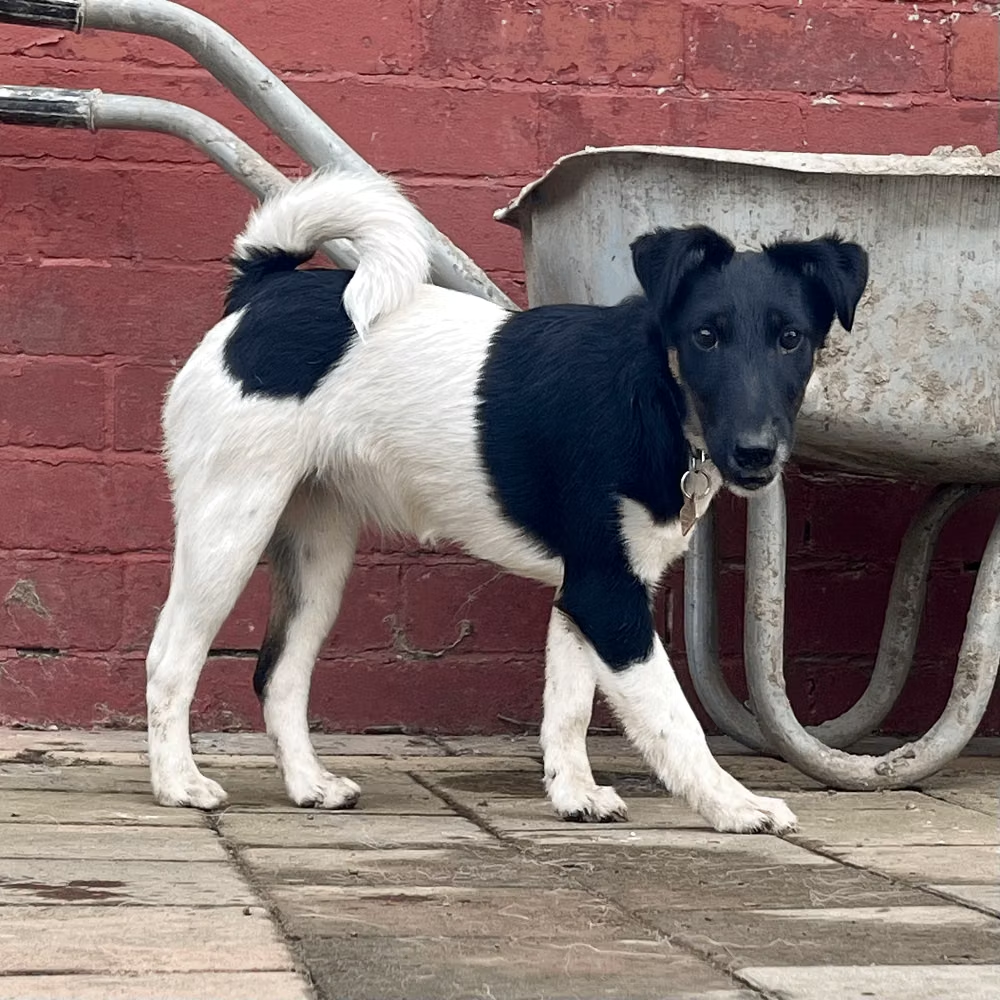
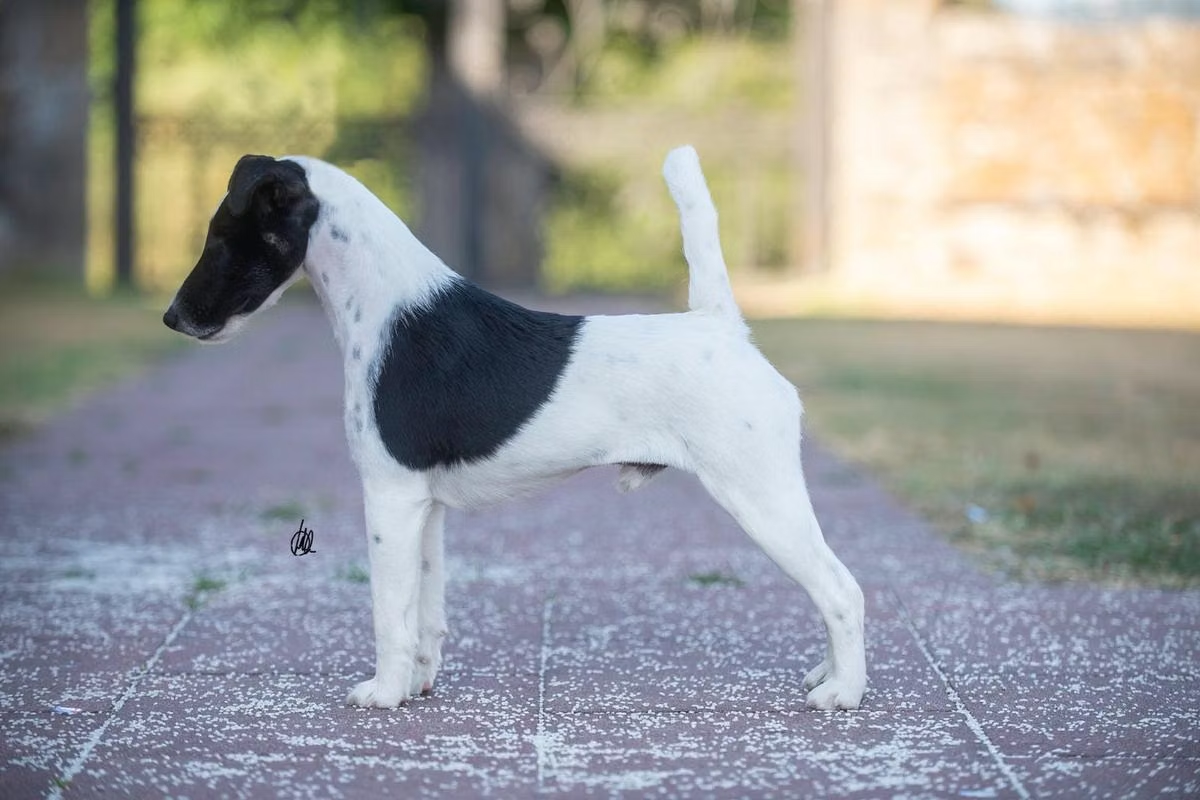
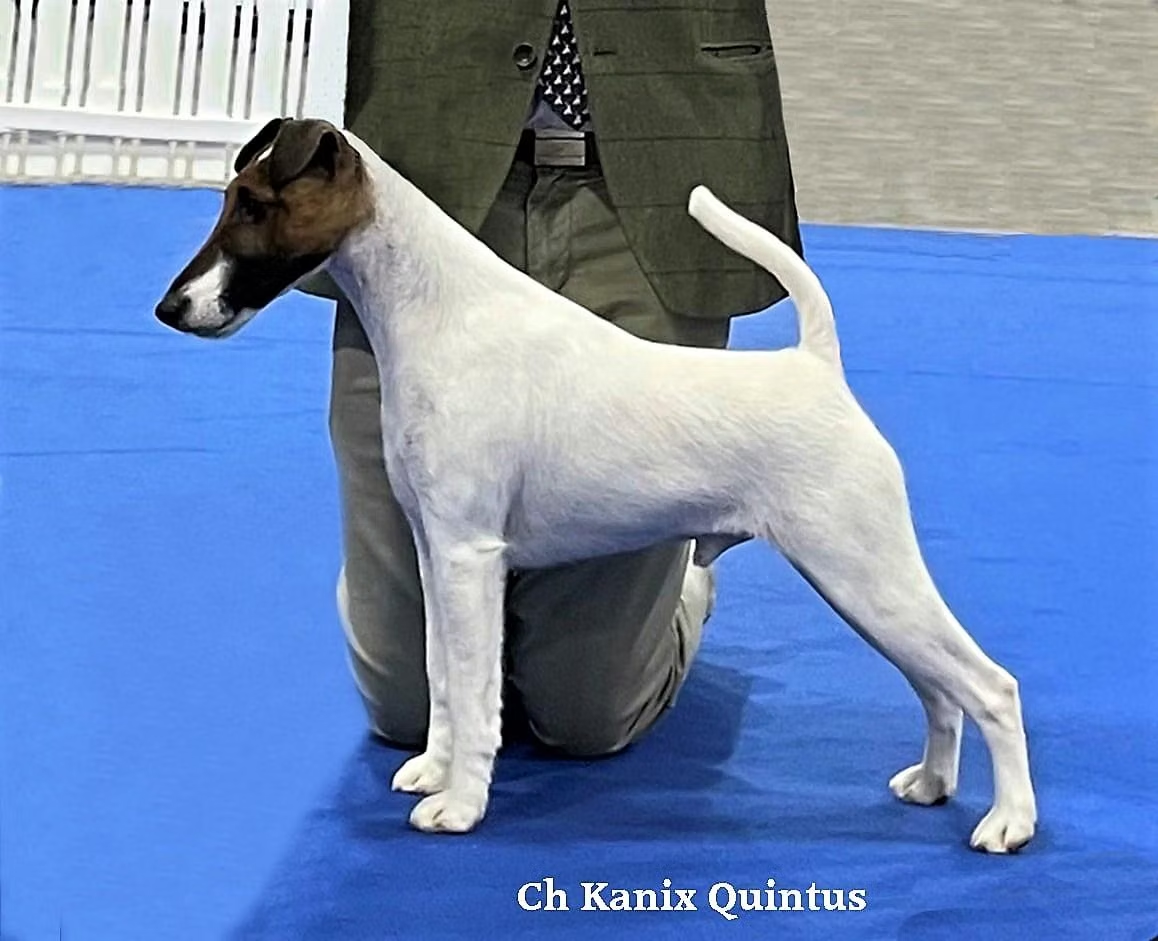
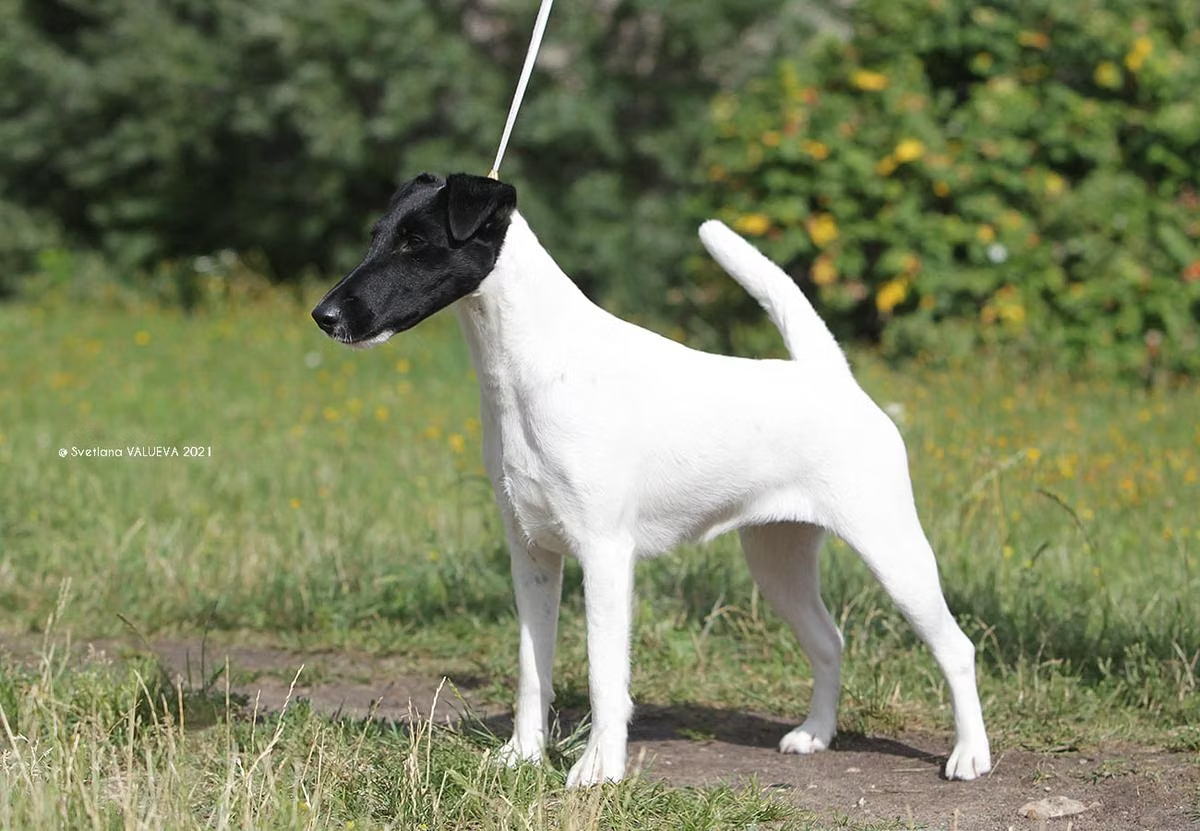
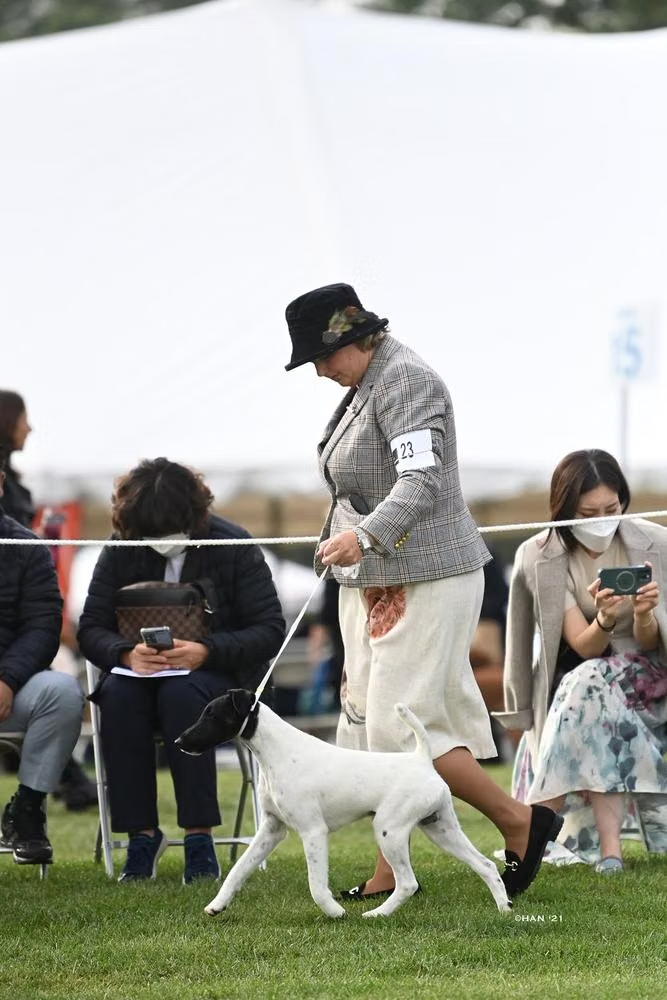

About the Smooth Fox Terrier
The Smooth Fox Terrier is a small, high-energy English terrier with a smooth coat and an alert temperament. It suits Filipino owners who can keep it active daily.
The Smooth Fox Terrier is a small dog that started out in the English countryside, built for speed and staying power in the field. It has a compact, square outline and a flat coat that lies smooth against the body. Hunters originally used the breed to bolt foxes out of their dens, and that working history still comes through in how the dog behaves today.
This is a confident, busy terrier. It carries itself upright and alert, and it reacts fast to movement or sound nearby. Around people it knows, it is friendly and easy to warm up to, and it stays curious about almost everything happening around it. Traits that terrier owners often note include a friendly streak, spirited energy, sharp intelligence, and constant alertness.
The Smooth Fox Terrier needs daily exercise and mental work to settle down at home, whether the household is in a subdivision house with a yard or a condo unit in the city. Without enough of an outlet, it tends to bark or get restless indoors. Given enough activity and consistent house rules, it turns into a tidy, companionable dog that fits well into an active household.
| Attribute | Detail |
|---|---|
| Origin | England |
| Size | Small |
| Lifespan | 12 to 15 years |
| Group and role | Terrier, originally bred to bolt foxes from their dens |
| Good with | Active families and experienced terrier owners; keep an eye on it around small pets |
Who it suits
This breed fits owners who want a small dog with a big appetite for activity. It does well with people who walk, run, or train regularly and enjoy a dog that stays involved in daily life. First-time dog owners can manage the breed if they commit to consistent training and exercise, even with the heat and humidity typical of most of the year. Households with small caged pets, like hamsters or birds, should be careful, since the terrier's prey drive can make it want to chase.
History and origin
The Smooth Fox Terrier developed in England during the 1800s to drive foxes from dens during mounted hunts, later reaching the Philippines through import and PCCI-recognized breeding.
The Smooth Fox Terrier traces back to England, where it was bred during the nineteenth century to work alongside foxhound packs. Its task was to enter a fox's den and force the animal into the open so the hunt could continue. That work needed a small, brave dog able to move fast over rough ground and dig when the job called for it.
Fox terriers were kept on hunts and rural estates well before anyone wrote them down as a formal breed. Early dogs varied quite a bit, and smooth-coated and wire-coated pups sometimes turned up in the same litter. Breeders eventually split the two coat types into separate lines, and the Smooth Fox Terrier gained recognition as its own breed.
The breed grew popular at dog shows as conformation competition took off in England during the late 1800s. Its clean lines and confident manner made it a frequent winner in the ring, and exporters carried it to other countries soon after. Show breeding sharpened the smooth coat and the square, balanced shape seen in the breed today, including the dogs registered with the Philippine Canine Club, Inc. (PCCI) under the FCI-aligned standard.
Few Smooth Fox Terriers still work the field, but the breed keeps the instincts of its hunting ancestors. Modern dogs, including Philippine-bred ones, still dig, chase, and explore with the same drive that once made them useful on English hunting estates.
Appearance and breed standard
The Smooth Fox Terrier is a small, square-built dog with a flat, dense coat, mostly white with black or tan markings, per the PCCI-recognized breed standard.
The Smooth Fox Terrier has a compact, well-balanced body that looks square when viewed from the side, with the height at the shoulder close to the length of the back. The head is long and tapers to a strong, level muzzle. Small, V-shaped ears fold forward, and the tail is carried high and upright, docked or natural depending on local practice. Overall, the dog looks quick and alert, almost standing on its toes and ready to move.
| Trait | Standard |
|---|---|
| Height | About 36 to 39 cm (14 to 15.5 in) at the shoulder |
| Weight | About 7 to 9 kg (15 to 20 lb) |
| Coat | Flat, hard, and dense, lying smooth against the body |
| Colors | Mostly white with black, tan, or black-and-tan markings |
| Eyes | Small, dark, round, and deep-set, with a sharp expression |
Coat and markings
The coat is short, flat, and hard enough to shed off dirt and water easily, which is handy on wet days during the rainy season. White is the dominant color, a trait that once helped hunters spot the dog in tall grass. Most dogs carry black, tan, or black-and-tan markings, often around the head and near the base of the tail. Because the coat is smooth, it is simple to keep clean and needs far less trimming than the wire-coated Fox Terrier.
Temperament and personality
The Smooth Fox Terrier is friendly, spirited, and alert, with plenty of energy and curiosity that make it lively at home and watchful of strangers.
The Smooth Fox Terrier is an outgoing, high-spirited dog that stays tuned in to everything happening around it. With its own family, it is affectionate and playful, and it usually forms a tight bond with the people it lives with. It tends to insert itself into whatever the household is doing instead of resting quietly in a corner.
Toward strangers, the breed stays alert and will typically announce visitors at the gate, which makes it a solid watchdog for its size, especially in a village or subdivision setting where barking carries. Most dogs warm up once they are introduced properly. Around other dogs, the terrier can be bold and a bit pushy, and same-sex pairings may need careful handling. Its hunting background gives it a strong prey drive, so it may chase cats, rats, or other small animals unless it grows up around them under supervision.
The breed is intelligent and picks things up fast, but it also has an independent streak and likes to make its own calls. It can be vocal, especially when bored or under-exercised, which is worth planning for in close-together housing like townhouses or condo units. Early socialization with people, dogs, and everyday situations helps produce a steady, confident adult.
| Trait | Rating |
|---|---|
| Affection | 4 |
| Energy | 5 |
| Trainability | 3 |
| Vocalness | 4 |
| Shedding | 3 |
Care and grooming
The Smooth Fox Terrier is easy to groom but needs a lot of daily exercise and mental stimulation, plus protection from heat, to stay calm and content.
Grooming
- Brush the smooth coat once a week with a bristle brush or grooming mitt to remove loose hair.
- Bathe only when the dog gets dirty, since the coat naturally sheds off soil and dust.
- Trim the nails every few weeks and check that they do not click against the floor tiles.
- Brush the teeth several times a week to keep dental problems away.
- Check and clean the folded ears often, since heat and humidity make ear infections more likely.
Exercise
- Give the dog at least 60 minutes of activity a day, split between walks and play.
- Schedule off-leash running in a secure area, since the breed loves a good sprint.
- Add games such as fetch, flyball, or earthdog trials to put its natural drive to use.
- Offer puzzle toys and short training sessions indoors during the hottest part of the day.
- Keep the dog leashed or fenced near roads and small animals, given its strong chase instinct.
Environment
The Smooth Fox Terrier adjusts well to houses and condo units as long as it gets enough exercise. A securely fenced yard or covered lanai suits it well, but the fence needs a solid base, since this breed digs with real determination and can squeeze through small gaps. The bigger concern in the Philippines is heat, not cold: exercise early morning or evening, keep fresh water available, and give the dog shade or air-conditioned space to rest during the hottest hours. During typhoon season, keep a dry, sheltered spot ready, since sudden downpours and flooding can leave an outdoor dog wet and stressed for hours.
Nutrition and feeding
The Smooth Fox Terrier does well on a complete diet sized for a small, active dog, fed in measured meals to avoid weight gain.
The Smooth Fox Terrier needs a complete and balanced diet formulated for its size and activity level. An active adult burns through energy fast, so the food should supply good-quality protein and fat to support muscle and stamina. Pick a product suited to the dog's life stage, whether puppy, adult, or senior, and adjust portions to keep the dog lean. Clean, fresh water should be available at all times, especially given how hot and humid most days are.
| Life stage | Amount per day | Meals |
|---|---|---|
| Puppy (2 to 6 months) | About 100 to 180 g of suitable puppy food | 3 to 4 |
| Puppy (6 to 12 months) | About 120 to 180 g | 2 to 3 |
| Active adult | About 100 to 160 g of adult food | 2 |
| Senior or less active | About 90 to 130 g, reduced as needed | 2 |
Treats and supplements
Keep treats to about 10 percent of the dog's daily calories so it stays at a healthy weight. Small, low-fat treats work well as training rewards for this food-driven breed. Most dogs on a complete diet do not need extra supplements, but a veterinarian may recommend joint or skin support for particular cases. Introduce any diet change gradually over several days to avoid an upset stomach.
Health and common conditions
The Smooth Fox Terrier is generally hardy, with a 12 to 15 year lifespan, though it can be prone to a few inherited and joint conditions.
The Smooth Fox Terrier is a sturdy, long-lived breed. With good care, regular vet checkups, and a healthy weight, many dogs reach 12 to 15 years. Responsible breeders, including those working under the Philippine Canine Club, Inc. (PCCI), screen their stock for known inherited problems, which lowers the risk in puppies. As with any breed, a few conditions turn up more often than in dogs generally.
| Condition | Signs | Note |
|---|---|---|
| Patellar luxation | Skipping gait, occasional hind-leg lameness | A slipping kneecap; mild cases may just need monitoring, severe cases need surgery |
| Lens luxation and other eye disorders | Cloudiness, redness, changes in vision | Eye screening of breeding dogs helps lower the risk |
| Deafness | Little or no response to sound, often in one ear | Linked to coat color; checked through BAER hearing screening in pups |
| Legg-Calve-Perthes disease | Hind-limb lameness, muscle wasting in young dogs | Affects the hip joint in some small breeds; may need surgery |
Preventive care
- Keep core vaccinations and parasite control current, including protection against heartworm and tick-borne disease, both common in the local climate.
- Book annual vet exams, and twice-yearly checkups once the dog reaches its senior years.
- Keep the dog at a lean body condition to protect the joints.
- Brush the teeth and schedule dental checkups to prevent gum disease.
- Ask the breeder for hearing, eye, and joint screening results before taking home a puppy.
Training
The Smooth Fox Terrier is intelligent and quick to learn but independent, so short, consistent, reward-based sessions started early work best.
The Smooth Fox Terrier learns fast and enjoys a mental challenge, but its independent, self-directed nature means it does not always obey on the first ask. Training goes better when it stays interesting and rewarding for the dog. Keep sessions short and varied to hold its attention, and use food or play as motivation. Recall deserves extra attention, since a terrier on the scent of a lizard or a rat may tune out a call unless this skill is built up carefully from puppyhood.
Basics
- Start socialization in puppyhood with people, dogs, and everyday sights and sounds, including street noise and crowds.
- Teach a reliable name response and attention cue first.
- Build core commands such as sit, down, stay, and come, one at a time.
- Practice recall on a long line before trusting the dog off leash.
- Give the dog an outlet for digging and chasing, such as a sandpit or earthdog games.
- Keep reinforcing house manners into adulthood, since the breed stays lively for years.
Breeding
The Smooth Fox Terrier typically has small litters after a roughly nine-week pregnancy, and breeding should follow health screening of both parents.
Breeding a Smooth Fox Terrier should be planned carefully and based on the health and temperament of both parents. Dogs reach sexual maturity within their first year, but responsible breeders wait until a bitch is physically mature, usually after her second season, before her first litter. Both parents should clear screening for the eye, joint, and hearing conditions known in the breed, and PCCI-registered breeders typically keep documentation of these results.
The female comes into season roughly twice a year. After a successful mating, pregnancy lasts about 63 days. Litters tend to run small to moderate for a breed this size. The whelping area should be quiet, warm, and clean, and a veterinarian should be reachable in case complications come up during birth.
Newborn puppies rely fully on the mother for warmth and feeding in the first weeks. Breeders should weigh pups regularly, keep the nest clean, and start gentle handling early to support socialization. Puppies are usually weaned and ready for new homes at about eight to twelve weeks, after a first health check and deworming.
| Metric | Value |
|---|---|
| Sexual maturity | Around 6 to 12 months |
| Recommended first breeding (female) | After second season, once fully mature |
| Seasons per year | About 2 |
| Gestation | About 63 days |
| Typical litter size | 3 to 6 puppies |
| Weaning age | About 6 to 8 weeks |
| Ready for new home | About 8 to 12 weeks |
Registering your Smooth Fox Terrier and its microchip in the Philippines
The city vet office handles the RA 9482 paperwork; a free United Pet Club record is what a finder anywhere can actually search for your Smooth Fox Terrier.
How to register a Smooth Fox Terrier in the Philippines
The Anti-Rabies Act, Republic Act 9482, tells every dog owner to register with the city or municipal veterinary office and keep the anti-rabies shots current, and that covers the local paperwork for your Smooth Fox Terrier. What the city record cannot do is tell a finder two provinces away how to reach you. A free United Pet Club profile fills that gap for life. Registering your dog costs nothing to start and nothing later.
If a vet has already implanted a chip, the number still has to be filed where a scanner can trace it, because an unfiled chip points at nobody. Register the microchip free on the lifetime plan: any brand sold in the Philippines qualifies, updates after you move house or change SIM cost nothing, and the record stays searchable here and abroad. Create your free account and cover both in one go.
How do I register my Smooth Fox Terrier in the Philippines?
Open a free United Pet Club account, add your Smooth Fox Terrier's details and a photo, then save the profile. It stays free for his whole life and sits alongside the city vet office registration RA 9482 requires.
How do I register my Smooth Fox Terrier's microchip?
Type the 15-digit chip number into your free account together with your mobile number and address. The lifetime plan charges nothing for the registration or for any update, whatever brand the clinic used.
Is registration required for a Smooth Fox Terrier in the Philippines?
Yes, RA 9482 requires dog registration with your city or municipal veterinary office, along with current anti-rabies vaccination. The United Pet Club profile is the searchable half: free, worldwide, and tied to your current mobile.
How much does it cost to register a Smooth Fox Terrier?
Nothing. The free lifetime plan covers the profile, the microchip record, and every update, with no renewal fees at all.
Frequently asked questions
Common questions about the Smooth Fox Terrier cover its size, temperament, care needs, lifespan, and fit for different Philippine households.
How big does a Smooth Fox Terrier get?
It is a small breed. Adults stand about 36 to 39 cm (14 to 15.5 in) at the shoulder and weigh roughly 7 to 9 kg (15 to 20 lb).
What is the Smooth Fox Terrier's temperament like?
Smooth Fox Terriers are friendly, spirited, intelligent, energetic, and alert. They are affectionate with their family, watchful of strangers, and carry a strong prey drive from their hunting background.
Is the Smooth Fox Terrier hard to take care of in the Philippines?
Grooming is easy thanks to the short, smooth coat, but exercise and mental stimulation are demanding. Owners also need to manage heat and humidity, since the breed can overheat if exercised at midday. It needs at least an hour of activity a day and can turn noisy or restless without it.
How long does a Smooth Fox Terrier live?
The typical lifespan is 12 to 15 years. Regular veterinary care and a healthy weight help dogs reach the upper end of that range.
Is the breed good with children and other pets?
It usually does well with respectful older children and enjoys active play. Take care around small caged pets, cats, and rats because of its chase instinct, and same-sex dog pairings may need management.
Does the Smooth Fox Terrier bark a lot?
It can be vocal, especially when bored or under-exercised, which is worth thinking about in close-together housing like townhouses or condo buildings. Enough activity, training, and mental stimulation cut down on nuisance barking.
Where can I find a Smooth Fox Terrier in the Philippines?
Look for breeders who screen for the breed's eye, joint, and hearing conditions, ideally ones registered with the Philippine Canine Club, Inc. (PCCI), and consider breed-specific rescue groups. The breed is less common locally than some terriers, so expect a possible wait for a well-bred puppy.
From the community
Ask about the Smooth Fox TerrierNo questions about the Smooth Fox Terrier yet. Be the first to ask.
Browse Dog breeds