
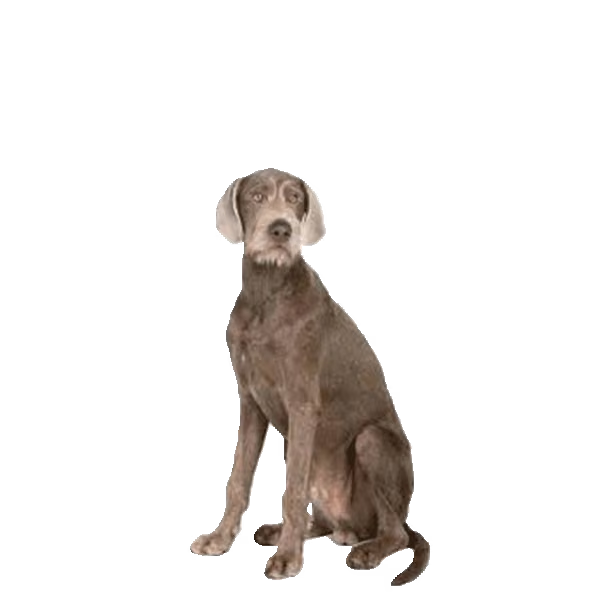
Slovakian Wirehaired Pointer
The Slovakian Wirehaired Pointer is a versatile, intelligent gundog known for its tireless work ethic in field and water.
- Size
- Medium
- Lifespan
- 12–14 years
- Origin
- Slovakia
- Temperament
- Intelligent
- Standard colors
- Gray and Silver
Characteristics
Coat and grooming
How the Slovakian Wirehaired Pointer coat is built, and what that means when you groom it.
- Coat layers
- Double coat
- Coat texture
- Wire
- Coat length
- Medium
- Shedding
- Low shedding
Grooming guidance
Caution: A Slovakian Wirehaired Pointer coat should be hand-stripped rather than clipped.
A wire coat is meant to be pulled out at the root once the hair is ready to release. Clippers cut it off part way instead, leaving the soft undercoat behind. The result is a coat that grows back limp and faded, and the weatherproof texture only returns after the hair is stripped out again.
Slovakian Wirehaired Pointer colors and patterns
What each club's breed standard says about every Slovakian Wirehaired Pointer color and pattern. Point at a ruling to see the club's own wording.
Breed standards describe the Slovakian Wirehaired Pointer in Gray and Silver. Standard patterns: Solid, Roan, and Sable.
| Color or pattern | FCI | AKC | KC | KUSA |
|---|---|---|---|---|
| Gray | Standard (“brown shaded sable (said “grey”)”) | Standard (“Gray”) | Standard (“grey of any shade”) | Standard (“brown-shaded sable (said “grey”)”) |
| Silver | Standard (“with varying lighter and darker shadings”) | Standard (“Silver Gray”) | Standard (“grey of any shade”) | Standard (“with varying lighter and darker shadings”) |
| Cream | Fault (“Colour much too light going to nearly white”) | Fault (“Cream”) | Not recognized | Fault (“Colour much too light, going to nearly white”) |
| Patterns | ||||
| Solid | No ruling | Standard (“Gray”) | Standard (“Grey”) | No ruling |
| Roan | Standard (“eventually speckled”) | Standard (“eventually speckled”) | Standard (“Evenly speckled grey roan is acceptable”) | Standard (“eventually speckled”) |
| Sable | Standard (“brown shaded sable”) | Standard (“Gray Sable”) | No ruling | Standard (“brown-shaded sable”) |


| Color or pattern | FCI | AKC | KC | KUSA |
|---|---|---|---|---|
| Blue | Standard (“In the puppies and the young dogs, they are bluish (azure)”) | Standard (“In the puppies and the young dogs, they are bluish (azure)”) | Standard (“In young dogs the eyes may be blue”) | Standard (“In puppies and young dogs, they are bluish (azure)”) |
| Amber | Standard (“of amber colour”) | Standard (“of amber colour”) | Standard (“Amber coloured in adults”) | Standard (“of amber colour”) |
What the rulings mean
- Standard
- Described by the club's breed standard.
- Fault
- Named by the club's breed standard as a fault: the animal can be shown but is penalized.
- Not recognized
- The club does not accept this color or pattern for the breed.
Color changes
How a Slovakian Wirehaired Pointer's colors can change over its life.
Bluechanges toDark brown
Eyes · With age · from 2 weeks
Bluechanges toBrown
Eyes · With age · from 2 weeks
Bluechanges toLight brown
Eyes · With age · from 2 weeks
Bluechanges toAmber
Eyes · With age · from 2 weeks
Bluechanges toHazel
Eyes · With age · from 2 weeks
Bluechanges toYellow
Eyes · With age · from 2 weeks
Sources
Each ruling comes from the club's published breed standard or color list.
About the Slovakian Wirehaired Pointer
The Slovakian Wirehaired Pointer is a medium-sized, all-around gundog from Slovakia built to point, retrieve, and track on land and in water, and remains a rare sight in the Philippines.
The Slovakian Wirehaired Pointer is a medium-sized hunting dog from Slovakia, developed to do everything a versatile gundog needs to do in the field. It points, retrieves, and tracks, and it moves through thick brush, open ground, and cold water without slowing down. Rather than sheer speed, the breed is built for stamina, and its wiry, weatherproof coat is what lets it keep working through long hours outdoors.
Dogs of this breed attach closely to their handler and are quick to pick up on cues, a trait that comes in handy given how many jobs a versatile gundog is expected to cover. Owners who put in the daily exercise say the dog settles well indoors afterward, though it never fully switches off and stays alert to what is happening around it.
It shares the qualities common to the continental versatile pointers: a deliberate, unhurried hunting style, a keen nose, and the drive to push through difficult terrain. The breed is essentially unknown in the Philippines, where local hunting traditions lean toward native aspins and imported retriever or terrier types. The few examples found here typically belong to dog sport hobbyists or breed enthusiasts who imported stock directly from Europe, so anyone interested should expect a long search and a serious import process rather than a quick trip to a local pet shop.
| Attribute | Detail |
|---|---|
| Origin | Slovakia |
| Size | Medium |
| Lifespan | 12 to 14 years |
| Group / role | Versatile gundog (pointer, retriever, tracker) |
| Good with | Active households, including provincial or farm-based families, that can commit to daily work |
Who it suits
This dog needs an owner who can give it a real job plus several hours of exercise every day, ideally someone involved in hunting, field trials, tracking, or another working dog sport. It is a poor match for condo or townhouse living in Metro Manila, and just as poor a fit for households where everyone is out of the house for most of the day. A dog of this type left without enough to do will get restless and start finding its own, usually destructive, ways to burn off energy.
History and origin of the Slovakian Wirehaired Pointer
The Slovakian Wirehaired Pointer took shape in Slovakia around the mid-1900s, bred from established versatile pointers into one wirehaired dog capable of field and water work.
The breed traces back to Slovakia, where it was developed around the middle of the twentieth century. Breeders wanted a single gundog that could point game, retrieve from both land and water, and follow a blood trail, all wrapped in one dog with a coat tough enough to handle the elements.
The foundation stock came from established continental versatile breeds. Breed records commonly name the German Wirehaired Pointer, the Wirehaired Vizsla, and the Czesky Fousek (Bohemian Wirehaired Pointing Griffon) as contributors to the early litters. Breeders selected for a hard, weather-resistant coat alongside a calm, cooperative working temperament.
Development continued through the latter half of the twentieth century, with breeders working toward consistent type and dependable field results. The breed earned recognition at home and was eventually accepted by the Fédération Cynologique Internationale (FCI), which places it among the continental pointing breeds.
The breed has stayed tied to its hunting roots and remains far less common than the better-known continental pointers. In the Philippines, dogs of this breed would be registered through the Philippine Canine Club, Inc. (PCCI), the country's FCI-linked national kennel club, but sightings here are rare, and the ones that exist are almost always privately imported by hunters or working-dog enthusiasts rather than sourced from local breeders.
Slovakian Wirehaired Pointer appearance and breed standard
The Slovakian Wirehaired Pointer is a lean, medium-sized gundog with a harsh grey wiry coat, a bearded face with bushy eyebrows, and an athletic, balanced frame.
The Slovakian Wirehaired Pointer is lean and athletic, medium in size, with a rectangular, well-proportioned outline. Its build favors function over bulk, carrying just enough bone and muscle to sustain a full day of work. The face is marked by a distinct beard and bushy eyebrows, a look shared by the other wirehaired continental pointers.
| Trait | Standard |
|---|---|
| Height | Males about 62 to 68 cm; females about 57 to 64 cm at the withers |
| Weight | About 25 to 35 kg, in proportion to height |
| Coat | Harsh, wiry topcoat about 4 cm long with a dense undercoat; beard and eyebrows on the face |
| Colors | Shades of grey, including grey roan and darker grey; white markings may appear |
| Eyes | Almond shaped, amber in color, with an alert expression |
Coat and colors
The coat is what sets this breed apart at a glance. The topcoat is harsh and wiry, lying close enough to shield the dog from thorns and cold water, while the undercoat provides extra insulation, a combination built for European winters rather than tropical heat. The face carries a full beard and heavy eyebrows, and the overall color runs through shades of grey, often described as grey roan, giving the dog a uniformly greyish look. In the Philippine climate, that same dense double coat needs closer attention than it would in a cooler country: regular hand-stripping keeps it from turning into a hot, matted mess during the humid months, and it sheds less than a smooth-coated dog even so.
Slovakian Wirehaired Pointer temperament
The Slovakian Wirehaired Pointer is loyal, sharp, and even-tempered, devoted to its handler, wary but not hostile toward strangers, and sociable with other dogs when raised well.
This is an even-tempered breed that forms a tight bond with its handler. It is intelligent and picks things up fast, a legacy of being bred to read constantly changing situations in the field. At home, a dog that has had its exercise settles down and stays calm, though it never fully drops its guard.
With its own household, the breed is affectionate and easy to work with. It tends to hold back around strangers rather than react aggressively, and early socialization helps it warm up to new people without fuss. It generally gets along with other dogs, and its hunting background means it is used to working alongside people and, depending on the setup, other dogs as well.
Prey drive runs high, which is normal for a pointing and retrieving breed. Homes with small pets such as rabbits or birds need to manage first introductions with care. Given a clear job and consistent handling, this dog thrives; deny it enough physical and mental activity, and it will grow restless or pick up habits nobody wants.
| Trait | Rating |
|---|---|
| Affection | 4 |
| Energy | 5 |
| Trainability | 5 |
| Vocalness | 2 |
| Shedding | 2 |
Caring for a Slovakian Wirehaired Pointer in the Philippines
The Slovakian Wirehaired Pointer needs regular hand-stripping, several hours of daily exercise, and a home with real outdoor space, best suited to an active, often provincial household.
Grooming
- Brush the wiry coat once or twice a week to clear out dead hair and stop matting before it starts, which happens faster in humid weather.
- Hand-strip the coat a few times a year to keep the harsh, protective texture; clipping softens it and takes away its weatherproofing.
- Wipe down the beard after meals and after water play, since it traps food and dirt quickly.
- Check and clean the ears often; drop ears hold on to moisture easily, and the Philippines' heat and humidity make ear infections more likely if they are ignored.
- Trim nails every few weeks and brush teeth several times a week.
Exercise
- Give the dog at least two hours of hard exercise daily, more on days it actually gets to work.
- Pair physical activity with scent work, retrieving games, or field training to keep its mind occupied too.
- Let it run off-lead in a secure area whenever possible; this is a high-drive working breed that needs the room to move.
- Schedule exercise for early morning or late afternoon, since the midday sun and heat index make hard activity risky, and skip outdoor sessions altogether during heavy rain or a typhoon signal.
- Do not rely on short leash walks around the block; that alone will not come close to meeting this breed's needs.
Environment
This breed does best in a home with a large, secure yard, whether that is a subdivision lot with a proper fence or a rural compound with open ground to run on. Its coat handles cold and damp weather well, which is exactly the opposite of what most of the Philippines offers, so plenty of shade, airflow, and fresh water matter far more here than protection from cold. It is a poor fit for a small condo unit or for an owner who cannot promise demanding daily exercise regardless of the weather outside.
Slovakian Wirehaired Pointer feeding and nutrition
The Slovakian Wirehaired Pointer needs a balanced, protein-rich diet matched to its activity level, with larger portions on working days and meals split in two.
As an active medium-sized working dog, this breed needs a complete and balanced diet with enough protein and fat to keep its energy up through long days of work. The right daily amount depends on weight, age, and workload; a dog out hunting all day needs noticeably more food than one resting at home. Choose a quality food made for active or working dogs, widely available through pet shops and veterinary clinics in the Philippines, and adjust the portion to keep the dog lean rather than sticking to a fixed number.
| Life stage | Amount per day | Meals |
|---|---|---|
| Puppy (2 to 6 months) | Per food label, divided through the day | 3 to 4 |
| Junior (6 to 12 months) | Per food label for growing dogs | 2 to 3 |
| Adult (maintenance) | About 300 to 450 g of dry food, by weight and activity | 2 |
| Adult (working days) | Increase above maintenance to match output | 2 |
| Senior | Reduce slightly if activity drops; maintain protein | 2 |
Treats and supplements
Keep treats to roughly ten percent of daily calories so they do not throw off the rest of the diet. A dog already on a complete commercial food generally needs no extra supplements. This is a deep-chested breed, so feed measured meals instead of one large sitting, and avoid hard exercise right before or after eating to lower the risk of bloat. Keep fresh water available at all times, and top it up often during water work or on hot, humid afternoons.
Slovakian Wirehaired Pointer health
The Slovakian Wirehaired Pointer is generally hardy with a lifespan of 12 to 14 years, though owners should watch for hip dysplasia, ear infections, and bloat.
The Slovakian Wirehaired Pointer is generally a hardy, healthy breed, helped along by its working background and the fact that it was never bred for exaggerated looks. Typical lifespan runs 12 to 14 years. As with most active medium-to-large dogs, a handful of conditions deserve attention, and responsible breeders screen their stock for inherited issues before mating them.
| Condition | Signs | Note |
|---|---|---|
| Hip dysplasia | Stiffness, limping, reluctance to rise or jump | Choose breeders who hip-score their stock |
| Elbow dysplasia | Foreleg lameness, especially after exercise | Screening is available |
| Ear infections | Head shaking, odor, scratching at the ear | Drop ears trap moisture easily, and Philippine humidity worsens this |
| Bloat (gastric torsion) | Swollen abdomen, retching without result, distress | Emergency; deep-chested dogs are at higher risk |
Preventive care
- Keep vaccinations and parasite control current, and stay on top of tick and heartworm prevention year-round given the local climate.
- Keep the dog lean to protect its joints.
- Check ears after every session in water or thick brush.
- Book annual veterinary checkups, and screen breeding dogs for hip and elbow scores.
- Brush teeth regularly to keep dental disease at bay.
Training a Slovakian Wirehaired Pointer
The Slovakian Wirehaired Pointer is highly trainable and eager to work alongside its handler, responding best to consistent, reward-based methods that give its energy a job to do.
This ranks among the more trainable gundogs. It pays close attention to its handler and wants to work, which makes it responsive in both obedience and field training. That same sharpness cuts both ways: without steady direction and regular mental challenge, the dog will invent its own entertainment, and it usually will not be the kind an owner appreciates. Start training early, keep sessions varied, and build on the dog's natural instinct to point and retrieve rather than fight against it.
Basics
- Socialize the puppy early and widely, with different people, places, sounds, and other dogs.
- Teach name response and a solid recall before adding any field distractions.
- Build sit, stay, and steadiness, the foundation for all later gundog work.
- Introduce retrieving and scent games to tap into the breed's natural drive.
- Add field or tracking work gradually as the dog's control becomes reliable.
- Keep sessions short, frequent, and consistent, with every member of the household using the same cues.
Breeding the Slovakian Wirehaired Pointer
Breeding the Slovakian Wirehaired Pointer follows the usual 63-day canine gestation, with health-screened parents and litters of about six to eight puppies raised with early socialization.
Breeding should only involve health-screened parents with sound temperament and proven working ability. Females reach physical maturity before they should actually be bred, and most responsible programs hold off until at least the second season and until hip and elbow screening is done. Mating, gestation, and whelping follow the standard canine timeline, with pregnancy lasting around 63 days.
Litters usually run about six to eight puppies, though this varies from dam to dam. Given her medium build, the dam typically whelps without much trouble. Puppies benefit from early neurological stimulation and broad socialization, since the adult dog needs to be confident and people-focused to do its job well. Breeders usually place puppies with hunting or genuinely active households that can meet the breed's exercise and training demands, and reputable programs stay in touch to support new owners well after the puppy goes home, which matters even more when the breed is being imported into a country like the Philippines with no established local support network.
| Metric | Value |
|---|---|
| Breeding maturity | Typically from the second season for females; after health screening |
| Gestation | About 63 days |
| Average litter size | About 6 to 8 puppies |
| Weaning | Around 6 to 8 weeks |
| Recommended screening | Hip and elbow scores; temperament assessment |
Registering your Slovakian Wirehaired Pointer and its microchip in the Philippines
The city vet office handles the RA 9482 paperwork; a free United Pet Club record is what a finder anywhere can actually search for your Slovakian Wirehaired Pointer.
How to register a Slovakian Wirehaired Pointer in the Philippines
The Anti-Rabies Act, Republic Act 9482, tells every dog owner to register with the city or municipal veterinary office and keep the anti-rabies shots current, and that covers the local paperwork for your Slovakian Wirehaired Pointer. What the city record cannot do is tell a finder two provinces away how to reach you. A free United Pet Club profile fills that gap for life. Registering your dog costs nothing to start and nothing later.
If a vet has already implanted a chip, the number still has to be filed where a scanner can trace it, because an unfiled chip points at nobody. Register the microchip free on the lifetime plan: any brand sold in the Philippines qualifies, updates after you move house or change SIM cost nothing, and the record stays searchable here and abroad. Create your free account and cover both in one go.
How do I register my Slovakian Wirehaired Pointer in the Philippines?
Open a free United Pet Club account, add your Slovakian Wirehaired Pointer's details and a photo, then save the profile. It stays free for his whole life and sits alongside the city vet office registration RA 9482 requires.
How do I register my Slovakian Wirehaired Pointer's microchip?
Type the 15-digit chip number into your free account together with your mobile number and address. The lifetime plan charges nothing for the registration or for any update, whatever brand the clinic used.
Is registration required for a Slovakian Wirehaired Pointer in the Philippines?
Yes, RA 9482 requires dog registration with your city or municipal veterinary office, along with current anti-rabies vaccination. The United Pet Club profile is the searchable half: free, worldwide, and tied to your current mobile.
How much does it cost to register a Slovakian Wirehaired Pointer?
Nothing. The free lifetime plan covers the profile, the microchip record, and every update, with no renewal fees at all.
Frequently asked questions about the Slovakian Wirehaired Pointer
Common questions about the Slovakian Wirehaired Pointer cover its size, temperament, upkeep, lifespan, fit as a family pet, and how hard it is to find in the Philippines.
How big does a Slovakian Wirehaired Pointer get?
It is a medium-sized breed. Males stand about 62 to 68 cm at the withers and females about 57 to 64 cm, with weight roughly 25 to 35 kg depending on size and condition.
What is its temperament like?
It is loyal, sharp, and even-tempered. It bonds closely with its family, holds back rather than acts aggressively around strangers, and is generally sociable with other dogs when well socialized. It has a high prey drive typical of a gundog.
Is it hard to take care of?
It demands a lot of time rather than being difficult by nature. It needs at least two hours of exercise daily plus mental work, and its wiry coat needs weekly brushing plus occasional hand-stripping, more so given the local heat and humidity. Meet those needs and it turns into a manageable, calm companion.
How long do they live?
Typical lifespan is 12 to 14 years. Good nutrition, a lean weight, regular veterinary care, and health-screened parents all support a long, healthy life.
Does it make a good family pet?
It can suit an active, often provincial family that can give it a job and daily exercise. It is affectionate with its own people, but it is a poor fit for sedentary households, small condo units, or owners who travel or work abroad for long stretches.
Is the breed easy to find in the Philippines?
No. It is virtually unknown here outside a small circle of hunters and dog sport enthusiasts, so anyone interested should expect to import directly from a European breeder rather than find one locally. Waiting lists are common even abroad, and most puppies go to working or very active homes.
Does it shed a lot?
Shedding is relatively low compared with smooth-coated breeds. The wiry coat still needs regular brushing and periodic hand-stripping to stay in good shape and to keep loose hair under control, particularly through the humid months.
From the community
Ask about the Slovakian Wirehaired PointerNo questions about the Slovakian Wirehaired Pointer yet. Be the first to ask.
Browse Dog breeds